
What happens if you quit your job, sign a lease, order an EMR… and then your “future partner” suddenly ghosts you?
That’s the nightmare version, right? You leave residency or your first employed job, you finally decide, “I’m going to start my own practice, but I’ll feel safer doing it with a partner,” and then your supposed safety net just… disappears. Or backs out. Or “needs more time to think.”
Let me just say it bluntly: this happens. More than people like to admit. I’ve seen it blow up friendships, marriages, and bank accounts.
But you don’t have to be the one holding the bag if you set things up right early instead of trusting everyone will “figure it out later.”
Let’s walk through this like the anxious person you probably are right now. Worst case first. Then how to protect yourself.
The Ugly Scenarios People Don’t Warn You About
You’re not crazy for being scared of this. The risk is real.
I’ve watched these specific disasters play out:
Two co-residents dream up a group practice.
They meet for coffee, divide up imaginary call schedules, argue about logo colors. One person (“the organized one”) takes the lead: talks to the lawyer, signs the clinic lease “for now,” starts credentialing. The other keeps saying, “Yeah yeah, I’m in, just busy with boards.”
Then six weeks before opening: text message.
“Hey, so I’ve been thinking… I got an offer from XYZ Health that has a big sign-on bonus, and with my loans, I just can’t pass it up. I’m so sorry. I hope we can still be friends.”
Translation: you’re now solo with a 5‑year commercial lease.Spouse or partner practice plan.
You and your spouse/partner: “Let’s open a clinic together after fellowship!”
You move to the city they want. You buy a house you wouldn’t have bought solo. You meet bankers. Then their fellowship director pulls them aside: “You’re fellowship material for big-name academic jobs; don’t waste it on private practice.”
Suddenly, they’re… “conflicted.” You’re not just dealing with business fallout. You’re sleeping next to the person who just nuked your plan.The “soft bailout.”
They don’t say “I’m out.” They just… never commit.
Don’t sign the operating agreement.
Don’t sign the guarantee on the loan.
Don’t answer texts about credentialing paperwork.
By the time you realize you’re doing 95% of the work, they’re already mentally employed somewhere else.
So yeah, your anxiety about “What if they bail?” is not overthinking. It’s realism.
Now the part that sucks: you can’t control whether they bail.
What you can control is whether their decision destroys you or is just an annoying plot twist.
Step One: Stop Building a Practice on Vibes and Verbal Promises
If your “partnership” currently consists of:
- Coffee shop brainstorming
- “We’re definitely doing this” texts
- Maybe a shared Google Doc called “Practice Ideas”
…you don’t have a partner. You have a person who likes the idea of being a partner.
Until someone is legally on the hook, they are emotionally free to walk away. And people do what’s easy when they’re scared. They walk.
The mental trap is: “We’re such good friends / co-residents / spouses, they’d never screw me.”
No. They might not screw you intentionally. But their fear, loans, parents’ opinions, or a shiny employed offer can screw you indirectly.
What you need are early, concrete commitments that match your level of risk. Not massive, but real.
Here’s the mindset shift:
Don’t ask, “Are you in?”
Ask, “What are you willing to sign and pay for now?”
That changes everything.
The Critical Line: Who Is Actually Liable For What?
Let’s talk about the financial guns pointed at your head. The big ones when starting a private practice:
- The lease
- The loans / credit line
- The equipment / build-out
- The EMR contract
- Staff salaries

| Category | Value |
|---|---|
| Lease (annual) | 120000 |
| Build-out | 150000 |
| Equipment | 80000 |
| EMR (year 1) | 30000 |
| Initial Payroll (3 months) | 90000 |
Here’s the terrible but common pattern:
Person A (you) signs as the sole lease guarantor “just to move things along” while Person B “plans” to sign once they talk to their spouse / lawyer / whatever.
Then Person B bails.
Landlord does not care that “it was supposed to be a partnership.” The bank does not care what they “promised” at brunch. Your name is on the line. Theirs isn’t.
The first layer of protection is boring but non-negotiable:
- Do not be the only lease guarantor if you’re both supposed to be equal partners.
- Do not take out a business loan solely in your name for a “two-physician practice.”
- Do not personally guarantee large recurring contracts (like an expensive EMR or billing company) without them equally guaranteeing or paying a clear share.
If they “aren’t comfortable” signing anything yet?
That’s your answer. They’re not actually in.
Get Real, Early: The Awkward Conversation You Have to Force
You need a brutally honest talk long before you:
- Quit your job
- Sign a lease
- Spend serious money on build-out or EMR
- Announce anything publicly
Something like:
“I am excited about this, but I can’t structure my entire career around a handshake. Before I commit to anything binding, I need us both to be equally on paper. That means: we both sign the LLC operating agreement, and we both share liability on the lease and loans we agree to. If you’re not ready for that, I respect it, but I need to know now so I can plan accordingly.”
If that conversation feels terrifying, that’s exactly why you need to do it. Your anxiety is basically your brain screaming: “Something isn’t defined here.”
If they respond with, “Why don’t you just sign for now and I’ll join later once it’s up and running”…
Translation: “I want the upside of your risk without taking the risk.”
You aren’t overreacting to be scared of that. That’s them already bailing, just slowly.
Use Paper and Structure to Protect Future-You
Here’s where you start taking actual protective steps. Not just hoping.
1. Put your relationship in writing before the big commitments
You want at least:
- A basic term sheet / memorandum of understanding (MOU) that spells out:
- Ownership percentages
- Capital contributions (who is putting in how much cash or credit)
- Roles (medical director, practice admin lead, etc.)
- What happens if:
- They bail before opening
- They leave within X years
Is an MOU ironclad like a 40-page operating agreement? No. But it moves you out of fantasy-land and into “are you actually willing to sign something” land.
Then you move to a real operating agreement (for an LLC) or shareholder agreement (for a corporation) with an attorney who does healthcare startups.
Include nasty but necessary things like:
- Buy-in terms
- Buy-out terms
- Non-competes / non-solicits (within legal limits in your state)
- What happens if someone just stops working, disappears, or refuses to pull their weight
If their energy drops the second lawyers and documents enter the picture? Take the hint.
2. Stage your risk
You don’t have to jump off the cliff all at once.
Think in phases where each person takes on proportionate risk:
Phase 1:
- Each of you puts in a refundable small amount (say $2–5k each) into a joint account to pay for:
- Basic legal setup
- Initial consultations (accountant, consultant, etc.)
If they won’t do even this? They’re not serious.
Phase 2:
- Before lease or large contracts:
- Both names on the entity documents
- Both sign any guarantee that involves big money
Phase 3:
- As things expand:
- Clear written agreement on how profit, call, admin work, and buy-in for future partners will be handled
You’re basically watching at each phase: do our actions match our words?
3. Have a “they leave early” clause… even if it feels pessimistic
You’re not jinxing the practice by planning for worst case. You’re doing what every grown-up business does.
I’ve seen good agreements include things like:
If a partner withdraws before opening:
- They forfeit part or all of their initial contribution
- They’re obligated to cover X% of certain sunk costs
If a partner leaves within the first 1–3 years:
- Their buy-out is discounted
- Payout is spread over time, not a giant check that sinks the practice
The emotional translation: you can leave, but you don’t get to walk away totally clean if your departure harms the other person.
Is that “harsh”? Maybe. But you’re protecting both of you from future resentment too.
What If They’re Already Pulling Away?
Maybe you’re reading this too late. Maybe you’ve already:
- Signed a lease
- Told everyone you’re opening a “group practice”
- Built the website with both names
- Paid a consultant
And now your “partner” is showing signs of cold feet.
You are not stuck. But you do need to rip off the band-aid now, not six months from now when it hurts even more.
Here’s what I’d do, bluntly:
- Schedule a direct, time-bound meeting (in person or video), not just “let’s chat when you’re free.”
- Call out what you’re seeing: “I’ve noticed I’m the only one answering emails about X, Y, Z. You’ve mentioned a couple times that you’re unsure. I need clarity.”
- Ask the yes/no question: “Are you willing to be legally and financially equal in this practice in the next 30 days?”
- If they stall, equivocate, or say anything except a clear yes: assume they are out.
- Emotionally and practically pivot to: “I am opening as a solo practice. If you want to join later, that will be as a new hire or a buy-in partner under clear terms.”
Does that feel cold? Probably. But staying in limbo is how people end up signing or spending things they can’t afford because they’re still secretly hoping the partner will come through.
Better to be “the mean one” who cut it off early than the naïve one paying double rent with half the doctors.
Quick Reality Check: You Can Survive Alone
One more thing your anxiety brain is probably whispering: “I need a partner. I can’t do this solo.”
That’s half true.
A partner can absolutely help with:
- Emotional support
- Sharing call
- Splitting upfront costs
- Covering vacations and maternity/paternity leave
But a partner also introduces major risks:
- Misaligned work ethic
- Different risk tolerance
- Slow decision-making
- Drama when someone wants out
There are a lot of very happy, very successful solo docs who started afraid and now look back thinking, “I’m so glad that partnership never happened.”

You are allowed to change the plan to:
- Open solo, with clear scalability to add partners later
- Hire another doc as an employee initially instead of co-owner
- Join forces temporarily with another practice while you test the waters
You’re not failing if the original “dream duo” never happens. You’re adapting.
Concrete Protection Moves You Can Start This Week
Let’s translate all this into actual steps you can take, even if you’re still just in the planning stage:
| Step | Timing |
|---|---|
| Draft MOU/term sheet | Before lease talks |
| Consult healthcare attorney | Before signing anything |
| Decide entity and ownership split | Before bank meetings |
| Require shared financial commitments | Before lease/loans |
| Add exit/withdrawal terms | During operating agreement |
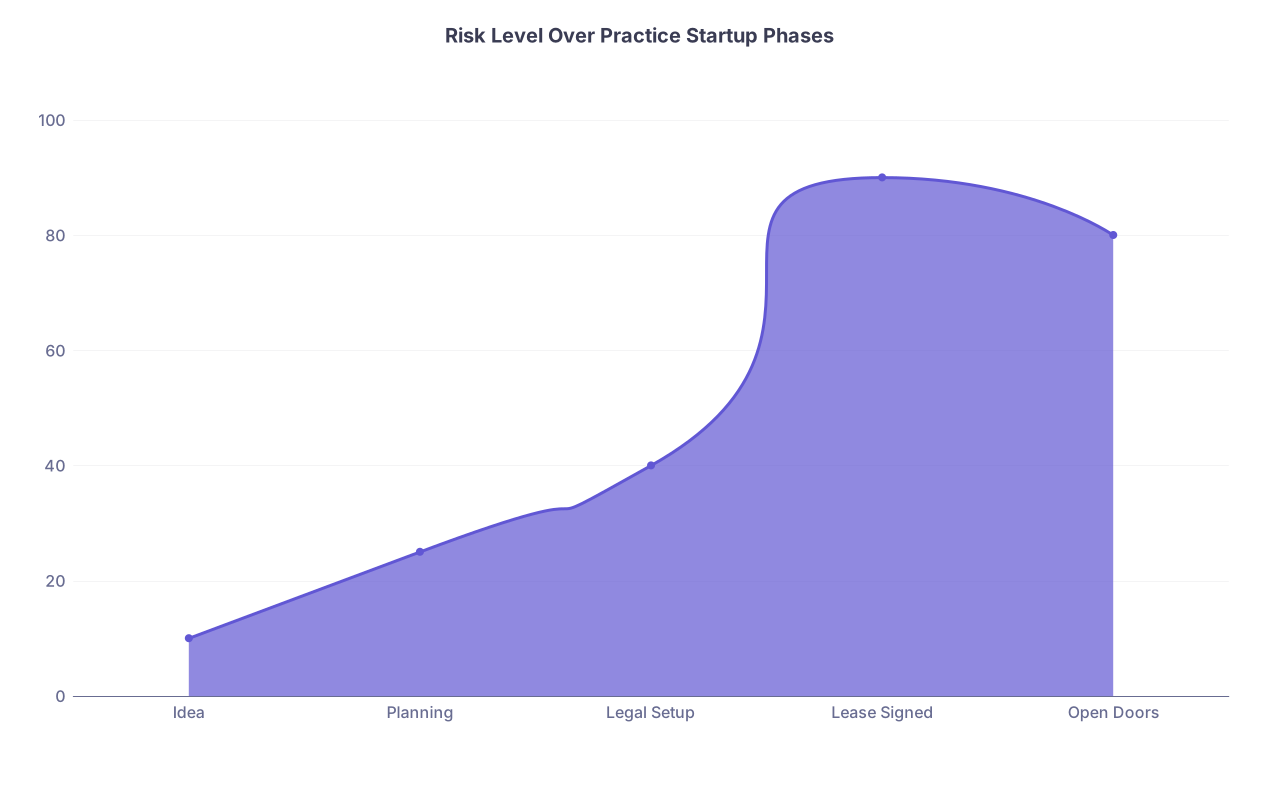
| Category | Value |
|---|---|
| Idea | 10 |
| Planning | 25 |
| Legal Setup | 40 |
| Lease Signed | 90 |
| Open Doors | 80 |
You’ll notice the risk spikes at “Lease Signed.” That’s where your protection needs to already be in place, not where you start thinking about it.
And yes, this all feels heavy and lawyer-y and awkward. But you know what’s worse? Sitting in an empty waiting room in a new office, staring at a chair that was supposed to be “their” exam room, while your bank account bleeds.
Do the awkward now to avoid the impossible later.
You’re Not Paranoid. You’re Early.
If your brain is running all the “what if they bail?” simulations, that’s not a sign you’re too negative. It’s actually a sign you’re thinking like a real owner.
You can absolutely:
- Respect the person
- Believe they mean well
- Hope the partnership works
…and still structure everything as if they might leave. Because they might.
And if they do? You’ll be annoyed, maybe heartbroken, but not destroyed.
FAQ (Exactly the Stuff You’re Afraid to Ask Out Loud)
1. Am I being unfair or mistrustful by insisting everything be in writing this early?
No. You’re being responsible. If someone gets offended that you want contracts and clarity before putting your career on the line, that’s not “hurt feelings,” that’s an incompatibility. Medicine is weirdly behind on this. In other industries, no one would blink at “Let’s get this in writing before we sign a lease.”
2. What if I already signed the lease alone and now my partner is hesitating?
You’re the only one on the hook. Stop assuming they’ll “come around.” Either they sign on as a co-guarantor / co-owner by a clear deadline, or you mentally and practically pivot to opening solo. Talk to your lawyer about adding them or restructuring, but do not keep taking on new obligations assuming they’ll fix this later.
3. Should I delay opening the practice if they’re not fully committed yet?
If the model only works with two doctors and they’re not actually committed, yes, you should strongly consider delaying or downsizing. Better a painful delay than a catastrophic shortfall six months in. Sometimes the right move is to open smaller solo—fewer rooms, less staff—and grow intentionally.
4. How do I even find a good lawyer/accountant for this without getting ripped off?
Ask graduating residents who went into private practice, local medical society groups, or physician-only Facebook/WhatsApp groups: “Who did you use for your practice startup legal/accounting, and would you use them again?” Avoid generalists who say, “I don’t know much about Stark/Anti-Kickback, but I can probably figure it out.” You want someone who actually does healthcare work regularly.
5. Is it dumb to start solo and add partners later instead of planning a group from day one?
Not dumb at all. Honestly, it’s often safer. When you start solo, you control culture, processes, and finances. Then, when someone wants to join, you’re negotiating from a position of data and stability, not two anxious people making vague promises. Buy-in later can be structured and deliberate, instead of chaotic and emotional.
6. How do I emotionally handle it if my partner bails and I feel betrayed?
You let yourself be mad, but you don’t let it dictate your business decisions. Vent to someone not involved—therapist, trusted friend, mentor. Then separate: “What does this mean for our friendship/relationship?” from “What does this mean for my practice?” One can sometimes be salvaged; the other needs hard-nosed practicality. And you remind yourself: their fear or change of heart does not mean your dream was stupid. It just means you’re going to build it differently.
Open whatever notes app you use and write a single sentence:
“Before I sign anything for this practice, I will require my partner to sign and pay something equal too.”
Then list the first three commitments you’ll ask them to make—money, signatures, or both. That’s your starting point.