
The first year of private practice is where most doctors either build a real business or accidentally build an exhausting job. The difference is not luck. It’s what you prioritize each quarter.
You’ve already done the hard part—training, residency, boards. Now the game changes. At this point you are no longer “just” a clinician. You are operations, marketing, HR, compliance, and finance, whether you like it or not.
Here is exactly how to structure Year One, quarter by quarter, so you’re not drowning in random tasks and hoping it works out.
Big Picture: Your Year-One Growth Map
Before we drill into quarters, lock this in:
- Quarter 1: Stabilize operations and cash flow
- Quarter 2: Lock in referral streams and patient volume
- Quarter 3: Optimize efficiency and profitability
- Quarter 4: Systematize, protect your time, and plan Year Two
You’ll be tempted to do everything at once—add services, buy toys, launch ads, hire more people. That’s how practices collapse under their own chaos.
You’re going to sequence it instead.
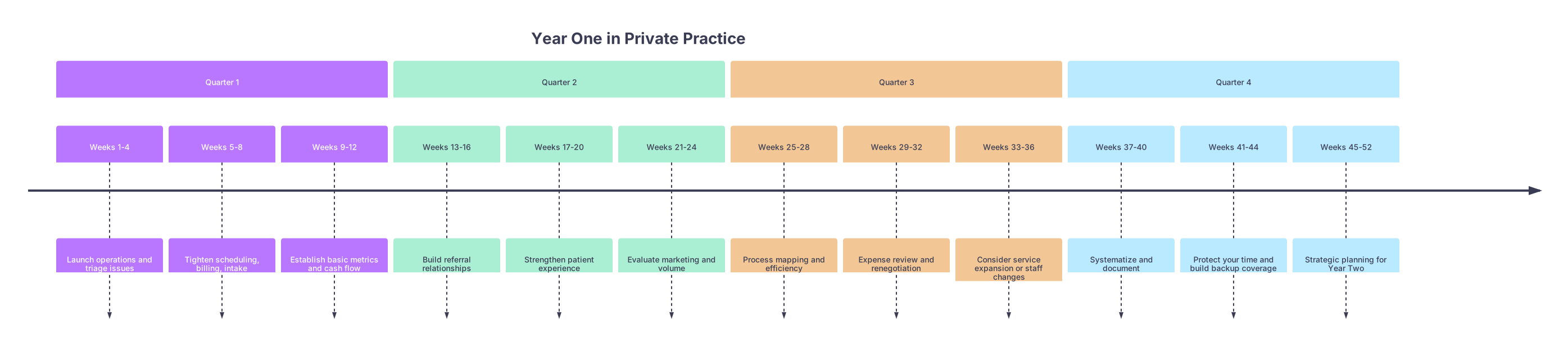
| Period | Event |
|---|---|
| Quarter 1 - Weeks 1-4 | Launch operations and triage issues |
| Quarter 1 - Weeks 5-8 | Tighten scheduling, billing, intake |
| Quarter 1 - Weeks 9-12 | Establish basic metrics and cash flow |
| Quarter 2 - Weeks 13-16 | Build referral relationships |
| Quarter 2 - Weeks 17-20 | Strengthen patient experience |
| Quarter 2 - Weeks 21-24 | Evaluate marketing and volume |
| Quarter 3 - Weeks 25-28 | Process mapping and efficiency |
| Quarter 3 - Weeks 29-32 | Expense review and renegotiation |
| Quarter 3 - Weeks 33-36 | Consider service expansion or staff changes |
| Quarter 4 - Weeks 37-40 | Systematize and document |
| Quarter 4 - Weeks 41-44 | Protect your time and build backup coverage |
| Quarter 4 - Weeks 45-52 | Strategic planning for Year Two |
Quarter 1 (Weeks 1–12): Stabilize Operations and Cash Flow
Your first quarter is not about “growth.” It’s about survival without chaos. At this point you should be obsessed with three things: being open, being paid, and not burning out in 8 weeks.
Weeks 1–2: Open With Bare-Minimum Functionality
If you’re reading this right before launch:
At this point you should verify:
- Phones work, and calls are answered by a human or a competent answering service
- EHR is live with:
- Your note templates
- E-prescribing working
- Superbills or charges correctly mapped
- Clearinghouse + billing workflow are tested with at least one clean claim
- Eligibility checks actually get run before visits
- Front desk knows:
- How to collect copays and balances
- How to verify IDs and insurance
- Your cancellation/no-show policy
Do not spend week 1 rearranging furniture or redesigning your logo. If I walk into a new office and the physician is fiddling with art on the wall while the front desk has no idea how to check me in, I know exactly how that year will go.
Daily checklist, first 10 business days:
- Review next day’s schedule for:
- Insurance on file
- Authorizations needed
- New patient packets sent
- Ask staff: “What broke today?” Then fix one thing per day:
- A script
- A template
- A form
- A setting in the EHR
Weeks 3–4: Tighten Scheduling and Front-Desk Flow
By week 3–4, you should be able to get through a clinic day without constant confusion at the front.
At this point you should:
- Standardize visit types and durations:
- New patient: 40–60 min (depends on specialty)
- Follow-up: 15–20 min
- Procedures: clearly labeled with exact time blocks
- Put in hard rules:
- How many new patients per half-day
- How many same-day slots to protect
- Cutoff times for same-day scheduling
- Create phone and message scripts for:
- New patient intake
- Refill requests
- Lab result callbacks
- Post-op or follow-up scheduling
If you skip this and just “let staff figure it out,” your schedule will be a mess for the rest of the year.
Weeks 5–8: Billing, Claims, and Money In the Door
Cash lag kills new practices. You will not feel how bad it is until month 3–4, when rent and payroll are due and your accounts receivable (AR) is a huge, useless number on a report.
At this point you should:
- Run weekly AR and claims reports:
- Total AR
- % of AR > 60 days
- Top 5 denial reasons
- Confirm:
- All insurance credentialing is actually active (I’ve seen “pending” status discovered 3 months into “seeing” those patients)
- Claims go out daily or every other day
- Rejections are worked within 48–72 hours
- Decide: in-house biller vs outsourced
- If in-house: they should be reporting to you weekly
- If outsourced: demand a standing weekly 15–20 minute call
| Metric | Target by End of Q1 |
|---|---|
| Days in AR | Under 45–50 days |
| Clean claim rate | 90%+ |
| Denial rate | Under 10% |
| Time to submit | Within 48 hours of visit |
If you do nothing else in Q1, do this: read the first page of your AR report every week and ask “Why?” next to every big number.
Weeks 9–12: Define Your Baseline and Fix Obvious Leaks
By the end of Quarter 1 you’re not trying to be perfect. You’re trying to be stable.
At this point you should:
- Know:
- Average patients per day
- Average revenue per visit (even a rough number is fine)
- Rough monthly overhead (rent, staff, software, malpractice)
- Fix 2–3 obvious leaks:
- No-show rate over 10–15%? Implement:
- Reminder texts
- Clear cancellation policy
- Waitlist usage
- Long wait times? Reduce double-booking. Add buffer slots.
- Frequent “we don’t take that insurance” chaos? Update website and phone scripts to be explicit about plans you accept.
- No-show rate over 10–15%? Implement:
Do not hire more people in Q1 unless you physically cannot function. Most new practices are overstaffed and undertrained in the first year.
Quarter 2 (Weeks 13–24): Build Patient Volume and Referral Streams
You survived the setup. Now you need enough patients to make the whole thing sustainable.
Quarter 2 is about deliberate volume growth—not random marketing experiments.

| Category | Value |
|---|---|
| Q1 | 20 |
| Q2 | 35 |
| Q3 | 25 |
| Q4 | 20 |
(Think of those values as percentage of your mental energy: Q2 is where patient growth dominates.)
Weeks 13–16: Formalize Your Referral Strategy
If you’re relying only on “good location” and “Google will find me,” you’re setting yourself up for a slow bleed.
At this point you should:
- Make a list of:
- 20–40 local PCPs, OB/GYNs, pediatricians, or other referring specialties
- 3–5 urgent cares in your area
- Hospital discharge planners and case managers, if relevant to your specialty
- Block 2–4 hours per week for:
- In-person visits with referring offices (yes, physically show up)
- Short lunches or coffee drop-offs
- Quick “thank you for the referral” calls for new referrers
When you visit an office, bring:
- A one-page handout:
- Who you are
- What you do (and do NOT do)
- How fast you can see their patients (same week? 48 hours for urgent?)
- Direct line or staff contact
Weeks 17–20: Refine Patient Experience So People Return and Refer
Marketing is expensive. A good visit is free marketing.
At this point you should:
- Mystery-shop your own office:
- Call your main number and see how long it takes to reach a human
- Time how long you sit in the waiting room during a typical appointment block
- Read every new patient intake form you’re asking people to complete
- Fix friction points:
- Reduce form length—only collect what you actually use
- Make follow-up scheduling automatic at checkout
- Standardize how staff greet and check out patients
- Implement basic feedback:
- Simple “How was your visit?” card or text survey
- Ask 3–5 happy patients a week to leave a review (Google, Healthgrades, etc.)
If your online presence has three 2-star reviews complaining about rude front desk or long waits, that will cost you more patients than any ad budget can replace.
Weeks 21–24: Evaluate Volume and Decide: Buy Speed or Stay Lean
By the end of Quarter 2, you should know if your volume trajectory is acceptable or not.
At this point you should:
- Review:
- New patients per week
- Follow-up ratio (how many patients are coming back)
- Scheduling lead time (next available routine new visit in how many days?)
- If new patient volume is low:
- Clean up your online presence:
- Website actually loads and states what you do, where you are, and which insurances you take
- Google Business profile claimed, with correct hours and phone
- Consider:
- Modest digital ads targeting your area
- Being listed prominently on insurance directories (and checking that you actually appear)
- Clean up your online presence:
- If you’re already too busy:
- Extend hours slightly (one early morning or evening per week)
- Tighten visit lengths and room turnover
- Stop accepting ultra-problematic plans if they’re crushing you and your payer mix allows it
This is where you decide: grow slower but sanely, or accelerate with targeted investment. Just do not confuse “busy but disorganized” with “I need more patients.”
Quarter 3 (Weeks 25–36): Optimize Efficiency and Profitability
Mid-year is where a lot of practices stagnate. You’re busy, money is coming in, and it feels “fine.” This is exactly when you should be ruthless about processes and margins.
Weeks 25–28: Map Your Core Workflows
If your staff “just knows how we do it,” you are one turnover away from a disaster.
At this point you should document:
- New patient intake workflow:
- From first call → scheduled → forms → eligibility → day-of-visit check-in
- Visit workflow:
- Check-in → rooming → you walk in → checkout → orders → claims submission
- Refill and message handling:
- Who triages
- Expected turnaround time
- What can be handled by staff vs must go to you
Write it down in simple bullet form. This is not a policy manual for a hospital. It’s “this is how we do it here” so anyone new can follow it.
Weeks 29–32: Cut Waste and Renegotiate
You’re now 6–8 months in. Odds are you’re overspending in at least 3 categories.
At this point you should:
- Run a 3-month expense report:
- Identify top 10 recurring expenses
- Flag:
- EHR tiers you don’t use
- Fancy software you almost never open
- Overpriced medical supplies or lab arrangements
- Renegotiate or shop around:
- Merchant processing (card fees)
- Phone systems
- Internet
- Medical/surgical supply vendors
- Look at your schedule data:
- Blocks consistently underfilled? Shift clinic hours.
- Procedures consistently overrun? Extend those blocks.
Your goal by end of Q3 is better profitability per hour worked, not just “more hours worked.”
Weeks 33–36: Thoughtful Expansion (Not Shiny Object Syndrome)
Now that operations are cleaner, you will feel the itch to expand. New services. New equipment. Maybe another provider.
Slow down.
At this point you should:
- Review what’s actually in demand:
- Common patient requests you currently refer out
- Services referrers keep asking if you provide
- Waitlist data (if you have one)
- Consider low-risk expansions:
- Extending hours before buying new toys
- Hiring part-time help (NP/PA/scribe) before full-time
- Adding one new service that:
- Uses existing space and equipment
- Has clear reimbursement or cash-pay pricing
- Avoid:
- Massive loans for capital equipment without a realistic volume plan
- Hiring a full-time provider before you have steady demand
This is the quarter where you can either set up smooth growth for Year Two or chain yourself to a giant monthly payment you resent.
Quarter 4 (Weeks 37–52): Systematize, Protect Your Time, Plan Year Two
Year One doesn’t end when you’re busy. It ends when you can see the shape of your practice and choose how it grows.

Weeks 37–40: Build a Practice “Playbook”
If you got hit by a bus tomorrow, could someone else run your clinic for a month? That’s your test.
At this point you should:
- Consolidate your key processes into a simple “playbook”:
- Scheduling rules
- Check-in and checkout scripts
- Billing workflow
- How to handle urgent messages and same-day issues
- Create:
- A basic onboarding checklist for any new staff
- A short cheat sheet for locum coverage or cross-coverage:
- How to access EHR
- Where to send prescriptions
- How to page or contact you (if needed)
- Back up:
- Key logins in a secure password manager
- Critical documents in cloud storage
This is boring. It’s also exactly what separates durable practices from chaos factories.
Weeks 41–44: Protect Your Time and Set Boundaries
Most new attendings in private practice learn this the hard way. If you do not protect your time now, the practice will take all of it.
At this point you should:
- Look at your weekly schedule and ask:
- What can only I do?
- What could a trained MA, RN, NP/PA, or front desk handle with a protocol?
- Offload:
- Routine refills with clear standing orders
- Standard lab result messages with templated explanations
- Pre-visit planning and post-visit instructions
- Set boundaries:
- No checking portal messages every 5 minutes—batch twice daily
- Protected admin time each week (1–2 hours) with no patients scheduled
Burnout in private practice rarely comes from “too many patients.” It comes from being both physician and director of everything, all day, every day, with no structure.
Weeks 45–52: Year-End Review and Year Two Plan
Last quarter is about looking back with cold eyes and deciding how you want Year Two to feel.
At this point you should:
- Run a Year One scorecard:
- Clinical: outcomes, complication rates if applicable, readmissions, patient satisfaction themes
- Operational: average wait times, no-show rate, staff turnover
- Financial: total revenue, total expenses, net income, days in AR, payer mix
- Decide 3–5 concrete priorities for Year Two:
- Example set A (growth focus):
- Add one NP/PA
- Open one extra half-day clinic per week
- Launch targeted referral outreach to 20 additional practices
- Example set B (stability focus):
- Reduce patient-facing hours by 0.5 day to build teaching or research
- Improve no-show rate from 15% to under 8%
- Replace one underperforming vendor/billing company
- Example set A (growth focus):
- Set measurable targets:
- “Increase average daily patient volume from 14 to 18 by September”
- “Cut days in AR from 55 to under 40 by June”
- “Reach 100+ Google reviews at 4.7 stars or higher”

| Category | Daily Patients | Days in AR |
|---|---|---|
| End of Q1 | 6 | 70 |
| End of Q2 | 10 | 60 |
| End of Q3 | 14 | 50 |
| End of Q4 | 16 | 45 |
| End of Year Two | 20 | 35 |
Do not create a 20-item goal list. You will ignore 17 of them. Pick a small number of high-impact targets and tie them to your actual calendar.
Weekly Cadence: The Habits That Make the Year Work
Across all four quarters, there’s a weekly rhythm that separates the practices that grow deliberately from the ones that just “see what happens.”
At this point you should structure each week around:
- 15–20 minutes: reviewing next week’s schedule for issues
- 30 minutes: reviewing money (claims, AR, denials, collections)
- 30–60 minutes: reviewing operations (what broke, what improved)
- 30 minutes: growth work (referral outreach, website tweaks, review responses)
Not complicated. Just non-negotiable.
You do not need a perfect business plan to have a successful first year in private practice. You need a clear quarterly focus and the discipline to ignore everything that’s “nice to have” until you’ve nailed the essentials.
Next step: open your calendar and block one 60-minute slot this week labeled “Quarter Review and Priorities.” Title it with your current quarter (Q1, Q2, Q3, or Q4) and write down three things from this guide you’ll fix before that quarter ends.