
Most new practices open their doors with almost no patients because the doctor “starts marketing” after day one. That is backwards.
You build the demand first. Then you open.
Below is a month‑by‑month and then week‑by‑week marketing calendar for the 6 months before opening a new private practice, aimed at the post‑residency physician stepping into the job market and saying, “I am going to build my own thing.”
I will assume:
- You are 6 months out from opening.
- You have a general idea of location and specialty.
- You want a sane, realistic plan that does not require 40 hours a week of “marketing.”
If you have less than 6 months, compress the early months, but do not skip them. That is how practices open to empty schedules.
Overview: The 6‑Month Pre‑Opening Marketing Timeline
At this point you should understand the basic arc:
- Months 6–5: Positioning, branding, foundational assets
- Months 4–3: Web presence, referral groundwork, content
- Months 2–1: Campaigns, community visibility, launch systems
- Final 2 weeks: Conversion mode and countdown
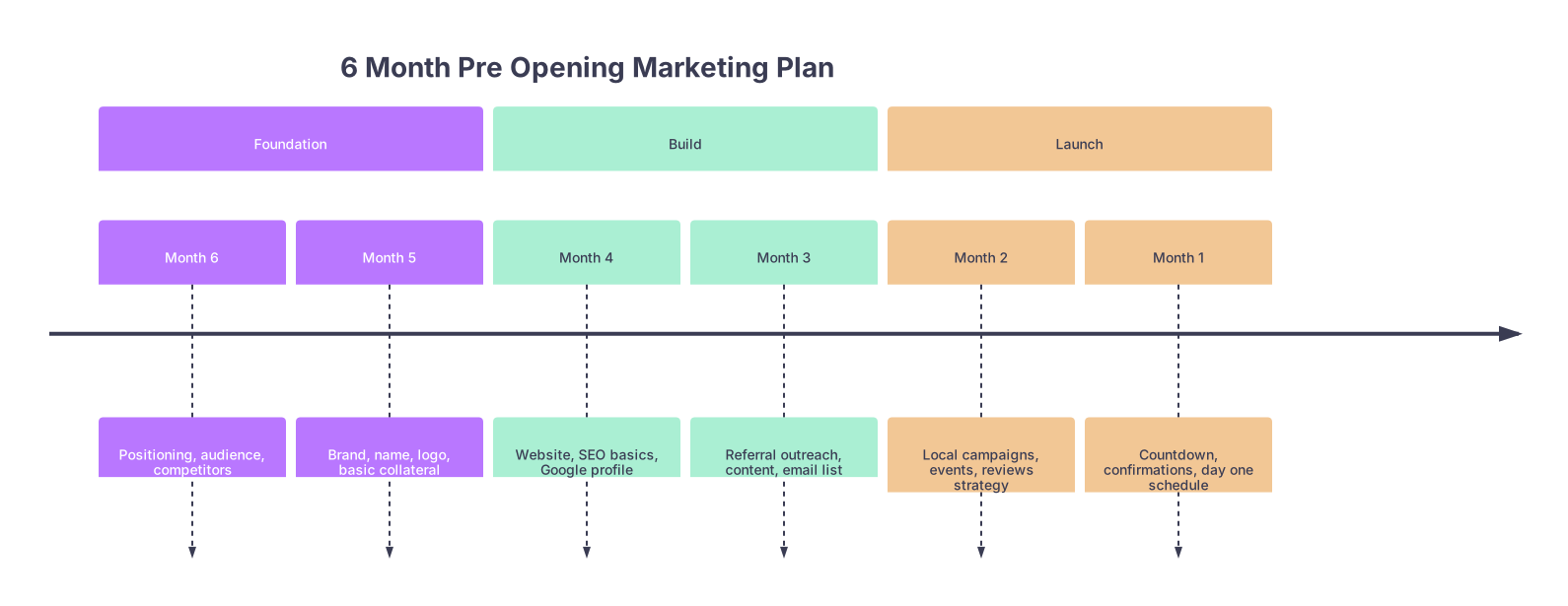
| Period | Event |
|---|---|
| Foundation - Month 6 | Positioning, audience, competitors |
| Foundation - Month 5 | Brand, name, logo, basic collateral |
| Build - Month 4 | Website, SEO basics, Google profile |
| Build - Month 3 | Referral outreach, content, email list |
| Launch - Month 2 | Local campaigns, events, reviews strategy |
| Launch - Month 1 | Countdown, confirmations, day one schedule |
Month 6 Before Opening: Decide Exactly Who You Are For
At this point you should stop thinking like a job applicant and start thinking like a business.
Week 1: Define your patient and your promise
- Choose your primary patient segments (not “everyone with insurance”):
- Example: “Busy professionals 30–55 with chronic conditions,” or
“Young families within 10 miles who want same‑day pediatrics.”
- Example: “Busy professionals 30–55 with chronic conditions,” or
- Write a one‑sentence practice promise:
- “Same‑week appointments, clear pricing, and on‑time visits for adults with chronic conditions.”
- If you cannot say it plainly, you are not ready to market.
Week 2: Analyze your local competition
You are post‑residency, so you have seen crowded hospital departments. Private practice is similar.
- Pull up a map of:
- Competing practices in your specialty within 10–15 miles
- Urgent cares and hospital‑owned clinics
- Direct competitors with strong reviews and websites
- For each, note:
- What they claim (tagline, website messaging)
- How they position access (wait times, telehealth, hours)
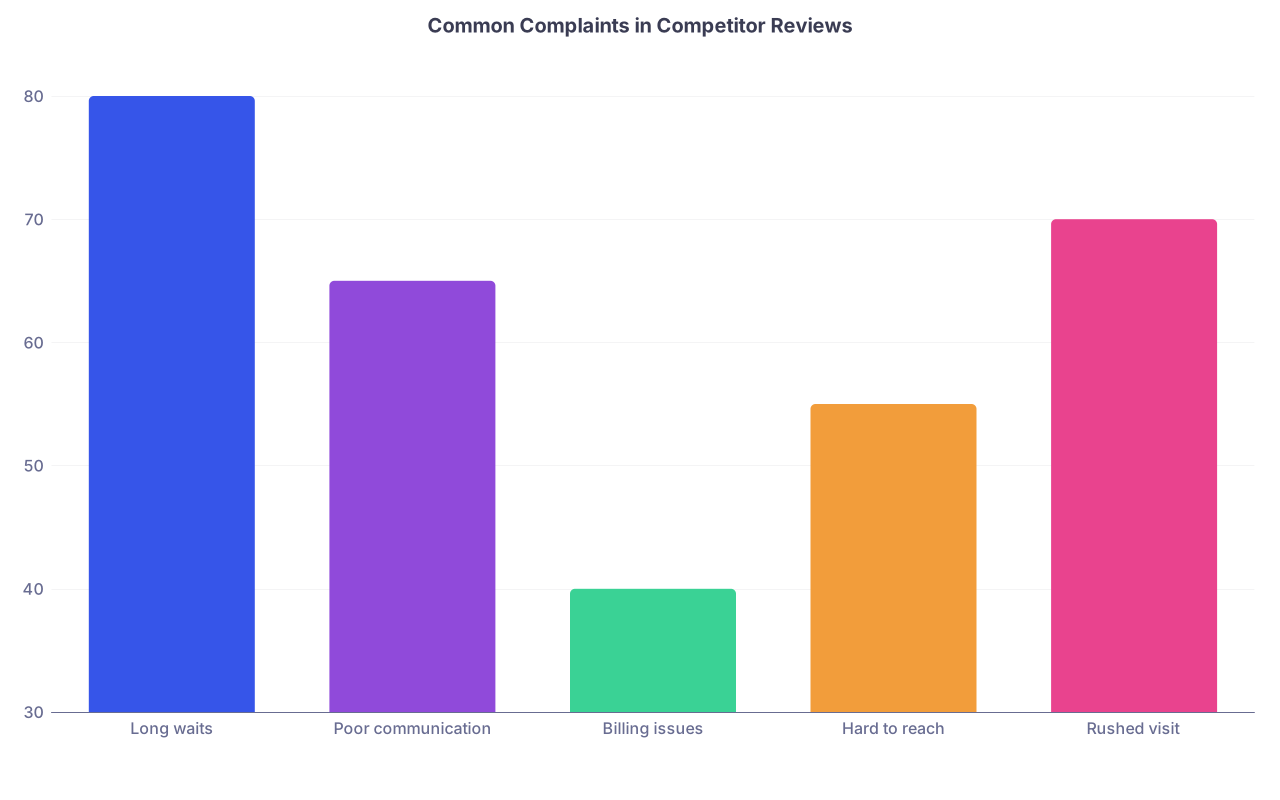
- Review patterns (what patients praise or hate)
| Category | Value |
|---|---|
| Long waits | 80 |
| Poor communication | 65 |
| Billing issues | 40 |
| Hard to reach | 55 |
| Rushed visit | 70 |
Your goal: find one or two clear differentiators you will hammer in all your marketing. Examples:
- “On‑time visits or your copay back.”
- “Evening clinic twice a week.”
- “All virtual follow‑ups for chronic care.”
Week 3: Clarify services and constraints
Marketing collapses when you promise things you cannot deliver.
- Decide:
- Insurance vs direct pay (or hybrid)
- Rough clinic hours per week
- Core procedures / services you want to grow
- Roughly sketch visit capacity in month 1 and month 3. That tells you how aggressively to market.
Week 4: Set marketing budget and targets
At this point you should assign real numbers:
- Monthly pre‑opening marketing budget (often $500–$2,000 baseline).
- Opening month patient target (e.g., 40–60 visits first month, 15–20 per week).
- 3‑month target (e.g., 80–120 visits/month).
Write it down. This is your benchmark for everything that follows.
Month 5 Before Opening: Build the Brand and Core Assets
Now you stop “thinking about a practice” and start creating things you can show people.
Week 1: Name, domain, and social handles
At this point you should lock down:
- Practice name that:
- Is easy to spell
- Matches your Google search strategy (e.g., “Riverside Family Medicine”)
- Domain: buy it (and common variations) immediately.
- Social handles:
- At minimum: Facebook Page, Instagram business, LinkedIn page, maybe Nextdoor profile.
Claim “Dr [Last Name] [Specialty]” where possible as well.
Week 2: Logo, color palette, and basic brand guide
Do not obsess, but do not look like a template either.
- Hire a designer or use a reputable service.
- Define:
- Primary logo + simple icon
- Two‑color palette + 1 accent color
- Typography pairing (one heading, one body)
You will use this for:
- Website
- Business cards
- Door signage
- Social media graphics
Week 3: Core messaging and “why us” page draft
At this point you should draft:
- A 2–3 sentence home page intro:
- Who you help
- Where you are
- How you are different
- A short bio (patient‑friendly, not a CV dump).
- A bullet list of your key services.
This becomes the copy for everything else. You are building a consistent story.
Week 4: Basic print and digital collateral
Order or mock up:
- Business cards (referral‑friendly, with website and direct line).
- A one‑page PDF “referral sheet” for other physicians.
- A simple “coming soon” flyer you can physically hand out.
You will use these heavily in Months 3–1.
Month 4 Before Opening: Build Your Online Home Base
This month you make yourself findable. Without it, everything else leaks.
Week 1: Website structure and content
At this point you should:
- Decide on platform: WordPress with a medical template, Squarespace, or Webflow.
- Define pages:
- Home
- About the physician
- Services
- New patients (insurance, forms, how to schedule)
- Contact & location
Draft all text now. Photos can come later.
Week 2: SEO basics and location signals
- Confirm your primary keywords:
- “Primary care doctor [City]”
- “[Specialty] near [Neighborhood]”
- Add:
- City and neighborhood names in headings and page titles
- A clear, text‑based address block on the site
- Driving and parking instructions (Google loves clarity here)
Week 3: Google Business Profile and map presence
At this point you should claim your digital front door:
- Create and verify your Google Business Profile using your practice name and future address (if allowed; if not yet leased, time this right after lease signing).
- Add:
- Hours (tentative “starting [date]”)
- Phone number (even if it forwards to you now)
- Website (or a temporary “coming soon” page)
- A few photos: neighborhood, building exterior if available, professional headshot.
Week 4: Online scheduling and phone system
You do not want to set this up 3 days before opening. That is how you miss calls.
- Choose an EHR/practice management platform with online scheduling or plug‑in scheduler.
- Set up:
- New patient appointment types
- Telehealth visit types if relevant
- Rules for how far out people can book (I recommend at least 6–8 weeks before opening).
- Phone:
- Get a dedicated practice number.
- Set up professional voicemail: “You have reached [Practice]. We open on [date]. To be among our first patients…”
Month 3 Before Opening: Start Relationship‑Based Marketing
Now you start telling humans. Not just algorithms.
Week 1: Map and prioritize referral sources
At this point you should make a hit list:
- Primary care or specialists whose patients you can complement, not steal.
- Urgent cares that need follow‑up destinations.
- PT/OT, behavioral health, dentists, chiropractors, midwives, depending on your specialty.
- Community organizations: churches, gyms, senior centers, schools.
| Source Type | Priority | Action Owner |
|---|---|---|
| Local PCPs | High | You |
| Urgent Cares | High | You |
| Gyms/Studios | Medium | Staff |
| Schools | Medium | Staff |
| Community Orgs | Low | You |
Week 2: Outreach scripts and initial contacts
You are a physician, not a sales rep, so keep it straightforward.
Prepare:
- A short email template:
- Who you are
- What you are opening
- What types of patients you are ideal for
- Offer to stop by with cards and a one‑pager.
- A 30–second intro for in‑person visits:
- “I am [Name], [specialty]. I am opening just down the road and would like to be a resource for your [type of patients].”
Start with 5–10 highest priority sources this week.
Week 3: Start simple content and email list
At this point you should begin warming your future audience:
- Create an email list in a basic platform (Mailchimp, ConvertKit, whatever).
- Put a “Get updates and early access” form on your temporary or full website.
- Write your first welcome email:
- Who you are
- Why you started this practice
- What they can expect in future emails.
Start posting 1–2 short educational posts per week on your chosen social channel:
- Common symptom Q&A
- Your approach to care
- Behind‑the‑scenes build‑out progress.
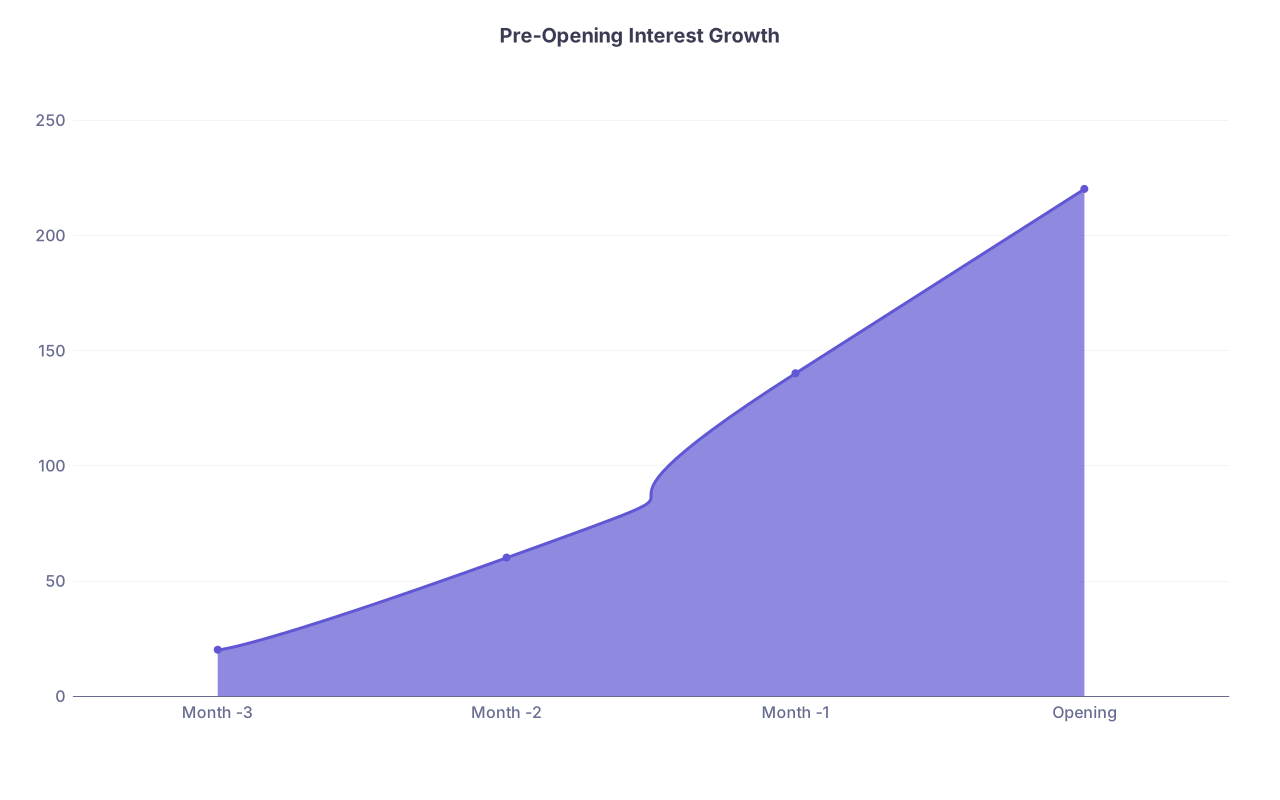
Week 4: Track interest and adjust targets
Look at:
- Email sign‑ups
- Website visitors
- Early scheduling inquiries
| Category | Value |
|---|---|
| Month -3 | 20 |
| Month -2 | 60 |
| Month -1 | 140 |
| Opening | 220 |
If no one is signing up or calling, your message is off, or your visibility is weak. Fix that now, not a week before opening.
Month 2 Before Opening: Visible in the Community
This is where you shift from quiet groundwork to being impossible to ignore in your local niche.
Week 1: Local campaigns (low‑budget, high‑trust)
At this point you should:
- Schedule at least one community presence event:
- Health talk at a gym
- “Meet your new [specialty]” Q&A at a community center
- Free blood pressure screenings with flyers.
- Run small, geo‑targeted social ads:
- 3–5 mile radius around clinic
- Simple: your photo, “New [specialty] clinic opening [date] in [area].”
- Landing on a page with easy email sign‑up + “schedule after [date]” note.
Week 2: Review strategy pre‑wiring
You cannot have reviews before you see patients. But you can:
- Prepare a review handout to give patients during opening month.
- Set up:
- Direct Google review links
- Simple email templates to request feedback from early patients.
Tell friends, colleagues, and former patients (if ethically and contractually allowed) about your upcoming opening and how to find you.
Week 3: Physician‑to‑physician follow‑ups
At this point you should revisit the referral list:
- Drop by with:
- Printed referral sheets
- Business cards
- Brief face‑to‑face time if they can spare 5 minutes.
- Emphasize:
- “We open in about a month. Here are the specific types of cases we can help with right away.”
Keep a basic spreadsheet of:
- Who you visited
- What they said
- Any follow‑up promised.
Week 4: Lock in all patient‑facing details
Marketing dies on the hill of logistics.
- Confirm:
- Insurance panels and how you are listed (so front desks can find you).
- Online scheduling links work on mobile.
- Phone is answered during business hours (or calls are returned same day).
- Test:
- A “dummy” patient journey: from Google search to website to appointment booking.
Month 1 Before Opening: Countdown and Conversion
Now you stop announcing and start filling the schedule.
Week 4 Before Opening: Soft launch to warm audience
At this point you should:
- Email your list:
- Clear subject: “Now scheduling for [Opening Date].”
- Direct link: “Book an appointment” with explanation of visit types.
- Post on social:
- “We are now accepting appointments for [date and beyond].”
Reserve a limited number of “founding patient” slots with small perks:
- Guaranteed same‑week follow‑up
- Extended first visit length
- Priority future scheduling.
Week 3 Before Opening: Intensify local visibility
- Increase frequency of:
- Short educational posts
- Behind‑the‑scenes photos of the space.
- Run a 2–3 week ad push focused only on:
- “Now accepting new patients”
- “Opening [date] in [location]”
- “Book today – first [X] patients receive [small, ethical perk].”

Week 2 Before Opening: Confirm and reconfirm
You want those first two weeks of the schedule to stay full.
- Call or text confirm all appointments booked for opening week.
- Offer flexible rescheduling if timing is off, but keep them on the calendar.
- Final outreach pass to referral partners with:
- Opening date reminder
- Direct referral fax or portal info.
Week 1 Before Opening: Final push and scripting
At this point you should be in conversion mode:
- Daily social posts:
- Short, concrete topics: hours, parking, what to bring.
- Email reminder:
- “We open next week: here is how to become a patient.”
Train staff (or yourself) on scripts:
- New patient phone script:
- How to explain your model in 30 seconds.
- “Price objection” responses if you are out of network or cash pay.
- “Can you see [X] condition?” answer with clear guardrails.
Final 3 Days and Day One: Operate Like You Are Already Busy
The marketing does not stop once the door opens. It shifts.
3 Days Before Opening
- Walk the outside of the building:
- Is your signage visible from the street?
- Is the door labeled clearly?
- Print:
- Review handouts
- Referral info sheets for in‑clinic distribution.

Day Before Opening
- Post a short video tour on social.
- Double‑check:
- Google listing shows correct hours for opening day.
- Website highlights “Now Open [date]” front and center.
Day One
At this point you should treat every patient as a future ambassador:
- Deliver on all the promises you made in your marketing:
- Short waits
- Clear communication
- Follow‑up plans.
- At checkout:
- Hand them a review card and say, “If this visit was helpful, a review on Google would really help other patients find us.”

Continue light posting and email updates about:
- New services
- Open appointment slots
- Updates on hours or telehealth options.
Sample Weekly Activity Snapshot (Final 8 Weeks)
| Week Relative to Opening | Primary Focus | Time Commitment (hrs) |
|---|---|---|
| -8 | Community event, ads | 3–5 |
| -7 | Referral follow‑up | 2–3 |
| -6 | Website + SEO tune‑up | 2–4 |
| -5 | Email + social rhythm | 2–3 |
| -4 | Soft launch scheduling | 3–4 |
| -3 | Local ads push | 3–5 |
| -2 | Confirm patients | 2–3 |
| -1 | Final reminders, scripts | 2–3 |

FAQ (Exactly 2 Questions)
1. What if I am only 2–3 months out and already signed a lease—how do I compress this calendar?
Cut the “nice‑to‑have” and keep the “must‑have.” In 2–3 months, you prioritize: (1) website with online scheduling and clear messaging, (2) Google Business Profile and accurate map presence, (3) direct outreach to 10–20 referral sources, and (4) simple geo‑targeted social ads plus one community presence event. Skip fancy branding iterations. Pick a clean template site, a simple logo, and spend your energy on getting humans to know you exist and giving them a way to book before opening day.
2. Do I really need paid ads, or can I rely only on word of mouth and referrals?
If you are post‑residency with no established local panel, relying purely on word of mouth is slow and frankly risky. You do not need a massive ads budget, but a focused $300–$800 per month for the final 2–3 months can dramatically accelerate early patient flow. Think of ads as a visibility amplifier layered on top of real relationships and a solid Google presence, not a replacement. The practices that grow quickest usually do both: smart referral work plus targeted, boringly consistent local ads.
Key points:
- Start marketing 6 months out by defining your positioning, not by printing business cards.
- Build a real digital front door (website + Google profile) by month 4, then spend the last 2–3 months pushing scheduling and referrals.
- Use the final month for conversion and confirmation so you open with a full first week, not an empty waiting room.