
The most dangerous time to “wing it” in your career is the 24 months between finishing residency and opening your own practice.
You either run this transition like a project…or it runs you.
What follows is a two‑year, month‑by‑month and quarter‑by‑quarter transition plan that actually works in the real world. No fantasy revenue projections. No “follow your passion” nonsense. Just a practical runway from PGY‑last to practice owner.
Big Picture: Your Two‑Year Arc
At this point you need a simple view of the entire runway before we zoom in.
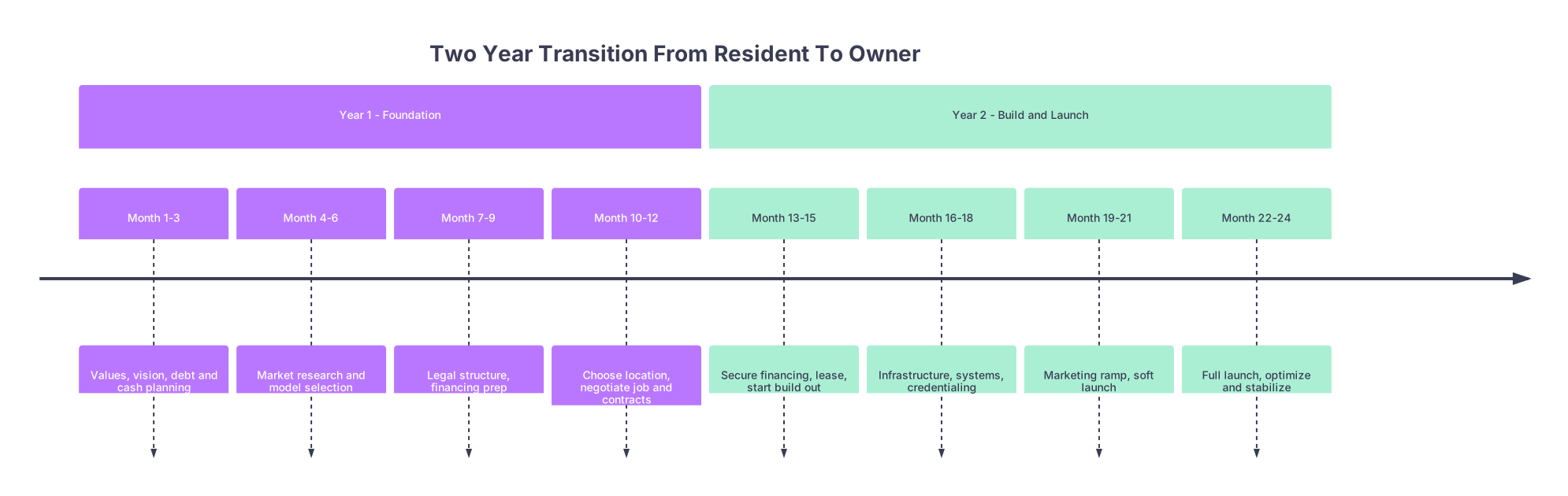
| Period | Event |
|---|---|
| Year 1 - Foundation - Month 1-3 | Values, vision, debt and cash planning |
| Year 1 - Foundation - Month 4-6 | Market research and model selection |
| Year 1 - Foundation - Month 7-9 | Legal structure, financing prep |
| Year 1 - Foundation - Month 10-12 | Choose location, negotiate job and contracts |
| Year 2 - Build and Launch - Month 13-15 | Secure financing, lease, start build out |
| Year 2 - Build and Launch - Month 16-18 | Infrastructure, systems, credentialing |
| Year 2 - Build and Launch - Month 19-21 | Marketing ramp, soft launch |
| Year 2 - Build and Launch - Month 22-24 | Full launch, optimize and stabilize |
At a high level, the years break down like this:
Year 1 – Foundation while employed
- Clarify what kind of practice you want.
- Learn the business side without going broke.
- Lock in a “bridge” job that funds your future.
- Line up financing and location.
Year 2 – Build and launch
- Lock down space, equipment, and systems.
- Get credentialed and contracted.
- Start seeing patients intentionally, not chaotically.
- Hit breakeven fast enough that you sleep again.
Now we walk it forward.
Months 1–3: Final Year of Residency – Get Honest and Get Numbers
At this point you are still in residency or just about to graduate. You have more control than you think, but only if you get specific.
Week 1–2: Decide if you actually want to own
You do not “accidentally” become an owner. Decide.
By the end of this fortnight, you should have:
- A clear yes or no on owning in the next 3–5 years.
- A list of deal‑breakers (for example: no 80‑hour weeks, no RVU‑only comp, no toxic partners).
- A first guess at practice type:
- Solo vs small group.
- Insurance‑based vs direct care/concierge vs hybrid.
- Procedural‑heavy vs consult‑heavy.
If you cannot say this out loud in one sentence—“I want to start a small outpatient GI practice in 3 years, insurance‑based, with 2 NPs supporting”—you are not ready to move on. Fix that.
Week 3–4: Get your personal finances out of denial
The single biggest reason residents never become owners is not “reimbursement cuts.” It is personal financial chaos.
By end of Month 1:
- List all debts: federal loans, private loans, credit cards, car.
- Document balances, minimums, interest rates.
- Pull last 3 months of spending and categorize.
- Rough out a post‑residency budget at three income levels:
- $220k
- $300k
- $400k
Then set 3 hard rules for the next 24 months:
- Max monthly housing cost you will tolerate.
- Max monthly car cost (spoiler: keep the resident car).
- Exact cash target for your “Practice Launch Fund” by Month 18.
For most primary care/specialty owners, that target is:
- $50k–$100k personal cushion (living expenses).
- $25k–$75k of your own capital ready to inject.
You can argue with those numbers, but you cannot ignore them.
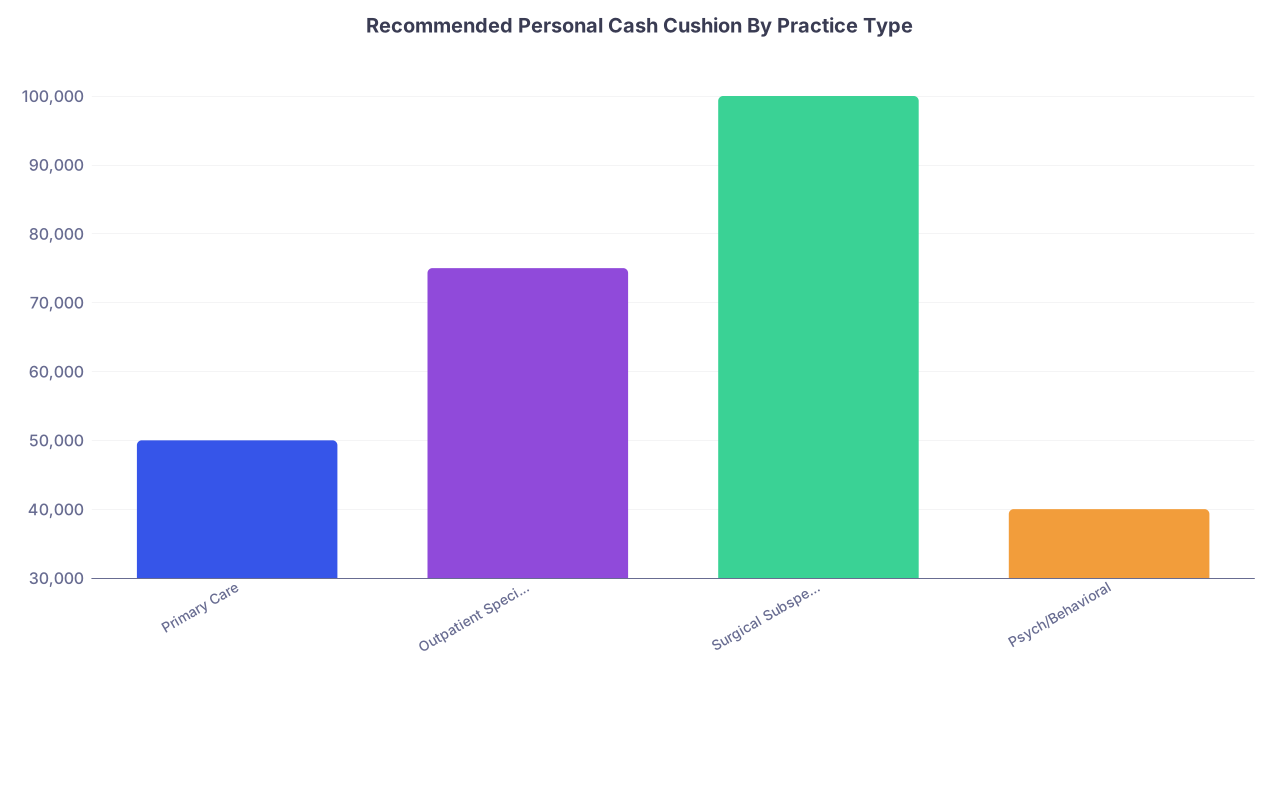
| Category | Value |
|---|---|
| Primary Care | 50000 |
| Outpatient Specialty | 75000 |
| Surgical Subspecialty | 100000 |
| Psych/Behavioral | 40000 |
Months 2–3: Quiet education and shadowing
By end of Quarter 1 you are building business literacy, not yet signing anything.
Your weekly goals:
- 1–2 hours per week of actual business learning:
- Read one solid book on medical practice ownership (not Instagram threads).
- Listen to 1–2 practice owner podcasts during commutes.
- Once per month: shadow or grab coffee with:
- One independent doc in your specialty.
- One practice manager / administrator who actually runs numbers.
Your questions should be concrete:
- “What were your first‑year monthly overhead numbers?”
- “What killed your margins more than you expected?”
- “If you started again, what would you change about the first 12 months?”
Write this down. You will forget the details later when you are tired and signing loan docs.
Months 4–6: Early Attending Offers + Market Reality Check
This is when idealism collides with zip‑code data.
Month 4: Choose target geography and practice model
At this point you should have:
- Shortlist of 2–3 cities/regions you are willing to live in for at least 7–10 years.
- A first‑pass decision about your practice model:
- Traditional insurance‑based.
- Direct primary care / cash‑based sub‑specialty.
- Hybrid (common in derm, psych, some surgical fields).
Then you move to basic market research. One focused weekend per city:
- How many competitors within a 5–10 mile radius?
- What are their wait times?
- Are they hospital‑owned or independent?
- Are large systems aggressively acquiring practices in your specialty?
| Item | Target Threshold |
|---|---|
| Wait time for new patient | > 4 weeks = good signal |
| Number of competitors | 1–4 independents ideal |
| Hospital dominance | < 70% of local market |
| Population growth | Positive last 5 years |
| Median income | Supports your fee model |
If everything in your dream neighborhood is saturated and hospital‑owned, you either adjust the geography or adjust the model (for example: niche cash‑based consulting practice instead of broad, insurance‑heavy).
Month 5: Negotiate your “bridge” attending job
Your first attending job is not your forever job. It is a bridge that funds your future practice and teaches you what not to do.
Your priorities are different from your classmates who are chasing sign‑on bonuses and fancy titles:
You want:
- A 2–3 year contract with:
- Reasonable non‑compete (or none).
- Transparent productivity expectations.
- Flexible schedule by Year 2 (0.8 FTE if possible).
- Time to learn:
- Exposure to coding and billing.
- Some say in operational decisions.
- Access to leadership who will talk numbers with you.
Red flags for someone planning ownership:
- 25‑mile, 2‑year non‑compete in the only city you want to practice.
- Non‑compete that covers any outpatient care in the system’s service area.
- RVU targets that guarantee burnout.
This month, your task list:
- Collect 3–5 offers if possible.
- Rank purely by:
- Non‑compete terms.
- Schedule flexibility.
- Learning potential.
- Use an attorney once you have a near‑final contract. Do not DIY this part.
Month 6: Build relationships, not branding
Resist the urge to build a practice website while you are still a resident. Premature branding is a distraction.
What you should do instead:
- Make a simple professional contact spreadsheet:
- Fellow residents.
- Senior attendings.
- Practice managers.
- Hospitalists, ED docs (future referrers).
- Note:
- Cell, email, affiliation.
- How you met.
- Whether they are open to future collaboration.
Your only public‑facing step right now:
- A clean LinkedIn profile with:
- Photo.
- Specialty.
- Location (city).
- A short, professional “About” focused on your clinical interests.
No announcements about “opening my practice in 2 years.” Quiet confidence beats premature advertising.
Months 7–9: First Attending Year – Make Money, Learn Operations
Now you are an attending. You have real income and real risk.
Months 7–8: Stabilize personally and set auto‑systems
First 60 days as an attending:
- Set automatic transfers:
- Monthly to “Practice Launch Fund” (high‑yield savings).
- Monthly to emergency fund if you do not already have 3–6 months expenses.
- Lock in lifestyle:
- Keep housing costs aligned with the budget you sketched earlier.
- Do not upgrade car, vacations, or “stuff” until your Practice Launch Fund hits at least 50% of target.
Then, time‑block your week:
- 4–5 days clinical.
- 1 dedicated evening per week on the business:
- Reading.
- Calls with owners.
- Number crunching.
- 1 half‑day per month to visit or shadow an independent office.
Yes, you will be tired. Ownership is for people who do hard things on purpose.
Month 9: Start keeping your own data
At this point you should stop thinking like an employee and start thinking like an owner collecting metrics.
Each week, track:
- Number of patients seen.
- Payer mix (Medicare, Medicaid, commercial, self‑pay).
- Common CPT codes you bill.
- Any data you can get on:
- Collections per RVU.
- Denial rates.
This gives you realistic expectations for your future practice. I have seen too many new owners shocked that 40% of their panel is Medicaid when they never bothered to check.
Months 10–12: Choose Your Practice Concept and Rough Budget
By the end of Year 1 you should be able to describe your future practice with alarming specificity.
Month 10: Lock in the practice concept
You should now answer these clearly:
- Solo vs partnership?
- Insurance‑based vs cash‑based vs hybrid?
- Procedural vs cognitive?
- Narrow niche (for example: headache clinic) or broad?
Write a one‑page Practice Concept Document:
- Who you serve.
- What problems you solve.
- How you get paid.
- What makes patients choose you over the hospital or other docs.
If you cannot do this, you are not ready to sign a lease next year.
Month 11: Create a first‑pass pro forma (yes, a spreadsheet)
You are not doing Harvard‑MBA level modeling here. You are trying to avoid lighting your savings on fire.
For Month 11, build a simple 12‑month projection with:
- Start‑up costs:
- Legal, accounting, credentialing.
- EMR and IT setup.
- Tenant improvements.
- Equipment and furniture.
- Monthly fixed overhead:
- Rent, utilities.
- Staff salaries.
- Malpractice, insurance.
- EMR/IT subscriptions.
- Revenue assumptions:
- New patients/week months 1–12.
- Average reimbursement per visit/procedure.
- Days per week you will see patients.
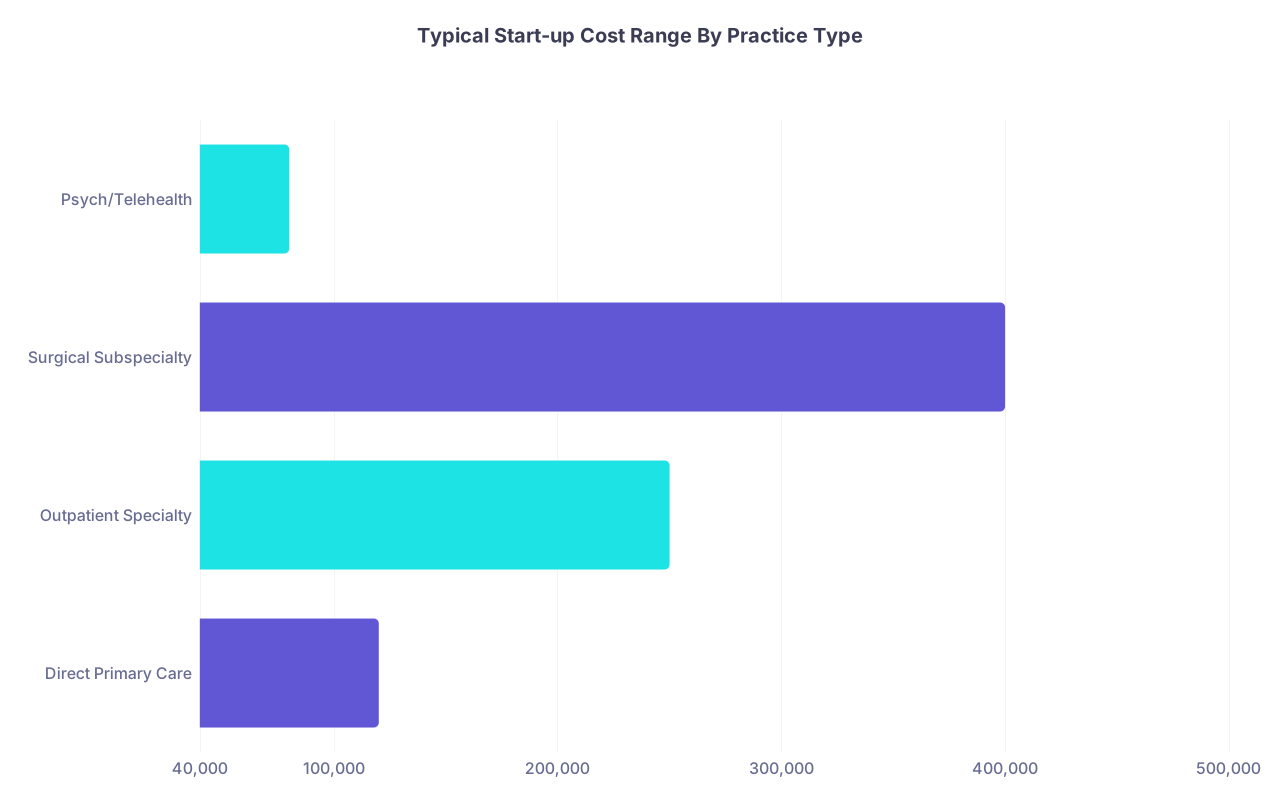
| Category | Value |
|---|---|
| Direct Primary Care | 120000 |
| Outpatient Specialty | 250000 |
| Surgical Subspecialty | 400000 |
| Psych/Telehealth | 80000 |
Your only job this month: make the spreadsheet and stress‑test it.
- Cut your revenue expectations by 25%.
- Increase overhead by 15%.
- See if the practice still survives months 1–12 with:
- Your savings.
- A realistic loan.
Month 12: Talk to financing sources
Before Year 2, you need to know whether someone other than your parents believes in this financially.
Conversations to schedule:
- 2–3 local banks that have healthcare lending programs.
- 1–2 specialty medical lenders (often know the space better).
- Your personal bank to discuss your overall profile.
They will care about:
- Your specialty and income history.
- Personal credit score.
- Existing debt load.
- How much of your own money you will put in.
By the end of Month 12 you want:
- A rough borrowing range (for example: “We could likely lend you $300k–$500k”).
- Sense of required personal guarantee.
- Understanding whether an SBA loan makes sense for you.
Do not sign anything yet. Just gather constraints.
Year 2, Months 13–18: Commit – Space, Financing, Infrastructure
This is where you move from “someday” to legally binding commitments.
Month 13: Refine non‑compete strategy and transition plan
Before you sign a lease down the street, read your employment contract again. Slowly.
You need clarity on:
- Exact radius and duration of any non‑compete.
- Whether it covers:
- Your exact specialty.
- Any outpatient work.
- Telemedicine.
- Whether your employer will waive or negotiate if you leave in good standing.
Then sequence your exit:
- Ideal scenario:
- Stay full‑time until 3–6 months before opening.
- Shift to 0.6–0.8 FTE for 3–6 months while you build out and ramp your own clinic.
- If they will not flex:
- Save more aggressively.
- Accept a short 1–3 month gap between jobs and opening.
Month 14: Lock in financing
At this point you go back to the lenders with:
- Updated pro forma.
- Practice concept.
- Target location ballpark.
Your checklist this month:
- Submit formal applications to 1–2 banks (not five).
- Choose between:
- Conventional practice loan.
- SBA‑backed loan (more paperwork, often better terms).
- Clarify:
- Interest rate.
- Term length (7–10 years typical).
- Covenants and reporting requirements.
You want a conditional approval by Month 15 so you can negotiate a lease confidently.
Month 15–16: Find and negotiate your space
This can make or break your cash flow.
Non‑negotiables you know by now:
- How many exam rooms you truly need in year 1 (hint: fewer than you think).
- Patient parking requirements.
- Proximity to referral sources and hospitals.
Bring in a healthcare‑experienced broker. The fee is almost always paid by the landlord. Do not go solo here.
Key terms to fight for:
- Tenant improvement allowance.
- Several months of free rent during build‑out.
- Renewal options.
- Clear responsibility for HVAC, maintenance, CAM charges.
By the end of Month 16 you should:
- Have a signed Letter of Intent (LOI).
- Be in lease review with your attorney.

Month 17–18: Legal setup, EMR, and core vendors
While the lease is finalized and build‑out starts, you build the skeleton.
Tasks for this 60‑day window:
- Form your entity:
- PLLC / PC as required in your state.
- Operating agreement (especially if partners).
- Get:
- EIN.
- Business bank accounts.
- Business credit card (for clean bookkeeping).
- Choose:
- EMR (resist “cool” and prioritize workflow + support).
- Practice management system.
- Billing solution (in‑house vs outsourced).
You should also:
- Retain a healthcare attorney for ongoing work.
- Retain an accountant who understands small medical practices.
- Decide on payroll solution.
This is where many new owners stall because they try to custom‑build everything. Choose good‑enough systems and move forward.
Months 19–21: Credentialing, Staffing, and Soft Launch
Now the clock is ticking. Every month of rent without revenue hurts.
Month 19: Credentialing and payer enrollment
You cannot bill if you are not in network. This part is slow and annoying. Start it early.
Your checklist:
- Decide your payer mix goal (for example: no Medicaid, or small percent).
- Apply to:
- Medicare.
- Key commercial plans in your area.
- Medicaid, if you choose to participate.
- Set realistic expectations:
- 60–180 days for many plans.
- Some may not be taking new providers.
At this point, your bridge job may help. You already have NPI and enrollment history, which sometimes speeds things up.
Month 20: Hire small, high‑quality staff
Do not build a mini‑hospital. You are not one.
For most new outpatient practices, your starting staff may be:
- 1 front desk / patient coordinator.
- 1 MA or nurse.
- Part‑time biller (if not outsourcing) or very strong billing company.
Month 20 tasks:
- Finalize job descriptions.
- Post on targeted boards and tap your network.
- Interview personally; cultural fit matters more than perfect experience.
- Run background checks and reference calls.
Plan for cross‑training. Your front desk may help with prior auths. Your MA may help with room turnover and phone triage.

Month 21: Start marketing like a professional, not a MLM rep
You are 3 months from go‑live. Now is the time to appear on people’s radar.
Your minimum viable marketing stack:
- Professional website with:
- Services, bio, location, insurance accepted.
- Clear online scheduling or phone workflow.
- Updated Google Business Profile.
- Clean signage (if permitted).
Then, relationship‑based actions:
- Personally email and call:
- Prior attendings.
- Hospitalists, ED docs, local PCPs or specialists who may refer.
- Offer:
- Clear availability for new patients.
- Fast access for urgent referrals.
Do not burn your bridge job while doing this. Keep it factual and professional: “I will be opening a practice on X date, happy to help with Y kind of patients.”
Months 22–24: Launch, Adjust, and Decide on Your Job Exit
These final 3 months are about controlled chaos.
Month 22: Soft opening
If credentialing is lagging, start with:
- Self‑pay visits.
- Services that do not require full payer panel participation.
Tighten internal workflows:
- Check‑in and check‑out.
- Rooming.
- Ordering labs, imaging, and following up.
- Handling messages and refills.
Have a weekly 30‑minute team huddle:
- What broke?
- What took too long?
- What confused patients?
Fix one thing each week. Not ten.
Month 23: Ramp volume intentionally, monitor cash weekly
Now you are seeing real numbers.
Watch these weekly:
- New patients.
- Established visits.
- Charges submitted.
- Collections.
- Days in A/R.
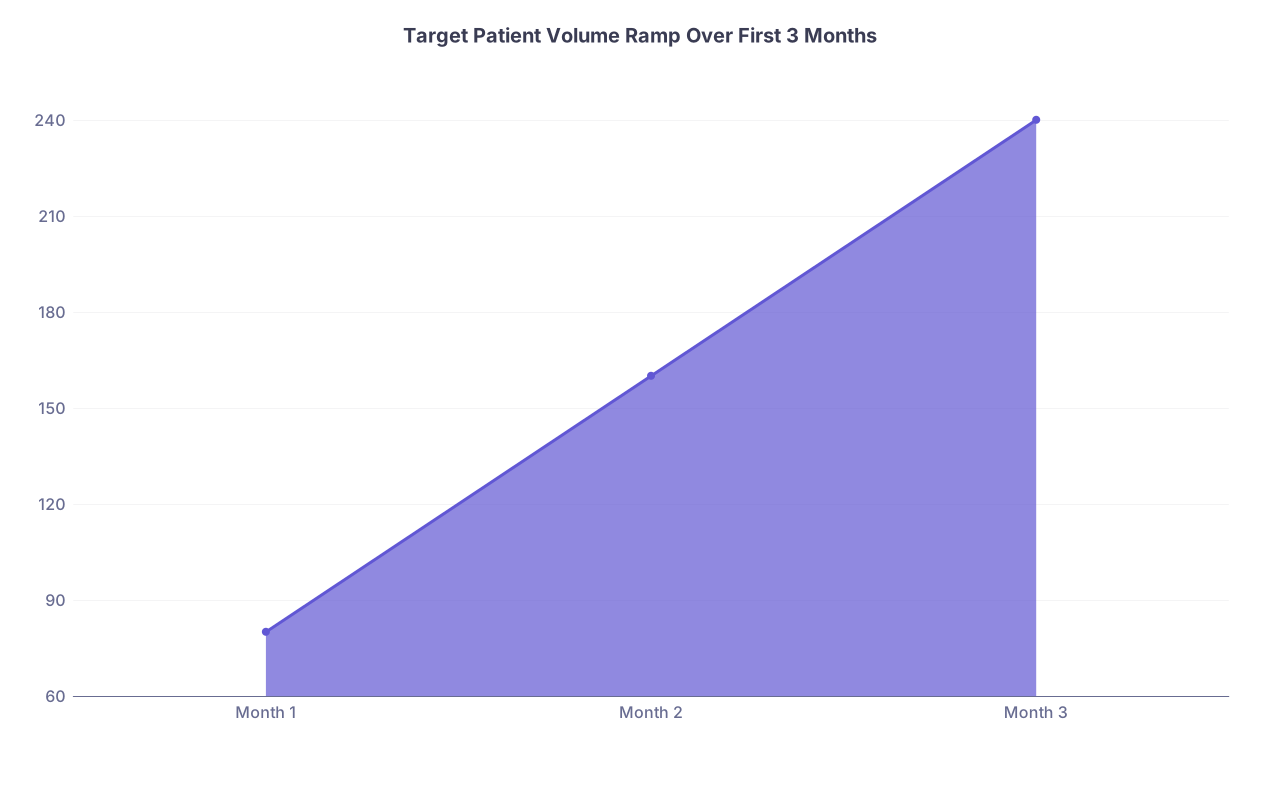
| Category | Value |
|---|---|
| Month 1 | 80 |
| Month 2 | 160 |
| Month 3 | 240 |
Adjust:
- Block off time for administrative work; do not book 100% of your schedule clinically.
- Tweak hours to meet demand (for example: one later evening).
At this point, re‑evaluate your bridge job schedule:
- If you are still full‑time employed, negotiate:
- Reduction to 0.6–0.8 FTE.
- Or prepare a clean resignation with proper notice.
- Make the decision based on:
- Actual cash in the bank.
- Projections for next 90 days.
- Your physical and mental bandwidth.
Month 24: Transition to full owner mindset
By the end of Year 2 you should have:
- A functioning clinic.
- A small but growing patient panel.
- Real data on revenue and expenses.
Your tasks in this last month of the “transition” phase:
- Decide on final timeline for leaving the bridge job, if you have not already.
- Review:
- First 3 months of financials with your accountant.
- Productivity and workflow with your staff.
- Set 3 concrete 12‑month goals:
- Monthly patient volume.
- Revenue or profit target.
- Operational improvement (for example: reduce no‑shows from 15% to 8%).

At this point you stop thinking of yourself as “resident who opened a practice” and start acting like a business owner who happens to practice medicine.
Final Reality Check
Three core points to leave you with:
- The bridge job is a tool, not a trap. Choose it to fund and teach, not to impress.
- Cash and contracts beat optimism. Non‑competes, leases, and loan terms matter more than your logo or Instagram.
- Progress must be scheduled. If it is not on a 24‑month timeline with real monthly tasks, it will not happen.
Run the next two years like a project, not a fantasy. That is how you get from resident to owner without burning out or going broke.