
The pass/fail era did not make fourth year easier. It just shifted the pressure onto your auditions and your research portfolio.
You are not “coasting” after Step 1 anymore. You are now on a long, very public audition that quietly starts late third year and peaks in the middle of fourth. If you treat it like a victory lap, you will lose to the people who treat it like a job interview that lasts twelve months.
Here is how your timeline actually needs to look.
Big-Picture Timeline: M3 Spring → Match Week
At this point you should map the entire year before you obsess over any single month.
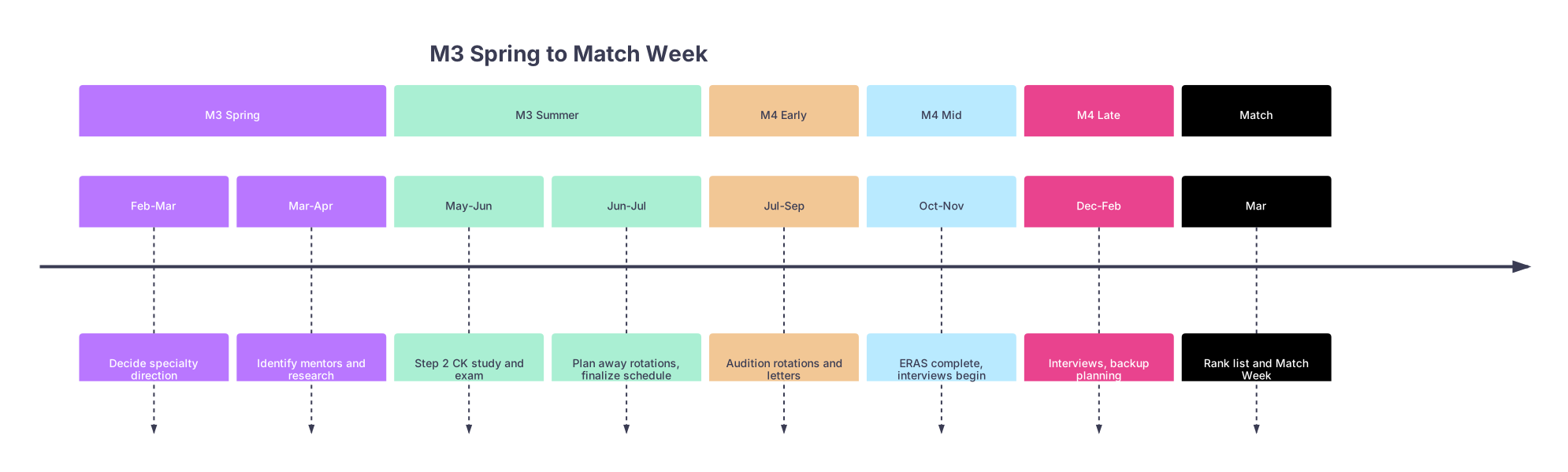
| Period | Event |
|---|---|
| M3 Spring - Feb-Mar | Decide specialty direction |
| M3 Spring - Mar-Apr | Identify mentors and research |
| M3 Summer - May-Jun | Step 2 CK study and exam |
| M3 Summer - Jun-Jul | Plan away rotations, finalize schedule |
| M4 Early - Jul-Sep | Audition rotations and letters |
| M4 Mid - Oct-Nov | ERAS complete, interviews begin |
| M4 Late - Dec-Feb | Interviews, backup planning |
| Match - Mar | Rank list and Match Week |
Keep that skeleton in your head. Now we go phase by phase.
M3 Late Winter – Early Spring: Commit to a Direction
At this point you should stop “exploring everything” and start acting like a future applicant to one specialty.
February–March M3: Lock in specialty and competitiveness check
By now you have enough clinical exposure to know if you are leaning toward:
- Competitive: derm, ortho, plastics, ENT, neurosurgery, urology, IR/DR
- Mid: EM, anesthesiology, OB/GYN, radiology, gen surg at most places, neuro
- Less competitive (nationally): FM, IM categorical, peds, psych, pathology, neurology at many programs
In the Step 1 P/F era, programs lean heavily on:
- Step 2 CK
- Clerkship grades (especially core rotations and your chosen field)
- Audition performance
- Research (for many fields, especially academic and competitive ones)
- Institutional letters / Standardized Letters of Evaluation (SLOEs, etc.)
Sit down with:
- A specialty advisor
- One attending who actually writes letters in that field
- Your dean or career advising office
And ask three blunt questions:
- With my current CV, what tier of programs is realistic?
- Do I need away auditions (and how many)?
- How urgent is research for my specialty?
If your advisor gives vague “you’ll be fine” answers, push. “Would you send me to University of X, yes or no?” You want concrete guidance, not vibes.
March–April M3: Pick mentors and research lanes
At this point you should have:
- One primary faculty mentor in your specialty
- At least one realistic research project that can move in 6–9 months
Do not chase ten tiny projects that never finish. Aim for:
- 1–2 meaty projects that can realistically become:
- Abstract or poster by late summer/early fall
- Maybe a manuscript under review by ERAS time
- 1–2 quick wins:
- Case report with a motivated resident
- Retrospective review with clear data source
- Quality improvement with obvious endpoints
Ask explicitly: “If I do my part, can this be submitted by August/September?”
If the answer is vague or noncommittal, find another project. I have watched too many students sit on a “great database” that never leads to a single PubMed entry by application season.
M3 Late Spring – Early Summer: Step 2 and Schedule Engineering
At this point you should be ruthlessly protecting your Step 2 CK window and locking your M4 schedule before slots disappear.
May–June M3: Step 2 CK as your new score signal
With Step 1 pass/fail, Step 2 is now the only national number many programs trust. That is just reality.
You want Step 2 in the books before auditions and preferably before ERAS submission, especially in competitive fields.
Target window:
- Most students: Take Step 2 CK between late May and mid-July after core rotations
- Highly competitive specialties: Early enough that a strong score can offset a P on Step 1 and boost program confidence
Rough prep phases:
- 4–6 weeks dedicated if possible
- Heavier UWorld / NBME use, less “content review” than Step 1
- Integrate practice around late M3 rotations if you cannot get full time
Do not stack Step 2 during your first audition month. I see this mistake every year. You underperform on both.
May–July M3: Build the M4 schedule around auditions
At this point you should be on a first-name basis with your registrar or scheduling office.
You need to:
- Reserve audition (away) rotation blocks:
- Ideal windows: July, August, September
- Some specialties accept Oct/Nov, but earlier is safer
- Protect Step 2 time:
- No high-stakes rotation the week before the exam
- Place home sub-I in your field:
- Often June–August of M4
- Before or between aways so that your home letter can be uploaded early
Think in terms of “letter months.” You want strong letter writers observing you in:
- Late M3 / early M4 sub-I at your home institution
- July/August/September aways (if your specialty uses them)
Those months are not just “rotations.” They are live interviews.
Late M3 – Early M4: Audition Logistics and Research Output Plan
Now you start behaving like a fourth year even if your ID badge still says MS3.
April–June: Away rotation strategy in the P/F world
At this point you should know:
- Whether your specialty uses official away rotations as de facto auditions (ortho, EM, neurosurg, etc.)
- Whether “visiting time” is optional, selective, or expected
Rules of thumb:
- Competitive surgical fields: 2–3 aways is common
- EM: Often 1–2 away EM rotations for SLOEs, plus home EM if available
- Medicine-like specialties: Fewer required aways; focus may be on home sub-I and research
Do not apply blindly to 15 aways. Instead:
- Build a tiered list:
- 3–5 reach programs
- 5–8 solid realistic programs
- 2–3 safety options for an away (places historically more welcoming to visiting students)
- Factor geography, program size, and your personal competitiveness
Remember: An away is a month-long interview. If you go somewhere well above your level and flame out, you just spent 4 weeks generating a negative data point.
May–August: Research milestones by month
You are now on a countdown clock. The question is not “Do I like research?” The question is “What will be visible in ERAS?”
At this point you should create a reverse-timed plan:
- By June 30:
- All IRB approvals submitted
- Data sources identified and accessible
- Case report images / pathology confirmed as usable
- By July 31:
- Data collection substantially complete for at least one project
- Draft poster or abstract skeletons started
- By August 31:
- At least one submission:
- Abstract submitted to a regional/national meeting or
- Manuscript submitted to a journal or
- Presented locally with documentation for ERAS
- At least one submission:
- By ERAS submission (mid-late September):
- You can honestly list:
- X submitted abstracts
- Y accepted / presented works (even if the conference is later)
- At least one project with you as first or second author if possible
- You can honestly list:
Do not let residents “get back to you soon” on edits forever. Set polite deadlines. Be the annoying but effective student who keeps the project alive.
Early M4 (July–September): Live Auditions and Letter Months
This is the stretch that matters more than any preclinical grade you ever got.
At this point you should behave like a junior resident who happens to pay tuition.
July–September: On-service behavior that actually gets you a letter
Day-by-day performance matters a lot more than your “interests” paragraph on ERAS.
Concrete daily checklist for an audition rotation:
- Before 6–7 a.m.:
- Pre-round on your patients with real plans written down
- Know overnight events, labs, imaging without being asked
- During rounds:
- Present clearly, concisely
- Offer 1–2 thoughtful questions or management suggestions per day
- Afternoon:
- Volunteer for procedures and consults
- Follow up on all action items you mention
- Update teams / residents without being chased
- End of day:
- Ask your senior: “Anything else I can close out before I go?”
- Read on 1–2 issues you saw that day; bring that to the next morning
The pass/fail world changes how attendings view you:
- They cannot see your Step 1 number
- They might see a Step 2, but many will not care as much
- They see how you work on their team, every day, all month
If you have an “off” week, own it. I have seen students rescue their letters by having a candid conversation:
“I know I was slower last week adjusting to the system. I have fixed X and Y, and I would appreciate any real-time feedback so I can finish strong.”
Most faculty respect that. Some will not. You are auditioning for both.
Mid-rotation: Letter calibration
By week 2–3 of a home sub-I or away, at this point you should:
- Ask a trusted resident: “Realistically, how am I doing compared to other students?”
- If feedback is lukewarm, adjust immediately:
- Fix punctuality
- Fix notes
- Fix reading and knowledge gaps
Then, before the final week:
- Ask your primary attending (only if you are confident):
- “If I continue performing at this level, would you feel comfortable writing a strong letter of recommendation for my residency applications?”
- Watch the reaction:
- Enthusiastic yes → good
- Hesitation → consider not using that letter
You want 3–4 strong letters total:
- 1 from your core specialty at home
- 1–2 from aways or additional subspecialty experiences in the field
- 1 from another core field or research mentor (depending on specialty norms)
ERAS and Application Season in the P/F Era
August–September: Pull all threads together
At this point you should have three visible pillars:
- Clinical performance
- Honors or strong evaluations in key rotations
- At least one excellent sub-I/away eval feeding into a letter
- Objective metrics
- Step 2 CK score that matches or exceeds your target specialty averages
- Scholarly output
- Research entries in ERAS (submitted / accepted)
- Maybe a presentation scheduled
Your tasks by week:
Early August
- Finalize personal statement draft and have:
- Specialty mentor review
- Someone outside medicine read for clarity
- Confirm which letters are being uploaded where
Late August
- Narrow your program list using realistic self-assessment:
- Some reaches, a solid core, and some safer programs
- Double-check all research entries:
- Titles accurate
- Your role accurate (do not inflate)
- Status: submitted / accepted / in progress
By ERAS opening / submission (usually September)
- Applications submitted as early as allowed
- Letters assigned appropriately (surgical vs prelim vs backup specialty, etc.)
- If you are dual applying:
- Two clean narratives
- No obvious copy-paste between personal statements
Remember: in the pass/fail era, timing still matters. Early complete applications get more looks at many programs.
Mid M4 (October–December): Interviews and On-Going Production
At this point you should be:
- Interviewing
- Still performing clinically
- And quietly maintaining research output
October–November: Interview months
While you travel (or Zoom-hop), your past year gets examined under a microscope.
Program directors now lean on:
- Your Step 2 CK
- Narrative comments from sub-Is and aways
- Research track record as a proxy for curiosity and follow-through
During this window:
- Keep at least one lighter clinical month if possible for interview flexibility
- Do not sabotage your reputation with a “check-out” elective where you disappear
- Send short, specific thank-you notes if that fits your personality; avoid generic spam letters
Research during interview season
At this point you should be tying bows, not starting new, massive projects.
Good moves:
- Finalize any in-revision manuscripts
- Push abstracts to “accepted” if pending
- Update your CV periodically (for pre-interview uploads if requested)
Bad moves:
- Starting a brand-new retrospective that will not reach submission for 9–12 months
- Overpromising on future research at an institution when you have zero track record of completing projects
If you get the common interview question:
“Tell me about your research”
They are not asking for methodology lectures. They want:
- What was the actual question?
- What was your role?
- What did you learn, including when things failed?
Have 2–3 polished stories ready.
Late M4 (January–March): Rank Lists and Contingency Planning
At this point you should be finishing, not improvising.
January–February: Rank list decisions
The P/F environment tends to produce more insecurity. People doubt whether they are “good enough” for certain tiers and over-rank safety programs out of fear.
Force yourself into a structured approach:
- Rank by fit and training quality, not just prestige
- Consider:
- How residents actually treat each other (you saw it on your away)
- Case volume and autonomy
- Geography and support systems
- Use mentors who are blunt. Show them your tentative list and ask:
- “Tell me where I am being unrealistic or irrational.”
Do not game the algorithm. Rank in your true preference order.
Backup and SOAP thinking
If you are in a high-risk category (late Step 2, weak portfolio, very competitive specialty, obvious red flags), at this point you should:
- Have a realistic SOAP backup strategy identified early
- Maybe dual-apply properly, not half-heartedly, with:
- Genuine letters in the backup field
- A coherent explanation for why that specialty is also a fit
I have watched students scramble during SOAP with zero plan. Those are awful weeks. Plan in January, hope you never need it in March.
How the Pass/Fail Era Changes Priorities
You are not being judged on a single test number anymore. You are being judged on your trajectory.
Three concrete shifts from the old world:
| Domain | Old Step 1 Era Priority | P/F Era Priority |
|---|---|---|
| Step 1 | High | Baseline only |
| Step 2 CK | Medium | Very high |
| Audition Rot | Medium | Very high |
| Research | Variable | Higher |
| Clerkship evals | Medium | High |
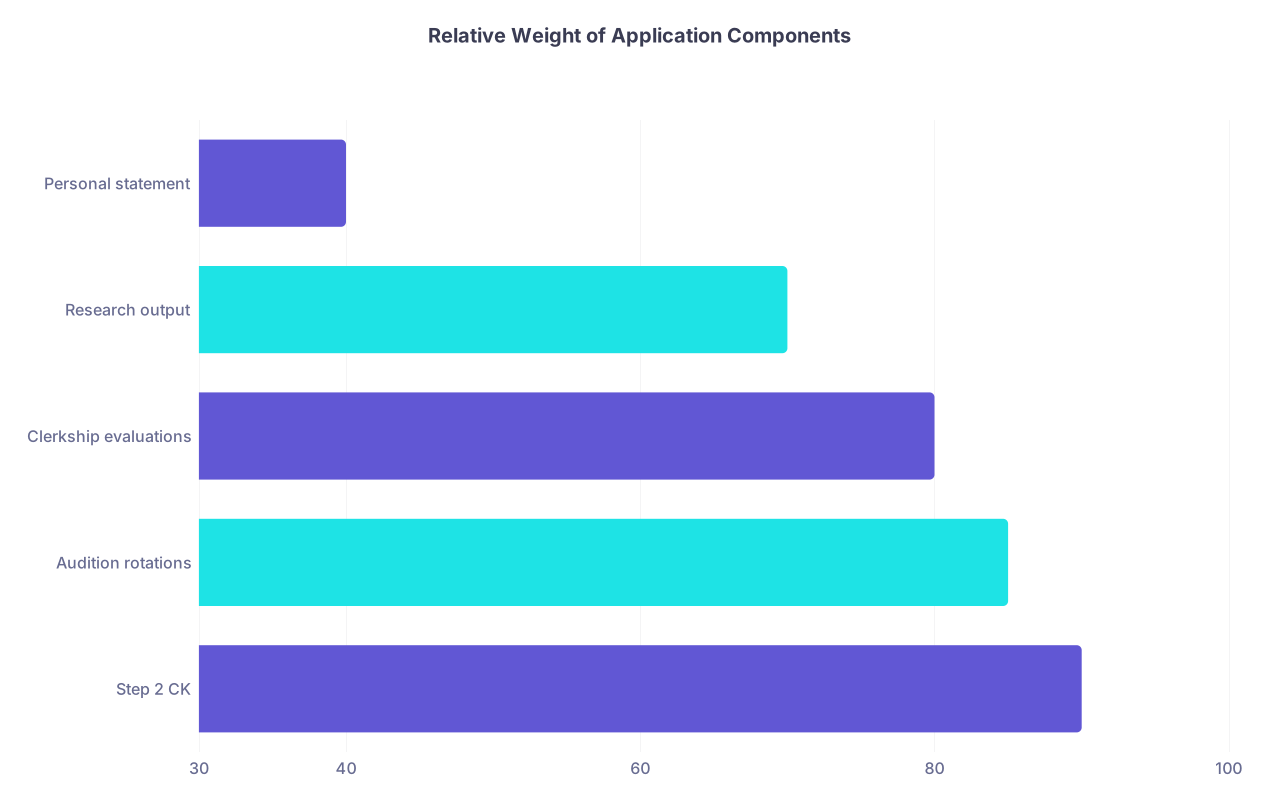
| Category | Value |
|---|---|
| Step 2 CK | 90 |
| Audition rotations | 85 |
| Clerkship evaluations | 80 |
| Research output | 70 |
| Personal statement | 40 |
What this means for your timeline:
- You cannot coast through late M3, bomb Step 2, and hope “they will see my potential.”
- You cannot treat away rotations as tourism.
- You cannot ignore research in any academic or competitive specialty and expect the same odds.
Instead, your fourth year milestones are:
- A timely, solid Step 2 CK score
- At least one home sub-I and 1–3 away rotations done well
- Visible, completed research outputs by ERAS time
- Strong, specific letters from people who actually watched you work
Example Month-by-Month Snapshot for a Competitive Specialty
To make this tangible, here is what a strong timeline might look like for a student applying to orthopedic surgery or dermatology. Adjust specifics to your field.

February–March M3
- Decide on ortho/derm after core rotations
- Meet with specialty advisor and research faculty
- Join one ongoing retrospective project + one case series
April–May M3
- Submit IRB if needed
- Schedule Step 2 CK for late June
- Preliminarily plan M4 with home ortho/derm sub-I in June/July, aways in August/September
June M3
- Dedicated Step 2 CK prep + exam
- Draft first abstract from quick-win project
July–August (early M4)
- Home sub-I:
- Arrive early, stay, read daily
- Secure one strong specialty letter
- Continue data analysis and abstract preparation after hours
August–September
- Away rotation 1 then 2:
- Treat as month-long interviews
- Clarify which attendings might write letters
- Submit abstract to a national meeting by late August
- ERAS submitted mid-September with:
- Step 2 CK score
- Research entries
- 2 specialty letters uploaded, 1–2 more pending
October–December
- Interviews
- Light elective + maybe a short research block to finalize manuscript revision
January–March
- Finalize rank list with mentor input
- Graduate with at least:
- 1–2 accepted presentations
- 1 manuscript submitted or in revision
- Strong letters tied to real clinical performance
You are not copying this line by line. You are stealing the structure.
Visualizing Your Year at a Glance
A quick way to sanity-check your own plan: lay out the year by primary focus of each block.
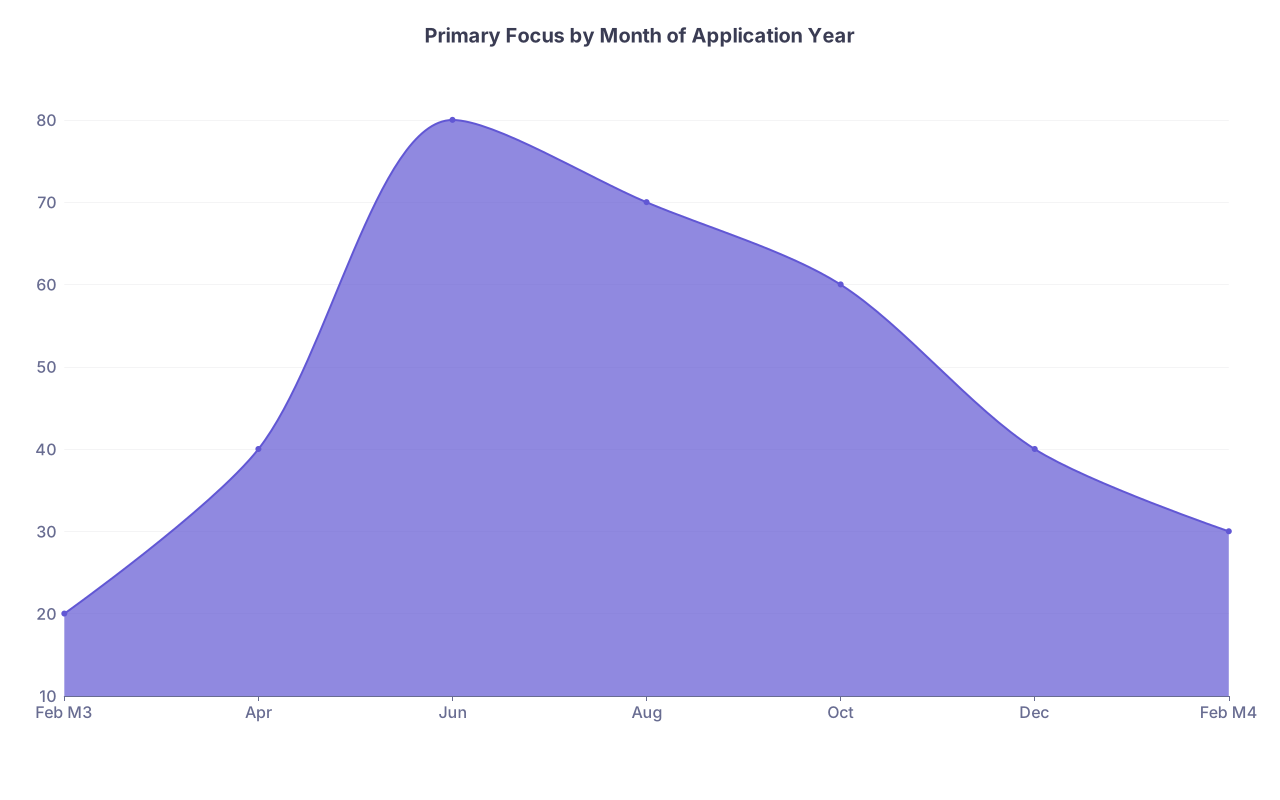
| Category | Value |
|---|---|
| Feb M3 | 20 |
| Apr | 40 |
| Jun | 80 |
| Aug | 70 |
| Oct | 60 |
| Dec | 40 |
| Feb M4 | 30 |
Here is the mindset:
- Early: Heavier on exploration and research ramp-up
- Middle: Max Step 2 + auditions + letters
- Late: Interviews and tying up loose ends
If you notice a month with no clear purpose, fix it now, not eight months from now.
Final Thoughts
Three points to walk away with:
- In the Step 1 pass/fail era, fourth year is not a coast; it is the core of your application—audition rotations, Step 2 CK, and research output are the real milestones.
- At each phase—late M3, early M4, ERAS season—you should know exactly what you are trying to produce: a score, a letter, a submission, not just “experience.”
- The students who win are not the ones with the most raw talent; they are the ones who treat the entire year as a structured, chronological audition and hit their deadlines like it is already their job.