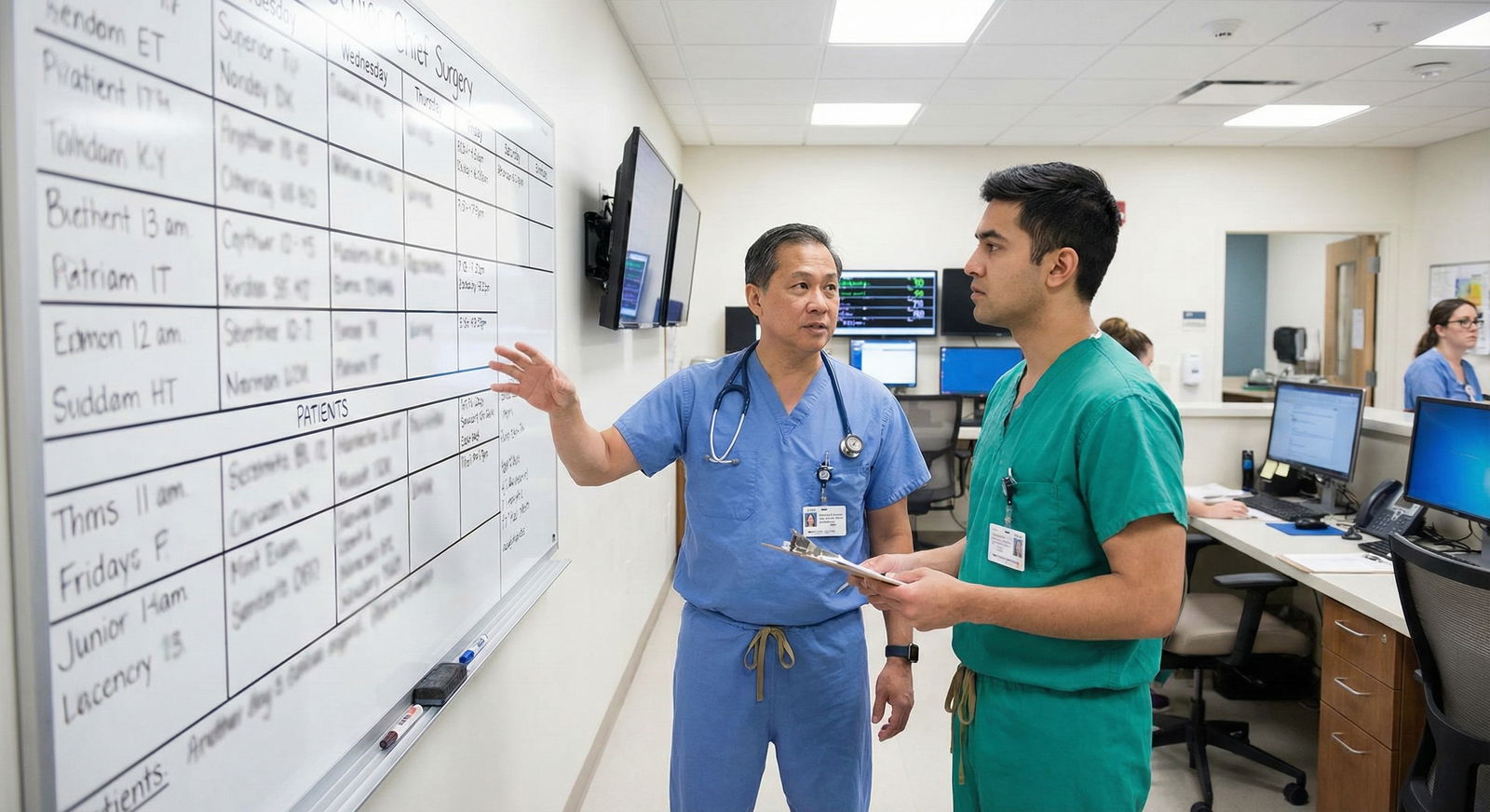
The students who get into the OR early are already being tagged as “one of ours.” Everyone else is just passing through.
Let me tell you what really happens behind the scenes: early OR access is not just about “exposure” or “learning the steps of a cholecystectomy.” It’s a quiet signal. To faculty. To residents. To the program director who’s pretending not to be watching. It marks you as someone who might actually become a surgeon—and people start treating you differently long before you ever apply.
You think you’re just showing up for a case. They think: we might be training this person for the next seven years.
What “Early OR Access” Really Means To Faculty
When faculty talk among themselves, they don’t say, “Oh, that M2 has great foundational knowledge.” They say things like:
- “That kid keeps showing up in the OR.”
- “They were here at 5:45, ready to go.”
- “They closed that skin better than some of our interns.”
Early OR access—especially pre-clinical or at the very beginning of third year—is interpreted as intent. Nobody stumbles into the OR repeatedly at 6 a.m. by accident.
Here’s the part your dean’s office usually does not spell out: most departments keep informal mental lists. The “this one might be surgery” list. That list starts early. Sometimes as early as your first scrub-in.
Is it fair? Not remotely. Is it real? Absolutely.
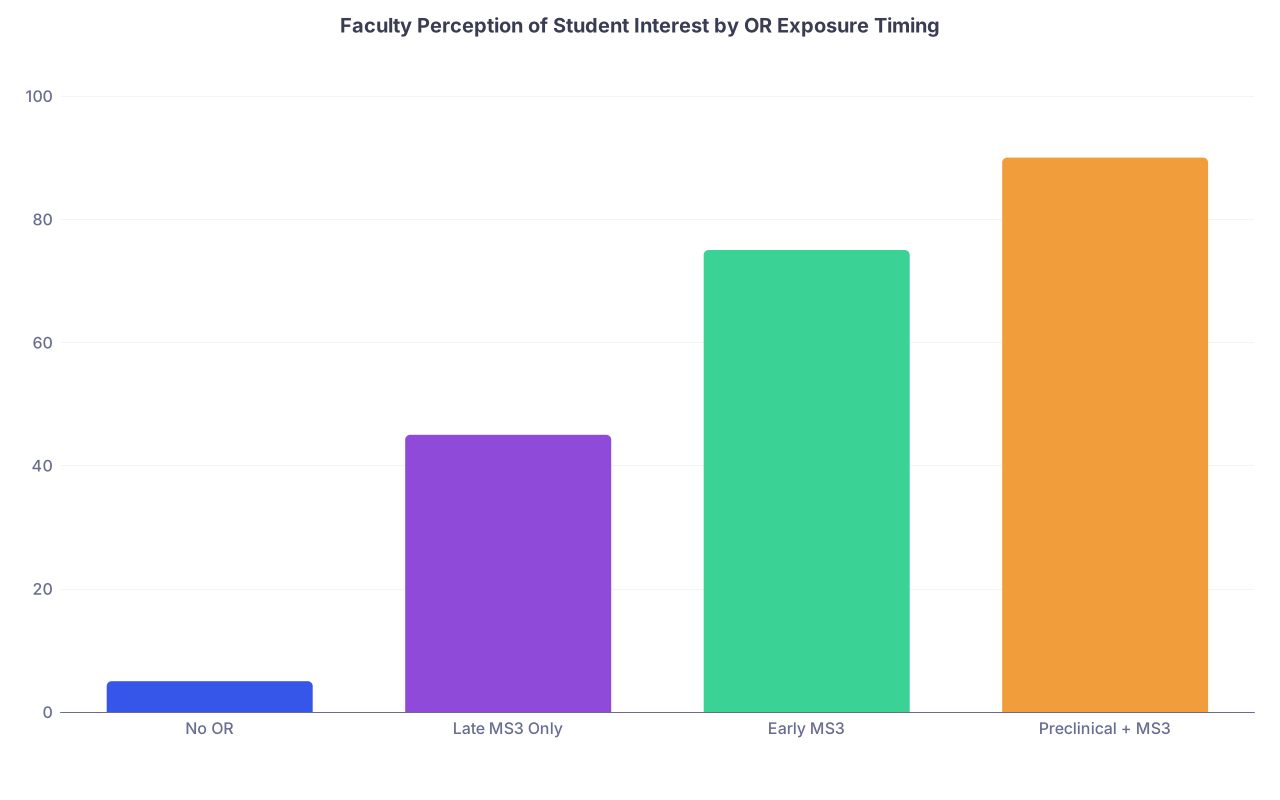
| Category | Value |
|---|---|
| No OR | 5 |
| Late MS3 Only | 45 |
| Early MS3 | 75 |
| Preclinical + MS3 | 90 |
Those numbers are close to how people actually talk in meetings. Students who never show their face in the OR before the core rotation are rarely seen as serious surgical candidates. Preclinical students who are already scrubbing in? Faculty immediately assume: “surgery-bound until proven otherwise.”
And once they tag you that way, several things start to happen:
Residents start teaching you at a higher level.
Attendings start remembering your name.
You get offered more responsibility earlier—simple suturing, closing, positioning, scopes.
You’re being test-driven. Long before formal letters ever get written.
How Program Leadership Uses OR Exposure As A Filter
I’ve sat in rooms where the clerkship director—or the associate PD—pulls up names and says, “Who do we actually know?” And the answers almost always come from two places: wards and OR.
Almost never from lecture halls.
Here’s the unspoken hierarchy of “this student matters to us” in surgical departments:
- Students who show up consistently in the OR, especially early.
- Students who request extra cases on their own time.
- Students who only do the required core rotation.
- Students who avoid the OR or disappear post-call.
Guess which category gets discussed when sub-I spots, away rotation recommendations, and strong letters are handed out?
To leadership, early OR access is a proxy for:
- Work ethic at surgical hours (not just clinic hours).
- Actual stomach for the environment: lights, blood, stress, hierarchy.
- Longitudinal interest—not a last-minute “I think I’ll try surgery” in October of fourth year.
They’re not just asking, “Can this person be a good doctor?” They’re asking, “Can this person survive and thrive in our world?”
Early OR presence answers that question faster than any personal statement.

The Signal You Think You’re Sending vs. The Signal They Actually See
Students often misread what matters. You think:
- “If I read the whole Sabiston chapter, they’ll be impressed.”
- “If I answer all the pimp questions, they’ll know I’m serious.”
- “If I say in my presentation that I’m interested in surgery, they’ll remember.”
Faculty, on the other hand, are tracking very different things.
They notice who showed up to pre-op.
Who walked the patient to the OR.
Who was in the room when anesthesia was still positioning.
Who stayed until dressings were on and the note was written—not who disappeared the second the drapes came down.
They equate early and repeated OR presence with:
- Reliability under unspoken expectations.
- Respect for the surgical process as a whole, not just “the fun part with the scalpel.”
- A mentality closer to resident than tourist.
Let me be blunt: plenty of students can answer anatomy questions. Far fewer will show up for a 7 a.m. Whipple and still be there at 5 p.m. closing the last hernia of the day without whining. Faculty remember the latter.
Concrete example
At one large academic program, the clerkship director kept a simple running list each block:
- Students who self-identified as “strong surgical interest.”
- Students the faculty independently labeled as “surgery type” based on behavior.
The overlap wasn’t perfect. Quite a few students who said they liked surgery rarely showed their face beyond mandatory cases. Meanwhile, a quieter student who never gave some grand “I love surgery” speech was in the OR four mornings a week, pre-rounding efficiently, and closing wounds like an R2.
Guess which one the program director pushed for when it came to away rotation support, and later, a spot at their home program?
Not the talker. The one with early, consistent OR behavior.
The Skills You Build In Early OR Time (That Program Directors Care About)
Forget “learning steps of the procedure” for a moment. Everyone learns that eventually. When faculty give you early access, they’re watching how fast you acquire certain habits that residents are expected to have on day one.
They’re quietly testing:
- Can you move in the OR like you belong there, without being a hazard?
- Can you anticipate what’s needed without being told five times?
- Do you keep your head when something unexpected happens—bleeding, conversion, new finding?
Those skills start from your first case.
Early OR access lets you accumulate “micro-reps” in:
Sterile field awareness
If you’re still breaking sterility during your core clerkship, people notice. The student who’s been in the OR since M1 or early M2 generally has that dialed in. Program directors love that, because it means less babysitting as an intern.Instrument familiarity and OR language
You don’t have to know every instrument, but if by MS3 you can at least recognize and hand back a needle driver, know what "Debakey" means, and understand basic retractor names, you’re ahead. Early access makes that knowledge feel natural, not forced.Stamina and focus
Watching you in a 6-hour case tells more about your suitability for surgery than any exam. Do you fade, start leaning, checking the clock, or complaining about back pain? Or do you lock in, keep your eyes on the field, keep tension right, and stay useful?Emotional tone under hierarchy
Surgery is hierarchical, and that’s not changing anytime soon. Early OR exposure shows attendings whether you can take direction, accept correction, and maintain composure under criticism. Because yes, you will be corrected—out loud, in real time.
These things are why faculty will tell the coordinator, “Sure, let them scrub again.” They’re not doing you a favor. They’re gathering data.
| Student Behavior in OR | Faculty Interpretation |
|---|---|
| Shows up pre-op, helps position | Serious about surgery, team-minded |
| Leaves post-closure every time | Tourist, not committed |
| Asks to suture small closures | Wants to build real skills |
| Only comes for 'cool' big cases | Chasing excitement, not the grind |
| Returns on non-required days | Likely future applicant to the program |
How Early OR Exposure Changes Your Identity On The Team
This part is subtle but powerful.
At first, you’re just “the med student.” The generic body in a too-large gown. Once you start showing up early and often in the OR, you become something different in the eyes of the team.
You become “our potential recruit.”
Residents start saying things like:
- “They’re basically an intern already.”
- “We should get them more laparoscopy.”
- “They’re thinking about gen surg—we should introduce them to Dr. X.”
The shift is real. Your name gets mentioned in the workroom when you’re not there. Attendings will say, “Put them on my case tomorrow.” That’s not random. That’s them starting to invest in you, because they think there’s a reasonable chance they’ll be reading your ERAS application in a year or two.
And here’s the kicker: once they mentally place you in the “future surgeon” bucket, your mistakes are interpreted differently.
A totally neutral student who fumbles tying a knot? “Ok, they’re just a med student.”
A student who has been in the OR repeatedly and fumbles tying a knot? “We need to teach them; they’re going to be one of ours.”
Same error. Very different energy and follow-through.

| Step | Description |
|---|---|
| Step 1 | First OR Visit |
| Step 2 | Generic Med Student |
| Step 3 | Tourist Label |
| Step 4 | Possible Future Surgeon |
| Step 5 | Our Potential Recruit |
| Step 6 | Interested But Unproven |
| Step 7 | Returns for More Cases? |
| Step 8 | Consistent Early Presence? |
Your job is simple: move yourself to “Our Potential Recruit” as fast as possible, and stay there.
Early OR Access vs. Just “High Case Volume”
Let’s separate two things people like to mash together.
- High case volume: how many cases you log over time.
- Early OR access: when you started being present and integrated.
Programs care about both, but they don’t weigh them the same.
Someone who shows up in the last three months of MS4 and bangs out 120 cases looks committed on paper, but faculty know what that is: a late conversion. They’ll take you seriously, but there’s less of that “we raised this one” feeling.
Now compare that to a student who:
- Shadowed in the OR during M1 and M2 breaks.
- Was present on day one of MS3, already halfway comfortable.
- Did a sub-I where they basically lived in the OR.
By the time that student applies, residents feel like they’ve watched the entire evolution. That emotional familiarity counts. Maybe more than you think.
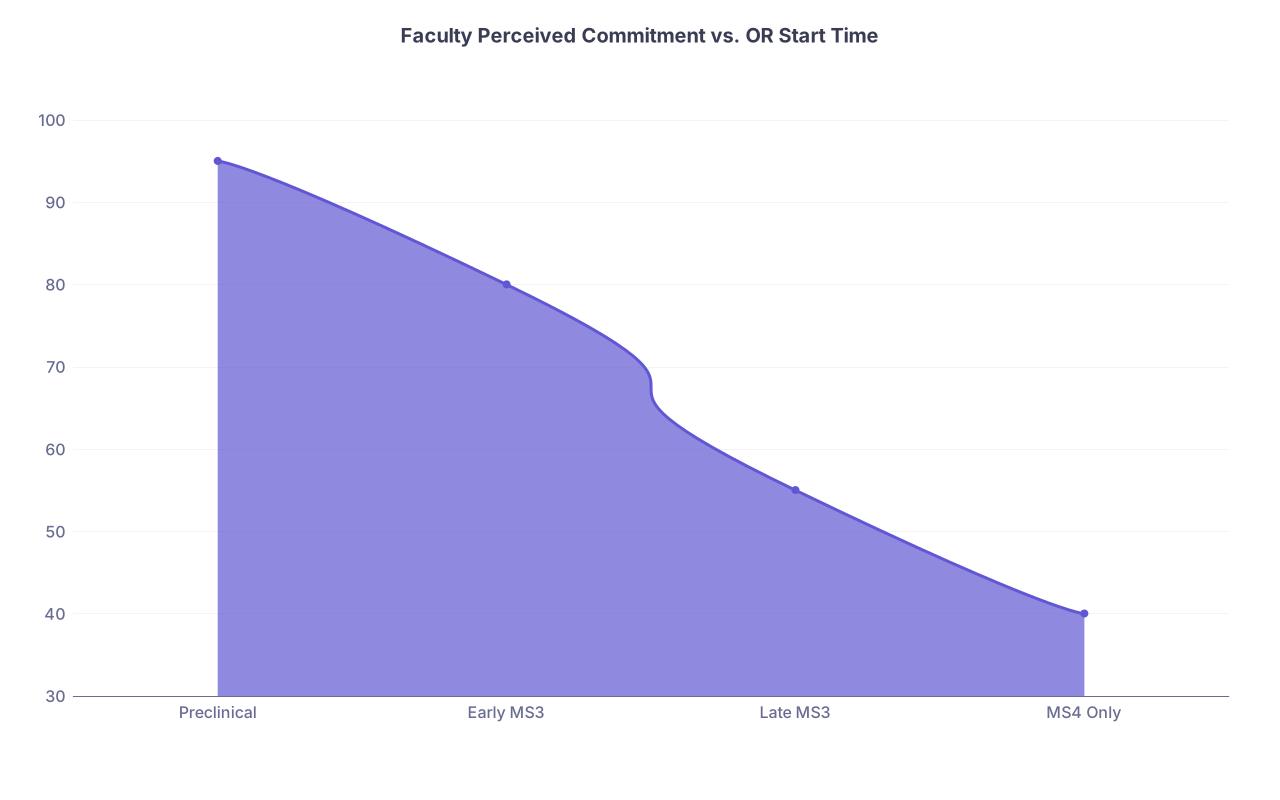
| Category | Value |
|---|---|
| Preclinical | 95 |
| Early MS3 | 80 |
| Late MS3 | 55 |
| MS4 Only | 40 |
You cannot fake timeline. You can cram case volume; you cannot rewind when you started showing up.
This is why early OR access is such a powerful signal. It says: “I didn’t become interested in surgery because it was the last thing standing. I’ve been orbiting this world for a while.”
How To Actually Get Early OR Access (Without Being Annoying)
Here’s the part no one explains clearly, and where a lot of students screw it up. You can’t just barge into the OR and start demanding to scrub on robotic cases as an M1. There’s a way to do it that makes faculty nod instead of roll their eyes.
A few principles:
Start by attaching yourself to a single resident or attending
The OR is territorial. If you can find one friendly resident or a teaching-minded attending and say, “I’m really interested in surgery—would it be ok if I came in on some of your cases to observe and start learning how the OR works?” you’re far more likely to be welcomed. They become your sponsor.Offer reliability before asking for privileges
Show up exactly when they tell you. Read the patient’s chart. Know the basic indication. Don’t ask to suture on day one. Let them see you’re not a flake, then opportunities will come.Behave like staff, not a guest
You help move the bed. You help put on SCDs. You make sure the patient has a pillow under their legs. You grab the warm blanket post-op. These are not glamorous, but they scream, “I get how the OR ecosystem works.”Ask for progressive responsibility, not everything at once
“Could I hold the camera for a bit if there’s a chance?” is reasonable. “Can I do the anastomosis?” as a preclinical student is how you get quietly banned.
When your reputation becomes: “They show up, they help, they don’t complain, and they’re safe,” doors open on their own.
How Faculty Turn Early OR Students Into Strong Applicants
Here’s the full cycle most students never see.
You start showing up early.
You become a familiar face.
You get looped into more complex cases.
You start doing closures and small tasks.
You’re around for complications, not just smooth cases.
You see the culture—both the good and the ugly.
At that point, a few strategic things happen:
- Someone suggests you do a research project.
- An attending offers to be your “home mentor.”
- You’re invited to M&M or resident teaching sessions.
- They tip you off about which away rotations fit your goals.
By the time ERAS opens, you are not just “Applicant #847.” You’re “the student who was always there on vascular days,” or “the one who kept asking good questions in trauma,” or “the quiet one who worked like a resident on their sub-I.”
That’s how letters end up with lines like:
“We have known this student in the OR setting since early in their third year, and they has consistently demonstrated the work ethic and temperament of a future surgeon.”
Program directors read between those lines. Early OR exposure is baked into that “we have known this student… since early” phrase.
They know exactly what that means: this isn’t a fling. It’s a long-term relationship with the OR.
With all of that, understand this: early OR access is not mandatory to become a surgeon. People convert late and do just fine. But if you’re already leaning toward surgery and you don’t step into the OR until the official schedule tells you to, you’re giving up one of the strongest, quietest signals you have.
You want faculty to look at you and think, “We’ve been seeing them here forever. They’re one of us.” That’s what early OR access buys you.
You’re building a reputation long before you build a case log.
With that foundation in place, you’ll walk into your sub-I, your aways, and eventually your interviews already stamped in people’s minds as a future surgeon. How you leverage that stamp on the interview trail—that’s another conversation entirely.