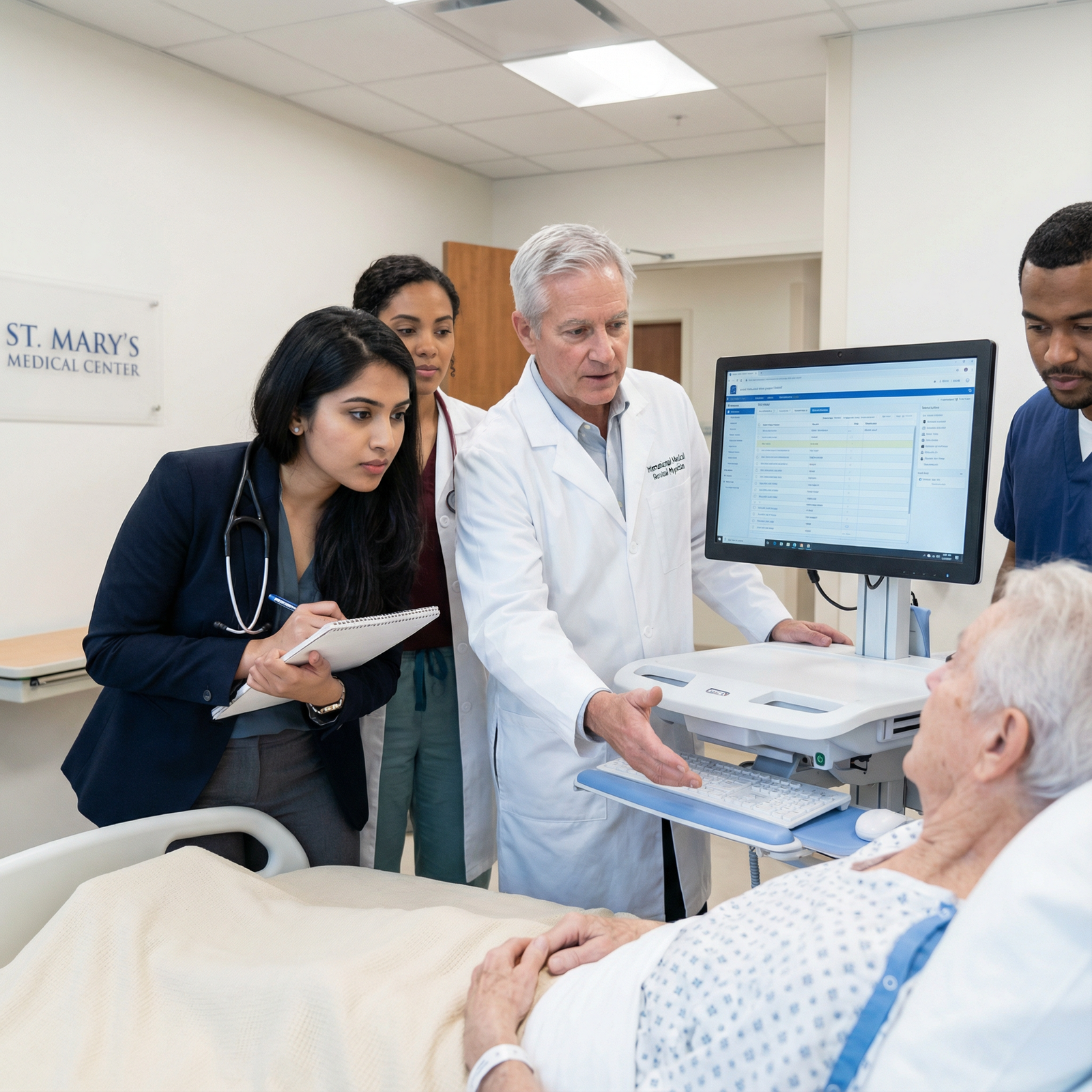
In the competitive world of U.S. residency, International Medical Graduates (IMGs) must not only demonstrate strong medical knowledge, but also prove they can thrive in the unique culture and workflow of American healthcare. Externships—structured, short-term clinical experiences in U.S. settings—are one of the most powerful tools IMGs can use to bridge this gap.
Externships do far more than check a box for “U.S. Clinical Experience.” They put you side by side with U.S. physicians, expose you to real-world patient care, and—crucially—help you build a professional network that can directly impact your residency applications and long-term career in medicine.
This article explores why externships matter so much for IMGs, how they strengthen your network and clinical profile, and how to strategically choose and maximize these opportunities.
Understanding the IMG Journey and Why Externships Matter
To appreciate the value of externships, it helps to understand the unique challenges International Medical Graduates face when pursuing residency in the United States.
Common Challenges for IMGs in the U.S. System
IMGs often encounter several major hurdles:
Limited familiarity with the U.S. healthcare system
Most IMGs train in systems that differ significantly in documentation style, insurance and billing, hierarchy, patient expectations, and interprofessional collaboration. Program directors want reassurance that you can function effectively within the U.S. model.Intense competition for residency positions
IMGs compete not only with other international candidates, but also with U.S. MD and DO graduates. Many programs receive hundreds or thousands of applications for a handful of positions. Anything that demonstrates readiness, adaptability, and commitment—such as high-quality externships—becomes critical.Networking barriers in medicine
U.S. graduates often build networks during medical school through clerkships, interest groups, and faculty mentors. IMGs may arrive with few or no local contacts, minimal access to program insiders, and limited understanding of unspoken norms in Networking in Medicine.Uncertainty about how applications are evaluated
Many IMGs are unfamiliar with how U.S. residency programs weigh scores, U.S. Clinical Experience, letters of recommendation, and communication skills. They may also underestimate how much program directors value personality fit, reliability, and teamwork—traits that externships can showcase.
Externships help address all of these challenges by providing structured exposure to U.S. clinical environments while giving IMGs space to prove themselves.
What Are Externships? Definitions, Types, and Goals in Medical Education
Externships exist at the intersection of Medical Education and real-world practice. While the term can be used differently by institutions, for IMGs it generally refers to a short-term, supervised placement in a U.S. clinical setting where you participate in patient care to varying degrees.
Core Objectives of an Externship for IMGs
A well-designed externship should advance your career in at least three key areas:
Skill Development and Clinical Experience
- Applying your medical knowledge to real patients in the U.S.
- Practicing history taking, physical examinations, and clinical reasoning.
- Learning how to document in English using U.S.-style notes and electronic medical records (EMR).
Exposure to the U.S. Healthcare System
- Understanding hospital workflows, outpatient clinic operations, and the role of multidisciplinary teams.
- Observing how insurance, prior authorizations, referrals, and discharge planning affect care.
- Adapting to time-pressured environments and standardized clinical pathways.
Professional Networking in Medicine
- Building relationships with attending physicians, residents, nurses, and program coordinators.
- Earning mentors who can advise you on specialty choices, application strategy, and interview preparation.
- Securing U.S. letters of recommendation that speak to your clinical skills and professionalism.
Different Types of Externships and Related Experiences
Not all “externships” look the same. Understanding your options helps you select what best fits your goals and timeline.
1. Hands-on Clinical Externships
These are often the most valuable for residency applications because they mimic actual clerkships:
- Direct patient interaction: Taking histories, performing physical exams, presenting cases.
- Supervised orders and note-writing: Depending on institutional policy, you may write progress notes or draft orders for your supervisor to review.
- Integration into the clinical team: Joining rounds, case discussions, and sign-outs.
Hands-on externships are especially powerful for demonstrating readiness in fields like internal medicine, family medicine, pediatrics, and some subspecialties.
2. Observerships (Shadowing Experiences)
Observerships are more limited but still important, particularly when hands-on roles are unavailable:
- Primarily observational: You follow attendings and residents, observe patient encounters, and attend teaching conferences.
- Restricted patient contact: You usually do not perform exams, write notes, or independently counsel patients.
While observerships may be seen as less robust U.S. Clinical Experience, strong engagement—asking good questions, studying cases, and contributing to discussions—can still lead to valuable recommendations and mentorship.
3. Research-Focused Externships
Some programs combine clinical shadowing with research:
- Research involvement: Chart reviews, data collection, literature reviews, or quality improvement (QI) projects.
- Academic output: Potential for abstracts, posters, or publications, which further strengthen your CV.
For IMGs targeting academic or competitive specialties (e.g., cardiology, oncology, surgery), a research externship in a respected institution can be particularly impactful.
4. Hybrid or Specialty-Specific Externships
Some externships are tailored to specific fields—such as cardiology, neurology, psychiatry, or emergency medicine—and may mix clinical observation with simulation, skills workshops, or didactics. These are ideal if you are already committed to a specialty and want aligned Clinical Experience and networking in that field.

How Externships Build Your Network and Boost Residency Applications
Externships are one of the most effective networking tools available to International Medical Graduates. They give you sustained access to physicians and health professionals who can directly influence your career trajectory.
Building Meaningful Professional Relationships
Networking in medicine is not about collecting business cards; it’s about building trust and demonstrating your value in real clinical settings.
1. Daily Contact with Attending Physicians and Residents
During an externship, your supervisors see you:
- Show up on time consistently.
- Interact with patients and families respectfully.
- Respond to feedback and improve.
- Take ownership of your learning.
Over a few weeks or months, these repeated interactions allow attendings and residents to move from “I met this IMG once” to “I’ve seen how this person works under pressure.” That depth of familiarity is what leads to strong advocacy later.
2. Access to Strong, Specialty-Relevant Letters of Recommendation
Letters from U.S. physicians who have supervised you clinically are one of the most influential parts of your residency application. Externships are a direct pathway to:
- Specialty-specific letters (e.g., internal medicine, pediatrics) that align with your target programs.
- Detailed commentary on your clinical reasoning, teamwork, communication skills, and professionalism.
- Credibility: A letter from someone known in the region or specialty carries added weight.
To maximize this:
- Ask for feedback midway through the externship so you can improve before requesting a letter.
- Demonstrate growth: show that you implement suggestions quickly.
- When the time comes to request a letter, provide your CV, personal statement draft, and list of programs so your referee can write a focused, supportive letter.
3. Long-Term Mentorship and Career Guidance
Externships can lead to mentorship relationships that last far beyond your rotation:
- Application strategy: Mentors can advise you on when to apply, which specialties to target, and how to improve your overall profile.
- Mock interviews and feedback: Some supervisors willingly help you prepare for residency interviews.
- Professional introductions: A well-connected mentor may introduce you to colleagues at other institutions or recommend you to program directors.
Maintaining these relationships requires effort:
- Periodically update mentors on your progress (exam results, applications, match outcome).
- Show appreciation and respect for their time.
- Be specific when seeking advice (“I’m deciding between two programs with X and Y features; how would you think about this?”).
Gaining Practical Clinical Insight and Soft Skills
Externships also expose you to the subtler aspects of practicing medicine in the U.S.—skills that are often underemphasized in formal curricula but heavily valued by residency programs.
1. Understanding Local Clinical Practices and Expectations
Each institution—and even each department—has its own style:
- Documentation standards: SOAP notes, admission H&Ps, discharge summaries, and EMR templates differ from country to country.
- Clinical pathways: Standard approaches to chest pain, sepsis, stroke, and other common conditions are often protocolized.
- Workflow expectations: Punctuality, handoff structure, response times, and escalation protocols can all be different from your home system.
Externships give you the chance to practice these norms before residency so your first day as an intern is not your first exposure.
2. Developing Essential Soft Skills
Residency program directors consistently emphasize that they seek team players who communicate well and adapt quickly. During an externship, you can actively work on:
- Patient-centered communication: Explaining diagnoses and plans in plain language, using interpreters appropriately, showing empathy.
- Team collaboration: Coordinating with nurses, case managers, pharmacists, social workers, and allied health professionals.
- Professionalism under stress: Managing time, handling criticism constructively, and staying calm when the unit gets busy.
These skills are often what distinguish a good candidate from a great one during residency interviews and in day-to-day practice.
Adapting to U.S. Medical Culture and Expectations
Medical culture in the U.S. includes ethical, cultural, and interpersonal norms that may differ significantly from your home country.
1. Cultural Competence and Patient Diversity
Externships place you in real clinical environments where you will:
- Manage patients from varied cultural, socioeconomic, and linguistic backgrounds.
- Navigate discussions around health literacy, mistrust of the medical system, or alternative medicine beliefs.
- Learn to incorporate patients’ values and preferences into shared decision-making.
Your ability to show cultural humility and adjust your communication style improves patient satisfaction and demonstrates maturity to supervisors.
2. Understanding Legal, Ethical, and Safety Standards
U.S. healthcare places strong emphasis on:
- Patient privacy and HIPAA regulations
- Informed consent and autonomy
- Documentation for medico-legal protection
- Quality and safety initiatives (e.g., fall risk prevention, infection control)
Externships give you exposure to these systems and expectations, helping you avoid common pitfalls and reassuring residency programs that you understand the legal and ethical framework in which they operate.
Real-World Example: How an IMG Used an Externship to Match Successfully
Consider the journey of Maria, an International Medical Graduate from Brazil, who aspired to match into internal medicine in the U.S.
Step 1: Identifying the Right Externship
Maria selected a 3-month hands-on externship at a community teaching hospital with an internal medicine residency program. This gave her:
- Daily exposure to inpatient medicine.
- Frequent contact with both attendings and residents.
- A chance to demonstrate her capabilities in the same environment where residents train.
Step 2: Maximizing Clinical Experience
During the externship, Maria:
- Actively volunteered to see new admissions, take histories, and perform focused exams (within the institution’s policy).
- Presented patients on rounds, integrating evidence-based medicine and current guidelines.
- Practiced writing structured progress notes in the EMR under supervision.
She also attended noon conferences and journal clubs, asking thoughtful questions and showing genuine curiosity about American internal medicine practice.
Step 3: Networking and Securing Strong Recommendations
Maria focused deliberately on Networking in Medicine:
- She requested regular feedback from her supervising attending, showing that she was committed to growth.
- When appropriate, she asked if her mentor would feel comfortable writing a letter of recommendation for her internal medicine residency applications.
- She kept in touch after the externship, updating her mentor on her USMLE scores and application plans.
Her attending eventually wrote a detailed, enthusiastic letter describing her clinical acumen, professionalism, and ability to work effectively with patients and staff—exactly the kind of letter that stands out to selection committees.
Step 4: Translating Externship Experience into Match Success
In her ERAS application and interviews, Maria drew heavily on her externship:
- She cited specific patient encounters to discuss ethical dilemmas, patient communication, and interprofessional collaboration.
- She highlighted her familiarity with U.S. documentation and workflows.
- She mentioned how feedback from her mentor shaped her approach to time management and clinical reasoning.
Maria ultimately matched into a competitive internal medicine residency program. Looking back, she identified her externship as a key turning point: it gave her credible Clinical Experience, strong U.S. references, and the confidence that she could excel in American medical training.
Practical Tips: Choosing and Maximizing Externships as an IMG
To get the most benefit from externships, it’s important to be strategic—both in how you select programs and how you perform once you’re there.
How to Choose the Right Externship Program
Consider the following factors:
- Hands-on vs. observational: Whenever possible, prioritize hands-on roles, especially if you have limited U.S. Clinical Experience.
- Specialty alignment: Choose externships in the field(s) you intend to apply to for residency. Internal medicine externships for internal medicine applicants, pediatrics for pediatrics, etc.
- Program reputation and setting: Academic centers, community teaching hospitals, and safety-net hospitals all provide valuable but different experiences. Match your goals with the environment.
- Duration: Longer externships (4–12 weeks) allow attendings to get to know you well enough to write strong letters and observe your growth.
- Cost and logistics: Many externships are unpaid and may charge administrative fees. Consider housing, transportation, and visa implications.
How to Find Externship Opportunities
- Hospital and medical school websites: Many institutions have dedicated sections for visiting students or international graduates.
- Professional organizations and IMG-focused services: Some organizations maintain curated lists of programs that accept IMGs.
- Word of mouth and alumni networks: Ask other IMGs who have matched where they obtained their Clinical Experience.
- Online communities and social media: Residency forums, IMG groups, and LinkedIn can all surface leads.
When reaching out:
- Send concise, professional emails.
- Attach your CV and a brief statement of interest.
- Make clear your goals (e.g., “seeking 4–8 weeks of internal medicine Clinical Experience starting in July”).
How to Stand Out During Your Externship
Once you secure an externship, focus on excellence and professionalism:
- Be punctual and reliable: Arrive early, be prepared for rounds, and honor your commitments.
- Be proactive but respectful: Volunteer to take on tasks within your allowed scope. Ask, “Is there anything else I can help with?”
- Study your patients: Read about their conditions, guidelines, and relevant literature. Bring suggestions to rounds thoughtfully.
- Communicate clearly: If you don’t understand an instruction, ask for clarification rather than guessing.
- Seek and use feedback: Show that you can evolve quickly based on constructive criticism.
These behaviors not only enhance your learning but also shape how supervisors describe you in letters and conversations with colleagues.

FAQ: Externships for International Medical Graduates
Q1: How do I find externship opportunities as an IMG?
Start by checking the websites of U.S. hospitals, medical schools, and community clinics—many have formal programs for International Medical Graduates or visiting students. Use alumni networks, IMG forums, LinkedIn, and professional organizations (e.g., specialty societies) to identify IMG-friendly sites. When in doubt, email department coordinators or education offices directly with a concise inquiry and your CV.
Q2: Are externships usually paid, and are they worth the cost?
Most IMG-oriented externships are unpaid and may charge administrative or program fees. While this can be financially challenging, the long-term benefits—U.S. Clinical Experience, strong letters of recommendation, and high-quality networking in medicine—often justify the investment, especially if the externship is aligned with your target specialty and offers genuine learning and mentorship.
Q3: How much can externships really improve my chances of matching into residency?
Externships can significantly strengthen your application by:
- Demonstrating readiness to work within the U.S. healthcare system.
- Providing concrete examples of patient care for interviews.
- Generating strong, specialty-specific U.S. letters of recommendation.
While externships cannot guarantee a match, they are often a decisive factor—especially for programs that prioritize recent, hands-on U.S. Clinical Experience.
Q4: How long should an externship be, and how many should I complete?
Externships typically range from 2 to 12 weeks. A single, longer externship (4–8 weeks) where you build deep relationships and earn strong recommendations is often more valuable than multiple brief, superficial experiences. Aim for a balance: enough Clinical Experience to demonstrate consistency and growth, but not so many that you delay other critical steps (e.g., USMLE exams, research, or applications).
Q5: What is the difference between an externship and an observership, and which is better for IMGs?
- Externship (hands-on): Involves direct or semi-direct patient care (history taking, physical exams, presentations, sometimes note-writing under supervision).
- Observership: Primarily shadowing, with minimal or no hands-on responsibilities.
From a residency perspective, hands-on externships are usually more valuable, but high-quality observerships—especially at respected institutions or with strong mentors—can still significantly enhance your understanding of U.S. medicine and lead to impactful recommendations when hands-on roles are not available.
Externships are more than a checkbox; they are a strategic investment in your future as a physician in the United States. By choosing wisely, engaging fully, and focusing on networking and growth, International Medical Graduates can transform externships into powerful stepping stones toward successful residency matches and long, fulfilling careers in U.S. medical practice.