The biggest mistake gap-year IMGs make is drifting. One observership here, a random research volunteer gig there, and suddenly the year’s over with nothing strong enough to move the needle for Match.
You cannot afford that.
You need a rigid, tactical 12‑month plan that builds USCE, research, and letters in a deliberate sequence. Month by month. Week by week. At specific checkpoints you should be doing very specific things—or you’re losing ground to other applicants.
Below is exactly how I’d structure a full year if you came to me as an IMG with 12 months, basic Step scores, and a clear goal: maximize US clinical experience and research to be competitive for the next Match.
Big Picture: How Your 12‑Month Gap Year Should Be Structured
Think of the year in 4 blocks. Each has a primary mission.
| Block | Months | Main Focus | Secondary Focus |
|---|---|---|---|
| Block 1 | 1–3 | Secure positions + start remote work | Study Step 2/3 (if pending) |
| Block 2 | 4–6 | First in-person USCE + ramp research | Network for LORs |
| Block 3 | 7–9 | Peak USCE + tangible research output | ERAS prep, personal statement |
| Block 4 | 10–12 | Final USCE, research polishing | Applications/interviews support |
By the end of the year you want:
- 2–3 solid USCE experiences (preferably at least one inpatient, one outpatient)
- 1–2 strong US letters from US attendings who actually know your work
- At least one tangible research output (abstract, poster, manuscript submission, or major contribution to a project)
- A coherent story: “During my gap year I completed X, Y, and Z in [your target specialty].”
Month 1–3: Foundation, Position Hunting, and Remote Work
At this point you should stop thinking and start executing. The first 12 weeks set the tone for the entire year.
Week 1–2: Hard Reset and Inventory
Days 1–3:
- List your current assets:
- Step scores (or test dates)
- Graduation year
- Any US contacts (friends in residency, alumni, faculty)
- Preferred specialties (rank 1–3)
- Decide your primary specialty focus for this year.
- If you’re torn between IM and FM, that’s acceptable. But do not scatter between IM + Psych + Surgery + Path all at once.
Days 4–7:
- Build or clean up:
- US‑style CV (1–2 pages, bullet points, action verbs)
- Basic email templates:
- Research inquiry
- Observership/USCE inquiry
- “Thank you + follow‑up” template
- Set your weekly time budget:
- 40–50 hours/week total:
- 15–20 hours: applications/networking/admin
- 15–20 hours: research/self‑study
- 10–15 hours: Step prep (if needed) or clinical reading
- 40–50 hours/week total:
Week 2–4: Aggressive Search for USCE and Research
At this point you should be sending 15–25 targeted emails per week. Minimum.
Targets:
- University hospital departments (IM, FM, your specialty)
- Community hospitals with residency programs
- Affiliated clinics of teaching hospitals
- Faculty running active clinical research (PubMed + institution websites)
Approach:
- Prioritize:
- Programs IMG‑friendly in Match data
- Cities you can actually live in (housing + visa reality)
- Ask for:
- Observerships
- Externships (if you qualify as a student somewhere)
- Research assistant roles (paid or unpaid)
- Hybrid roles: research + some clinical shadowing
Meanwhile:
- Register on observership platforms if you can afford them (for some people this is the only realistic door in):
- Hospital‑run programs
- Reputable third‑party USCE providers (vet them; avoid anyone promising “guaranteed residency”)
Week 4–8: Lock in At Least One Research and One USCE Slot
By the end of Month 2, you should have at least one of these confirmed with dates:
- A 2–3 month research position (in‑person or remote)
- A 4‑week observership/externship with a start date within 2–4 months
- Or both, staggered
This is the first major checkpoint. If you do not have any commitments by Week 8:
- Double your email output.
- Expand your radius to less competitive cities/states.
- Ask every contact you have:
- “Do you know any attendings who accept observerships or research volunteers?”
- Consider:
- Remote chart review projects
- Systematic review teams internationally connected to US faculty
Parallel Track: Exams (Months 1–3)
If you still need:
- Step 2 CK: Target exam in Months 3–5.
- Step 3 (for H‑1 hopefuls): Target exam in Months 6–9.
At this point your daily structure might look like:
- Morning (3–4 hours): Emailing, applications, Zoom calls, follow‑ups
- Midday (3 hours): Step study or research articles
- Late afternoon (2–3 hours): Data work/literature review/online courses
- Evening (1–2 hours): Clinical reading, guidelines, or rest
Month 4–6: First USCE Block + Research Ramp-Up
Now you should switch from hunting to producing. You’ve secured something—time to extract maximum value.
Month 4: Start First In-Person USCE (If Possible)
Ideal structure: 4–8 weeks in one setting.
At this point, during your first USCE, you should:
- Show up early, leave a bit late.
- Ask directly:
- “How can I be most useful to you and the team within observership rules?”
- Keep a tiny pocket notebook:
- Patients you saw
- Questions to read about
- Procedural logs (even if just observing)
Goal by end of Month 4:
- At least one attending has said something like:
- “It’s great having you here.”
- “You’re picking things up quickly.”
- That’s your potential letter writer.
Month 5–6: Combine USCE With Building a Letter and Research Role
If your USCE continues:
- Week 1–2 of Month 5:
- Identify 1–2 attendings who:
- Know your name
- Have seen your work ethic
- Supervise you regularly
- Start positioning for a LOR:
- Ask for feedback.
- Volunteer for small tasks: presentations, patient summaries, short teaching sessions.
- Identify 1–2 attendings who:
- Week 3–4 of Month 5:
- Say clearly:
- “I’m planning to apply in the upcoming Match. If you feel comfortable, I would be honored to have you write a letter for my application.”
- Say clearly:
Parallel: Research
If your research position started remotely earlier, ramp it up:
Take on:
- Data cleaning
- Chart review
- Manuscript references
- Figure/table preparation
Ask your PI or mentor:
- “What’s the most time‑consuming task I can relieve you of over the next 6–8 weeks?”
You want them to think: “This IMG actually moves my project forward.”
Visualizing the Year: Your USCE vs Research Time
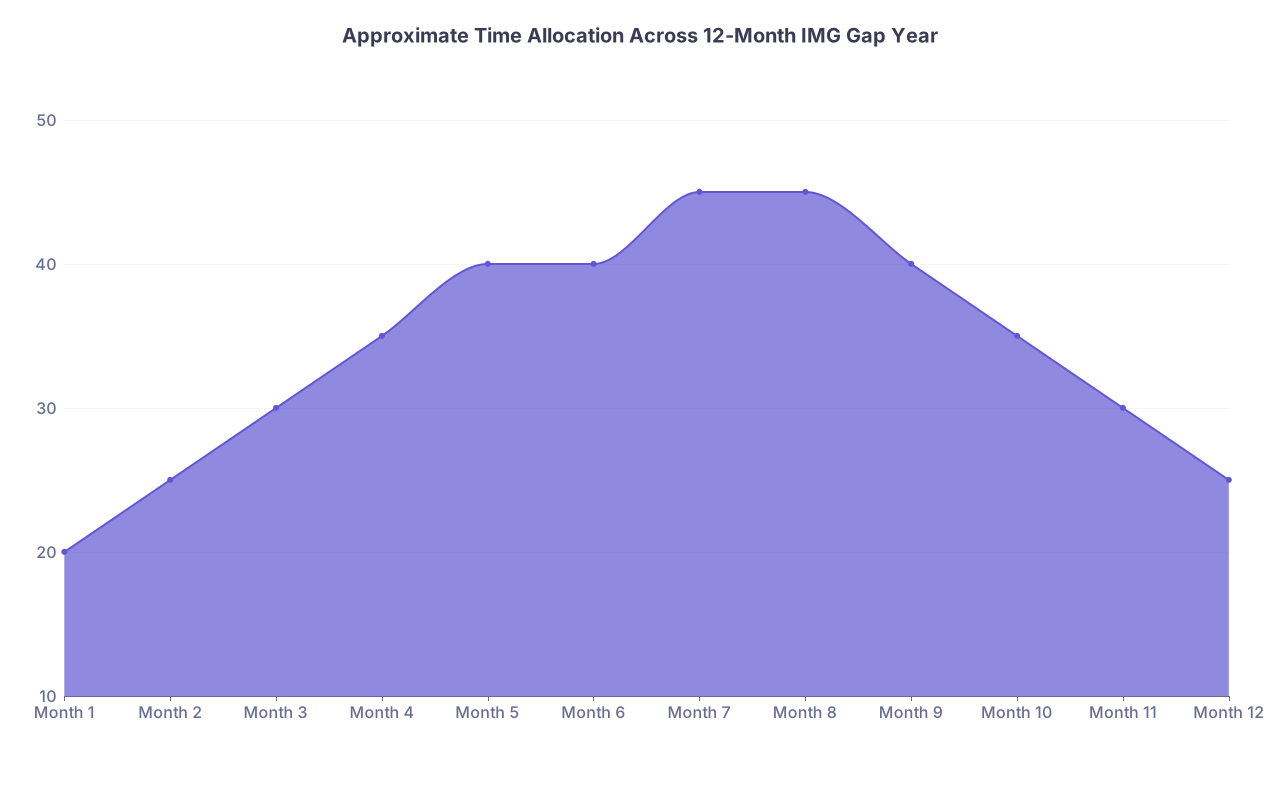
| Category | Value |
|---|---|
| Month 1 | 20 |
| Month 2 | 25 |
| Month 3 | 30 |
| Month 4 | 35 |
| Month 5 | 40 |
| Month 6 | 40 |
| Month 7 | 45 |
| Month 8 | 45 |
| Month 9 | 40 |
| Month 10 | 35 |
| Month 11 | 30 |
| Month 12 | 25 |
(Think of the curve like this: light at the start, peaks mid‑year when you’re juggling USCE + research + ERAS, then tapers as you focus on interviews.)
Month 7–9: Peak Output – Strongest USCE + Concrete Research Products
This is the core of your year. At this point you should already have:
- 1 completed or nearly completed USCE rotation
- One research mentor who knows your name and relies on you
- Exam plan clear or executed
Month 7–8: Second USCE – Strategically Timed
Target:
- A second rotation in your target specialty or a closely allied field.
- Preferably at a residency program or affiliated site.
Why Month 7–8?
- You’re more polished.
- You can ask for a LOR that will be ready before ERAS deadlines.
During this block, you should:
- Re-use what you learned from the first rotation:
- Present cases succinctly.
- Know hospital workflows.
- Understand US attending expectations: brevity, safety, documentation awareness.
- Explicitly ask for:
- A US‑style LOR on letterhead.
- That it comments on:
- Clinical reasoning
- Work ethic
- Communication skills
- Fit for US residency
Month 7–9: Turn Research Work Into Real Outputs
You’re no longer “doing research.” You’re now converting effort into CV lines.
Possible outputs by Month 9:
- Abstract submission to:
- ACP
- AAFP
- Specialty‑specific meetings (ATS for pulm, AHA for cards, etc.)
- Case report:
- From an interesting patient seen during USCE.
- Manuscript draft:
- Even if it’s not accepted yet, “manuscript in preparation/submission” under your mentor’s supervision is still something—just don’t lie about status.
By Week 4 of Month 9, you should be able to list:
- Project 1: My role, current status
- Project 2: My role, current status
- Project 3 (optional): Data/assisting role
If you can’t list them clearly, you’re just “busy” without product. That’s a red flag.
ERAS and Match Prep Integrated into the Timeline
You’re not doing USCE and research in a vacuum. It all feeds into ERAS. Let’s align it.
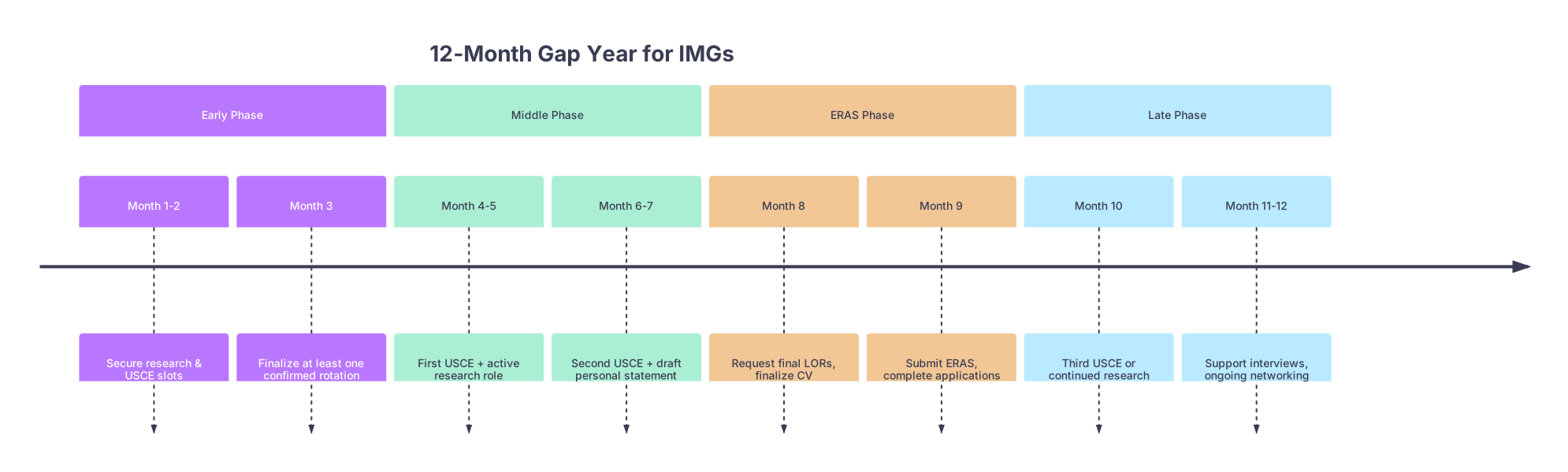
| Period | Event |
|---|---|
| Early Phase - Month 1-2 | Secure research & USCE slots |
| Early Phase - Month 3 | Finalize at least one confirmed rotation |
| Middle Phase - Month 4-5 | First USCE + active research role |
| Middle Phase - Month 6-7 | Second USCE + draft personal statement |
| ERAS Phase - Month 8 | Request final LORs, finalize CV |
| ERAS Phase - Month 9 | Submit ERAS, complete applications |
| Late Phase - Month 10 | Third USCE or continued research |
| Late Phase - Month 11-12 | Support interviews, ongoing networking |
Month 8–9: ERAS Build-Out While Finishing Rotations
At this point you should be:
- Finalizing:
- CV entries with clear dates, roles, locations
- USCE descriptions (avoid “observed.” Use “participated in” where accurate.)
- Drafting and polishing:
- Personal statement:
- Show your US experience.
- Tie your research and clinical work into a single narrative.
- Personal statement:
- Confirming:
- LOR upload status in ERAS (do not assume your letter writers actually uploaded them—politely verify).
Schedule by Week in Month 9:
- Week 1:
- Personal statement finalized.
- Program list drafted (IMG‑friendly, realistic mix).
- Week 2:
- ERAS activities filled.
- LORs at least promised with ETA.
- Week 3:
- ERAS submission (don’t play games with ultra‑late submission dates).
- Week 4:
- Secondary portals, extra questions, and any program‑specific forms.
Month 10–12: Final Push, Extra USCE, and Interview Support
If your timeline aligns with the Match cycle (ERAS in September), these months are your late game.
Month 10–11: Third USCE (Optional but Powerful)
If you can afford and arrange it, a third rotation now helps:
- For unmatched re‑applicants (if this is a pre‑reapplication year): shows continued clinical activity.
- For first‑cycle applicants: helps with last‑minute LORs if an early letter falls through.
During this rotation, your goals are slightly different:
- Focus on:
- Interview practice: ask attendings for mock interviews or feedback.
- Program intel: how residents got in, what PDs care about.
Month 10–12: Interview Season Support
If you do get interviews:
- Clear your schedule on interview days—no rotas, no double‑booking.
- Use days between interviews to:
- Update your mentors where you’ve interviewed, ask for targeted advice.
- Reflect and adjust your answers.
If you’re not getting interviews this cycle:
- Use this time brutally honestly:
- Meet with a mentor/attending and ask:
- “If you were my PD, would you rank my application? Why or why not?”
- Identify holes: low Step score, recent graduation, weak LORs, not enough USCE, no clear narrative.
- Start planning your next 6–12 months before March hits.
- Meet with a mentor/attending and ask:
Sample Weekly Schedule Templates by Phase
To make this real, here’s how your week might look at different stages.
| Phase | USCE Hours | Research Hours | ERAS/Apps | Exams/Other |
|---|---|---|---|---|
| Months 1–2 | 0 | 15–20 | 15–20 | 10–15 |
| Months 4–6 | 30–40 | 10–15 | 5 | 5–10 |
| Months 7–9 | 25–35 | 10–15 | 10–15 | 0–5 |
What Strong vs Weak Gap Years Look Like
You need to be honest about which path you’re on.
| Aspect | Strong Year | Weak Year |
|---|---|---|
| USCE | 2–3 rotations, 1+ at teaching hospital | 1 short observership, non-teaching clinic |
| LORs | 2–3 detailed US letters | 1 generic letter, rest home-country |
| Research | Abstract/poster or paper with clear role | “Helped with research” but no outputs |
| Story | Coherent specialty focus, clear growth | Random activities, no unified narrative |
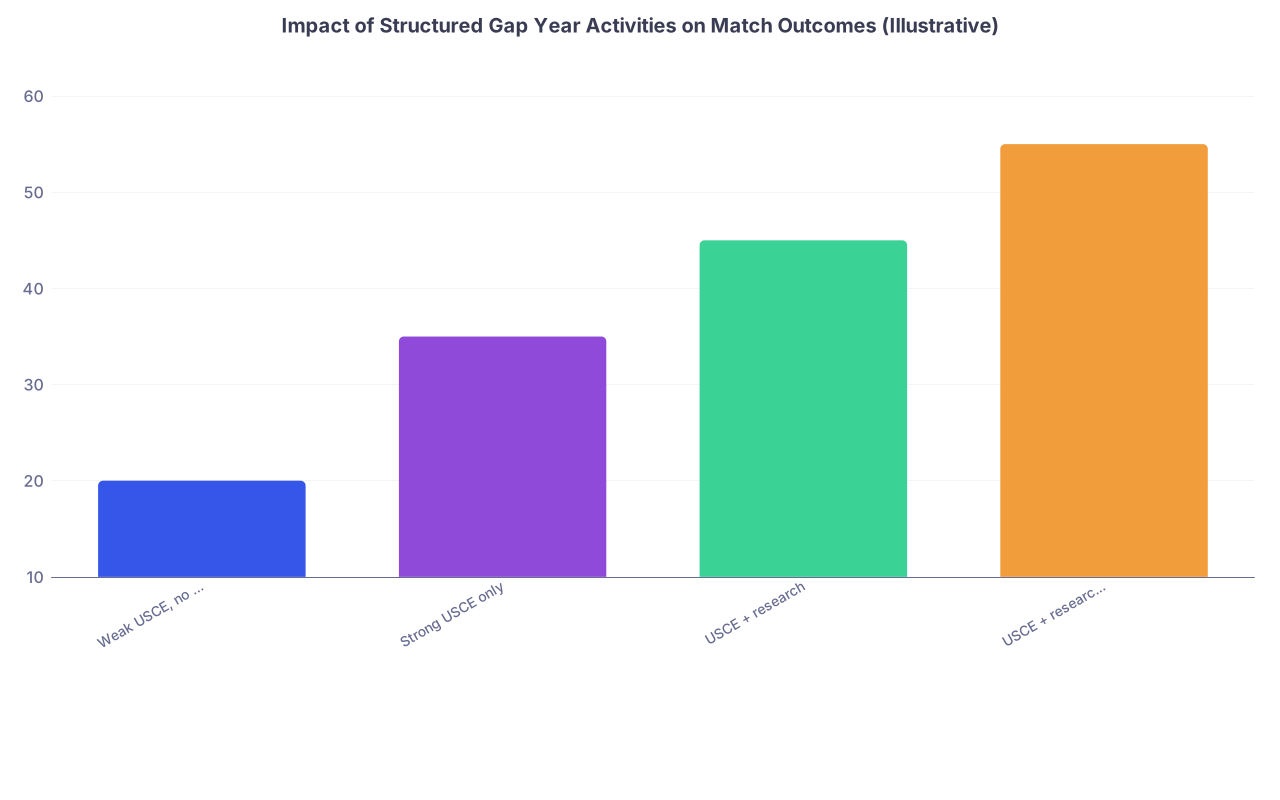
| Category | Value |
|---|---|
| Weak USCE, no research | 20 |
| Strong USCE only | 35 |
| USCE + research | 45 |
| USCE + research + strong LORs | 55 |
(Those percentages aren’t from a specific dataset—they reflect what I repeatedly see anecdotally: layered activities outperform isolated ones.)
Common Pitfalls by Month – And What You Should Do Instead

Months 1–3 Pitfalls
- Waiting for “perfect” research or USCE instead of taking a decent option.
- Sending 3–5 emails a week and calling that effort.
At this point you should:
- Prioritize any legitimate, rule‑abiding USCE or research position that gets you started.
- Over‑apply. The worst that happens is people ignore you.
Months 4–6 Pitfalls
- Treating observership like tourism.
- Never directly asking for feedback or a LOR.
At this point you should:
- Act like a sub‑intern within the rules. Prepare, read, and follow up on patient issues.
- Make it very easy for attendings to say “yes” to a letter: give them your CV, draft bullet points, and plenty of notice.
Months 7–9 Pitfalls
- Letting ERAS consume you while neglecting actual work.
- Spreading yourself across five micro‑projects in research instead of finishing one.
At this point you should:
- Ruthlessly prune low‑yield tasks.
- Push at least one project to a clearly citable output.
Months 10–12 Pitfalls
- Emotionally shutting down if interviews are few/none.
- Letting the end of the year dissolve into vague “planning.”
At this point you should:
- Use real data—interview count, feedback, mentor opinions—to decide your next step.
- Either double‑down on a reapplication strategy or, if needed, start planning for alternate routes (fellowships, non‑US training, or back‑up careers).
A Visual Walkthrough of Your Year
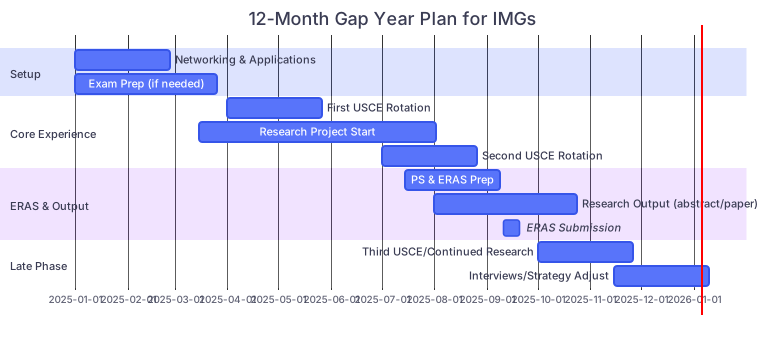
| Task | Details |
|---|---|
| Setup: Networking & Applications | a1, 2025-01-01, 8w |
| Setup: Exam Prep (if needed) | a2, 2025-01-01, 12w |
| Core Experience: First USCE Rotation | b1, 2025-04-01, 8w |
| Core Experience: Research Project Start | b2, 2025-03-15, 20w |
| Core Experience: Second USCE Rotation | b3, 2025-07-01, 8w |
| ERAS & Output: PS & ERAS Prep | c1, 2025-07-15, 8w |
| ERAS & Output: Research Output (abstract/paper) | c2, 2025-08-01, 12w |
| ERAS & Output: ERAS Submission | milestone, 2025-09-15, 1d |
| Late Phase: Third USCE/Continued Research | d1, 2025-10-01, 8w |
| Late Phase: Interviews/Strategy Adjust | d2, 2025-11-15, 8w |

If You Remember Nothing Else
Three things.
Front‑load the hunting, not the hoping. Months 1–3 are for aggressive outreach and securing positions. If you’re “waiting to hear back” from five places with no backup plan, you’re already behind.
Every block must produce an asset. Each 3‑month period should end with something you can put into ERAS: a completed USCE, a LOR, an abstract, or a manuscript draft. If not, you’re just busy, not advancing.
Your year needs a story, not a collection of random lines on a CV. USCE, research, and letters should align around your target specialty and show progression. At each point in time you should be asking yourself: “What am I building toward—and can I prove it on paper?”
You have 12 months. Treat every one like it matters, because for gap‑year IMGs trying to break into US training, it does.