The biggest mistake IMGs make with USCE is timing. Not quality. Not letters. Timing.
If you get the year-before-Match timeline wrong, you will waste rotations, miss LOR windows, and look “stale” to programs. You do not have that luxury.
Below is a month‑by‑month USCE roadmap for the 12 months before Match, written for IMGs who are serious about maximizing every block of clinical time.
Big Picture: Your 12‑Month USCE Calendar
Before we go month by month, fix these anchor points in your head. I am assuming a standard Match year:
- ERAS opens: early June
- You can submit ERAS: mid–September
- MSPE release / application download spike: October 1
- Interviews: October–January
- Rank list due: late February
- Match Day: mid–March
Your USCE should bracket that calendar intelligently.
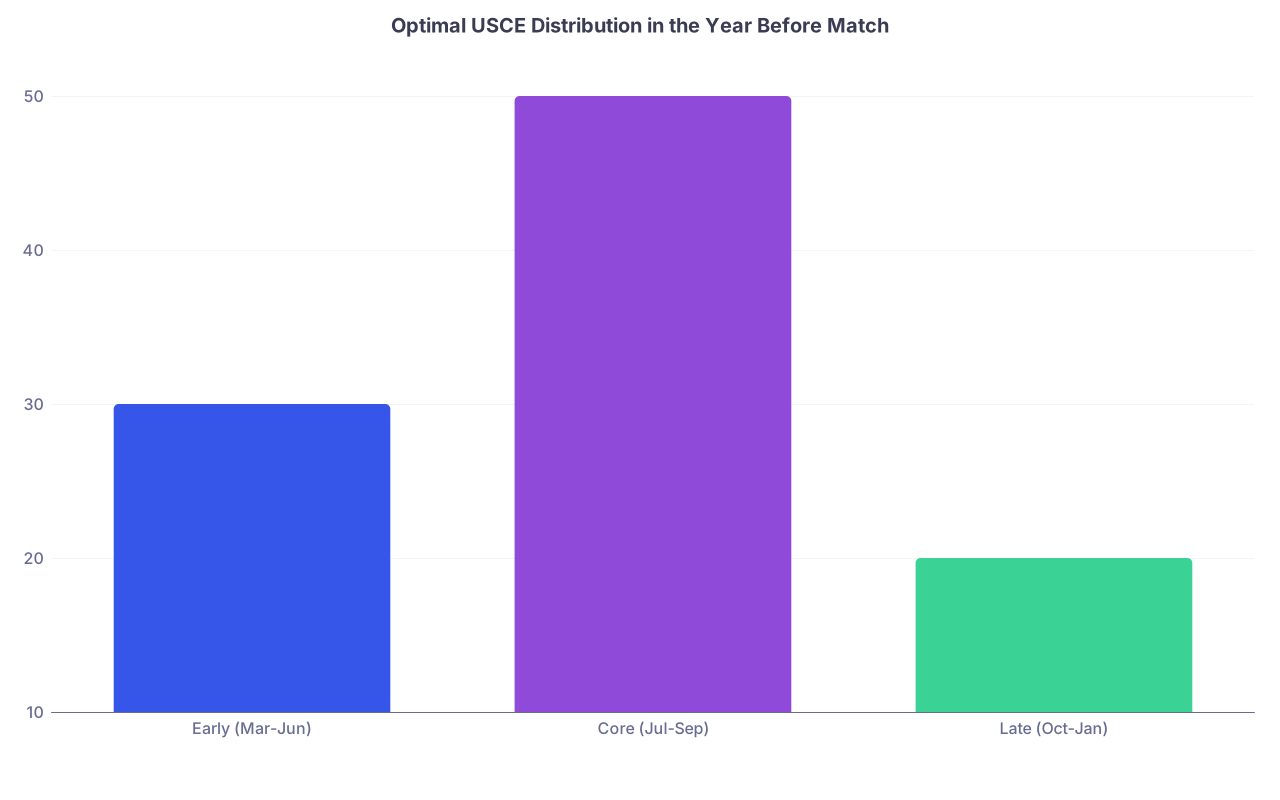
| Category | Value |
|---|---|
| Early (Mar-Jun) | 30 |
| Core (Jul-Sep) | 50 |
| Late (Oct-Jan) | 20 |
- Early (March–June): Secure spots, start U.S. exposure, fix any obvious gaps.
- Core (July–September): Prime LOR season and recency window for ERAS.
- Late (October–January): Targeted, interview-supportive USCE that reinforces your specialty choice.
Now let’s walk through it chronologically.
Month 12 Before Match (Previous March): Commit and Backwards-Plan
At this point you should stop “thinking about” applying and actually commit. This is where IMGs either get disciplined or drift.
Your objectives this month:
Lock your specialty choice
- You cannot build a coherent USCE year if you are still bouncing between IM, FM, Neuro, and Psych.
- Decide on:
- Primary specialty (e.g., Internal Medicine)
- Acceptable backup (e.g., Family Medicine or prelim year)
Map required USCE volume
- General rule for competitive IMGs:
- 8–12 weeks of U.S. hands-on clinical experience in your chosen specialty
- At least 2 strong LORs from U.S. attendings in that field
- If you are aiming for more competitive specialties (Neuro, OB, etc.), push toward the higher end of USCE weeks.
- General rule for competitive IMGs:
Build your USCE master calendar
- Open a 12‑month calendar (digital, not in your head).
- Block:
- March–May: mostly planning + some early rotations if possible
- June–September: core audition months – must be high-yield USCE
- October–January: interview-season supportive rotations
You should walk out of this month with a draft schedule like:
| Period | Focus |
|---|---|
| Mar–Apr | Applications for USCE, observerships |
| May–Jun | First USCE block(s) |
| Jul–Sep | Core hands-on rotations + LORs |
| Oct–Nov | Specialty-aligned rotations near target regions |
| Dec–Jan | Flexible USCE + interview support |
If your calendar is blank at the end of Month 12, you are already behind. Fix that now.
Month 11 (April): Secure Rotations and Visas
At this point you should be aggressively booking USCE. Not browsing “top observerships” on Reddit.
Priority #1: Applications to USCE programs
Target:
- University-affiliated hospitals
- Community programs with active residencies in your field
- Structured IMG‑friendly programs (AMO, Chicago Clerkships, etc.—yes, they can be expensive, but sometimes that is the cost of entry)
Sort your applications by:
- Hands-on vs observership: Hands-on (history, physicals, notes, presentations) always preferred.
- Specialty match: 70–80 percent of your USCE should be in your target specialty.
- Timeline fit: July–September are the most valuable months. Guard them.
Priority #2: Visa and documents
You should already have:
- Valid passport
- US visa strategy (B1/B2 vs others)
- Degree status clear (final-year student vs graduate)
- Step 1 (and ideally Step 2 CK) scores available or coming soon
Every rotation coordinator has the same questions:
- Who are you?
- Are you insured?
- Are you legally allowed to be here?
- Have you done Step exams?
Prepare a boilerplate packet:
- CV (U.S. format, 1–2 pages)
- US‑style personal statement paragraph (not the full ERAS essay, just a short “who I am + specialty interest”)
- Exam score reports
- Dean’s letter / enrollment or graduation verification
- Immunization and TB documents
- Proof of malpractice insurance if required (many structured programs arrange this for you)
Month 10 (May): First USCE Block and Professional Reset
By now, at least one early rotation should be booked for May or June. If not, all your “core” months will compress and you will panic later.
At this point you should be:
Starting your first early rotation
- Treat this as your U.S. system orientation:
- Learn EMR basics
- Learn how rounds actually run at 7:00 a.m., not in theory
- Learn how to present succinctly: “One-liner + overnight events + assessment/plan”
- This month’s LOR may not be your best, but it will teach you the standards.
- Treat this as your U.S. system orientation:
Fixing your professional image
- Buy 2–3 sets of professional clothes that work in U.S. hospitals.
- Standard U.S. presentation template drilled into your brain.
- Figure out how to introduce yourself:
- “I am Dr. X, visiting physician from [Country], working with the team on a non-licensed basis.”
I have watched IMGs lose respect in week 1 because they sound apologetic or uncertain. Do not.
- “I am Dr. X, visiting physician from [Country], working with the team on a non-licensed basis.”
Confirming July–September slots
- Email coordinators for any pending core-month requests.
- Accept something reasonable instead of chasing “perfect” and ending with “nothing.”
Month 9 (June): Align USCE with ERAS and LOR Timing
June is where smart IMGs separate from the rest.
At this point you should:
Be actively in a U.S. clinical setting or about to start in July at the latest.
Plan your LOR timeline backward from ERAS
You want:
- At least 1 U.S. LOR uploaded by early September
- Ideally 2–3 U.S. LORs from rotations June–September
Which means:
- June/July rotations → Ask for letters in late July / early August
- August rotations → Ask last week of August
- September rotations → Ask mid‑rotation and remind early October (they can be uploaded post‑submission; programs will still see them)
- Tell attendings you are applying this cycle
Not at week 4. At week 2.
Say it clearly:
“Dr. Smith, I am applying for Internal Medicine this coming ERAS cycle. I would be very grateful if, based on my performance, you might consider writing a letter of recommendation.”
If they hesitate, that is data. You still have time to impress someone else in August.
Month 8 (July): Core USCE – Audition Phase Begins
July is prime time. Many U.S. grads are just starting intern year. Teams are feeling out the new flow. You can either be a burden or a relief.
At this point you should:
- Be in a specialty-aligned, hands-on rotation if at all possible
Daily priorities:
- Show up early.
- Know your patients cold.
- Anticipate tasks.
- Present clearly without reading.
This is where the strongest LORs are born.
- Identify your LOR writer by the end of week 2
You are looking for:
- An attending who sees you frequently
- Someone who has watched you on:
- Rounds
- Notes / EMR
- Interactions with nurses and patients
- Preferably involved in residency selection or academic leadership (PD, APD, core faculty)
- Ask for specific, ERAS-focused letters
Near the end of the rotation:
“Dr. Lee, I am applying to Internal Medicine residency this September. I have really valued working with you. Would you feel comfortable writing a strong letter of recommendation commenting on my clinical reasoning and teamwork for my ERAS application?”
If they say yes, give them:
- CV
- Personal statement draft (even a rough one)
- List of programs or at least your goals
- ERAS letter request with waiver signed
Month 7 (August): Stack One More Strong LOR
At this point you should already have:
- 1 strong July LOR pending or uploaded
- At least 1–2 more U.S. rotations booked through October
August is your second swing at a top-tier letter.
During this month:
Do another core specialty rotation if possible
- Ideally a different setting:
- If July was community, aim for academic in August.
- Or vice versa. Shows versatility.
- Ideally a different setting:
Fine‑tune your ERAS story based on feedback
Attendings will say things like:
- “You are great with complex sick patients.”
- “You present very clearly.”
- “You need to work on efficiency.”
Use that feedback in:
- Your personal statement
- How you position your strengths in interviews later
- What you emphasize in your CV bullets
- Coordinate LOR timing with attendings
You want at least 2 U.S. LORs fully uploaded by early September.
Do not just “hope” they will remember. Send:
- A polite reminder email 7–10 days after the rotation ends
- Another if needed right before ERAS opens
Month 6 (September): ERAS Submission and Strategic USCE Use
September is non‑negotiable. You cannot treat this like any other month.
At this point you should:
- Submit ERAS as early as realistically complete
- Aim: mid–September submission
- Have:
- CV polished
- Personal statement aligned with your actual USCE experiences
- At least 2 U.S. letters in, 3rd on the way
- Use a September rotation carefully
Options:
- If you have enough letters already:
- A September rotation can be slightly lower pressure, used to reinforce your clinical skills and generate more concrete experiences for interviews.
- If you still need a letter:
- Tell the attending up front you are already applying and that a timely letter would significantly help.
- Align your ERAS content with your real rotations
Your USCE should not feel random on paper. It should tell a narrative:
- “I completed multiple inpatient and outpatient Internal Medicine rotations at U.S. institutions, where I took ownership of patient care, presented on rounds, and integrated into multidisciplinary teams.”
If your rotations are scattered and unclear, revise the wording in your Experience section so that the through-line is obvious.
Month 5 (October): MSPE Release and Interview Prep During USCE
Once October 1 hits, programs start actively looking. If they like your file, they will often peek at recency of USCE.
At this point you should:
- Be in or just finishing another specialty-aligned rotation
Ideal targets:
- Rotations in regions where you applied heavily
- Hospitals with programs you applied to
Even an observership associated with a residency program can help if faculty interact with you and can advocate informally.
- Shift some energy from “proving yourself” to “interview readiness”
During this month:
- Practice 5–10 common interview questions with actual examples from your USCE:
- “Tell me about a difficult patient from your U.S. rotation.”
- “How have you adapted to the U.S. healthcare system?”
- Refine 2–3 go-to cases from your rotations that show:
- Clinical reasoning
- Communication
- Ownership and follow‑up
- Use attendings as sounding boards
You can ask:
“Dr. Patel, I am starting to prepare for interviews. Based on how you have seen me on this rotation, what strengths should I highlight? Anything I should be careful about?”
You will get brutally honest, extremely useful feedback.
Month 4 (November): Balancing USCE with Early Interviews
By now, invitations should be trickling in if your profile is competitive. If you have zero by late November, that is a separate conversation, but let us assume you are getting some.
At this point you should:
- Keep at least one foot in clinical work
You do not want a long gap from October to February with no patient contact.
Good options:
- Part‑time observership
- Two‑week blocks instead of a full month
- Clinic-based USCE with predictable hours
- Use USCE to support upcoming interviews
If you have an interview at a community IM program, and you are currently in a big academic center, make mental notes:
- How team structure differs
- Patient populations you have seen that mirror the program’s
- Examples that show you can thrive in both settings
- Avoid over‑committing to heavy inpatient while interviews ramp up
I have watched IMGs try to work 80‑hour weeks on a rotation and then speed‑interview from the call room. It shows. Your energy and focus will tank.
Design November so you can step away for 2–3 interview days without collapsing.
Month 3 (December): Flexible USCE and Interview-Driven Adjustments
December is messy. Holiday schedules, lighter census in some places, interview clusters. You need flexibility.
At this point you should:
- Favor shorter or more outpatient-heavy experiences
- Two‑week ambulatory rotations
- Clinic days 3–4 times per week
- Research with some clinic exposure if clinical spots are scarce
- Mine your USCE for interview material
During this month, between interviews, you should be:
- Writing down 5–10 specific patient stories from your rotations.
- Linking each to:
- A skill (communication, leadership, cultural competence)
- A learning point (guideline, diagnostic reasoning)
- A reflection (“This case confirmed my decision to pursue…”)
Occasionally:
- Update them when you get significant interviews.
- Thank them again for their letters and support.
Sometimes, an attending will email a PD they know and quietly advocate. Those emails are never advertised, but they happen.
Month 2 (January): Final USCE Touches and Last Impressions
By January, most interview offers are out. Some programs still run late, but rarely.
At this point you should:
- Avoid starting totally new heavy inpatient rotations
Your energy is already drained from months of interviews. If you commit to a brutal schedule, your performance will drop and any LOR from this month will be mediocre at best.
Better approaches:
- Light observership
- One more clinic-based month
- A rotation that helps your backup specialty if that is still in play
- Use USCE to double-check specialty fit before ranking
Pay attention:
- Do you feel at home on the IM service?
- Are you energized or exhausted by this type of patient?
- Do the residents you meet at programs feel like “your people” compared to the ones in your current hospital?
It is not sentimental. This should inform your rank list.
Month 1 (February): Rank List and USCE Wind‑Down
This is the close. No new heroics. No “maybe one more letter.” That window has passed.
At this point you should:
- Prioritize rank list strategy
Use your whole year of USCE to sort programs:
- Places where your attendings know faculty
- Regions where you rotated and felt comfortable with the system and culture
- Program types that match what you have actually seen yourself enjoy
- If you are still in USCE, downshift intensity
- Maintain professionalism.
- Do not voluntarily tank your last rotation.
- But accept that your main work product now is your rank list, not another marginal LOR.
- Collect final thank‑yous and future contacts
Before you leave:
- Ask attendings if you may keep them updated after Match.
- Store their professional emails somewhere safe.
- You may need them again for:
- SOAP
- Reapplying
- Future fellowship letters
Quick Comparison: Early vs Late USCE Impact
| Timing | Best For |
|---|---|
| Mar–Jun | Building skills, securing first LORs |
| Jul–Sep | High-impact LORs, ERAS recency |
| Oct–Jan | Interview stories, regional ties |
Visual: Your Year-Before-Match USCE Timeline
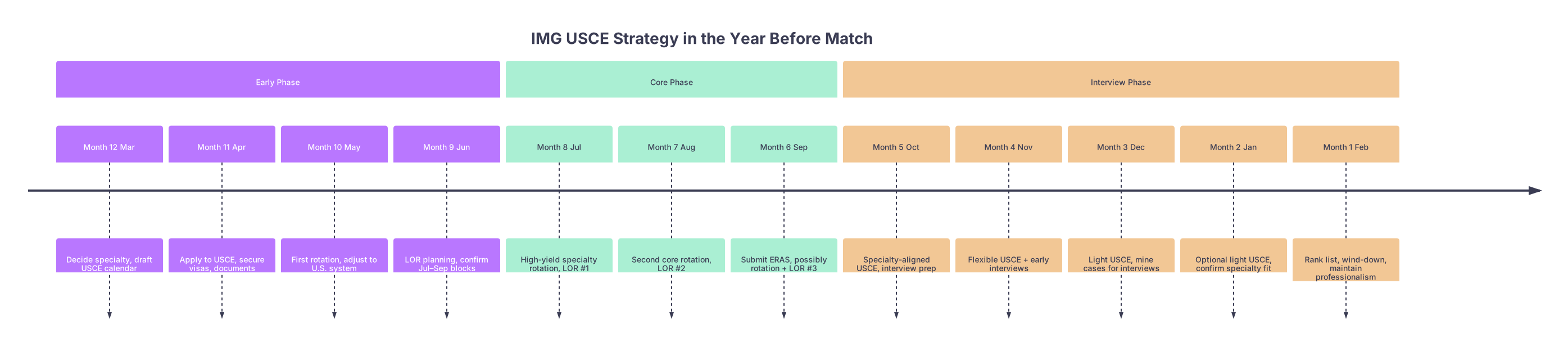
| Period | Event |
|---|---|
| Early Phase - Month 12 Mar | Decide specialty, draft USCE calendar |
| Early Phase - Month 11 Apr | Apply to USCE, secure visas, documents |
| Early Phase - Month 10 May | First rotation, adjust to U.S. system |
| Early Phase - Month 9 Jun | LOR planning, confirm Jul–Sep blocks |
| Core Phase - Month 8 Jul | High-yield specialty rotation, LOR #1 |
| Core Phase - Month 7 Aug | Second core rotation, LOR #2 |
| Core Phase - Month 6 Sep | Submit ERAS, possibly rotation + LOR #3 |
| Interview Phase - Month 5 Oct | Specialty-aligned USCE, interview prep |
| Interview Phase - Month 4 Nov | Flexible USCE + early interviews |
| Interview Phase - Month 3 Dec | Light USCE, mine cases for interviews |
| Interview Phase - Month 2 Jan | Optional light USCE, confirm specialty fit |
| Interview Phase - Month 1 Feb | Rank list, wind-down, maintain professionalism |
A Glimpse: How USCE Ties into Interview Volume
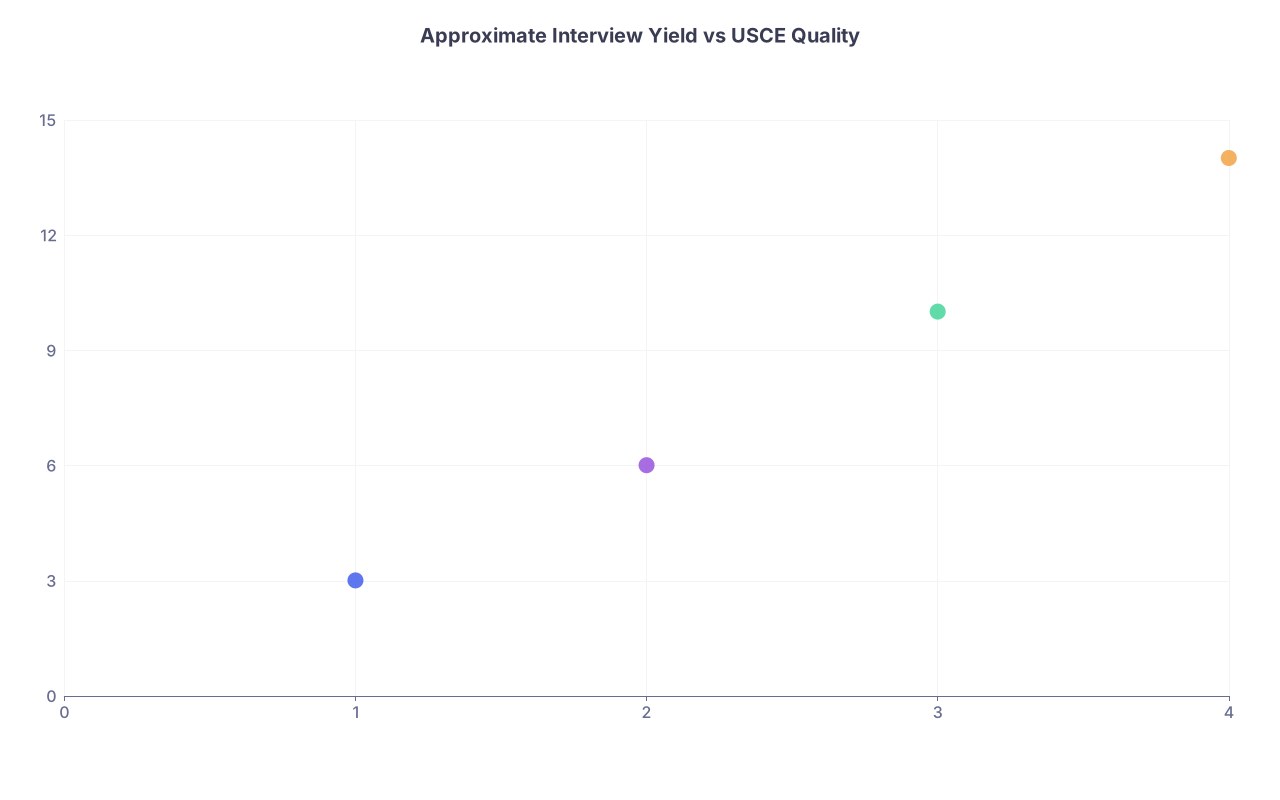
| Category | Value |
|---|---|
| Weak USCE | 1,3 |
| Moderate USCE | 2,6 |
| Strong USCE | 3,10 |
| Strong+Recent USCE | 4,14 |
(This is illustrative, not destiny. But you get the point: quality and timing of USCE matter.)
Final 3 Things To Remember
- The calendar is not optional. If you do not plan USCE month by month, the default outcome is random gaps, weak letters, and bad timing.
- July–September are sacred. Build everything else around those core months. That is where your strongest LORs and most recent experience should land.
- USCE is not just for ERAS, it is for your story. Every month should feed your letters, your personal statement, and your interview answers. If a rotation cannot help at least one of those, think twice before wasting a month on it.