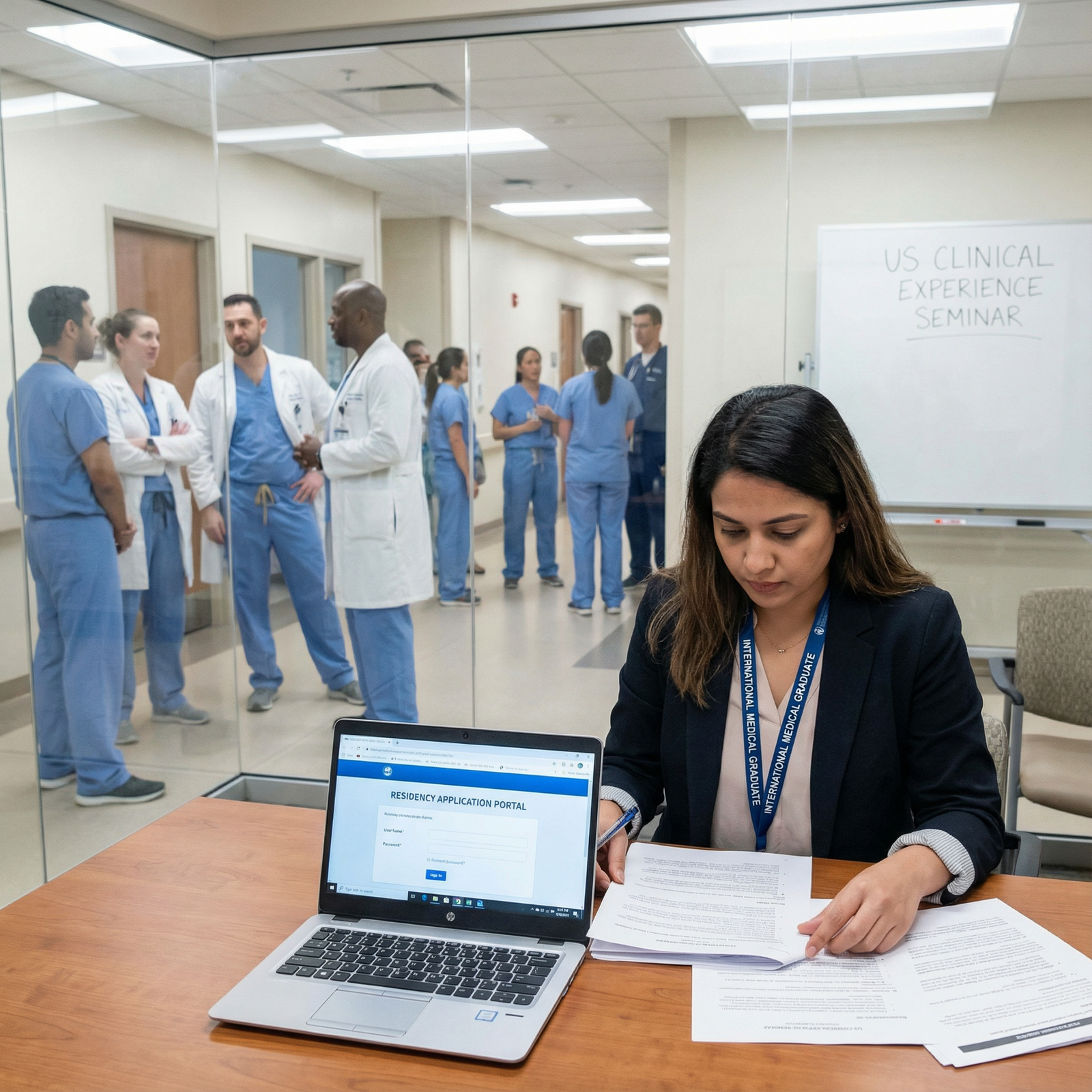
It is March 1st. You just realized most people started planning US clinical experience a year ago. Your Step scores are done (or nearly), applications for the Match are 6–7 months away, and you have… zero confirmed USCE.
You are late. Not doomed. But late.
This is your reality: if you are an IMG and you want any meaningful US clinical experience on your ERAS application this cycle, the next 6 months have to be aggressive, disciplined, and frankly a little uncomfortable.
Here is a compressed, no-excuses 6‑month action calendar to salvage USCE before applications go live.
Big Picture: Your 6-Month Sprint
At this point you should understand the hard constraints:
- You need USCE that finishes by September so letters are ready for ERAS.
- You have limited time to arrange contracts, visas, housing, and travel.
- Observerships and externships fill early. You are grabbing cancellations and late openings, not prime slots.
Your core goals for the next 6 months:
- Lock at least 1–2 months of USCE that includes direct attending exposure.
- Obtain 2 strong US LORs from US-based physicians.
- Avoid gaps: show continuous clinical involvement or preparation.
Here is how the next 6 months break down.
Month 1: Triage and Blitz (Right Now)
At this point you should stop “researching” and start executing. Week by week.
Week 1: Hard Reality Check and Strategy
Clarify your timeline
- Target Match year: this upcoming cycle.
- ERAS opens: early June.
- Programs start reviewing: mid‑September.
- Latest end date for USCE that still helps: end of September (letters still usable).
Assess your profile
- USMLE: passed? scores back?
- Visa status: B1/B2, F1, green card, or citizen.
- Money: realistically how much can you spend on USCE + housing + travel?
Define your minimum viable USCE plan
- Baseline target:
- 1 month of hands-on (externship or sub‑internship equivalent) OR
- 2–3 months of observerships with strong involvement + letters.
- More is better. But we are not chasing perfect; we are chasing “enough to not look clueless to PDs.”
- Baseline target:
Create a master spreadsheet Columns:
- Program/Clinic name
- City/State
- Type (observership/externship/research/tele-rotation)
- Requirements (USMLE, ECFMG, visa, immunizations)
- Cost
- Contact email/phone
- Status (not contacted / emailed / called / applied / waiting / accepted / rejected)
- Start dates available
You will live inside this sheet for 4 weeks.
Week 2: Wide Net Applications (Institutions + Paid Programs)
At this point you should apply broadly and stop being picky.
Institution-based observership programs
Prioritize large systems that still sometimes take late applicants:- University-affiliated community programs (e.g., community hospitals with internal medicine residencies).
- Safety-net hospitals and county systems.
- Places that are not in NYC/LA/Chicago. Less competition.
Paid externships / observership companies
Many IMGs hate these. I get it. Some are predatory. But on a compressed 6‑month timeline, they may be your only guaranteed path.- Focus on:
- Clear schedule (4–6 weeks per block).
- Direct attending contact.
- Explicit letter policy (who writes it, when, what format).
- Avoid:
- No promised letter.
- “Shadow multiple departments each week” with no continuity.
- Completely tele-only if you have zero prior USCE.
- Focus on:
Apply to at least 20–30 sites this week
- Use a standard email template, customized for:
- Specialty
- Start month flexibility
- Your Step status and goals
- Use a standard email template, customized for:
Do not email three places and then complain there are no opportunities. Volume matters.
Week 3: Cold-Calling and Direct Physician Outreach
At this point you should be contacting individual physicians and small groups, not just formal programs.
Target:
- Community hospitals.
- Private practice groups with hospital privileges.
- Hospitalist groups.
- Outpatient clinics near academic centers.
How to get contacts:
- Program websites: faculty lists with emails.
- Hospital “Find a Doctor” pages.
- LinkedIn.
- Friends and alumni already in the US.
Your outreach email (short, specific):
- Who you are (IMG, grad year, Steps).
- Why you are interested in their practice/specialty.
- Exact dates you are available (give 2–3 windows).
- What you are asking: a 2–4 week observership OR unpaid externship.
- Attach: CV + 1-page personal statement.
Aim for 30–40 physicians contacted this week.
Week 4: Documentation + Backup Plan
At this point you should assume at least some offers will come late or not at all. Prepare both for success and for failure.
Gather required documents
- Immunization records (MMR, Varicella, Hep B, Tdap).
- TB test / Quantiferon.
- COVID vaccine and booster documentation.
- Health insurance proof.
- Background check (if needed).
- ECFMG certificate or Step transcripts, if available.
Create a backup “still useful on ERAS” path If you get no USCE offers by the end of Month 2:
- Secure:
- Tele-rotations with US‑based attendings who will write letters.
- Research assistant roles (remote or on-site).
- Volunteer clinical roles that give patient exposure (free clinics, health fairs).
- Secure:
You cannot show six empty months. Programs will notice.
Month 2: Lock Dates, Fix Logistics, Protect Letters
By now, at this point you should have:
- At least a few “maybe” or “we will see” responses.
- Some idea about which months you can be physically in the US.
Your job this month is to convert “maybe” into “yes” and arrange your life around those dates.
Weeks 5–6: Close on Offers and Sequence Your Rotations
Confirm at least 1 rotation
- Push for:
- Start date: Month 3 or 4.
- Duration: At least 4 weeks. Longer is better.
- Preceptor: ideally an attending in the specialty you are targeting.
- Push for:
Sequence plan Ideal structure for the remaining months:
- Month 3–4: First USCE rotation (core letter #1)
- Month 4–5: Second USCE or tele-rotation (letter #2)
- Month 5–6: Research / continuity in US setting + ERAS prep
Confirm letter expectations early When an attending or program agrees to host you, clarify:
- Will they write a letter if you perform well?
- Will it be on institutional letterhead?
- Can the letter be uploaded to ERAS by September?
If an opportunity explicitly does not provide a letter, you should think hard about whether it is worth the time on a 6‑month schedule.
| Option Type | Priority Level | Typical Letter Strength |
|---|---|---|
| Hands-on externship | Highest | Strong, detailed |
| Structured observership | High | Good, if engaged |
| Tele-rotation (US-based) | Medium | Variable, ask early |
| Pure research only | Medium-Low | Good but non-clinical |
| Unstructured shadowing | Lowest | Often generic/weak |
Weeks 7–8: Visas, Housing, Finances
At this point you should be treating logistics as seriously as the rotation itself. People lose rotations because they “could not get there in time.”
Visa issues
- If you need a B1/B2 or other visa:
- Book the earliest possible embassy appointment.
- Prepare a clear rotation invitation letter and financial proof.
- If you already have US entry permission:
- Check duration; make sure your stay covers full rotation dates.
- If you need a B1/B2 or other visa:
Housing
- Short term options:
- Hospital housing (if offered).
- Airbnb near the hospital.
- Extended-stay hotels.
- Room sublets from residents / students (ask on Facebook groups, WhatsApp groups).
- Short term options:
Budget Build a realistic 6‑month cost estimate:
- Rotation fees (if any)
- Housing
- Food
- Local transport (public transit, Uber, car rental if absolutely necessary)
- Exam/ERAS fees
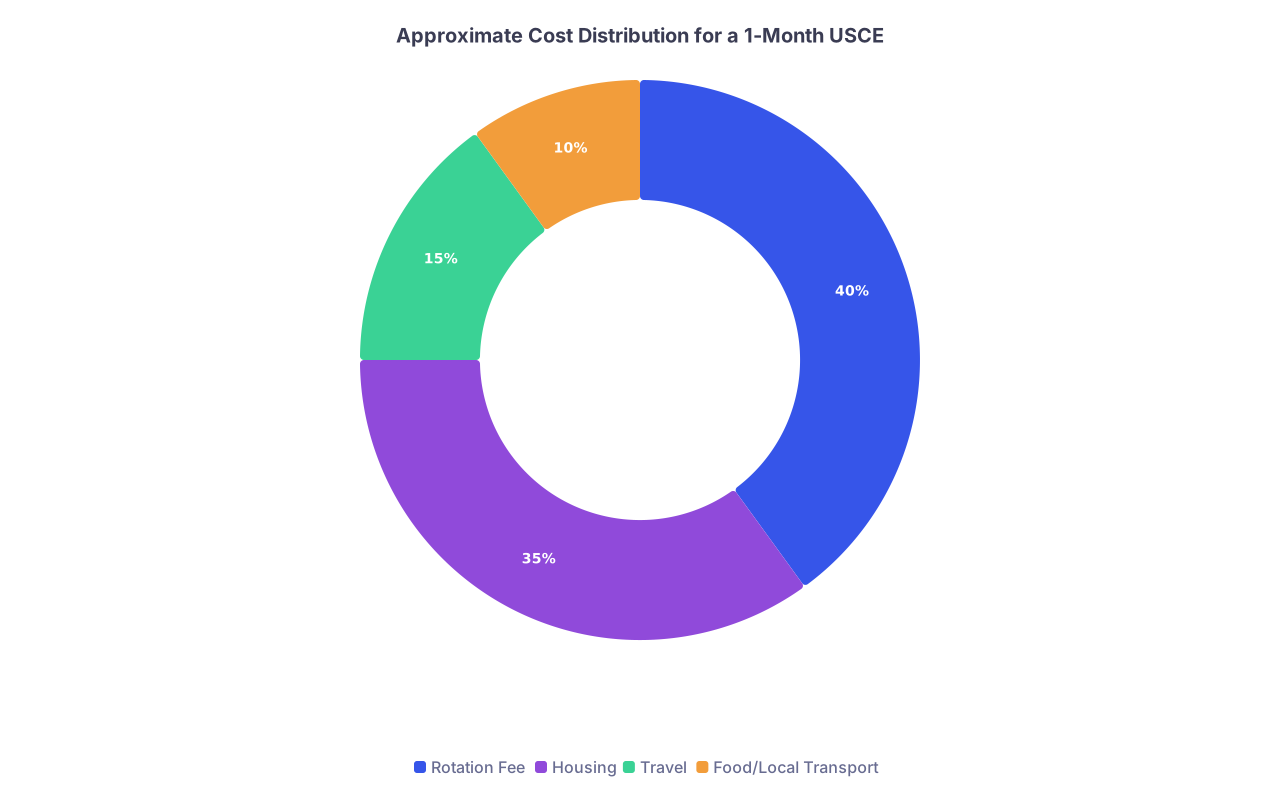
| Category | Value |
|---|---|
| Rotation Fee | 40 |
| Housing | 35 |
| Travel | 15 |
| Food/Local Transport | 10 |
If the numbers are brutal, adjust:
- One in‑person 4‑week rotation + one tele-rotation might be financially realistic and still useful.
Month 3: First USCE Block – Performance Mode
Now you are in. Or you should be. At this point you should be starting your first confirmed USCE.
Your only job: perform so well that your attending cannot write you a bad letter even if they tried.
Week 9–10: Integration and Impression
Day 1–3: Learn the system fast
- Clinic / floor layout
- EMR access (or workaround if observers cannot chart)
- Rounding structure, sign-out, team hierarchy
- How nurses and staff prefer to communicate
Within the first week, tell your attending:
- You are applying this upcoming cycle.
- You hope to earn a strong letter if they feel your performance justifies it.
- The timeline: you would need the letter by early–mid September.
Do not wait until the last day. That is how you end up with “To Whom It May Concern, he rotated here and did okay.”
- Behaviors that actually get you a letter
- Pre-rounding (even if unofficial).
- Presenting patients concisely on rounds.
- Looking up guidelines after each case and mentioning what you learned.
- Being the person who always volunteers for the unglamorous tasks.
I have watched attendings decide about letters in the first 7–10 days. They will not say it out loud, but you can see their mind is made up.
Week 11–12: Consolidate, Ask, and Document
At this point you should be nearing the end of your first rotation.
End-of-rotation meeting
- Ask for feedback.
- Ask directly: “Do you feel comfortable writing me a strong letter of recommendation for internal medicine residency this cycle?” (Change specialty as needed.)
Provide a letter packet
- Updated CV
- Personal statement draft
- List of cases you saw together (bullet form)
- Your ERAS ID if available
Confirm upload plan
- How will they upload?
- Do they want the ERAS letter request form now or later?
- Do they prefer to write it immediately while you are fresh in their mind? Push gently for earlier.
Month 4: Second USCE Block or Tele-Rotation + Parallel ERAS Prep
By now, at this point you should:
- Have 1 rotation done or nearly done.
- Be positioned for 1 letter (maybe 2 if multiple attendings observed you).
Now you stack one more meaningful experience.
Week 13–14: Start Second Rotation (On-Site or Tele)
If you secured a second in-person USCE:
- Treat it like a fresh audition. Different attending, different style.
- Aim for:
- New letter writer.
- Different setting (inpatient vs outpatient) if possible.
If all you managed to secure for this window is a tele-rotation:
- Maximize interaction:
- Turn on your camera.
- Speak up on cases and reading assignments.
- Ask for responsibility: case write‑ups, mini‑presentations.
Tele-rotations are weaker than in-person USCE. But a specific, detailed letter from a tele-rotation attending is still better than generic fluff from a crowded, in-person observership where no one remembers your name.
Week 15–16: Parallel ERAS Work
At this point you should not postpone ERAS prep until all rotations finish. That is how people run out of time.
Work in parallel:
- Draft your personal statement (tied to your USCE experiences).
- Update your CV with Month 3 rotation details.
- Build your programs list (filter by:
- Visa friendliness
- IMG percentages
- USCE requirements)
You are constructing a narrative: “I came to the US, engaged with the system, learned the workflow, and have attendings ready to vouch for me.”
Month 5: Letters, Gaps, and Final Polishing
By now, at this point you should have:
- 1–2 letters verbally promised.
- At least 1 completed, documented USCE on your CV.
- A second ongoing or completed rotation (or tele-rotation/research role).
Now the clock is really visible.
Week 17–18: Lock in All Letters
-
- Politely check in with attendings from Month 3 (and Month 4 if already completed).
- Provide ERAS letter request forms.
- Confirm:
- They know the deadline: aim for early September latest.
- They will upload directly to ERAS, not send to you.
Decide your letter set Aim for at least:
- 2 US clinical letters (from your compressed USCE).
- 1 letter from home-country or pre‑US supervisor (ideally academic or Department Chair).
- 1 research or long‑term mentor letter (if applicable).
You do not need 10 letters. You need 4–5 high-quality ones and to choose correctly for each specialty.
Week 19–20: Fill Any Remaining Time with Substance
If you have gaps (no rotation scheduled this month), at this point you should not be “resting” or “waiting.”
Options that still look good on ERAS:
- Short-term research assistantship.
- Consistent volunteer clinical work at free clinics or community health events.
- Telemedicine scribing or clinical documentation roles.
You want every month on your ERAS timeline to show intentional activity related to US healthcare or clinical practice.
Month 6: ERAS Lock-In and Last-Minute USCE
Now you are in the final stretch. ERAS is opening. You either have your USCE or you do not. Your focus now is presenting what you have in the strongest possible light.
Week 21–22: Final USCE and Profile Assembly
At this point you should:
Finish any remaining rotations
- Make a final push for detailed, personalized letters.
- Collect contact info for attendings and coordinators (you may need them later for verifications or updates).
Finalize ERAS entries
- Under Experiences:
- List each USCE with correct dates, location, and supervisor.
- Use bullet-style descriptions:
- “Observed and assisted in the management of inpatient general internal medicine patients under Dr. X; prepared daily case summaries.”
- “Participated in outpatient continuity clinic; presented literature reviews on hypertension management in underserved populations.”
- Under Experiences:
Update personal statement
- Integrate specific USCE scenes:
- “On my first rotation in a community hospital in Ohio, I learned…”
- PDs like seeing you know what US medicine actually looks like.
- Integrate specific USCE scenes:
Week 23–24: Submission and Damage Control
At this point you should be:
- Ready to submit ERAS in September.
- Monitoring your letters to ensure they are uploaded.
Submit ERAS as early in the opening window as possible
- Do not delay submission because one letter is missing.
- You can assign late-arriving letters later; programs will still see them.
Email a targeted update to some programs (optional, and only if substantial):
- Especially those where your Month 4–5 USCE matches their environment (e.g., community hospital, similar patient population).
- Keep it short: mention completion of USCE, key skills gained, and that your US letter is now uploaded.
If some letters do not appear
- One follow-up email to the attending, max two.
- If they remain non-responsive, accept it and configure ERAS with your remaining letters. Better to move forward than to cling to a missing LOR.
Example Compressed Timeline at a Glance
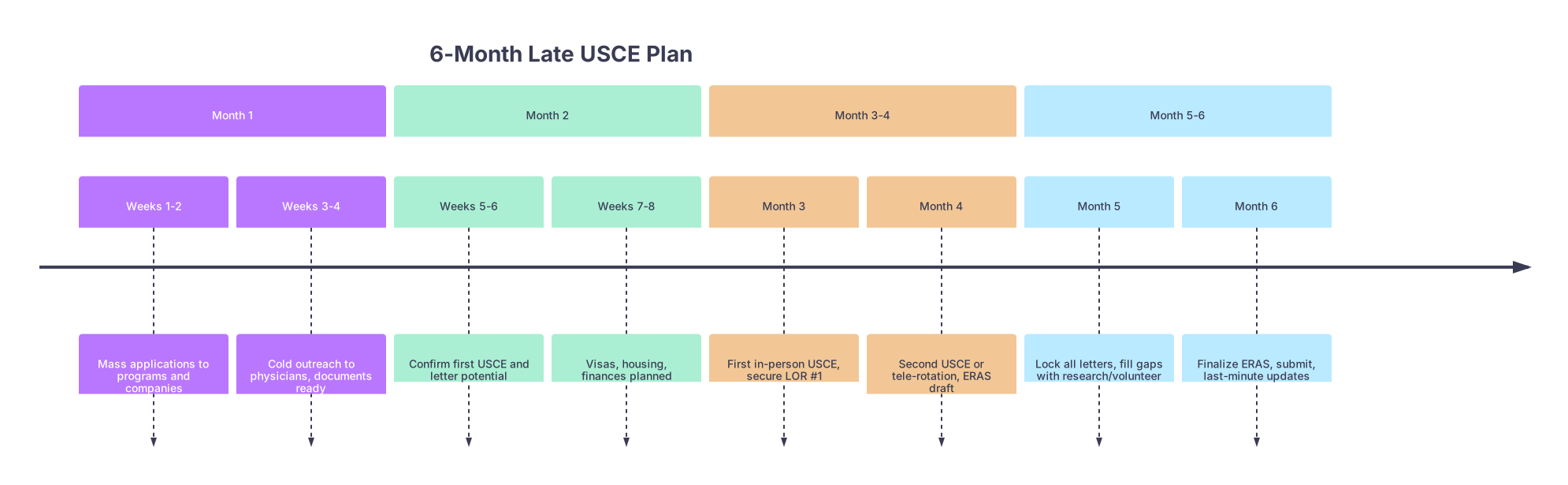
| Period | Event |
|---|---|
| Month 1 - Weeks 1-2 | Mass applications to programs and companies |
| Month 1 - Weeks 3-4 | Cold outreach to physicians, documents ready |
| Month 2 - Weeks 5-6 | Confirm first USCE and letter potential |
| Month 2 - Weeks 7-8 | Visas, housing, finances planned |
| Month 3-4 - Month 3 | First in-person USCE, secure LOR #1 |
| Month 3-4 - Month 4 | Second USCE or tele-rotation, ERAS draft |
| Month 5-6 - Month 5 | Lock all letters, fill gaps with research/volunteer |
| Month 5-6 - Month 6 | Finalize ERAS, submit, last-minute updates |
How Compressed USCE Actually Looks to Programs
Program directors are not stupid. They can see when all your USCE happened in a tiny burst before application.
But here is what matters more than the timing:
- Are the rotations in the US healthcare system (not just observerships abroad)?
- Are the letters specific and detailed, or generic and copy‑pasted?
- Do you show progression and reflection in your personal statement and interviews?
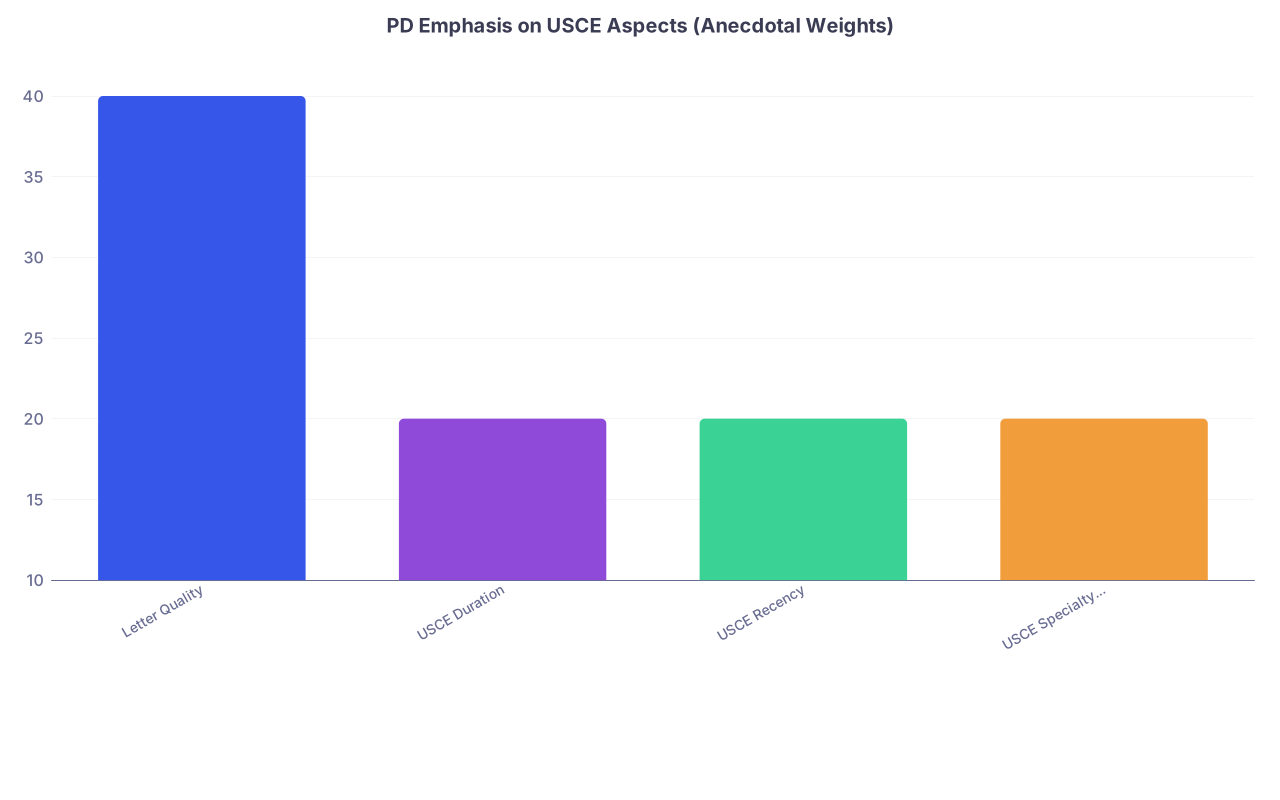
| Category | Value |
|---|---|
| Letter Quality | 40 |
| USCE Duration | 20 |
| USCE Recency | 20 |
| USCE Specialty Match | 20 |
Notice: duration matters. But letter quality overrides a lot. A 4‑week high‑impact externship with a powerful letter beats 3 months of anonymous shadowing every time.
Final 3 Things to Remember
- You are late, but not lost. A focused 6‑month sprint can still produce credible USCE and real letters if you treat this like a full-time job.
- Volume of outreach wins. Apply widely, cold-email aggressively, and stop waiting for the “perfect” opportunity. You do not have time for perfection.
- Every month must mean something. From now until ERAS submission, you cannot afford “blank” months. If you are not in a rotation, you should be in research, tele-rotations, or clinically relevant volunteering that you can defend proudly on interview day.