The fastest way to lose a USCE opportunity is not your CV. It is your email.
Program directors, attendings, and coordinators do not have time to forgive sloppy communication. They use your email as a quick proxy for how you will behave on the wards. If your email looks careless, entitled, or desperate, you will never even know you were rejected—because they simply will not reply.
You are an IMG. You do not have the margin of error that local students have. You cannot afford these mistakes.
The Harsh Reality: Your Email Is Your First “Mini‑Interview”
Most IMGs underestimate this. They think: “If my Step scores and CV are good, a slightly informal email is fine.” Wrong.
Here is what your email silently answers for the recipient:
- Can this person follow basic professional norms?
- Will this student embarrass me in front of patients or colleagues?
- Will I regret saying yes to this person?
They decide in seconds. On the basis of:
- Subject line
- Greeting
- Tone
- Length
- Grammar
- How easy you made their life
If any of those are off, your perfectly good application dies in their inbox.
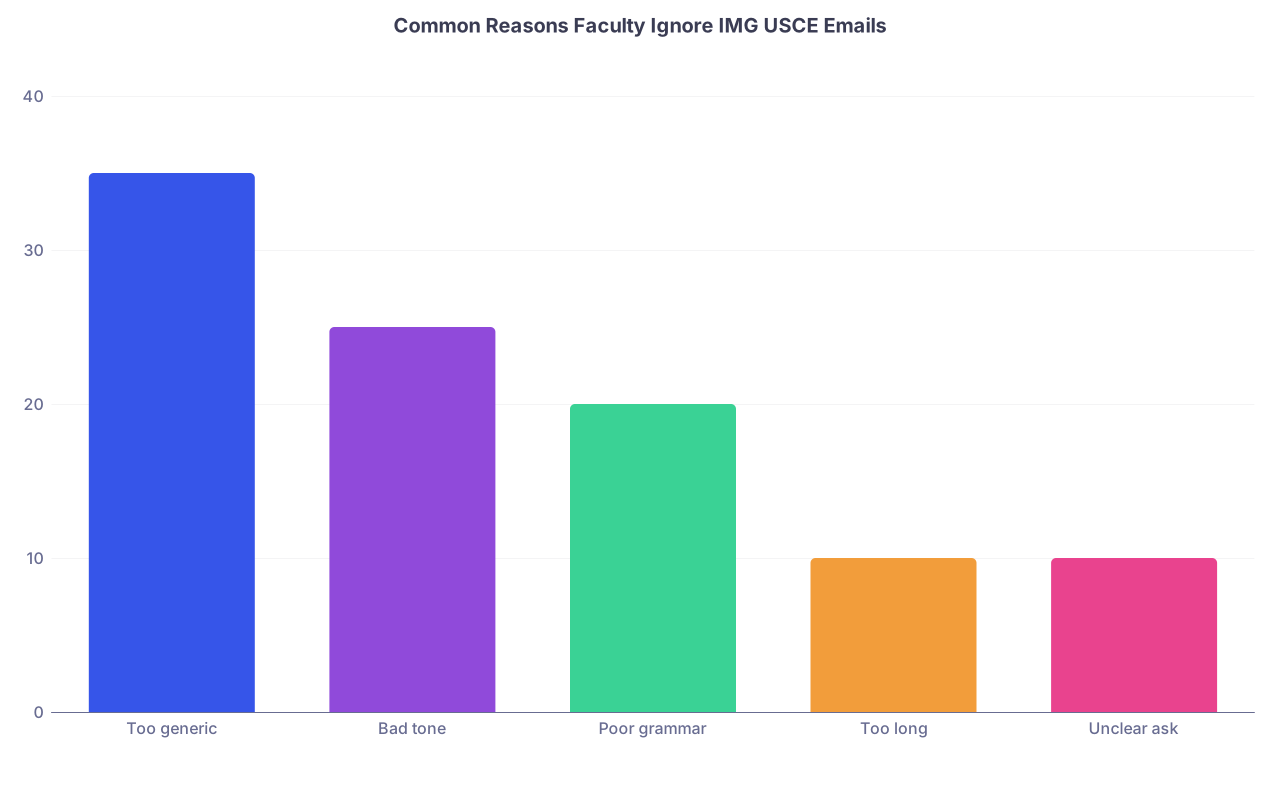
| Category | Value |
|---|---|
| Too generic | 35 |
| Bad tone | 25 |
| Poor grammar | 20 |
| Too long | 10 |
| Unclear ask | 10 |
Let me walk you through the unprofessional email habits that quietly kill your chances—and exactly how to avoid them.
Mistake #1: Sloppy Subject Lines That Scream “Mass Email”
If your subject line looks automated, vague, or spammy, many faculty will never even open the message.
Typical IMG disasters I see:
- “Request”
- “Observership”
- “USCE”
- “URGENT HELP NEEDED”
- “High Step Score IMG Seeking USCE”
- No subject line at all
These show poor judgment. They give the recipient nothing to work with.
What a bad subject line signals:
- You are emailing dozens (or hundreds) of people in a blast
- You have not thought about their time or priorities
- You may be difficult to supervise
Use specific, clean, and honest subject lines instead:
- “Inquiry about Observership in Internal Medicine – March–April 2026”
- “IMG Requesting 4‑Week Cardiology Observership – CV Attached”
- “Interest in Family Medicine USCE – [Your Name], 2025 Applicant”
Avoid:
- ALL CAPS
- Exclamation points
- Emotional language (“Desperate IMG seeking opportunity”)
- Clickbait phrasing (“Please read, very important”)
If your subject line could be copy‑pasted to 100 different people, it is bad.
Mistake #2: Unprofessional Greetings and Over‑Familiarity
You are not texting a friend. You are writing to people who hold your future in their inbox.
I routinely see:
- “Hey Doc”
- “Dear Sir/Madam”
- “Dear Program”
- “To whom it may concern”
- “Hello Dear”
- Using first name only: “Hi John,” when you have never met
This feels lazy and sometimes disrespectful.
Correct approach:
- Use their professional title and last name whenever possible:
- “Dear Dr. Smith,”
- “Dear Professor Ahmed,”
- “Dear Program Coordinator Ms. Johnson,”
- When emailing a generic departmental address:
- “Dear Internal Medicine Education Office,”
- “Dear Neurology Clerkship Coordinator,”
If you do not know gender from the name and cannot find a title, use:
- “Dear Dr. [Last Name],” if they have an MD / DO / PhD
- Or “Dear [First Name] [Last Name],” (rarely necessary if you research properly)
Never use “Respected Sir” or “Respected Madam” in US academic medicine. That may be normal where you trained; in the US it reads as awkward and out of place.
Mistake #3: Essays Disguised as Emails
Another classic IMG error: turning a simple request into a 1,000‑word autobiography.
Faculty and coordinators live inside their inbox. They scan fast. Long blocks of text get closed instantly.
I see emails like:
- 8–10 paragraphs describing your whole life story
- Full replication of your personal statement
- Every exam score, every publication, every hardship
Here is how busy physicians think: “If this person cannot communicate concisely in an email, they will not write good notes, and they will talk endlessly on rounds. Pass.”
Your initial email should:
- Be 150–250 words, not 800
- Have clear short paragraphs (2–4 sentences each)
- Get to the point by the second sentence
Basic structure that works:
- Who you are (1–2 lines)
- Why you are emailing this specific person (1–2 lines)
- What you are requesting (2–3 lines)
- Key attached documents and timing (1–2 lines)
- Polite close (1 line)
If you need to include more detail, attach a CV and keep the email lean. The email is a hook, not the whole story.
Mistake #4: Generic Copy‑Paste Emails with Zero Personalization
This one kills more USCE chances than low Step scores.
Mass emails like:
“Dear Sir/Madam,
I am an IMG from [Country] seeking USCE. I am very hardworking and dedicated. Please consider me for any observership or externship in your esteemed institution…”
You might send this to 200 addresses. It reads exactly like that: generic and desperate.
Red flags from generic templates:
- No mention of the specific institution or speciality
- Over‑used adjectives: “hardworking,” “passionate,” “dedicated”
- Same email body to Internal Medicine, Dermatology, and Pathology alike
Better approach:
- Mention why you are interested in their department or specialty
- Reference something specific and true:
- “I am particularly interested in your hospital’s safety‑net population.”
- “Your residency’s strong emphasis on outpatient continuity is aligned with my goals.”
- Connect your background concisely to what they do:
- “I completed two months in a stroke unit during medical school and would value exposure to your neurology service.”
Personalization does not mean flattery. It means evidence that you actually know who you are writing to.
Mistake #5: Entitled or Desperate Tone
Tone will betray you. Fast.
Common tone mistakes from IMGs:
- Sounding owed an opportunity:
- “I would be very grateful if you can provide me with a letter of recommendation.”
- “I deserve a chance to show my skills in the US health system.”
- Over‑selling:
- “I am sure I will be an excellent addition to your team.”
- “I guarantee I will be the best observer you have ever had.”
- Begging:
- “Please, sir, I am in a very difficult situation and desperately need this.”
- “You are my last hope.”
People do not want to invite drama into their already overloaded clinics.
Your tone should be:
- Polite, not subservient
- Confident, not arrogant
- Hopeful, not desperate
Examples of professional tone:
- “I would be grateful for the opportunity to be considered for an observership.”
- “If there are any openings that align with my background, I would appreciate your review of my attached CV.”
- “I understand you receive many such requests and appreciate your time.”
US academic culture values calm, measured communication. Strong emotions belong in personal statements, not cold emails.
Mistake #6: Poor Grammar, Typos, and Casual Language
This one is brutal: I have seen excellent candidates with strong scores ignored because their email looked like a rushed text message.
Common issues:
- No capitalization (“i am writing to…”)
- Run‑on sentences
- Mixed tenses randomly
- Text‑speak: “u”, “pls”, “thx”
- Emojis. Yes, people actually use them. Do not.
What this signals:
- You may not document well in the medical record
- You may not communicate clearly with patients
- You may embarrass them in written communication with other staff
You are an IMG. English may be your second or third language. That is fine. What is not fine is sending an unedited email.
Before sending:
- Write your email in a document editor with spellcheck
- Read it out loud once
- Have at least one person who writes good English review your template
One badly written email can create a permanent “no” from that institution. They will remember your name.
Mistake #7: Attaching Nothing or Attaching Chaos
Two extremes:
- No attachments at all (they have to write back to even see your CV)
- Five random files with confusing names:
- “mycvfinalfinal.docx”
- “LOAUSclinic.pdf”
- “Step scores new NEW.pdf”
- “picpassport.JPG”
Lack of attachments makes more work for them. Too many, disorganized ones scream lack of judgment.
For an initial USCE inquiry, usually attach:
- Your CV (1–2 pages, US‑style)
- Sometimes your USMLE transcript (if already available)
File naming:
- “CV_FirstName_LastName_2026.pdf”
- “USMLE_Transcript_FirstName_LastName.pdf”
Do not:
- Attach 10+ documents
- Send huge scanned files that take ages to download
- Attach high‑resolution personal photos unless explicitly requested
And always mention attachments in the email body: “I have attached my CV for your reference.”
Mistake #8: No Clear Ask, No Clear Dates
A shocking number of emails never specify:
- What type of experience they want
- When they are available
- For how long they can come
Example of a useless request:
“I am looking for some US experience at your institution. Please let me know if you can help.”
This forces the reader to do all the work. Most will not.
Be specific:
- Type: observership / shadowing / hands‑on externship (if appropriate)
- Specialty: internal medicine, pediatrics, etc.
- Time frame: “4 weeks between June–August 2026” or “specifically October 2026”
- Location flexibility: “I will be in the US and able to arrange housing nearby.”
Reasonable version:
“I am seeking a 4‑week Internal Medicine observership between September and November 2026 and would be grateful if you could let me know whether your department offers such opportunities.”
Clarity increases your chance of a helpful response—even if the answer is “We do not offer that, but try this link.”
Mistake #9: Harassing Follow‑Ups or Complete Silence
Both extremes are bad.
Some IMGs never follow up at all, assuming silence means permanent rejection. Others send daily or weekly “reminder” emails that border on harassment.
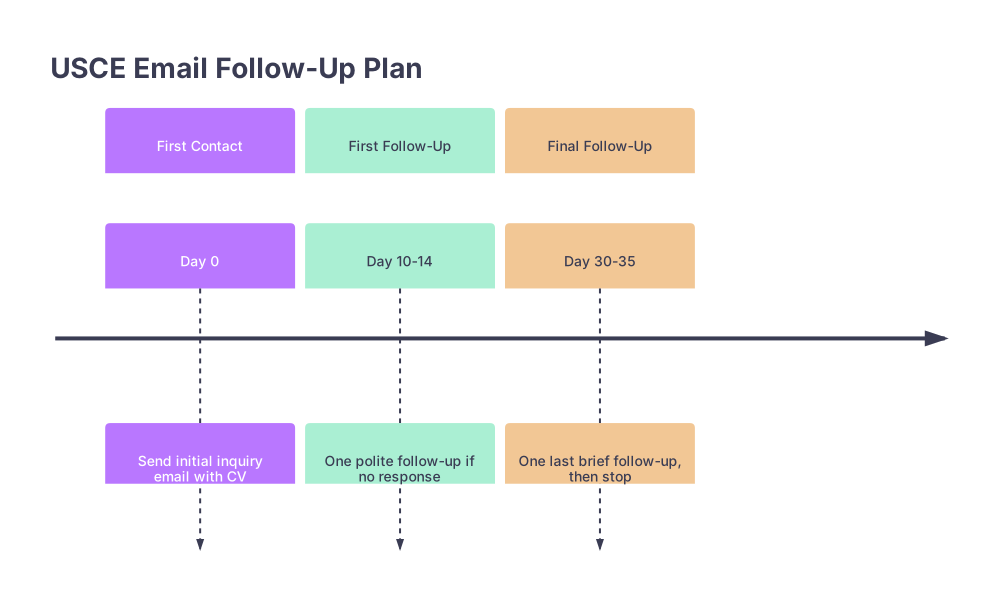
Here is a sane follow‑up pattern that does not make you look needy or annoying:
| Period | Event |
|---|---|
| First Contact - Day 0 | Send initial inquiry email with CV |
| First Follow-Up - Day 10-14 | One polite follow-up if no response |
| Final Follow-Up - Day 30-35 | One last brief follow-up, then stop |
Your follow‑up should be:
- Short
- Polite
- Not guilt‑inducing
For example:
“Dear Dr. Smith,
I wanted to follow up on my email from December 1st regarding a possible Internal Medicine observership. I understand you receive many such requests and appreciate your time.
Best regards,
[Name]”
Do not:
- Write “Why have you not replied?”
- Forward the same email with “PLEASE RESPOND” added
- Follow up more than twice without any signal from them
Also, do not send a new, completely different email chain to the same person every week. They see the pattern.
Mistake #10: Ignoring Institutional Policies and Applying Blindly
Many IMGs blast emails to attendings at big‑name hospitals without checking if:
- The hospital even permits informal observerships
- The department has a formal process
- The website clearly says “We do not accept unsolicited requests”
This makes you look careless and uninformed.
Before emailing:
- Search “[Hospital name] observership IMG”
- Check the GME, medical education, and international office pages
- Read their policies
If the policy says:
- “All requests must go through [Office X]” → Email that office, not random attendings
- “We do not accept observership applications directly from individuals” → Respect that
- “Please complete this online form” → Do that first, then if needed send a short email referencing your submission
Reference the policy in your email when appropriate:
- “I reviewed your department’s observership page and saw that positions are limited. I completed the online application and am attaching my CV here for your reference.”
Demonstrating that you follow rules is a major plus. The opposite is a quick filter‑out.
Mistake #11: Using Unprofessional Email Addresses and Signatures
Your email address is not the place for creativity. I have actually seen:
- “dr.rockstar123@…”
- “futureusdoc@…”
- “cuteboy1993@…”
- “princessdoc@…”
- Addresses shared with family members
Do this instead:
- Use some version of your real name:
- “firstname.lastname@…”
- “firstname_lastname_md@…”
- “firstname.lastname.med@…”
- Avoid numbers unless necessary, and if you must, keep them simple
Your signature should be:
- Clean
- Informative
- Not a CV in itself
Example:
FirstName LastName, MD (or MBBS)
International Medical Graduate – [Medical School], [Country]
USMLE Step 1: 238 | Step 2 CK: 245 (if you want to include)
Email: [address] | Phone/WhatsApp: [+country code number]
Do not include:
- Inspirational quotes
- Religious statements
- Huge colorful fonts or images
- Multiple logos you are not officially affiliated with
Mistake #12: Hidden Cultural Missteps That Signal “Not Ready for US System”
Some problems are more subtle, but faculty notice.
A few common ones:
Over‑flattering language
- “It would be my greatest honor to serve under your excellent guidance in your prestigious and renowned institution.”
This sounds exaggerated, even insincere, to US readers.
- “It would be my greatest honor to serve under your excellent guidance in your prestigious and renowned institution.”
Over‑sharing personal hardship in a cold email
- “My family is in severe financial crisis and I beg you to help me.”
This is painful, but it places emotional pressure on someone who has never met you.
- “My family is in severe financial crisis and I beg you to help me.”
Name‑dropping without context
- “Dr. X from your institution said I should contact you,” when “Dr. X” barely knows you.
People talk. They will verify.
- “Dr. X from your institution said I should contact you,” when “Dr. X” barely knows you.
Demanding letters of recommendation upfront
- Hinting or explicitly stating you are emailing “to obtain a strong US letter” before you have even shadowed.
It makes the relationship feel transactional.
- Hinting or explicitly stating you are emailing “to obtain a strong US letter” before you have even shadowed.
These things together make faculty think, “This person might struggle with the professional norms here.”
If you are unsure about your tone and cultural framing, have someone familiar with US medical culture review your template. Not just someone who speaks English—someone who understands the system.
Quick Comparison: Fatal vs. Fixable Email Habits
| Area | Red Flag Example | Professional Alternative |
|---|---|---|
| Subject line | "URGENT USCE REQUEST!!!" | "Internal Medicine Observership Inquiry – June" |
| Greeting | "Hey Doc" / "Dear Sir/Madam" | "Dear Dr. Smith," |
| Length | 800-word life story | 150–250 words, 4–6 short paragraphs |
| Tone | Begging or entitled | Polite, measured, specific request |
| Attachments | 0 or 8+ messy files | 1–2 cleanly named PDFs (CV, transcript) |
A Simple, Safe Template You Can Adapt
Do not copy this word‑for‑word; personalize it. But this structure will keep you out of the danger zone.
Subject: Internal Medicine Observership Inquiry – September–October 2026
Dear Dr. Smith,
My name is [FirstName LastName], an international medical graduate from [School, Country], currently preparing for the 2026 Internal Medicine residency match. I am writing to inquire whether your department offers observerships for IMGs.
I am particularly interested in [brief, specific interest related to their program or patient population]. I have completed [relevant rotations or experience] and would greatly value the opportunity to observe clinical care within a U.S. academic setting.
I am seeking a 4‑week observership between September and October 2026 and will be able to arrange my own visa and housing. I have attached my CV for your reference and would be grateful for any guidance on whether such an opportunity might be available in your department, or if there is a formal process I should follow.
Thank you very much for your time and consideration.
Best regards,
[FirstName LastName], MD
International Medical Graduate – [School]
Email: [address] | Phone/WhatsApp: [+country code number]
Use this as a starting point. Not as a script to spam 200 people.

FAQs (Exactly 3)
1. How many USCE inquiry emails is “too many” to send?
You will not be blacklisted for emailing multiple institutions, but sending hundreds of near‑identical messages in one burst is a red flag. Target 20–40 carefully chosen programs or hospitals where:
- Your specialty interest fits
- They have some history of working with IMGs or observers
- You have at least a thin connection (alumni, country, research, etc.)
Quality beats quantity. Ten well‑researched, personalized emails will outperform 100 generic ones every time.
2. Should I mention my USMLE scores in the email?
You can, but briefly and only if they are reasonably strong. One short line is enough: “I have passed Step 1 and Step 2 CK (238/245) on the first attempt.” Do not paste your entire score report or rationalize any failures in a cold email. That level of detail belongs in your CV or later in the process, not in the first contact.
3. What if my English writing is weak—will that automatically disqualify me?
Weak English alone will not disqualify you, but unedited, sloppy writing will. There is a difference. Many IMGs with accents or imperfect grammar obtain excellent USCE because their written communication shows effort, structure, and improvement. Use tools: spellcheck, grammar checkers, and—most importantly—human reviewers who understand US academic tone. You do not need perfect prose. You do need careful, respectful, and clear communication.
Key points you cannot afford to ignore:
- Your email is a mini‑interview; generic, sloppy, or emotional writing quietly destroys USCE chances.
- Respect their time: clear subject, concise body, specific ask, clean attachments, and limited follow‑ups.
- Professional tone and cultural awareness matter as much as your scores—fix your email habits before they cost you opportunities you will never even know you lost.