
US program directors are not confused about what “USCE” means—international graduates are.
If you blur the line between shadowing and true US clinical experience on your application, you will look either naïve or dishonest. Sometimes both.
Let me be blunt: calling shadowing “clinical experience” is one of the fastest ways for an IMG to sink credibility with American program directors, especially in competitive specialties or programs with lots of IMG applicants.
You’re in the right category (US clinical experience for IMGs, residency match phase), which also means the stakes are high. This is the point where mislabeling stops being “a misunderstanding” and becomes “a reason to screen you out.”
Let’s fix that.
1. The Core Mistake: Calling Everything “USCE”
Most IMGs who mess this up don’t do it maliciously. They’re repeating what they heard from someone two years ahead of them who “matched with only observerships,” or copying wording from a WhatsApp group PDF.
Still doesn’t matter. Programs will judge you on what you write, not what your cousin in New Jersey told you.
Here’s the core distinction:
- Shadowing / Observership = You watch. You do not touch the patient. You do not write notes. You do not place orders. You do not bill.
- True USCE (hands-on) = You have direct, documented patient care responsibilities (appropriate to your role), supervised by a U.S. physician in a clinical setting.

Here’s where people sabotage themselves:
- Labeling a 2-week shadowing as “Subinternship in Internal Medicine”
- Writing “hands-on clinical experience” when all they did was observe H&Ps and procedures
- Putting “US Clinical Experience: 6 months” on the CV, then describing pure observation
Programs see this every single year. And they’re tired of it.
Many PDs have a mental filter now:
“IMG + vague ‘USCE’ + no clear description of duties = probably just shadowing or padding.”
Your job is to not trigger that filter.
2. What Actually Counts as “True USCE” (And What Definitely Doesn’t)
Let’s be precise. Because vague is how you get in trouble.
Hands-On USCE (What Programs Usually Mean)
This is what almost everyone means when they say “USCE” in the context of residency applications:
- Externships where you:
- Take histories and perform focused physical exams (under supervision)
- Present patients on rounds
- Help write notes that go into the medical record (even as “student notes”)
- Participate in clinical decision-making discussions
- Sub-internships / electives as:
- A final-year medical student at a U.S. med school or teaching hospital
- A visiting student through VSLO or formal visiting programs
- Preliminary/transitional year, or actual U.S. residency time (for reapplicants)
- Employment with direct patient contact in a clinical role (e.g., licensed RN, PA, NP; very rarely IMGs who managed to get some limited role with documentation and supervision)
Shadowing is not in this list. And that’s intentional.
Observerships and Shadowing (What Programs Consider “Non-Hands-On”)
These experiences can still help you. But they’re not hands-on USCE:
- Standing in the room while the doctor sees the patient
- Watching surgeries from the corner or via video monitor
- Following an outpatient physician from room to room, not touching the chart
- Sitting in conferences, tumor boards, or teaching sessions
- Observing via telehealth without direct interaction
| Type | Patient Interaction | EMR Access | Notes/Orders | PDs Count as Hands-On? |
|---|---|---|---|---|
| Sub-internship | Direct | Usually | Yes (supervised) | Yes |
| Elective rotation | Direct | Usually | Yes (supervised) | Yes |
| Externship (true) | Direct | Sometimes | Sometimes | Often |
| Observership | None | No | No | No |
| Clinic shadowing | None | No | No | No |
Calling an observership “USCE” without qualification is like calling a tourist visit “work experience.” It sounds embellished at best, deceptive at worst.
3. How Mislabeling Destroys Your Credibility (Silently)
Most applicants think: “If they don’t like it, they’ll just ignore it.”
No. The problem isn’t that they ignore it. The problem is that they stop trusting you.
Common consequences:
Your application gets mentally downgraded.
PDs and coordinators see 1,000+ applications. The moment they smell exaggeration, your file goes in the “maybe later” pile. Which is code for: likely never.Your interview becomes a cross-examination.
If you’re unlucky enough to get an interview after mislabeling, be ready for:
“Tell me exactly what you did on this ‘externship’.”
If your answer is “I observed… I watched… I attended…”, they’ll mentally flag you as someone who padded the CV.Your LORs are scrutinized harshly.
If you call something hands-on but your letter says “He observed our team and showed interest,” it exposes the gap instantly.Your entire application becomes suspect.
If you’ll exaggerate here, where else did you overstate? Research? Leadership? Publications?
This isn’t just about not getting “credit” for USCE. It’s about trust.
4. Red-Flag Phrases That Scream “I’m Stretching The Truth”
Some wording choices are dead giveaways that an IMG is trying too hard to make shadowing sound like USCE.
Watch out for these:
“Actively participated in patient care”
(But in reality you watched and asked questions.)“Managed patient cases under supervision”
(Yet you never entered an order, wrote a note, or gave a discharge instruction.)“Worked as part of the healthcare team”
(But you never had assigned patients, never had responsibilities.)“Hands-on clinical experience”
(When your hands never touched a stethoscope in that clinic.)
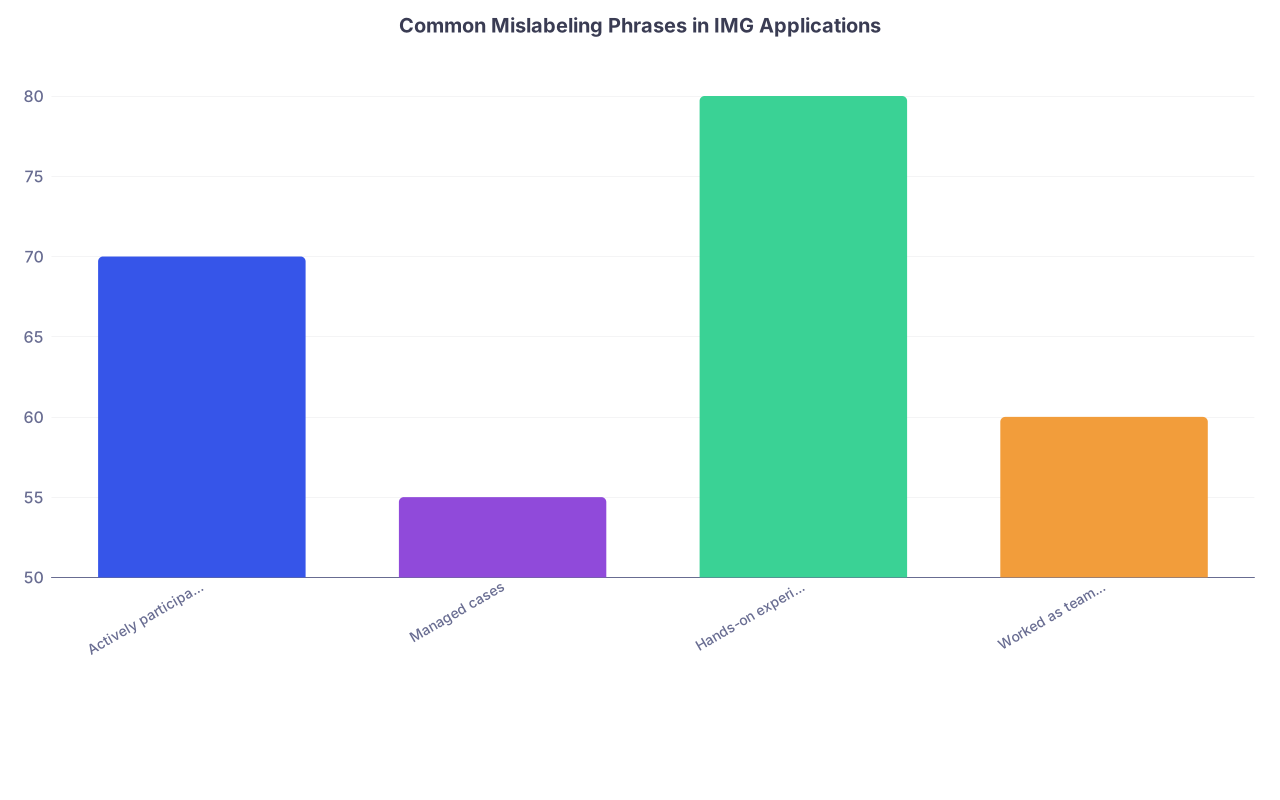
| Category | Value |
|---|---|
| Actively participated | 70 |
| Managed cases | 55 |
| Hands-on experience | 80 |
| Worked as team member | 60 |
These phrases by themselves aren’t evil. They become a problem when:
- You use them for pure observation
- You can’t back them up with specific examples
- Your LORs use softer, clearly observational language
If a program director reads “managed cases” and then sees your status clearly labeled as “observer,” they know exactly what you’re doing: inflation.
They won’t confront you. They’ll just move on to the next file.
5. How To Label Your Experiences Without Shooting Yourself in the Foot
This is where most IMGs need a hard reset. The solution is not to hide shadowing; it’s to call it what it is and describe it honestly but intelligently.
Step 1: Use Accurate Titles
Do not rename the position into something more impressive. That trick fools no one.
Use titles like:
- “Observership in Internal Medicine – Outpatient”
- “Clinical Observer – Cardiology”
- “Visiting Medical Student Elective – Internal Medicine”
- “Sub-internship – Family Medicine”
- “Externship – Internal Medicine (Hands-on role)”
If the official certificate says “Observer,” don’t you dare write “Extern.” Programs have seen the original letters from those same clinics. You’re not the first person from that office.
Step 2: Clearly Separate Hands-On vs Observership Sections
A simple structural change on your CV can save you:
- Section 1: “U.S. Hands-On Clinical Experience”
- Section 2: “U.S. Clinical Observerships and Shadowing”
This prevents the very common accusation: “They’re trying to pretend observerships are hands-on.”
Step 3: Describe Actual Duties, Not Aspirations
Example difference:
Bad (inflated observership):
“Managed a panel of patients, actively participated in diagnosis and treatment planning, worked as an integral member of the team.”
Better (honest observership):
“Observed outpatient visits, discussed differential diagnoses and management plans with the attending after each encounter, attended weekly case conferences, and reviewed relevant guidelines.”
Bad (vague “externship”):
“Hands-on clinical experience with direct participation in patient care.”
Better (real hands-on):
“Performed focused histories and physical exams, presented patients on rounds, drafted daily progress notes in the EMR (reviewed and signed by supervising physician), and participated in pre- and post-discharge counseling.”
You don’t need flowery language. You need accurate verbs: observed, discussed, performed, documented, presented, counseled. Use the right ones—for what you actually did.
6. When Sponsors Oversell Your Experience (And How That Backfires)
Here’s a scenario I’ve seen more than once:
A for-profit externship company advertises: “Hands-on USCE with direct patient care!”
Reality? You:
- Take vitals occasionally
- Maybe do an H&P “for learning purposes” that never goes into the chart
- Never appear as a provider or student in the EMR
- Aren’t truly responsible for anything

Programs know these companies. They’ve seen dozens of applicants from the same site describing the same “hands-on externship” that’s basically glorified shadowing with a blood pressure cuff.
Do not copy the company’s marketing language into your ERAS.
Judge the experience by:
- Did I have assigned patients?
- Did I document in the EMR in any official way?
- Did my name appear anywhere in the clinical workflow (notes, orders, sign-outs)?
- Could the attending truthfully say I “participated in direct patient care”?
If the honest answer is “not really,” then you do not call it hands-on USCE. You can still call it an “externship” if that was the contracted term, but your description must reflect the actual duties.
7. Writing ERAS Entries That Don’t Trigger Suspicion
Most IMGs only think: “How do I make this sound impressive?”
Wrong question. The right one: “How do I make this sound accurate and mature?”
Here’s a clean way to structure an entry for an observership:
- Experience Type: Volunteer
- Organization: XYZ Internal Medicine Clinic
- Position Title: Clinical Observer – Internal Medicine
- Description (concise, honest):
“Observed outpatient visits in a busy internal medicine clinic serving a diverse patient population. Discussed diagnostic reasoning and management plans with the attending after each encounter. Attended weekly case conferences and quality improvement meetings. Independently reviewed ACC/AHA and ADA guidelines relevant to common clinic presentations.”
For a true hands-on elective:
- Experience Type: Clinical
- Organization: ABC University Hospital
- Position Title: Visiting Medical Student – Internal Medicine Sub-internship
- Description:
“Managed 2–4 inpatients daily under supervision. Performed histories and physical exams, presented on rounds, and entered daily progress notes in the EMR (reviewed and co-signed by residents/attendings). Assisted with discharge planning and patient counseling. Participated in daily teaching rounds and noon conferences.”
See the difference? The second one clearly states management, documentation, and responsibility. The first one is explicitly observational but still sounds serious.

| Step | Description |
|---|---|
| Step 1 | U.S. Clinical Experience |
| Step 2 | Label as Observership/Shadowing |
| Step 3 | Describe as limited hands-on, be specific |
| Step 4 | Label as Hands-On USCE/Elective/Sub-I |
| Step 5 | Direct patient care? |
| Step 6 | Documented in EMR or official role? |
This little decision tree is what PDs run in their heads unconsciously. You should run it consciously before you write a single word.
8. How Much Non-Hands-On Experience Is Still Useful?
Here’s the part nobody tells you: observerships are not useless. They’re just often misused and misrepresented.
They can help you:
- Understand U.S. documentation, culture, and workflow
- Get a U.S.-based letter of recommendation (if you show up like a serious adult)
- Fill recent clinical gaps so you’re not “five years out of practice”
- Talk intelligently in interviews about how U.S. medicine actually works
The mistake is not doing observerships. The mistake is pretending they’re something else.
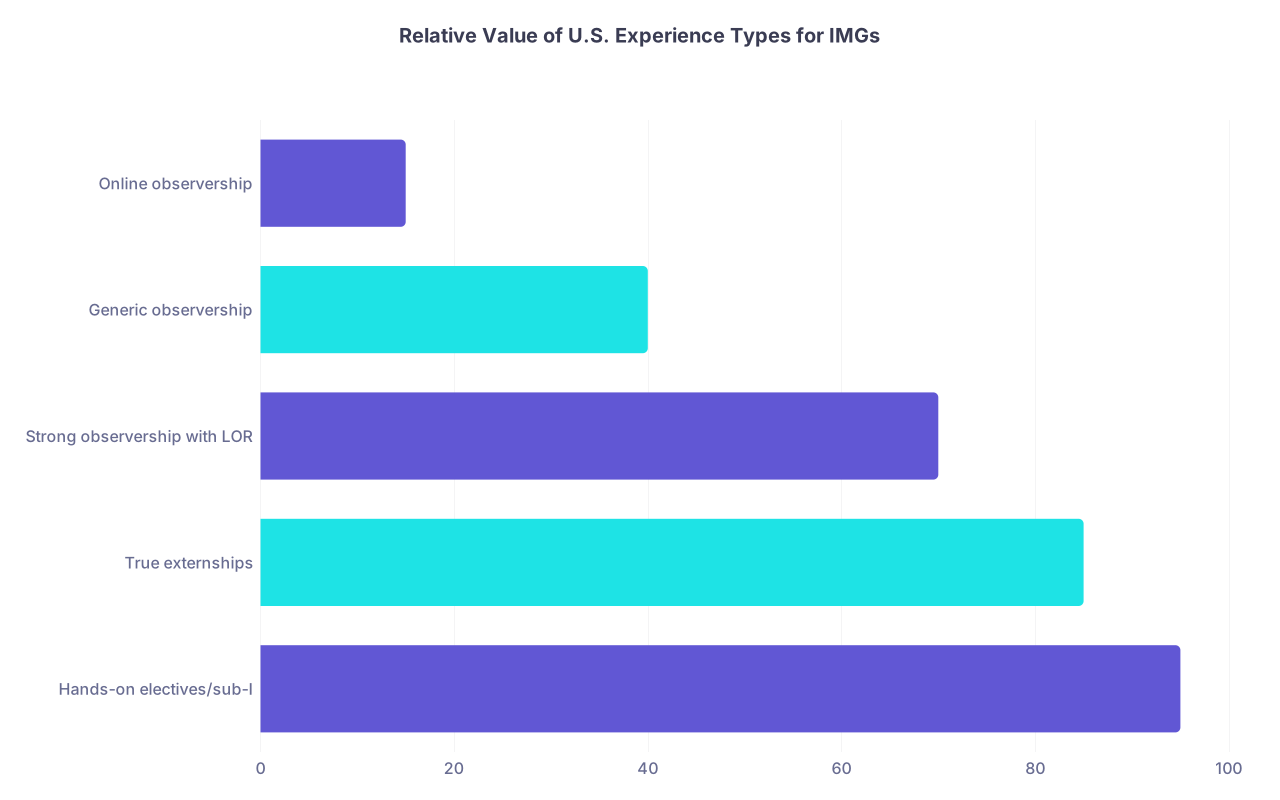
| Category | Value |
|---|---|
| Hands-on electives/sub-I | 95 |
| True externships | 85 |
| Strong observership with LOR | 70 |
| Generic observership | 40 |
| Online observership | 15 |
If you can get one or two solid hands-on rotations plus a couple of meaningful observerships, that’s often enough for many IM and FM programs—provided you describe them honestly.
The combination that kills people:
- Only observerships
- Labeled as “USCE – 6 months hands-on”
- Vague descriptions
- LORs that sound lukewarm and observational
Programs are not angry at your observership. They’re annoyed by the spin.
9. Red Flags Programs See That You Don’t
Program directors talk. Over coffee. At conferences. In group chats.
Here are patterns they’ve complained about regarding IMGs and USCE:
- CV lists “USCE: 12 months,” but every single position is “Observer”
- A supposed “externship” with identical wording from multiple applicants from the same agency
- Experience entries that sound like job descriptions from the company’s brochure instead of personal descriptions
- Applicants who inflate roles, then crumble when asked, “Tell me about a patient you personally managed in that setting.”

Your defense against this? Radical clarity.
If your experience is observational, say it. Then show depth in how you used it:
- Specific cases you learned from
- Guidelines you studied
- Systems issues you noticed
- Communication differences you observed
Maturity sells better than exaggeration. Always.
10. Practical Fixes If You Already Mis-Labeled Your USCE
If you’re reading this with ERAS already submitted and realizing you oversold your experiences, you’re not the first.
You can’t edit ERAS post-submission, but you can:
Fix it in future cycles
If you reapply, clean up your wording. Program coordinators do remember chronic exaggerators, especially from the same school or agency.Be brutally honest in interviews
If asked, don’t double down. Say:
“This was primarily an observership. I realized later that I should have described it more precisely. Here’s what I actually did…”That level of ownership can partly repair the damage.
Ensure your LORs reflect reality
Do not push letter writers to call your experience “hands-on” if it wasn’t. They won’t, and they may mention the limitations explicitly.Get at least one truly hands-on U.S. rotation
Even a short, genuine elective or sub-I later can balance earlier, weaker experiences.
FAQ (Exactly 5 Questions)
1. Does shadowing/observership count as USCE at all, or should I leave it off?
Do not leave it off. Observerships still matter, especially for IMGs with older graduation years or big gaps. They show effort, exposure, and interest in U.S. medicine. Just don’t label them as hands-on or imply patient care responsibilities you never had. Put them under a clearly titled section like “Observerships and Shadowing” and describe them accurately.
2. My certificate says “Externship,” but the experience was mostly observational. What should I call it?
Use the official title (“Externship”) but describe your actual duties honestly. For example: “Externship (primarily observational clinical experience)” and then list what you really did. If the company’s marketing promised hands-on but reality didn’t match, don’t carry that exaggeration into ERAS. Programs care far more about your description than the fancy label on a certificate they’ve seen 100 times.
3. Can I say “hands-on” if I did vitals, EKGs, or basic tasks but no notes or orders?
Be very careful. That’s limited hands-on exposure, not full clinical management. You can say, “Participated in basic bedside tasks such as obtaining vitals and EKGs” instead of generic “hands-on patient care.” If you never had assigned patients and never documented officially in the EMR, most PDs won’t consider it true hands-on USCE, even if you touched a few blood pressure cuffs.
4. How much hands-on USCE do I realistically need as an IMG?
This depends on specialty and competitiveness, but a common pattern that works for many IM/FM programs is: 2–3 months of genuine hands-on electives/sub-Is or strong externships, plus any additional observerships you can obtain. For more competitive fields (neuro, psych, some university IM programs), hands-on USCE becomes almost mandatory. But even then, inflated shadowing won’t help; it will just undermine you.
5. My mentor told me “just call everything USCE, everyone does it.” Is that actually true?
No, and it’s bad advice. The people who “just call everything USCE” are exactly the ones PDs complain about. More and more programs are explicitly differentiating between hands-on and observational experience. The trend is toward stricter interpretation, not looser. You don’t want to be on the wrong side of that shift—especially as an IMG, where trust and clarity are already under the microscope.
Key takeaways:
- Do not call shadowing or pure observership “hands-on USCE.” Ever.
- Separate and label hands-on vs observational experience clearly and describe what you actually did.
- Protect your credibility first; inflated wording might add one line to your CV, but it can quietly erase your entire chance with a program director.