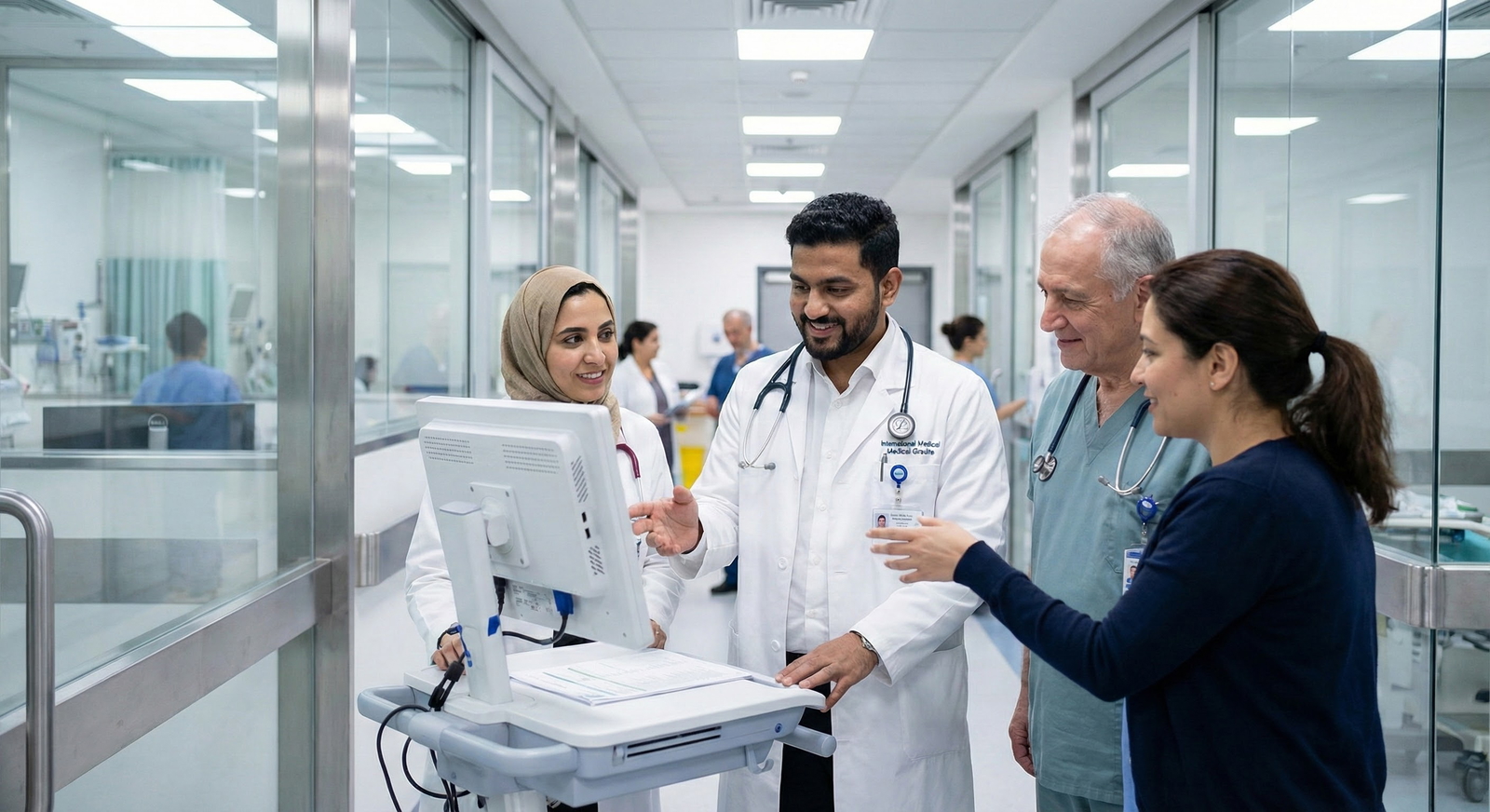
Understanding US Clinical Experience (USCE) for IMGs
US Clinical Experience (USCE) is one of the most critical components of a successful residency application for any international medical graduate (IMG). Program directors consistently rank USCE as a top factor when deciding whom to interview and rank. For many IMGs, it’s also the most confusing part of the process—what counts as USCE? How much is enough? What type is best?
This IMG residency guide will break down the types of USCE, how to prioritize them, and specific strategies to secure, maximize, and document these experiences.
What Counts as “Real” USCE?
Different programs define USCE slightly differently, but most agree on the following hierarchy (from strongest to weakest):
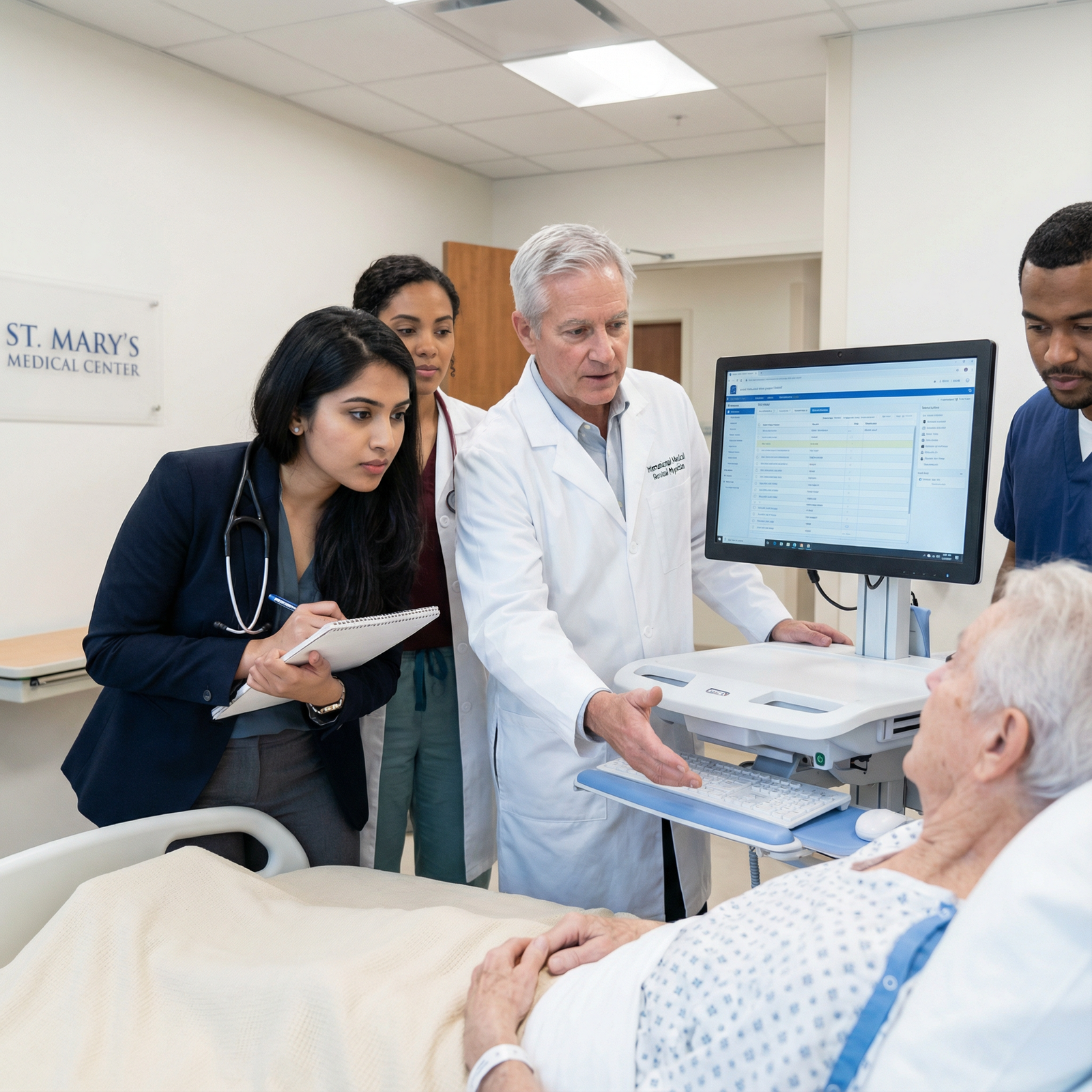
Hands-on USCE
- Inpatient and outpatient clerkships or electives
- Acting internships / sub-internships
- Externships designed for IMGs (clinical, not purely observership)
- Must involve:
- Direct patient contact (history, physical, notes)
- Use of the electronic medical record (EMR), under supervision
- Participation in patient care decisions with the team
Semi–hands-on Experiences
- Research with clinical exposure (e.g., enrolling patients, shadowing associated with a research project)
- Scribe positions (some programs value these highly)
- Telemedicine experiences where you actively participate in care planning under supervision
Non–hands-on USCE
- Observerships
- Shadowing
- Hospital volunteering that exposes you to clinical environments without decision-making or documentation
Most residency programs strongly prefer hands-on USCE, especially in the specialty to which you are applying. However, non–hands-on experiences like observerships still matter, particularly if:
- You lack any US exposure at all, or
- You need recent clinical contact in your chosen specialty, and hands-on roles are not available.
How Much USCE Do You Need?
There is no universal rule, but patterns have emerged:
Competitive IMGs often have:
- 2–4 months of solid, hands-on USCE
- Within 1–3 years of the application year
- Including at least 1–2 months in their desired specialty
Minimum baseline for many programs:
- At least 1 month of USCE
- At least 1 strong, US-based clinical letter of recommendation (LOR)
Programs that are IMG-friendly often explicitly list “US clinical experience required or preferred” on their website. Read this carefully when building your application list.
Key principle:
If your USCE is limited, prioritize quality, recency, and relevance to your target specialty over sheer quantity.
Types of USCE for IMGs: What’s Available and What to Target
Different options work better depending on whether you are a current student or a graduate, your visa status, and your budget. Below is a practical breakdown of USCE for IMG candidates.
1. Electives and Clerkships (Best Option for Current Students)
If you are still enrolled in medical school, US electives in your final year (or penultimate year) are usually the most valuable form of USCE.
Features of strong US electives:
- Conducted in ACGME-affiliated teaching hospitals
- Supervised by residency program faculty
- Provide:
- Direct patient care duties
- EMR documentation
- Graded performance evaluation
- Opportunity for strong letters of recommendation
Requirements commonly include:
- Being in your final year of medical school
- A dean’s letter and transcript
- Proof of malpractice insurance (often arranged via home school or VSLO/VSAS)
- USMLE Step 1 (and sometimes Step 2 CK) scores
- Immunization and background checks
Action steps for students:
- Start planning 12–18 months in advance.
- Use VSLO (Visiting Student Learning Opportunities) if your school participates.
- For non-VSLO schools, search “[Hospital name] international visiting medical student” or “[University name] elective for international medical students.”
- Prioritize electives:
- At institutions with residency programs in your specialty
- In US regions and states where you’re likely to apply for residency
2. Externships for Graduates
If you are already a graduate, pure “student electives” are usually no longer an option. Instead, look for externships created specifically for IMGs.
Characteristics of a high-quality externship:
- Defined clinical responsibilities (H&P, SOAP notes, presentations)
- Supervised by board-certified attendings
- Direct exposure to residence-level workflow
- Formal evaluation and LOR opportunity
- Clear statement that it is hands-on and distinct from an observership
Be cautious with paid externships:
- Fees can be high; higher cost does not necessarily mean higher value.
- Look for evidence of:
- Affiliation with a teaching hospital
- Prior participants matching into residency
- Well-structured curriculum
3. Observerships and Shadowing
Observerships are the most accessible form of US clinical experience for IMG candidates, but they’re also the most misunderstood.
Observership ≠ useless.
While observerships are non–hands-on, they still help you:
- Learn US medical culture and systems
- Understand documentation, billing, and workflow
- Show initiative and commitment to US training
- Obtain US-based LORs (if you are engaged and impress your supervisors)
Stronger observerships typically:
- Occur in teaching hospitals or academic centers
- Provide:
- Regular teaching (conferences, morning report)
- Access to rounds and clinics
- Frequent interaction with residents and fellows
- Lead to personalized, detailed letters rather than generic LORs
If observership is your primary USCE:
- Aim for at least 2–3 months total
- Try to get exposure in:
- Your target specialty
- Both inpatient and outpatient settings if possible

4. Research with Clinical Exposure
Research roles are not technically USCE, but they can be extremely valuable, especially when paired with some clinical exposure.
Benefits of research positions (especially in academic centers):
- Proximity to faculty in your target specialty
- Direct line to potential LOR writers
- Opportunities to attend grand rounds, clinics, and conferences
- Publications and presentations that strengthen your CV
Many IMGs do a 1–2 year research fellowship at a US institution before applying to residency, particularly in competitive specialties (e.g., internal medicine subspecialties, neurology, psychiatry).
Look for positions that offer:
- Regular clinical conferences or case discussions
- Optional clinic observation
- Chances to interact with residents/fellows
5. Scribe and Clinical Support Roles
Working as a scribe or clinical assistant is not traditional USCE, but many programs value it because it trains you in:
- US medical documentation
- EMR navigation
- Real-time clinical reasoning, even if you are not the decision-maker
These roles can be particularly useful if:
- You need US-based work experience while studying for exams
- You want to demonstrate familiarity with US healthcare systems
- Hands-on electives or externships are hard to secure
Be aware of visa and licensing issues; some roles may require work authorization or additional certifications.
How to Find and Secure USCE as an IMG
Finding strong USCE is often the toughest challenge for international medical graduates. A structured approach can make a big difference.
Step 1: Clarify Your USCE Goals
Before sending any emails, decide:
- Specialty focus: What are your top 1–2 specialties?
- Timeline: When are you planning to apply for residency? How many months are available for USCE?
- Profile gaps: Do you need:
- Recent experience?
- Specialty-specific exposure?
- US letters of recommendation?
- First-ever US experience?
Define these clearly so that your search for USCE is targeted and efficient.
Step 2: Identify Target Institutions and Physicians
Use a layered strategy:
Residency program websites
- Search “[Specialty] residency [city or state]”
- Look under “For Applicants,” “Eligibility,” or “International Medical Graduates”
- Many IMG-friendly programs list:
- Whether USCE is required
- Whether they accept IMGs for observerships or research
Hospital observership pages
- Google:
[hospital name] observership international medical graduate - Common in internal medicine, family medicine, pediatrics, psychiatry
- Google:
University department pages
- Search for “Visiting scholars,” “International visiting physician,” or “global health exchange”
Published faculty
- Look up authors in your specialty from PubMed or conference programs
- Target those at institutions known to be IMG-friendly
Step 3: Networking and Cold Outreach
Most IMGs will need to use direct email outreach to secure USCE for IMG-friendly pathways, especially observerships or informal shadowing.
Effective email components (1-page maximum):
- Professional subject line:
- “Prospective Observership – IMG Interested in [Specialty] – [Your Name]”
- Brief introduction:
- Your medical school, graduation year, current status
- Clear purpose:
- Seeking an observership, shadowing opportunity, or clinical research with exposure
- Why them:
- Mention their research interests, clinical area, or institution features
- Attachments:
- CV (1–2 pages)
- USMLE transcript if available
- Brief personal statement paragraph (optional, or integrated in email body)
Example outreach angle: “As an international medical graduate strongly interested in internal medicine, I hope to gain structured exposure to US inpatient medicine. Your work in hospital medicine quality improvement closely aligns with my final-year project, and I would be grateful for any opportunity to observe your team and learn from your practice.”
Send emails to:
- Program directors (PDs) and associate PDs
- Clerkship directors
- Section chiefs
- Faculty whose work overlaps with your interests
Expect a low response rate (often <10%). Consistency and volume matter—sending 100 targeted, professional emails is not unusual.
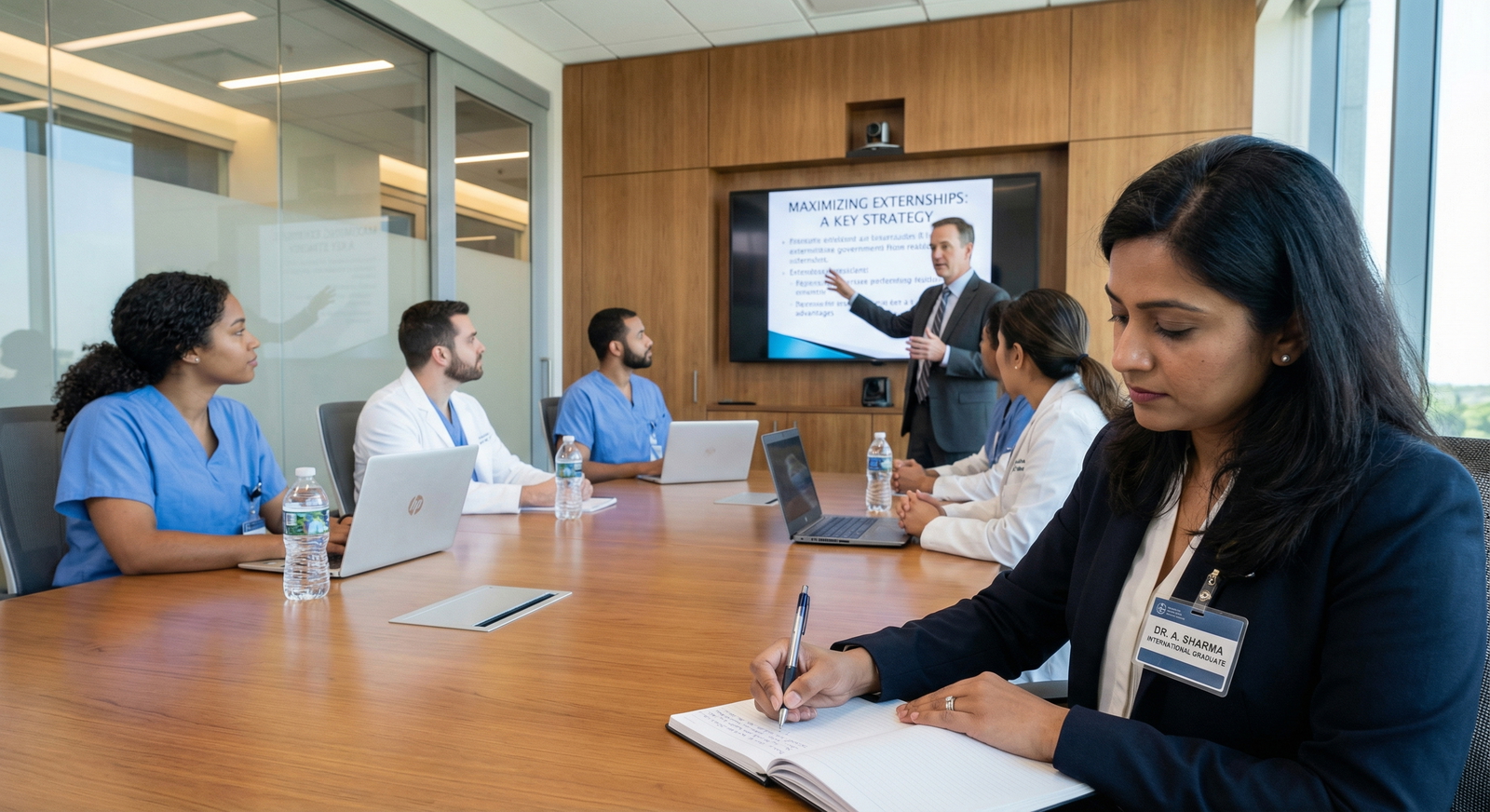
Maximizing the Value of Your USCE
Securing US clinical experience is just the first step. The real benefit comes from how you perform and what story you can later tell in your personal statement, ERAS experiences section, and interviews.
1. Professionalism Is Your Foundation
From day one, demonstrate:
- Punctuality: Arrive early, leave late if needed.
- Dress code: Conservative, clean, and in line with team expectations.
- Communication: Clear, concise, respectful with all staff (nurses, techs, admins are all important).
- Reliability: If you say you’ll follow up on a patient or task, do it.
Program directors often comment on professionalism more than raw knowledge in letters of recommendation.
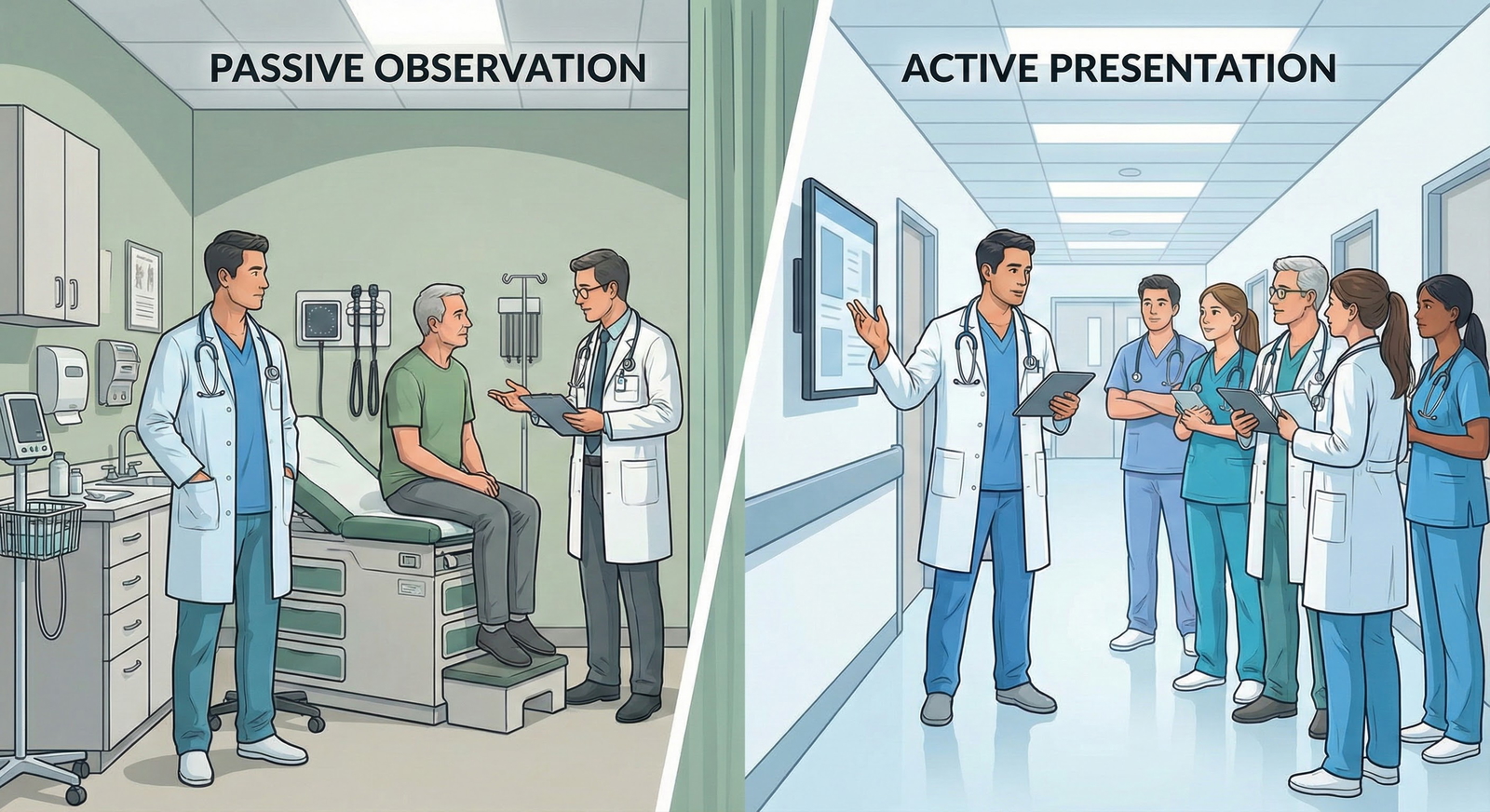
2. Active, Not Passive, Participation
Even in an observership, you can remain actively engaged:
- Read charts before rounds; prepare your own assessment and plan mentally.
- Ask specific, well-timed questions:
- “I noticed the team chose DOAC instead of warfarin in this patient with atrial fibrillation and CKD. Could you share how kidney function influences this choice?”
- Offer help that does not violate hospital rules:
- Organize notes
- Prepare literature search summaries
- Draft case presentations for teaching sessions
In hands-on USCE:
- Volunteer to present patients, write draft notes (if permitted), and participate in sign-out.
- Ask for feedback midway through the rotation:
- “Is there anything I can improve in my presentations or clinical reasoning?”
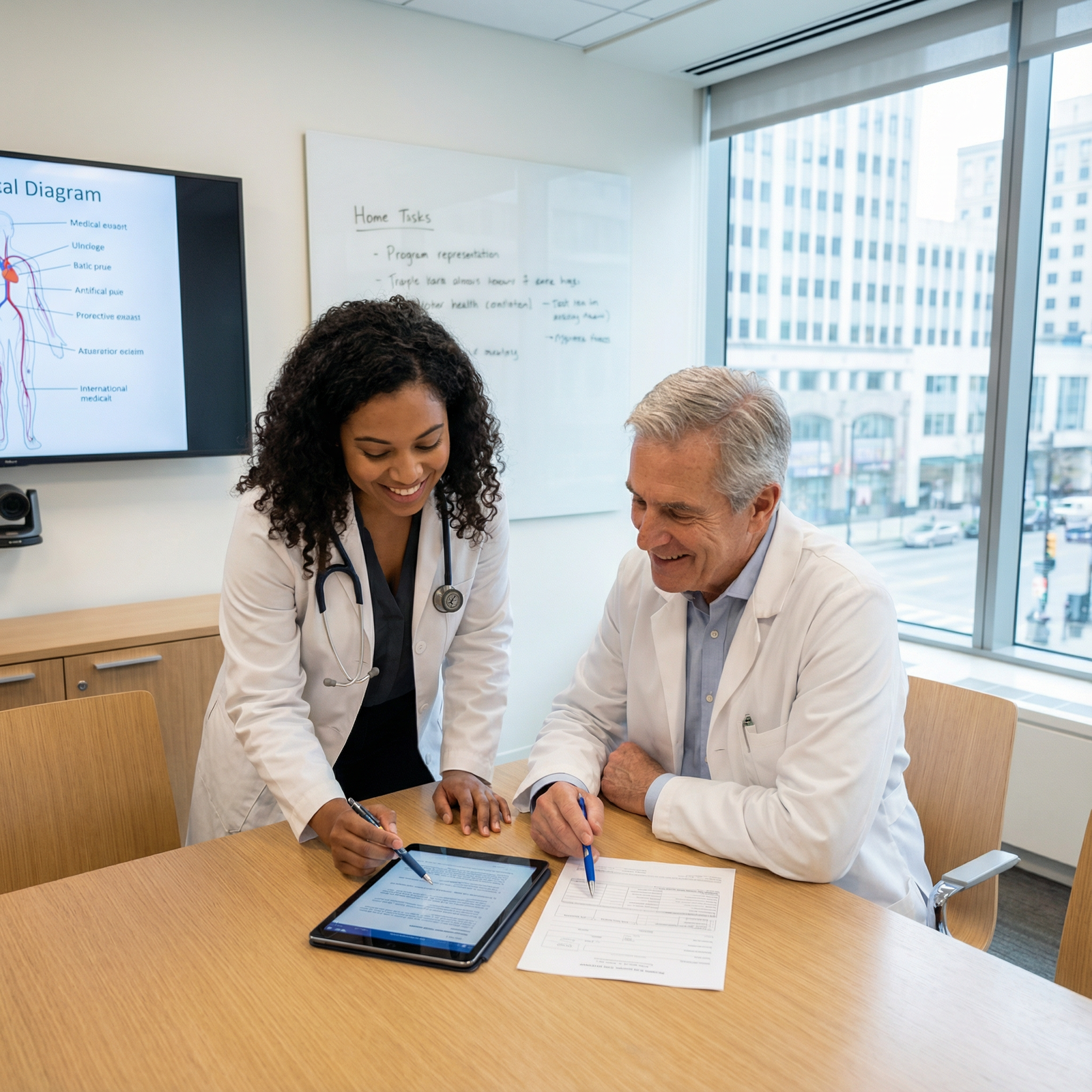
3. Building Strong Relationships for LORs
The most valuable outcome of USCE is often a strong letter of recommendation.
To position yourself for this:
Identify potential letter writers early.
- Attendings who:
- Work closely with you
- See your progress
- Are known in your specialty or program
- Attendings who:
Show consistent performance.
- Be prepared, engaged, and dependable every day.
Request LORs strategically.
- Ask near the end of your rotation:
- “Based on our time working together, do you feel you know my work well enough to write a strong letter of recommendation for my US residency applications?”
- Provide:
- Your updated CV
- Draft personal statement
- ERAS ID and list of specialties
- Ask near the end of your rotation:
Letters from USCE should ideally mention:
- Your clinical skills and knowledge
- Work ethic and professionalism
- Communication and teamwork
- Comparison with US students or residents at a similar level
4. Documenting and Reflecting on Your Experience
Immediately after each USCE:
- Write a 1–2 page reflection:
- Key cases
- Skills learned
- How it influenced your choice of specialty
- Differences from your home country’s system
This reflection:
- Helps you later write convincing personal statements and ERAS descriptions
- Provides concrete stories for interview questions like:
- “Tell me about a memorable patient from your US experience.”
- “How did your observership or externship prepare you for residency?”

Strategic Planning: Integrating USCE into Your Residency Timeline
To use this IMG residency guide effectively, align your US clinical experience with your overall residency timeline.
Ideal Timeline (For a First-Time Applicant)
2–3 Years Before Application
- Begin USMLE Step 1 and Step 2 CK.
- Start exploring potential institutions for USCE.
- If still in medical school: plan 4th-year US electives.
12–18 Months Before Application
- Secure at least 1–3 months of USCE:
- Electives (if student)
- Externships or observerships (if graduate)
- Aim for at least one rotation in your target specialty.
6–12 Months Before Application
- Focus on:
- Additional USCE if needed
- Finishing Step 2 CK and OET (if required)
- Obtain and confirm LORs:
- Ensure at least 2–3 from US clinicians where possible.
Application Year
- Use your USCE heavily in:
- ERAS “Experiences” section
- Personal statements
- Interview answers
Adapting if You Have Constraints
Older graduation year (YOG gap):
- USCE becomes even more important to demonstrate recency.
- Target at least 2–3 months of recent experience in the US system.
Limited funds:
- Prioritize 1–2 high-yield experiences:
- Academic center observership with good LOR potential
- Research role that includes clinic exposure
- Avoid very expensive paid rotations with vague benefits.
- Prioritize 1–2 high-yield experiences:
Visa limitations:
- Some institutions are more flexible with B1/B2 visitor status for observerships.
- For paid positions (scribes, research employment), visa complexity increases—plan early and consult official sources.
Presenting USCE in Your Application and Interviews
US clinical experience only helps you if you communicate its value clearly and consistently.
ERAS Experience Entries
For each USCE (elective, externship, observership, research):
Use a clear title:
- “Internal Medicine Observership – XYZ University Hospital”
- “Clinical Externship in Family Medicine – ABC Community Hospital”
Highlight practical responsibilities:
- “Participated in inpatient rounds and case discussions with the internal medicine team.”
- “Observed and analyzed management of common chronic diseases in a US outpatient setting.”
Connect to your specialty choice:
- Mention specific cases, skills, or mentors that reinforced your decision.
Personal Statement Integration
Rather than just listing USCE, show how it shaped you:
Describe a patient encounter from your USCE that:
- Demonstrates your clinical thinking
- Shows understanding of US healthcare
- Reflects empathy and communication skills
Discuss how USCE:
- Clarified your interest in the specialty
- Showed you the importance of interdisciplinary teamwork
- Helped you understand system-based practice and patient safety
Interview Talking Points
Be prepared to answer:
- “Tell me about your US clinical experience.”
- “How did your observership or externship prepare you for residency here?”
- “What differences did you notice between US and your home country’s healthcare systems?”
Use the STAR method (Situation, Task, Action, Result) to structure your responses with concrete examples.
Frequently Asked Questions (FAQ)
1. Does observership count as USCE for residency applications?
Yes, observership is a form of US clinical experience, although it is non–hands-on. Many residency programs understand that IMGs often have limited access to hands-on roles and will still value observerships, especially when:
- They are done in teaching hospitals or academic centers
- They lead to strong, detailed letters of recommendation
- You can clearly explain what you learned and how it prepared you for residency
Where possible, combine observership with some form of hands-on experience, such as electives (if still a student), externships, or scribing.
2. How many months of USCE do I really need as an IMG?
Most successful IMGs have 2–4 months of USCE, including at least 1–2 months in their target specialty and recent experiences (within 1–3 years of applying). Some programs require only 1 month; others may prefer more.
If your profile has other strengths (high USMLE scores, strong research, excellent home country training), slightly less USCE may be acceptable. However, if you have an older year of graduation or gaps, more USCE is often needed to show recency and readiness.
3. Is paid USCE (externship) worth the cost?
It depends on the quality of the program, not the price. A paid externship may be worth it if:
- It includes genuine hands-on responsibilities
- It’s affiliated with a teaching hospital or residency program
- Faculty closely supervise you and are willing to write detailed LORs
- Alumni from the program have successfully matched into residency
Before paying, ask for:
- A clear description of clinical duties
- Sample weekly schedule
- Clarification about LORs and evaluation
- Any affiliations with residency programs
Avoid programs that are vague, guarantee residency placement, or focus mainly on observer-like activities for a high fee.
4. Is USCE absolutely mandatory to match as an IMG?
Not always, but it is strongly recommended. Some community programs may accept IMGs with little or no USCE if they have other compelling strengths. However, most programs—especially university or university-affiliated programs—prefer or require some US exposure.
USCE for IMG applicants:
- Demonstrates understanding of US medical culture and systems
- Provides US-based LORs, which are highly valued
- Helps you adapt more smoothly in PGY-1
If you cannot obtain USCE before your first application cycle, consider building at least some observership or research with clinical exposure before reapplying.
US clinical experience is a cornerstone of a strong IMG residency application. By understanding the different types of USCE, strategically selecting and securing your opportunities, and making the most of each rotation, you can transform USCE from a simple requirement into a powerful advantage in your path toward US residency.