Introduction: Why Observerships Matter for Your Medical Career
In today’s competitive and rapidly evolving healthcare environment, simply graduating from medical school is no longer enough—especially for International Medical Graduates (IMGs) aiming to build successful medical careers in a new country. Residency program directors increasingly look for candidates who not only have strong academic records but also demonstrate familiarity with local healthcare systems, clinical workflows, and professional expectations.
Observerships bridge this gap.
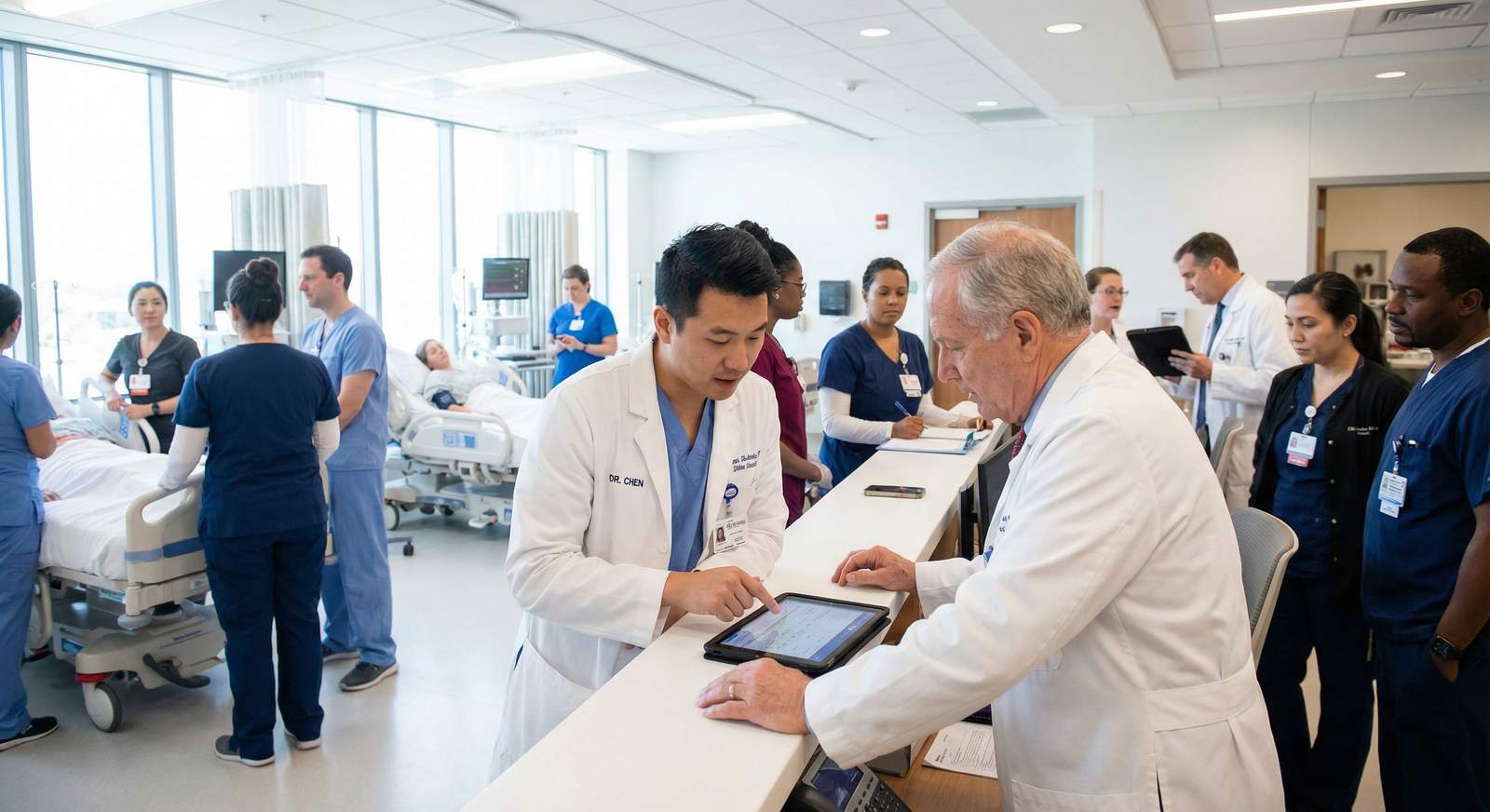
For IMGs, observerships are often the first structured exposure to the healthcare system of the country where they hope to practice, particularly in the United States, Canada, or the UK. These short-term, usually unpaid experiences allow you to carefully observe practicing physicians, learn how care is delivered, and begin integrating into the local medical community.
This article explores in depth how observerships can enhance your medical career—especially as an IMG—by strengthening clinical skills, sharpening communication, building cultural competence, and creating crucial networking opportunities for residency and beyond.
What Is an Observership in Medicine?
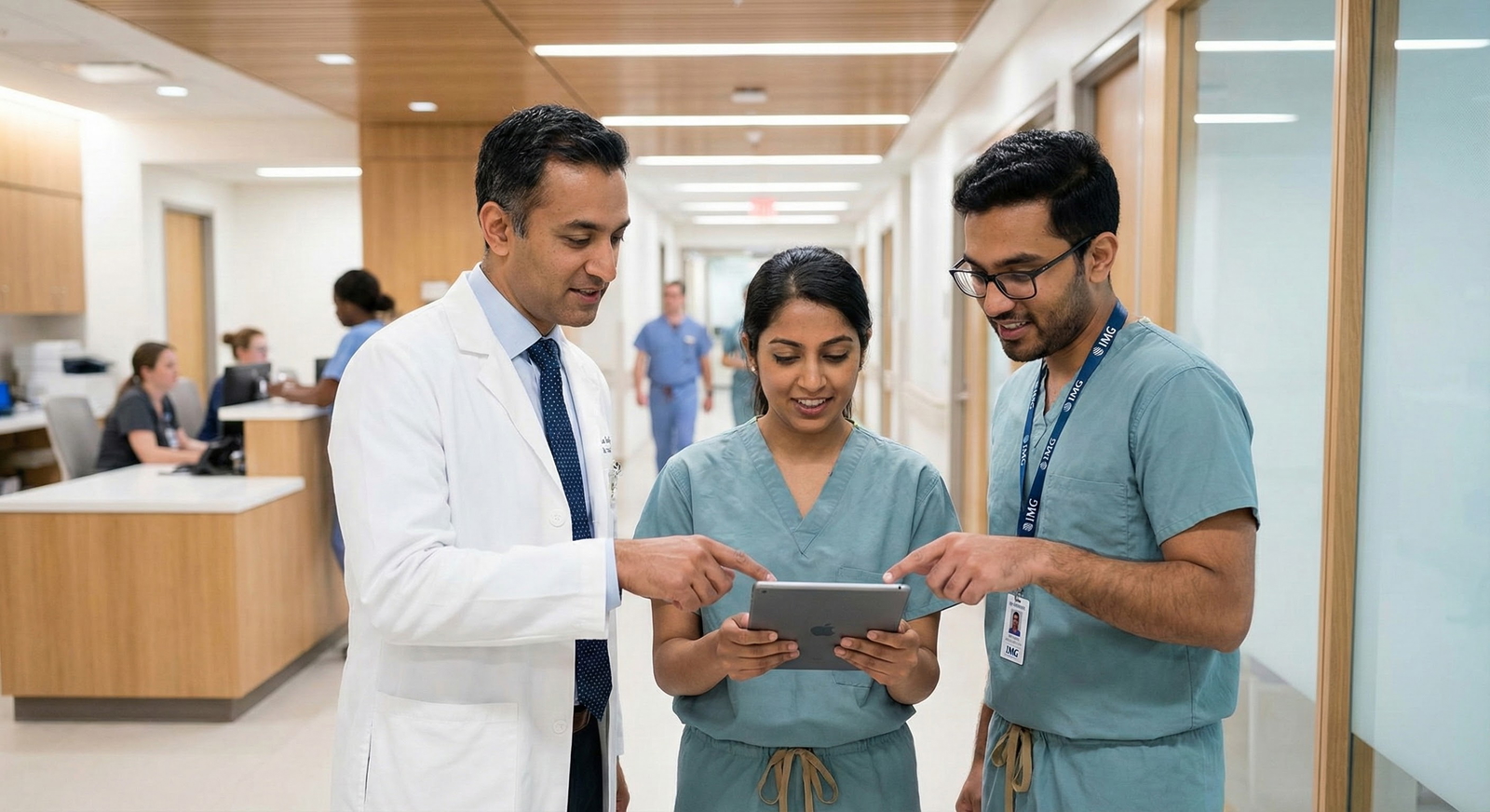
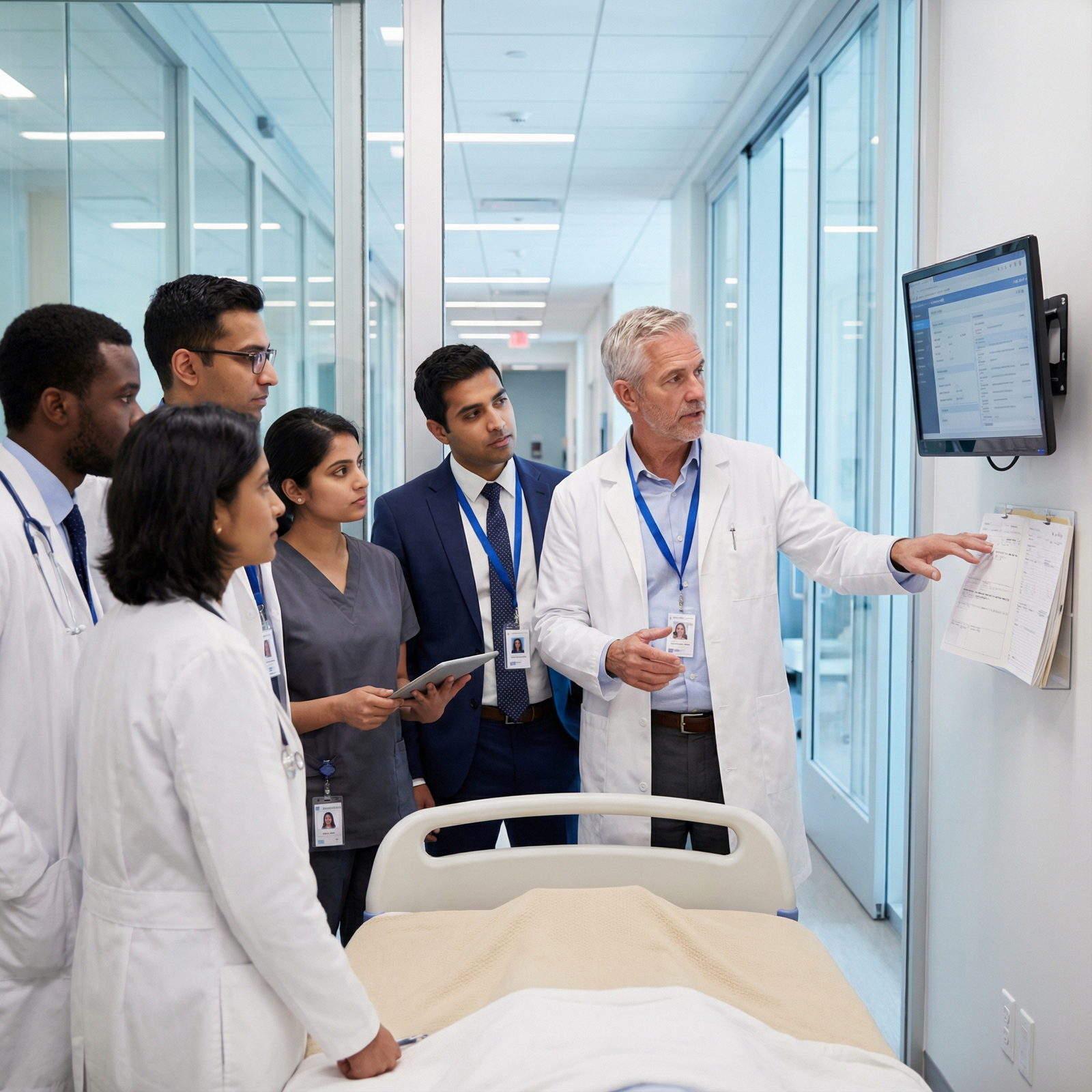
An observership is a supervised, non–hands-on clinical experience where a medical graduate or student “shadows” an attending physician or team in a hospital, clinic, or specialized practice. Unlike clinical rotations or externships, observerships generally exclude direct patient care, procedures, or documentation in the medical record. Instead, the focus is on structured, immersive observation and learning.
Core Characteristics of Observerships
Short-term, defined duration
Most observerships last from 2–4 weeks, though some extend to 2–3 months depending on the institution and specialty.Unpaid, educational focus
These experiences are designed for education and professional development, not employment.Non–hands-on role
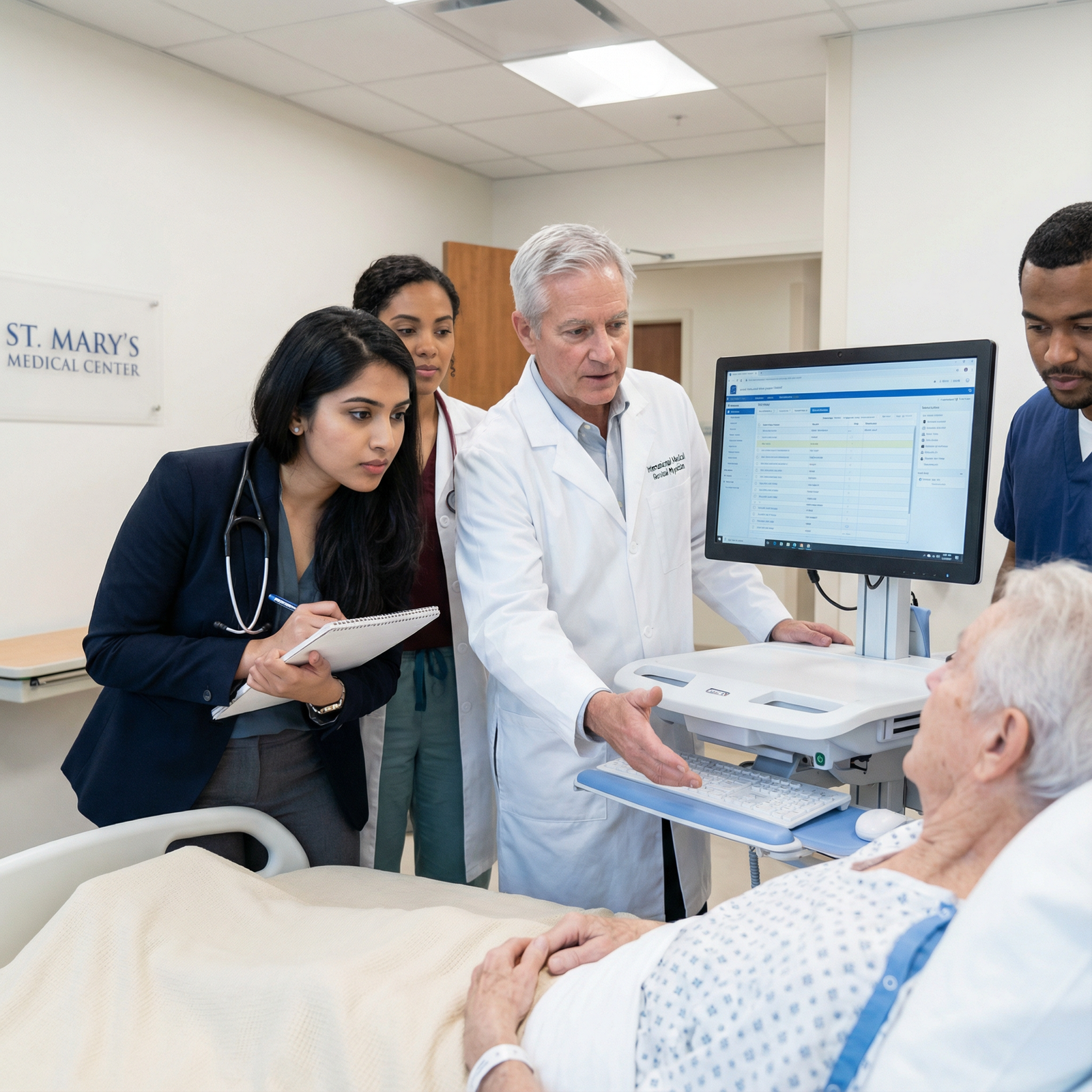
You typically do not write notes, place orders, or perform procedures. Your role is to observe, ask questions, and learn.Supervised by licensed physicians
You are paired with one or more preceptors (attending physicians) who allow you to observe their daily clinical work.Clear boundaries and expectations
Institutions often require health clearance, HIPAA/confidentiality training, and acknowledgment of your non-clinical status.
Key Features and Benefits
1. A Real-World Learning Environment
Observerships immerse you in authentic clinical practice rather than textbooks or simulated cases. You see:
- How physicians organize their day and manage competing priorities
- Real-time clinical decision-making, not just “ideal” textbook scenarios
- Common pitfalls, uncertainties, and how clinicians manage them
- Differences between healthcare systems (e.g., US vs. your home country)
This real-world exposure is particularly important for IMGs trying to understand what “normal” looks like in a US hospital or clinic.
2. Networking Opportunities in the Local Medical Community
For IMGs, a strong professional network in the host country is often the difference between a generic application and a compelling, supported one. Observerships give you:
- Direct contact with attending physicians who may later provide letters of recommendation
- Opportunities to meet residents, fellows, nurse practitioners, and allied health professionals
- Insight into how different residency programs function if your preceptor is affiliated with one
Effective networking during an observership can open doors to future observerships, research collaborations, or even residency interview invitations.
3. Cultural and Systems Insight
Beyond medicine itself, observerships help you understand:
- How patients in the host country express symptoms and expectations
- Cultural norms around communication, privacy, and consent
- Health system structure (insurance, referrals, outpatient vs. inpatient care)
- Electronic medical record (EMR) workflows and documentation expectations
For IMGs, this understanding is critical to demonstrating “fit” within a US or other Western medical environment during interviews and clinical skills assessments.
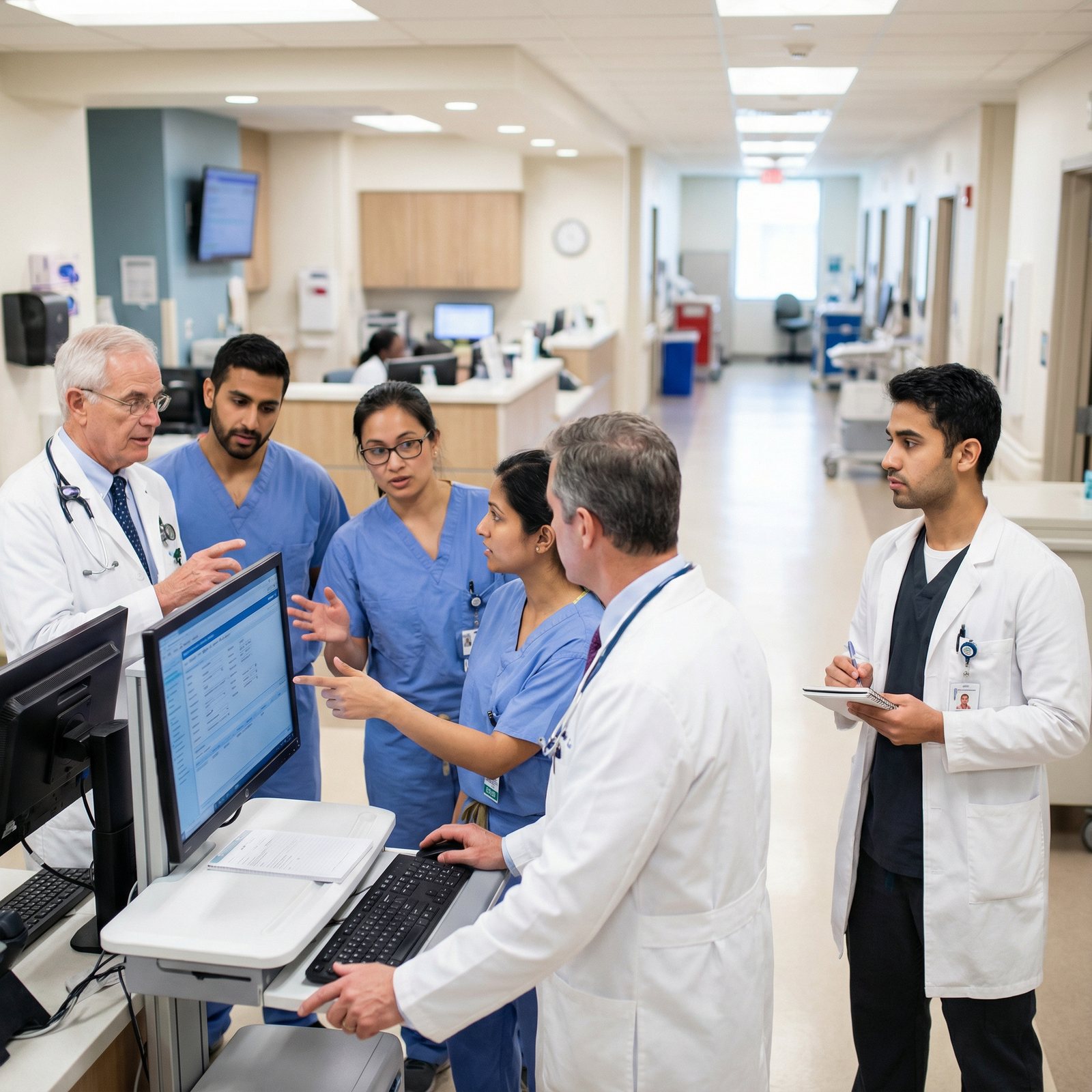
How Observerships Enhance Clinical and Professional Skills
Even without direct patient contact, observerships can significantly strengthen your clinical skills and professional readiness, especially when approached deliberately.
1. Deepening Clinical Knowledge and Expertise
Observerships expose you to a wide variety of clinical problems, specialty practices, and management strategies in real time.
You can systematically focus on:
Diagnostic reasoning
Observe how physicians move from chief complaint → differential diagnosis → targeted investigations → final diagnosis. Take notes on phrasing (“What is the most likely diagnosis?” “What must we rule out?”) and clinical heuristics they use.Treatment decision-making
Pay attention to why one medication or procedure is chosen over another, including patient-specific factors (age, comorbidities, cost, adherence).Guideline-based practice
Notice how physicians reference and integrate clinical guidelines (e.g., ACC/AHA, IDSA, ADA) and how strictly or flexibly they follow them in complex cases.Subspecialty exposure
Observerships in cardiology, surgery, psychiatry, pediatrics, etc., allow you to explore potential career paths while learning the “language” of each specialty.
Actionable tip:
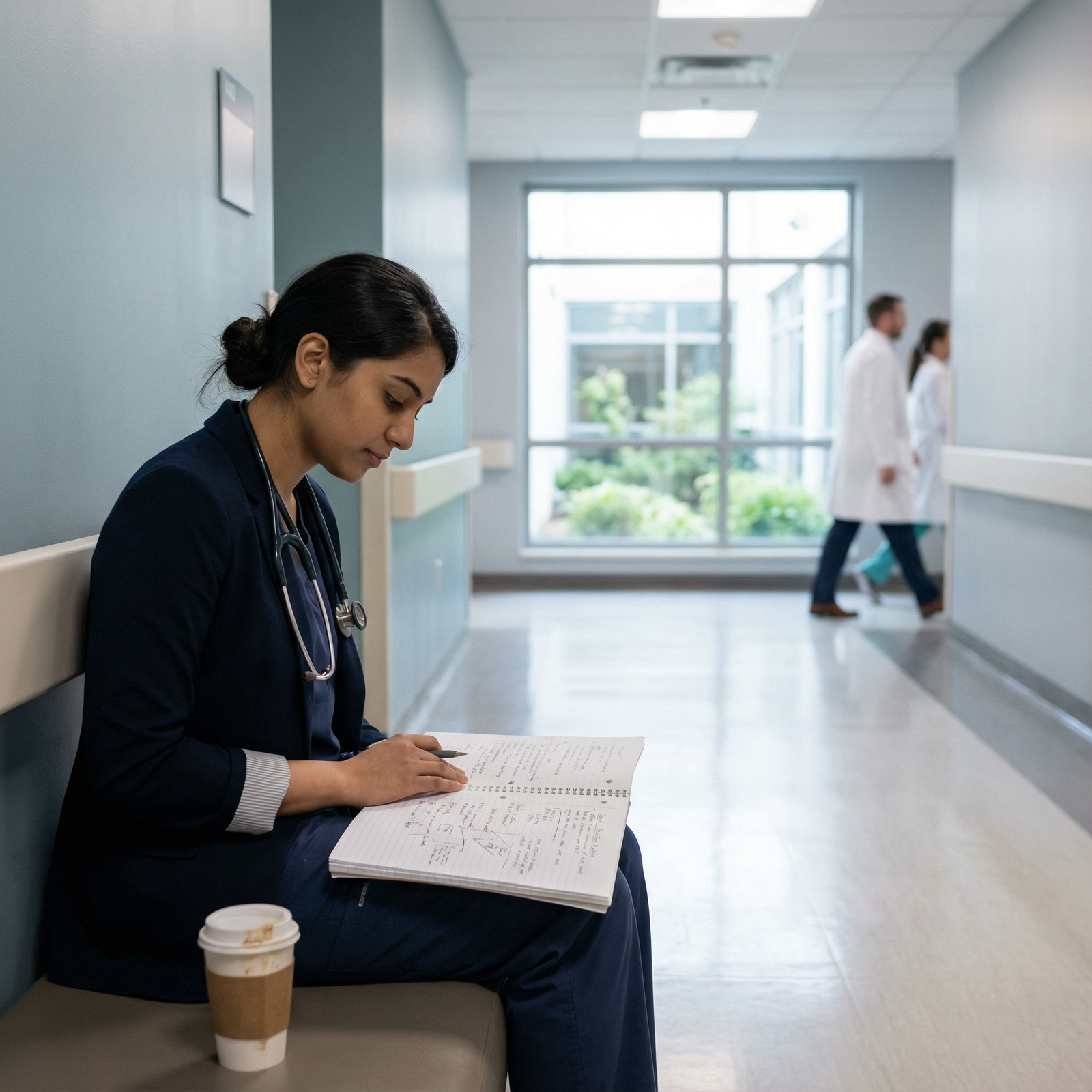
Keep a structured learning log with columns such as “Chief complaint,” “Key findings,” “Differential diagnoses,” “Final diagnosis,” and “What I learned.” Reviewing this regularly consolidates your clinical knowledge.
2. Refining Communication Skills in Clinical Settings
Even as a passive observer, you can dramatically improve your medical communication skills—critical for residency interviews, OSCEs, and future patient care.
Key areas to focus on:
Patient interviewing style
Observe how attendings:- Open the interview (“What brings you in today?” vs. “How can I help you?”)
- Use open versus closed questions
- Explore psychosocial context, not just biomedical details
- Summarize and confirm understanding
Explaining diagnoses and plans
Pay attention to how they:- Translate complex medical terms into patient-friendly language
- Use analogies to explain physiology or pathology
- Check patient understanding (“Can you tell me in your own words what we just discussed?”)
Interprofessional communication
Watch how physicians communicate with nurses, pharmacists, social workers, and other team members:- Hand-off structure (e.g., SBAR: Situation, Background, Assessment, Recommendation)
- Conflict resolution and respectful disagreement
- Clarifying responsibilities and follow-up
Actionable tip:
After rounds, mentally (or on paper) practice how you would explain the case to a patient or a colleague in clear, concise language. This builds your confidence and fluency, even without speaking to patients directly.
3. Building Cultural Competence and System Awareness
For IMGs, cultural competence is a core component of being perceived as a safe and effective future physician in the host country.
During your observership:
Notice patterns in patient behavior
How do patients express pain or distress? How do they respond to bad news? How do privacy and modesty concerns manifest?Observe shared decision-making
How much are patients involved in choosing between treatment options? How are risks explained? How do physicians handle language barriers, low health literacy, or mistrust of the system?Learn local norms and etiquette
- How do clinicians address patients (first name vs. last name)?
- What level of formality is used with colleagues?
- How do teams respond to delays, errors, or misunderstandings?
Understanding and internalizing these norms helps you integrate smoothly into teams as a resident and strengthens your interview performance when discussing your US clinical experience.
4. Developing Clinical Judgment and Confidence
Even without touching a patient, you can practice clinical reasoning alongside your preceptor.
You can:
Form your own impression first
Quietly build a differential and management plan while listening to a case presentation. Then compare your thinking to the attending’s approach.Ask targeted questions
Instead of “Why did you do that?”, try:- “What were the key findings that pushed you toward this diagnosis?”
- “How would your management change if the patient had [X comorbidity]?”
- “What red flags would make you reconsider this plan?”
Reflect on complex cases
After particularly challenging patients, reflect:- What made the case difficult?
- What were the main uncertainties?
- How did the team handle limited information or conflicting data?
Over time, these reflections build your clinical acumen and confidence in your own judgment—skills you can highlight explicitly in personal statements and interviews.
5. Networking and Professional Development Through Observerships
Observerships are not only learning opportunities; they are also powerful career development tools.
Building Mentorship Relationships
A key outcome of a successful observership is often a strong relationship with a preceptor who:
- Understands your background, strengths, and goals
- Can advise you on specialty choice and application strategy
- May later write a detailed, credible letter of recommendation (LOR)
To cultivate mentorship:
- Be reliable and punctual every day
- Show curiosity: ask thoughtful, concise questions
- Demonstrate initiative within the boundaries of your role (e.g., pre-reading about tomorrow’s cases)
- Periodically ask for feedback on your performance and how you can improve
Understanding the Residency Application Landscape
During your observership, you can learn invaluable “insider” information about:
- Which residency programs are IMG-friendly
- Common pitfalls in personal statements and interviews
- Expectations for US clinical experience and USMLE scores in your specialty
- Opportunities to get involved in small research or QI projects
Many residents and attendings are willing to share their own journeys—ask respectfully, listen carefully, and take notes.
Real-World Application: An IMG’s Success Story with Observerships
Case Study: Maria’s Path from IMG to Surgical Resident
Maria, an IMG from Spain, arrived in the United States with strong clinical training from her home country but limited understanding of the US healthcare system. She aspired to match into a competitive general surgery residency.
Recognizing the importance of US clinical experience, she secured a 4-week observership in a busy academic surgical unit.
During her observership, Maria:
Immersed herself in surgical workflow
She arrived early for pre-rounds, joined OR cases as an observer, and stayed late to follow the entire perioperative course. She carefully noted how attendings communicated with anesthesiologists, nurses, and patients’ families.Asked focused, high-yield questions
Rather than asking basic questions easily answered by textbooks, she prepared one or two thoughtful questions per case—for example, “How does your approach to anticoagulation differ in high-risk elderly patients?” Her attendings noticed her engagement and preparation.Demonstrated professionalism and reliability
Maria never missed a day, was always prepared for morning cases, respected confidentiality, and helped with non-clinical tasks like organizing patient lists or summarizing recent guidelines.Built strong relationships
Over time, one surgical attending became an informal mentor. Impressed by her dedication, he later wrote a detailed LOR that highlighted her work ethic, curiosity, and potential as a future surgical resident.
Outcome:
When Maria applied for residency, she had:
- A strong US-based letter of recommendation from a known academic surgeon
- A deep understanding of US surgical practice to discuss in interviews
- Clear examples of what she learned and how she adapted to a new system
She ultimately matched into a competitive general surgery residency, crediting her observership as a pivotal experience that transformed her from an “unknown IMG” into a well-prepared, confident candidate.
Maximizing the Value of Your Observership: Practical Tips
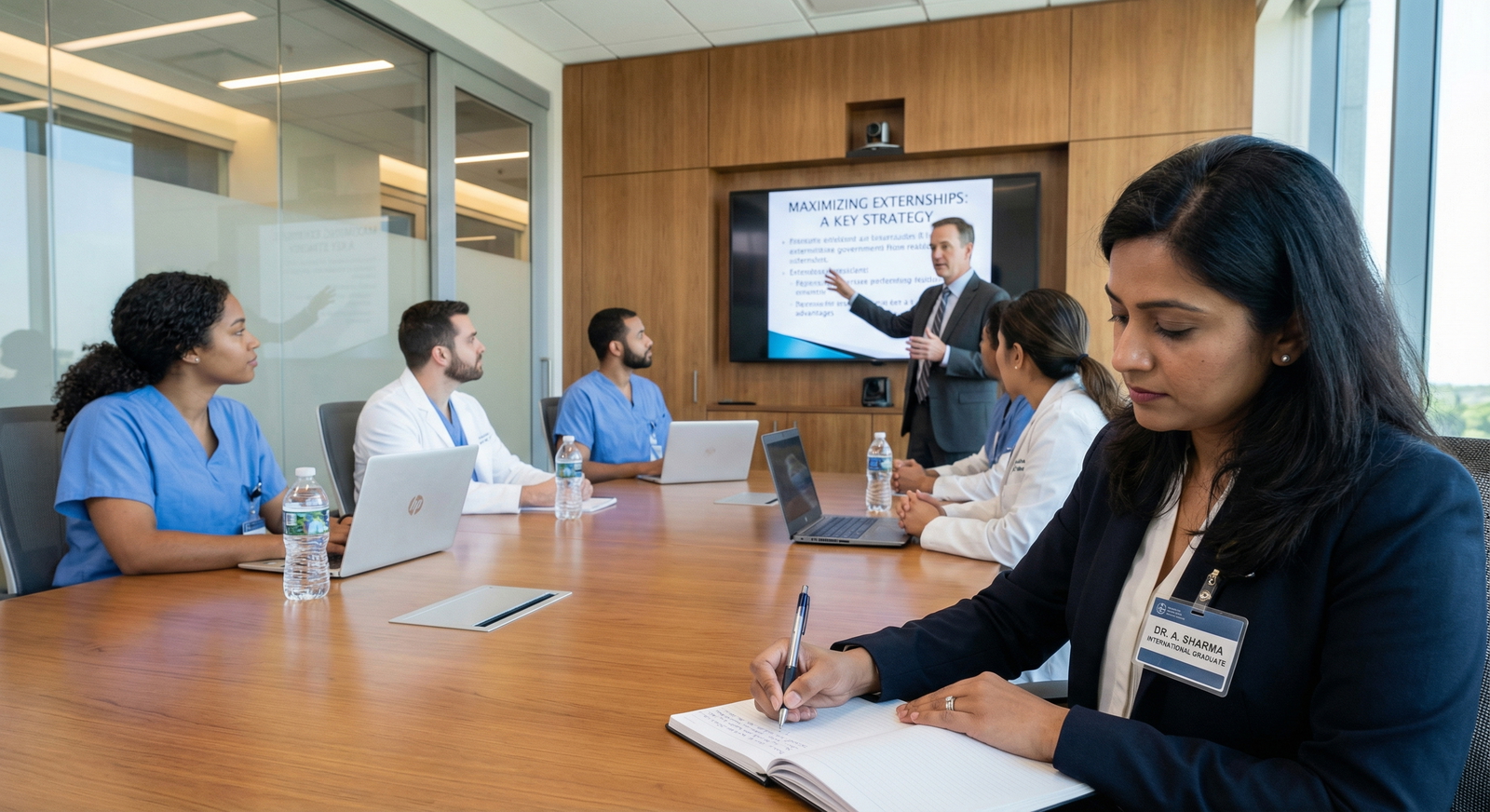
To ensure your observership meaningfully enhances your medical career, approach it strategically.
Before the Observership
Clarify your goals
Are you primarily seeking:- Specialty exposure?
- A potential LOR?
- Familiarity with US healthcare systems?
- Networking in a specific geographic region?
Write down 3–5 specific goals and revisit them weekly.
Review core clinical content
Refresh key topics in the specialty you will observe so you can follow discussions and ask higher-level questions.Understand program expectations
Clarify start/end times, dress code, required documents, and any institutional training modules (HIPAA, infection control) before you start.
During the Observership
Be present and engaged
Avoid using your phone or laptop for non-clinical purposes during rounds. Take handwritten notes if EMR access is limited.Respect boundaries
Never present yourself as a physician in the host country if you are not licensed. Always follow the hospital’s policy regarding introductions and roles.Ask for feedback
Midway through the observership, ask your preceptor:- “Is there anything I could do to learn more effectively?”
- “Are there specific topics you recommend I review to get more out of this experience?”
Document your experiences
Keep a portfolio of:- Cases encountered
- Skills or insights gained
- Reflections on cultural and system differences
You can later draw from this for personal statements, ERAS application, and interviews.
After the Observership
Maintain professional contact
Send a brief thank-you email summarizing what you learned and expressing appreciation. Periodically update your preceptor on your progress (exam results, future observerships, application outcomes).Integrate learning into your application
Explicitly mention in your personal statement or interviews:- What you observed
- How it changed your understanding of US medicine
- How it influenced your career goals and practice style
Leverage your new network
Ask your preceptor or residents if they know of:- Additional observerships or externships
- Research or quality-improvement projects
- IMG-friendly programs or mentors in your specialty
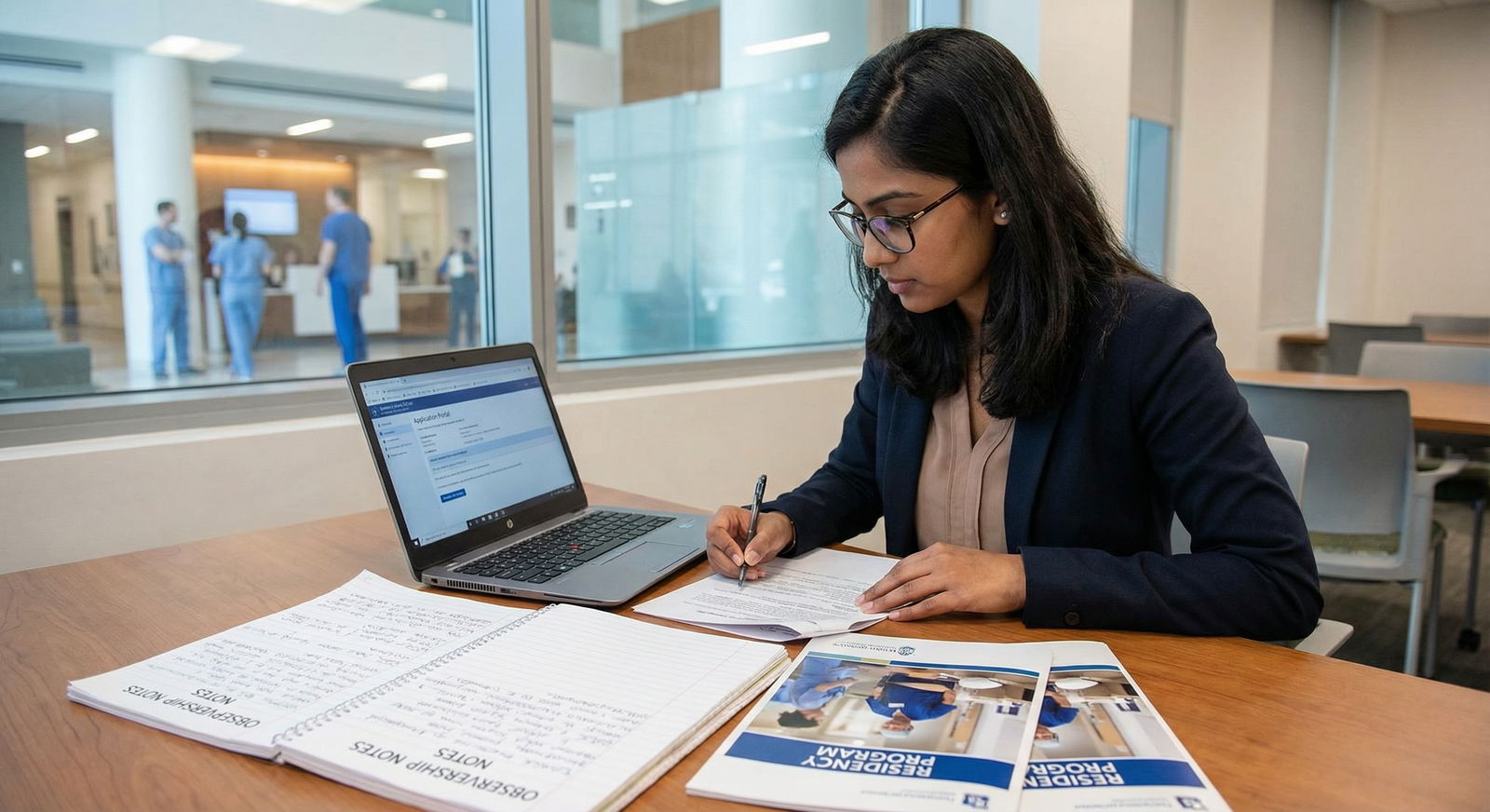
Frequently Asked Questions About Observerships for IMGs
1. How do I find observership opportunities as an IMG?
You can find observerships through several channels:
University-affiliated hospitals
Many academic centers have formal “International Observership” or “Visiting Physician” programs listed on their websites under Graduate Medical Education (GME) or International Programs.Community hospitals and private practices
Some community hospitals and large private groups unofficially host observers. These may require you to contact physicians directly via email or through professional introductions.Professional organizations and specialty societies
Some specialties (e.g., cardiology, radiology, surgery) have programs or listings for international visitors.Networking
Use conferences, alumni connections from your medical school, or mentors in your home country who have worked abroad. A warm introduction often works better than a cold email.
When emailing potential preceptors, include a concise CV, a brief statement of your goals, and your available dates.
2. Are observerships paid, and do I have to pay fees?
Compensation:
Observerships are almost always unpaid; they are educational, not employment.Fees:
Some institutions charge:- Application fees
- Program fees for administrative processing, badging, or insurance coverage
Others are free but may be competitive or require additional documentation.
Clarify all costs up front and budget for travel, housing, and living expenses during your observership.
3. What documents do I typically need to apply for an observership?
Exact requirements vary, but commonly requested documents include:
- Updated CV or résumé
- Copy of medical degree or proof of current enrollment (if still a student)
- Passport and immigration/visa documentation (if international)
- Immunization records and TB/health clearance
- Proof of medical malpractice or liability coverage (some programs provide this)
- Letters of recommendation from your home institution
- A brief personal statement explaining your goals for the observership
Always check the specific program’s website or contact their coordinator for exact requirements and deadlines.
4. How long do observerships last, and how many should I complete?
Typical duration:
2–4 weeks per observership is common, though some may extend up to 12 weeks.Number of observerships:
There is no universal rule, but for residency applications, IMGs often aim for:- At least 2–3 months of total US clinical exposure (observerships, externships, or research with clinical exposure)
- Preferably in the specialty they are applying to
Quality matters more than quantity. One or two observerships that lead to strong letters and genuine learning can be far more valuable than many superficial experiences.
5. Can I improve clinical skills through observerships if I cannot touch patients?
Yes—though not hands-on, observerships significantly enhance your clinical skills by:
- Strengthening your clinical reasoning and diagnostic frameworks
- Improving your understanding of guideline-based and evidence-based management
- Sharpening your communication strategies through modeling experienced physicians
- Increasing awareness of safety practices, documentation standards, and EMR workflows
You won’t be performing procedures, but you will gain the contextual knowledge and professional behaviors that residency programs expect from strong candidates.
Observerships are far more than passive shadowing experiences. When chosen and used wisely, they can be transformative stepping stones in your medical career—especially as an International Medical Graduate striving to enter a new healthcare system. By focusing on clinical learning, cultural adaptation, and deliberate networking, you can turn an observership into a powerful asset for residency applications, long-term career growth, and your development as a globally competent physician.