How Observerships Open Doors for IMGs: Real Success Stories and Practical Strategies
Embarking on the U.S. residency journey as an International Medical Graduate (IMG) can feel overwhelming. The U.S. healthcare system has its own culture, expectations, and unwritten rules, and simply having strong exam scores often isn’t enough. This is where observerships become powerful stepping stones.
For many IMGs, observerships are the bridge between training abroad and residency success in the United States. They provide exposure to real-world clinical practice, a chance to understand how care is delivered in the U.S. healthcare system, and—critically—opportunities for meaningful Networking in Medicine.
This expanded guide will help you:
- Understand what observerships are (and are not)
- Learn how observerships support Residency Success for IMGs
- See how real IMGs transformed observerships into residency offers
- Apply practical strategies to make your own observership high-impact
- Find observership opportunities and prepare effectively
Understanding Observerships in the U.S. Healthcare System
What Is an Observership?
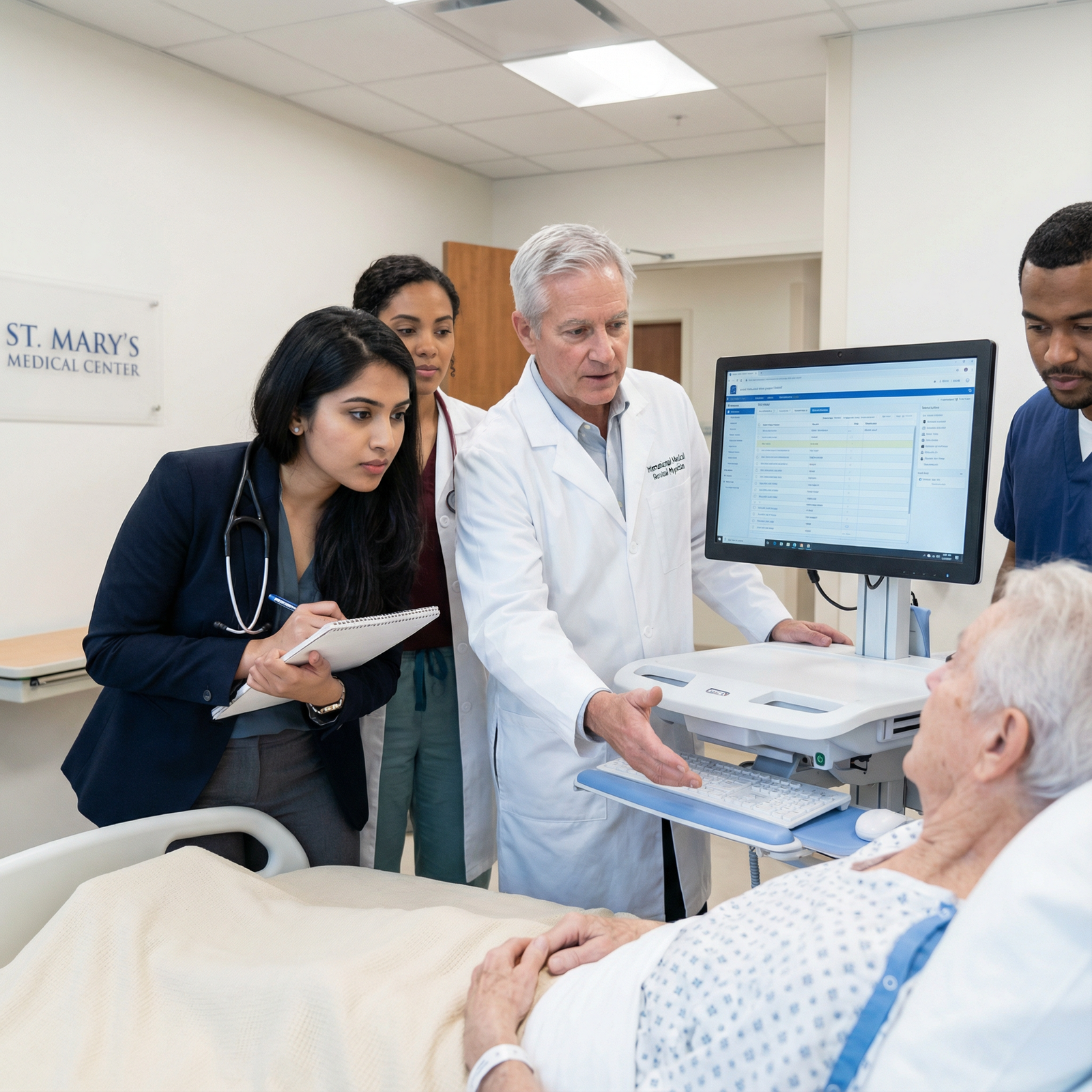
An observership is a structured, time-limited experience that allows International Medical Graduates to observe clinical practice in the U.S. healthcare system without direct hands-on patient care. You are not acting as a physician; instead, you are a supervised observer, learning by watching and engaging in academic and clinical discussions.
Typical features of an observership:
- No independent patient care (no orders, prescriptions, or documentation as a provider)
- Shadowing attendings, residents, and fellows in clinics, inpatient units, or specialty services
- Attending teaching conferences, grand rounds, and case discussions
- Exposure to electronic medical records (EMR), documentation standards, and workflow
- Duration usually ranges from 2–12 weeks, depending on the program
Even though observerships do not involve direct patient care, they are highly valued because they demonstrate that you have seen and understood how medicine is practiced in the U.S.
Why Observerships Matter for International Medical Graduates
For IMGs, the gap between training in their home country and expectations in U.S. residency programs can be wide. Observerships help close this gap in several key ways.
1. Understanding the U.S. Healthcare System in Practice
Textbooks and exams cannot fully capture:
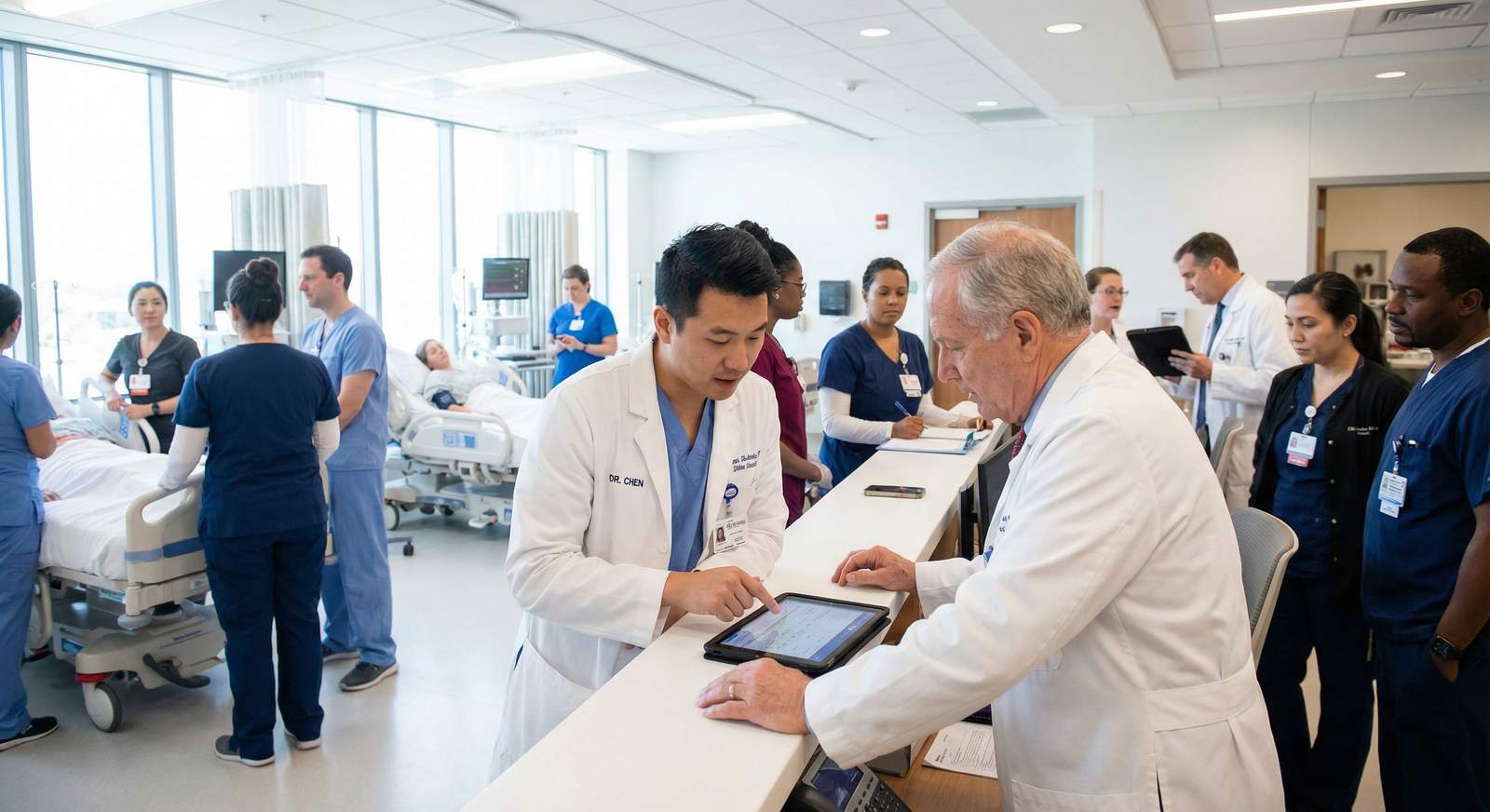
- Interactions between physicians, nurses, case managers, and other staff
- How insurance coverage affects tests, referrals, and discharge planning
- How physicians navigate time pressures, documentation, and patient expectations
- Cultural aspects of patient care, such as shared decision-making and informed consent
During an observership, you see how all of this works together in real time. This helps you:
- Answer interview questions like:
“How does the U.S. healthcare system differ from your home country?” - Demonstrate familiarity with EMRs, clinical pathways, and quality metrics
- Show that you are already adapted to the culture of U.S. practice
2. Building Powerful Professional Networks in Medicine
One of the biggest advantages of observerships is Networking in Medicine:
- Attending physicians can become mentors, advocates, and letter-writers
- Residents and fellows can explain residency culture, interview expectations, and program-specific details
- Program administrators and coordinators may remember your professionalism and initiative
These relationships often outlast the observership itself and can directly contribute to residency interviews and match outcomes.
3. Strengthening Your Residency Application
Residency programs increasingly expect IMGs to have some form of U.S. clinical experience (USCE). Observerships:
- Show commitment to practicing in the U.S.
- Provide content for your personal statement and interviews (real cases, real reflections)
- Offer opportunities for U.S.-style letters of recommendation (LoRs)
- Help you clarify your specialty choice by letting you observe different fields
When described well in your ERAS application and interviews, observerships can set you apart from other candidates with similar exam scores.
4. Advancing Your Clinical and Professional Development
Even without direct patient care, observerships can sharpen your skills:
- Clinical reasoning by listening to case presentations and attending discussions
- Evidence-based medicine by participating in journal clubs or resident teaching sessions
- Communication skills by watching how physicians handle difficult conversations or cultural barriers
- Professionalism by learning expected behaviors in U.S. clinical settings
Many IMGs find that after observerships, they can think and speak more like U.S.-trained residents, which is exactly what program directors want to see.
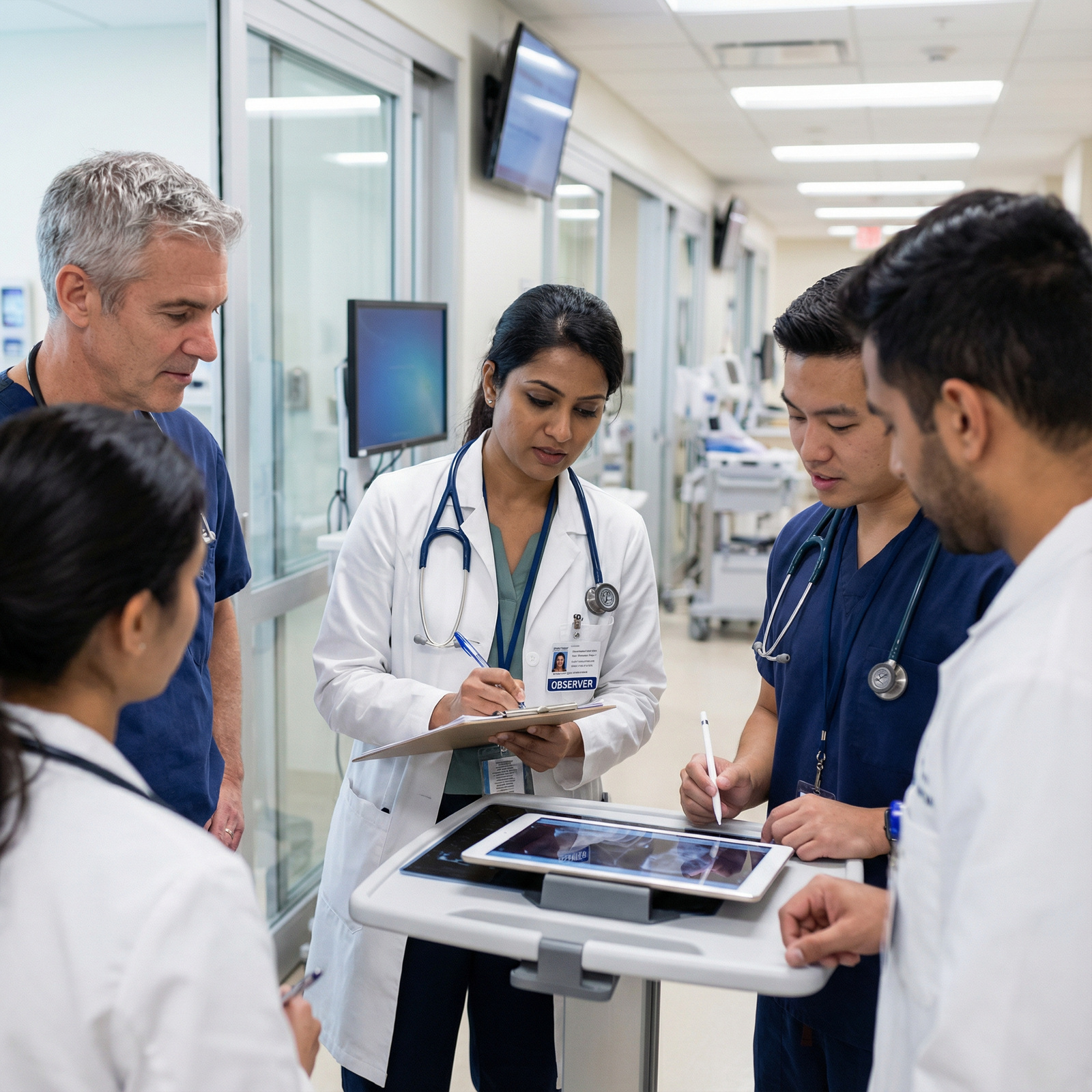
Success Stories: How Observerships Opened Doors for IMGs
Real-world experiences highlight how powerful observerships can be when used strategically. Below are expanded versions of three IMG journeys, plus the specific actions they took that you can replicate.
Success Story 1: From Observation to Family Medicine Residency
Dr. Anaya – India → Family Medicine in New York
After completing medical school and several years of practice in India, Dr. Anaya came to the U.S. with strong clinical skills but limited understanding of the U.S. residency system. Despite decent Step scores, her first application cycle resulted in very few interview invites.
Recognizing the gap, she arranged a family medicine observership at a large teaching hospital in New York.
What She Did During the Observership
- Arrived early and stayed engaged: She consistently arrived before rounds to pre-read charts and understand patient cases.
- Asked thoughtful, case-based questions: Instead of asking general questions like “What are the core conditions in family medicine?” she asked targeted ones such as:
“In this patient with uncontrolled diabetes and limited insurance, how do you prioritize medications and follow-up?” - Participated in academic activities:
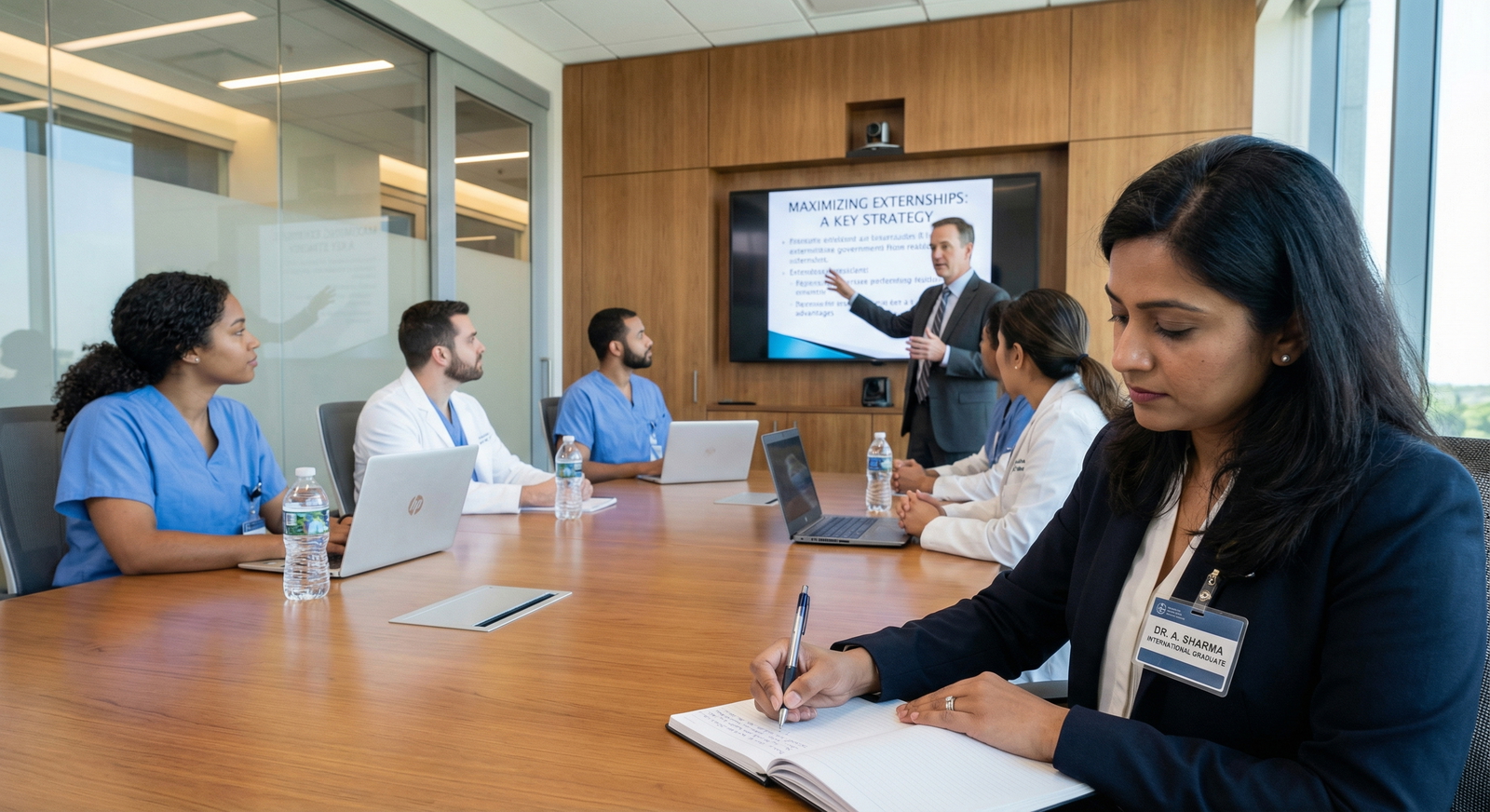
- Attended grand rounds and noon conferences
- Reviewed current guidelines on hypertension and diabetes management
- Discussed articles informally with residents
- Demonstrated reliability and professionalism: She maintained confidentiality, respected boundaries (no touching patients or entering orders), and communicated clearly with the team.
How It Opened Doors
- One attending noticed her preparation and engagement and invited her to a department networking event.
- At this event, she met faculty and program leadership from several nearby residency programs.
- The attending wrote a strong, personalized letter of recommendation emphasizing:
- Her work ethic
- Her understanding of continuity care
- Her potential as a resident in a primary care setting
In her next application cycle, Anaya:
- Received significantly more interviews in family medicine
- Was able to confidently discuss her observership cases in interviews
- Ultimately matched into a family medicine residency at a program where she had networked during that event
Today, she is known for her patient-centered approach—a philosophy she refined during that observership.
Success Story 2: Networking His Way into Neurosurgery Interviews
Dr. Mohammed – Pakistan → Neurosurgery Residency
Neurosurgery is one of the most competitive specialties, particularly challenging for IMGs. Even after passing his exams with strong scores, Mohammed struggled to secure interviews due to limited U.S. clinical experience and lack of U.S.-based mentors.
He arranged a neurosurgery observership at a respected academic center in Chicago.
What He Did Differently
- Set clear goals before starting:
- Understand neurosurgery residency expectations
- Learn about ongoing research projects
- Build strong relationships for mentorship
- Actively engaged with residents and fellows:
- Asked them to explain typical resident schedules, expectations, and common pitfalls
- Joined them in pre-round discussions and debriefs when permitted
- Showed long-term interest:
- Attended as many conferences and morbidity & mortality (M&M) meetings as allowed
- Volunteered to help with literature searches for ongoing research projects
- Found a mentor:
A senior neurosurgery resident noticed Mohammed’s consistency and curiosity and began:- Reviewing his CV and personal statement drafts
- Practicing mock interviews
- Introducing him to faculty who might support his application
Outcomes from the Observership
Because of his strong presence and relationships:
- He secured well-written letters of recommendation from neurosurgical faculty.
- His research involvement allowed him to list abstracts and poster presentations on his ERAS application.
- Faculty directly advocated for him with other program directors.
As a result, Mohammed received several interview invitations in neurosurgery—something that had not happened before his observership. He is now in neurosurgery residency, steadily progressing toward his long-term career goal.
Success Story 3: Cultural Adaptation and Internal Medicine Success
Dr. Elena – Philippines → Internal Medicine and Patient Advocacy
When Elena first arrived in the U.S., the biggest challenge wasn’t medical knowledge—it was cultural adaptation. She felt unsure about communication style, patient autonomy, and the expectations around documentation and multidisciplinary care.
She secured an internal medicine observership at a community hospital with a diverse patient population.
How the Observership Transformed Her Approach
- Assigned Mentor: She was paired with a primary care physician who:
- Explained nuances of patient-centered care in the U.S.
- Demonstrated how to handle language barriers, health literacy issues, and shared decision-making
- Focused Learning on Culture and Communication:
- Watched how physicians discussed goals of care and end-of-life decisions
- Observed how physicians involved patients and families in treatment planning
- Noted approaches to discussing sensitive topics (e.g., non-adherence, substance use)
- Reflected and Took Notes Daily:
- She kept a “learning log” of challenging and inspiring patient encounters
- This later became a source of interview stories and themes for her personal statement
The End Result
Her mentor recognized her growth and wrote a strong, narrative-style letter of recommendation highlighting:
- Her empathy
- Her commitment to culturally sensitive care
- Her ability to adapt and learn quickly
Elena applied broadly to internal medicine and was able to articulate in interviews exactly how her observership shaped her approach to care. She matched into an internal medicine residency and is now known for her focus on patient advocacy and cultural competence—skills she built directly from her observership experience.
Making Your Observership Count: Practical Strategies for IMGs
Not every observership automatically leads to residency success. What matters is how you use the opportunity. Below are practical, actionable steps to maximize your experience.
1. Approach Your Observership Like a Professional Job
- Be consistently punctual: Aim to arrive 10–15 minutes before start time.
- Dress professionally: Follow hospital guidelines (white coat if permitted, clean attire, ID badge visible).
- Respect boundaries: Remember, you are an observer:
- Never examine patients or perform procedures unless explicitly permitted under program rules.
- Do not enter orders or prescriptions.
- Ask before accessing any part of the electronic medical record.
- Maintain confidentiality: Follow HIPAA regulations. Do not share patient details outside of the clinical setting, including on social media.
Professionalism is often the first and strongest impression you create.
2. Be Curious—but Prepared and Focused
Asking questions is essential, but the quality of your questions matters:
- Before asking, spend a few moments thinking it through:
- “What do I already know about this?”
- “Is this something I could look up first?”
- Aim for clinical reasoning questions instead of simple factual ones, such as:
- “Why did we choose this imaging modality instead of another?”
- “How would this decision change if the patient had no insurance?”
- Take notes so you can research later and then follow up:
- “I read the latest guidelines last night; could I clarify how we apply them in this type of patient?”
This shows initiative, depth, and serious engagement.
3. Use the Observership for Strategic Networking in Medicine
Networking in Medicine should be intentional, not accidental.
- Introduce yourself clearly: Share your background, country of training, and career goals in a concise way.
- Ask for advice—not just opportunities:
- “Given your experience, what would you prioritize if you were in my position?”
- “What do you think is the most overlooked part of an IMG application?”
- Request mentorship respectfully:
- After a few days or weeks, if the relationship feels natural, you might say:
“I really appreciate your guidance. Would you be open to staying in touch or occasionally reviewing my progress as I prepare for residency?”
- After a few days or weeks, if the relationship feels natural, you might say:
Networking is about relationships over time, not only about asking for letters or favors.
4. Document Your Experience in a Structured Way
Keeping a record of your observership will help you later in applications and interviews.
Consider tracking:
- Interesting cases you observed (de-identified, no patient names or identifiers)
- Key clinical lessons, especially where management differed from your home country
- Communication strategies that impressed you
- Feedback (formal or informal) you received from faculty or residents
This personal log can help you:
- Write a compelling and specific personal statement
- Answer interview questions like “Tell me about a meaningful clinical experience in the U.S.”
- Recall details for future networking or follow-up research projects
5. Follow Up and Maintain Connections
Your observership doesn’t end on your last day in clinic.
- Send thank-you emails to attendings, residents, and administrators:
- Thank them for specific things you learned
- Mention how you plan to use what you gained
- Update your mentors periodically:
- Share major milestones (Step scores, match outcomes, research acceptances)
- When appropriate, ask about letters of recommendation:
- Give them enough time (ideally 4–6 weeks)
- Provide your CV, personal statement draft, and a summary of your activities during the observership
Strong, ongoing relationships often lead to advocacy during application review and match ranking.
Finding and Securing Observership Opportunities as an IMG
Identifying observerships can feel challenging, but a systematic approach helps.
1. Use Professional and Alumni Networks
- Medical school alumni who are now in the U.S. are often willing to help:
- Ask if their institution accepts observers
- Request introductions to faculty or coordinators
- National and local medical associations:
- Some state or specialty societies maintain lists of hospitals or practices open to IMGs
- Online professional platforms (e.g., LinkedIn):
- Connect with physicians in your desired specialty
- Politely inquire about observership or shadowing opportunities
2. Contact Medical Institutions Directly
Different institutions have different policies:
- Formal Observership Programs:
- Some teaching hospitals have structured programs with:
- Clear start dates and durations
- Application forms and fees
- Defined eligibility criteria (e.g., graduation within a certain number of years)
- Some teaching hospitals have structured programs with:
- Informal Observerships / Shadowing:
- Smaller hospitals or private practices may not have official programs but may allow observerships on a case-by-case basis if:
- A physician agrees to sponsor/supervise you
- You complete necessary paperwork (immunizations, TB test, HIPAA training, etc.)
- Smaller hospitals or private practices may not have official programs but may allow observerships on a case-by-case basis if:
Check hospital websites under sections like “International Medical Graduates,” “Visiting Physicians,” or “Observership Programs.”
3. Explore Online Platforms and IMG-Focused Resources
- IMG-focused organizations, forums, and educational groups often post:
- Observership opportunities
- Reviews of specific programs by past observers
- Guidance on preparing application materials
Be cautious of any site that:
- Guarantees residency placement
- Charges unusually high fees without transparency
- Lacks clear affiliation with real medical institutions
4. Prepare a Strong Observership Application
Even for observerships, you may be asked to submit:
- Updated CV/Resume with clear formatting
- Medical school diploma or transcript
- USMLE/other exam scores, if available
- Personal statement or brief statement of purpose
- Proof of immunizations and health clearance
- Visa or immigration documentation, if required
Treat the observership application as seriously as a job or residency application; this can set the tone for how you are perceived before you even start.

Frequently Asked Questions About Observerships for IMGs
1. What is the difference between an observership and an externship?
An observership:
- Involves observation only, with no direct patient care
- Is common for graduates who are not currently enrolled in a U.S. medical school
- Does not usually allow you to write notes, place orders, or perform procedures
An externship (or hands-on clinical experience):
- Includes direct patient care responsibilities under supervision
- May allow you to write notes, present patients, and contribute more actively
- Is often more competitive and may have stricter eligibility criteria
For many International Medical Graduates, observerships are more accessible and still highly valuable, especially when hands-on positions are limited.
2. How many observerships do I need for residency success?
There is no fixed number, but quality and relevance matter more than quantity. Many successful IMGs have:
- 1–3 well-chosen observerships in their target specialty or related fields
- Strong performance in these observerships leading to:
- Good letters of recommendation
- Clear understanding of the U.S. healthcare system
- Concrete experiences to discuss in interviews
Several short, superficial observerships may be less impactful than one or two high-quality, well-utilized experiences.
3. Do observerships guarantee a residency position?
No. Observerships do not guarantee residency placement. However, they can significantly improve your chances by:
- Providing U.S. clinical context and experiences
- Strengthening your application with U.S.-based letters of recommendation
- Demonstrating commitment and adaptability
- Enhancing your interview performance through real clinical stories and reflections
Think of observerships as one critical component in a broader strategy that includes exams, research, personal statement, and networking.
4. Can I get a letter of recommendation (LoR) from an observership?
Yes, many IMGs obtain strong LoRs from observerships—if they perform well and build genuine relationships.
To maximize your chances:
- Show consistent professionalism and engagement
- Ask for feedback during the observership so you can improve in real time
- Near the end, if appropriate, ask directly and respectfully:
- “Based on what you have observed of my work and interactions here, would you feel comfortable writing me a strong letter of recommendation for residency?”
- Provide your CV, personal statement draft, and a reminder of your specific activities and contributions
5. Can students (not yet graduates) participate in observerships?
Policies vary:
- Many observership programs are designed specifically for graduates (IMGs)
- Some institutions may allow senior medical students, especially if:
- They are close to graduation
- They meet the institution’s eligibility criteria
Always check the specific program requirements. If you are still a student, you might also explore electives or visiting student rotations, which can offer more hands-on experience if your school has affiliations with U.S. institutions.
Observerships are more than passive shadowing opportunities; when approached deliberately, they can become powerful launchpads for Residency Success in the U.S. healthcare system. By understanding their value, planning strategically, and engaging fully—just as Dr. Anaya, Dr. Mohammed, and Dr. Elena did—you can turn observerships into meaningful steps toward your own residency match and long-term career in American medicine.