Internships vs. Externships: Which Is Better for International Medical Graduates (IMGs)?
For International Medical Graduates (IMGs), securing strong U.S. clinical experience is one of the most critical steps in residency preparation and a successful Match. Among the most common options are internships and externships—terms that often get used loosely but represent different types of clinical experience.
Understanding the differences, strengths, and limitations of internships vs. externships can help you build a deliberate strategy for your CV, clinical exposure, and letters of recommendation. This guide breaks down each option in detail, compares them, and helps you decide which is better for your specific situation as an IMG.
Understanding the Basics: Internships vs. Externships for IMGs
Before deciding which is better for your residency preparation, you need a clear understanding of what each term typically means in the context of U.S. clinical experience for IMGs.
What Is an Internship for IMGs?
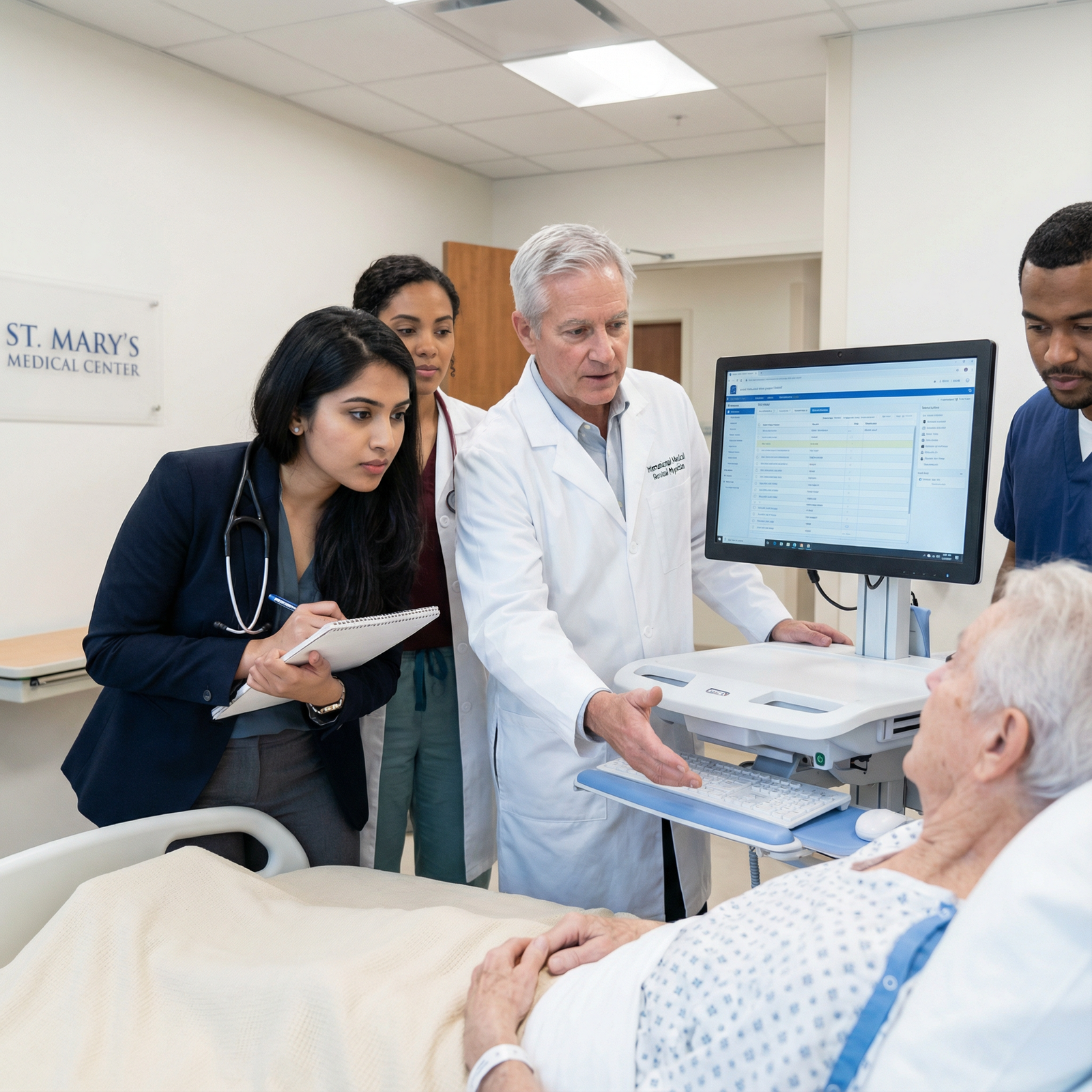
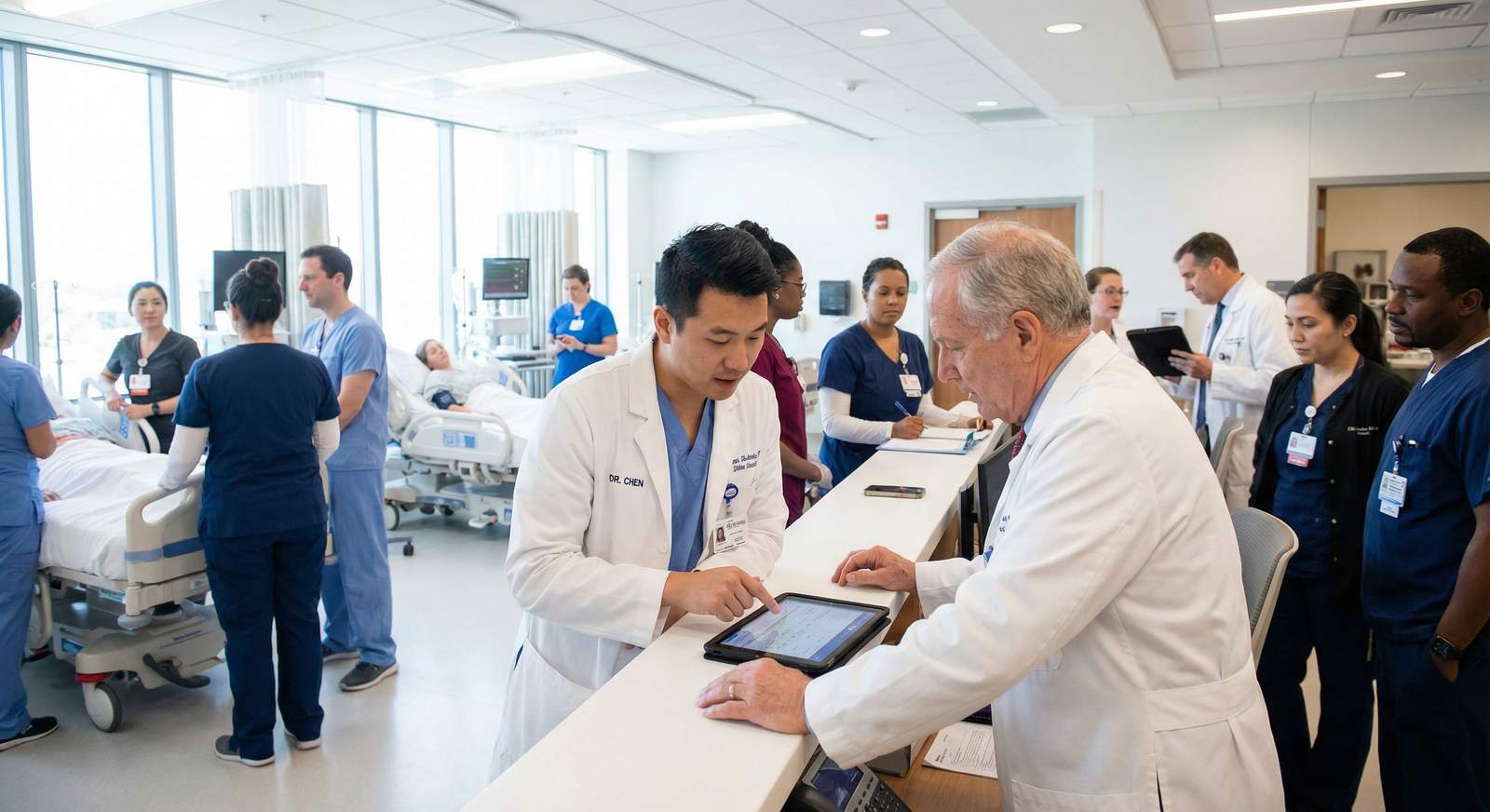
In the IMG context, “internship” usually refers to a structured, hands-on clinical experience in a U.S. healthcare setting where you:
- Participate in direct or closely supervised patient care
- Engage in daily clinical activities (rounds, case discussions, documentation)
- Interact regularly with attending physicians and residents
- Develop both clinical and professional skills
These opportunities may be:
- Hospital-based internships (often affiliated with teaching hospitals)
- Clinic or outpatient practice internships
- Research-clinical hybrid roles with patient interaction and data collection
Internships:
- Often run from 4 weeks to several months
- May be paid or unpaid, depending on institution, visa, and role
- Are typically more intensive and structured than observership-style experiences
For many IMGs, internships function as de facto “mini-residency experiences,” helping them adapt to U.S. clinical workflows, electronic medical records (EMR), and interprofessional communication.
What Is an Externship for IMGs?
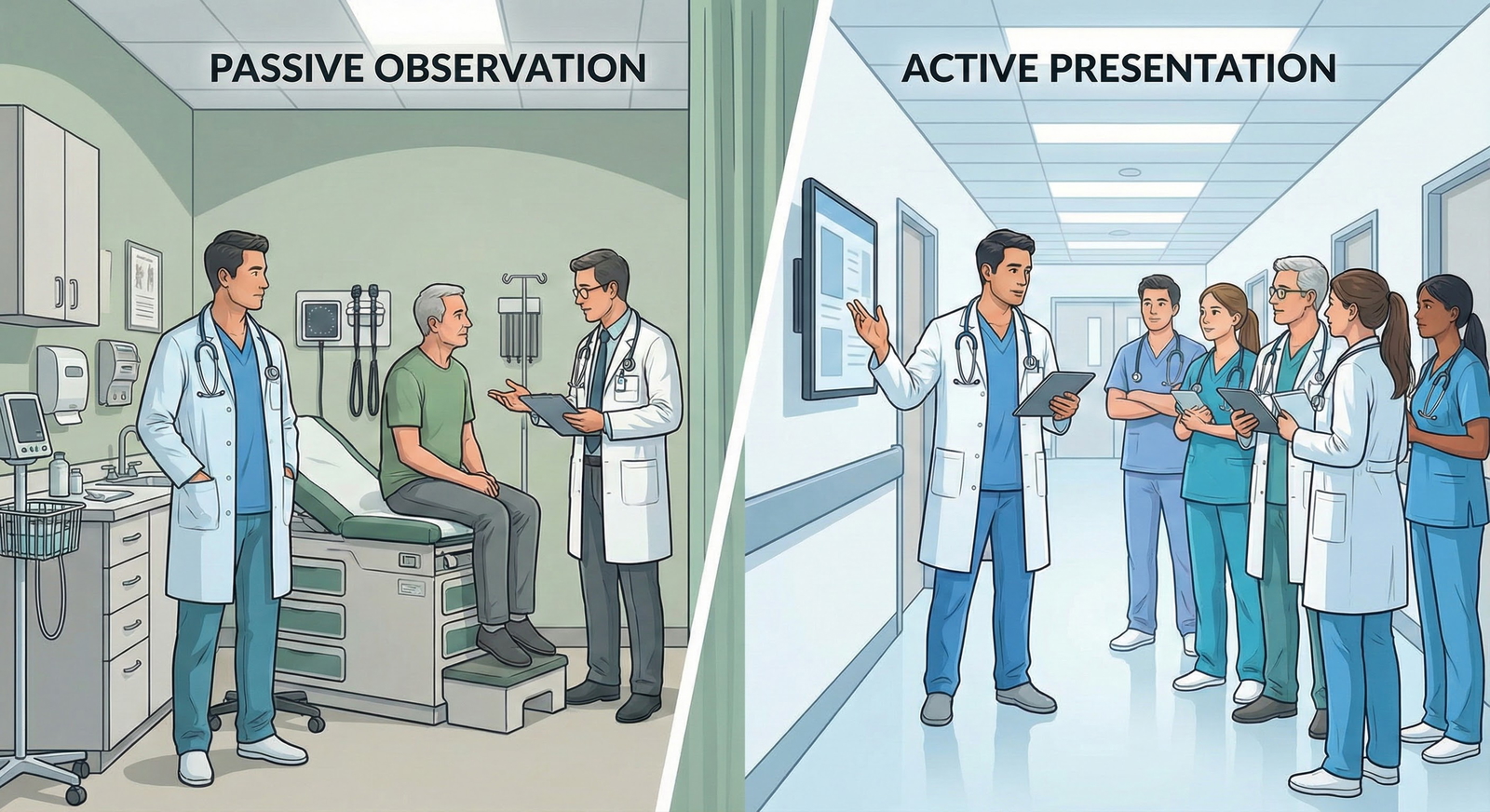
Externships are generally shorter-term, more observational experiences, though some structured externships for IMGs now include limited hands-on tasks under close supervision.
Traditionally, externships involve:
- Shadowing physicians and other healthcare providers
- Observing patient encounters and procedures
- Learning clinical workflows and team communication styles
- Attending rounds, conferences, and teaching sessions
Externships:
- Commonly last from a few days to several weeks
- Are almost always unpaid
- Are often easier to arrange than internships, especially for IMGs early in their journey or those still outside the U.S.
Some programs brand what is essentially an observership as an “externship,” and others use “externship” to describe a more structured, hands-on experience for recent graduates. Carefully read program descriptions to understand:
- Whether direct patient contact is allowed
- What kind of evaluation and letter of recommendation (LoR) you can expect
- How closely you will work with attendings and residents
Key Differences: Internships vs. Externships at a Glance
| Feature | Internship | Externship |
|---|---|---|
| Primary Role | Active participant in patient care (where permitted) | Primarily observer; may have limited supervised tasks |
| Level of Involvement | Higher – history, notes, orders (if allowed), procedures | Lower – shadowing, case discussions, conferences |
| Duration | Longer: weeks to several months | Shorter: a few days to weeks |
| Compensation | May be paid or unpaid | Typically unpaid |
| Learning Focus | Hands-on skills, clinical reasoning, workflow integration | Clinical observation, system familiarization |
| Commitment Level | More intense, structured schedule | More flexible, often fewer responsibilities |
| Impact on CV | Stronger for demonstrating clinical readiness | Useful for exposure, networking, and early exploration |
Both internships and externships can significantly strengthen an IMG’s residency application when strategically chosen and maximized.

Why Internships Often Provide Greater Value for IMGs
While both types of U.S. clinical experience are helpful, internships usually provide a deeper impact on residency preparation, particularly for IMGs who have already decided on their specialty and are ready for more responsibility.
1. More Robust Practical Experience
The core strength of an internship is active involvement in patient care.
Depending on the structure and institutional rules, you may:
- Take or confirm patient histories and perform focused physical exams
- Help write progress notes or drafts in the EMR
- Assist with clinical procedures (e.g., phlebotomy, IV insertion, suturing, bedside ultrasound) under supervision
- Participate in treatment planning, medication reconciliation, and follow-up
- Present cases in rounds or case conferences
For residency programs, this kind of experience demonstrates that you:
- Can function within a real U.S. clinical environment
- Possess practical, up-to-date clinical skills
- Have recent, relevant clinical exposure (especially important if you’ve had a gap since graduation)
Example:
An IMG applying to Internal Medicine completes a 3-month inpatient internship at a community teaching hospital. During this time, they present patients during rounds, write daily notes, and participate in admission H&Ps. In residency interviews, they can confidently discuss:
- Managing a patient with decompensated heart failure
- Coordinating care with nursing and case management
- Adjusting therapy based on daily labs and clinical status
This kind of specific, recent experience is highly valued by Program Directors.
2. Stronger Networking and Mentorship Opportunities
Internships typically allow you to work more closely with:
- Attending physicians
- Residents and fellows
- Nursing staff and allied health professionals
- Clinic managers and program coordinators
This sustained exposure builds:
- Professional relationships that can lead to strong letters of recommendation (LoRs)
- Potential mentorships that last through your residency application journey
- Opportunities to join research projects, quality improvement initiatives, or scholarly work
Because you are actively contributing, faculty have more opportunities to evaluate your:
- Work ethic and reliability
- Clinical reasoning and judgment
- Communication skills and professionalism
- Adaptability and growth mindset
That depth of familiarity often translates into more detailed and persuasive LoRs, which are critical for IMGs in competitive Match cycles.
3. Direct Residency Preparation and System Familiarity
Internships closely mirror aspects of residency life:
- Early-morning rounds and full clinic schedules
- Complex documentation and EMR workflows
- Interdisciplinary team communication
- Balancing clinical responsibilities with ongoing learning
Through an internship, you can:
- Learn U.S.-style documentation, including problem lists, assessment and plan, and coding awareness
- Become comfortable with case presentations in the format residency programs expect
- Understand how attendings and residents approach evidence-based decision-making
- Learn about hospital culture, professionalism, and expectations
This significantly reduces the transition shock when you start residency and demonstrates to programs that you’re “residency-ready.”
4. Accelerated Clinical and Professional Skill Development
Internships allow you to refine both clinical competencies and soft skills:
Clinical skills might include:
- Performing focused physical exams efficiently
- Interpreting basic lab results, EKGs, and imaging reports
- Prioritizing differential diagnoses
- Contributing to diagnostic and management decisions
Professional/soft skills include:
- Communicating with patients across cultures and literacy levels
- Delivering bad news alongside supervisors
- Handling disagreements respectfully in a team
- Managing time and tasks in a busy clinical environment
These are the skills residency programs try to infer from your application, LoRs, and interviews. A robust internship gives you concrete experiences to draw on and discuss.
Advantages of Externships for IMGs: When Observation Is the Right Starting Point
Externships—even when primarily observational—still play an important role in residency preparation, especially at certain stages of your journey.
1. Greater Flexibility and Accessibility
Externships are often:
- Easier to secure than structured internships, especially without U.S. work authorization
- More flexible in scheduling, allowing you to:
- Prepare for or take USMLE exams
- Work a part-time job
- Complete medical school coursework if you’re still a student
- Manage family or visa constraints
Because externships may require less paperwork and liability coverage, some hospitals and clinics are more willing to host observers than interns.
This can be particularly helpful if:
- You are an IMG still living abroad and planning a short visit for U.S. clinical exposure
- You have not yet passed USMLE Step 1 or 2 CK
- You’re very early in exploring whether U.S. residency is right for you
2. Broad Exposure to Specialties and Settings
Externships let you sample different specialties and environments without committing to a long-term role.
You might:
- Spend two weeks in Internal Medicine, two in Pediatrics, and one in Neurology
- Split time between an academic medical center and a community clinic
- Compare private practice vs. hospital-based practice environments
This broad exposure can help you:
- Clarify which specialty aligns best with your interests and strengths
- Decide whether you prefer outpatient vs. inpatient settings
- Understand where you might be a strong fit for residency
Example:
An IMG unsure between Psychiatry and Family Medicine completes two short externships: one in an outpatient psychiatry clinic and another in a community family medicine practice. Through observing patient populations, workflow, and team dynamics, they realize they are more energized by primary care and continuity of care—guiding their residency application strategy.
3. Reduced Performance Pressure While You Adapt
Externships, especially those that are observational, carry lower stakes than internships because:
- You don’t have direct clinical responsibility
- Your role is primarily to learn rather than “perform”
- Mistakes are less likely to impact patient care
This can be very helpful if you’re:
- Adjusting to U.S. culture, language nuances, or new communication styles
- Experiencing anxiety or self-doubt after time away from clinical work
- Overwhelmed by navigating a new country, housing, or transportation
In this more relaxed environment, you can:
- Focus on learning how teams function
- Listen carefully to patient–physician interactions
- Take detailed notes and reflect without the stress of clinical decision-making
For many IMGs, starting with an externship builds the confidence and system familiarity needed to later step into a more hands-on internship.
4. Building Foundational Understanding of the U.S. Healthcare System
Even without direct patient care, externships help you understand:
- How patients move through the system (referrals, admissions, discharge)
- Insurance dynamics, prior authorizations, and social determinants of health
- Multidisciplinary care with nursing, social work, pharmacy, and case management
- Documentation expectations and legal considerations
This macro-level perspective is extremely helpful when you later start a hands-on role or residency. You’ll already have context for many of the processes that confuse new trainees.
Internships vs. Externships: How to Decide What’s Best for You as an IMG
Ultimately, there’s no universal “better” choice. The right path depends on your timeline, profile, and goals. Consider these key factors.
1. Clarify Your Career Stage and Goals
Ask yourself:
- Are you early in your journey, still exploring specialties and confirming your interest in U.S. residency?
- Short externships in different specialties may be ideal.
- Are you near or in the Match cycle, needing strong LoRs and demonstrable clinical readiness?
- A hands-on internship is often more valuable.
- Do you have a significant gap in clinical experience since graduation?
- Longer, hands-on internships can help mitigate concerns about clinical inactivity.
If your primary objective is to maximize residency competitiveness, aim—when possible—for at least one substantial internship in your chosen specialty, even if you begin with externships.
2. Assess Your Scheduling and Availability
Consider:
- Do you have months available for full-time clinical work?
- You may be able to complete a 2–3 month internship and several short externships.
- Are you limited to short windows because of visas, current employment, or exams?
- Multiple short externships (2–4 weeks each) may be more practical.
Create a timeline:
- When will you complete USMLE Steps?
- When do you plan to apply for the Match?
- What blocks of time can you dedicate purely to clinical experience?
Then align internships or externships accordingly.
3. Understand What’s Available to You
Local and institutional realities matter:
- In some regions, internships are rare or highly competitive, while observership-style externships are common.
- Some programs only accept graduates of affiliated medical schools, limiting options.
- Visa status may restrict paid employment, affecting access to certain internship roles.
Research sources such as:
- Hospital and medical school websites (often have “Visiting Students” or “IMG Programs” sections)
- IMG-focused organizations and agencies
- Alumni from your medical school who’ve matched in the U.S.
- Social media groups and forums for IMGs
Be realistic: If internships are scarce in your target region, well-structured externships may be your primary path to U.S. clinical experience initially.
4. Factor in Financial Considerations
Financial realities may strongly influence your decision:
- Internships
- Rarely may be paid, which can help offset living expenses.
- However, some structured programs charge administrative or tuition-like fees.
- Externships
- Are typically unpaid.
- Many require you to pay program fees, plus travel, housing, and living costs.
Create a simple budget:
- Program fees (per week or month)
- Housing and utilities
- Transportation
- Visa and exam costs
- Food and personal expenses
Then strategically decide:
- Whether to invest in fewer, longer, higher-yield internships
- Or several shorter externships to maximize exposure while controlling costs
5. Consider What Residency Programs in Your Target Specialty Prefer
Preferences differ by specialty and by program:
- Some Internal Medicine or Family Medicine programs strongly favor hands-on U.S. clinical experience and FMG/IMG internships.
- Others will accept observerships/externships, especially when:
- The experience is in the same specialty
- The LoR is strong and detailed
- The experience is recent (within 1–2 years of application)
Review program websites and resident profiles:
- Do they explicitly state a preference for hands-on experience?
- Do they specify a requirement like “at least 3 months of U.S. clinical experience”?
Use that information to guide how many and what type of experiences you pursue.

Making the Most of Any Internship or Externship
Regardless of which option you choose, what matters most is how you use the opportunity. Program Directors can distinguish between candidates who simply “completed a rotation” and those who actively engaged and grew.
Strategies to Maximize Your Internship
Show up prepared
- Review common conditions in the specialty before starting.
- Familiarize yourself with basic U.S. medical terminology and documentation style.
Be proactive but respectful
- Ask for chances to see patients, assist with procedures, or write draft notes if permitted.
- Offer to help with tasks like updating problem lists or summarizing labs.
Seek feedback regularly
- Ask attendings or residents: “Is there anything I can improve in my presentations or assessments?”
- Implement suggestions and show visible growth.
Document your work
- Keep a log of cases, procedures observed/performed, and teaching points.
- This will help you recall details when writing personal statements or answering interview questions.
Aim for strong letters of recommendation
- Towards the end, ask supervisors if they feel they know your work well enough to write a detailed, supportive LoR.
- Provide them with your CV and personal statement draft for context.
Strategies to Maximize Your Externship
Observe actively, not passively
- Take structured notes on each case: presentation, assessment, management, and learning points.
- After clinic or rounds, review guidelines or articles related to interesting cases.
Ask thoughtful questions
- Time your questions appropriately (after patient encounters, between cases).
- Focus on clinical reasoning and system-related issues.
Network intentionally
- Introduce yourself to residents and attendings.
- Express your interest in the specialty and ask for advice on residency preparation as an IMG.
Look for continuity
- If you impress a supervisor, ask whether you can return later for a longer or more hands-on experience.
- This can transform an initial externship into a stronger internship-style experience over time.
Reflect and adapt
- After each rotation, write down what you learned about:
- The specialty
- U.S. clinical culture
- Your own strengths and gaps
- Use this to guide your next steps (study focus, future rotations, exam timing).
- After each rotation, write down what you learned about:
FAQs: Internships, Externships, and Residency Preparation for IMGs
1. How can I find internships and externships in the U.S. as an IMG?
Start with:
- Hospital and medical school websites (look for “International Visiting Physician,” “Observer,” or “Visiting Student” programs)
- IMG-focused clinical experience providers (research carefully for reputation and authenticity)
- Alumni from your medical school who are currently in U.S. residency
- Professional networks: LinkedIn, specialty societies, and IMG organizations
Cold-emailing physicians or departments can sometimes yield observerships or externships. Always include:
- A concise introduction
- Your CV
- Your current status (graduate vs. student, USMLE progress)
- Specific dates and type of experience you’re seeking
2. Are unpaid externships still worth it for my residency application?
Yes—if you choose them strategically and engage actively. Even unpaid externships can:
- Provide U.S. clinical exposure, which some programs require
- Help you understand the healthcare system
- Allow you to build relationships that may lead to letters of recommendation
- Clarify your specialty interests and inform your personal statement
However, if finances are limited, prioritize fewer, higher-yield experiences (e.g., longer externships in your target specialty at teaching hospitals).
3. What requirements do IMGs usually need for internships or externships?
Requirements vary, but common ones include:
- Medical school diploma or enrollment verification
- Transcript and Dean’s letter
- USMLE transcripts (some require at least Step 1, others prefer Step 2 CK as well)
- Immunization records and TB testing
- Health insurance and sometimes malpractice/liability coverage
- Proof of English proficiency (occasionally)
- Visa documentation (if applicable)
Always review each program’s website carefully; missing documentation is a common cause of rejection or delay.
4. Is it better to have multiple short externships or one long internship?
If possible, one substantial, hands-on internship in your chosen specialty is usually more impactful than many very short, purely observational externships, because it:
- Demonstrates sustained clinical engagement
- Allows supervisors to know you well for strong LoRs
- Provides deeper residency preparation
However, multiple externships can be useful to:
- Explore specialties if you’re undecided
- Accumulate diverse settings (academic vs. community, inpatient vs. outpatient)
- Build a broader network
Many IMGs use a hybrid strategy: a few short externships early on, followed by at least one longer internship closer to the Match.
5. Will internships or externships alone guarantee a successful Match?
No single element guarantees a Match. U.S. clinical experience is one crucial component among many, including:
- USMLE scores and number of attempts
- Time since graduation
- Research and publications (depending on specialty)
- Quality and specificity of letters of recommendation
- Personal statement and interview performance
- Visa status and program preferences
However, well-chosen internships and externships can significantly strengthen your profile by:
- Providing recent U.S. clinical experience
- Demonstrating your commitment to practicing in the U.S.
- Generating strong, specialty-specific LoRs
- Giving you concrete experiences to discuss in interviews
Internships and externships are both valuable tools in your journey as an International Medical Graduate. Instead of thinking in terms of “which is absolutely better,” consider which is better for you right now, given your goals, timeline, and resources—and how you can strategically combine both to build the strongest possible residency application.