Introduction: Why Clinical Experience Is Central to IMG Residency Success
International Medical Graduates (IMGs) face a challenging and highly competitive journey when applying for residency positions in the United States. Strong USMLE scores and solid academic performance are essential, but alone they are rarely enough. What often separates matched candidates from equally qualified applicants is high-quality, recent Clinical Experience in the U.S. healthcare system.
For IMGs, clinical exposure in the United States does more than fill a CV line. It shows residency programs that you understand how medicine is practiced in the U.S., can function in a multidisciplinary team, communicate effectively with patients, and adapt quickly to a new healthcare environment. In many programs, this experience is viewed as a core requirement, not an optional extra.
This enhanced guide explains:
- What “clinical experience” really means for IMGs
- The different types of U.S. clinical experience and how programs view them
- Why clinical experience matters so much in IMG Residency applications
- How it strengthens your letters, interviews, and overall competitiveness
- Practical strategies to find, secure, and maximize these opportunities
By the end, you’ll understand how to strategically use clinical experience to strengthen every part of your residency application and stand out in a crowded field.
Understanding Clinical Experience for IMGs in the U.S.
What Counts as Clinical Experience?
In the context of IMG Residency applications, clinical experience refers to structured, supervised involvement in patient care or clinical workflows, usually in a hospital, clinic, or community health setting.
Key elements include:
- Healthcare environment: Hospital, outpatient clinic, community health center, or similar
- Clinical exposure: Observing or participating in history taking, physical exams, documentation, or patient discussions
- Supervision: Oversight by a licensed U.S. healthcare professional (usually an attending physician)
- Educational intent: The goal is learning, adaptation to the U.S. healthcare system, and demonstration of clinical skills
For IMGs, U.S.-based clinical experience (USCE) is especially important. Many programs explicitly state that they prefer, or even require, recent clinical experience in the U.S. within a certain time frame (often the last 1–3 years).
Types of Clinical Experience for IMGs: What They Are and How They Differ
Not all experiences carry the same weight. Understanding the differences helps you target opportunities that best support your residency goals.
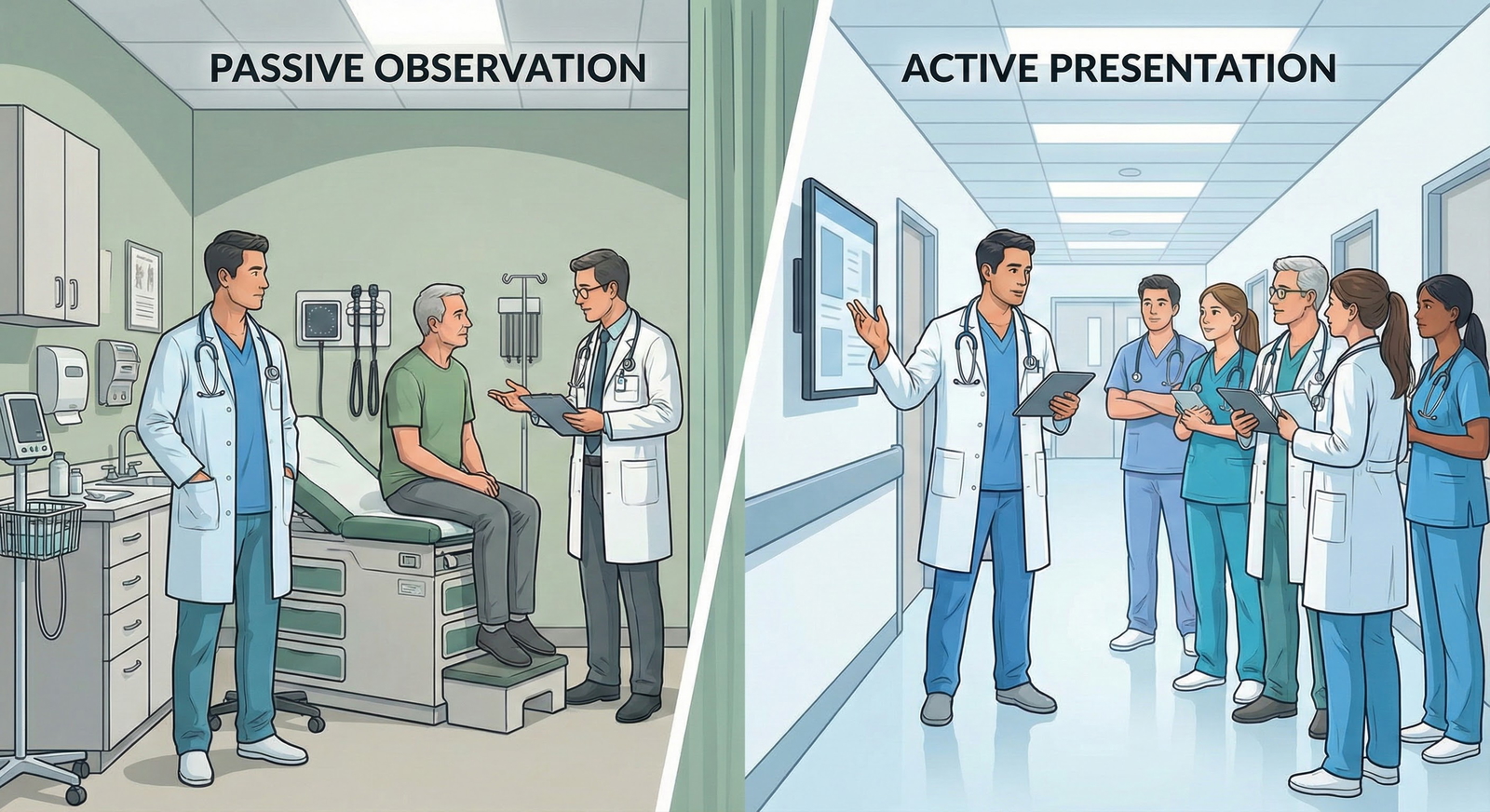
1. Observerships
What it is:
An observership allows IMGs to shadow U.S. physicians without direct hands-on patient care. You observe patient encounters, resident teaching rounds, and clinical workflow.
Typical activities:
- Shadowing attendings and residents
- Sitting in on patient interviews and exams (without performing them)
- Watching procedures (if permitted)
- Attending teaching conferences, grand rounds, and case discussions
- Learning documentation structures and EHR navigation (view-only access in some settings)
Pros:
- Accessible first step into the U.S. healthcare system
- Good for learning culture, documentation style, and team structure
- Can still lead to meaningful letters of recommendation if you are engaged, reliable, and proactive
Limitations:
- No direct patient care (you generally cannot write notes, enter orders, or perform physical exams)
- Some programs value observerships less than hands-on experiences
Best for:
New IMGs trying to gain initial exposure to the U.S. healthcare system or those building early connections for future externships or research.
2. Externships (Hands-On US Clinical Experience)
What it is:
Externships provide hands-on clinical experience that mimics the responsibilities of a U.S. medical student or sub-intern. They are often considered the gold standard of clinical experience for IMGs.
Typical activities:
- Taking histories and performing physical examinations
- Writing or drafting notes in the EHR under supervision
- Presenting patients on rounds
- Participating in diagnostic and management discussions
- Observing or assisting in procedures (depending on setting and policy)
Pros:
- Highly valued by many residency programs
- Demonstrates ability to function within the U.S. healthcare system
- Excellent platform for strong, detailed letters of recommendation
- Directly tests your readiness for the pace and expectations of residency
Limitations:
- More competitive and often fee-based
- Some require that you have passed certain USMLE exams
- Availability varies by institution and specialty
Best for:
IMGs aiming for competitive specialties or programs that explicitly prefer hands-on USCE; applicants wanting strong, clinically specific letters of recommendation.
3. Volunteer Work in Clinical or Community Settings
What it is:
Volunteer roles in clinical or community health environments, such as free clinics, health fairs, community screening programs, or hospital volunteer departments.
Typical activities:
- Patient intake, translation, or health education
- Basic vitals (where allowed)
- Administrative support and coordination
- Community outreach and health promotion activities
Pros:
- Shows commitment to service and patient care
- Can demonstrate initiative and alignment with primary care or community-focused programs
- Good source of networking and local references
Limitations:
- Not always considered “formal” USCE
- May not provide extensive exposure to physician-level decision-making
Best for:
Building a track record of service, especially in underserved communities, and strengthening your narrative for primary care, family medicine, internal medicine, or community-oriented programs.
4. Clinical Clerkships / Electives (During Medical School)
What it is:
U.S. clinical electives or clerkships completed during your final years of medical school. These are often arranged through affiliated institutions or official visiting student programs.
Typical activities:
- Similar responsibilities to U.S. medical students
- Presenting patients on rounds
- Writing notes and participating in team discussions
- Attending teaching sessions and didactics
Pros:
- Viewed very favorably, especially if done at academic centers
- Can function as an extended “audition” rotation
- Often result in strong, structured letters based on formal evaluations
Limitations:
- Must usually be completed while still enrolled as a student, not after graduation
- Highly competitive and often require significant documentation and fees
Best for:
Current medical students planning ahead for U.S. residency and those seeking exposure to academic institutions or specific residency programs.

Why Clinical Experience Matters So Much in IMG Residency Applications
1. Boosting Competitiveness in a Crowded Match
Residency programs receive thousands of applications each year. Once academic filters (USMLE scores, graduation year) are applied, clinical experience becomes a powerful differentiator.
High-quality USCE allows you to:
Prove readiness for residency workflows
Programs want candidates who can start contributing with minimal adjustment. Recent, relevant experience reassures them you understand rounding structures, documentation standards, and communication norms.Demonstrate sustained commitment to practicing in the U.S.
Engaging in the U.S. healthcare system—especially over several months—signals that you’re serious about building a career here, not just applying broadly without clear intent.Compensate partially for borderline metrics
While not a substitute for exam scores, strong USCE plus excellent letters and a coherent story can help programs see you as more than a number.
Example:
Two IMGs with similar USMLE scores apply to the same Internal Medicine program. One has 4 months of hands-on U.S. clinical experience with strong letters from U.S. attendings. The other has only home-country experience. Program directors are far more likely to interview (and rank) the candidate who has already shown they can function in the U.S. system.
2. Developing Communication and Interpersonal Skills
Residency is fundamentally about team-based patient care, and programs often prioritize communication skills as highly as clinical knowledge.
Through clinical experience, you:
Refine English language fluency in clinical contexts
Communicating bad news, explaining treatment plans, and obtaining informed consent require more than textbook language skills. Clinical exposure trains you in real-time, nuanced, patient-centered communication.Build cultural competence
The U.S. patient population is extremely diverse. Clinical experience helps you navigate:- Different cultural beliefs about illness and treatment
- Variations in health literacy
- Sensitive topics such as end-of-life care, sexual health, and mental health
Learn interdisciplinary teamwork
You see how physicians, nurses, pharmacists, social workers, and case managers collaborate—and how you, as a physician-in-training, are expected to communicate within that team.
These soft skills often surface clearly in letters of recommendation and interview feedback, both of which are crucial elements of successful IMG Residency applications.
3. Understanding and Adapting to the U.S. Healthcare System
The U.S. Healthcare System has unique structures, regulations, and pressures. Clinical experience gives you practical insight into areas that are hard to learn from books alone:
Clinical protocols and standards of care
Exposure to evidence-based guidelines, order sets, and institutional protocols in real cases helps you understand how theory is implemented in practice.Electronic Health Records (EHRs)
Familiarity with common systems (Epic, Cerner, etc.) and standard documentation formats (H&P, daily progress notes, discharge summaries) significantly reduces your learning curve in residency.Insurance and utilization dynamics
You gain awareness of how insurance coverage, prior authorizations, and resource limitations affect real clinical decisions and discharge planning.Quality, safety, and compliance
You see the emphasis on checklists, safety protocols, incident reporting, and quality improvement activities—key aspects of modern residency training.
Programs want IMGs who will not require months just to understand the healthcare environment. Clinical experience shows you’ve already started that learning process.
4. Building a Professional Network and Strong Letters of Recommendation
Networking is often underappreciated by IMGs, yet it is a major advantage of clinical experience in the U.S.
Through observerships, externships, and electives, you can:
Earn strong U.S. letters of recommendation (LoRs)
Supervising physicians can comment specifically on your clinical reasoning, professionalism, communication, teamwork, and reliability. These letters carry substantial weight on ERAS and during ranking discussions.Identify mentors and advocates
A mentor might review your personal statement, conduct mock interviews, introduce you to program leadership, or alert you to research or quality improvement opportunities.Increase visibility at target programs
If you do clinical work at hospitals that host residency programs, you may be informally “auditioning.” Residents and attendings who know your work can advocate for interview invitations and ranking.
Residency is not just about credentials; it is also about trust. Clinical experience is how you give U.S. physicians a chance to see you in action and vouch for you.
How Residency Programs Evaluate IMG Clinical Experience
1. What Program Directors Look For in Clinical Experience
When reviewing IMG Residency applications, program directors often consider:
Location of experience
U.S.-based clinical experience is usually preferred. Some programs explicitly require it.Recency
Experiences within the last 1–3 years are far more impactful than very old clinical activity, especially for applicants with a significant gap after graduation.Type and level of involvement
Hands-on experiences (externships, sub-internships, electives) generally carry more weight than purely observational ones, especially when applying to more competitive specialties.Continuity and duration
Several months of consistent experience in core specialties (e.g., Internal Medicine, Family Medicine) may be more persuasive than multiple very short rotations.Relevance to chosen specialty
Experience that aligns with your target specialty (e.g., pediatrics exposure for Pediatrics applicants) strengthens the narrative that you are committed and informed.
2. Institutional and Program-Level Partnerships
Some residency programs are affiliated with hospitals or clinical sites that host structured IMG observership or externship programs. Completing clinical experience at these institutions can:
- Familiarize you with the program’s culture, documentation style, and expectations
- Allow you to meet residents and faculty informally before applying
- Sometimes function as a quasi-audition rotation
While not a guarantee of interviews or matching, such experiences often give IMGs a strategic edge when programs are selecting from a large applicant pool.
Practical Tips to Find, Secure, and Maximize Clinical Experience
1. Start Early and Plan Strategically
Begin 12–18 months before your target Match cycle
Quality experiences fill up quickly. Early planning gives you access to more options and time to align your experiences with your specialty interests.Clarify your goals
Are you seeking letters, U.S. adaptation, specialty exploration, or networking? Your goals will guide whether you prioritize observerships, externships, or research-linked clinical roles.Target relevant specialties
If you’re applying to Internal Medicine, prioritize IM rotations, then related areas (Cardiology, Endocrinology, etc.). This coherence strengthens your application narrative.
2. Use Multiple Channels to Find Opportunities
Hospital and university websites
Many institutions have dedicated pages for international observership or externship programs, often under “International Medical Education” or “Visiting Physicians.”Alumni and faculty connections
Reach out to your medical school alumni who have matched in the U.S. Ask where they did their clinical experience and if they can introduce you to program coordinators or attending physicians.Professional networking platforms
Use LinkedIn and specialty-specific associations (e.g., ACP, AAFP) to identify physicians who work in your area of interest and inquire (professionally and concisely) about potential opportunities.IMG-focused organizations and services
Some organizations specialize in arranging observerships or externships for IMGs. Research them carefully to ensure legitimacy and educational value, especially before paying fees.
3. Strengthen Your Applications for Clinical Positions
Tailor your CV and cover letter
Highlight relevant clinical rotations, USMLE progress, language skills, and any prior international experience. Emphasize professionalism, reliability, and eagerness to learn.Be explicit about your goals
Explain why you want experience in that specific specialty or institution and how it connects to your long-term career plans in the U.S.Show evidence of initiative
Mention prior volunteer work, research, teaching, or leadership roles, which signal you will be active and engaged during the rotation.
4. Maximize the Value of Each Clinical Experience
Once you secure an opportunity, how you perform matters more than the label of the experience:
Arrive prepared
Review common conditions in that specialty, read about documentation standards, and understand basic U.S. patient safety and HIPAA principles.Be reliable and professional
Punctuality, appropriate dress, respectful communication, and thorough follow-through on assigned tasks are non-negotiable.Ask for feedback regularly
Periodically ask your supervisors how you can improve. This shows maturity and a growth mindset.Engage in teaching and academic activities
Attend conferences, volunteer to present cases, and participate in journal clubs. These activities often lead to stronger, more specific letters.Express interest in letters of recommendation early (but respectfully)
If you have a meaningful relationship with a supervising physician and have worked with them for several weeks, ask if they would feel comfortable writing a strong letter for your residency applications.

FAQ: Clinical Experience and IMG Residency Applications
1. How much U.S. clinical experience do I need to be competitive?
There is no universal minimum, but many successful IMG applicants have 3–6 months of recent U.S. clinical experience, especially in core fields like Internal Medicine, Family Medicine, or Pediatrics. More important than the exact duration is:
- Recency (within 1–3 years of applying)
- Relevance to your chosen specialty
- The quality of your involvement and resulting letters of recommendation
Check the websites of your target programs; some specify their expectations (e.g., “at least 3 months of U.S. clinical experience preferred”).
2. Does clinical experience from my home country still matter?
Yes. While U.S. clinical experience is often prioritized, home-country experience can still strengthen your profile by:
- Showing continuous clinical activity and no major gaps
- Demonstrating leadership, teaching, or responsibility (e.g., working as a junior doctor)
- Supporting your specialty choice (e.g., two years in Internal Medicine before applying to IM)
When writing your personal statement or during interviews, connect the skills you gained in your home system to how they prepare you to adapt and add value in the U.S. healthcare system.
3. Do observerships really count in residency applications?
Observerships do count, especially when:
- They are recent and done at reputable U.S. institutions
- You demonstrate strong engagement, reliability, and professionalism
- They lead to detailed letters from U.S. attendings who can speak about your clinical reasoning and interpersonal skills
However, some programs distinguish between “hands-on” USCE and purely observational experiences. Whenever possible, aim to combine observerships with at least some form of hands-on exposure, volunteer work, or structured externships.
4. How can I use clinical experience to improve my letters of recommendation?
To maximize the impact of clinical experience on your letters:
- Work closely and consistently with a few attendings rather than superficially with many
- Take ownership of learning: volunteer to present patients, review literature, or assist with small QI/research tasks
- Demonstrate growth: show that you incorporate feedback and improve over time
- When requesting a letter, remind the physician of specific cases, projects, or interactions that highlight your strengths
Letters from U.S. physicians who know you well and can comment on your performance in the U.S. healthcare system are invaluable for IMG Residency applications.
5. How does clinical experience influence my residency interview performance?
Clinical experience gives you:
- Concrete patient cases and clinical scenarios you can discuss when asked behavioral or clinical questions
- Confidence when talking about the U.S. healthcare system, EHRs, teamwork, and patient communication
- Real examples to illustrate resilience, adaptability, and ethical decision-making
Interviewers often sense quickly whether an applicant has genuinely experienced U.S. clinical practice. High-quality clinical experience makes your answers more authentic, specific, and persuasive.
Clinical experience is not a small checkbox on an IMG’s to-do list; it is a foundational element of a strong U.S. IMG Residency application. By strategically pursuing meaningful exposure to the U.S. healthcare system, building reliable professional relationships, and reflecting thoughtfully on your experiences, you significantly increase your chances of matching—and set yourself up for a smoother, more successful transition into residency and beyond.