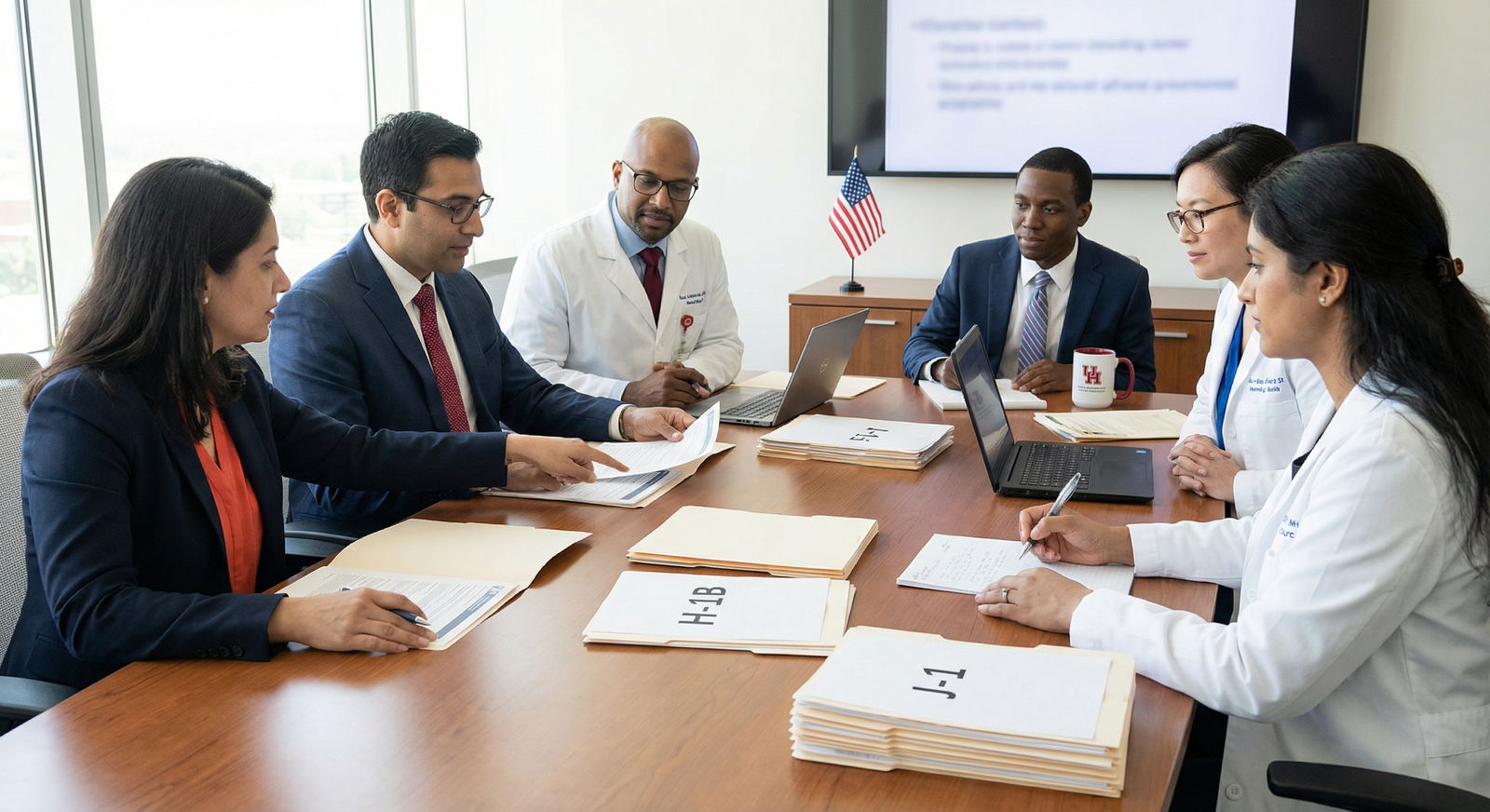
The biggest mistake IMGs make about visas is waiting for Match Day to start caring. By then, the clock is already against you.
If you’re aiming for a U.S. residency on J‑1 or H‑1B, your DS‑2019, I‑797, and ECFMG steps all run on a brutally specific timeline. Miss one date, and your “dream program” can quietly become “sorry, we can’t sponsor you.”
I’ll walk you through this chronologically—from a few months before rank list submission all the way to PGY‑1 start—and spell out what you should be doing month by month and then week by week.
1. Big Picture: J‑1 vs H‑1B and How DS‑2019 / I‑797 Fit In
At this point, you need to be clear on what you’re actually chasing, because the documents are not interchangeable.
J‑1 Clinical Visa for Residency
- Sponsored by ECFMG, not your program’s GME office.
- You’ll ultimately get:
- ECFMG sponsorship approval
- DS‑2019 (Certificate of Eligibility for Exchange Visitor Status)
- Then a J‑1 visa stamp at a U.S. consulate.
- Typical use: the majority of IMGs in residency.
H‑1B Visa for Residency
- Sponsored directly by your hospital/program.
- You’ll ultimately get:
- I‑797 approval notice (USCIS approval of H‑1B petition)
- Then an H‑1B visa stamp at a consulate (unless you’re changing status inside the U.S.).
- Typical use: programs that accept it + IMGs with all USMLE Steps fully passed (including Step 3 in most cases).
| Factor | J-1 (DS-2019) | H-1B (I-797) |
|---|---|---|
| Sponsor | ECFMG | Residency program |
| Main Doc | DS-2019 | I-797 approval notice |
| Step 3 Required? | No | Usually yes |
| Common for IMGs | Very common | Less common |
If you don’t know which status your target programs use, you’re already behind. Email GME coordinators early in interview season and get explicit answers.
2. Six Months Before Rank List: Set Up Your ECFMG and Exam Timeline
At this point (roughly September–November for a July 1 start the following year), you should:
Confirm your ECFMG status
- Make sure your ECFMG certification path is on track:
- USMLE Step 1 and Step 2 CK: passed or scheduled with realistic dates.
- OASIS / EPIC primary source verification: submitted and moving.
- Make sure your ECFMG certification path is on track:
Decide J‑1 vs H‑1B target
- If you want H‑1B, you need to:
- Plan USMLE Step 3 timing to be done by around March–April (varies by program, but earlier is safer).
- Target programs that explicitly say they’ll sponsor H‑1B.
- If you’re fine with J‑1, you still need:
- ECFMG certification no later than May–June.
- A clean timeline for document verification.
- If you want H‑1B, you need to:
Check passport
- Ensure your passport will be valid for at least 6–12 months beyond the start of residency.
- If not, renew now, not after Match when time is tight.
At this stage, you’re laying the foundation. You’re not filing DS‑2019 or I‑797 paperwork yet—but your exam and paperwork timing is what will make those possible.
3. From Interview Season to Rank List (December–February)
From now until rank list submission, the visa game is more about positioning than paperwork.
December–January: Ask the Right Questions
When programs hint they’re interested, you should:
- Confirm:
- “Do you sponsor J‑1, H‑1B, or both for categorical residents?”
- “Do you require Step 3 for H‑1B sponsorship, and by what date?”
- Clarify:
- Any internal deadlines for foreign grads (many programs won’t say this unless you ask).
If you have multiple interviews at H‑1B possible programs and you truly want H‑1B, Step 3 should already be booked.
February: Rank List Submission
By the time you submit your rank list, you should:
- Have a realistic visa plan per program you’re ranking highly:
- For J‑1: confident you’ll be ECFMG certified by May–June.
- For H‑1B: Step 3 passed or scheduled with score report date before their internal cut-off.
- Keep a personal file ready:
- Passport scan
- Medical diploma (and translations if needed)
- ECFMG ID and status screenshots
- Previous visas / I‑94, if you’ve been in the U.S. before.
This little “visa packet” will save you from scrambling in April when coordinators email you.
4. Match Week to Mid‑April: DS‑2019 vs I‑797 Fork in the Road
Match Week is not the time to celebrate for 3 days and ignore your inbox. Visa timelines start moving immediately.

| Step | Description |
|---|---|
| Step 1 | Match Day |
| Step 2 | ECFMG J-1 Applicant Portal |
| Step 3 | Program Starts H-1B Process |
| Step 4 | DS-2019 Issued |
| Step 5 | I-797 Approved |
| Step 6 | Visa Interview - J-1 |
| Step 7 | Visa Interview - H-1B |
| Step 8 | Travel & Start Residency |
| Step 9 | Visa Type? |
Match Week (Mid‑March)
Within the first 3–5 days after Match:
- Watch for emails from:
- Program coordinator / GME office.
- ECFMG (for J‑1 applicants) with J‑1 instructions.
At this point you should:
- Reply immediately confirming:
- Your citizenship, current location, and visa history.
- Your intended visa type if program gives a choice.
- For J‑1:
- Program usually confirms they will support ECFMG J‑1 sponsorship.
- For H‑1B:
- Program asks for details:
- Step 3 score report.
- CV, passport, prior immigration documents.
- Sometimes transcripts, diploma, and ECFMG certificate.
- Program asks for details:
Late March–Mid April: J‑1 DS‑2019 Process Begins
For J‑1 residents, the ECFMG steps follow a fairly consistent rhythm:
At this point (roughly 2–3 weeks post-Match) you should:
Create / Log in to ECFMG’s Exchange Visitor (EVNet/OLR) system
- Complete the online J‑1 sponsorship application once your program enters your details.
Upload required documents (typical list):
- Passport biographical page.
- Signed contract or official offer letter from the program.
- Medical school diploma + translation (if not in English).
- ECFMG certificate (or indication you’re close to certification).
- Proof of funding if program salary doesn’t cover ECFMG minimums (rare but occurs for some dependents).
Coordinate with your program
- Program has to send ECFMG:
- Appointment letter and salary info.
- GME office authorization forms.
- Program has to send ECFMG:
The goal by mid‑April:
Your part of the J‑1 application should be 100% complete and submitted in EVNet / OASIS.
5. April–May: Processing Windows for DS‑2019 and I‑797
This is where the timing can make or break your visa.
J‑1: DS‑2019 Processing Timeline
Once both you and your program have completed your parts:
- ECFMG processing: usually 2–4 weeks for a clean, straightforward case.
- You should watch your email and portal. At this point you should:
- Respond to any ECFMG queries within 24–48 hours.
- Fix missing documents the same day they’re flagged.
Typical timeline if you stay on top of it:
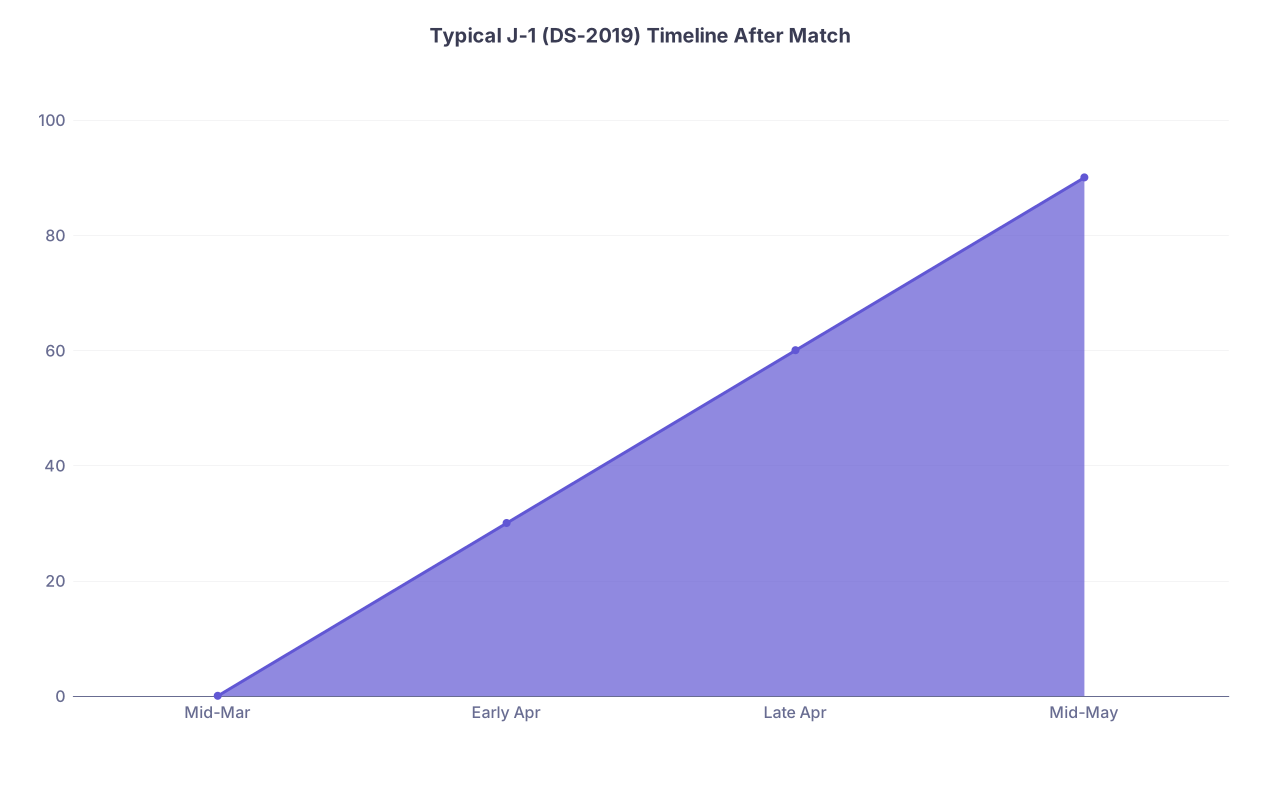
| Category | Value |
|---|---|
| Mid-Mar | 0 |
| Early Apr | 30 |
| Late Apr | 60 |
| Mid-May | 90 |
(Think of the numbers as % progression: by mid‑May you want to be at 90–100% with DS‑2019 in hand.)
When ECFMG approves your case:
- They issue a DS‑2019 electronically and/or by mail depending on current procedures.
- You can now:
- Pay the SEVIS I‑901 fee.
- Book your J‑1 visa interview at the U.S. consulate in your country.
H‑1B: I‑797 Petition and Approval Timeline
H‑1B is two steps:
Program’s petition → USCIS approval → I‑797 approval notice.
At this point (April–early May):
Program’s attorneys prepare the petition
- They will request:
- Copy of your ECFMG certificate.
- Step 3 score report.
- Medical diploma + translations.
- Detailed CV and sometimes license/permit pre-approval info (varies by state).
- They will request:
USCIS filing
- Standard vs premium processing:
- Standard: 2–4 months (risky for July 1 start).
- Premium: 15 calendar days (often used for residents).
- Standard vs premium processing:
Once approved:
- You (and the program) receive the I‑797 approval notice.
- With the I‑797, you:
- Book your H‑1B visa interview.
- Use I‑797 as key evidence of approved status.
If you don’t see petition movement by early May, start pushing (politely). I’ve seen H‑1Bs filed in late May that required miracle-level consular scheduling to make it by July.
6. Early–Mid June: Visa Interview and Travel Planning
By early June, for a normal July 1 start, here’s where you should be:
J‑1 path
- DS‑2019: issued.
- SEVIS fee: paid.
- DS‑160: submitted.
- Visa interview: scheduled.
H‑1B path
- I‑797: approved.
- DS‑160: submitted.
- Visa interview: scheduled.
If you’re in a country with long consulate wait times, you should be aggressive about this. Check multiple consulates if possible.
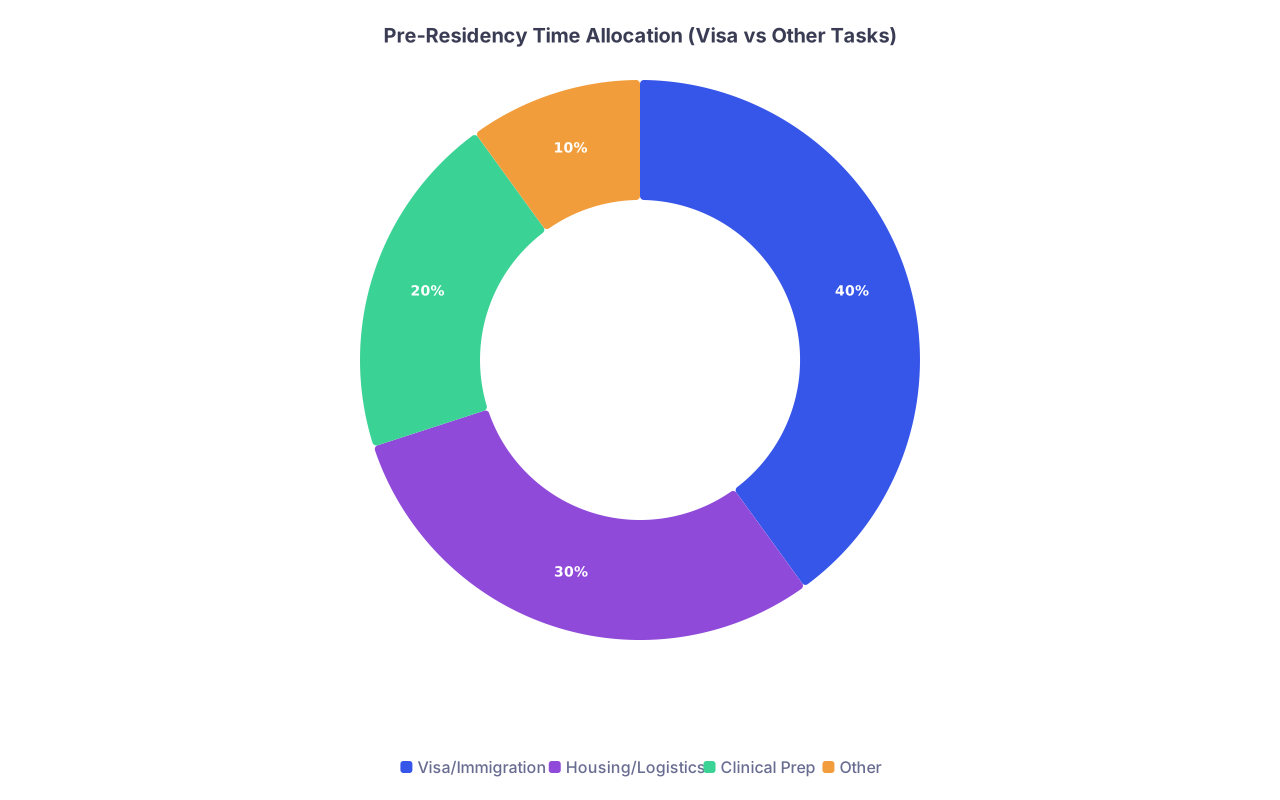
| Category | Value |
|---|---|
| Visa/Immigration | 40 |
| Housing/Logistics | 30 |
| Clinical Prep | 20 |
| Other | 10 |
Realistically, the month before residency, visa and logistics eat 70% of your time. Don’t pretend you’ll be calmly reading Harrison’s.
Two–Four Weeks Before Start Date
At this point you should:
- Have your visa stamp in your passport (J‑1 or H‑1B).
- Have your travel booked:
- Arrive 7–14 days before orientation if possible.
- Coordinate:
- Temporary housing or permanent lease.
- Any state limited license or training permit requirements.
For those already in the U.S. in another status (e.g., F‑1 → J‑1 change of status), your timeline shifts slightly:
- Your status change (COS) must be approved by USCIS before you can start work.
- However, many still travel home and get a visa stamp before or during residency to avoid being stuck in the U.S. indefinitely.
7. Week‑by‑Week Countdown: From Match to PGY‑1 Start
Here’s the compressed “do this now” view.
Week 0 (Match Week)
- Confirm match results and program contact.
- Reply to program emails same day.
- Clarify visa type they’ll sponsor.
Week 1–2 Post‑Match
- For J‑1:
- Get access to ECFMG J‑1 portal (EVNet/OLR).
- Start filling out J‑1 sponsorship application.
- For H‑1B:
- Send all requested documents to program / attorney.
- Confirm if they’re using premium processing.
Week 3–4 Post‑Match (Late March–Early April)
- J‑1:
- Finish uploading all documents.
- Confirm program has done their part.
- H‑1B:
- Petition should be filed by now or within days.
- Get your receipt number if possible.
April–Early May
- J‑1:
- Respond quickly to any ECFMG questions.
- Watch for DS‑2019 issuance.
- H‑1B:
- If premium: expect I‑797 in this window.
- If no decision by now and start date is July 1, start asking about upgrading to premium.
Mid–Late May
- DS‑2019 in hand → Pay SEVIS, complete DS‑160, schedule visa interview.
- I‑797 in hand → Complete DS‑160, schedule visa interview.
- If interview slots are far out, keep checking daily for earlier openings.
June
- Attend visa interview.
- Get passport back with visa stamp.
- Finalize travel, housing, and onboarding documents (I‑9, background checks, etc.).
Late June–July 1 (Orientation / Start Date)
At this point you should:
- Enter the U.S. in the correct status:
- J‑1: up to 30 days before program start date.
- H‑1B: typically close to start date based on petition validity.
- Keep with you:
- Passport with visa.
- DS‑2019 (for J‑1).
- I‑797 copy (for H‑1B).
- Contract / offer letter.
- ECFMG certificate.
Show up to orientation with everything scanned and backed up. Phones die. Bags get lost. PDFs save careers.
8. Common Failure Points (And How to Avoid Them)
I’ve watched IMGs hit the same landmines year after year. Avoid these:
Late ECFMG Certification
- If your certification drags into June, ECFMG may not issue DS‑2019 in time.
- Fix: schedule exams with buffer months, not weeks.
Assuming H‑1B Without Step 3
- Many programs are blunt: “No Step 3, no H‑1B.”
- Fix: if Step 3 might be late, lock in J‑1 mentally and practically.
Ignoring Consulate Wait Times
- In some countries, “next available interview” can be 6–8 weeks away.
- Fix: check wait times online in April, not after you get your DS‑2019/I‑797.
Slow Email Responses
- Coordinators and ECFMG staff handle hundreds of residents. Slow responders drop to the bottom of the pile.
- Fix: treat any email about visa as urgent. Same‑day reply should be your norm.
FAQ (Exactly 4 Questions)
1. When should I start the J‑1 (DS‑2019) process for residency?
As soon as your program and ECFMG systems open your case—typically within 1–2 weeks after Match. Your goal should be to have your part of the J‑1 application fully submitted by mid‑April, giving ECFMG several weeks to process and issue the DS‑2019 before you need a visa interview.
2. Can I switch from J‑1 to H‑1B after starting residency?
Sometimes, but it’s complicated. Many programs won’t switch visa types mid‑residency because of cost, policy, or cap issues. If you start on a J‑1, plan your career assuming J‑1 rules (including the 2‑year home residency requirement) unless you later secure a waiver or a very supportive employer.
3. Do I need ECFMG certification before I can get DS‑2019?
For most categorical residency J‑1 sponsorship, yes—you need to be ECFMG certified or very close, and ECFMG will not finalize DS‑2019 issuance until they’re satisfied you meet all requirements. That’s why Step 2 CK timing and diploma verification matter so much in the months before Match.
4. How late is “too late” for my visa if my residency starts July 1?
Realistically, if you don’t have your DS‑2019 or I‑797 in hand by early June, you’re in the danger zone. You still might make it, but every delay—consulate wait times, administrative processing, travel issues—becomes higher risk. Aim to have your visa stamp no later than 1–2 weeks before orientation so travel disruptions don’t derail your start.
Key takeaways:
Get your exam and ECFMG timelines right before Match, move aggressively on DS‑2019 or I‑797 steps in the first 4–6 weeks after Match, and don’t underestimate consulate delays. If you stay a month ahead of the official deadlines, you’ll sleep a lot better—and you’ll actually show up on July 1 with a badge instead of an apology email.