
Most IMGs ruin their rank lists before they ever open ERAS.
They let Step 2 CK, fear about visas, and program names pull them in different directions. By October, they are “hoping for any interview.” By February, they are stuck with a list that does not match their reality.
You are not doing that.
Here is the straight, time‑anchored playbook: from 9–12 months before ERAS opens, all the way to the moment you certify your rank list. At each point, what you should do with:
- Step 2 CK timing and score strategy
- Program selection and filters
- Visa strategy (H‑1B vs J‑1 vs “I just need any visa”)
And how to keep all three aligned.
9–12 Months Before ERAS: Set the Framework
At this point you should not be touching ERAS. You should be building the constraints that will shape it.
Step 2 CK: Decide Timing, Not Just a Score Goal
You need Step 2 CK to be either:
- In-hand before ERAS opens – strong option for competitive fields / locations.
- At least scheduled before ERAS – minimum if you are relying on Step 1 pass only.
At this point you should:
Look at your Step 1 result:
- Step 1 pass with strong NBME performance → aim Step 2 CK ≥ 245.
- Barely passed / multiple attempts → you must use Step 2 CK to compensate; timing becomes critical.
Fix a test window, not a vague plan:
- If applying in September, realistic Step 2 dates:
- Very strong test-taker: late May–July
- Struggling / weak foundation: April–June (gives room for a retake if disaster happens)
- If applying in September, realistic Step 2 dates:
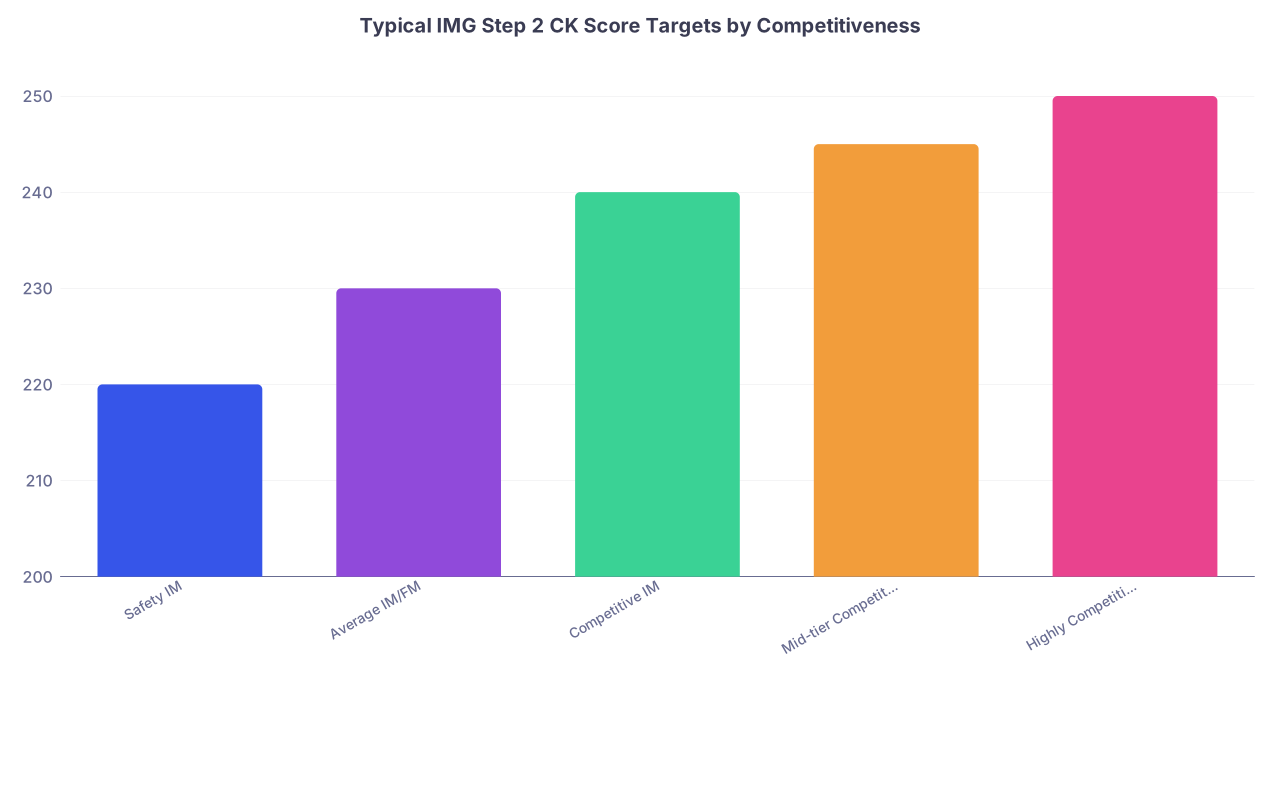
| Category | Value |
|---|---|
| Safety IM | 220 |
| Average IM/FM | 230 |
| Competitive IM | 240 |
| Mid-tier Competitive (Neuro, EM) | 245 |
| Highly Competitive (Top IM, Some Neurosurg) | 250 |
Lock the window now. Your visa and program options later will depend on whether your score is known early or late.
Visa Reality Check: Pick Your Primary Path
Do this early or you will waste 50% of your application list on programs that will never rank you.
At this point you should pick a primary visa strategy:
J‑1 primary (most realistic for many IMGs)
- Pros: More programs accept it, ECFMG sponsors it, simpler for hospitals.
- Cons: 2‑year home requirement, waiver needed later if you want to stay.
H‑1B primary (only if you really meet the bar)
- Pros: Dual intent, smoother long‑term path to a green card.
- Cons: Fewer programs willing, many require Step 3 before residency.
“Any visa” is not a strategy. That usually means you have not done your homework.
At this point you should:
- Check your home country’s J‑1 rules and waiver options.
- Check whether you can realistically take and pass Step 3 before residency start if you want H‑1B.
- Accept this truth: If you are H‑1B only, your effective program pool may drop by 50–70%.
6–9 Months Before ERAS: Score Projection and Program Pre-Screen
Now your Step 2 CK study should be in full swing, and you should be building a filtered long list of programs.
Calibrate Your Expected Step 2 Score
At this point you should have at least one NBME or UWSA under your belt.
- If your predicted score is:
- ≥ 245: You can target more selective programs and visa-flexible institutions.
- 230–244: Most IM/FM and some others are realistic; prestige programs will be harder.
- < 230: You will need a very strategic list, more community programs, and less visa rigidity.
Be honest. The rank list you want in February must be supported by the score you are trending toward now.
Build a First-Pass Program Universe
You are not choosing yet. You are identifying what is theoretically possible based on visa and score expectations.
At this point you should:
Create a spreadsheet with columns:
- Program name
- State / city
- Specialty
- Visa type accepted (J‑1, H‑1B, both, none)
- Step 2 minimum (explicit or implicit from interview data / forums)
- IMG friendliness
- Past IMGs’ reported scores (if you can gather)
- Notes (research, location, etc.)
Use these sources:
- Program websites (visa info is often under “Eligibility” or “International Applicants”).
- FREIDA (filter “Visa sponsorship”).
- Alumni and senior IMGs’ match lists from your school or hospital.
- Past interview experiences in forums.
Filter brutally:
- If you are J‑1 primary: remove all “no visas” programs.
- If you are H‑1B primary: keep only:
- Programs that explicitly say “H‑1B sponsored”
- Programs with strong IMG history and Step 3-friendly policies
At this point your spreadsheet should have a raw list, usually:
- 80–150 programs for IM/FM
- 40–80 for moderately competitive specialties
You will tighten this later once your real Step 2 CK score lands.
3–6 Months Before ERAS: Test, Then Triage Your Options
This is the phase where timelines collide: Step 2 CK exam, score release, ERAS prep.
Step 2 CK: When the Score Drops
Let me be blunt. The day your score posts, your fantasy list either survives or dies.
At this point you should:
Compare your actual score to your projection:
- Score ≥ projection: You can keep or slightly upgrade your program list.
- Score significantly below (≥ 10–15 points): You must immediately:
- Cut dream programs that never interview below their median.
- Add more IMG-friendly and safety programs that match your new range.
Recolor your spreadsheet:
- Green: Comfort zone (your score ≥ typical or reported program averages).
- Yellow: Stretch (you are within 5–10 points below their usual targets).
- Red: Fantasy (you are well below typical scores or they take almost no IMGs).
Your final rank list will be shaped mostly from the green + some yellow column. Red is for 1–3 vanity applications, not 20.
Visa Strategy Checkpoint: Adjust for Reality
Maybe you thought you would do Step 3 early and push H‑1B. Then Step 2 CK came back lower than hoped, and studying for Step 3 before March looks suicidal.
At this point you should:
Decide—for real—your workable visa lane:
- If Step 3 before residency start is not realistic, shift to J‑1-primary programs.
- If you are still serious about H‑1B:
- Schedule Step 3 date.
- Confirm via email which programs require Step 3 before rank list vs before start.
Update spreadsheet:
- Mark programs as:
- “J‑1 only”
- “H‑1B only (Step 3 by X date)”
- “Both J‑1 and H‑1B”
- “No visa”
- Mark programs as:
This is the first time your Step 2 CK score and visa path are truly intersecting. You either align them now or suffer later.
0–3 Months Before ERAS Opening (June–August): Application List Lock-In
Application season is here. At this point you should be finalizing where your money and energy are going.
Build a Tiered Program List
You are aiming for a balanced portfolio, not a wish list.
At this point you should:
Group programs into 3 tiers based on your actual Step 2 CK and visa status:
Tier 1 (Reach / Dream)
- Your score is at or slightly below their usual range.
- They sponsor your visa type.
- Usually 10–20% of your list.
Tier 2 (Realistic Core)
- Your score is around or slightly above their usual range.
- They regularly take IMGs and sponsor your visa.
- 50–70% of your list.
Tier 3 (Safety / High IMG)
- Your score is comfortably above their minimums.
- Heavy IMG presence, clear visa policy.
- 20–30% of your list.
Double-check visa alignment:
- Remove any program where your visa and their policy obviously clash.
- Do not “hope they changed this year.” If the website says “No visa sponsorship,” believe them.
| Tier | Approx. Programs | Typical Visa Match | Score Fit |
|---|---|---|---|
| Tier 1 | 10–15 | J‑1/H‑1B mix | At / slightly below |
| Tier 2 | 30–50 | Mostly J‑1, some H‑1B | At / above |
| Tier 3 | 20–30 | Strong J‑1, consistent IMG intake | Clearly above |
Align Personal Preferences (Location, Academic vs Community)
You don’t want to end up ranked only in locations you secretly hate.
At this point you should:
Decide your non-negotiables:
- Absolute “no” locations (e.g., extreme weather, remote areas with no support).
- Preferences for academic vs community programs (research vs service-heavy).
Then look at your spreadsheet and be honest:
- If you refuse rural programs, your J‑1 + mid-range Step 2 combo may not be enough.
- If you insist on New York City and H‑1B and borderline scores, you are shrinking your chances to almost zero.
You can keep preferences. You cannot keep all preferences if your metrics do not support them.
September–December: Interview Season Reality Check
Applications are out. Now your list meets the real world.
Track Interviews by Tier and Visa
At this point you should be tracking everything.
Create two simple running tallies:
- Interviews by tier (1, 2, 3).
- Interviews by visa friendliness (strong J‑1, J‑1/H‑1B, H‑1B only).
As invitations arrive (or do not):
- If almost all are Tier 3 → you overestimated your reach.
- If almost all are J‑1-only, but you are insisting on H‑1B, your rank list will be dangerously small.
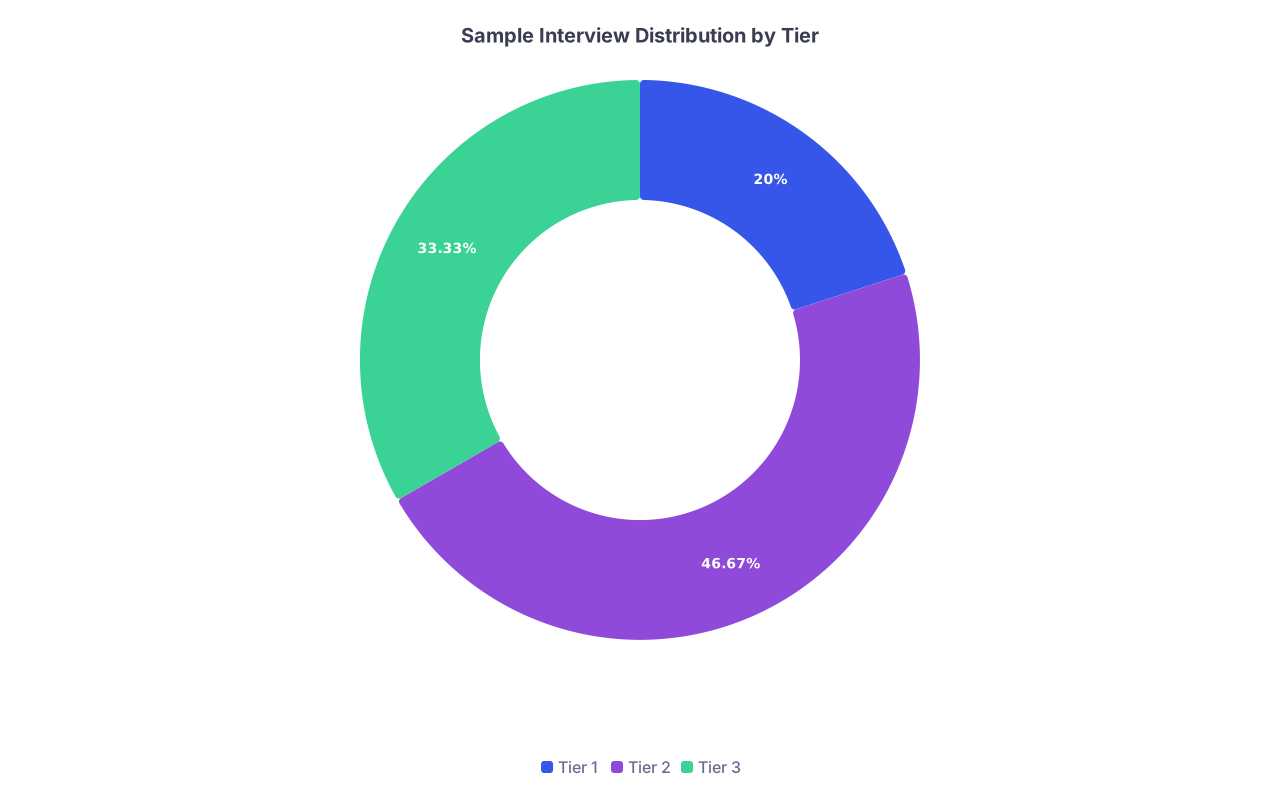
| Category | Value |
|---|---|
| Tier 1 | 3 |
| Tier 2 | 7 |
| Tier 3 | 5 |
At this point you should:
- Add a few more safety programs if deadlines allow and your invite count is weak by late October.
- Stop obsessing about dream programs you have not heard from by mid-December. They are not coming.
On Each Interview Day: Ask Targeted Visa + Step Questions
You are not a generic applicant. You are an IMG with concrete visa constraints.
At this point you should be asking:
- To the program coordinator / PD (not all at once, but over the day):
- “Do you sponsor J‑1 only, or also H‑1B?”
- “For H‑1B, do you require Step 3 passed by rank list or before start date?”
- “How many IMGs are currently in your program, and what visas are they on?”
Write this down immediately after the interview. Do not trust your memory in January.
You will use this exact information when building your rank list later.
January–Early February: Pre–Rank List Consolidation
Interviews (mostly) done. Now we shift from “getting invitations” to “arranging your future life in order.”
Build Your Interviewed Program Matrix
At this point you should:
- Create a new sheet with only programs where you actually interviewed.
- Columns should include:
- Step 2 CK fit (Green / Yellow / Red vs program competitiveness)
- Visa type offered to IMGs this year
- Whether Step 3 is needed for H‑1B and by when
- Your interview-day impression (1–5 rating for:
- Training quality
- Resident happiness
- Location fit
- Support for IMGs)
Now sort by overall “fit” score, not by name prestige.
A brutally honest list beats a glamorous but useless one.
Visa–Score–Preference Alignment Pass
At this point you should do three passes through the matrix:
Visa pass
- Drop any program:
- That does not sponsor your feasible visa type.
- Or requires Step 3 before rank list and you cannot meet that.
- Drop any program:
Score / support pass
- Bump up programs where:
- Your Step 2 CK is comfortably in range.
- They clearly like IMGs (many current IMGs, friendly attitude, realistic expectations).
- Move down programs where:
- You felt they were “doing you a favor” by interviewing an IMG with your score.
- Bump up programs where:
Life and preference pass
- Rank higher the places where:
- You could realistically see yourself surviving call, winter, and being far from home.
- You felt resident camaraderie and support systems.
- Rank higher the places where:
Do not pretend that location does not matter. It matters on your hardest days.
Mid–Late February: Constructing and Certifying the Rank List
This is where people panic and make irrational decisions. Keep it structured.
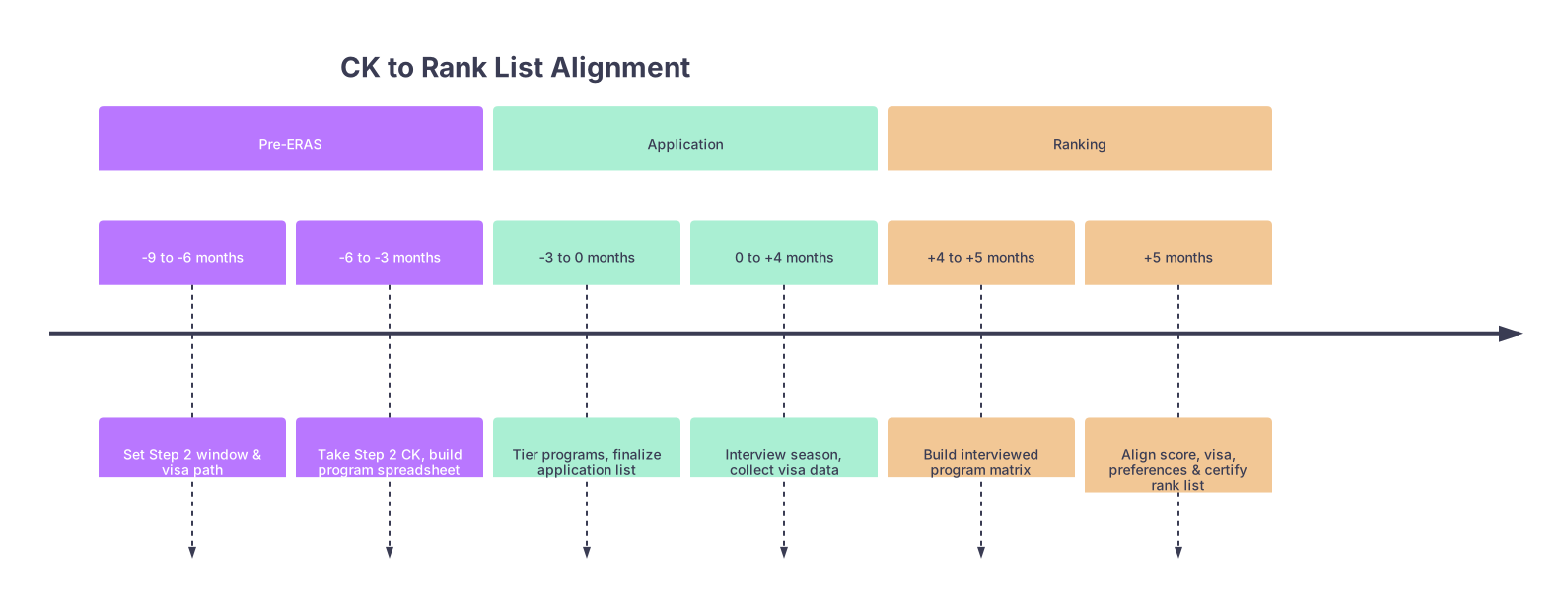
| Period | Event |
|---|---|
| Pre-ERAS - -9 to -6 months | Set Step 2 window & visa path |
| Pre-ERAS - -6 to -3 months | Take Step 2 CK, build program spreadsheet |
| Application - -3 to 0 months | Tier programs, finalize application list |
| Application - 0 to +4 months | Interview season, collect visa data |
| Ranking - +4 to +5 months | Build interviewed program matrix |
| Ranking - +5 months | Align score, visa, preferences & certify rank list |
Ranking Rule #1: Order by Preference, Not by Chance
NRMP’s algorithm works for the applicant. You should rank programs in true order of preference, as long as:
- They are eligible for your visa situation, and
- You are not obviously unrankable (e.g., you know they do not rank IMGs below a certain threshold and you are far below it).
Do not try to “game” chances by putting a lower-choice program higher. That is how people end up spending three years in a place they hate.
Ranking Rule #2: Use Tiers One Last Time
At this point you should:
Partition interviewed programs into 3 rank tiers:
- A: “I would be happy here.”
- B: “I could survive here.”
- C: “Only if everything else fails, but still acceptable.”
Within each tier, sort by:
- Overall training and support.
- Visa security (J‑1 vs fragile H‑1B).
- Fit with your personal life and Step 2 CK profile.
Then build the final list:
- All A programs first (ordered by true preference).
- Then B programs.
- Then C programs.
If a program feels “unacceptable,” it does not belong on the list. You would rather not match than be trapped where you know you will be miserable or unsafe.
Final Visa Sanity Check Before Certifying
Right before you click “Certify”:
At this point you should:
- Re-verify visa policies for the top 5–10 programs on your list:
- Quick website or email check: “Confirming that your program will sponsor J‑1 visas for matched IMGs this cycle.”
- Confirm any Step 3-related conditions for H‑1B:
- If your Step 3 is pending and required before start, accept the risk consciously.
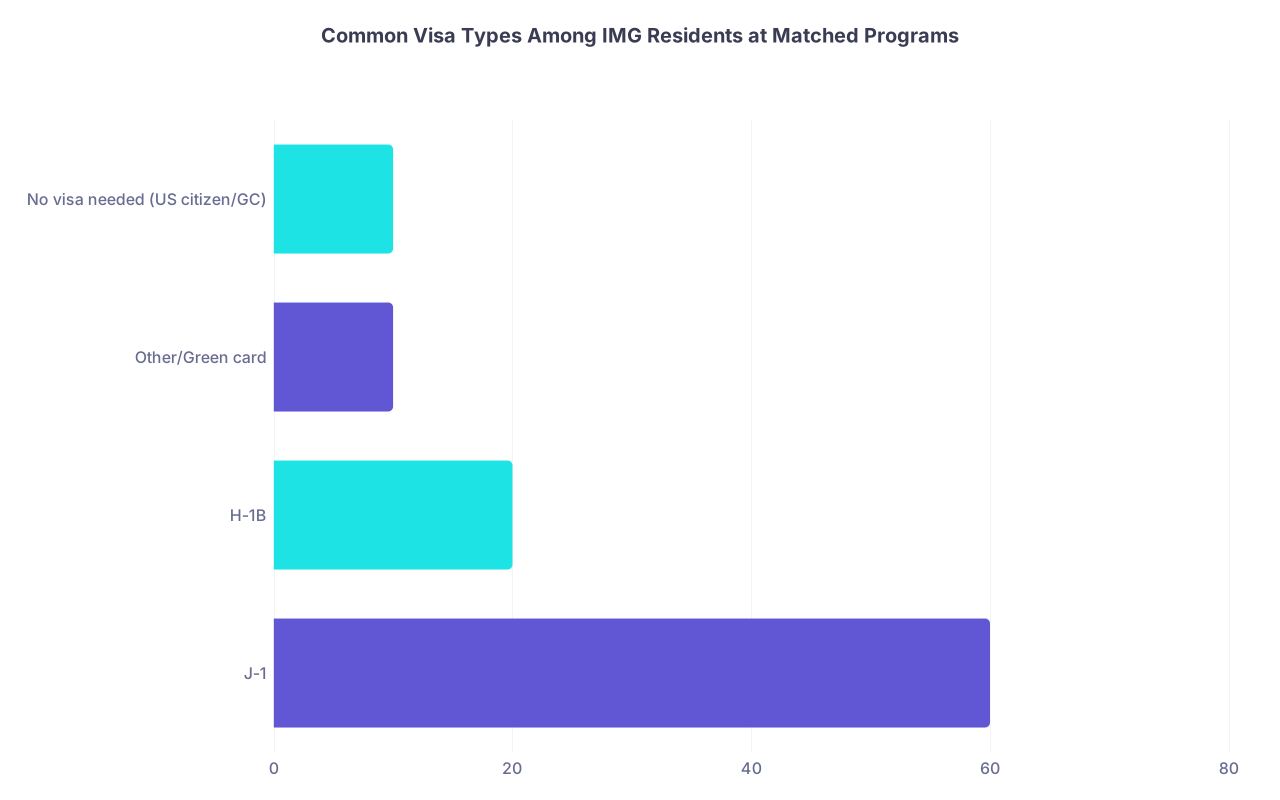
| Category | Value |
|---|---|
| J-1 | 60 |
| H-1B | 20 |
| Other/Green card | 10 |
| No visa needed (US citizen/GC) | 10 |
If a program suddenly stops sponsoring your visa type and you learn this before rank list certification, adjust immediately.
Three Things To Remember
- Step 2 CK timing is strategic, not cosmetic. When you test and when the score posts will decide which programs even look at you and how you build your tiers.
- Visa is not an afterthought. Decide early whether you are realistically J‑1, H‑1B, or flexible, and filter your program list ruthlessly based on that.
- Your rank list must reflect where you can actually train and live. Not just where you dreamed of matching, but where your score, visa, and sanity all line up in the same direction.