
The biggest mistake IMGs make with residency visas isn’t choosing the wrong visa. It’s bringing in an immigration lawyer months too late—after damage is already done.
You do not need a lawyer for every minor visa question. But there are clear points on the residency timeline where not having one is flat‑out dangerous. At those points, guessing or relying on rumors from forums is how people lose years, offers, or status.
I’ll walk you step‑by‑step, month‑by‑month, through the residency application and Match phase and tell you, bluntly, “at this point, you should absolutely get a lawyer” vs “here, you can probably manage without one.”
12–18 Months Before Match: Early Strategy (Usually No Lawyer Yet)
At this stage, you’re typically:
- Finishing or planning US clinical experience (observerships/externships)
- Scheduling or taking USMLE Step 2 CK
- Thinking about which specialties and states to target
- Trying to understand the alphabet soup: J‑1, H‑1B, O‑1, green card, change of status, etc.
At this point, you do not usually need a lawyer yet unless your situation is already messy (more on that shortly). Your job now is to understand the basics and avoid boxing yourself into a corner later.
At this point, you should:
- Clarify your likely visa path:
- Will you be J‑1 via ECFMG (most IMGs)?
- Or are you a strong H‑1B candidate (Step 3 done, high‑demand specialty, academic programs)?
- Start a basic info spreadsheet:
- Which programs historically sponsor J‑1 only?
- Which will consider H‑1B?
- Which state boards require Step 3 or additional exams?
This is research and planning. No billable hours needed yet—unless you already recognize yourself in one of these red‑flag categories:
Consider a brief consult now (even 30–45 minutes) if:
- You’ve ever overstayed a US visa, even “just” a few weeks.
- You’ve been denied a US visa before (B1/B2, F‑1, etc.).
- You had any prior arrest/charge (even if “dismissed”).
- You previously held J‑1 status in any category.
- You’re married to or engaged to a US citizen / green card holder and trying to line up residency with a marriage‑based process.
If any of those apply, an early strategy call with an immigration attorney is cheap insurance. You don’t need a long relationship yet, but you need to know your landmines.
9–12 Months Before Match: Program List & Exam Timing (First Structured Checkpoint)
You’re now moving into:
- Final USMLE attempts (Step 2 CK if not done, maybe Step 3)
- Building your ERAS program list
- Deciding how many “visa‑friendly” programs to include
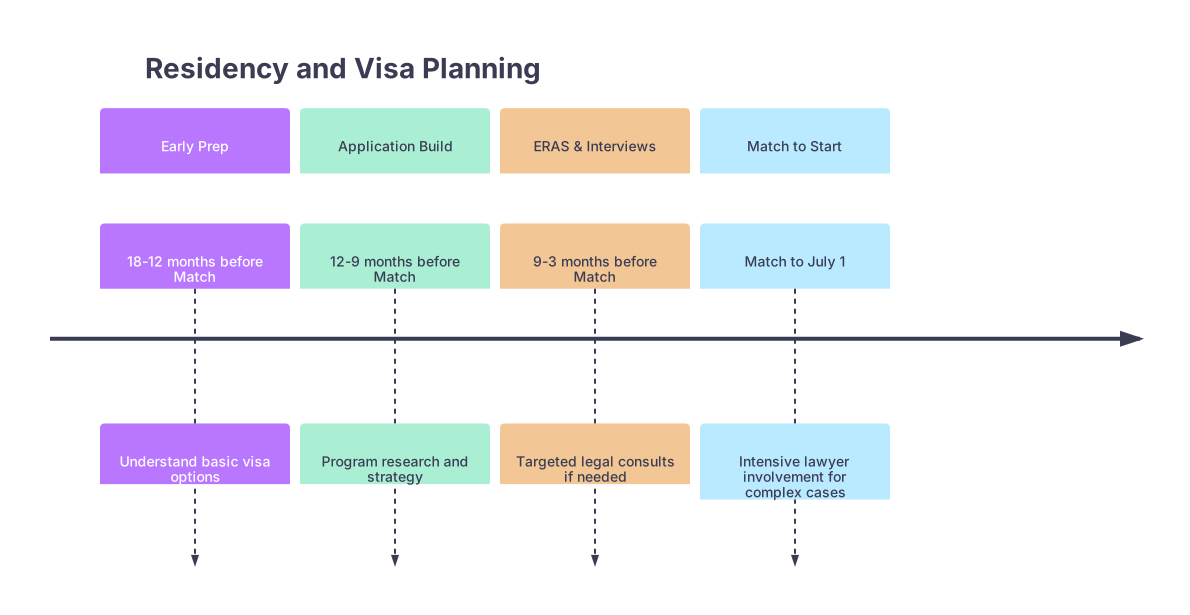
| Period | Event |
|---|---|
| Early Prep - 18-12 months before Match | Understand basic visa options |
| Application Build - 12-9 months before Match | Program research and strategy |
| ERAS & Interviews - 9-3 months before Match | Targeted legal consults if needed |
| Match to Start - Match to July 1 | Intensive lawyer involvement for complex cases |
At this point, you should strongly consider a lawyer if:
You’re aiming for H‑1B from PGY‑1.
This is not standard. Many programs will only do H‑1B for PGY‑2+ or not at all. Misunderstanding this is how IMGs:- Rank programs that “don’t sponsor H‑1B for first‑years”
- Match there
- Then realize they must either switch to J‑1 or lose the spot
A 1–hour consult now can help you:
- Confirm if your profile is realistically competitive enough for H‑1B‑sponsoring programs.
- Understand Step 3 timing: many H‑1B programs require Step 3 passed before contract.
- Build a realistic program list with correct visa filters.
You’re in the US on another status (F‑1, H‑4, etc.).
Transitioning from F‑1 (with or without OPT), H‑4, or another status to J‑1/H‑1B isn’t impossible, but timing is unforgiving. A lawyer can map:- When your current status expires
- How to bridge gaps until July 1 start date
- Whether change of status vs consular processing makes more sense
You have prior J‑1 history.
If you ever held J‑1 before (research scholar, exchange visitor, etc.), you may be subject to the 2‑year home residency requirement (212(e)). That condition can derail a clinical J‑1 later if you:- Assume you’re free to start a new J‑1
- Discover too late that you either need a waiver or must return home first
A lawyer at this stage can:
- Review your DS‑2019 and visa stamps
- Confirm if 212(e) applies
- Lay out whether you should pursue a waiver before Match
If you’re a relatively “clean” IMG outside the US, no prior issues, planning on J‑1, you can still hold off on formal representation. Bookmark a few reputable immigration lawyers, but you don’t have to engage one yet.
6–9 Months Before Match: ERAS Season Prep (Targeted Consultation Zone)
Now you’re:
- Finalizing your ERAS application
- Locking in your program list
- Requesting letters and setting up MyERAS
This is the first ideal window for a focused immigration consult for most IMGs, because decisions now affect which offers you can even accept later.
At this point, you should:
Create two columns in your spreadsheet:
- “Visa sponsorship according to website”
- “Visa sponsorship confirmed by recent residents / emails”
Track:
- J‑1 only
- J‑1 + H‑1B possible
- No visa sponsorship
| Visa Type | Typical Use | Key Dependency |
|---|---|---|
| J-1 (ECFMG) | Most IMGs in residency | ECFMG sponsorship & home-country residency requirement |
| H-1B | Some academic / high-demand programs | Step 3 passed, program willingness, cap-exempt positions |
| O-1 | Very strong academic CVs | Evidence of extraordinary ability |
| F-1/OPT | Rare for residency | Usually not suitable alone for GME |
When a lawyer becomes smart, not optional:
You’re juggling multiple possible paths.
Example: You might marry a US citizen in the next year and you’re applying for J‑1 and your dream programs prefer H‑1B. Great. But chaotic.A lawyer can:
- Rank these options by risk and timeline
- Tell you which to actively pursue and which to keep as backup
- Prevent you from accidentally sabotaging a green card case with a poorly timed J‑1 or vice versa
You’re aiming at O‑1 or long‑term US practice planning.
If you’ve got:- Publications
- Presentations
- Significant research
- Awards or leadership roles
And you’re thinking O‑1 or early green card, don’t wing this. The earlier a lawyer tells you which evidence matters, the more efficiently you can collect it during residency.
Your current US status is fragile.
If your I‑20 is expiring, OPT clock is tight, or you’re on dependent status (H‑4, L‑2) that might end if your spouse’s job changes, you should align ERAS and visa strategy now.
A single strategy session in this 6–9 month window can save you from ranking programs that will never be able to touch your case.
3–6 Months Before Match: Interviews & “Visa-Friendliness” Reality Check
You’re now getting interview invitations and attending them. Programs are asking:
- “Will you require visa sponsorship?”
- “Are you open to J‑1?”
- “Do you have Step 3 for H‑1B?”
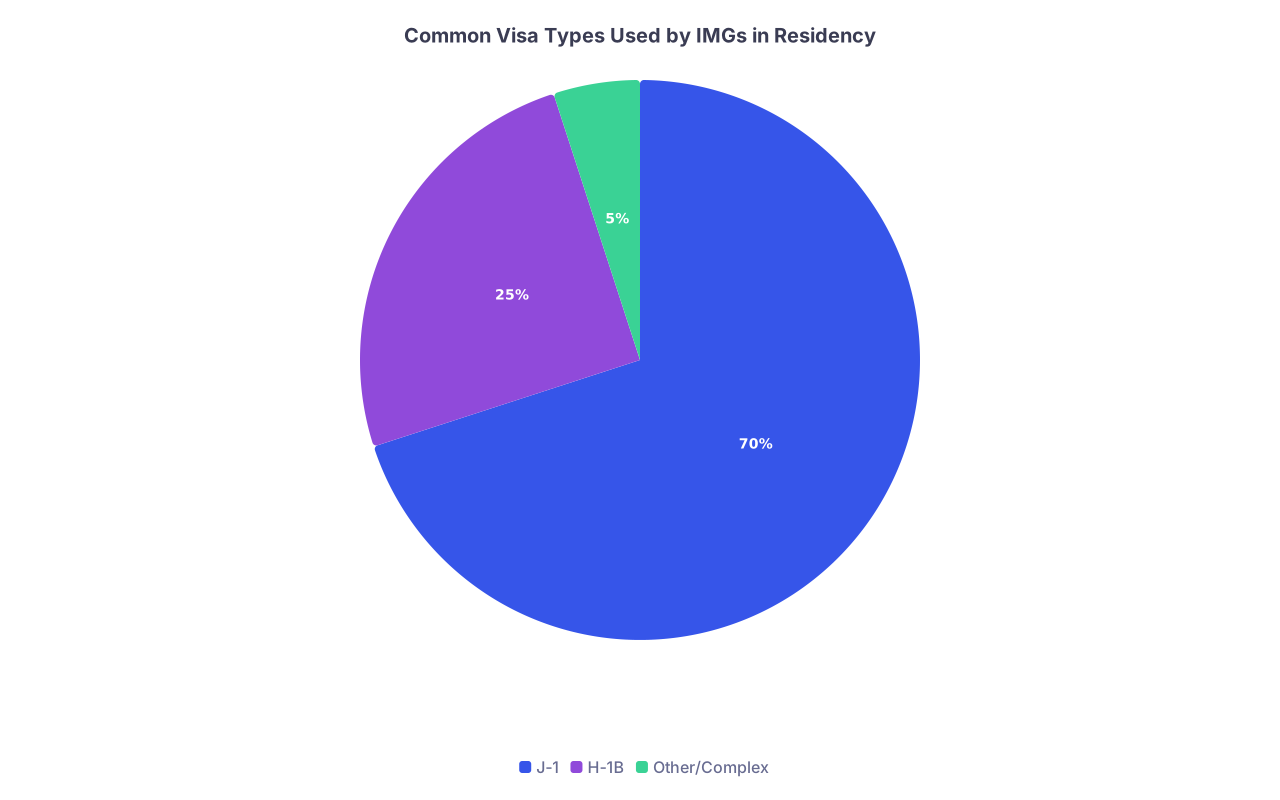
| Category | Value |
|---|---|
| J-1 | 70 |
| H-1B | 25 |
| Other/Complex | 5 |
At this point, you should:
- Be crystal clear and honest in how you answer visa questions.
- Keep a log of:
- Programs that explicitly confirm J‑1 support
- Programs that might support H‑1B if Step 3 is done
- Programs that clearly say “no visa sponsorship”
When you absolutely bring in a lawyer:
You receive mixed or confusing answers from programs.
Example:- One coordinator says, “We do H‑1B, no problem.”
- An attending says, “We only did it once; it was a huge mess.”
- GME office sends you a PDF that contradicts both.
A lawyer can:
- Decode what “we can consider H‑1B” realistically means
- Draft clear, concise emails to GME or HR so you don’t sound demanding or clueless
- Review any preliminary documents (policies, past contracts) programs send you
You’re asked about complex history during interviews.
If a PD or coordinator asks:- “Have you ever overstayed?”
- “Have you been denied any US visa in the past?”
- “We see you were previously J‑1 research… can you explain your situation?”
And you’re not sure how to answer without hurting your chances or misrepresenting yourself, pause before improvising. Talk with a lawyer about:
- Exactly how to phrase your history
- What documents you might later need
- When to say, “I’ll need to check details with my immigration attorney”
You get early signs of a potential pre‑Match offer or off‑cycle start.
Pre‑Match or off‑cycle PGY‑1/PGY‑2 positions for IMGs often involve:- Rushed visa timelines
- Programs unfamiliar with IMG processes
- Negotiations about J‑1 vs H‑1B
This is negotiating a legal and professional commitment. You want an attorney in your corner before you say yes.
Match Week to Match Day: High-Risk, High-Stress Window
Now everything becomes real.
You Match (or SOAP) into one program. That program either:
- Clearly supports your visa path,
or - Suddenly reveals “limitations” that were not obvious earlier.
At this point, you must:
- Read every word of:
- Match letter
- Contract/offer letter
- Any attached visa policy or “GME manual” section on visas
This is where I’ve seen IMGs lose years because they trusted a vague phone promise instead of the written policy.
You should get a lawyer immediately if:
Your matched program is waffling on visa type.
Example scenarios I’ve seen:- A program says: “We said we’d try H‑1B but GME only approved J‑1 this year.”
- Or: “We didn’t realize you need a change of status; that might be a problem.”
- Or: “We’re not sure we can get your petition approved before July 1.”
An immigration lawyer can:
- Review the exact timing and feasibility of H‑1B or J‑1 for your case.
- Help you and the program choose the safest path (maybe J‑1 now, H‑1B later).
- Communicate directly with the program’s legal/HR team, which they’ll generally respect more than your solo advocacy.
You have any status gap or travel complication.
If you’re:- Inside the US and your current status ends before July 1
- Outside the US with a prior visa denial or security administrative processing
- Needing to travel home for personal reasons before residency
Do not guess whether this is safe. A lawyer will:
- Map out whether to file a change of status inside the US or do consular processing abroad
- Warn you about risks of triggering bars or extra scrutiny if you leave
- Help you schedule and prepare for the consular interview properly
You’re subject to 212(e) and match to a J‑1-only program.
If you’re still under the 2‑year home residency rule from prior J‑1 and you now need a clinical J‑1:- You may need a waiver started immediately
- Or you may have to accept that J‑1 is impossible and look at other options
This is very technical, and program coordinators will not solve it for you.
Match to July 1: Paperwork, Petitions, and Panic (Lawyer Heaviest Phase)
These 3–4 months are where immigration issues either quietly resolve… or explode.
Your program’s obligations:
- File DS‑2019 paperwork via ECFMG (for J‑1)
or - Initiate H‑1B petition as a cap‑exempt institution (for H‑1B)
Your obligations:
- Provide documents quickly and accurately
- Schedule visa stamping if needed
- Enter the US on the correct status, at the correct time
At this point, you should bring in a lawyer if:
You’re on H‑1B.
Honest answer: I would not go through an H‑1B residency start as an IMG without counsel, even if the hospital has its own lawyer. Their lawyer represents the institution, not you.Your own attorney will:
- Check LCA, job description, and prevailing wage issues
- Confirm start dates and end dates protect you
- Catch errors that could ruin portability later if you switch programs or jobs
You’re subject to check‑the‑box “yes” questions you don’t fully understand.
On DS‑160, DS‑2019, I‑129, etc., questions about:- Prior overstays
- Visa denials
- Arrests, immigration violations, fraud issues
If you’re not 100% clear what “yes” triggers, do not guess. A lawyer can:
- Review your full history
- Tell you exactly how to answer
- Prepare an explanation letter if needed
You’ve already hit a problem.
Examples:- Your SEVIS record or I‑94 history is messy.
- Consulate puts your case into “administrative processing.”
- You get an RFE (Request for Evidence) on an H‑1B petition.
- Your J‑1 or H‑1B is denied or delayed.
At that point, this is not YouTube‑tutorial territory. Every written word you send from here on can end up in a future denial rationale.
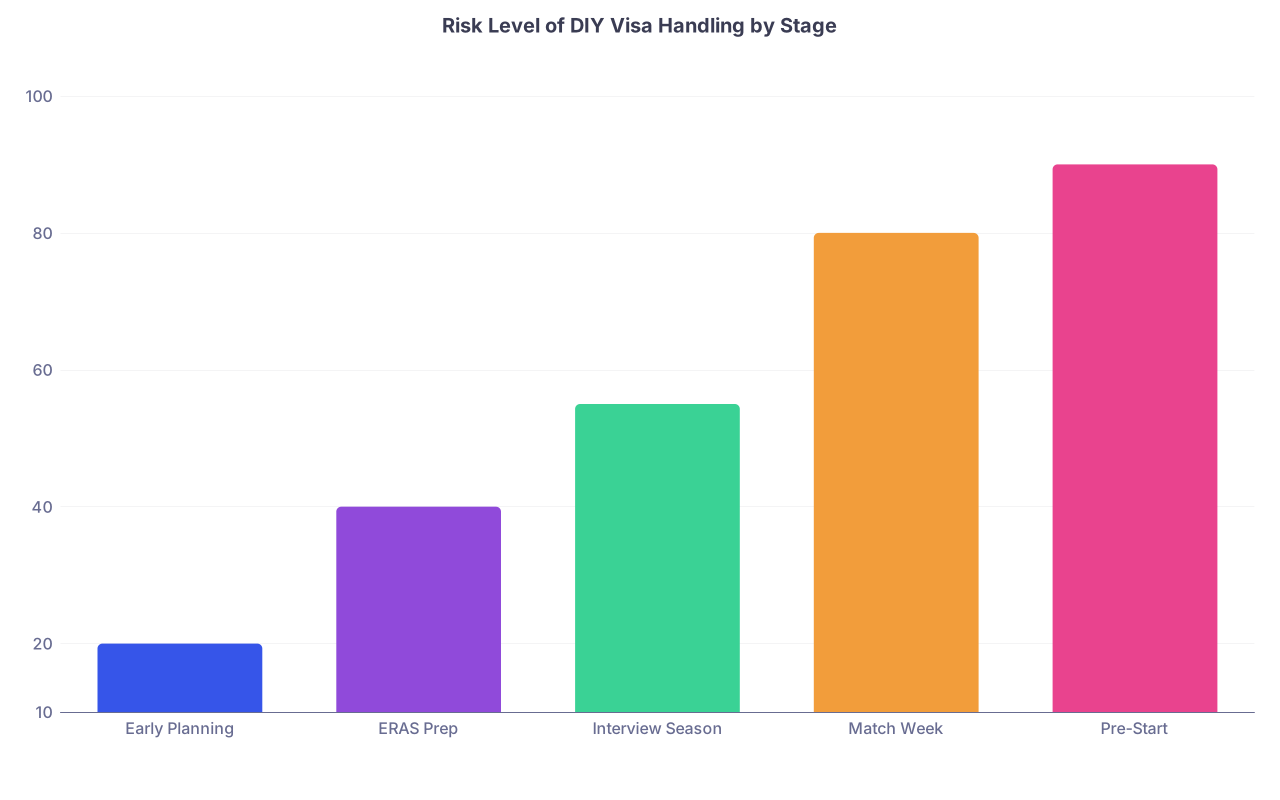
| Category | Value |
|---|---|
| Early Planning | 20 |
| ERAS Prep | 40 |
| Interview Season | 55 |
| Match Week | 80 |
| Pre-Start | 90 |
Who Really Doesn’t Need a Lawyer?
Let me be balanced for a minute. Not everyone has to pay legal fees.
You might be okay without a lawyer if, across the entire timeline:
- You’re outside the US the whole time.
- You have:
- No prior US overstays
- No prior J‑1
- No visa denials
- No arrests or charges
- You’re going J‑1 via ECFMG only.
- Your matched program has a strong, well‑oiled IME/ECFMG pipeline and routinely brings in multiple IMGs per year.
- Your DS‑160 and consular interview are completely straightforward.
This is the “standard, clean J‑1” case. Many people get through it fine without ever speaking to an attorney.
But the second any of those assumptions break—even slightly—you’re in “please at least pay for a consult” territory.
How to Time Your First Consultation
You do not need to hire a lawyer for a full retainer on day one of ERAS.
A smarter sequence:
Short strategy consult (30–60 min) around 9–6 months before Match
- Confirm your likely best visa path
- Flag any dangerous history
- Get a rough timeline for exams and status changes
Second consult during interview season if complex questions arise
- Tweak your program list or rank list based on realistic visa options
- Script how you’ll answer visa questions in interviews
Full engagement from Match to start date if:
- You’re doing H‑1B
- You have any 212(e), prior overstay, or denial issues
- You’re inside the US changing status
That’s how you keep costs controlled but risk low.
What You Should Do Today
Open a blank document and write three headings:
- “My visa history”
- “My red flags (if any)”
- “My target visa path (J‑1 / H‑1B / other)”
Under each, jot bullet points with specific dates, statuses, and events you remember. Then mark anything you’re not 100% sure about with a “?”.
If you see more than two question marks on that page, your next step today is simple:
Look up two or three reputable immigration lawyers who work with IMGs and book a short strategy consult in the next 2–3 weeks.