What do you do when your co-residents are complaining about cafeteria food… and you’re quietly figuring out whether you can afford rent, daycare, and your next student loan payment on a single resident salary?
If that’s you—the only (or main) breadwinner in residency—your situation is not normal in the way programs pretend it is. You are doing two full-time jobs: trainee physician and financial backbone of a household. That changes everything.
Let’s walk through what actually works in this situation. Not theory. Actual tactics.
1. First, Get Real About Your Situation (Not the Instagram Version of Residency)
You do not have the same life as your co-resident who lives in a cheap apartment with two roommates and whose parents pay their car insurance.
Stop benchmarking against them.
You need a clearer, more brutal snapshot of your reality:
- One salary (yours).
- Fixed training schedule.
- Minimal control over geographic location.
- High baseline fatigue.
- Possibly kids, a non-working spouse/partner, or family overseas who need support.
This isn’t about drama. It’s about accepting that you have less slack in the system. That means two rules:
- You must be more deliberate with money than the average resident.
- You must be more disciplined with your health boundaries, not less.
If either side collapses—money or health—you’re done. Or worse, patient care suffers.
So step one: map out your constraints, not some generic “resident life” fantasy.

| Step | Description |
|---|---|
| Step 1 | Resident Breadwinner |
| Step 2 | Prioritize essentials |
| Step 3 | Track 2 months spending |
| Step 4 | Automate payments and savings |
| Step 5 | Build bigger emergency buffer |
| Step 6 | Protect sleep and health |
| Step 7 | Know monthly numbers |
| Step 8 | Schedule stable? |
2. Know Your Monthly Numbers Like You Know the BLS Algorithm
You cannot “vibe” your way through finances as a breadwinner.
You need three numbers, and you should be able to say them out loud without opening Excel:
- How much comes in every month (after taxes, insurance, retirement contributions, union dues if you have them).
- How much must go out (true non-negotiables).
- What’s left for choices (discretionary + savings + debt strategy).
Do this once, carefully, then keep it updated every 3–6 months or when life changes (new baby, partner loses job, move, etc.).
Break down your categories
Think in terms of must / should / want, not a thousand tiny line items.
Must-pay (you literally can’t function without these):
- Rent / mortgage
- Utilities + phone + internet (basic, not luxury versions)
- Food (groceries at realistic level, not fantasy beans-and-rice forever)
- Transportation to work (gas, transit pass, basic car expenses)
- Childcare or dependent care if applicable
- Minimum payments on all debts
Should-pay (for stability, future, or legal protection):
- Health insurance premiums and deductibles, if applicable
- Basic renter’s or home insurance
- Disability insurance (we’ll talk about this—do not skip it if you’re the breadwinner)
- Some amount to emergency savings, even if tiny
- Visa/immigration related costs if relevant to staying employed
Want/pay-if-possible:
- Subscriptions, streaming, gym memberships
- Travel beyond necessary family visits
- Eating out, convenience spending, upgrades
Now, put some actual structure to it.
| Category | Typical Range (USD) |
|---|---|
| Take-home pay | 3,800–5,200 |
| Must-pay | 2,800–4,200 |
| Should-pay | 200–400 |
| Leftover range | -200–1,000 |
That leftover range is why you feel squeezed. In many cities, your must-pay numbers already exceed what’s rational on a resident salary. So you cannot play this like a “regular” budget.
Two practical moves:
- Track every dollar for 1–2 months (use Mint, Rocket Money, YNAB, or even a spreadsheet—doesn’t matter, just be consistent).
- Rename categories in apps to match your reality: “Work survival,” “Kids,” “Elders,” “Debt,” “Future.” Makes you think about priorities each time you spend.
3. Build a “Resident-Sized” Safety Net, Not a Fantasy One
You are not building a perfect financial future in residency. You’re building something that prevents catastrophe.
For a breadwinner resident, these are your non-negotiables in order:
- Do not miss rent or mortgage.
- Do not lose your ability to work (health + disability insurance).
- Do not default on major debts.
- Do not let $0 sit between you and any emergency.
Emergency fund: adjust expectations
You’ll hear “3–6 months of expenses” everywhere. That’s cute. Here’s what’s actually realistic in residency:
- Aim first for $500 buffer.
- Then $1,500–2,000.
- Then a true one-month bare-bones expenses number.
You hit one level, you maintain it. Then you build the next. Slowly. Automatically. $50–$150 per paycheck counts. You’re not competing with some attending on TikTok.
Disability insurance: the boring thing that can save your family
If you are the only breadwinner and your hands, brain, or spine are your income… losing them is an existential risk.
You want:
- Own-occupation disability insurance (pays if you cannot do your job as a physician, not “any job”).
- A benefit that at least covers your monthly must-pay line.
Yes, it’s another bill. But unless you have a wealthy partner or family who can fully support you and your dependents indefinitely, skipping disability coverage as the sole breadwinner is financial malpractice.
Ask your program if there’s an institutional group policy. Sometimes residents get a decent base policy cheap. If not, talk to specialized physicians’ disability brokers, not random financial salespeople.
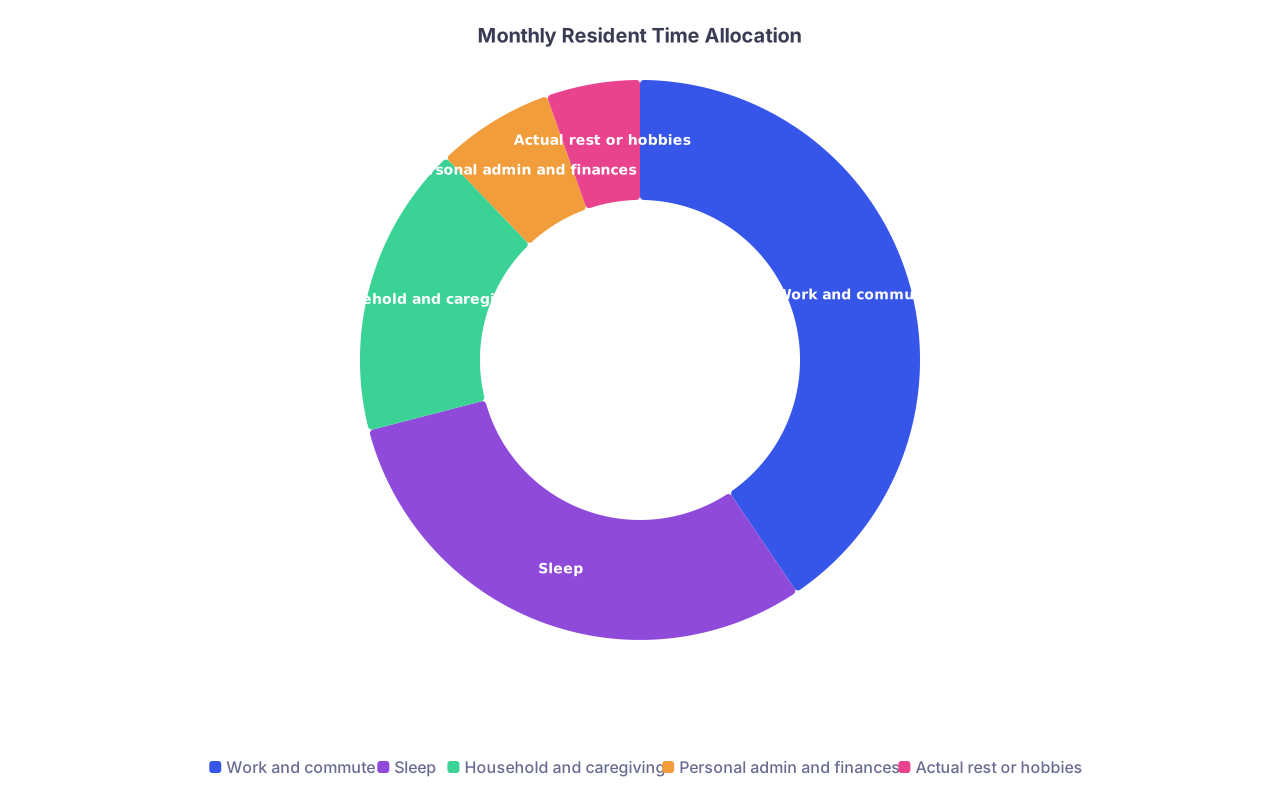
| Category | Value |
|---|---|
| Work and commute | 60 |
| Sleep | 45 |
| Household and caregiving | 25 |
| Personal admin and finances | 10 |
| Actual rest or hobbies | 8 |
4. Cut Expenses Without Burning Your Health
Here’s where people usually give dumb advice. “Just moonlight more.” “Just live cheaper.” As if you’re not already stretched thin.
You need health-preserving cost cuts.
Housing
If rent is >40–45% of your take-home pay, it’s suffocating you.
Options, depending on your life situation:
- If you do not have kids: consider resident housing, reliable roommate(s), or living slightly farther away with a cheaper commute.
- If you do have kids or a non-working partner: consider smaller but safe housing, maybe slightly farther out, but do not trade safety or hours of commute for a couple hundred dollars.
Moving is disruptive, but if you’re bleeding $500–$800 per month more than you need to, that’s real money over a 3–4 year residency.
Food
You’re not going to meal-prep like a fitness influencer. You can, however:
- Identify 5–7 “default” cheap, realistic meals you can cook half-asleep.
- Use frozen veggies, canned beans, rotisserie chicken, pre-cut stuff if it keeps you out of DoorDash hell.
- Pack snacks aggressively for long shifts: nuts, yogurt, sandwiches, leftovers. Hunger is what drives the $18 cafeteria meals.
The question isn’t “Is this the cheapest diet possible?” The question is, “Does this keep me decently nourished with less chaos and lower cost than takeout?”
Subscriptions and lifestyle creep
Do one “subscription amputation” afternoon:
- Open bank/credit card statements.
- Cancel everything you forgot about or can live without for 12 months: extra streaming services, unused fitness apps, premium music, random cloud storage, “free trial” junk.
You can always add them back when you’re an attending.
5. Should You Moonlight? Only If You Respect Red Lines
Here’s the move most breadwinner residents are tempted by: “I’ll just pick up extra shifts.”
Sometimes it’s exactly the right call. Sometimes it’s how people wreck their health, marriages, or patient safety.
Ask yourself these questions honestly:
- Are you already consistently sleep-deprived on your current schedule?
- Are you making recurrent small medical mistakes or feeling cognitively dulled?
- Is your partner or your kids already barely seeing you?
- Is your program humane about duty hours or are they already pushing the line?
If you’re already at the edge, adding moonlighting is like borrowing against your future liver, marriage, and judgment.
If you’re not at the edge, then you can moonlight surgically:
- Choose high-yield, lower-stress shifts (clinic, low-acuity urgent care, or telemedicine if allowed).
- Cap it: e.g., maximum 1–2 shifts/month, or never after a 28-hour call.
- Funnel that extra money directly into emergency fund or high-interest debt, not lifestyle upgrades.
Do not let anyone guilt you into endless extra shifts. You’re not lazy if you protect your brain. You’re safe.

6. Protecting Your Health When Your Family Depends on You
Here’s the ethical gut punch: if you destroy your health in residency, you’re not just hurting yourself. You’re putting your dependents and your patients at risk.
So yes, you have a moral obligation—to your family and to your future patients—to not treat yourself as fully disposable.
Three non-negotiables, even if you’re broke and exhausted:
1. Minimum sleep floor
You’re not getting 8 consistent hours. Fine. But set a hard floor.
For example:
- No pattern of <5 hours/night for more than 3–4 days in a row.
- Post-call: you actually go home, you actually sleep, you don’t add more work that day.
If your schedule is so brutal that this isn’t possible, you have a program problem, not a “you’re weak” problem. Document it. Use GME channels if needed.
2. Medical care for yourself
I’ve seen residents ignoring:
- Signs of depression or anxiety.
- Uncontrolled migraines.
- Back pain from years of bad ergonomics.
- Untreated diabetes or hypertension.
Why? No time. Money worries. Stigma.
If you’re the breadwinner, untreated physical or mental illness is a financial time bomb. Use your insurance. Use resident mental health resources confidentially. This is not optional.
3. Micro-rest, not mythical vacations
You probably cannot swing long retreats. You can still:
- Protect one partial day per week as much as possible (even 3–4 hours) where you’re not studying, charting, or doing finances.
- Do simple, low-cost decompression: walking, stretching, bad TV, time on the floor with your kid.
The indicator is your irritability level. If you’re snapping at intern colleagues and your partner every day, something has to change. That is not “just residency.”
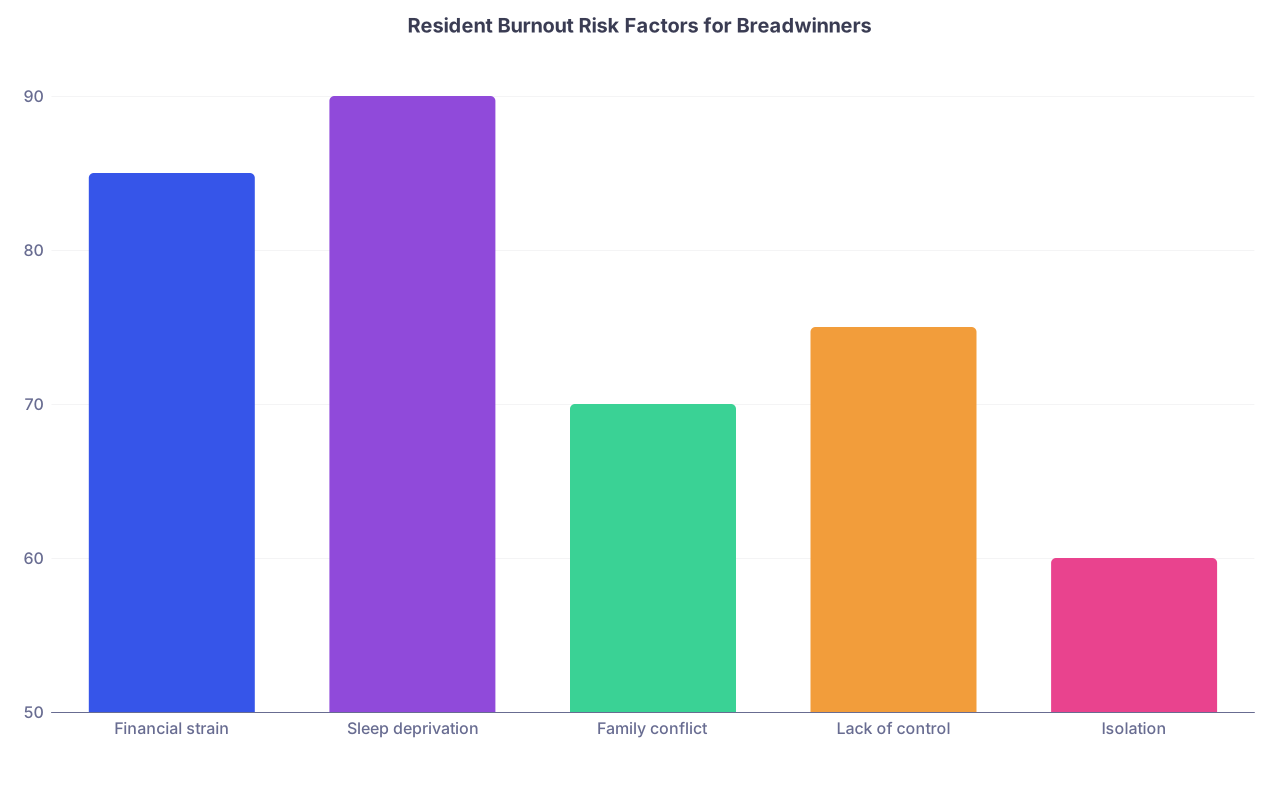
| Category | Value |
|---|---|
| Financial strain | 85 |
| Sleep deprivation | 90 |
| Family conflict | 70 |
| Lack of control | 75 |
| Isolation | 60 |
7. Managing Guilt and Resentment at Home
Being the sole breadwinner in residency can trash a relationship if you’re not deliberate about how you handle it.
Common patterns I see:
- You feel guilty you’re never home, so you overspend to “make it up.”
- Your partner feels trapped (especially if they relocated for your training and can’t easily find work or support).
- You start resenting each other silently.
A few practical moves.
Run your finances as a team, not as a secret
Even if your partner doesn’t work, they are in this with you. Sit down together:
- Show them the actual numbers (income, fixed costs, debts).
- Agree on priorities and what “lean years” will look like.
- Decide together where to cut and what to protect (e.g., kid’s daycare vs. vacations).
This shifts it from “I’m failing to provide” to “We’re strategically surviving a known hard season.”
Clarify non-financial contributions
If your partner is home:
- Acknowledge that childcare, housework, emotional labor are real work, not “you’re lucky you don’t have a job.”
- Divide what you can realistically do when you’re home so they don’t burn out either.
If your partner does work:
- Recognize they’re doing their full-time job plus much of the household load, because your schedule is insane.
- Ask what specific things would help them feel less alone.
And if you’re supporting parents or family abroad, be honest about your capacity. You are not an infinite wire transfer.

8. Planning for the Attending Years Without Torturing Yourself Now
You don’t need a full retirement blueprint in residency. But you do need a story you can believe in, or the grind feels pointless.
Here’s a realistic arc:
During residency
Priority stack:
- Stay housed and fed.
- Stay healthy enough to finish residency.
- Avoid catastrophic financial events (eviction, default, medical bankruptcy).
- Build a small emergency cushion.
- Get basic disability insurance in place.
If—only if—there’s extra:
- Contribute modestly to retirement (employer match first, if available).
- Pay down high-interest debt more aggressively.
Final year of residency / early attending
Now you pivot.
- Do a lifestyle inflation cap: when income jumps, you do not immediately triple your spending.
- Aggressively pay down high-interest loans, build a real 3–6 month emergency fund, and then invest.
- Reevaluate how much family support you can offer without recreating residency-level stress with an attending paycheck.
The ethical angle: you are not obligated to live like a martyr forever. The point of surviving this period is not to chain yourself to endless financial obligations the moment you can breathe.

FAQs
1. I’m the only breadwinner, and my partner wants me to moonlight more. How do I push back without sounding selfish?
Be specific, not vague. Instead of “I’m tired,” say, “If I add two more shifts a month, I’ll be working 80+ hours weekly with 4–5 hours of sleep on some nights. That increases my risk of medical mistakes and burnout. I’m willing to do one extra shift a month and put every dollar towards [rent/emergency fund/debt], but more than that is unsafe for me and my patients.”
Then offer alternatives: tightening the budget together, your partner exploring part-time work if possible, delaying certain expenses or goals. You’re not refusing to help; you’re refusing to blow up your health and career.
2. I feel like a failure because my family struggles financially even though I’m “a doctor.” How do I deal with that?
You’re not a doctor in the way society pictures yet—you’re a low-paid trainee doing high-responsibility work. The mismatch between social expectations and actual pay is brutal. Reframe it: residency is a fixed-length, underpaid apprenticeship. Your value is not your current paycheck. Your job right now is to get through this period intact—professionally, physically, and mentally—so that your earning potential later can actually materialize. Struggling on a resident salary with dependents is normal, not a personal failing.
3. When is it reasonable to say no to family members asking for money?
Any time the request would:
- Threaten your housing, food, or ability to get to work.
- Force you to skip critical medical care, medications, or disability insurance.
- Increase your debt to bail them out of ongoing, unchanged behavior.
You can say, “I can’t send $X every month right now without risking our rent and my ability to finish residency. I can do $Y, and once my income goes up after training, we can revisit.” Boundaries are not betrayal. If you collapse financially or fail to complete training, you will not be able to help anyone long term.
Key Takeaways
- As the only breadwinner resident, your job is not to “do it all”—it is to survive training with your health, license, and basic finances intact.
- Build a resident-sized plan: clear monthly numbers, small but real emergency buffer, disability insurance, and health protections—then add moonlighting or extra savings only where it’s actually safe.
- Treat your family and partner as teammates, not critics or dependents only—run the numbers together, set boundaries together, and keep your eye on the post-residency plan instead of beating yourself up for what a resident salary can’t do.