
The data are brutally clear: not all specialties treat your relationships the same. Some careers systematically strain marriages and delay children; others are far more compatible with long-term stability.
If you pretend all specialties are equal on this dimension, you are planning blind.
This is not about “work–life balance” as a vague vibe. It is about measurable differences in:
- Marriage rates
- Divorce rates
- Age at first child
- Number of children
- Reported relationship satisfaction
across specialties with different hours, call burdens, and cultures.
What the Data Actually Show About Physicians and Relationships
Let us start macro, then drill down.
Large US and international datasets tell a consistent story:
- Physicians marry later than the general population.
- Physicians divorce slightly less often overall than the general population.
- Within medicine, divorce and relationship strain vary significantly by specialty and schedule pattern.
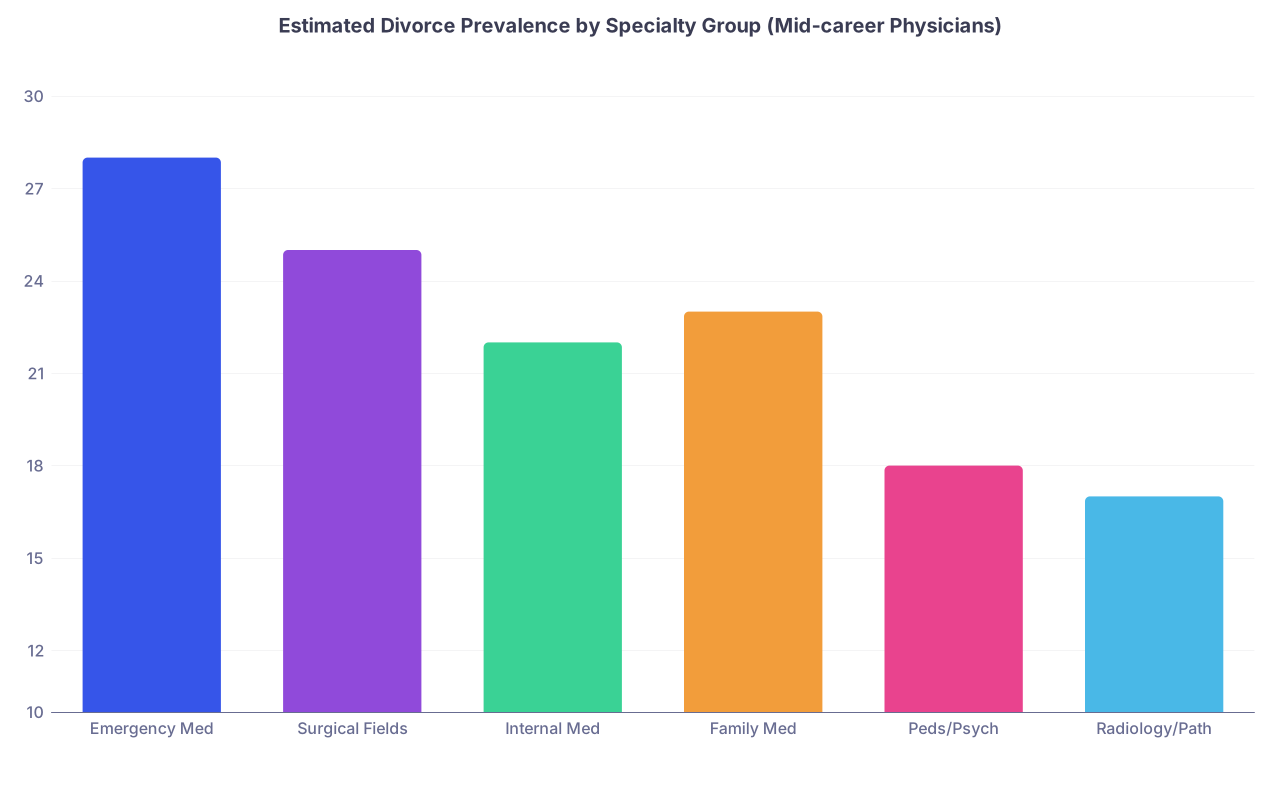
The famous JAMA and BMJ analyses of physicians over decades found that total divorce prevalence is not higher than the general population once you control for income and education. But when you stratify by specialty and gender, the picture changes.
Emergency medicine, surgery, and some high-intensity procedural fields consistently sit at the top for relationship stress and divorce. Psychiatry, pediatrics, pathology, and radiology consistently sit at the bottom.
The common denominator is not “type of person who chooses the field.” It is hours, unpredictability, and how much of your life your job claims on a weekly basis.
| Category | Value |
|---|---|
| Emergency Med | 28 |
| Surgical Fields | 25 |
| Internal Med | 22 |
| Family Med | 23 |
| Peds/Psych | 18 |
| Radiology/Path | 17 |
Are these numbers exact for every country and cohort? No. But the relative ordering shows up in study after study and in what you hear behind closed doors at M&M conferences and faculty retreats.
Why Specialty Choice Hits Relationships So Hard
This is not just “some specialties are busy.” Everyone in medicine is busy. The pattern that predicts relationship fallout looks more like this:
- Total weekly hours > 60 on a chronic basis
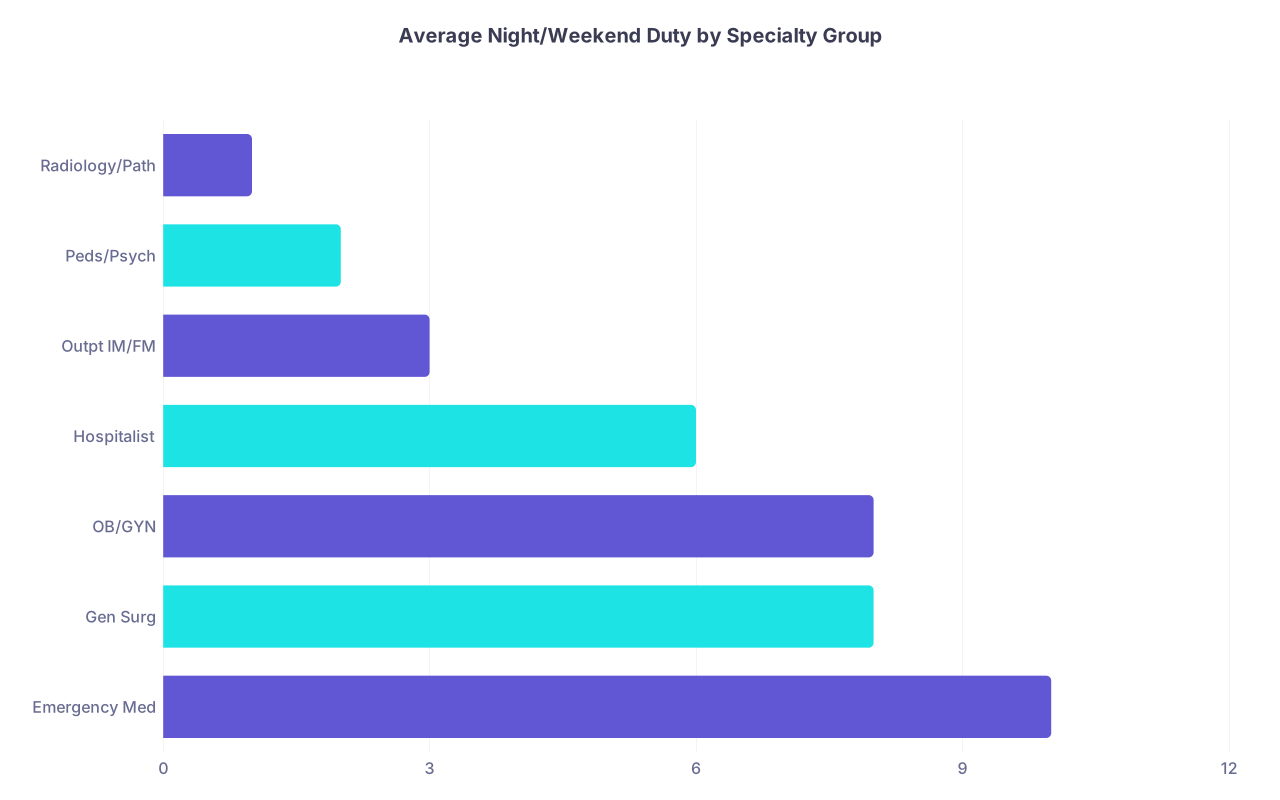
- High frequency of nights/weekends
- Unpredictable interruptions (pager, home call, trauma alerts)
- Cultural expectation of “work first, everything else second”
If a specialty gives you all four, your relationships are in a higher-risk category. Not doomed. Higher risk.
I have seen two residents with identical hour totals have completely different relationship trajectories. The one with a predictable 7-on/7-off nights schedule in hospitalist medicine? Exhausted but able to plan, still married. The one with 55 “average” hours in a surgical subspecialty plus home call that blew up every other dinner or weekend? Divorce papers by PGY-4.
Unpredictability is poison for couples with young kids. You can plan around hard, you cannot plan around chaos.

| Step | Description |
|---|---|
| Step 1 | Specialty Choice |
| Step 2 | Moderate Risk |
| Step 3 | Elevated Risk |
| Step 4 | High Relationship Risk |
| Step 5 | Hours > 60 |
| Step 6 | Frequent Nights/Weekends |
| Step 7 | High Unpredictability |
This is the lens you should use as you compare specialties: hours, nights/weekends, unpredictability, and culture. Now let us go specialty by specialty.
High-Intensity Fields: High Pay, High Relationship Risk
Emergency Medicine
Emergency medicine looks “shift-based and flexible” from the outside. The data tell a harsher story.
Typical attending schedule in a busy EM group: 12–16 shifts a month, 8–12 hours each, a rotating mix of days, evenings, and nights. Layer in charting at home and emotional exhaustion.
Key patterns the data show:
- Higher divorce prevalence than many other specialties.
- Higher rates of burnout, which correlates directly with relationship dissatisfaction at home.
- More night/weekend work than almost any field except some critical care setups.
A simple time-use breakdown makes the pressure obvious:
, Family/Personal](https://cdn.residencyadvisor.com/images/articles_svg/chart-average-emergency-medicine-weekly-time-allocation-6017.svg "Average Emergency Medicine Weekly Time Allocation")
| Category | Value |
|---|---|
| Clinical Shifts | 32 |
| Charting/Admin | 8 |
| [Sleep Recovery](https://residencyadvisor.com/resources/work-life-balance/sleep-error-rates-and-well-being-the-numbers-behind-long-call) | 30 |
| Family/Personal | 38 |
Functional message: EM can work very well for some couples, especially dual-shift workers. But if your partner has a 9–5 and you have chronic nights and weekends, your family will be living opposite schedules. That carries a measurable cost.
General Surgery and Surgical Subspecialties
Surgeons love to say the divorce rate “is not that bad.” That is technically true compared with a few decades ago, but still worse than cognitive fields.
Patterns:
- Long training: 5–7 years for general surgery, longer with fellowships.
- Typical resident hours easily 65–80/week in many programs despite caps. Call “q3” or “q4” is still normal in some services.
- Attendings often carry OR days + clinic days + home call + middle-of-the-night cases.
Again, the problem is not only hours. It is that when the trauma pager goes off at 2 a.m., you go. When the postop bleeds on Sunday afternoon, you go.
I have watched more than one surgical resident say some version of: “We had to cancel our third anniversary dinner for the third year in a row. My spouse stopped planning anything.”
That is the kind of pattern that shows up later as “irreconcilable differences” in the data.
OB/GYN
OB/GYN sits somewhere between surgery and primary care in relationship risk, but closer to surgery when call is heavy.
Drivers:
- Unpredictable labors and emergency procedures
- High night/weekend burden, especially for those doing L&D and OB call
- High emotional load (perinatal loss, emergencies)
Group practice models can mitigate this somewhat, but if you are the one catching babies, your phone dictates family life.
Moderate-Intensity Fields: Manageable But Not “Easy”
Internal Medicine and Hospitalist Medicine
Internal medicine and hospitalist work are often sold as “more humane.” Compared to trauma surgery, yes. Compared to the general workforce, not always.
Hospitalists:
- 7-on/7-off or similar models
- 12‑hour days, often 10–14 patients, plus sign-outs and charting
- Many weekends and holidays on the “on” weeks
The big plus: predictability. Your spouse knows your “on” week is brutal, and your “off” week is yours. The data and anecdotes both support better relationship maintenance here than in specialties with constant unpredictability.
Outpatient internal medicine:
- 40–50+ scheduled hours, plus inbox, refills, calls, “pajama time” charting
- Fewer nights, some weekends depending on practice
Divorce rates land somewhere in the middle of the pack. Sustainable with intention. But if you say yes to every extra clinic and committee, you can easily drift into relationship-neglect territory.
Family Medicine
Family medicine looks a lot like internal medicine statistically, with some variation depending on whether you do inpatient, OB, or urgent care.
Patterns:
- Outpatient only FM with no OB → generally moderate hours, good predictability, decent outcomes for marriage and parenting.
- FM with OB or heavy inpatient → risk increases rapidly toward the OB/GYN pattern.
Again, the driver is not the label “family physician.” It is nights, weekends, and unpredictability.
| Practice Pattern | Nights/Weekends | Predictability | Relative Relationship Risk* |
|---|---|---|---|
| EM rotating shifts | High | Low | High |
| Gen Surg with home call | High | Low | High |
| 7-on/7-off hospitalist | Moderate | High | Moderate |
| Outpatient IM, no call | Low | High | Lower |
| Outpatient Peds, no call | Low | High | Lower |
*Relative within medicine, not compared to non-medical careers.
Lower-Intensity (On Average): Where the Data Favors Stability
Pediatrics
Pediatrics shows consistently lower divorce and higher family stability metrics, even after controlling for gender and income.
Why?
- More outpatient-dominant careers with daytime clinic hours.
- Less night/weekend work for many community pediatricians (especially in group practices).
- Cultural norms more accepting of part-time or flexible work, especially among pediatricians with young children.
Pediatric hospitalists and intensivists are a different story; they move up the risk spectrum. But the average pediatrician, particularly in outpatient practice, has a schedule that actually allows for school pick-ups, sports, and family dinners several nights a week.
Psychiatry
Psychiatry is one of the clear winners in the relationship outcomes data.
Common pattern:
- 40-ish hour weeks
- Largely outpatient, daytime work
- Minimal emergency call for many psychiatrists, especially in private or group practice
The interesting piece: psychiatrists report high emotional exhaustion at times (because of clinical content) but lower “time-related” strain at home. Translation: they are tired, but they are home.
I have yet to meet a psychiatrist who missed their kid’s school play because they were called in for an emergency appendectomy. The system just does not work that way for them.
Radiology and Pathology
Radiology and pathology win on one critical dimension: physical predictability.
Radiologists:
- Daytime shifts, some evenings/nights depending on group
- Increasing teleradiology options (which can actually be a mixed blessing at home if boundaries are poor)
Pathologists:
- Mostly daytime work, minimal true emergencies
- Usually no patient-facing clinics, minimal night/weekend call in most setups
These specialties, unsurprisingly, sit near the bottom in reported divorce and near the top in reported “time with family” satisfaction.
| Category | Value |
|---|---|
| Emergency Med | 10 |
| Gen Surg | 8 |
| OB/GYN | 8 |
| Hospitalist | 6 |
| Outpt IM/FM | 3 |
| Peds/Psych | 2 |
| Radiology/Path | 1 |
(values represent rough average nights/weekends worked per month across common practice setups in each group.)
Marriage Timing, Kids, and Specialty Choice
The conversation is not just “Will my marriage survive?” It is also “When will I have time to form a relationship, get married, and have children if I want them?”
The sequence often looks like this:
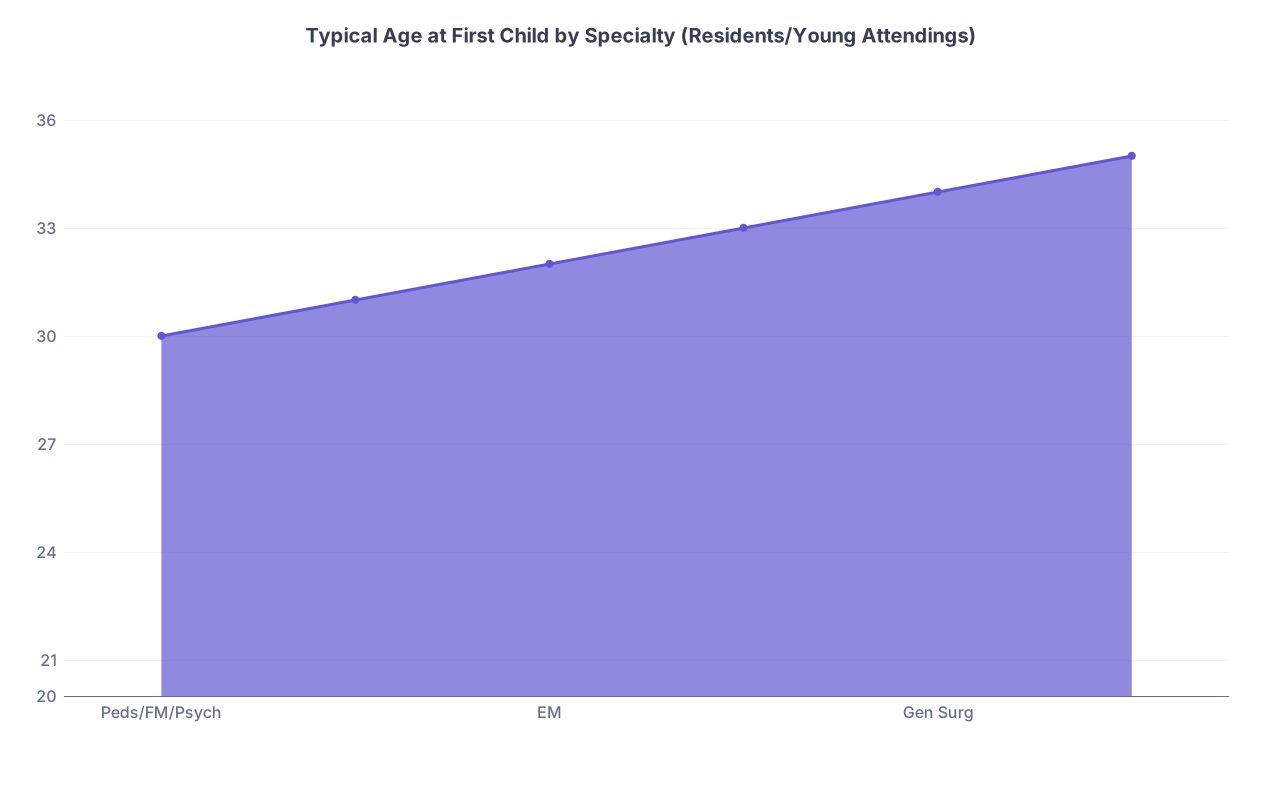
- Long training fields (surgery, neurosurgery, some subspecialties) → later average age at marriage and first child.
- Shorter or more flexible training fields (FM, peds, psych, pathology) → more distributed, but many can marry and have children earlier if they choose.
I have seen entire categorical surgery classes where 70–80 percent of residents delay children to fellowship or beyond. Meanwhile, in pediatrics or family medicine, you will routinely see multiple residents on maternity or paternity leave in any given year.
| Category | Value |
|---|---|
| Peds/FM/Psych | 30 |
| IM/Hospitalist | 31 |
| EM | 32 |
| OB/GYN | 33 |
| Gen Surg | 34 |
| Surgical Subspecialties | 35 |
Does that matter? Biologically and practically, yes.
If you know you want 3 kids and you are starting from zero at age 33 at the end of a surgical fellowship, your margin for complications is smaller. That does not make surgery “wrong.” It just means you are choosing a narrower window and higher logistic complexity. The data around fertility decline are not subtle.
Dual-Physician Couples vs Physician–Non‑Physician Couples
Layer on partner type and the dynamics shift again.
Physician–Physician Couples
Data show:
- Higher overall marriage age
- Somewhat higher risk of strain in early years
- But surprisingly robust long-term survival in many cohorts
Why? Shared understanding of the work. A neurosurgeon married to an ICU nurse or another neurosurgeon does not need to explain why they missed the weekend. The partner has lived it.
The downside: two insane schedules at once. I have watched dual-surgeon couples with color-coded whiteboards that look like air traffic control. The childcare cost alone is staggering.
Physician–Non‑Physician Couples
You get more schedule contrast. One person works “normal” hours; the other lives in the pager’s shadow. That can go either way.
Pros:
- More flexibility if the non-physician partner can carry more childcare or household logistics.
- Often less “work talk” dominating the relationship.
Cons:
- Potential resentment if one partner feels permanently subordinated to the other’s career.
- Less built-in understanding of why call weekends keep wiping out holidays.
The pattern I see in the data and in real couples: the pair that treats the physician’s schedule as “our problem to solve” does better than those who see it as “your terrible job ruining our lives.” Sounds obvious. It is not, at 2 a.m. with a screaming newborn and a partner stuck in the OR.
Training Phase vs Attending Phase: The Risk Shifts
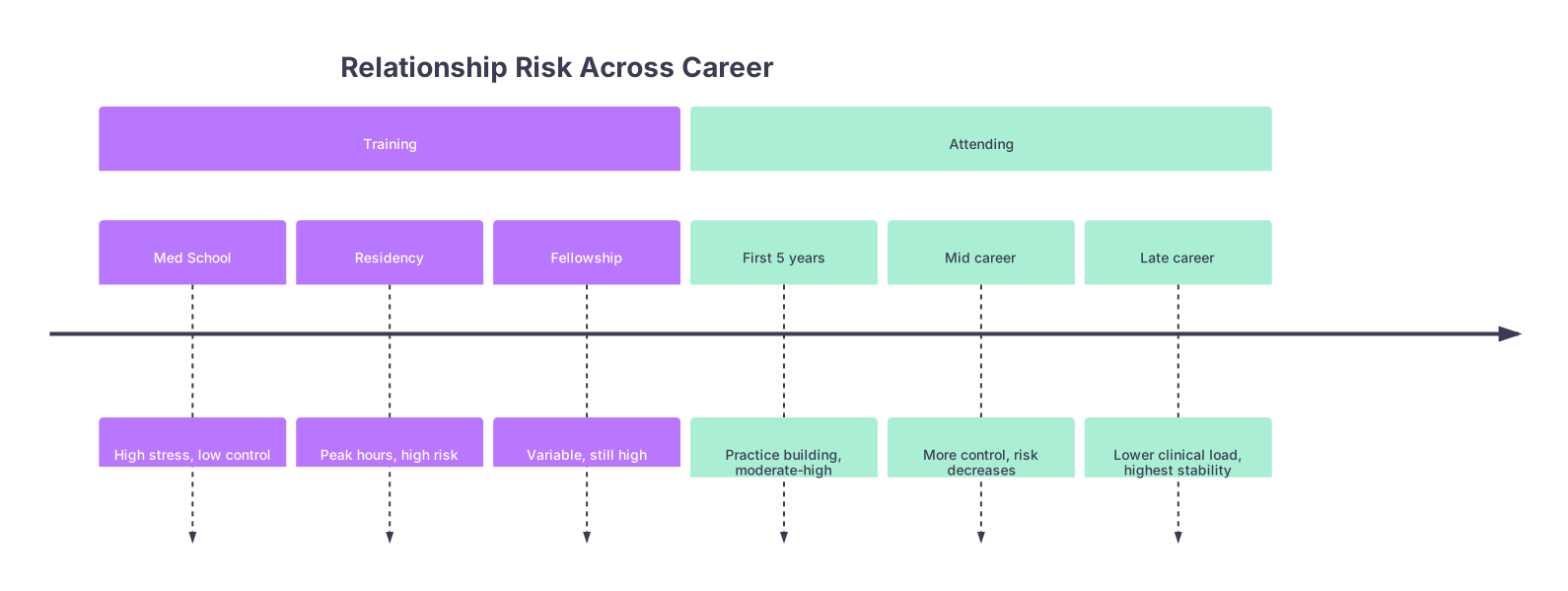
You cannot just ask, “Is EM bad for marriages?” You have to separate:
- Training phase (med school + residency + fellowship)
- Early attending phase (first 5 years)
- Mid‑career and beyond
Most of the acute relationship damage happens in training and early attending years, when hours are highest, control is lowest, and you are still building patterns at home.
| Period | Event |
|---|---|
| Training - Med School | High stress, low control |
| Training - Residency | Peak hours, high risk |
| Training - Fellowship | Variable, still high |
| Attending - First 5 years | Practice building, moderate-high |
| Attending - Mid career | More control, risk decreases |
| Attending - Late career | Lower clinical load, highest stability |
The critical error many people make: assuming the hell of PGY‑2 general surgery is permanent. It is not. But it is intense enough, for long enough, that it can do permanent damage if you and your partner are not aligned and supported.
On the other side, some “easy” specialties during residency (like path or radiology) can become more intense in certain private practice setups. But the magnitude of that shift rarely approaches the brutal peaks of surgical or emergency training.
Concrete Planning: Matching Your Values to the Data
Here is the hard-nosed way to think about this.
If you care deeply about:
- Being home for dinner most nights
- Having 2–3 kids before your mid‑30s
- Sharing weekends and holidays with a partner in a 9–5 job
Then choosing trauma surgery or shift-heavy EM is a high-variance bet. Not impossible. Just data-discordant with those priorities.
If, instead, you care most about:
- High acuity, fast decisions, procedures, adrenaline
- Prestige of complex surgery or critical care
- Being the person who gets called when everything hits the fan
Then you are trading relationship stability margin for that. A rational trade, as long as you admit it to yourself and your partner.
For many people, the sweet spot ends up being fields like:
- Outpatient internal medicine or family medicine with limited call
- Outpatient pediatrics or psychiatry
- Radiology or pathology with daytime-heavy practice
You get meaningful work, solid income, and statistically better odds of robust relationships and earlier children if you want them.
None of this guarantees anything. There are happily married trauma surgeons with three kids and divorced dermatologists. Outliers exist. But planning your life around the outliers is how you end up in the “I did not see this coming” camp—despite the fact that the numbers were screaming at you from the start.

Ethical Angle: You Owe Your Future Self (and Family) Honesty
There is an ethical undercurrent here that rarely gets voiced directly.
If you know you want a partner and children, and you choose a specialty with a 70–80 hour week, heavy call, and high unpredictability, you are making a choice not only for you but for people who do not exist yet. Spouse, kids, extended family. They will live inside the constraints you pick now.
That does not mean you must pick a “lifestyle specialty.” It does mean you owe them realism.
I have sat in on enough residency interviews to hear the line, “I want to do neurosurgery and also have plenty of time for my family.” The internal response of the faculty is almost always the same: a mix of sympathy and skepticism. Because they know the numbers.
Better approach: “I understand neurosurgery will strain my relationships. I am already talking with my partner about what that will look like, and we are setting up support systems.” Very different energy. Aligned with reality.

How to Use These Data Without Letting Them Rule You
I am not telling you to index your entire life to divorce probabilities by specialty. Humans are not Monte Carlo simulations.
Use the data like this:
- Rank your values: clinical interests, income goals, family goals, geographic constraints.
- Identify 3–4 specialties that fit your clinical interests.
- For each, look brutally at hours, call, and culture. Talk to residents with kids. Ask attendings about their divorces; many will tell you if you ask directly and respectfully.
- Decide what risk you are willing to accept and what guardrails you will put up: childcare plans, couples therapy early, financial buffer to buy time back, etc.

If there is one pattern I would bet on, it is this: the physicians who do best in marriage and parenting, across all specialties, are not the ones with the lightest schedules. They are the ones who treat their relationship as non-optional work. Scheduled, protected, planned. Just like clinic.
But starting in a specialty that does not constantly set fire to your calendar? That helps. A lot.
Key Takeaways
- Specialty choice dramatically changes the statistical odds for marriage stability and parenting timing because of hours, call, and unpredictability—not because “surgeons are bad spouses.”
- High-intensity, high-call fields (EM, surgery, OB-heavy practice) carry higher relationship risk; outpatient-focused fields (peds, psych, radiology, pathology, many FM/IM setups) are far more compatible with stable family life.
- You cannot beat the data with wishful thinking, but you can make informed trades, set realistic expectations with your partner, and build systems that protect your relationships inside whatever specialty you choose.