
What if the job you’ve been quietly judging as “selling out” is actually where a lot of the real medical impact is happening—and you’ve just been fed a lazy narrative in residency lounges?
Let’s puncture this one properly.
Where the “Sellout” Myth Actually Comes From
Walk into any academic resident workroom and you’ll hear some version of this:
“Yeah, he left for pharma. Big money. Total sellout.”
Said by someone on hour 21 of a 28‑hour call, writing notes that no one will ever read, while their hospital CFO is pulling a seven-figure bonus.
The irony writes itself.
The “pharma = selling out” story usually rests on a few unspoken assumptions:
- Pharma physicians are just helping companies sell more drugs.
- Leaving the bedside means abandoning patients.
- Industry work is “less noble” than academia or clinical practice.
- People only go into pharma because they couldn’t hack “real medicine.”
All four are lazy, and all four fall apart when you actually look at what pharma physicians do, how the work is structured, and what outcomes it affects in the real world.
Let me be very clear: pharma is not some moral Disneyland. There are perverse incentives, stupid decisions, and bad actors—just like in hospital administration, private equity–backed practices, and yes, even academics gaming authorship order for grant money.
But the blanket “selling out” judgment? That’s not ethics. That’s ignorance mixed with a bit of insecurity.
What Pharma Physicians Actually Do (Not the Cartoon Version)
Most trainees picturing “pharma” imagine a former cardiologist in a suit, coaching sales reps to push the latest statin to anyone with a pulse.
That’s the 1990s caricature.
Look at where physicians are actually working in pharma now: clinical development, medical affairs, pharmacovigilance, health economics and outcomes research, regulatory strategy. Those aren’t sales.
Here’s the basic layout.
| Role | Primary Focus |
|---|---|
| Clinical Development | Designing and running trials |
| Medical Affairs | Evidence, education, strategy |
| Pharmacovigilance | Safety and risk management |
| HEOR / RWE | Outcomes and value data |
| Regulatory Strategy | Submissions, label strategy |
Clinical development: not “selling,” but deciding what even exists
If you’re in clinical development at, say, Novartis or Genentech, you’re not tweaking marketing decks. You’re:
- Designing phase II/III protocols
- Deciding inclusion/exclusion criteria
- Choosing endpoints (hard clinical vs surrogate)
- Weighing risk vs benefit for actual human beings you will never meet
I’ve seen protocol review meetings where one physician in the room pushed back on a glamorous surrogate endpoint and forced a change to a hard outcome. That single decision made the drug less “marketable” in the short term but prevented the company from spending half a billion dollars chasing noise.
That’s not selling out. That’s upstream medicine.
Medical affairs: the “clinical conscience” (when done right)
Medical affairs is where many physicians land first. Here you:
- Review and shape scientific communications
- Talk to key opinion leaders (KOLs) who will absolutely call out weak data
- Run advisory boards and educational programs
- Handle complex off-label information requests with legal breathing down your neck
Is there spin? Of course. But there’s also a lot of “No, we are not pushing that message because the data don’t support it and the FDA will eat us alive.”
A good medical director spends a lot of their day saying “show me the data” to their own colleagues. Maybe you think that’s corrupt. I call it quality control.
Safety and pharmacovigilance: the part no one glamorizes
This is the least “sellout” space of all and gets zero respect from armchair critics. Think about what these teams actually do:
- Signal detection from post‑marketing data
- Risk–benefit reassessment when new safety signals emerge
- Label changes, REMS programs, or even pulling drugs
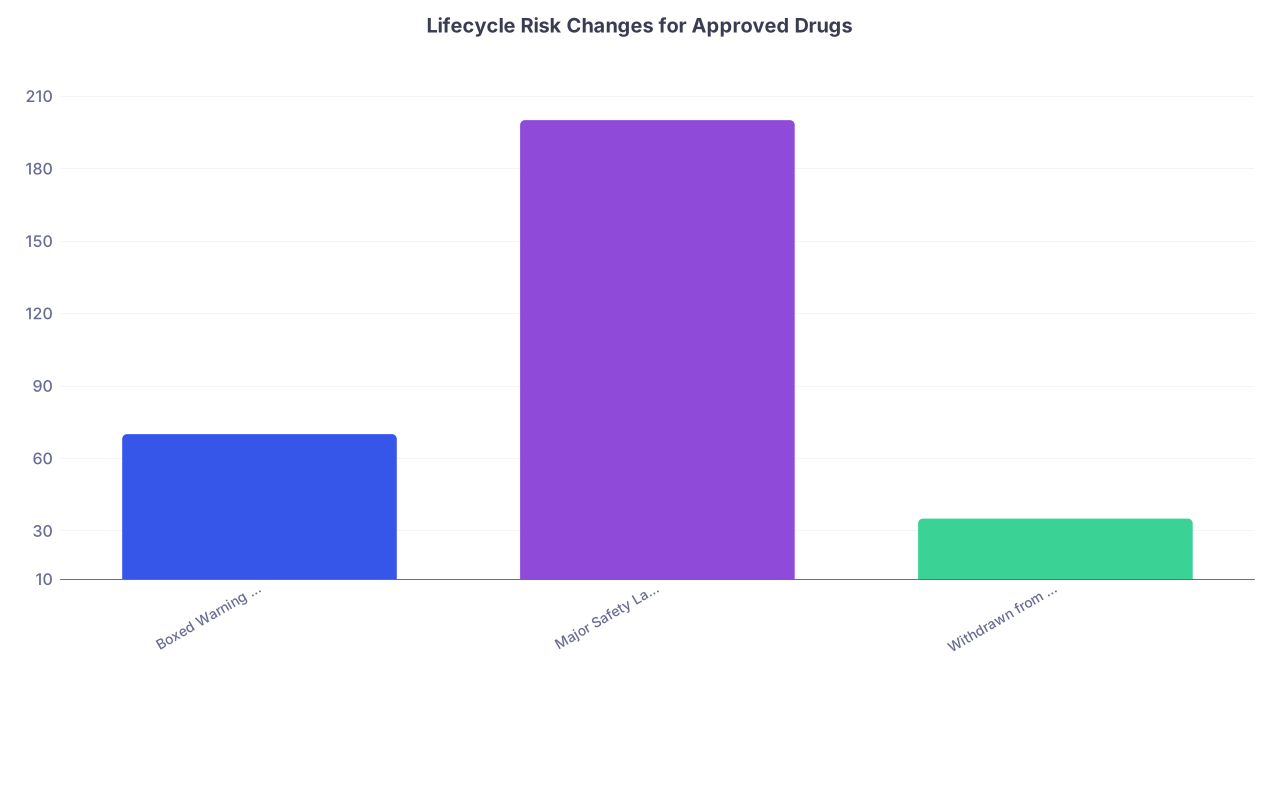
Remember when rosiglitazone got hammered over cardiovascular risk? Or when natalizumab was pulled and then reintroduced with strict monitoring because of PML risk? Those calls weren’t made in a vacuum. Safety physicians, regulators, and statisticians wrestled with those tradeoffs in detail.
If you think bedside clinicians are the only ones “advocating for patients,” you have not seen a pharma safety review where someone argues to restrict or kill a billion‑dollar asset because the risk profile is wrong.
| Category | Value |
|---|---|
| Boxed Warning Added | 70 |
| Major Safety Label Change | 200 |
| Withdrawn from Market | 35 |
(Those are approximate yearly counts across all FDA‑approved drugs over recent years. Safety work is not theoretical.)
“But Pharma Is All About Profit” – Compared to What, Exactly?
This is the part that really bothers me. People talk like medicine is divided into:
- Pure, patient‑first saints (clinicians and academics), and
- Greedy, drug-pushing marketers (pharma)
Reality: almost every corner of modern health care is financially contorted.
Your hospital is maximizing RVUs and payer mix.
Your academic center is chasing NIH grants and pharma-sponsored trials.
Your “nonprofit” system is building a gleaming new surgical tower while closing the unprofitable maternity ward.
Pretending pharma is uniquely morally compromised is just comforting self‑deception.
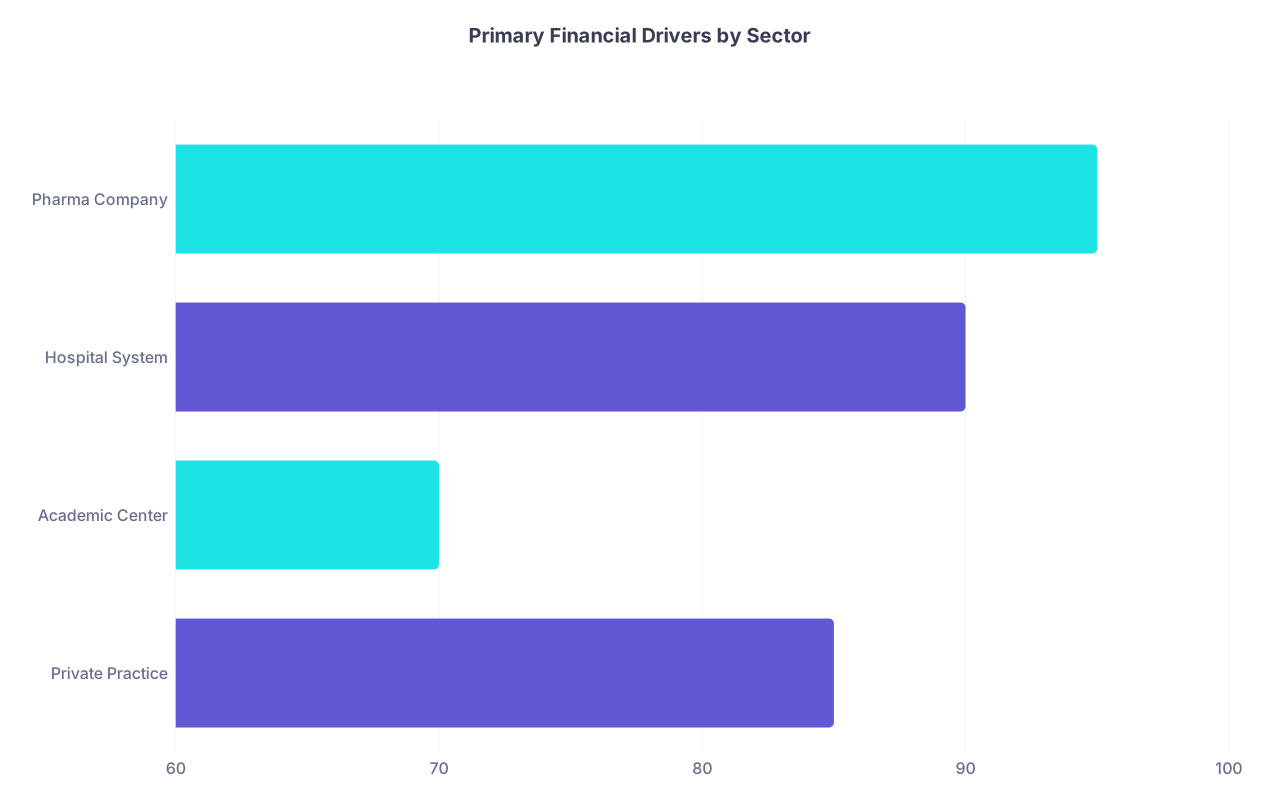
Let’s look at incentives more honestly.
| Category | Value |
|---|---|
| Private Practice | 85 |
| Academic Center | 70 |
| Hospital System | 90 |
| Pharma Company | 95 |
Those “financial pressure” scores are conceptual, but you get the idea: everyone is playing the money game. Pharma isn’t an exception. It’s just more honest that profit is the game.
Here’s the crucial difference: in pharma, the unit of work is data. If a trial fails, it doesn’t matter how good your marketing plan is—regulators and payers will shut you down. In hospital medicine, we routinely do profitable things that add little or no outcome benefit because no one’s running an RCT on half of what we call “standard of care.”
I am not saying pharma is more ethical. I’m saying the narrative that only pharma is tainted is childish.
Does Leaving the Bedside Mean Abandoning Patients?
The emotional core of the “sellout” accusation is this: you walked away from patients.
Let me be blunt. You know what else walks away from patients?
- Burnout that makes you numb and irritable
- Five‑minute visits in a 30‑patient clinic day
- EMR systems that force you to spend more time clicking boxes than listening
No one calls those things “selling out.” They call them “the system.”
So what actually happens to your impact on patients when you shift to pharma?
Scale vs intimacy
In clinical medicine, your impact is direct and local. You see Mrs. Jones, adjust her meds, recheck her A1c. Rewarding, human, important.
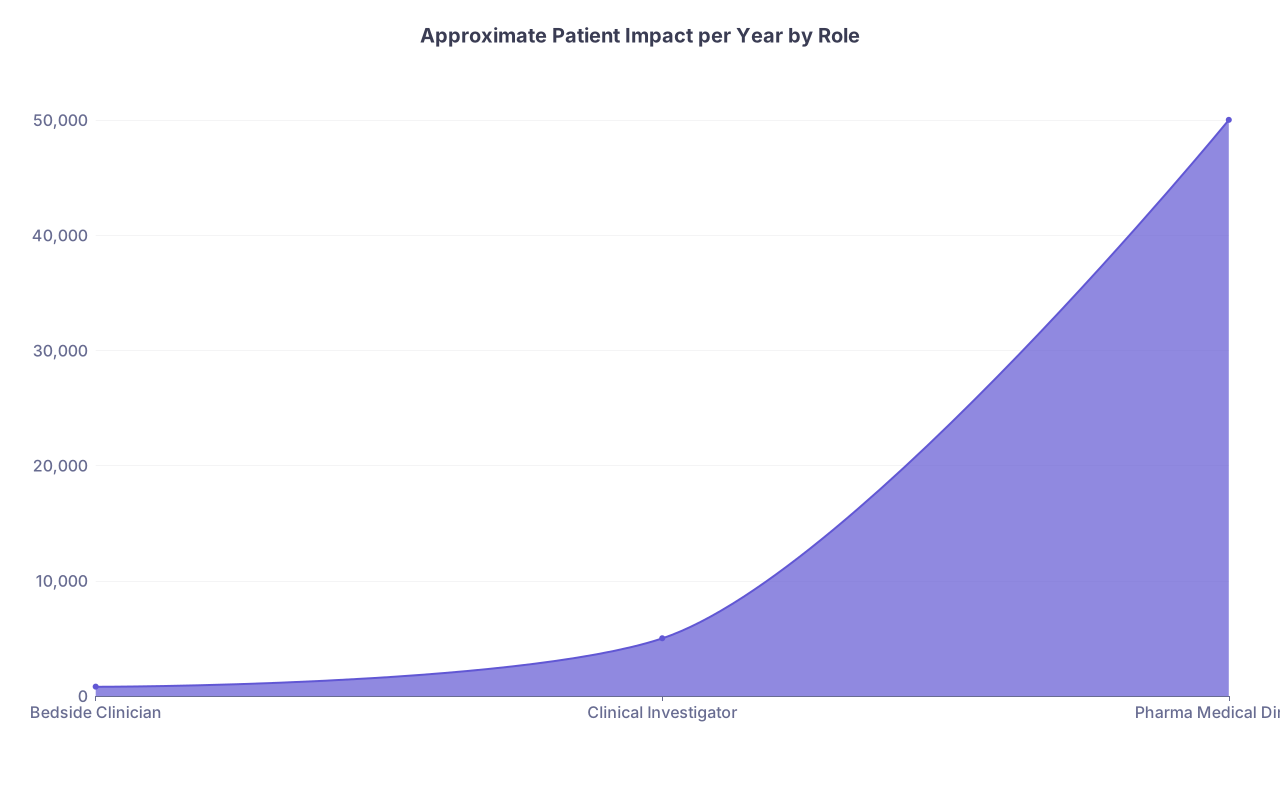
In pharma, you might make one decision about a trial design, indication, or safety signal that affects tens of thousands of “Mrs. Jones” equivalents, none of whom you’ll ever meet.
Is that less meaningful? Some people feel it is. Others find the scale compelling once they get over the romance of the bedside.
| Category | Value |
|---|---|
| Bedside Clinician | 800 |
| Clinical Investigator | 5000 |
| Pharma Medical Director | 50000 |
Are these numbers rough? Of course. But even if I’m off by a factor of two, the order of magnitude difference stands.
Evidence, not vibes
Look at how major therapeutic advances actually reach patients: oncology, rheumatology, HIV, HCV cures, GLP‑1 agonists. Every one of those therapies exists and got to your clinic because of industry‑funded development, scaled manufacturing, and global distribution.
Were academics involved? Absolutely. But the engine that took a molecule from phase I to your prescription pad was not a university department. It was pharma.
If you prescribe modern oncology regimens on Monday and sneer at “industry shills” on Tuesday, that’s cognitive dissonance, not ethics.
“People Only Go to Pharma for the Money” – Also Wrong
Let’s not be naïve. Compensation is a factor. When you’re staring down $300k in loans and your hospital just announced another “cost‑saving initiative” that somehow never seems to touch executive pay, a stable industry salary is not evil. It’s rational.
But the idea that pharma is a soft landing for weak clinicians who couldn’t handle “real medicine”? I’ve seen the opposite pattern more often:
- People who like complex problem‑solving more than 20 routine encounters a day
- Clinicians who care about data and trial design and can’t stand sloppy thinking
- Physicians tired of being constantly on the back foot—always reacting, never upstream
And yes, some who are just done sacrificing their health and family on the altar of 80‑hour weeks and pager anxiety.
Is there self-selection toward people with a bit more tolerance for corporate nonsense and meetings? Of course. Just like academics self-select for people who can tolerate grantsmanship and promotion committees. Different flavor, same game.
The Real Ethical Landmines in Pharma (And How People Handle Them)
Calling pharma “selling out” because it has ethical challenges is like calling surgery “evil” because there are complications. The honest question is: what are the real landmines, and can you live with how you navigate them?
Here are a few genuine pressure points:
- Pushing marginally beneficial drugs into crowded markets
- Trying to expand indications where the signal is weak
- Deciding how transparent to be about post‑hoc analyses
- Handling off-label interest in ways that are legal but also meaningful
Good physicians in pharma are the internal resistance to the worst tendencies. I’ve seen medical directors kill publications because the subgroup analysis was tortured nonsense. I’ve seen them refuse to support messaging that exaggerated effect sizes.
Do people sometimes cave? Yes. Do some physicians become exactly the caricature you fear? Also yes.
But that’s a character issue amplified by environment, not a guaranteed outcome of accepting an industry paycheck. Plenty of clinicians in private practice over-treat, over-scan, and over-prescribe because RVUs and patient satisfaction surveys push them in that direction. We do not label the entire specialty “sellouts” because of that.
Same standard should apply.
So Who Actually Should Consider Pharma—and Who Should Stay Far Away?
If your primary joy is face‑to‑face patient care, and you feel restless or guilty when you’re not in the exam room, pharma will likely leave you cold. You’ll miss the direct feedback loop. You’ll feel disconnected.
On the other hand, if you:
- Get irrationally angry at poorly designed studies
- Love picking apart forest plots and subgroup analyses
- Enjoy long‑arc projects more than instant clinical gratification
- Want some control over your hours and geography
- Crave being upstream of the care you currently deliver
Then industry is not “selling out.” It’s aligning your skills with a different part of the system.
Just do not kid yourself: you are working for a business. The business exists to make money. You are there to make sure that what gets built, tested, and sold is medically defensible, ethically tolerable, and as beneficial as the data say it is.
Some people thrive in that tension. Some hate it. That’s a personality and values question—not a universal moral verdict.

The Hypocrisy No One Likes to Admit
One last uncomfortable point.
A lot of the loudest “pharma is selling out” critics:
- Prescribe heavily marketed drugs daily
- Present at conferences funded by industry
- Attend catered grand rounds sponsored by companies
- Use guideline recommendations driven by trials mostly funded by pharma
They participate in every downstream benefit of industry work while morally disowning the people doing that work upstream.
You can criticize marketing excesses, pricing insanity, and distorted research priorities without vilifying every physician who chooses to work in that ecosystem. In fact, you need some people with clinical spine inside the machine, or it gets worse.
The cleanest, least intellectually lazy stance is this:
- Pharma as a sector has real, serious ethical problems.
- Modern medicine is utterly dependent on what pharma does well.
- Physicians working in pharma can either improve or worsen that balance.
- The job is not inherently “selling out.” What you do with it is.

The Bottom Line: Myth vs Reality
Let’s strip it down.
Reality check:
“Pharma = selling out” is an emotional shorthand, not an evidence‑based conclusion. Industry roles range from deeply patient‑protective (safety, regulatory) to highly strategic (medical affairs, development). They’re not monolithic and they’re certainly not all sales.
Leaving the bedside does not automatically mean abandoning patients. It means trading depth of individual contact for breadth of population impact. That trade‑off can be noble, neutral, or corrupt—depending on how you handle the role, not the job title on your badge.
If you already function inside a system where money distorts care—and you do—then singling out pharma as uniquely immoral is hypocrisy. The more honest conversation is: where can you, with your skills and values, do the most good without burning yourself to ash?
If you still want to call every physician in pharma a sellout after understanding all that, fine. But at least admit you’re arguing from ideology, not from the data.