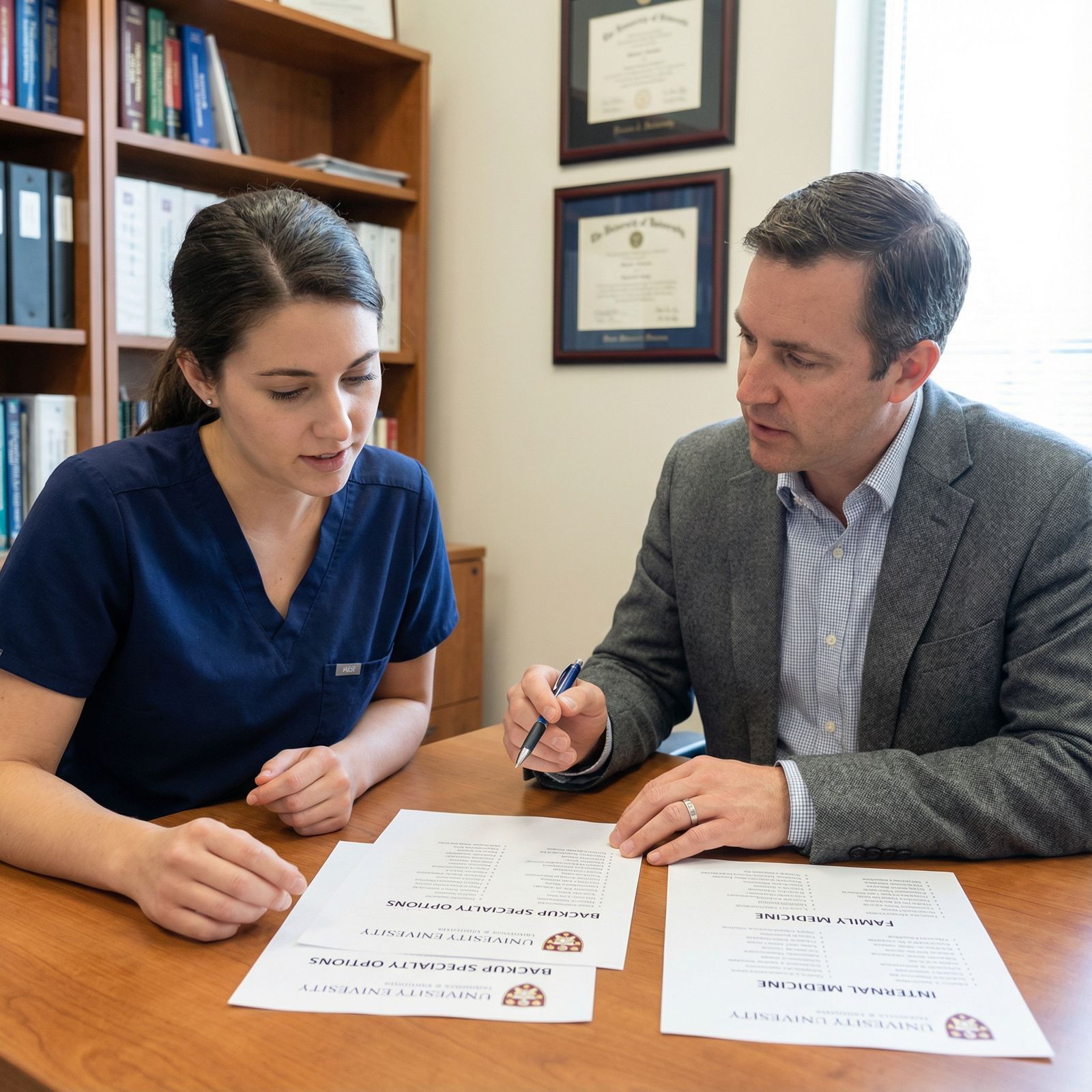
Choosing your primary specialty is a major milestone in medical education—but planning strong backup specialties is just as critical for a successful residency match and long‑term career development. In an increasingly competitive Match environment, a thoughtful backup specialty strategy can mean the difference between matching into a program this year or reapplying next cycle.
This guide expands on ten essential tips for picking your backup medical specialty, with practical examples, current match‑strategy considerations, and advice tailored for medical students and international medical graduates navigating the residency match process.
Why Backup Specialties Matter in the Residency Match
Backup specialties are not a sign that you’re “settling.” They are a strategic part of residency match planning that protect your training timeline and broaden your career possibilities.
In many medical specialties—particularly competitive ones like dermatology, orthopedic surgery, plastic surgery, ENT, and radiology—the number of strong applicants exceeds available positions. Even excellent candidates sometimes go unmatched. Having a well‑thought‑out backup specialty:
- Increases the probability that you match into something you can be happy with
- Prevents gaps in training that can complicate future applications
- Provides alternative pathways to subspecialties or aspects of practice you care about (e.g., procedures, continuity of care, critical care)
- Reduces anxiety during application season because you have a realistic plan B
Key Factors to Consider Across All Backup Specialties
Before diving into the specific tips, keep these global considerations in mind as you evaluate potential backup fields:
- Your genuine interest and passion
- Competitiveness and match statistics
- Lifestyle and work‑life balance
- Career opportunities and geographic demand
- Training length and potential for subspecialization
The rest of the article will walk through ten detailed strategies to help you align these factors with your goals.
1. Start With Honest Self‑Assessment of Interests and Strengths
Your backup specialty should still feel like an exciting and meaningful career—not a consolation prize. Begin by honestly assessing what you enjoy and where you excel.
Reflect on Your Clinical Experiences
Think back to:
- Rotations where you lost track of time because you were so engaged
- Clerkships where staff or attendings commented on your aptitude
- Patients or clinical scenarios that felt particularly rewarding
Ask yourself:
- Do I prefer acute care or chronic disease management?
- Do I enjoy procedures or feel more drawn to diagnostic thinking?
- Do I want longitudinal relationships (e.g., family medicine, pediatrics) or episodic care (e.g., emergency medicine, anesthesiology)?
- Am I more energized by inpatient, outpatient, or mixed settings?
Make a list of 3–5 specialties—including your primary goal specialty and several alternatives—that align with these preferences.
Practical Action Step
- Action: Write down every specialty that intrigued you, even briefly, during clerkships, electives, observerships, or shadowing. Include:
- What you liked
- What you didn’t like
- What you felt naturally good at
You may notice themes (e.g., procedure‑heavy vs. clinic‑heavy, adult vs. pediatric patients) that can guide your backup specialty choices.
2. Understand Competitiveness and Match Realities
Competitiveness should not be your only criterion, but it must be part of a realistic strategy for the residency match. A backup specialty that is just as competitive as your primary choice does not function as a true backup.
Use Objective Data to Inform Decisions
Leverage sources like:
- NRMP’s Charting Outcomes in the Match
- NRMP Program Director Survey
- Specialty‑specific match data (e.g., AAMC, Canadian CaRMS, or country‑specific equivalents)
- For IMGs, resources on match rates by specialty, visa‑sponsoring programs, and IMG‑friendly specialties
Look for:
- Match rates for applicants with similar profiles (e.g., US MD, DO, IMG, Step scores, research)
- Average number of program ranks for matched vs. unmatched applicants
- Fill rates by specialty (how many positions are filled by U.S. seniors vs. IMGs)
Building a Tiered Strategy
Think in terms of tiers:
- Reach specialty: Your dream field that is highly competitive (e.g., derm, ortho, neurosurgery)
- Realistic specialty: Still competitive but more aligned with your metrics and portfolio
- Safer specialty: Historically higher match rates and broader program availability (e.g., internal medicine, family medicine, psychiatry in many regions)
A true backup specialty usually comes from the “safer” tier, while still aligning with your interests and strengths.

3. Factor in Lifestyle, Workload, and Work–Life Balance
Lifestyle in medicine is complex and varies between programs, practice settings, and regions—but general trends still matter. Your backup specialty should be compatible with your long‑term vision for your life outside the hospital.
Consider Key Lifestyle Dimensions
Ask yourself:
- Hours and call: Am I comfortable with frequent overnight call and irregular hours (e.g., surgery, OB/GYN), or do I prefer more predictable schedules (e.g., outpatient internal medicine, dermatology)?
- Intensity of work: Do I thrive in high‑acuity, high‑pressure environments (e.g., emergency medicine, ICU) or prefer more controlled settings?
- Flexibility later in career: Are part‑time work, telemedicine, or outpatient‑only roles important to me?
- Emotional load: How do I cope with frequent death, trauma, or chronic mental illness?
Gather Real‑World Insights
- Action: Talk to residents and attendings at different stages of life:
- Single, early‑career physicians
- Physicians with families and children
- Senior physicians planning retirement
Ask them:
- “What surprised you about the lifestyle in this specialty?”
- “What would you tell a medical student considering this field as a backup?”
- “How has your lifestyle changed from residency to attending life?”
Use these conversations to verify whether your assumptions about each field match reality.
4. Look for Specialties With Diverse Subspecialty and Career Path Options
Some backup specialties offer broad subspecialty ladders and flexibility that can approximate aspects of your original dream field. This can be an excellent way to stay close to your core interests, even if you don’t match into your first‑choice specialty.
Examples of Flexible “Gateway” Specialties
- Internal Medicine (IM)
- Subspecialties: Cardiology, GI, oncology, pulmonary/critical care, infectious disease, rheumatology, and more
- Tracks: Hospitalist, outpatient primary care, academic research, health systems leadership
- Family Medicine (FM)
- Focus areas: Sports medicine, geriatrics, palliative care, hospitalist medicine, women’s health, rural emergency care
- Strong for those who love continuity, breadth, and community‑based practice
- Pediatrics
- Subspecialties: Pediatric cardiology, critical care, NICU, hematology/oncology, endocrinology
- Ideal for those passionate about child and family care
- Psychiatry
- Subspecialties: Child/adolescent, addiction, consult‑liaison, forensic, geriatric
- Growing field with expanding outpatient and telehealth roles
Align Subspecialty Options With Your Core Interests
If you’re drawn to:
Procedures: Consider IM with interventional subspecialties, anesthesiology, or EM where procedural work is central.
Long‑term relationships: FM, pediatrics, outpatient IM, or psychiatry may align best.
Critical care and resuscitation: IM (pulm/crit), anesthesiology (ICU), or EM provide options.
Action: For each potential backup specialty, sketch:
- Several subspecialties or practice types you could see yourself enjoying
- Any fellowships that would move you closer to your original career goals
This ensures your backup specialty can still support meaningful career development.
5. Evaluate the Job Market and Geographic Opportunities
Residency match is only one step; your ability to build a satisfying career after training also matters. Some medical specialties are in high demand nationally or in specific regions, which can influence how attractive they are as backup options.
Research Workforce and Demand
Look at:
- National physician workforce reports (e.g., AAMC, specialty society data)
- Regional or rural vs. urban demand
- Trends in telemedicine, urgent care, hospitalist models, and outpatient clinics
Specialties often in demand (varies by country/region) include:
- Family medicine
- General internal medicine and hospitalist medicine
- Psychiatry
- Geriatrics and palliative care
- Some surgical subspecialties in rural areas
Consider Your Geographic Priorities
Ask yourself:
Do I have strong geographic preferences (e.g., need to be near family or a partner)?
Am I willing to relocate for better job opportunities after training?
Would I consider rural or underserved areas, which often offer:
- Loan repayment programs
- Signing bonuses
- Broader scope of practice and autonomy
Action: Browse physician job boards and talk to recent graduates in your potential backup specialties. Ask:
- “How easy was it to find a job in your desired location?”
- “What practice models are most available in your field?”
This helps ensure your backup specialty leads to realistic, satisfying career options, not just a matched residency.
6. Build Networks and Seek Specialty‑Specific Mentorship
Mentorship is one of the most powerful tools in medical education and career development. It’s especially important when navigating backup specialties and complex residency match decisions.
Identify Mentors in Both Your Primary and Backup Fields
Aim to have mentors in:
- Your dream specialty (to optimize that application)
- At least one realistic backup specialty (to help you build a strong parallel plan)
Mentors can help you:
- Assess your competitiveness honestly
- Suggest targeted electives, research, and experiences
- Connect you with program directors or faculty
- Strategize about whether to apply to one or multiple specialties in a single match cycle
Where to Find Mentors
Your home institution:
- Clerkship directors
- Residency program leadership
- Research supervisors
Specialty interest groups or student organizations
National conferences and regional meetings
Online mentorship programs run by specialty societies
For IMGs, alumni from your school who matched in your target country
Action: When approaching potential mentors, be clear:
“I’m strongly interested in [primary specialty], but I’m also seriously considering [backup specialty] due to match competitiveness. I’d really value your perspective on how to plan my applications.”
7. Reflect on Training Length, Intensity, and Your Timeline
Backup specialties differ significantly in training duration and intensity. A clear understanding of these factors will help you avoid burnout and align your training path with your life goals.
Compare Training Paths Side by Side
For each specialty you’re considering (primary and backup), map out:
- Length of residency
- Typical need for fellowship vs. direct entry into practice
- Required exams and certifications
- Intensity of call and responsibilities, especially in early years
Example:
- General Surgery: 5+ years residency, many pursue additional fellowships
- Internal Medicine: 3 years residency; hospitalist or primary care possible right after, or 1–3 more years for subspecialty
- Family Medicine: 3 years residency; broad career options afterward, with optional focused fellowships
Consider Your Personal Circumstances
Age and family plans
Financial situation and debt load
Tolerance for long, intense training
Desire for early career stability vs. willingness to invest more years in subspecialty training
Action: Create a simple comparison chart of training length, typical fellowship requirements, and time to independent practice for each potential specialty. This visual can clarify what you’re truly prepared to commit to.
8. Investigate Available Resources, Support, and Training Environment
Not all residency programs within the same specialty offer equal support, mentorship, or educational structure. When considering backup specialties, pay attention not only to the field but to the training environment you’re likely to enter.
Key Program‑Level Questions
For each specialty/program type you’re exploring, ask:
- Are there strong mentorship and faculty engagement?
- Is there protected time for education and scholarly activity?
- Are residents supported in career development (fellowship applications, job search, leadership)?
- What is the program’s board pass rate and resident satisfaction?
- Are there opportunities for:
- Research or quality improvement projects
- Teaching medical students
- Leadership roles (chief resident, committees)
These factors can significantly affect your learning and well‑being, especially in a specialty that began as a backup.
Use Electives and Audition Rotations Strategically
- Action: If possible, schedule rotations in your potential backup specialty:
- At your home institution
- At a program or region where you might realistically apply
- During these rotations, actively gauge:
- How residents are treated
- Educational atmosphere vs. pure service demands
- Cultural fit and supportiveness of faculty
Even if you ultimately match into your primary specialty, these experiences build broader clinical skills and professional networks.
9. Maintain an Open and Flexible Mindset Throughout the Process
The journey from pre‑clinical years to residency match is rarely linear. Interests evolve as you gain more exposure. Sometimes a “backup” specialty becomes your first choice—and that’s perfectly valid.
Embrace Exploration, Especially Early
- Take advantage of early clinical exposure, shadowing, and elective time to:
- Sample different medical specialties and practice settings
- Compare your experience with your expectations
- Remain curious about fields that surprise you:
- Many students discover unexpected interest in psychiatry, pathology, PM&R, anesthesiology, or radiology only after genuine exposure.
Be Willing to Adjust Your Plan
As you collect more data—USMLE/COMLEX scores, clinical grades, research output, mentor feedback—revisit your specialty choices:
Is your current primary specialty still a good fit?
Do you need to shift your main target to a former backup field?
Do match trends suggest you should broaden or narrow your application strategy?
Action: Reassess your specialty plan at least twice:
- After core clinical rotations
- At least 4–6 months before ERAS (or equivalent) opens
Document what has changed and discuss with mentors to refine both your primary and backup plans.
10. Combine Data With Intuition—Then Commit to Your Choice
Ultimately, no amount of data can fully predict your satisfaction in a field. After you have thoroughly researched, talked to mentors, considered competitiveness, and experienced the work firsthand, you still need to listen to your internal compass.
Tune Into How Each Specialty Feels Day to Day
After experiences in each specialty, ask yourself:
- How do I feel at the start of the day—dread or excitement?
- At the end of a busy day, do I feel energized, satisfied, or drained?
- Do I like the ways physicians in this field think and interact with patients and teams?
- Can I see myself doing this work for decades?
Your backup specialty should pass these tests too. You don’t need to love it more than your dream specialty, but you should genuinely respect and enjoy the work.
Once You Decide, Present a Coherent Story
If you apply to more than one specialty in the same match cycle, you must be strategic:
- Tailor your personal statement and experiences to each specialty
- Be prepared to explain, in a sincere way:
- Why you’re applying to that field
- How your background and interests fit that specialty
- How you would be committed to that program if you matched there
Program directors want residents who genuinely want to be in their field—your application needs to show that each specialty is a thoughtful choice, not an afterthought.

Putting It All Together: A Strategic Approach to Backup Specialties
When done well, choosing a backup specialty is not about lowering your ambitions—it’s about broadening your definition of a fulfilling medical career.
To summarize a practical approach:
- Clarify your core interests (clinical style, patient population, procedures vs. cognitive work).
- Research competitiveness to identify realistic and safer options based on your profile.
- Evaluate lifestyle and job market for both primary and backup specialties.
- Prioritize fields with robust subspecialty and career paths that resonate with you.
- Engage mentors early in both your dream and backup specialties.
- Use electives wisely to test your assumptions and demonstrate committed interest.
- Stay flexible as you gain new information about yourself and the match landscape.
- Trust your informed intuition once you’ve done the groundwork.
Your backup specialty could become the field where you ultimately thrive. Approach the process with curiosity, humility, and strategic thinking, and you’ll greatly improve your chances of both matching and building a career you’re proud of.
FAQs About Choosing Backup Medical Specialties
1. What is the role of a backup specialty in residency applications?
A backup specialty increases your chances of successfully matching into a residency program in a single cycle. Because many medical specialties are highly competitive, even strong candidates may not match into their first choice. Having a realistic backup specialty:
- Provides a safety net if your primary specialty doesn’t work out
- Prevents gaps in training, which can complicate future applications
- Opens additional career pathways you may not have initially considered
In other words, it’s a proactive strategy for career development, not a sign of failure.
2. How can I tell if a specialty is truly competitive for someone with my profile?
Look beyond general labels like “competitive” or “non‑competitive” and focus on data specific to your situation:
- Check NRMP Charting Outcomes or equivalent data for:
- Match rates by specialty and applicant type (US MD, DO, IMG)
- Exam score ranges and research output of matched applicants
- Talk to program directors, advisors, and mentors:
- Ask how your application compares to those of recent matched applicants
- Consider additional factors:
- Number of available positions nationally
- Proportion of spots filled by U.S. seniors vs. IMGs
- Recent trends (e.g., EM’s evolving competitiveness, or increased interest in certain fields)
This will help you determine whether a specialty is a reach, realistic, or safer option for you specifically.
3. Should I only consider backup specialties in which I have prior clinical experience?
Prior exposure is helpful but not always mandatory. Ideally, you should:
- Have at least some authentic experience (elective, shadowing, observership) in your backup specialty before applying
- Be able to articulate clear, specialty‑specific reasons for your interest
- Obtain at least one strong letter of recommendation from that field if possible
However, you don’t need years of research or extensive experience to legitimately consider a new field. Many students discover their ultimate specialty late in 3rd or even early 4th year.
4. Can I apply to more than one specialty in the same residency match cycle?
Yes, many applicants apply to more than one specialty—especially when pursuing a very competitive field plus a backup. If you do this:
- Submit separate personal statements tailored to each specialty
- Emphasize relevant experiences differently depending on the field
- Be honest but strategic during interviews:
- Never tell a program they are your “backup”
- Instead, explain what genuinely attracts you to their specialty and program
Discuss multi‑specialty application strategies with mentors or an advisor, as this approach requires careful planning to avoid diluting your application.
5. What if I don’t match into any specialty, even with a backup plan?
If you go unmatched, you still have options:
- Participate in SOAP (or your country’s equivalent) to secure an unfilled position
- If still unmatched:
- Seek research positions, observerships, or preliminary/transitional year spots
- Strengthen weak areas in your application (scores, clinical experience, US clinical exposure for IMGs, letters)
- Reassess your choice of primary and backup specialties given your match outcome
It can be emotionally difficult, but many physicians who experienced an initial unmatched year later go on to have outstanding careers. A thoughtful reassessment and stronger application the next cycle can still lead to a rewarding match.
By intentionally applying these ten tips to your specialty planning, you’ll be better positioned not only to optimize your residency match outcome, but also to build a flexible, fulfilling medical career—whether in your original dream specialty or a backup field that becomes an even better fit.