Understanding Backup Specialty Planning as a US Citizen IMG in ENT
If you are a US citizen IMG aiming for an otolaryngology (ENT) residency in the United States, you are targeting one of the most competitive specialties in the match. That does not mean you should give up on ENT—but it does mean you need a serious, structured backup specialty plan.
For an American studying abroad, backup planning is not a sign of weakness or lack of commitment to ENT. It is risk management. Your goal is to:
- Maximize your chances of matching into some residency program on your first attempt
- Preserve the option of ENT where realistic
- Avoid burning future bridges by overreaching or under-strategizing
- Maintain career satisfaction even if your path is not straight into otolaryngology
This article will walk you through, in detail:
- Why backup planning is essential for US citizen IMGs interested in ENT
- How to assess your competitiveness honestly
- How to choose appropriate plan B specialties and dual applying strategies
- How to practically implement a dual application (ENT + backup) in one cycle
- Common pitfalls and how to avoid sending mixed signals to programs
Throughout, we’ll keep the specific context of a US citizen IMG / American studying abroad at the center.
Why ENT Is High-Risk for US Citizen IMGs
Competitiveness of Otolaryngology (ENT)
Otolaryngology is consistently one of the most competitive specialties in the NRMP match. Features that make ENT high-risk include:
- Limited number of positions compared with internal medicine or family medicine
- High average scores and research output among matched applicants
- Preference for:
- US MD over DO and IMG
- Strong clinical evaluations at US academic centers
- Applicants with home or strong “home-like” ENT departments
As a US citizen IMG, you have some advantages over non‑US IMGs (no visa issues, understanding of US culture, potential connections), but you still face:
- Fewer in-house ENT rotations at your international school
- Less organic access to US otolaryngology mentors and advocates
- Limited research opportunities in US‑based ENT departments unless you deliberately seek them out
All of that makes the otolaryngology match a high-variance outcome for an IMG, even if you are academically strong.
Match Risk Specifically for US Citizen IMG in ENT
For US citizen IMGs, the risk factors include:
- Lower match rates into ENT compared to US MD seniors
- Fewer programs willing to consider IMGs at all in otolaryngology
- Heavy emphasis on US clinical experience, often in ENT at academic centers
Because of this, going “ENT or nothing” as a US citizen IMG can be dangerous. A backup specialty is not simply optional; it is often critical protection against going unmatched and losing a full year.
Step 1: Honest Self-Assessment Before You Plan Backups
Before you design a backup strategy or decide whether to dual apply in residency, you must realistically assess your ENT competitiveness. This is not about pessimism; it’s about clarity.
Key Factors to Review
USMLE Scores (or Step equivalents)
- Strong ENT applicants often have:
- Step 2 CK: frequently above national average; often 245+ in recent cycles for US MDs (ENT expectations remain high even without Step 1 scores)
- As a US citizen IMG:
- Step 2 CK becomes even more important
- A lower Step 2 may push you more strongly toward a robust backup specialty plan
- Strong ENT applicants often have:
Clinical Performance and Letters
- Honors or strong performance in:
- Surgery clerkship
- ENT electives or sub-I’s (US-based if possible)
- Letters of recommendation:
- Ideally, at least two ENT letters from US faculty
- Letters that describe you as one of the top students they have worked with carry significant weight
- Honors or strong performance in:
ENT-Specific Experiences
- Away rotations or visiting electives in US ENT departments
- ENT-related research, QI projects, or case reports
- Consistent involvement in ENT interest groups, shadowing, or clinic experiences
IMG-Specific Considerations
- Any US clinical experience outside ENT (e.g., internal medicine, family medicine, surgery)
- Gaps in training or irregularities in your academic path
- Visa independent status (a plus as a US citizen IMG)
How Your Profile Influences Backup Planning
High ENT Competitiveness (for a US citizen IMG)
- Strong Step 2 CK
- Multiple US ENT rotations with excellent letters
- ENT research with meaningful contributions
- No academic red flags
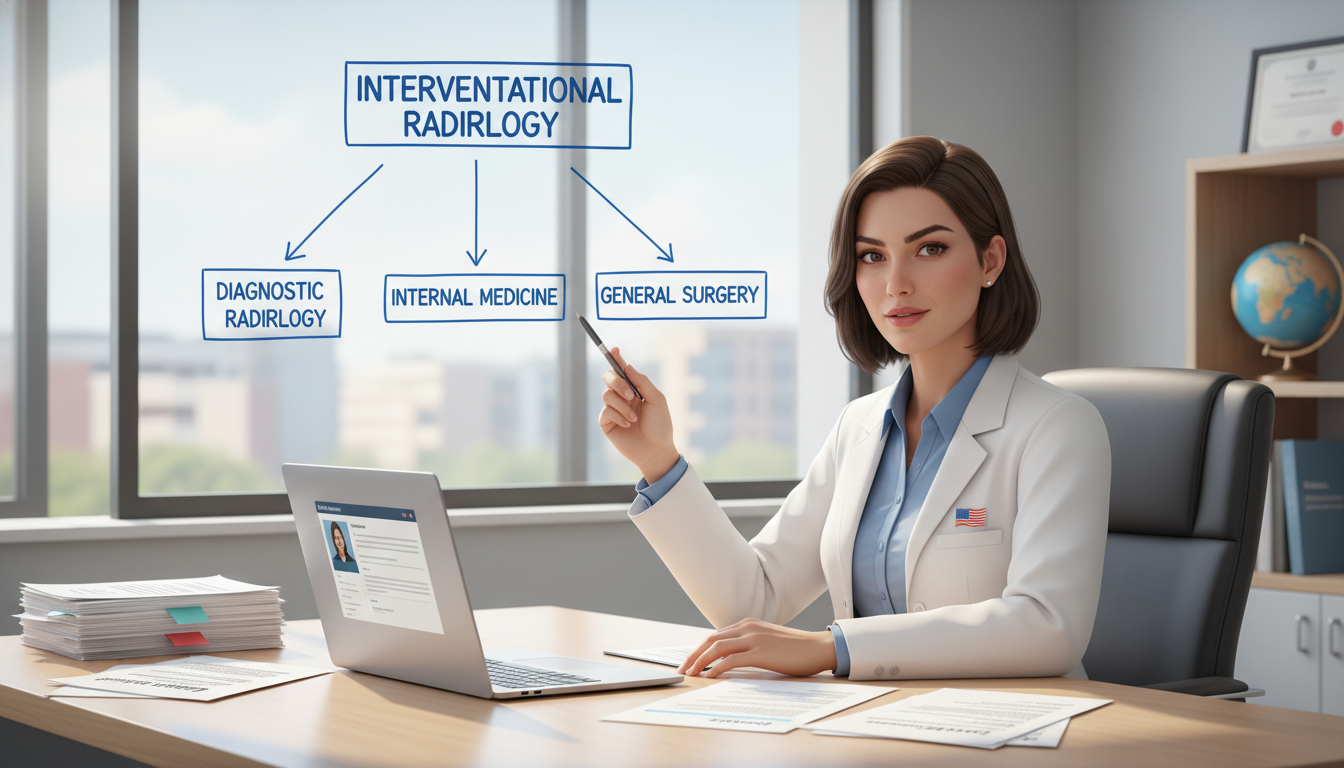
→ Backup still recommended, but you may aim for one or two relatively competitive yet attainable plan B specialties that preserve some overlap with ENT (e.g., general surgery, anesthesia).
Moderate ENT Competitiveness
- Solid but not exceptional scores
- Limited ENT research or fewer US ENT rotations
→ Strong case for dual applying with a more IMG‑friendly backup specialty where you are clearly competitive.
Low ENT Competitiveness (for this cycle)
- Lower scores, significant gaps, or minimal ENT exposure
→ You can still apply ENT selectively, but your backup plan should be robust, realistic, and broad—your main goal becomes matching somewhere safely.
- Lower scores, significant gaps, or minimal ENT exposure
Be candid with yourself and with mentors at US institutions if you have them. Their feedback will shape how aggressive your ENT application vs. backup specialty strategy should be.

Step 2: Choosing a Plan B Specialty That Fits You and Your ENT Interests
A "backup specialty" should not be a random low‑competition field you pick the night before ERAS opens. For a US citizen IMG in ENT, your backup specialty choice should balance:
- Realistic match probability
- Alignment with your skills and interests
- Potential for long-term satisfaction
- Some overlap with ENT skills or patient population (if that matters to you)
Core Principles for Selecting a Backup Specialty
Don’t choose a specialty you cannot imagine doing long-term.
A backup must be a field you could be reasonably content in if you never switch to ENT.Consider future ENT‑adjacent options.
Some plan B specialties might give you:- Continued exposure to head and neck issues
- Options to work closely with ENT departments
- Procedural work that scratches a similar itch
Consider IMG-friendliness and program volume.
As an American studying abroad, you benefit from choosing a field with:- More positions nationally
- A track record of accepting US citizen IMGs
- Less rigid school pedigree bias than ENT
Common Backup Options for ENT-Focused US Citizen IMGs
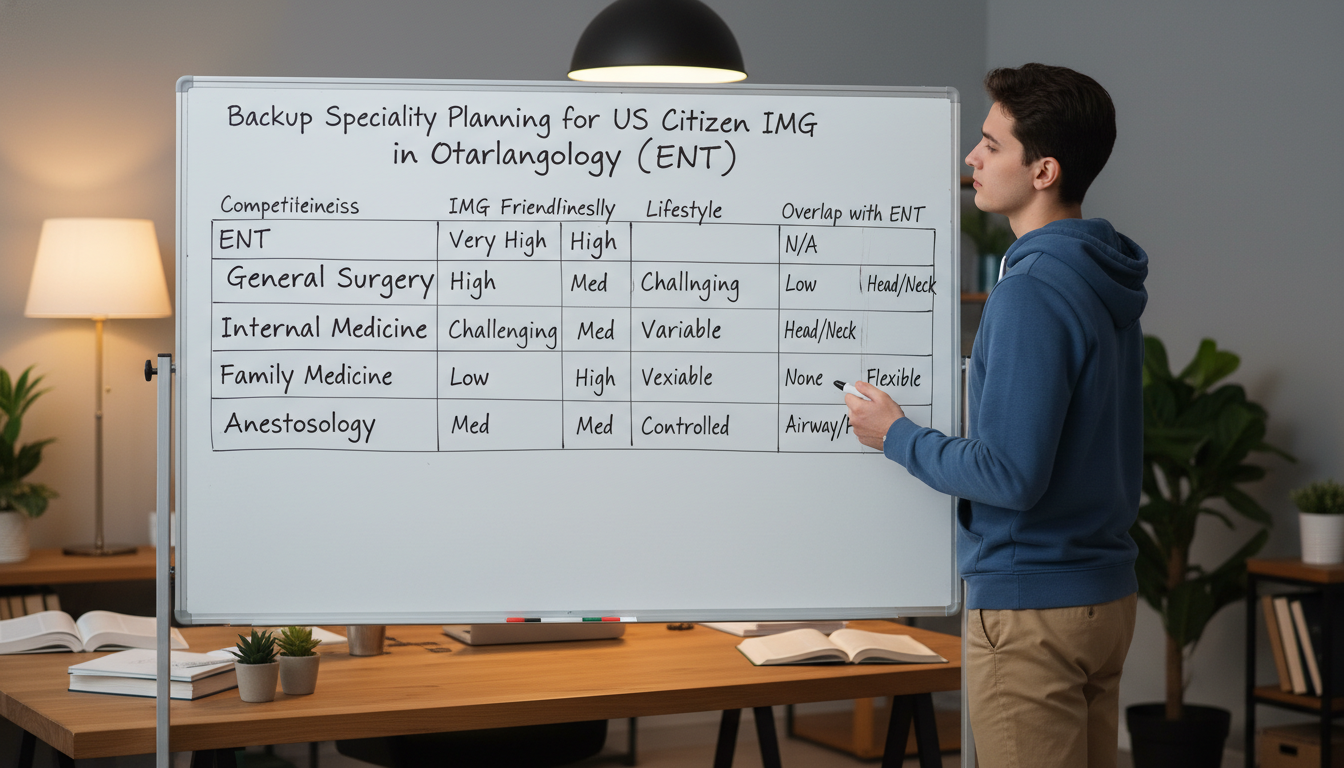
Below are common plan B specialties for those interested in ENT, with pros/cons particularly from the US citizen IMG perspective.
1. General Surgery
- Why it appeals to ENT-leaning applicants:
- Operative, procedural field with anatomy and technical skills
- Some overlap in head and neck surgery (depending on program)
- Pros:
- Higher number of positions than ENT
- Some programs are more open to IMGs
- If you remain interested in head and neck, you can sometimes collaborate with ENT or pursue related fellowships (e.g., surgical oncology with head and neck exposure)
- Cons:
- Still competitive, especially at academic centers
- Demanding lifestyle; not a “safe” backup in the same way as FM or IM
- May still be a stretch if your metrics are weak
General surgery can be a reasonable dual applying residency target for a strong US citizen IMG whose profile is just below ENT level.
2. Internal Medicine
- Why it works as a plan B:
- Broad specialty with many fellowship options (e.g., rheumatology, oncology, allergy/immunology, pulmonology)
- Significant number of programs that accept US citizen IMGs
- Pros:
- Large number of positions → safer match odds
- You can maintain ENT-adjacent interests (e.g., allergy, pulmonology, oncology dealing with head & neck cancer systems)
- Often more tolerant of non-traditional paths and IMG backgrounds
- Cons:
- Less procedural and surgical than ENT
- If you are very surgically minded, long-term satisfaction may be a concern unless you plan for procedural subspecialties
Internal medicine is a strong backup specialty for US citizen IMGs: plentiful positions, reasonable competitiveness, and many ways to still treat complex, ENT-relevant conditions (e.g., cancers, autoimmune diseases involving ENT systems).
3. Family Medicine
- Why it is often chosen as a backup:
- Highly IMG-friendly
- Very large number of positions
- You will see many ENT complaints in outpatient primary care (e.g., sinusitis, otitis, dizziness, allergies)
- Pros:
- Highest safety net for matching as a US citizen IMG
- Flexibility in practice setting and location
- Opportunities to develop niche clinics for ENT‑type conditions (allergy, vestibular complaints, sleep issues, etc.)
- Cons:
- Less procedural/surgical
- Lower compensation on average than surgical subspecialties (though lifestyle can be better)
Family medicine makes sense if your top priority is avoiding an unmatched year, while still treating a large volume of ENT‑type clinical problems.
4. Pediatrics
- Why it can work:
- Many ENT problems are highly prevalent in children (otitis media, tonsillitis, airway issues)
- Pediatricians regularly collaborate with pediatric otolaryngologists
- Pros:
- Moderately IMG‑friendly
- Abundant outpatient ENT‑like pathology
- Cons:
- Limited procedural opportunities unless pursuing procedural fellowships
- Lifestyle and career path quite different from surgery
Pediatrics may appeal if your favorite ENT experiences were in pediatric ENT and you enjoy longitudinal care.
5. Anesthesiology
- Why some ENT-focused students choose it:
- Familiarity with the OR environment
- Airway management and perioperative care overlap with ENT patients
- Pros:
- Procedural, fast-paced
- Moderate availability of IMG positions depending on region
- Cons:
- Competitiveness fluctuates; not always a low‑risk backup
- Requires strong USMLE scores and ideally US clinical experience
Anesthesiology can be an attractive plan B specialty if you value the OR atmosphere and procedural work over specific anatomical focus.
Step 3: Designing a Dual Application Strategy (ENT + Backup)
“Dual applying” means applying to ENT residency programs and a backup specialty in the same match cycle. For a US citizen IMG in ENT, dual applying is often the most rational option, but it has to be done carefully.
Key Principles of Dual Applying in ENT
Decide early which backup specialty you’ll use.
Aim to decide 6–12 months before ERAS:- This gives you time to gather appropriate letters
- You can tailor rotations and experiences to both ENT and your plan B
Craft two coherent narratives, not one confused application.
- Your ENT application should read as:
“I am genuinely committed to otolaryngology, with clear ENT experiences, mentors, and goals.” - Your backup application should read as:
“I am genuinely committed to [backup specialty], with specific reasons and experiences that make sense.”
- Your ENT application should read as:
Avoid obvious contradictions in your documents.
- Do not submit the same personal statement to both ENT and your plan B
- Do not talk only about ENT in your IM or FM personal statements
- Do not have letters that say, “She will be an excellent otolaryngologist” for an internal medicine program
How to Handle ERAS Documents in Dual Applying
Personal Statements
ENT personal statement:
- Focus on:
- ENT-specific experiences (surgery exposure, research, mentors)
- Why head and neck anatomy, OR work, and ENT patient populations resonate with you
- Avoid:
- Mentioning your plan B or sounding uncertain about ENT
- Focus on:
Backup specialty personal statement:
- Focus on:
- Genuine experiences that connect you to that field (subspecialty clinics, research, longitudinal care, etc.)
- What aspects you value: intellectual, procedural, continuity, patient population
- Acceptable to mention:
- You enjoy procedures or surgical collaboration but prefer to keep ENT references subtle
- Avoid:
- “I’m applying here as a backup.”
- Overt statements that ENT is your true love
- Focus on:
Letters of Recommendation
- Target 3–4 letters focused on ENT:
- ENT attendings from US rotations
- Surgery attendings who know your OR strengths
- Target 2–3 letters for your backup specialty:
- Internal medicine, family medicine, pediatrics, or other relevant attendings
- They should specifically endorse you for that field
Use the ERAS system to choose which letters go to which programs. ENT programs get ENT/surgical letters; backup programs get letters from their own specialty or generalists.
Application Numbers and Program Types
As a US citizen IMG, you need to apply broadly, especially in ENT:
ENT:
- Apply very widely—even 60–80+ programs, depending on your budget and profile and which programs even review IMGs
- Prioritize programs that explicitly list openness to IMGs or have matched US citizen IMGs in the past
Backup specialty:
- Also apply broadly—for example:
- Internal Medicine: 60–100 programs
- Family Medicine: 40–80 programs
- General Surgery: 40–70 programs (if you are reasonably competitive)
- Also apply broadly—for example:
You are leveraging your US citizenship (no visa burden) but still competing as an IMG, so volume matters.
Scheduling Interviews and Signaling Interest
- Interview offers:
- ENT interviews may be fewer and later; backup specialty interviews may come earlier and in higher volume
- Virtual or in-person logistics:
- Try not to cancel ENT interviews unless absolutely necessary
- Carefully space your schedule to accommodate both fields
In interviews, you must commit fully to whichever program you are speaking to that day. For example:
- At ENT interview:
- Emphasize your deep interest in ENT, your experiences, and long-term goals in otolaryngology
- At internal medicine interview:
- Emphasize your interest in IM, subspecialties you might pursue, and experiences that align with complex medical care
Programs rarely appreciate hearing, “I’m really ENT-focused, but I’d be okay here too.” Even when dual applying, speak to each field as if it is your true goal.
Step 4: Safeguards, Timelines, and Practical Tips
Protecting Against Going Unmatched
As a US citizen IMG in ENT, risk management should be methodical:
Monitor your ENT interview volume.
- If by mid-season you have very few or no ENT interviews, mentally shift your expectations: your plan B becomes effectively your plan A for this cycle.
- Consider SOAP planning if both ENT and backup interviews are minimal.
Have a SOAP plan ready.
- Know which specialties you’d be comfortable with in SOAP (often IM, FM, prelim surgery, transitional year).
- Have a concise SOAP personal statement and updated CV ready just in case.
Be willing to adjust your rank list based on interview impressions.
- If you felt lukewarm about your ENT interviews and strongly connected with several IM or FM programs, it’s reasonable to prioritize where you see long-term fit.
Example Scenarios for US Citizen IMG Applicants
Scenario 1: Strong ENT Candidate, US Citizen IMG
- Step 2 CK: 253
- Two US ENT rotations, strong letters from academic faculty
- ENT research with one poster at a national meeting
- Also strong letters from internal medicine and surgery attendings
Plan:
- Apply ENT broadly (70+ programs that consider IMGs)
- Backup: General Surgery and/or Internal Medicine (depending on exact interests)
- Prepare:
- ENT‑specific PS + IM PS
- ENT letters to ENT programs; IM letters to IM programs
- Expect:
- Moderate number of ENT interviews, robust IM interview set
- Rank ENT high where you felt excellent fit, followed by IM programs you liked
Scenario 2: Moderate ENT Profile, Limited ENT Exposure
- Step 2 CK: 238
- One ENT observership, minimal ENT research
- Strong IM and FM rotations in the US
- US citizen IMG at Caribbean school
Plan:
- ENT applications still possible but limited and targeted (30–40 programs that have historically considered US citizen IMGs)
- Backup: Internal Medicine and Family Medicine
- Strategy:
- Emphasize ENT interest but do not overinvest in a single long-shot field
- Build a strong IM/FM narrative with outpatient and inpatient experiences
- Likely Outcome:
- Few or no ENT interviews
- Healthy number of IM/FM interviews → safe match in backup specialty
Scenario 3: Weak ENT Competitiveness This Year
- Step 2 CK: 225
- No US ENT rotations, only one research experience from home country
- Some US general rotations, but letters are average
Plan:
- ENT application may be symbolic or limited; the realistic plan is backup-heavy
- Primary focus: Family Medicine, Internal Medicine
- Consider doing:
- A dedicated ENT research year in the US post‑match
- Additional US clinical experiences to strengthen future ENT application if you plan to reapply
- Your immediate goal:
- Match safely into a field you can live with
- Reassess ENT options after establishing a clinical track record or research portfolio
Long-Term Planning: If You Don’t Match ENT Initially
Many US citizen IMG applicants fear that if they don’t get ENT on the first try, their dream is over. That’s not necessarily true, but you must plan carefully.
Pathways After Matching in a Backup Specialty
If you match into your plan B specialty but remain passionate about ENT:
Excel where you are.
- Programs will look at your residency performance if you later attempt to switch
- Being a mediocre resident while saying you want ENT will hurt your chances
Seek ENT-adjacent opportunities.
- Collaborate with ENT services on shared patients
- Participate in ENT-related research from your current department (e.g., oncology, pulmonology, pediatrics)
Consider a research or clinical fellowship year later.
- ENT research fellowships in academic centers
- However, switching into ENT from another specialty is rare and highly competitive; many who try do not succeed.
Be realistic about when to stop reapplying.
- If you’ve made one robust attempt and did not gain significant traction, perseverance is admirable—but at some point, you must prioritize your current specialty and career satisfaction.
If You Go Unmatched Entirely
If you dual apply and still go unmatched:
Analyze why.
- Were your scores too low?
- Were you too narrow in program selection?
- Were your documents inconsistent (ENT everywhere, no true narrative for backup)?
Develop a concrete improvement year:
- US clinical experience (especially in backup specialty)
- Robust research or QI with publications or strong letters
- Re-taking Step exams if appropriate and allowed, or taking Step 3 if strategically beneficial
Reconsider ENT vs. fully embracing a more attainable specialty.
Many IMGs ultimately prioritize matching into a stable specialty over repeatedly chasing a very low-probability ENT match.
FAQs: Backup Specialty Planning for US Citizen IMG in ENT
1. As a US citizen IMG, do I have any advantage in the otolaryngology match?
Yes, compared to non-US IMGs you avoid visa issues and sometimes benefit from cultural familiarity and networking ties. However, in ENT you are still disadvantaged relative to US MD seniors. Programs may still hesitate to rank IMGs highly, so you should still have a robust backup specialty and consider dual applying into residency.
2. Which backup specialty is “best” for an ENT-focused US citizen IMG?
There is no single best plan B specialty. It depends on your priorities:
- If you want surgical work: consider general surgery or anesthesiology (if your metrics are strong enough).
- If you want safety and broad career options: internal medicine or family medicine are usually more IMG-friendly.
- If you love kids and ENT-related pathology: pediatrics can work.
The key is choosing a field you could reasonably enjoy long-term, not just as a stepping stone.
3. Will programs know that I’m dual applying, and will that hurt me?
Programs generally cannot see where else you applied, but they can sometimes infer from your letters or interviews if your story is inconsistent. Dual applying itself is common and acceptable. The problem arises when:
- ENT letters are sent to IM or FM programs
- Your IM personal statement talks only about otolaryngology
- You tell one specialty outright that another is your “real” goal
As long as you maintain coherent, field-specific narratives, dual applying should not significantly harm your chances.
4. Can I match ENT later after completing another residency?
It is possible but rare. Most people who successfully transition into ENT after starting another specialty:
- Had strong ENT connections and research
- Demonstrated excellence in their initial specialty
- Made a compelling, well-supported case for switching
You should not count on this path as your primary plan. When you choose a backup specialty, assume you may spend your career in it and ensure it is something you can accept and grow in.
Backup specialty planning as a US citizen IMG in otolaryngology is about balancing ambition with realism. You can pursue an ENT residency while simultaneously building a strong, thoughtful plan B specialty strategy that preserves your future and protects you from going unmatched. By assessing your competitiveness honestly, choosing an appropriate backup field, and executing a disciplined dual applying plan, you maximize both your chances of matching and your long-term career satisfaction—whether or not that path ultimately runs through ENT.