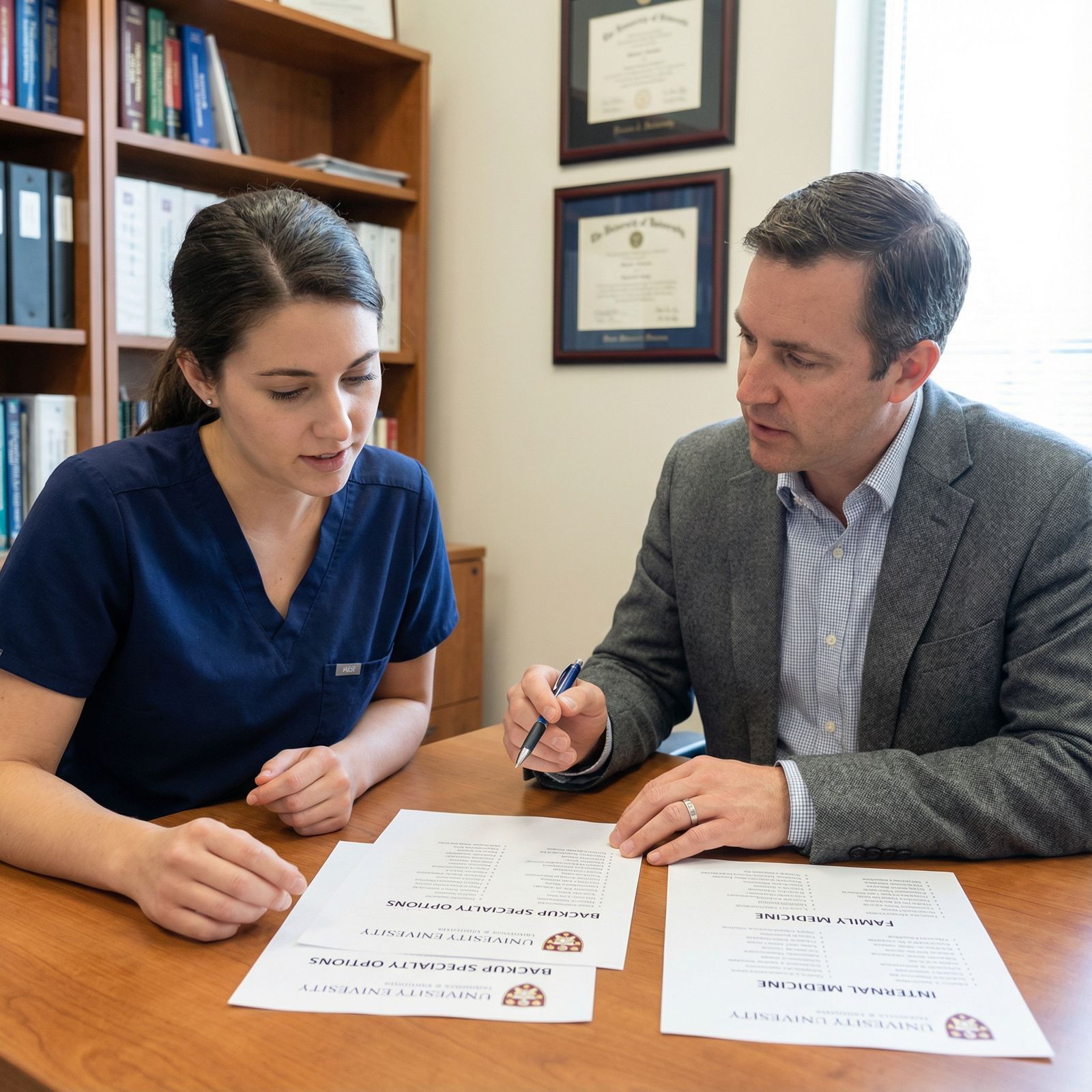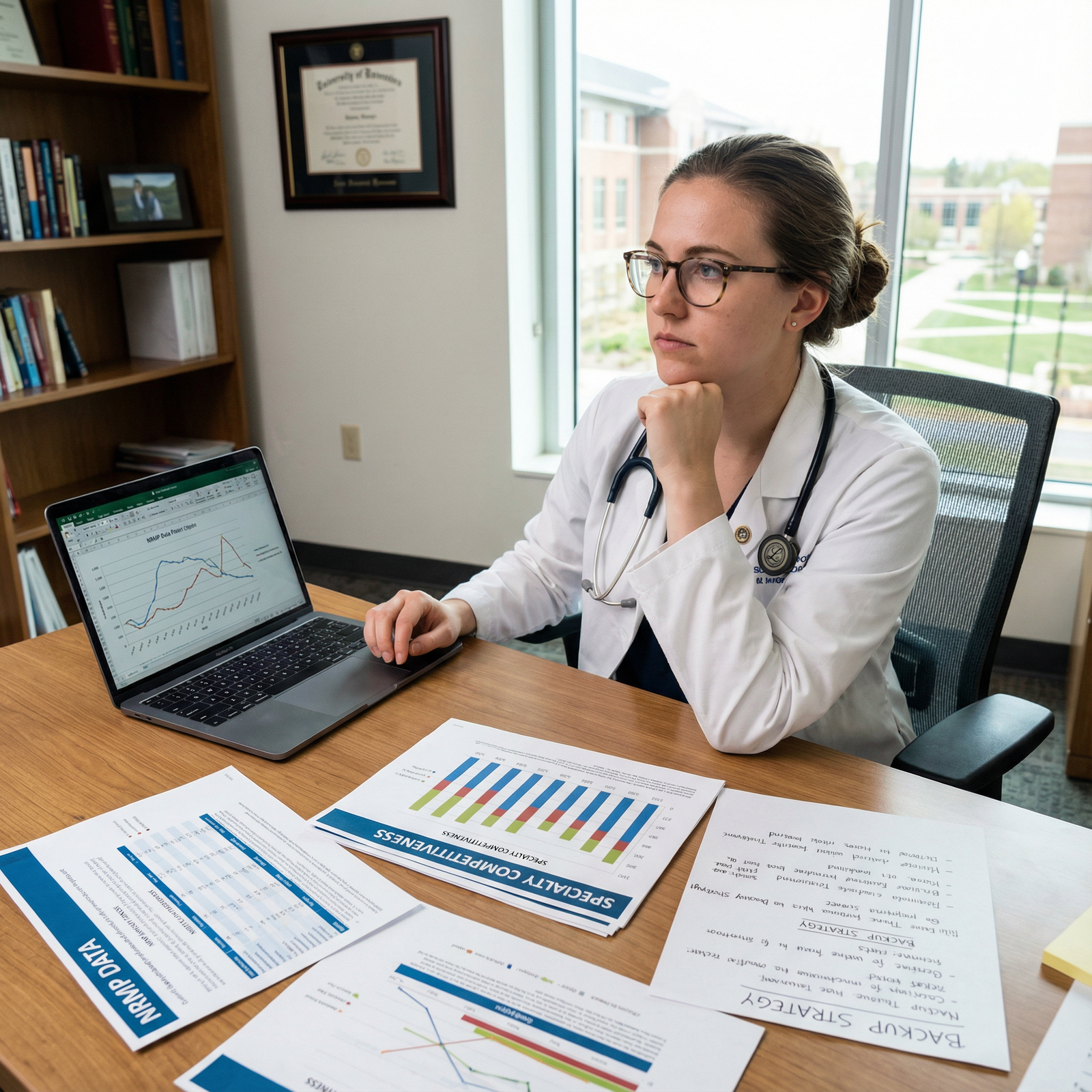
Understanding Backup Specialty Planning in Dermatology
Dermatology is one of the most competitive residencies in the United States. Even excellent applicants may not match on their first attempt, and each year strong candidates with high scores and solid research experience still go unmatched. Thoughtful backup specialty planning is not a sign of weakness—it is a sign of maturity, realism, and strategy.
For dermatology applicants, the stakes are high: many spend years building a derm-focused portfolio—research, away rotations, and mentorship. When the derm match doesn’t go as hoped, the question becomes: What now? That’s where smart planning around a backup specialty, dual applying residency strategy, and a plan B specialty can protect your long-term career goals.
This guide walks you through:
- Why backup planning is especially important for dermatology
- How to decide whether to dual apply or go “derm-only”
- How to choose an aligned backup specialty (and which ones commonly pair with dermatology)
- How to practically execute a dual application strategy
- What to do if you don’t match in dermatology
Throughout, the focus is on maximizing your chances of a derm match while still protecting your future if things do not go according to plan.
Why Backup Planning Matters So Much in Dermatology
Dermatology’s competitiveness makes backup specialty planning more than just a “nice to have.” It’s risk management.
The Reality of the Dermatology Match
Several factors make dermatology uniquely challenging:
- High applicant-to-position ratio: Derm consistently ranks among the top 3 most competitive specialties, with far more qualified applicants than available PGY-2 positions.
- Heavily research-weighted: Many successful applicants have multiple dermatology-specific publications, often from 1+ dedicated research years.
- Heavily network-dependent: Away rotations and connections with dermatology faculty can play a major role, and these opportunities are finite.
- Step 1 pass/fail era: Traditional numerical cutoffs are less informative now, so programs rely more heavily on research, letters, and holistic assessments—making the process even less predictable.
Even if your application is objectively strong, you are applying into a specialty where:
- There are few spots
- There is substantial randomness in interview selection
- Small perceived weaknesses (or just lack of “fit”) can mean fewer interviews
Emotional and Career Risks of a Single-Specialty Strategy
Going “all in” on dermatology without a plan B specialty can carry significant risks:
- Emotional toll: The uncertainty of the derm match alone can be extremely stressful; having a backup reduces anxiety and gives you more control.
- Delayed training: If you do not match and have no backup, you may face a “gap year” or have to scramble into preliminary or transitional positions without a clear long-term pathway.
- Visa and financial complications: For international graduates or those with financial obligations, an unmatched year can be especially destabilizing.
- Reapplicant challenges: Being a reapplicant in dermatology can be successful, but it usually requires extra time, strategy, and often additional research or degrees.
Backup specialty planning means you decide proactively: What is my best alternative route if derm doesn’t work out this cycle? It is about staying in control of your trajectory.
Step 1: Clarify Your Goals and Risk Tolerance
Before deciding on a backup specialty or dual applying residency strategy, you should clarify your priorities.
Key Questions to Ask Yourself
How critical is it that I match this cycle?
- High urgency: Financial pressures, visa limitations, family responsibilities.
- Moderate urgency: You can tolerate 1 more year of research or a non-categorical position.
- Lower urgency: You’re willing to reapply 1–2 more years to maximize your chance at dermatology.
How strong is my dermatology application objectively? Consider:
- Research: Derm-focused publications, posters, abstracts; quality and quantity.
- Mentorship and letters: Strong letters from dermatology faculty, especially program or department leadership.
- Clinical performance: Honors in core rotations, especially medicine, surgery, and derm electives.
- USMLE/COMLEX performance: Step 2 CK score (particularly important in the Step 1 P/F era).
- School reputation and derm department strength: Not determinative, but they can influence your interview yield.
How geographically flexible am I?
- Will you go anywhere to match dermatology (including less desirable locations)?
- Do you have major family or personal constraints limiting your options?
How versatile are my interests?
- Are your interests entirely skin-centered?
- Or do you genuinely enjoy internal medicine, pediatrics, pathology, or surgery as well?
The more risk-tolerant and derm-focused you are, the more a “derm-only” strategy may make sense (especially with a very strong application). The more risk-averse or time/visa-constrained you are, the more a structured backup specialty becomes important.
Step 2: Choosing a Backup Specialty That Aligns with Dermatology
A “backup specialty” is not just “whatever is easier to match.” It should be:
- Realistic given your credentials
- Something you can envision doing long-term
- Ideally related to dermatology in skills, patient population, or content
This ensures that even if you never match derm, you are still in a career you can enjoy and grow in.

Common Backup Specialties for Dermatology Applicants
Below are some frequently chosen plan B specialties for derm applicants, with pros, cons, and how they can fit into long-term career planning.
1. Internal Medicine (IM)
Why it aligns:
- Massive overlap with systemic diseases that have cutaneous manifestations (e.g., rheumatology, oncology, infectious disease).
- Many inpatient derm consults originate from medicine services.
- Offers later subspecialization options that still allow a skin-focused career: rheumatology, allergy/immunology, oncology.
Pros:
- Broad, versatile foundation.
- Many positions nationwide; generally more accessible than derm.
- Can lead to academic careers with strong derm collaboration.
Cons:
- Clinical pace and acuity differ significantly from outpatient derm.
- Lifestyle can be more demanding depending on subspecialty.
Who it fits:
- Applicants who enjoy reasoning through complex systemic disease.
- Those open to possibly becoming a rheumatologist, allergist, or hospitalist and collaborating with dermatology.
2. Family Medicine (FM)
Why it aligns:
- High proportion of skin complaints in primary care.
- Ample opportunity to develop “special interest” or niche in dermatology-like care (e.g., procedural dermatology in primary care settings).
Pros:
- Strong continuity of care; you can become “the skin person” in your community.
- Great for applicants aiming for community-based practice.
- Generally more flexible and less competitive.
Cons:
- Scope is very broad; less specialized day-to-day than dermatology.
- Procedural opportunities may depend on practice setting and local norms.
Who it fits:
- Applicants who enjoy holistic, cradle-to-grave care.
- Those who value flexibility in practice location and format (outpatient, rural, community health, etc.).
3. Pathology (especially Dermatopathology as a long-term goal)
Why it aligns:
- Deep overlap in understanding skin structure, pathology, and biopsy interpretation.
- Dermatologists rely heavily on dermpath colleagues; dermpath fellowships bridge the two worlds.
Pros:
- Strong intellectual overlap with derm.
- If you truly love the microscopic side of skin disease, this can be extremely satisfying.
- Potential pathway to dermatopathology fellowship (though competitive).
Cons:
- Less direct patient interaction.
- The route: pathology residency → dermpath fellowship; does not automatically position you to become a clinical dermatologist.
- Dermpath fellowship is competitive and may still be challenging to obtain.
Who it fits:
- Applicants drawn to histology, immunofluorescence, and disease mechanisms.
- Those comfortable with primarily lab/diagnostic roles.
4. Pediatrics (with interest in Pediatric Dermatology or Allergy/Immunology)
Why it aligns:
- Many pediatric conditions have prominent skin findings (eczema, genetic syndromes, vascular anomalies).
- Later training in pediatric dermatology or allergy/immunology may combine your interests.
Pros:
- Clear avenue to work with children and skin diseases.
- Allergy/Immunology as a subspecialty can overlap heavily with atopic diseases and urticaria.
Cons:
- Derm training is not automatic; you’d still need fellowship options that may be competitive.
- Pediatric lifestyle and case mix differ significantly from adult derm.
Who it fits:
- Applicants who love working with kids and families.
- Those already considering pediatrics but strongly attracted to skin disease presentations.
5. Plastic Surgery or General Surgery (selective use as backup)
These are not typical backup specialties for dermatology due to their own competitiveness (plastics) and very different long-term lifestyle and practice patterns. However, for some derm applicants with procedural interests, general surgery or even ENT can be a realistic alternative if:
- They have strong surgical evaluations and letters.
- They already enjoy the OR environment.
- They are comfortable with very different day-to-day practice than derm.
For most derm applicants, though, internal medicine, family medicine, pediatrics, and pathology are the core backup options.
Step 3: Designing a Dual Applying Residency Strategy
“Dual applying” means actively applying to dermatology and at least one backup specialty in the same ERAS cycle. This is different from having a theoretical plan B. It’s structured and intentional.
When Dual Applying Makes the Most Sense
Dual applying is often a strong strategy if:
- Your application is borderline for derm by current standards (for example: fewer derm pubs, average Step 2 score, limited derm letters).
- You are not willing to take a dedicated research year or post-match gap if unmatched.
- You are an IMG or DO applicant, groups that often face additional barriers in derm.
- You are geographically constrained but still want derm interviews.
If your derm application is exceptionally strong with multiple home and away rotations, robust research, and high Step 2, your mentors might advise a derm-only approach. But even then, having a clear backup plan (e.g., what you’d do if unmatched) is wise.
Structuring Your ERAS Application for Dual Applying
You must ensure that each specialty sees a specialty-specific application, even if your overarching career goal remains dermatology.
Key components to manage:
Personal Statements
- Write a dermatology-specific personal statement focusing on your passion for skin disease, clinical experiences, and derm research.
- Write a backup specialty-specific personal statement that is equally sincere and grounded in real experiences with that field.
- Avoid generic statements that obviously sound like they are “really for derm.”
Letters of Recommendation
- Aim for at least:
- 3 derm-related letters for dermatology programs.
- 2–3 letters from clinicians in your backup specialty for the backup application.
- It is fine for one of your letters to be a strong “general medicine” or “sub-internship” letter that you use for both specialties.
- Aim for at least:
Program Signaling and Preference Signaling
- If dermatology uses signaling, allocate your derm signals to programs where you have strong connections or geographic ties.
- For the backup specialty, use any signaling mechanism (if available) thoughtfully; do not rely solely on signals to carry your derm ambitions.
ERAS Experiences and Activities
- Do not hide your dermatology research or experiences when applying to your backup specialty. Programs expect and respect that you explored different paths.
- However, when you describe derm experiences to, say, an internal medicine program, emphasize:
- Generalist skills learned (teamwork, communication, continuity).
- Systems-based practice, quality improvement, patient education.
- Ensure your top experiences contain some diversity (e.g., include primary care clinic, inpatient rotations, community outreach) to show genuine breadth of interest.
Being Honest in Interviews
Many applicants fear that a backup specialty will “discover” they are striving for derm and automatically reject them. In reality:
- Many program directors appreciate honesty if it’s framed maturely.
- You should never lie; instead, explain your thought process.
Example framing for an internal medicine interview:
“I’ve been strongly drawn to dermatology because of its diagnostic challenges and visual pattern recognition. At the same time, I genuinely enjoy internal medicine and its systemic complexity. Given the competitiveness of dermatology and my desire to start residency this year, I decided to apply to both. I can absolutely see myself building a fulfilling, long-term career in internal medicine, especially in a subspecialty like rheumatology or allergy/immunology, where there is overlap with skin disease.”
Programs are primarily looking for:
- Commitment to their specialty if you match there.
- Emotional maturity and insight.
- Realistic understanding of the match landscape.
Step 4: Building a Year-by-Year Plan (Sample Scenarios)
To make backup specialty planning more concrete, here are example pathways for dermatology applicants with different strategies.

Scenario A: Strong Derm Applicant, Moderate Risk Tolerance
- MS3: Honors most clerkships, does derm elective, starts derm research.
- MS4: Two derm away rotations, several abstracts, strong letters.
- Step 2: Strong score.
Plan:
- Apply derm-only.
- If unmatched: pursue a 1-year derm research fellowship or chief resident year in a prelim medicine or transitional year, then reapply derm with stronger portfolio.
Backup here is not another specialty, but a structured reapplication plan.
Scenario B: Solid Applicant, But Derm Portfolio Limited
- MS3: Good performance but no early derm exposure.
- MS4: One derm elective, beginning research projects, Step 2 above average but not stellar.
- No dedicated research year.
Plan:
- Dual apply to dermatology and internal medicine.
- Use:
- Derm letter set for derm programs.
- Medicine-heavy letters for IM programs.
- Rank list:
- Top: Derm programs (including community and newer programs).
- Then: Internal medicine programs where you had strong interview day connections.
- If matches IM:
- Consider building a long-term career as a hospitalist or subspecialist with strong derm collaboration.
- Or consider if, after PGY-1, a carefully planned derm reapplication makes sense (coordinate closely with mentors and be realistic).
Scenario C: IMG Applicant with Strong Research but Visa Constraints
- Graduated abroad, completed derm research in the U.S.
- Multiple publications but limited U.S. clinical experience outside derm.
- Needs a residency position promptly due to visa.
Plan:
- Dual apply derm + family medicine (or internal medicine), maximizing number of programs in both.
- Pay careful attention to:
- Programs known to sponsor visas.
- Community and university-affiliated programs with track record of supporting IMGs.
- In interviews, be upfront about your interest in a long-term primary care or IM career if you match there.
- If matched in FM/IM:
- You can build a niche in skin disease within that specialty.
- Use your derm background to become a local referral point for complex skin issues.
What If You Don’t Match Dermatology?
Even with thoughtful planning, some dermatology applicants will not match—a reality you must emotionally and practically prepare for.
Immediate Steps After an Unsuccessful Derm Match
Process the disappointment. This is not a small loss. Take a few days to step back, grieve, and avoid rushed decisions.
Meet with mentors quickly. Ideally:
- A trusted derm faculty member.
- A dean or advising office representative.
- Any mentor in your potential backup specialty.
Analyze feedback and data from your cycle:
- Number and type of interviews received.
- Any consistent themes in feedback from rotations or interviews.
- Strengths and weaknesses of your application (research, letters, scores, narrative).
Clarify your updated priorities:
- Do you still want to pursue derm above all else?
- Or has the process clarified that you might be equally happy in your backup specialty?
Main Options After Not Matching
Option 1: Dedicated Dermatology Research Year + Reapply
- Best if:
- You are truly committed to derm.
- You can obtain a strong, structured derm research position with mentorship and publications.
- Pros:
- Strengthens your derm portfolio substantially.
- Builds deeper connections at a derm program (sometimes leading to future interview or match).
- Cons:
- Delays clinical training.
- Financial/logistical pressures.
Option 2: Prelim/TY/IM/FM/Peds/Pathology Year, Then Reapply
- Best if:
- You want to stay clinically active.
- You are open to ultimately staying in the backup specialty if needed.
- Pros:
- Keeps skills fresh.
- Provides new letters, experiences, and perspectives.
- Cons:
- Reapplying from a non-derm residency is possible but must be framed carefully so as not to appear “undecided” or unreliable.
Option 3: Fully Transition to Your Backup Specialty
- Best if:
- You recognize you can be truly fulfilled in the plan B specialty.
- The emotional and financial cost of reapplying derm multiple times is too high.
- Pros:
- Greater stability and clarity.
- Opportunity to build depth and leadership in that field early.
- Cons:
- May involve grieving the loss of the specific dream of dermatology.
In any of these paths, the key is intentionality: don’t drift. Decide deliberately, with input from mentors who understand your situation.
Putting It All Together: A Practical Checklist
As you move through the derm match and start planning your backup specialty strategy, use this simple checklist:
- Assess your derm competitiveness honestly.
- Discuss with at least two dermatology mentors.
- Clarify your risk tolerance and life constraints.
- Financial, visa, family, geographic issues.
- Choose a realistic, aligned backup specialty.
- Internal medicine, family medicine, pediatrics, or pathology for most derm applicants.
- Decide whether to dual apply this cycle.
- Yes → Build distinct, sincere applications for both specialties.
- No → Create a detailed plan for what you’ll do if you don’t match derm.
- Prepare tailored application materials.
- Specialty-specific personal statements.
- Letters appropriate to each specialty.
- Plan your interview messaging.
- Honest, confident explanation of derm interest and genuine engagement with the backup field.
- Before ranking, revisit your priorities.
- Could you see yourself long-term in your backup specialty?
- Are you willing to reapply derm if matched elsewhere?
- Have a post-match contingency plan.
- If unmatched: research year vs. non-derm clinical year vs. full transition.
Thoughtful backup planning does not make your derm dream weaker. It makes your overall career path stronger, more resilient, and more controlled.
FAQ: Backup Specialty Planning for Dermatology Applicants
1. If I have a strong application, do I really need a backup specialty?
Not everyone needs to dual apply, but everyone should have a backup plan. If mentors at your home derm program unanimously believe you are an exceptionally strong candidate, it may be reasonable to apply derm-only, especially if you are open to a research year and reapplying if necessary. However, you should still:
- Discuss contingency plans (research, prelim/TY year).
- Consider financial and visa implications of not matching.
- Mentally prepare for multiple pathways to a satisfying career.
2. Will backup programs reject me if they know I also applied dermatology?
Most programs understand that dermatology is highly competitive and that smart applicants consider backup options. They are more concerned with:
- Whether you can see yourself committing fully to their specialty if you match.
- Whether your interest in their field is genuine and grounded in experience.
If you frame your dual interest maturely, many programs see that as realistic planning, not disloyalty. Avoid sounding like their specialty is merely a “consolation prize.”
3. Is it possible to start in a backup specialty and later switch into dermatology?
It is possible but not guaranteed. Some pathways include:
- Completing a preliminary or transitional year and then reapplying derm.
- Starting in IM, FM, peds, or path and applying to derm as a PGY-1 or PGY-2.
Programs may have concerns about “program hopping,” so this route requires:
- Transparent, respectful communication with your current program leadership.
- Strong ongoing involvement in dermatology (research, electives, mentorship).
- A compelling, consistent narrative for why derm remains the right fit.
You should only pursue this if you are prepared—and willing—to stay in your current specialty if a derm position never materializes.
4. How do I talk to my mentors about a backup plan without seeming pessimistic?
Be direct and professional. You might say:
“I’m highly committed to dermatology and want to put forward my strongest application. At the same time, I want to be realistic given how competitive the derm match is. Can we discuss where you see my application standing, and whether a dual-application or backup specialty strategy would be wise in my case?”
This frames backup planning as strategic and responsible, not as giving up. Experienced mentors will appreciate your foresight and can help you navigate options thoughtfully.
Backup specialty planning in dermatology is about aligning realism with ambition. By understanding your own risk tolerance, building a thoughtful derm match strategy, and designing a credible plan B specialty pathway, you protect both your dream and your future.