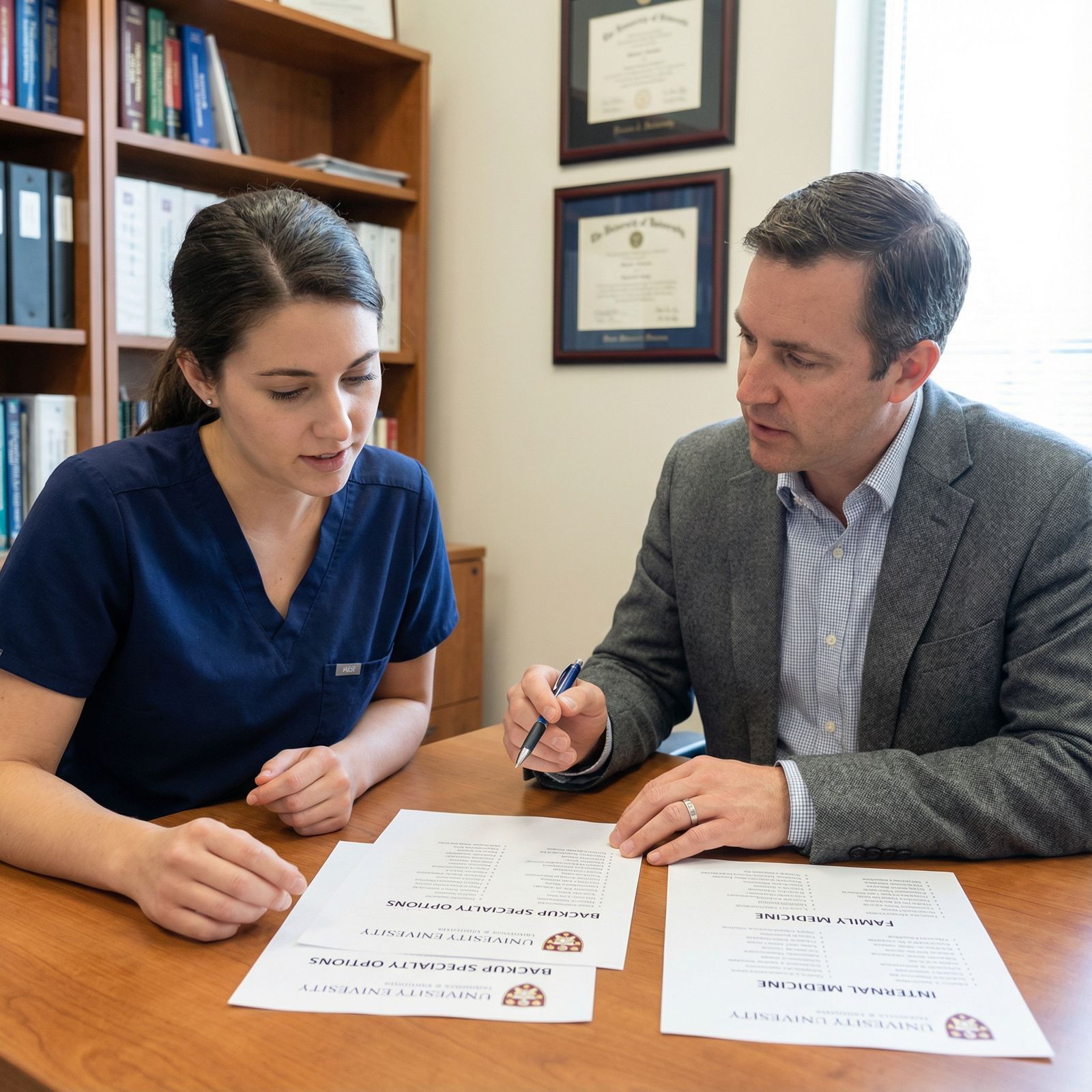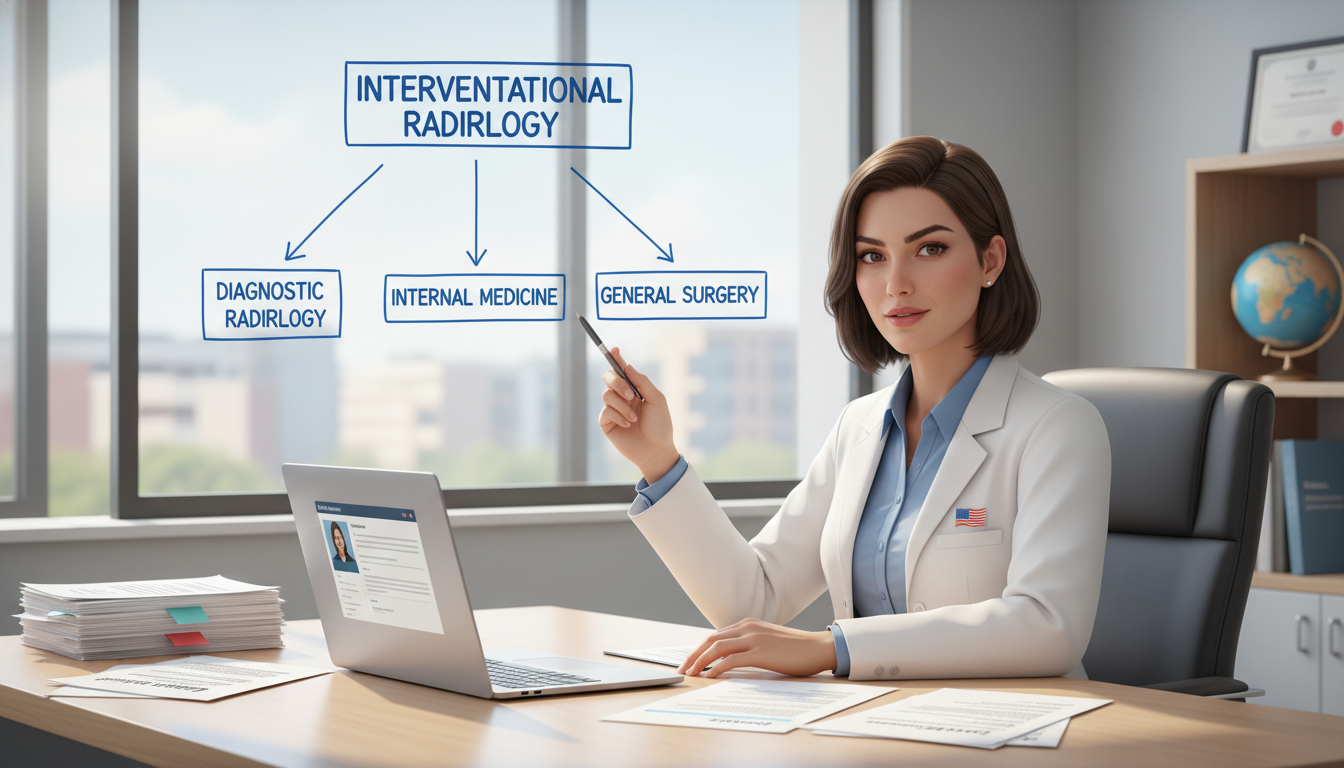
Choosing radiology residency as a career goal is exciting—but also nerve‑wracking. Diagnostic radiology is competitive, applicant profiles are heterogeneous, and the match can be unpredictable even for strong candidates. Thoughtful backup specialty planning is one of the smartest, most mature steps you can take to protect your future—and it does not mean you’re less committed to radiology.
This guide walks you through how to design a realistic, strategic Plan B specialty approach while applying in diagnostic radiology, including dual applying options, common backup specialties, risk assessment, and how to execute this plan without sabotaging your radiology application.
Understanding Your Risk in the Radiology Residency Match
Before you decide on a backup specialty or dual applying strategy, you need an honest assessment of your diagnostic radiology match risk.
1. Objective Risk Factors
These are the factors that PDs and programs will look at and that strongly predict competitiveness:
- USMLE/COMLEX scores
- Below-average or marginal Step 2 score for matched DR applicants
- A Step 1 fail or multiple attempts on any exam
- Medical school context
- Lower‑tier US MD or DO school without strong radiology presence
- International medical graduate (IMG) status, particularly non‑US IMG
- Academic record
- Failed courses or remediation
- Extended time to graduation (beyond 4 years) without a compelling explanation
- Limited or no radiology‑related research if targeting academic programs
- Letters and exposure
- No home radiology department or limited access to radiology rotations
- Lack of radiology‑specific letters of recommendation
- Minimal radiology extracurriculars or scholarly work
2. Subjective or Contextual Risk Factors
These are often overlooked but can impact your match chances:
- Late specialty decision
Applying late to radiology, minimal time to tailor application. - Geographic constraints
- Applying almost exclusively to one region
- Applying to very few programs due to family or personal reasons
- Application strategy
- Narrow or unbalanced program list (e.g., all top‑tier academic centers)
- Weak or generic personal statement
- Poor ERAS strategy (few programs, poor filtering, late application)
3. Self‑Categorizing Your Risk Level
Use your profile to roughly place yourself into one of three categories:
- Lower risk DR applicant
- Strong scores, no failures, decent clinical performance
- Home program or strong radiology mentor
- 1–2 radiology letters, some relevant exposure
- Applying broadly in geography and program tier
- Moderate risk DR applicant
- Slightly below mean scores OR one area of weakness (e.g., no home program)
- Few radiology‑specific experiences
- Some geographic limitations or very selective program list
- High risk DR applicant
- Exam failures, major academic issues, low scores, or IMG with limited US experience
- No radiology department or letters, minimal DR exposure
- Strong geographic constraints or very few applications
Your backup specialty plan should be proportional to your risk level:
- Lower risk: Consider a light safety net (e.g., prelim/transitional year, a few backup specialty applications).
- Moderate risk: Strongly consider dual applying residency with a realistic Plan B specialty.
- High risk: Make backup planning a central part of your strategy, not an afterthought.
Core Principles of Backup Specialty Planning for Radiology
Before choosing a backup, anchor your decisions to these guiding principles.
1. A Backup Specialty is Not a “Throwaway”
A backup specialty should be:
- A field in which you can genuinely see yourself building a career
- Something that matches your interests, strengths, and lifestyle goals
- A specialty where your profile has a realistic chance of matching
Avoid choosing a field solely because “it’s easier” if you would be profoundly unhappy in it.
2. Dual Applying vs. Pure Backup
There are two main strategies:
- Dual applying residency
You apply to diagnostic radiology plus another categorical specialty in the same cycle. - Radiology‑only with a structured Plan B
You apply only to radiology but:
- Make a plan to SOAP into categorical/prelim programs if needed
- Consider a later reapplication into radiology via transitional paths (e.g., internal medicine → fellowship, or re‑applying DR)
Most moderate–high risk applicants benefit from intentional dual applying, not a last‑minute SOAP scramble.
3. Consider the Match Structure for Radiology
Radiology is often a categorical or advanced specialty:
- Advanced (PGY‑2 start) programs require a separate preliminary (prelim) or transitional year (TY) application.
- Categorical radiology programs include the intern year within their structure.
Your backup planning may involve:
- Applying to DR + another categorical specialty
(e.g., DR and internal medicine) - Applying to DR + prelim/TY spots
with the intention of pursuing DR later - Applying to both advanced DR and categorical backup fields concurrently
4. Transparency and Integrity
Maintain professional integrity:
- Do not lie about your level of interest in any specialty.
- You can express genuine enthusiasm for a backup specialty while also acknowledging broader career goals.
- Avoid telling multiple specialties that they are your “one true calling” with identical narratives; tailor your personal statement honestly for each field.
How to Choose a Logical Backup Specialty for Radiology
Not all specialties make equal sense as a backup for diagnostic radiology. You want overlaps in skill set, personality fit, and training pathways while preserving realistic match chances.
Below are commonly considered backup specialties for radiology residency applicants, with pros, cons, and applicant fit.

1. Internal Medicine (IM)
Why it fits well:
- Broad field with abundant positions; relatively more forgiving than DR for certain academic blemishes.
- Strong overlap in interests:
- Pathophysiology
- Diagnostic reasoning
- Complex multi‑system cases
- Paths back toward imaging:
- Cardiology with imaging focus
- Pulmonology with chest imaging, procedures
- Nephrology, oncology, hospitalist work with heavy imaging use
Best for applicants who:
- Enjoy cognitive, puzzle‑solving work over procedures
- Are comfortable with inpatient and outpatient continuity
- Would be okay, long‑term, as a hospitalist or subspecialist if radiology never materializes
Strategic notes:
- IM is a strong Plan B specialty and a common choice for dual applying with radiology.
- You can emphasize your interest in diagnostic reasoning and interdisciplinary collaboration in your IM personal statement without misrepresenting yourself.
2. Transitional Year (TY) / Preliminary Internal Medicine / Preliminary Surgery
These are not full backup specialties, but:
- They can serve as:
- A bridge for a later DR reapplication
- A way to strengthen your clinical record and letters
- TYs are desirable and can be quite competitive in popular locations.
- Prelim IM or prelim surgery spots are often available but may not guarantee a long‑term pathway if you don’t re‑match.
Best for applicants who:
- Are relatively competitive but might be worried about landing an advanced DR position
- Are committed to radiology long term and want to keep all doors open
Caution:
If you rely solely on prelim/TY and don’t match DR, you’ll need a robust plan for what happens after that year (e.g., reapplying DR, pivoting fully into IM, anesthesia, etc.).
3. Anesthesiology
Why it’s often considered:
- Competitive but in some cycles slightly less so than DR, depending on region and year.
- Appeals to similar students: those who want:
- Technology‑driven practice
- Procedural skills
- Limited clinic and a controlled lifestyle
- Good compensation and defined shifts in many practice models.
Overlap with radiology:
- Technology and monitoring
- Acute problem management
- High-stakes OR and ICU settings relying heavily on imaging
Best for applicants who:
- Like physiology and pharmacology
- Enjoy OR environment and acute care
- Could genuinely see themselves as anesthesiologists
Strategic notes:
- For some applicants, dual applying to diagnostic radiology + anesthesiology makes sense.
- Be aware: both can be competitive; this is less of a “safety” and more of a “parallel” option.
4. Neurology
Why it’s a reasonable backup:
- Uses imaging heavily: CT, MRI, neuroimaging
- Strong cognitive and diagnostic focus
- Often a bit more accessible than DR at many institutions
- Routes to imaging‑adjacent careers (neurophysiology, interventional neurology in some contexts, heavy reliance on imaging for stroke work, etc.)
Best for applicants who:
- Are particularly drawn to neuroradiology, stroke, neurodegenerative disease
- Enjoy in‑depth neuroanatomy and localization
- Are comfortable with inpatient call, ED consults, and longitudinal follow‑up
5. Pathology
Shared elements with radiology:
- Image‑based diagnosis (slides rather than scans)
- Strong analytic and pattern‑recognition emphasis
- Less direct patient contact in many roles
- Heavy role in multidisciplinary cancer care, similar to radiology tumor boards
Pros:
- Historically more forgiving to nontraditional applicants and IMGs than DR
- Path to subspecialties (forensic, cytopathology, hematopathology, etc.)
Cons:
- Job markets can be regionally tight
- Requires comfort with limited patient‑facing time
6. Family Medicine or Pediatrics
These are rarely “natural” fits for those strongly drawn to radiology, but they might be:
- Necessary for high‑risk applicants who want maximum match security
- Appealing if you enjoy longitudinal care, holistic medicine, and primary prevention
Consider these if you:
- Could genuinely enjoy outpatient primary care or pediatric work
- Have strong interpersonal and communication strengths that you’d miss in radiology
How to Execute a Dual Applying Strategy Without Hurting Your Radiology Chances
The biggest concern students have is:
“If I dual apply, will radiology programs think I’m not committed?”
If you plan carefully, the answer is generally no. Many PDs understand that applicants—especially in competitive fields—must have a rational Plan B.

1. Tailor Your ERAS Application Strategically
Common elements (shared across specialties):
- Demographics, school, grades, USMLE/COMLEX
- Most experiences and publications
Specialty‑specific elements:
Personal statements:
Create distinct, honest personal statements for each specialty:- For radiology: Emphasize imaging, pattern recognition, multidisciplinary roles, prior DR exposure.
- For backup specialty: Highlight authentic interest in that field’s core work, not just “if I don’t match radiology.”
Letters of recommendation (LoRs):
- Aim for:
- 2–3 DR letters (including any from radiology rotations or research mentors)
- 2 letters from your backup specialty (IM, anesthesia, etc.)
- Use ERAS flexibility to send:
- DR letters → radiology programs
- Backup letters → backup specialty programs
- A mix (e.g., medicine + radiology) to prelim/TY or certain programs where appropriate.
- Aim for:
2. Constructing Your Program List
Balance is key:
Radiology applications:
- Apply broadly—most applicants should apply to significantly more programs than they think.
- Include a mix of academic, community, and different geographic regions unless constrained.
Backup specialty applications:
- The number will depend on your risk profile:
- Lower risk: 10–20 programs in a backup field might suffice.
- Moderate risk: 20–40+ backup applications.
- High risk: 40–60+ in your Plan B specialty, possibly more than DR.
- The number will depend on your risk profile:
Ensure that your total number of applications is manageable in terms of:
- Interview availability
- Financial cost
- Time to attend interviews
3. Managing Interviews and Signaling Commitment
On radiology interviews:
- Focus your narrative on why radiology resonates with your skills and values.
- You do not need to volunteer that you dual applied unless directly asked.
- If asked:
- Be transparent but professional:
“Radiology is my top choice and where I see my long‑term career. Because the match can be unpredictable and I have [risk factor], I also applied to a limited number of [backup specialty] programs where I could also see myself practicing if necessary.”
- Be transparent but professional:
On backup specialty interviews:
- Do not treat these as “throwaway” interviews.
- Highlight what you respect and like about that field:
- E.g., for internal medicine: continuity, complex diagnostics, interdisciplinary care.
- You do not need to emphasize radiology unless questioned, but if so, answer honestly and respectfully.
4. Personal Statement Strategy: Radiology vs Backup
Radiology Personal Statement:
- Core elements:
- Origin of interest in imaging
- Clinical experiences that underscored radiology’s impact
- Skills: visual analysis, attention to detail, team communication
- Career aspirations (e.g., academic vs community, subspecialty interests)
Backup Specialty Personal Statement:
- Avoid:
- “If I don’t match radiology, I’ll do X.”
- Instead:
- Tell a coherent story of why that specialty makes sense for you:
- Shared strengths (diagnostic thinking, patient care, procedures, etc.)
- Experiences and mentors who shaped this interest
- Long‑term roles you’d be happy to pursue
- Tell a coherent story of why that specialty makes sense for you:
It’s possible to be sincere about both specialties without being disingenuous.
Long‑Term Perspective: If You Don’t Match Radiology
Even with strong planning, some applicants will not match into diagnostic radiology in their first cycle. A well‑constructed Plan B specialty can cushion that blow and open new paths.
1. If You Match Your Backup Specialty
If you match, your main future options are:
Fully commit to that specialty
- Build a fulfilling career independent of radiology
- Seek imaging‑heavy niches within your specialty (e.g., cardiac imaging for cardiologists, stroke work for neurologists, imaging‑driven oncology, etc.)
Consider later imaging‑adjacent paths
- Internal medicine → cardiology with advanced imaging
- Neurology → stroke or neuroimaging‑focused practices
- Pathology → molecular diagnostics, research with imaging collaborations
Re‑training into DR later is possible but uncommon and logistically difficult (funding, program policies, time). Do not rely on this as a guaranteed pathway.
2. If You Don’t Match Any Categorical Specialty
This is where backup planning done before the match is crucial.
Options may include:
SOAP (Supplemental Offer and Acceptance Program)
- Apply to unfilled categorical, prelim, or TY positions.
- Common landing spots: internal medicine, preliminary medicine, family medicine, psychiatry, pathology, pediatrics depending on the year.
Research or gap year
- Particularly radiology or imaging research to strengthen your CV for reapplication.
- Typically more viable for US grads with institutional support.
Reapplying to radiology vs pivoting fully
- If your original application had remediable issues (e.g., late decision, weak letters, lack of DR exposure), a structured gap year plus strong mentorship may elevate your chances next cycle.
- If fundamental barriers exist (multiple exam failures, etc.), it may be wiser to fully pivot to a less competitive field.
3. Mental Health and Identity
Diagnostic radiology is a career, not a personality trait. Anchoring your entire self‑worth to one specialty is risky.
If you don’t match:
- Allow yourself to grieve the lost plan.
- Seek support:
- Advisors, mentors, mental health services
- Peers who have taken nonlinear paths
- Remember:
- Many satisfied physicians are in fields they hadn’t originally planned.
- Your adaptability, resilience, and professionalism matter as much as the specialty title.
Practical Step‑by‑Step Action Plan
To put everything together, here’s a practical timeline‑based framework for backup specialty planning in the diagnostic radiology match.
MS3 (or early decision phase)
- Confirm interest in radiology
- Do shadowing, elective rotations, talk with radiologists.
- Assess competitiveness realistically
- Meet with a dean or residency advisor.
- Review your board scores, grades, and any red flags.
- Identify 1–2 potential backup fields
- Based on your values, strengths, and risk profile.
Early MS4
- Schedule rotations strategically
- Radiology elective(s) for letters.
- Backup specialty rotation(s) for letters and experience.
- Begin relationships with mentors in both fields
- Ask for honest feedback on your competitiveness.
- Discuss dual applying residency transparently.
Summer Before ERAS Opens
- Draft two personal statements
- One for radiology residency
- One for your backup specialty
- Request letters of recommendation
- Radiology attendings
- Backup specialty attendings
- Build your program lists
- Radiology: broad, tier‑balanced, geographically diverse.
- Backup specialty: realistic mix of community/academic, broad geography.
ERAS Submission and Interview Season
- Submit early
- Don’t delay your application for either field.
- Interview professionally with both fields
- Keep calendars organized.
- Never no‑show or treat backup interviews casually.
- Continuously reassess
- If DR invites are sparse and backup invites robust, prepare psychologically for a backup match.
Rank List Time
- Order your list honestly
- If DR remains your top goal, rank DR programs above backup specialty programs you would less prefer—even if backup interviews felt safer.
- However, do not rank any program, in any field, where you would not be willing to train if matched.
Frequently Asked Questions (FAQ)
1. Does dual applying hurt my chances of matching into diagnostic radiology?
Not if done thoughtfully. Programs mainly see your radiology‑specific materials (personal statement, DR letters) and evaluate you on that basis. Many PDs are aware that applicants in competitive specialties often have a Plan B specialty. Problems arise only if your application to radiology appears half‑hearted or inconsistent, or if mentors in radiology perceive you as not genuinely interested.
2. How many radiology vs backup specialty programs should I apply to?
It depends on your risk profile and budget, but typical patterns:
- Lower risk DR applicant:
- 40–60+ DR programs
- 10–20 backup programs (or just prelim/TY if comfortable with risk)
- Moderate risk:
- 60–80+ DR programs
- 20–40+ backup programs
- High risk:
- 60–100 DR programs
- 40–60+ backup programs, often in a less competitive field
Always discuss exact numbers with your school’s advising office and mentors who know your specific context.
3. Which backup specialty is “best” for a radiology applicant?
There is no universal best specialty. The most common backup specialties for DR applicants include:
- Internal medicine
- Anesthesiology
- Neurology
- Pathology
The “best” one for you is the field you could realistically be happy in if radiology does not work out, matches your strengths, and offers a reasonable chance of matching with your profile.
4. If I match into my backup specialty, can I switch into radiology later?
Occasionally, residents transfer into diagnostic radiology from other fields, but it is:
- Uncommon
- Highly dependent on funding availability and program needs
- Logistically complicated
You should apply with the mindset that, if you match your backup specialty, you may very well spend your career there. If you later find a legitimate pathway into DR, consider it a fortunate bonus—not a guaranteed contingency.
Thoughtful backup specialty planning is not a sign of doubt; it’s a sign of maturity and realism. Whether you match into diagnostic radiology or a Plan B specialty, your professionalism, adaptability, and dedication to patient care will define your career more than the match result alone.