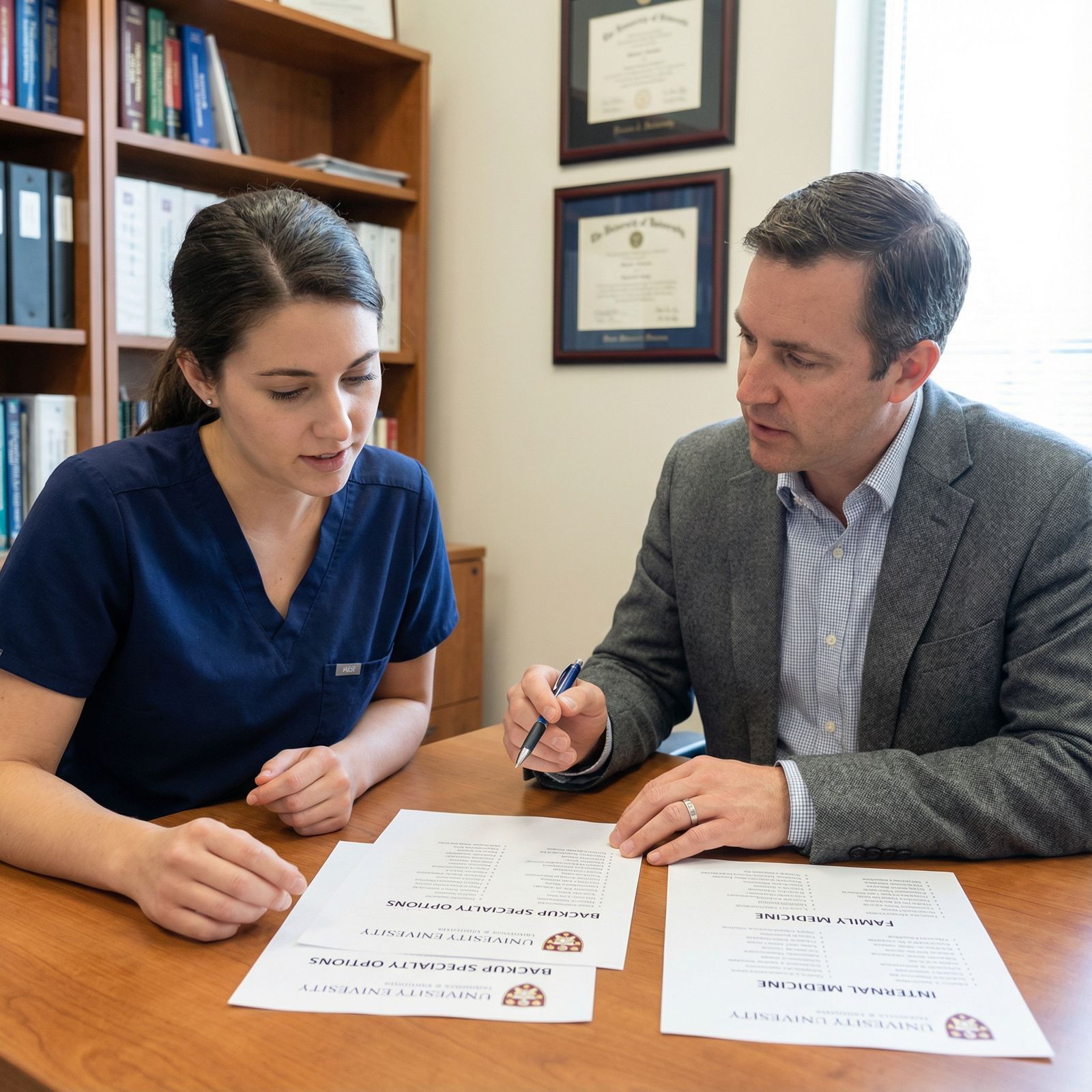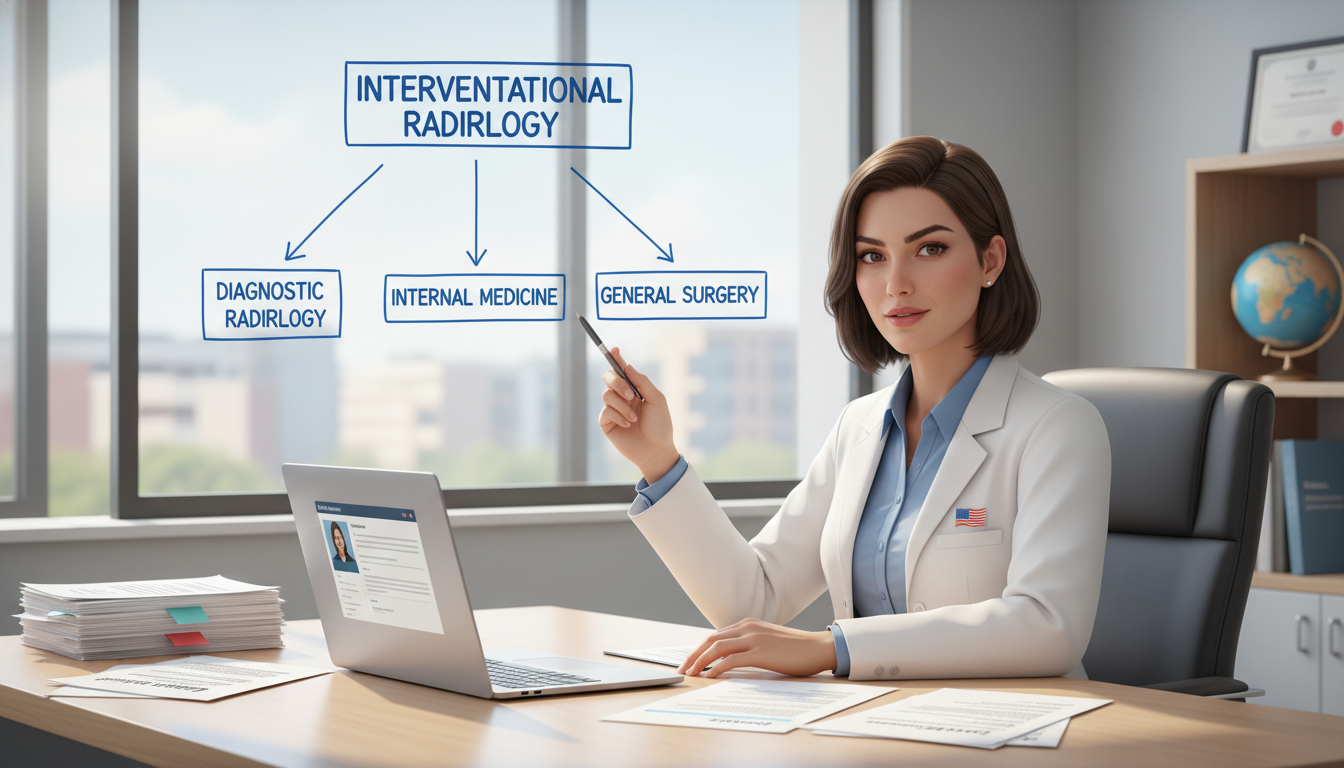
Understanding Why Backup Specialty Planning Matters for DO Graduates
For many DO graduates, the goal is clear: match into your first-choice specialty in the osteopathic residency match or the NRMP Match. Yet the landscape has changed dramatically since the single accreditation system transition. Some specialties are now intensely competitive; others have a limited number of osteopathic-friendly programs. As a DO graduate, you face unique challenges and advantages that should directly shape how you think about a backup specialty, dual applying residency strategies, and your overall Plan B.
Backup specialty planning is not about giving up on your dream. It’s about protecting the years you’ve invested in your osteopathic training and ensuring you enter a field where you can thrive clinically, personally, and professionally—even if your first-choice plan doesn’t work out.
Key reasons DO graduates need a deliberate backup strategy:
- Competitive pressures: Certain specialties (e.g., dermatology, orthopedic surgery, plastic surgery, ENT, ophthalmology, radiology, anesthesiology, EM in some regions) are now more crowded, with MD and DO applicants competing in the same pool.
- Board exam complexity: Some DOs apply with COMLEX only; others also take USMLE. Program preferences about which exams they accept or prefer directly affect interview chances.
- Regional limitations: Many DO schools are located in regions where local programs may be limited in certain specialties. Geographic constraints (family, visas, partner’s job) can further restrict options.
- Systemic bias: Although improved, there still may be subtle or overt biases at some academic centers regarding DO grads in certain “prestige” specialties.
A smart backup plan protects you from:
- Going unmatched or SOAPing into a field or location you truly don’t want.
- Relying on a last-minute, panic-driven Plan B.
- Wasting a year in limbo without clear direction.
Thoughtful planning allows you to:
- Present a coherent narrative to programs even if you’re dual applying residency.
- Maintain alignment with your clinical interests and lifestyle preferences.
- Maximize your chances of matching somewhere you’ll be genuinely satisfied.
Step 1: Clarify Your Primary Specialty Profile and Risk
Before you can choose a backup, you must understand how competitive you are in your primary specialty and where the risks are, specifically as a DO graduate.
A. Evaluate Competitiveness of Your Primary Specialty
Start by gathering objective data:
- Recent NRMP and AACOM/ERAS statistics for your specialty:
- Match rates by US DO seniors
- Average Step 1, Step 2 CK, and COMLEX Level 1/2 scores
- Average number of programs ranked
- Program requirements:
- COMLEX-only vs. USMLE required/preferred
- Research expectations (publications, presentations)
- Typical number and quality of letters of recommendation (LORs)
- Preference for home or “feeder” schools
Ask yourself:
- Is your first-choice specialty in the “very high risk” category (e.g., derm, plastics, ENT, neurosurgery)?
- Is it moderately competitive (e.g., anesthesia, EM, radiology, general surgery in desirable regions)?
- Or relatively accessible but still with some risk (e.g., internal medicine at academic centers, OB/GYN in high-demand cities)?
B. Assess Your Individual Applicant Strengths and Weaknesses
Be brutally honest and evidence-based:
- Board exams:
- COMLEX Level 1/2 vs. specialty averages
- USMLE Step 1/2 CK (if taken) vs. specialty averages
- Do your scores open doors or close them?
- Clinical performance:
- Honors vs. passes in core and specialty-relevant rotations
- Strong narrative comments on evaluations and MSPE
- Letters of recommendation:
- Do you have at least 2–3 strong LORs from attendings in your primary specialty?
- Are any from program directors or well-known faculty?
- Research and scholarly work:
- Any publications, case reports, QI projects, or regional/national presentations?
- Are they directly relevant to your specialty?
- Osteopathic identity and skills:
- Have you used OMM meaningfully in clinical care?
- Any OMM-related research, teaching, or leadership roles?
If you’re clearly above average for your specialty and geographic goals, your backup planning can be more conservative. If you’re in the middle or below-average range—or aiming for a heavily saturated city—you should consider a more robust Plan B.
C. Define Your Risk Tolerance and Constraints
Not all risk is equal. Consider:
- Geographic limitations: If you must stay in a small region, even “less competitive” specialties can become tough.
- Personal obligations: Family, finances, health, visas, or partner’s career can make a gap year or transitional year less feasible.
- Time to re-apply: Are you emotionally and financially prepared to reapply if needed?
Put simply: if matching anywhere, in some specialty, this year is extremely important to you, your backup specialty strategy needs to be aggressive and realistic.
Step 2: Choosing a Backup Specialty That Actually Fits You
Choosing a backup is not about grabbing the “easiest specialty.” It’s about finding a Plan B specialty that you can see yourself practicing happily if you never reapply for your first choice.

A. Identify Overlapping Skill Sets and Interests
Your backup specialty should overlap with your primary specialty in one or more of the following:
- Patient population: Adults vs. children vs. mixed age.
- Clinical environment: Inpatient vs. outpatient vs. OR vs. ED.
- Procedural intensity: Hands-on vs. mostly cognitive.
- Lifestyle and schedule: Shift work vs. regular office hours vs. heavy call.
- Core interests: Critical care, longitudinal relationships, acute care, diagnostics, musculoskeletal, etc.
Examples of logical pairing:
- Primary: Emergency Medicine
- Potential backups:
- Internal Medicine (hospitalist focus)
- Family Medicine with urgent care/emergency focus
- Anesthesiology (for acute procedural and critical care interest)
- Potential backups:
- Primary: Orthopedic Surgery
- Potential backups:
- Physical Medicine & Rehabilitation (PM&R)
- Family Medicine with sports medicine pathway
- General Surgery (if surgical lifestyle is the priority)
- Potential backups:
- Primary: Dermatology
- Potential backups:
- Internal Medicine (with future derm-focused clinics or cosmetics)
- Family Medicine with procedural dermatology interest
- Potential backups:
Think about your true non-negotiables: Do you need procedural work? Do you crave continuity of care? Do you enjoy managing complexity or focusing on a narrow domain?
B. Analyze DO Friendliness and Match Data for Backups
Not all potential backups are equally DO-friendly. For each possible backup specialty, look at:
- Match rate for US DO seniors
- Number of DO-friendly programs (based on historical DO matches and COMLEX acceptance)
- Geographic distribution of DO-friendly options
- Program culture (community vs. academic centers)
Many DO graduates successfully match into:
- Family Medicine
- Internal Medicine (especially community or mid-tier academic programs)
- Pediatrics
- PM&R
- Psychiatry
- Transitional Year (as part of a multi-year pathway, though this is not a standalone specialty)
However, even within these fields, some programs heavily favor MDs, require USMLE, or rarely take DOs. Use tools like program websites, FREIDA, residency explorer (when available), and word of mouth from upperclassmen to identify where DOs are genuinely welcome.
C. Avoid Backup Specialties You Would Hate
A surprisingly common mistake: picking a backup specialty you actively dislike, assuming “I’ll just reapply later.”
Why this is dangerous:
- If you match into your backup, it’s challenging—logistically and politically—to re-enter the match from a PGY-1 spot.
- You may feel stuck, burned out, or resentful.
- It can be tough to explain to future programs why you left another specialty.
Before adopting a specialty as your Plan B, ask:
- Could I realistically see myself doing this every day, long term?
- Would I respect myself as a professional in this field?
- Are there subspecialty pathways within it that might genuinely excite me (sports med, palliative, hospitalist, addiction, etc.)?
If the honest answer is “no,” reconsider that backup.
Step 3: Smart Dual Applying Residency Strategies for DO Graduates
Once you’ve selected a viable backup specialty, you need a tactical plan for dual applying residency without appearing unfocused or insincere.
A. Determine Whether You Truly Need to Dual Apply
Dual applying is not automatically required. Consider it strongly if:
- You’re applying to a highly competitive specialty as a DO graduate (e.g., derm, ortho, ENT, neurosurgery, plastics, optho, IR, rad onc).
- Your board scores are below average for your primary field.
- You have major geographic constraints.
- You have minimal research or weak specialty-specific LORs.
If your primary specialty is moderately competitive and you are a strong applicant with flexibility in geography, you may choose to apply broadly in that one field instead of dual applying.
B. Application Logistics: Timelines, Costs, and Materials
Dual applying involves:
- Extra personal statements: One tailored to each specialty. Never use a generic PS.
- Distinct program lists: Thoughtful, not random; organized in a spreadsheet tracking requirements, DO-friendliness, and region.
- Letters of recommendation: Ideally:
- 2–3 from your primary specialty.
- 1–2 from your backup specialty.
- Some letters (e.g., medicine or surgery) may be repurposed for both if appropriate.
Cost considerations:
- ERAS fees rise quickly with each additional program.
- Travel and lodging for in-person interviews (if applicable) multiply.
Be honest about your budget and factor that into how many programs you apply to in each specialty.
C. Presenting a Coherent Narrative
Programs can detect a scattered applicant. Your goal is to appear intentional in both fields.
For each specialty:
- Personal statement:
Focus on:- What drew you to THIS specialty (not just medicine in general).
- Concrete experiences showcasing fit (rotations, research, leadership).
- Long-term career goals that align with that specialty.
Avoid:
Mentioning your other specialty explicitly in the PS.
Sounding like you’re settling or using this field as a “backup.”
Generic phrases that could fit any specialty.
Interview responses:
If asked directly—“Are you applying to other specialties?”—answer honestly but strategically. For example:“I am primarily committed to [Specialty A] and most of my application reflects that. Given the competitiveness of the match and some personal geographic constraints, I also applied to [Specialty B] because I truly enjoy [overlapping aspects, such as acute care/longitudinal relationships] and could see myself thriving in that field as well.”
Programs understand the realities of the match; what matters is that you can clearly and convincingly explain why you would be happy in their specialty if you match there.
Step 4: Building a Strong DO Graduate Application for Both Primary and Backup
Your strategy should be to create the best overall DO graduate residency application you can, then customize it for each specialty.

A. Maximizing Osteopathic Strengths
As a DO graduate, you bring unique assets:
- Training in holistic, patient-centered care.
- Osteopathic Manipulative Treatment (OMT) skills.
- Often strong clinical acumen and bedside manner from community-heavy training environments.
Highlight these strengths:
- In your personal statements (where relevant and authentic).
- Through LORs mentioning your osteopathic perspective.
- In interviews, when discussing patient care philosophy.
Some specialties and programs are particularly receptive to OMM and holistic care, including:
- Family Medicine
- PM&R
- Sports Medicine tracks
- Some Internal Medicine programs (especially community or osteopathic-legacy programs)
B. Board Exam Strategy and Score Interpretation
Programs vary widely in how they view COMLEX vs USMLE:
- Some accept COMLEX only and are comfortable interpreting those scores.
- Some require or strongly prefer USMLE scores, particularly in competitive fields or academic centers.
If you have both:
- Choose how to report them strategically, but be consistent.
- If your USMLE is notably weaker than your COMLEX, seek advising before deciding whether to release the USMLE score.
If you have COMLEX only:
- Focus more heavily on DO-friendly programs and specialties.
- Be prepared to explain COMLEX scoring briefly if an interviewer appears unfamiliar (rare but possible).
C. LOR Strategy When Dual Applying
Letters can make or break both your primary and backup specialty applications. For dual applying:
- Aim for 4–5 strong letters total.
- At least 2 from your primary specialty.
- At least 1 from your backup specialty.
- Consider 1–2 from core rotations (e.g., IM, surgery) that speak broadly to your clinical excellence.
Practical recommendation:
- Assign letters thoughtfully in ERAS:
- Primary specialty applications: 3 letters with at least 2 from that field.
- Backup specialty applications: 3 letters with at least 1–2 from that field.
- Ask letter writers if they feel comfortable supporting you for multiple specialties or if they would prefer to keep it specialty-specific.
D. Rotations, Electives, and Sub-Is
Try to secure:
- Sub-internships (sub-Is) in your primary specialty at:
- Your home institution.
- A strong DO-friendly or osteopathic-legacy program.
- For your backup specialty:
- At least 1–2 significant rotations (home or away) to:
- Demonstrate commitment.
- Generate a strong LOR.
- Test whether you really could see yourself in that field.
- At least 1–2 significant rotations (home or away) to:
If time is limited, prioritize:
- One high-quality sub-I in your dream specialty.
- One solid rotation in your plausible backup specialty.
Step 5: Ranking Strategy and Decision-Making at the End of Interview Season
The final piece of backup specialty planning is what you do once interviews are over and you must create your rank list.
A. Weighing Primary vs Backup Offers
Imagine two scenarios:
- A mid-tier program in your dream specialty but in a location you don’t love.
- A strong program in your backup specialty in your ideal city with great support and training.
Which matters more to you: specialty vs. location vs. program culture? There is no right answer, but you must be honest.
Ask yourself:
- If I matched into Program X in my backup specialty, would I be at peace building my career there?
- If I took a chance and ranked only my dream specialty, how devastated (and practically set back) would I be by not matching?
The match algorithm favors applicants. Rank programs in true order of preference across both specialties. Don’t try to game the system; instead, use your internal hierarchy of values.
B. Considering a Reapplication If You Don’t Match
If you go unmatched or SOAP into a program that is clearly not a good long-term fit:
- Reflect on whether you want to:
- Reapply to your primary specialty.
- Pivot fully to your backup specialty.
- Consider a preliminary or transitional year with a plan to re-enter the match.
Important for DO grads:
- Use the year strategically: research, additional clinical experience, improved board scores (Step 3, COMLEX Level 3), and networking in your target field.
- Maintain professionalism and good standing with any program you join, as future PDs may contact them.
Practical Example: A DO Graduate’s Backup Specialty Strategy in Action
Consider “Alex,” a DO graduate:
- Primary interest: Emergency Medicine.
- Board scores: COMLEX and USMLE near national average.
- Strengths: Excellent clinical comments, leadership in EM interest group, one EM rotation with strong LOR.
- Constraints: Needs to stay within the Midwest for family reasons.
Risk assessment:
- EM is moderately competitive, and Midwest EM spots are increasingly sought after.
- Geographic limitation increases risk.
- Research: Minimal.
Backup specialty options Alex considers:
- Internal Medicine (hospitalist interest).
- Family Medicine (with future urgent care/EM shifts).
- Anesthesiology.
After advising and introspection, Alex chooses:
- Primary: EM.
- Backup: Internal Medicine (community and smaller academic programs).
Actions:
- Applies to 60 EM programs in the Midwest and select national DO-friendly EM programs.
- Applies to 35 IM programs, focusing on community and osteopathic-legacy sites.
- Obtains:
- 2 EM letters.
- 1 IM letter.
- 1 strong core medicine LOR usable for both.
- Writes:
- EM personal statement emphasizing acute care passion, teamwork, and ED experiences.
- IM personal statement focusing on complex inpatient care, continuity with hospital follow-up, and possible critical care fellowship.
Interview season:
- Receives 8 EM interviews, 7 IM interviews.
- After visiting programs, Alex realizes:
- A couple of IM programs actually feel like a better fit than some EM programs, due to culture and location.
Rank list:
- EM Program A (excellent culture, acceptable city).
- EM Program B.
- IM Program C (backup specialty but ideal location and supportive PD).
- EM Program C.
- IM Program D.
Alex matches at EM Program B, but if that had not happened, IM Program C would have been a strong, fulfilling backup.
FAQs: Backup Specialty Planning for DO Graduates
1. As a DO graduate, do I always need a backup specialty?
Not always. If you are applying to a relatively accessible specialty, have strong objective metrics (board scores, grades), broad geographic flexibility, and good advising support, you may safely apply to one specialty only. However, if your field is competitive or your risk factors (scores, location, limited interviews) are notable, having a plan B specialty significantly reduces your chance of going unmatched.
2. How do I avoid looking unfocused when I dual apply?
Commit to a clear narrative for each specialty. Use separate personal statements and targeted program lists. Obtain at least one strong LOR in your backup specialty so your interest appears genuine. In interviews, if asked, be honest about your dual-application but explain the intersection in skills and interests between the two fields and why you’d be happy in either. Programs care less that you applied elsewhere and more that you can articulate why you belong in their specialty.
3. Which specialties are common backups for DO graduates?
It depends on your primary interest, but common pairings include:
- EM → Internal Medicine or Family Medicine
- Ortho → PM&R or Family Medicine with sports focus
- Derm → Internal Medicine or Family Medicine
- General Surgery → Internal Medicine or Anesthesia
- Radiology → Internal Medicine
- Neurology → Internal Medicine or Psychiatry
The key is alignment in interests and a realistic osteopathic residency match probability.
4. If I match into my backup specialty, can I later switch back to my original dream specialty?
It is possible but difficult and not guaranteed. Switching requires:
- Exceptional performance in your current program.
- Strong support from your current PD.
- Available positions in your target specialty.
- A compelling explanation for the transition.
Because switching is uncertain, never choose a backup specialty that you cannot realistically accept as your long-term career. Plan as if you may stay in that specialty for life, and if switching later becomes possible, consider it a bonus rather than a guarantee.
Thoughtful backup specialty planning as a DO graduate is about protecting your future while still pursuing the field you love. Start early, analyze your risk honestly, choose a Plan B that genuinely fits you, and craft an application strategy that keeps doors open without undermining your authenticity.