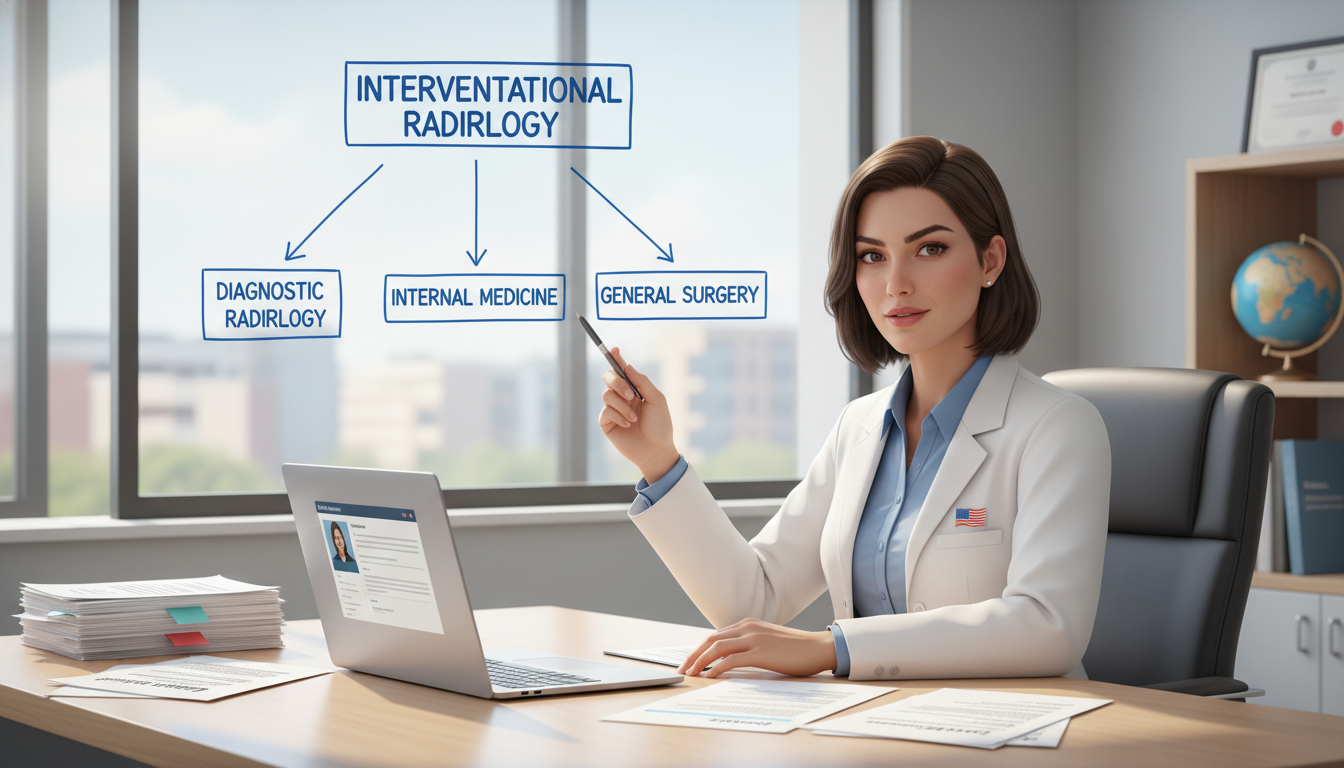
Understanding Why Backup Planning Matters for DO Applicants in Ortho
For a DO graduate pursuing orthopedic surgery, residency planning is high-stakes. Orthopedic surgery remains among the most competitive specialties, and DO applicants historically face additional hurdles—even as integration of ACGME programs has improved access.
A thoughtful backup specialty strategy is not a sign that you lack commitment; it is a professional risk‑management plan. It protects you from an unmatched outcome, preserves your long-term career flexibility, and can actually strengthen your primary orthopedic application when done correctly.
Key realities for a DO graduate in orthopedic surgery residency planning:
- Competitiveness is intense. Even with strong scores, research, and letters, there’s no guarantee of an ortho match (the “ortho match” is especially tight for first‑time applicants).
- DO-specific barriers still exist. Some programs remain de facto MD-heavy; others are more DO‑friendly but receive applications from highly competitive DO and MD candidates.
- One cycle can define multiple years. An unmatched outcome affects your trajectory for at least 1–2 years, sometimes longer, unless you have a structured Plan B.
Your backup specialty planning should be as deliberate as your primary orthopedic strategy. That includes:
- Assessing your realistic competitiveness in the orthopedic surgery residency match.
- Identifying DO‑friendly programs and understanding where your profile fits.
- Choosing a Plan B specialty (or two) that align with your interests and strengths.
- Deciding whether to dual apply and how to execute that without undermining ortho.
- Preparing a coherent narrative for both specialties.
This article focuses specifically on backup specialty planning for a DO graduate in orthopedic surgery—not on how to build an orthopedic application from scratch.
Step 1: Realistic Self-Assessment for the Osteopathic Residency Match
Before any backup planning, you must understand where you stand in the osteopathic residency match landscape as an ortho applicant.
Core Metrics to Review
Board Exams (COMLEX and/or USMLE)
- Are your COMLEX Level 1 and Level 2 scores at or above recent matched ortho DO medians?
- If you took USMLE:
- Are Step scores competitive for ortho (or at least solid enough for DO‑friendly programs)?
- Any failures or significant score drops will weigh heavily and should influence how aggressively you plan for backup options.
Clinical Performance
- Honors or high passes in surgery, internal medicine, and other core rotations.
- Strong performance in orthopedic and surgical sub‑internships (audition rotations).
- Comments on evaluations that highlight work ethic, technical skill, and team fit.
Orthopedic-Specific Experience
- Number and quality of orthopedic away rotations.
- Strength and specificity of orthopedic letters of recommendation.
- Ortho‑related research (even if not first author; case reports count).
Contextual Factors
- DO school reputation and affiliation with ortho programs.
- Geographic restrictions or family obligations.
- Red flags: professionalism issues, delays in training, leave of absence, etc.
Competitiveness Tiers for Ortho DO Applicants
While exact thresholds vary annually, you can roughly think of your profile in three tiers:
Strong Ortho Candidate
- Above-average COMLEX (and possibly USMLE) scores for matched DO ortho residents.
- Multiple ortho audition rotations with excellent evaluations.
- Strong ortho letters and at least some scholarly activity.
- Few or no academic or professionalism red flags.
Borderline Ortho Candidate
- Scores in the lower-but-acceptable range for ortho; maybe one exam weaker.
- Some ortho exposure but limited research or fewer high-impact experiences.
- One or more contextual issues (late specialty decision, fewer away rotations, geographic constraints).
High-Risk Ortho Candidate
- Below-average board scores or a failure on COMLEX/USMLE.
- Limited or late orthopedic clinical exposure.
- Significant red flags (remediation, professionalism concern, leaves of absence) without a clear explanation.
Your tier should directly inform how robust your backup specialty planning must be. Strong candidates might apply primarily to ortho with a targeted backup approach. High-risk candidates should prioritize a strong Plan B and consider seriously whether to dual apply in residency.
Step 2: Principles of Choosing a Backup (Plan B) Specialty
Picking a plan B specialty as a DO graduate aiming for ortho is more than picking “something less competitive.” It should be strategic, authentic, and forward‑looking.
Core Principles
Clinical Overlap with Orthopedic Surgery
- Ideal backup specialties share elements with orthopedics:
- Musculoskeletal focus
- Procedures or interventions
- Team-based care
- This makes your experiences and narrative more transferable.
- Ideal backup specialties share elements with orthopedics:
Realistic Match Probability
- Backup specialties should have:
- Higher match rates than ortho.
- A track record of accepting DO graduates.
- Otherwise, it’s not truly a “backup.”
- Backup specialties should have:
Genuine Interest and Career Satisfaction
- You must plausibly be happy in your backup field.
- You’ll spend a lifetime in this specialty if you don’t re‑enter the orthopedic surgery residency path later.
Pathways Back Toward Musculoskeletal Care
- Some Plan B specialties allow you to build a career still anchored in:
- Sports medicine
- Pain management
- Rehabilitation
- Interventional procedures
- For an ortho‑leaning DO graduate, this can matter a lot.
- Some Plan B specialties allow you to build a career still anchored in:
Compatibility with Your Application Timeline
- You must have time to build a credible application:
- Letters from that specialty.
- At least one rotation in your Plan B field.
- A tailored personal statement and program list.
- You must have time to build a credible application:

Step 3: Common Backup Specialty Options for Ortho-Focused DO Graduates
Below are common backup specialties and how they align with an orthopedic surgery background, especially for a DO graduate.
1. Physical Medicine & Rehabilitation (PM&R)
Why PM&R is a strong backup:
- Heavy emphasis on:
- Musculoskeletal medicine
- Functional recovery
- Rehabilitation after injuries and surgery
- Frequently works closely with orthopedic surgeons.
- Strong alignment with osteopathic principles of holistic, functional care.
- Better match rates than orthopedic surgery, with many DO‑friendly programs.
Pros for DO ortho applicants:
- Your ortho experiences, sports medicine exposure, and MSK exams translate well.
- Viable path to sports medicine or pain medicine fellowships.
- Narrative coherence: “I love function, movement, and musculoskeletal care.”
Challenges:
- Requires clear commitment to PM&R in your application materials.
- Need at least one dedicated PM&R rotation and strong specialty-specific letters.
Ideal for:
- DO graduates who like the MSK system but are open to non-operative management.
2. Anesthesiology
Why anesthesia works as a Plan B specialty:
- Strong presence in the OR environment.
- Interventional procedures and acute perioperative care.
- Multiple DO‑friendly programs and a generally higher match rate than ortho.
Pros for ortho‑leaning DOs:
- You stay closely connected to surgery and intraoperative physiology.
- Can pursue pain medicine or regional anesthesia fellowships.
- Technical and procedural aspects may appeal to those drawn to the OR.
Challenges:
- Less MSK focus than PM&R or sports medicine.
- Requires a clear rationale for shifting from orthopedics to anesthesia, especially in your personal statement.
Ideal for:
- Applicants who enjoy the OR, physiology, and procedural care, and can see themselves primarily in a non-surgical physician role.
3. General Surgery (as a limited backup)
Some DO candidates consider general surgery as a backup, especially if they deeply prefer operative practice.
Pros:
- High overlap in surgical mindset, teamwork, and operative experience.
- Future options: trauma, surgical oncology, minimally invasive surgery.
Cautions:
- General surgery is still competitive and not a “safe” backup.
- Lifestyle and burnout considerations must be understood.
- Some general surgery programs may be wary if they sense you view them as a temporary stop on the way to ortho.
Best used as:
- A partial backup if you’re a strong surgical candidate but open to non‑orthopedic operative practice.
- Often paired with a second, safer backup (e.g., PM&R).
4. Internal Medicine or Family Medicine (True Safety Nets)
For DO graduates with significant risk factors in the ortho match, internal medicine or family medicine can function as more reliable backups.
Pros:
- Generally higher match rates.
- Many DO‑friendly programs nationwide.
- Broad future options (sports medicine via IM/FM, hospitalist, primary care, etc.).
Challenges:
- Less overlap with ortho in day‑to‑day content.
- Requires you to honestly consider a very different career path.
- Your orthopedic-heavy CV must be reframed to highlight continuity, holistic care, or systems thinking.
Ideal for:
- High-risk ortho applicants who want to maximize the chance of matching somewhere in the first attempt.
- Candidates who could be genuinely content in primary care or internal medicine with a sports medicine focus.
Step 4: Dual Applying in Residency: Strategy, Ethics, and Execution
Dual applying residency—applying to more than one specialty in the same cycle—is increasingly common for competitive fields, including orthopedic surgery.
For a DO graduate, dual application can protect against an unmatched outcome but must be executed carefully.
When Should a DO Ortho Applicant Seriously Consider Dual Applying?
Indicators:
- Borderline or high-risk profile for ortho (as described earlier).
- One or more significant red flags (exam failure, late decision, limited away rotations).
- Strong interest in a viable Plan B that you truly see as acceptable.
If you’re a clearly strong candidate with multiple ortho interviews historically expected, you can still dual apply, but most will focus on optimizing their ortho list instead.
Ethical and Strategic Considerations
Honesty with Programs
- You should not misrepresent your intentions.
- However, you do not need to volunteer that you are dual applying unless asked directly.
Maintaining Coherent Narratives
- Ortho personal statement: focus on surgical passion, MSK disease, operative teamwork.
- Backup specialty statement: emphasize overlapping values (function, pain control, OR environment, continuity of care, etc.) tailored to that field.
- Your core “why medicine” theme should be consistent, even if the specialty focus changes.
Application Mechanics
- Two distinct personal statements.
- Specialty-specific letters for each field:
- For example, at least 2 ortho letters + 1 PM&R or anesthesia letter.
- Separate program lists:
- Aggressive ortho list (especially DO‑friendly, community-based, and mid‑tier programs).
- Reasonable but not minimal list for the backup specialty.
Interview Strategy
- Be prepared to answer: “What other specialties are you considering?” honestly but strategically.
- If asked in an ortho interview:
- You can say you’re keeping an open mind, exploring related fields, but that ortho is your clear first choice.
- In a backup specialty interview:
- Emphasize genuine interest in their specialty; do not describe them as second-best.

Step 5: Building a Strong Backup Application Without Weakening Ortho
You want your backup plan to be credible, but you cannot afford to dilute your orthopedic surgery residency application.
Rotation and Letter Strategy
Orthopedic Focus Remains Primary
- Aim for:
- 2–3 ortho away rotations if feasible.
- 2–3 strong ortho letters highlighting your operative potential and work ethic.
- Aim for:
Add 1–2 Backup Specialty Rotations
- A single dedicated PM&R or anesthesia rotation can be enough to:
- Secure 1–2 strong letters.
- Signal genuine interest.
- Schedule these strategically:
- Preferably early enough to obtain letters before ERAS deadlines.
- But not at the expense of essential ortho rotations.
- A single dedicated PM&R or anesthesia rotation can be enough to:
Balance Your Letter Portfolio
- Example for ortho + PM&R dual application:
- 2–3 ortho letters.
- 1 PM&R letter.
- Optional: 1 core clerkship letter (e.g., IM or surgery) if allowed by programs.
- Example for ortho + PM&R dual application:
Tailoring Your Personal Statements
Orthopedic Surgery Statement
- Focus on:
- Why orthopedics specifically (MSK, biomechanics, operative repair, tangible outcomes).
- Ortho‑specific clinical experiences and role models.
- Your long‑term goals in orthopedics.
- Avoid language that implies you’re uncertain about being a surgeon.
- Focus on:
Backup Specialty Statement
- For PM&R:
- Emphasize function, rehab, non‑operative MSK care, patient-centered outcomes.
- For Anesthesiology:
- Highlight OR interest, physiology, acute care, team‑based management.
- For IM/FM:
- Focus on continuity, broad knowledge, whole-person care, perhaps with a sports or musculoskeletal angle.
- For PM&R:
Both statements should be authentic—avoid copying sections verbatim between them.
Program List Construction
For a DO ortho applicant:
Orthopedic Surgery List
- Emphasize:
- DO‑friendly programs (prior DO residents, welcoming culture).
- Community or hybrid academic‑community programs.
- Geographic flexibility, if possible.
- Apply broadly; it is common to submit 60–80+ ortho applications.
- Emphasize:
Backup Specialty List
- Choose:
- A sufficient number of programs to generate interviews (often 20–40+, depending on specialty and your competitiveness).
- Programs with a strong track record of matching DO graduates.
- Choose:
Remember: the goal of a backup specialty is not to have one or two options; it’s to actually match if ortho doesn’t work out.
Step 6: Long-Term Career Planning and “Second Chances”
Planning a backup does not necessarily mean closing the door on orthopedics forever, but you should be realistic about re‑applying.
If You Remain Unmatched in Ortho and Match into a Backup
- Commit to your new specialty.
- You owe it to your patients and your colleagues to be present and engaged.
- Explore musculoskeletal‑adjacent pathways.
- PM&R: sports medicine, pain, spine.
- Anesthesia: pain medicine, regional anesthesia.
- IM/FM: sports medicine fellowship, MSK ultrasound, outpatient ortho‑collaborative practice.
- Occasional transitions are possible but rare.
- Moving from one residency to orthopedics is extremely uncommon and complicated.
- Count on your backup as your likely final specialty, and plan to make it fulfilling.
If You Go Unmatched Entirely
If you apply only ortho (or weakly to a backup) and do not match:
- Consider:
- A research year in orthopedics or related fields.
- A transitional year (TY) or preliminary surgery position (if available).
- Strengthening your profile for a future osteopathic residency match in a backup specialty.
- Recognize that re‑applying ortho after an unmatched year is even more competitive and requires substantial improvement in your application.
This is why robust backup specialty planning on the first attempt is so critical for a DO graduate targeting orthopedic surgery.
Practical Scenarios: How Different DO Applicants Might Plan
Scenario 1: Strong Ortho DO Applicant
- High COMLEX/USMLE scores, multiple ortho rotations, strong research.
- Approach:
- Apply broadly to ortho only or with a light backup (e.g., 10–15 PM&R programs).
- Maintain a primarily ortho‑focused narrative.
- Use PM&R as true safety net, not equal priority.
Scenario 2: Borderline DO Applicant with Some Weaknesses
- Solid but not stellar board scores, 1–2 ortho rotations, minimal research.
- Approach:
- Full ortho application to DO‑friendly and mid‑tier programs.
- Robust dual application to PM&R or anesthesia with at least 20–40 programs.
- One or two backup rotations and specialty-specific letters.
- Two well‑crafted personal statements.
Scenario 3: High-Risk DO Applicant
- Board exam failure, limited ortho exposure, or other major red flag.
- Approach:
- Have an honest conversation with advisors about the true viability of ortho.
- Strongly prioritize a plan B specialty with a higher probability of match (e.g., PM&R, IM, FM).
- If applying to ortho at all, treat it as an aspirational reach while optimizing the backup specialty as your primary path.
FAQs: Backup Specialty Planning for DO Ortho Applicants
1. As a DO graduate, is it risky to tell orthopedic programs that I am dual applying?
Yes, it can be. Some ortho programs may interpret dual applying as lack of commitment. You don’t need to volunteer that you are dual applying. If asked directly, answer honestly but emphasize:
- Orthopedic surgery is your first choice.
- You have related interests (e.g., rehab, pain, PM&R) and are keeping a realistic plan B.
2. What is the best backup specialty for a DO student aiming for orthopedic surgery?
There is no single “best” option, but PM&R is often a top choice because:
- It involves musculoskeletal medicine and function.
- It has reasonable match rates and is relatively DO‑friendly.
- It allows links to sports medicine and pain management. Anesthesiology, internal medicine, and family medicine can also be strong options depending on your interests and risk level.
3. How many backup programs should I apply to if I dual apply?
For most DO ortho applicants, applying to at least 20–40 programs in your backup specialty is reasonable, depending on competitiveness. Submit:
- A broad list of DO‑friendly ortho programs.
- A genuinely adequate list of backup programs so that you have a real chance of matching if ortho doesn’t work out.
4. Can I match a backup specialty now and later switch into orthopedic surgery?
It’s possible but rare and difficult. Switching requires:
- An available ortho spot (often due to attrition).
- Program willingness to take a trainee mid‑stream.
- A compelling, updated application.
You should assume that your plan B specialty will likely be your long-term career and choose it accordingly. Focus on making that field fulfilling, possibly via MSK‑oriented niches like sports medicine, pain, or rehab‑heavy practices.
Thoughtful backup specialty planning is a mark of maturity, not doubt. As a DO graduate in the orthopedic surgery residency match, designing a realistic plan B specialty and possibly dual applying residency can protect your future, align with your genuine interests, and still keep you as close as possible to the musculoskeletal care that drew you to ortho in the first place.