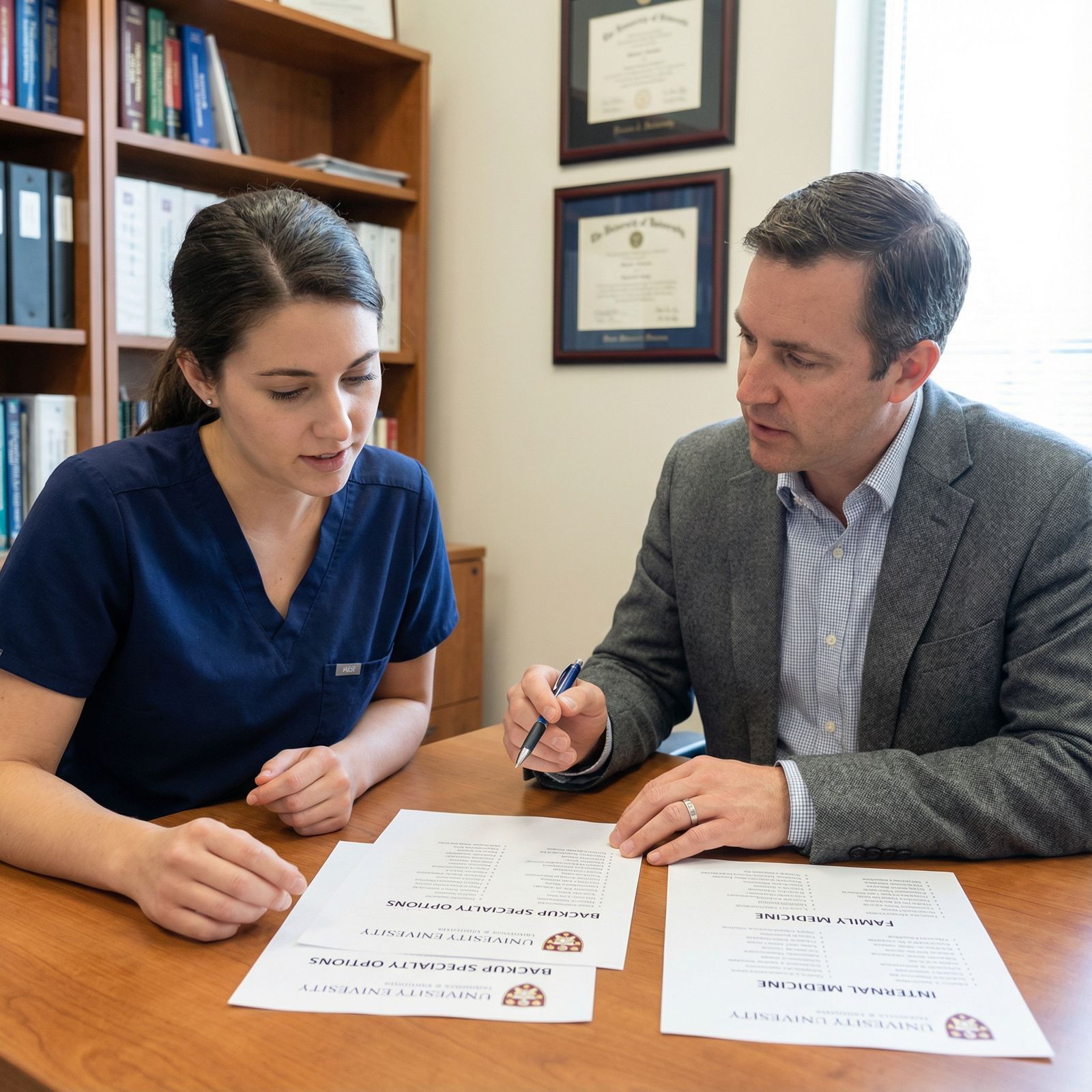
Understanding Backup Specialty Planning as a DO Applying in Ophthalmology
Applying to ophthalmology residency as a DO graduate is exciting—but also uniquely risky. Ophthalmology is a small, competitive field with limited spots, and DO applicants historically face additional hurdles: fewer home programs, variable program familiarity with osteopathic training, and lingering bias in some institutions despite improving trends.
That reality makes backup specialty planning not just smart, but essential.
In this guide, you’ll learn how to:
- Understand your true competitiveness in the ophtho match
- Decide whether to dual apply to residency or focus on a single specialty
- Choose realistic, satisfying plan B specialties that fit your interests and profile
- Strategically organize your applications, personal statements, and letters
- Protect your career trajectory while still giving yourself the best chance to match in ophthalmology
The focus here is on the DO graduate residency experience and the unique challenges and opportunities you face.
1. Why Backup Planning Matters More for DO Ophthalmology Applicants
The Reality of the Ophthalmology Match for DOs
Ophthalmology is among the most competitive specialties, with:
- Fewer total positions compared with large fields like internal medicine or family medicine
- High board score averages
- Strong emphasis on research, AOA/ophthalmology-specific rotations, and letters from ophthalmologists
- Historically, fewer DO-friendly programs (though this is steadily improving in the unified ACGME era)
As a DO graduate, you may face:
- Limited access to ophthalmology departments at your home institution
- Fewer built-in research opportunities in ophtho
- Less program familiarity with your school or osteopathic transcripts
- Potential bias in some academic programs, even if it’s not stated outright
Because of these factors, many DOs interested in ophtho should not rely solely on ophthalmology unless their application is very strong and advised mentors agree.
Risk Assessment: Are You in a “Must Have a Backup” Category?
You should strongly consider having a plan B specialty or dual applying residency if:
- You have no home ophthalmology program and limited ophtho mentorship
- Your USMLE/COMLEX scores are around or below the median for matched ophtho applicants
- You have minimal ophthalmology research or only very recent involvement
- You cannot secure 2–3 strong letters from ophthalmologists (preferably academic)
- You’re applying as a DO to primarily very competitive academic programs without geographic or institutional ties
- You have red flags (failed exam, leave of absence, professionalism concerns)
On the other hand, you might consider a more focused ophtho-only strategy (still with a post-Match contingency plan) if most of the following are true:
- Strong board scores (well above ophtho averages)
- Multiple away rotations with positive feedback
- Robust, sustained ophtho research with posters, abstracts, or publications
- Strong ophtho letters, including at least one from well-known faculty
- Solid mentorship from faculty who routinely place students into ophthalmology
- Reasonable expectation of 10–14+ interviews based on advisor review
Even in this “strong candidate” group, having at least a mental backup plan is wise, especially for DO graduates.
2. Clarifying Your Goals: What Do You Actually Want from Your Career?
Before picking a backup specialty, you need clarity on what you enjoy about ophthalmology and what you need from a career. This helps distinguish between genuine fit and chasing prestige.
Break Down What Draws You to Ophthalmology
Common reasons ophtho appeals to students:
- Procedural and surgical: Cataracts, glaucoma surgery, lasers, intravitreal injections
- Delicate, visually oriented work: Microsurgery, working with optical systems, intricate anatomy
- Clinic-based lifestyle: Predictable hours, fewer emergencies than many surgical fields
- Chronic patient relationships: Glaucoma, diabetic retinopathy, macular degeneration
- Neuro-ophthalmology interest: Interface of neurology and vision
- Impact on quality of life: Restoring/improving sight is deeply rewarding
Write down your top 3–5 motivations and rank them. For example:
- Microsurgery and using my hands
- Mix of clinic and OR with relatively controllable lifestyle
- Longitudinal care of patients with chronic conditions
- Visual diagnostics and imaging
This list will guide your backup specialty choices.
Map Your Preferences to Core Career Elements
Ask yourself:
- How important is operating room time vs. clinic?
- How much do you value a procedural vs. cognitive specialty?
- How strongly do you care about lifestyle, nights/weekends, and call intensity?
- Do you want a shorter training path (e.g., 3 years) or are you okay with 5+ years?
- Are you aiming for academics vs. private practice?
Clarifying these points now prevents you from choosing a backup that you’ll later resent.

3. Choosing a Backup Specialty: Smart Options for an Ophtho-Focused DO
There’s no universal “best” backup, but some plan B specialties tend to align well with the interests and strengths of ophtho applicants. For DO graduates, you must also weigh DO friendliness and realistic match chances.
Below are categories and concrete examples.
A. Ophthalmology-Adjacent or Vision-Related Paths
These aren’t traditional backup specialties for the Match itself, but they’re important contingency options if you don’t match in the ophtho match and don’t dual apply.
1. Transitional Year + Reapply Ophthalmology
- For some unmatched applicants (including DOs), doing a Transitional Year (TY) or prelim medicine year is a way to strengthen the application (more clinical grades, letters, time for research).
- This is more viable if you were already reasonably competitive and just came up short.
2. Vision Science / Postdoctoral Research Fellowship
- If you’re serious about academic ophthalmology, spending 1–2 years in a vision science research lab (ophthalmology, retina, glaucoma, neuro-ophthalmology) can dramatically upgrade your research portfolio.
- Consider this if your main deficit is research output, not clinical performance.
These aren’t backups you apply to through ERAS initially in the same cycle, but they are part of a broader backup strategy.
B. Surgical or Procedural Backups for Ophtho-Minded DOs
If you love the OR and procedures, some more DO-friendly surgical/procedural specialties may be appropriate for dual applying residency.
1. Anesthesiology
Why it fits:
- High-procedure field: intubations, lines, regionals
- OR-based, requires comfort with physiology and acute care
- Generally more DO friendly than many smaller surgical fields
- Mix of lifestyle flexibility and strong compensation in many markets
When to consider:
- You like the OR environment more than the specific organ (eye)
- You’re open to critical care, pain management, or academic anesthesia
- You have solid board scores and can obtain anesthesia letters or at least strong medicine/surgery letters
Practical note: Many ophtho applicants successfully dual apply ophtho and anesthesiology, using overlapping core letters (medicine/surgery) and writing a separate anesthesiology personal statement.
2. Radiology (Diagnostic or Interventional)
Why it fits:
- Appeal to those who like imaging (similar to OCT, fundus photography, visual diagnostics)
- High-tech, visual, problem-solving field
- Interventional radiology offers procedural options
Considerations for DOs:
- Radiology is reasonably DO friendly, especially in community programs and mid-tier academics
- You’ll need letters that reflect interest in radiology; imaging research can help
Best for: Ophtho applicants who enjoy pattern recognition, imaging, and diagnostics more than clinic face-time.
3. ENT (Otolaryngology)
- ENT shares features with ophtho: delicate head-and-neck anatomy, microsurgery, clinic + OR, quality-of-life interventions.
- But ENT is also quite competitive, with similar research and letter expectations.
- As a DO graduate, ENT may not represent a substantially “safer” backup than ophthalmology unless you have specific ENT strengths.
For most DO ophtho applicants, ENT is not an ideal backup unless you are already deeply invested in ENT specifically.
C. Medicine-Based Backups with Procedure Options
If you value longitudinal patient relationships, chronic disease management, and lifestyle, medicine-based specialties can be very satisfying.
1. Internal Medicine (with Future Subspecialty)
Why it fits:
- Flexible platform: You can later subspecialize in cardiology, GI, rheumatology, heme/onc, etc.
- Broad range of academic and community positions; typically very DO friendly
- Some subspecialties offer procedures (e.g., GI endoscopy, cardiology interventions) and strong earning potential
Best for DO ophthalmology applicants who:
- Enjoy complex diagnostics and internal medicine
- Want open doors and future flexibility
- Are okay with less OR time and more cognitive work
You could, for example, pursue neuro-ophthalmology-related neurologic pathways or maintain an academic interest in systemic diseases that affect the eye (diabetes, autoimmune conditions).
2. Neurology
Why it fits:
- Overlaps conceptually with neuro-ophthalmology
- Strong focus on neuroanatomy, imaging, and chronic disease management
- DO friendliness is moderate to good, depending on program and region
Ideal if you enjoy:
- Neuroscience, stroke care, demyelinating disease, epilepsy
- Reading imaging (MRI/CT) and integrating clinical exam findings
Neurology is a common plan B specialty for ophtho-leaning students who gravitate to the nervous system.
D. Primary Care and Lifestyle-Focused Backups
Many DO graduates are drawn to primary care—a core strength of osteopathic training. These specialties can be highly fulfilling and generally more DO friendly.
1. Family Medicine
Why it fits:
- Extremely DO friendly with robust match rates
- Broad scope: peds, adult medicine, women’s health, minor procedures
- Wide geographic flexibility and good work-life balance options
Ophtho-relevant angle:
- You can develop a niche in chronic disease management with ocular complications (diabetes, hypertension) and work closely with ophthalmologists.
- Though you won’t be doing eye surgery, you can still be part of vision-preserving care.
2. Physical Medicine & Rehabilitation (PM&R)
Why it fits:
- Procedural opportunities (injections, EMGs, spasticity management)
- Functional, quality-of-life focus similar to improving vision
- Often quite DO friendly, with a strong osteopathic presence in the field
Good option if you:
- Like multidisciplinary care, rehab, neuromuscular medicine, sports or pain
- Want a mix of procedures and clinic with relatively controllable hours
4. How to Dual Apply Without Sabotaging Your Ophtho Application
Dual applying residency—submitting applications in ophthalmology and a backup specialty in the same cycle—can be done strategically as a DO graduate, but it requires careful planning to avoid sending mixed signals.
A. Timeline Considerations for Ophtho vs Main Match
Ophthalmology participates in the SF Match, which is earlier than the NRMP Main Match (where most other specialties reside).
Implications:
- You must be fully committed and optimized for ophtho early in the cycle.
- If you don’t match in the ophtho match, you still have time to pivot to a backup strategy in the regular NRMP match, but:
- Your interview season will be intense, and
- You may be scrambling to assemble a second, specialty-specific application quickly.
For many DO applicants, the smoother path is to apply to both ophtho and your backup through ERAS from the outset, especially if your competitiveness for ophtho is uncertain.
B. Managing Personal Statements and Letters of Recommendation
To dual apply effectively:
Separate Personal Statements
- One tailored to ophthalmology residency
- One tailored to your backup specialty (anesthesiology, internal medicine, etc.)
- Avoid generic “I love both X and Y” statements—they weaken your perceived commitment.
Letters of Recommendation (LORs)
- Ophthalmology expects letters from ophthalmologists (ideally at least 2) and possibly 1 medicine/surgery letter.
- Your backup specialty will want at least one letter clearly from that field or from a closely allied experience.
- Nearly all programs accept a mix as long as there’s clear support for their specialty.
Example configuration for ophtho + anesthesiology dual apply:
- 2 letters from ophthalmologists
- 1 letter from an anesthesiologist (or strong medicine/surgery attending who can comment on OR/procedural performance)
- For ophtho applications: prioritize ophtho letters + best general letter
- For anesthesiology applications: include anesthesiology letter + strongest general letter + one ophtho letter if it speaks broadly to your clinical skills
C. How Many Programs to Apply To?
There is no universal number, but as a DO graduate you should lean on the higher end of application ranges, especially in ophthalmology.
Rough guide (will vary based on your competitiveness, budget, and advisor input):
- Ophthalmology: 60–90 SF Match programs for an average to slightly below-average DO applicant; fewer if very strong, more if weaker.
- Backup specialty (anesthesiology, internal medicine, etc.): 30–60 programs depending on specialty competitiveness and your metrics.
Always discuss numbers with a dedicated advisor who understands current match data for DO grads.
D. Interview Strategy and Signaling Commitment
You do not have to reveal that you’re dual applying unless specifically asked, and many applicants in competitive fields do it.
However, if a program directly asks:
- Be honest but emphasize that you’d be thrilled to match at their program.
- Frame it as a pragmatic response to competitive realities, not a lack of commitment.
Example answer:
“I’m applying to both ophthalmology and anesthesiology given how competitive ophtho is, especially for DO graduates. Ophthalmology has been a long-term interest, but if I match in anesthesiology, I would be fully committed to building a career in that field. I applied here because your program’s training environment and case mix align well with what I’m looking for.”

5. Practical Steps to Build a Strong Primary and Backup Application
Step 1: Get an Honest Competitiveness Assessment Early
As a DO graduate planning for the osteopathic residency match environment in ophthalmology and beyond, you need data-driven feedback:
- Meet with:
- Ophthalmology faculty (if available)
- Your school’s matching advisor
- Recent DO grads who matched (or didn’t) into ophtho
- Review:
- COMLEX and USMLE scores
- Clinical grades and narrative comments
- Research CV, especially ophtho-related
- Geographic ties and school reputation
Ask them directly:
“If I were your advisee only, would you recommend ophtho-only, dual applying, or primarily backup specialty with a future chance to pursue ophtho-adjacent options?”
Step 2: Build a Coherent Narrative for Both Ophtho and Backup
You don’t want your application to look random. Even with different specialties, aim for thematic consistency:
- If ophtho is about restoring function and quality of life, link your backup specialty to similar values (e.g., PM&R, anesthesiology’s role in perioperative care, family medicine’s role in chronic disease management).
- Emphasize shared core strengths: attention to detail, visual thinking, manual skills, patient communication.
Example narrative connection:
- Ophtho: microsurgery + vision
- Anesthesiology: physiology + perioperative care, high responsibility in the OR
- Common thread: “I enjoy high-stakes environments where attention to detail and steady hands directly affect patient outcomes.”
Step 3: Schedule Rotations Strategically
- Early 4th year: prioritize ophthalmology rotations and away rotations to secure letters.
- Later 4th year: schedule electives in your backup specialty to secure at least one strong letter and confirm your interest.
For DOs at schools without a home ophtho program:
- Try to arrange at least 2 away rotations in ophthalmology at programs known to be DO friendly.
- Simultaneously, plan 1–2 rotations in your backup field (internal medicine, anesthesia, etc.) in the NRMP season.
Step 4: Protect Your Mental Health and Flexibility
Backup planning is not an admission of failure; it’s a responsible response to risk. Many excellent physicians:
- Did not match to their first-choice specialty
- Found fulfilling careers in what began as a “backup”
- Or used a stepping-stone year (TY, research) to ultimately enter their dream field
As a DO graduate navigating ophthalmology and backup decisions, try to view your strategy as building multiple viable paths to a satisfying career, not hedging because you’re unworthy.
6. Putting It All Together: Sample Scenarios for DO Ophtho Applicants
Scenario 1: Moderately Competitive DO Applicant
Profile:
- COMLEX/USMLE: near specialty average
- Some ophtho research, one poster
- One ophtho away rotation, strong evaluation
- 2 ophtho letters, 1 medicine letter
Plan:
- Apply to ophthalmology (70–80 programs) via SF Match.
- Simultaneously apply to anesthesiology (40–50 programs) via ERAS as a backup specialty.
- Schedule 1 anesthesia elective early enough to secure a letter.
- Prepare two personal statements and tailored ERAS experiences descriptions.
Outcome possibilities:
- Match ophtho (preferred).
- Match anesthesiology—fully commit and build a happy career there.
- If unmatched in ophtho but with solid anesthesia options, rank anesthesia highly in NRMP.
Scenario 2: Less Competitive DO with Strong Interest in Ophtho but Multiple Gaps
Profile:
- Scores slightly below average, no ophtho research, late start in specialty
- No home program, difficulty securing more than one ophtho letter
Plan:
- Have an advisor-guided discussion: likely advise primary focus on backup specialty.
- Choose a backup like internal medicine or family medicine, where match chances are high and DO friendliness is strong.
- Still apply to a limited number of ophtho programs if desired (as a long shot), but mentally and logistically prioritize the backup field.
- Explore ophthalmology-adjacent interests (diabetes eye disease, neuro-ophthalmic disorders) within your backup specialty.
Scenario 3: Very Strong DO Applicant with High Ophtho Chances
Profile:
- Above-average board scores, 3+ ophtho publications, multiple strong ophtho letters, known ophtho mentors
- Programs have historically interviewed DOs from your school
Plan:
- Apply ophtho-only with a robust list of programs and strong letters.
- Have a contingency plan ready: TY year or ophthalmology research fellowship if unmatched.
- If anxiety remains high, consider a small-scale dual apply to a highly DO-friendly backup like internal medicine, but primarily aim for ophtho.
FAQ: Backup Specialty Planning for DO Ophthalmology Applicants
1. As a DO graduate, do I have to dual apply if I’m going for ophthalmology residency?
Not necessarily. If you have a very strong ophthalmology profile—excellent scores, robust research, strong ophtho letters, and supportive mentors—you may reasonably apply ophtho-only with a post-Match contingency plan (TY or research). However, because the ophtho match is highly competitive and small, many DO applicants benefit from dual applying residency or at least having a clear plan B specialty.
2. What are the most common backup specialties for DOs applying to ophthalmology?
Commonly chosen backups include:
- Anesthesiology – OR-based, procedural, generally DO friendly
- Internal Medicine – highly flexible, allows subspecialization later
- Neurology – overlaps with neuro-ophthalmology interests
- Family Medicine or PM&R – lifestyle-friendly and very DO friendly
The best backup specialty for you depends on your interests, competitiveness, and long-term goals.
3. Will programs in my backup specialty view me negatively if they suspect I’m primarily interested in ophthalmology?
Programs mainly want residents who will commit fully to their training if matched. If directly asked, you can acknowledge the competitive nature of ophtho and emphasize your genuine interest in and readiness to commit to their specialty. Strong, sincere specialty-specific personal statements and at least one field-appropriate letter are essential to show that your interest is real.
4. If I don’t match ophthalmology, can I still work in a vision-related area later?
Yes. Even if you don’t enter an ophthalmology residency, you can:
- Pursue neurology and focus on neuro-ophthalmologic conditions
- Specialize in internal medicine or family medicine with a niche in managing systemic diseases affecting the eyes
- Engage in vision science research or work closely with ophthalmology departments in academic centers
You won’t be an eye surgeon without an ophthalmology residency, but you can still contribute significantly to vision care and research through other specialties.
Thoughtful backup specialty planning as a DO graduate applying to ophthalmology doesn’t diminish your ambition—it maximizes your chances of building a satisfying, sustainable career in medicine, whether that ends up inside or outside the OR suite with a microscope.