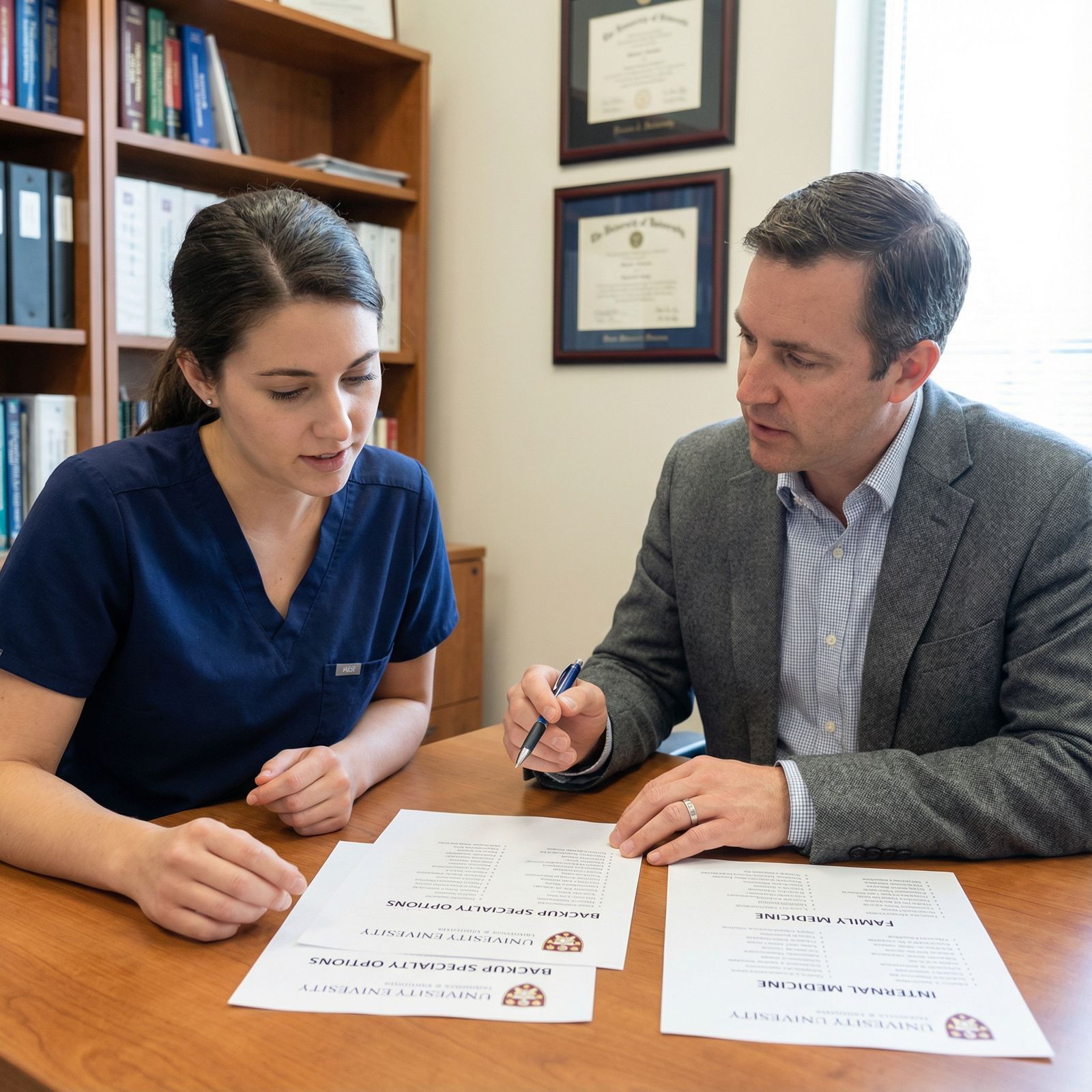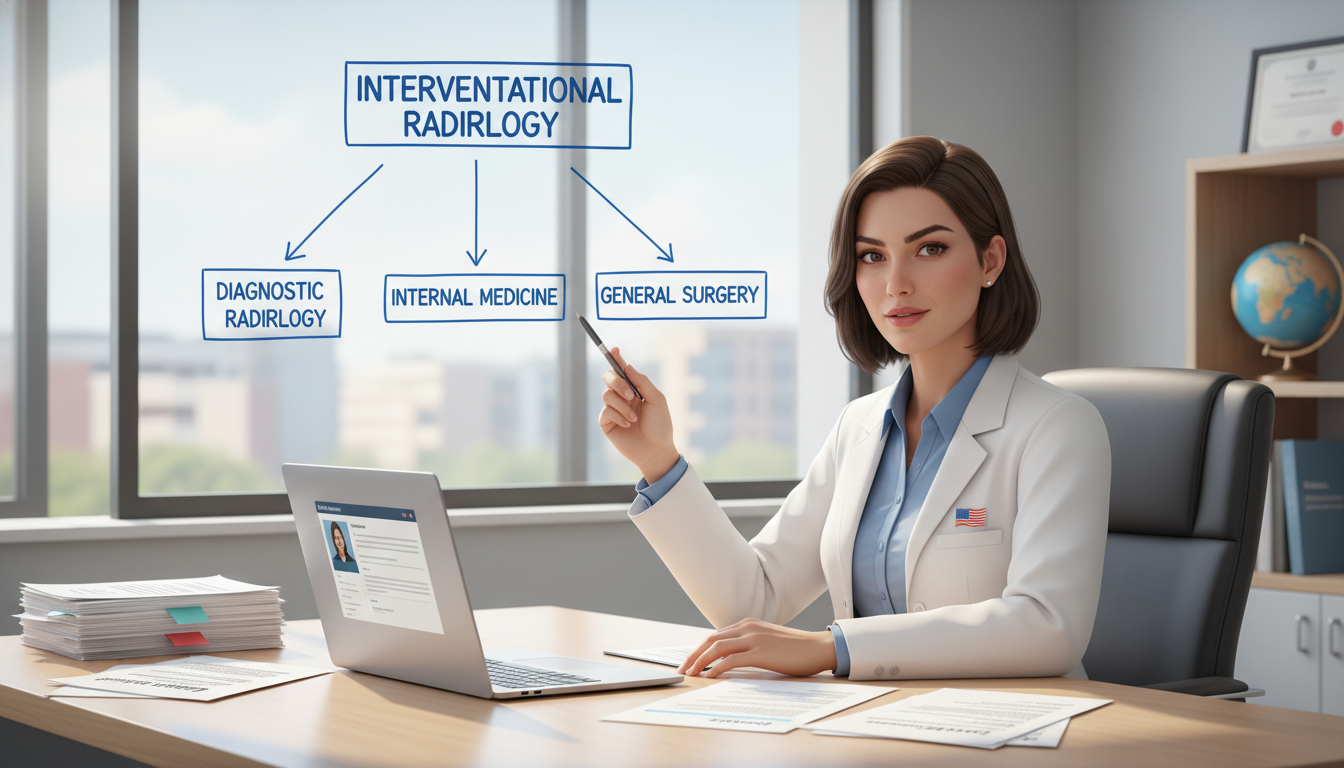
Choosing plastic surgery as a career is bold, competitive, and incredibly rewarding. As a DO graduate, you face an extra layer of strategy in the integrated plastics match—especially around backup specialty planning, dual applying, and building a realistic Plan B specialty without undermining your primary goal.
This article walks through a structured, honest, and DO‑specific approach to backup specialty planning for plastic surgery residency applicants.
Understanding Your Risk Profile as a DO Plastic Surgery Applicant
Before you can design a smart backup plan, you need a clear-eyed view of your competitiveness in the integrated plastics match as a DO graduate.
Why DO applicants face unique challenges
The osteopathic residency match landscape has improved post–single accreditation, but plastic surgery remains one of the most competitive specialties in medicine. DO applicants often face:
- Fewer DO-friendly integrated plastic surgery programs
- Program leadership and faculty bias (explicit or implicit) toward MD applicants
- Limited home programs for many DO schools, which restricts:
- Access to plastic surgery mentors
- Research opportunities
- Sub‑I slots and internal advocacy
Despite this, DO graduates do match into plastic surgery each year—both integrated and independent tracks—but almost always with standout applications.
Key competitiveness indicators for DO applicants
You’ll need to be brutally honest about where you stand. Consider:
USMLE/COMLEX performance
- Did you take USMLE Step 1 and Step 2 CK in addition to COMLEX?
- Scores relative to plastics benchmarks (often 250+ Step 1 historically, 255–260+ Step 2 CK; COMLEX often >600, though programs vary).
- If your scores are below typical plastics ranges, you may need a stronger backup plan.
Research profile
- Number of plastics‑relevant publications, presentations, posters
- Involvement in outcomes, basic science, or clinical plastics research
- Ability to show a coherent academic narrative (e.g., wound healing, hand surgery, craniofacial, outcomes research)
Clinical exposure and letters of recommendation
- Strong away/sub‑I rotations in integrated plastics programs
- Letters from plastic surgeons known in the field (especially at programs that frequently match DOs)
- Evidence you’ve been tested in the OR and clinic and performed at or above intern level
Institution type and mentorship
- Coming from a DO school with a history of plastics matches is a plus
- Strong mentorship and advocacy by faculty who understand the integrated plastics match
The more of these elements you lack, the more heavily you should lean into deliberate backup specialty planning and possibly a dual applying strategy.
Core Principles of Backup Specialty Planning for Plastic Surgery
Backup planning is not about giving up; it’s about risk management and aligning your career with realistic pathways.
Principle 1: Decide early if you will dual apply
Waiting until September of application season to think about a Plan B specialty can sabotage both applications. Instead:
- Begin considering backup options in late MS3 or very early MS4
- Talk with:
- Plastic surgery mentors
- Career advisors at your DO school
- Residents who dual applied or took a nontraditional route
Early planning allows you to:
- Schedule key rotations
- Build backup‑relevant letters
- Tailor your ERAS materials without last‑minute panic
Principle 2: Your backup should be “adjacent,” not random
A Plan B specialty should:
- Share overlapping skill sets with plastic surgery
- Offer pathways back toward plastics‑related work (if desired)
- Be genuinely acceptable to you as a long‑term career if plastics never materializes
This is critical: backup specialty planning must be sincere, not just a checkbox to calm anxiety. Program directors easily detect half‑hearted interest.
Principle 3: Maintain internal honesty and external consistency
Internally, you can rank specialties:
- #1: Integrated plastic surgery
- #2: Closely related surgical or procedural fields
- #3: More distant but still tolerable options (if truly needed)
Externally, your applications (personal statements, letters, interviews) must support the narrative for each specialty separately, without any appearance of “I like you, but I really want plastics.”

Choosing a Backup or Plan B Specialty: Realistic Options for DO Plastics Applicants
The best backup specialties for a DO applicant targeting plastic surgery are those with:
- Hands‑on procedural work
- Overlap in anatomy, OR time, and patient types
- Feasible match odds for your profile as a DO graduate
Below are commonly considered Plan B specialties, with pros, cons, and DO‑specific nuances.
1. General Surgery
Why it’s a top backup choice
General surgery is probably the most common backup specialty for plastics applicants, because:
- Overlapping OR skills (suturing, tissue handling, flap basics)
- Exposure to trauma, breast surgery, oncologic resections, burns—plenty of overlap with reconstructive plastic surgery
- Some plastics fellows are recruited from general surgery backgrounds, especially through independent plastic surgery residencies or microsurgery fellowships.
Pros:
- Clear, established pathway to plastics via:
- Independent plastic surgery residency after general surgery
- Fellowships in breast, wound care, or hand surgery
- Programs often appreciate technically skilled, research‑active applicants
- Many DO‑friendly general surgery programs with reasonable match rates
Cons:
- Lifestyle and call can be intense; plastic surgery may still be hard to obtain later
- Highly competitive academic general surgery programs may still prefer MDs
- No guarantee of plastics fellowship/residency later; you must be okay with a general surgery career
When this works best
- Your research and letters are surgery‑heavy, not purely plastics
- You can convincingly express a passion for broad surgery and acute care
- You’d be content being a general surgeon if plastics never happens
Red flag: If every element of your application screams “plastic surgery only,” some general surgery PDs may worry you’ll leave after a year or be disengaged. Tailoring your materials is essential.
2. ENT (Otolaryngology–Head & Neck Surgery)
Why ENT can be a strong Plan B specialty
ENT has major overlap with craniofacial plastic surgery:
- Facial trauma
- Head and neck reconstruction
- Rhinoplasty and facial plastics (depending on fellowship)
Pros:
- High overlap in fine anatomy and delicate reconstructive work
- ENT facial plastics fellowships exist and can provide a plastic‑like practice
- Many ENT surgeons do significant reconstructive and aesthetic work
Cons:
- ENT is itself a highly competitive specialty
- Not necessarily easier to match into than plastics for a DO graduate
- Fewer DO‑friendly ENT programs; still significant MD preference in many departments
When this works best
- You have strong head & neck or ENT research
- You’ve done ENT rotations or sub‑Is and have letters from ENT faculty
- You’d be happy with a career in general ENT or laryngology/otology even without facial plastics
Caution: ENT is not a “safe” backup in the way that some less competitive specialties might be. For a DO graduate, ENT + plastics dual applying can be a high‑risk, high‑risk combination.
3. Hand Surgery–Relevant Pathways (Orthopedic Surgery or General Surgery)
Many plastic surgeons specialize in hand surgery; conversely, orthopedic surgery is a major pathway into hand surgery fellowships.
Orthopedic surgery as backup:
Pros:
- Strong overlap in upper extremity and microsurgical work
- Hand fellowships accept ortho and plastics graduates
- Many DO‑friendly ortho programs exist
Cons:
- Orthopedic surgery is itself competitive
- Culture, case mix, and long‑term practice may be very different from what drew you to plastics (more trauma, joints, sports)
When it works best:
- You are genuinely interested in musculoskeletal medicine and trauma
- You already have ortho research or rotations
- Hand surgery as a long‑term focus seems appealing
General surgery + hand:
You can also become a hand surgeon via general surgery + hand fellowship, though this is less common than ortho or plastics routes.
4. Dermatology (for Aesthetic/Procedural Focus)
Dermatology may appeal to plastic‑interested students because of aesthetics and procedures (e.g., cosmetics, MOHS reconstruction).
Pros:
- High volume of procedure‑based work
- Aesthetic and cosmetic overlap (fillers, lasers, cosmetic clinics)
- Generally better lifestyle than many surgical fields
Cons:
- Extremely competitive; not a safer backup for most DOs
- Many derm programs strongly favor MDs and heavy research portfolios
- Limited deep reconstructive surgical work compared to plastics
Best for:
- Applicants with very strong board scores and derm‑focused research
- Those who would be equally happy matching derm as plastics
For most DO graduates, dermatology is not a realistic safety net if plastics doesn’t work out.
5. More Realistic Safety‑Net Plan B Specialties
If your metrics are moderate or your plastics‑specific portfolio is thinner, you may want a genuinely more attainable plan B specialty that still offers procedures and some overlap. Options can include:
- Anesthesiology
- Intraoperative environment exposure
- Procedures (lines, regional blocks)
- Lifestyle and job market often favorable
- PM&R (Physical Medicine & Rehabilitation) with a pain or MSK focus
- Procedural (injections, EMG, interventional pain)
- MSK and nerve‑related cases that conceptually overlap with reconstructive work
- Emergency Medicine
- Laceration repair, trauma exposure, procedural sedation
- However, less long‑term reconstructive experience
These specialties are not direct pipelines to plastic surgery, but they may offer more predictable match outcomes, especially for DO graduates.
The key is: Don’t pick a backup only because it’s “easier.” Pick one in which:
- You can see yourself enjoying the day‑to‑day practice
- Your skillset and personality align with the work
- You can articulate a sincere, specialty‑specific motivation

How to Dual Apply Without Self‑Sabotage
Dual applying to plastic surgery and a backup specialty can be an effective strategy, particularly for DO graduates, but it requires precise execution.
1. Map out timelines and rotations early
By the start of MS4, you should have:
- Sub‑Is for plastics scheduled at:
- Any home or affiliated plastics programs
- Known DO‑friendly integrated plastic surgery programs
- Rotations in your backup specialty:
- At least one home or away rotation in your Plan B specialty
- Secure letters from that specialty
This ensures:
- Strong plastics letters and
- Credible backup specialty letters
2. Create distinct application packages
For each specialty, tailor:
Personal statement
- Plastics: emphasize reconstructive philosophy, hand skills, creativity, longitudinal patient relationships, your research niche in plastics.
- Backup specialty: emphasize the core values, patient population, and case types of that field, not just that it’s “surgical.”
Letters of recommendation
- Plastics ERAS set:
- 2–3 letters from plastic surgeons
- Possibly 1 from a general surgeon or research mentor
- Backup ERAS set:
- 2–3 letters from faculty in that backup specialty
- 1 from a surgeon or research mentor who can talk about your work ethic
- Plastics ERAS set:
ERAS experiences
- Order and highlight experiences based on each specialty’s priorities
- Same underlying content, but emphasis can shift slightly (e.g., ENT‑relevant research vs. broad surgery projects)
Avoid any sign in your backup specialty application that you’re using it purely as a safety net. Program directors do not want to be your consolation prize.
3. Plan interview strategy and logistics
Dual applying can double or triple your interview volume—if your applications are strong and aligned. Practical steps:
- Calendar discipline:
Use a spreadsheet to track:- Interview offers
- Travel (if in‑person)
- Interview date ranking by preference
- Rank preference clarity:
- Decide early: if you get both plastics and general surgery offers, where do your boundaries lie?
- Some applicants choose to:
- Attend all plastics interviews, then selectively accept backup specialty interviews
- Or prioritize backup interviews if plastics invites are sparse by late October/early November
4. Maintain professionalism at interviews
During interviews:
- For plastics interviews:
- Don’t mention dual applying unless directly asked
- Focus on your plastics dedication and long‑term goals
- For backup specialty interviews:
- Emphasize how this field aligns with your skills and values
- If asked, “Are you applying to other specialties?” answer honestly but diplomatically:
- “I have a strong interest in [backup specialty] for X, Y, Z reasons and would be fully committed if I matched here. I did also apply to programs in another surgical field that aligns with my interests in reconstructive work, but I’ve been very intentional about only applying to programs in [backup specialty] where I would be genuinely excited to train.”
Scenario‑Based Planning: Putting It All Together for a DO Graduate
Below are practical scenarios that reflect common DO applicant profiles and how backup planning might look.
Scenario 1: Strong DO applicant, near‑competitive metrics
- COMLEX: 640, Step 2 CK: 253
- 2 plastics publications and 3 posters
- 2 plastics sub‑Is at DO‑friendly institutions
- Good letters from plastic surgeons
Plan:
- Primary: Integrated plastic surgery
- Backup: General surgery (with hope for future independent plastics or breast/hand focus)
Strategy:
- Dual apply plastics + general surgery
- 3 plastics letters; 2 general surgery letters
- Fully tailored personal statements
- Attend all plastics interviews; selectively attend general surgery ones at DO‑friendly, academically supportive programs
Scenario 2: Moderate metrics, strong DO clinical performance, limited plastics research
- COMLEX: 595, Step 2 CK: 243
- Minimal plastics research; more generalized surgery exposure
- Only one brief plastics elective
Plan:
- Apply to integrated plastics only if you accept a very low match probability
- Serious backup: General surgery or anesthesiology as realistic Plan B specialty
Strategy:
- Consider whether investing heavily in plastics is worth the emotional and financial cost
- Possibly prioritize general surgery as primary with targeted plastics applications at DO‑friendly programs only—or forgo integrated plastics for now and focus on a strong categorical general surgery match with long‑term reconstructive interest
Scenario 3: Late pivot to plastics, high scores
- Step 2 CK: 260, strong research in basic science but not plastics
- Realized interest in plastics during late MS3
- Limited time for plastics‑specific activities
Plan:
- Primary: General surgery (research‑heavy academic programs that host plastic surgery fellowships)
- Plastics: Limited, targeted integrated applications, or plan for independent plastics later
Strategy:
- Build a narrative around academic surgery and reconstructive interests
- Use your general research productivity as a strength
- Seek a general surgery residency with strong plastic surgery faculty and mentorship available for later independent match
Additional Tips for DO Graduates Targeting Plastic Surgery
1. Know the osteopathic residency match data
Track:
- NRMP data for integrated plastics and your backup specialty
- DO match rates and which programs have historically taken DO graduates
Use tools such as:
- NRMP Charting Outcomes in the Match
- Program websites’ resident lists
- Alumni match lists from your DO school
This protects you from overloading applications to programs that have effectively never interviewed or matched DO applicants.
2. Be strategic with audition rotations
Prioritize:
- Programs that:
- Have a DO in their program or faculty
- Have shown interest in DO applicants in prior years
- Rotations where:
- You can get a strong, detailed letter
- You’ll have meaningful OR exposure, not just shadowing
Similarly, for your backup specialty:
- Choose at least one rotation where you can be truly visible and develop a letter‑writing relationship.
3. Consider a research year if needed
If your application is clearly below the bar for integrated plastics but close enough that improvement might make a difference:
A dedicated research year in plastics can:
- Dramatically increase publications and presentations
- Deepen relationships with plastic surgeons
- Strengthen your case for both plastics and academically oriented general surgery or ENT programs
However:
- This is a big time and financial commitment
- Does not guarantee a plastics match
- May make sense only if you’d be satisfied with Plan B careers at research‑intensive institutions
FAQs: Backup Specialty Planning for DO Graduates in Plastic Surgery
1. As a DO graduate, is it realistic to match integrated plastic surgery without a backup specialty?
It’s possible but risky. If you have:
- Exceptional board scores (USMLE and COMLEX)
- Significant plastics research
- Multiple strong sub‑Is and high‑impact letters you may choose to go “plastics‑only.” However, most DO applicants benefit from at least considering a backup, especially if any part of your application is mid‑range rather than top‑tier.
2. What is the best backup specialty specifically for a DO targeting plastics?
There’s no universal best, but general surgery is the most common and practical backup for a DO graduate. It:
- Aligns with your surgical interests
- Leaves open the possibility of independent plastics or reconstructive fellowships
- Has more DO‑friendly programs than other highly competitive surgical subspecialties like ENT or derm
The “best” Plan B specialty is the one you can genuinely see yourself doing long term if plastics never happens.
3. How do I avoid offending backup specialty programs when they know I’m interested in plastics?
Be honest but strategic:
- Emphasize what you like about their specialty and program
- Avoid framing them as a second choice
- If asked about dual applying, say something like:
- “My interests fall at the interface of reconstructive and procedural care. I applied in a way that reflects that, but I only applied to programs in [backup specialty] where I would be fully committed to training and building a career.”
Programs understand applicants may explore overlapping fields; they just don’t want to feel like a fallback you’d abandon.
4. If I don’t match integrated plastics as a DO, is my plastics dream over?
Not necessarily. Alternatives include:
- Matching into general surgery and aiming for:
- Independent plastic surgery residency
- Breast, wound, or hand fellowships
- Gaining more experience and reapplying after a research year
- Pursuing an adjacent field (e.g., ENT, ortho hand, derm with cosmetic focus) that captures some aspects of plastics you value
However, you must be willing to accept that an integrated plastics path may not materialize and that your Plan B specialty may become your primary career—which is why careful, honest backup specialty planning is so important.
Thoughtful backup specialty planning allows you, as a DO graduate targeting plastic surgery, to protect your future, preserve your options, and still pursue a highly competitive dream in a realistic, strategic way.