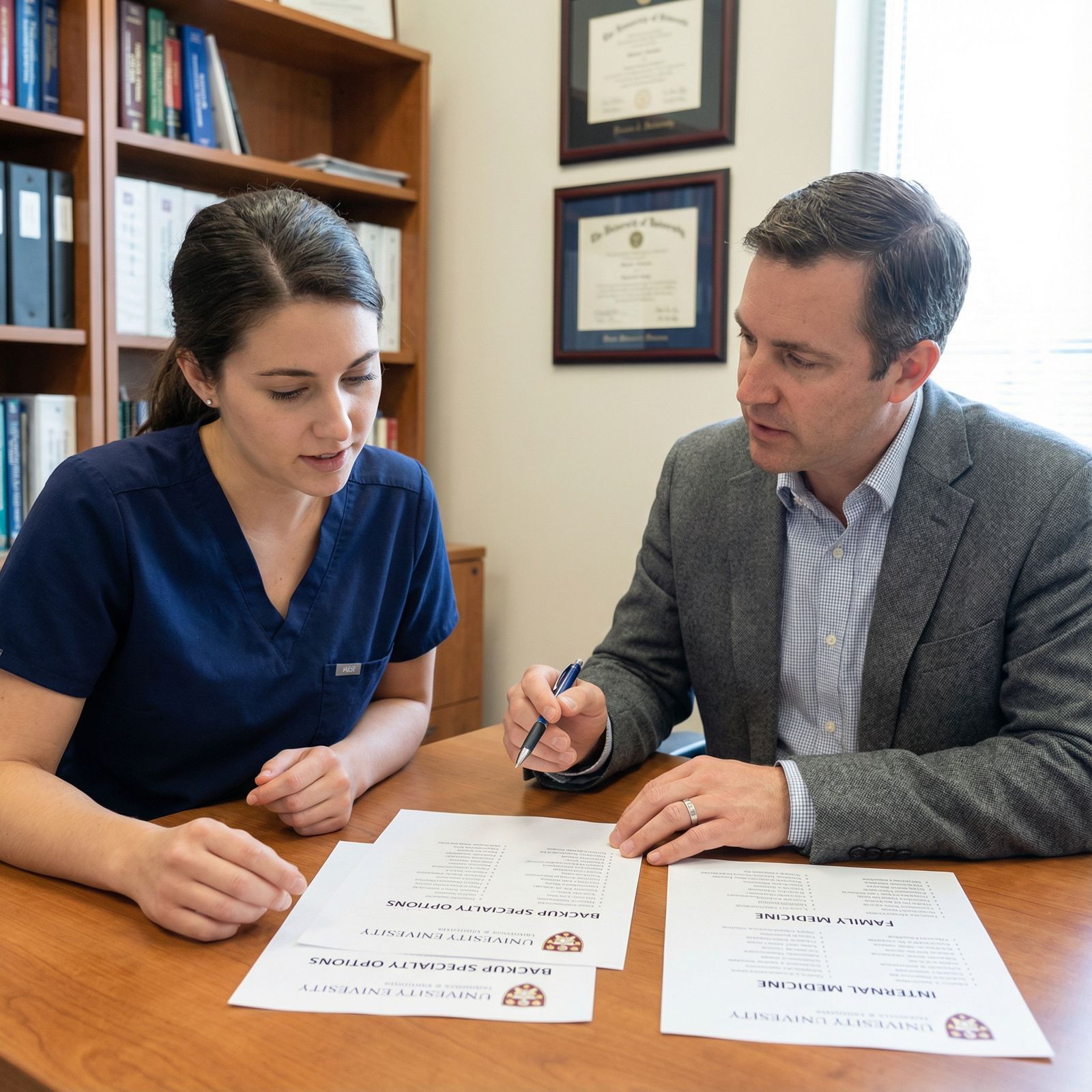
Understanding Why Backup Planning Matters for MD Graduates in ENT
Otolaryngology (ENT) remains one of the most competitive specialties in the allopathic medical school match. As an MD graduate, you may have strong ENT experiences, solid letters, and a focused application—yet still face significant match uncertainty. That’s precisely why intentional backup specialty planning is essential, not optional.
In recent match cycles:
- ENT has had a high proportion of unmatched applicants, including strong MD candidates.
- Program preferences have increasingly emphasized research, audition rotations, and AOA/step scores, which not every applicant has.
- A single less-than-ideal interview season, geographic restriction, or personal factor can markedly increase your risk of going unmatched.
A thoughtful backup strategy doesn’t signal a lack of commitment to ENT; it reflects strategic risk management. Done well, it:
- Protects you from going unmatched while still maximizing your chances in the otolaryngology match.
- Gives you realistic options that fit your interests and strengths.
- Reduces anxiety by converting “I hope it works out” into “I have a plan, even if it doesn’t.”
This article focuses on MD graduates from allopathic medical schools applying to ENT who are considering a backup specialty (or specialties). We’ll cover:
- How to assess your true competitiveness for ENT
- When and how to use dual applying residency strategies
- Criteria for choosing a Plan B specialty that makes sense
- How to manage letters, personal statements, and ERAS logistics
- How to protect relationships with ENT mentors while still applying broadly and safely
Step 1: Honest Competitiveness Assessment in the Otolaryngology Match
Before you can design a backup strategy, you need a clear, honest picture of your standing in the otolaryngology match.
Key Factors Programs Consider
Most ENT programs look at a combination of:
- USMLE/COMLEX scores (if applicable)
- Especially Step 2 CK (with Step 1 now pass/fail)
- Relative to national ENT applicant averages
- Medical school pedigree
- MD graduate from a U.S. allopathic medical school is a strength, but not a guarantee
- Presence of a home ENT department often helps
- ENT-specific experiences
- ENT rotations (home + away/audition)
- ENT research projects, posters, publications
- Involvement in ENT interest groups, conferences, or ENT outreach
- Letters of Recommendation
- Strong letters from ENT faculty (especially program directors or well-known otolaryngologists)
- Evidence of clinical excellence, work ethic, teamwork
- Academic performance
- Honors in core clerkships
- AOA status (if applicable)
- Any remediation or academic red flags
- Non-cognitive factors
- Interview performance
- Communication skills and professionalism
- Evidence of resilience and maturity
Risk Stratification: Where Do You Fall?
You can loosely think of yourself in one of three risk categories:
Relatively Low Risk for ENT Unmatch
- Step 2 CK at or above typical ENT matched MD averages
- Strong ENT research output (e.g., multiple ENT-related posters/pubs)
- At least 2–3 strong ENT letters
- ENT home program or strong away rotation performance
- No major academic or professionalism concerns
Backup strategy: You still consider a backup specialty, but you may opt for a lighter form of dual applying residency, or at least have a clear plan if you don’t match.
Moderate Risk
- Slightly below-average Step 2 CK or limited research
- ENT letters are solid but not from big-name faculty, or fewer letters than ideal
- Limited or no home ENT program, with 1–2 away rotations
- Minor academic issues but overall solid performance
Backup strategy: Strongly consider actively applying to a Plan B specialty, not just keeping it in the back of your mind.
Higher Risk
- Step 2 CK substantially below typical ENT matched MD averages
- Minimal ENT research or weak CV compared to ENT peers
- No home ENT program and difficulty securing away rotations or strong letters
- Previous application cycle in ENT without success
- Significant academic/professional red flags
Backup strategy: You should definitively pursue a robust backup, possibly with broadened geographic reach and possibly more than one Plan B option.
Get External, Honest Feedback
Don’t assess your competitiveness in a vacuum. Seek:
- Your ENT program director (or rotation director’s) perspective
- A trusted ENT mentor who knows the match landscape
- Your school’s Student Affairs or Career Advising office
- Recent graduates who matched (or didn’t match) in ENT
Ask directly:
- “Based on my full application, would you recommend I dual apply?”
- “If this were your child or sibling, would you advise a backup specialty?”
The goal is not to get reassurance, but realistic guidance to frame your backup specialty planning.
Step 2: Principles of Choosing a Backup or Plan B Specialty
Once you’ve acknowledged your level of risk in the otolaryngology match, the next step is carefully choosing a backup specialty that is both realistic and genuinely acceptable to you.

Key Criteria for a Good Backup Specialty
Clinical Overlap and Skill Synergy Ideally, your Plan B specialty should leverage:
- Similar anatomic or procedural interests
- Overlapping patient populations or disease types
- Skills you’ve already built for ENT
This synergy:
- Makes your backup application more credible
- Allows you to re-use some experiences and narratives
- Makes your day-to-day work more likely to feel rewarding
Realistic Match Competitiveness A backup that is nearly as competitive as ENT doesn’t reduce your risk enough. Consider:
- Typical fill rates and unmatched rates
- Your Step 2 CK and academic metrics relative to that specialty
- The interest of that specialty in ENT-like profiles (procedural, research-oriented)
Acceptable Long-Term Career Fit You must be able to say:
“If I match here and never get to reapply ENT, can I live a satisfying career in this specialty?”Ask yourself:
- Does this specialty offer a mix of clinic and procedures I’d enjoy?
- Can I picture myself practicing in this field 10–20 years from now?
- Are there niches (e.g., head & neck oncology, allergy, facial plastics, sleep medicine) that align with my ENT passion?
Geographic and Program Flexibility If you dual apply, your backup specialty should ideally be:
- Competitively attainable given your metrics even if you’re somewhat restricted geographically
- Or, if you’re open geographically, have many programs to spread risk
Common Backup Specialties for ENT Applicants
There is no single “correct” Plan B, but MD graduates interested in ENT often consider:
General Surgery
- Pros:
- Procedural, operative field; anatomy-heavy
- Opportunity to later subspecialize in surgical oncology, plastics, trauma, etc.
- Cons:
- Also competitive at top programs
- Lifestyle and work hours may differ significantly from ENT
- Fit: Good for applicants who strongly prioritize the OR and complex anatomy.
- Pros:
Plastic Surgery (Integrated or Independent Path)
- Often overly competitive as a “backup”; for many, it’s not truly a safer option.
- Only makes sense if you would be equally happy in plastics, and your metrics are strong.
Anesthesiology
- Pros:
- Strong procedural content
- Good job market and lifestyle in many regions
- Still involved in head and neck surgeries and airway management
- Cons:
- Different patient interaction profile (episodic vs longitudinal)
- Fit: For those who like physiology, acute care, procedures, but are flexible about not being the primary surgeon.
- Pros:
Radiation Oncology or Diagnostic Radiology
- Pros (Radiation Oncology):
- Head & neck cancer care overlap with ENT
- Cons:
- Job market concerns in some regions for Rad Onc
- Pros (Diagnostic Radiology):
- Heavy anatomy, including head & neck imaging
- Cons:
- Less direct procedural and patient-facing work (though interventional radiology is more procedural).
- Pros (Radiation Oncology):
Internal Medicine or Family Medicine
- Pros:
- Typically more accessible in the allopathic medical school match
- Can later specialize in Allergy/Immunology, Sleep Medicine, or other fields with ENT overlap
- Cons:
- Much less procedural; may feel far from ENT for some
- Fit: For those who truly enjoy broad medical care and longitudinal relationships.
- Pros:
Neurology or Neurosurgery
- Some overlap in skull base, cranial nerve disorders, dizziness/vertigo.
- However, neurosurgery is highly competitive and not automatically a safer backup.
Balancing Passion vs. Strategy
You should not choose a Plan B specialty purely because it’s “easier to match.” A purely tactical backup that you actively dislike is a setup for long-term dissatisfaction.
Instead, target the intersection of:
- Reasonable match probability for your profile
- Genuine engagement with the patient population and day-to-day work
- Potential to integrate aspects of your ENT interests
Step 3: How to Execute a Dual Applying Residency Strategy (Without Sabotaging ENT)
Many ENT applicants end up pursuing dual applying residency strategies: applying to ENT and at least one backup specialty in the same match cycle. This requires thoughtful planning and strict organization.

1. Timing: When to Decide to Dual Apply
Ideally, you should commit to dual applying before ERAS opens for submission, not as a last-minute reaction:
- Late summer to early fall of the application year is the window to:
- Finalize your ERAS content
- Confirm letters for both ENT and your backup specialty
- Draft two distinct personal statements
Last-minute decisions often result in rushed, lower-quality materials and weaker mentorship engagement.
2. Personal Statements: Separate, Honest Narratives
You will need at least:
- One ENT-focused personal statement
- Emphasize your passion for otolaryngology, ENT experiences, and long-term goals in the field.
- One backup specialty personal statement
- Genuinely explain your interest in that field, not just “I didn’t match ENT.”
Avoid “generic” personal statements that try to apply to both ENT and your Plan B. Programs can recognize vague, non-specific narratives—and it undermines your candidacy in both fields.
For the backup specialty statement, you may:
- Reference a broad interest in anatomy, procedures, or longitudinal care that aligns with both ENT and your backup field.
- Briefly allude to appreciating multiple ways of caring for similar patient populations (e.g., oncology care in Rad Onc vs ENT).
- Focus on why you would be happy and effective in their specialty, independent of ENT.
3. Letters of Recommendation: Clear Separation
You should not simply repurpose ENT letters for non-ENT specialties unless:
- The letter deliberately highlights broad clinical strengths applicable anywhere.
- The letter-writer is a senior faculty member who knows you well beyond ENT.
More ideal approach:
ENT Applications:
- 2–3 letters from otolaryngologists (preferably including your home or away rotation PD).
- Possibly 1 non-ENT letter (e.g., from surgery or medicine) showing your overall clinical excellence.
Backup Specialty Applications:
- At least 1–2 letters directly from that specialty’s faculty.
- Additional letters from core clerkships (medicine, surgery) if appropriate.
Meet with potential letter-writers and be transparent (to a degree you’re comfortable):
- “I’m strongly committed to ENT but, given competitiveness, I am also applying to [backup specialty]. I would be grateful for a letter focusing on my abilities relevant to [backup specialty].”
4. ERAS Application Logistics
In ERAS, you can:
- Assign different personal statements to different programs.
- Assign different sets of letters to ENT vs non-ENT programs.
- Tailor your experience descriptions (especially the top experiences) to emphasize ENT for ENT programs and relevant aspects for the Plan B specialty elsewhere.
Be meticulous with:
- Program lists (clearly labeled ENT vs Plan B in your tracking document)
- Which PS is linked to which program
- Which letters are assigned where
A simple spreadsheet can prevent disastrous errors (e.g., sending an ENT-focused PS to an anesthesiology program).
5. Interview Season: Managing Two Tracks
If you receive interviews in both ENT and your Plan B specialty:
- Prioritize ENT interviews first, if schedule conflicts arise, but do not recklessly cancel all Plan B interviews.
- Consider how many interviews you realistically need:
- ENT: Because of competitiveness, more interviews are typically needed for a reasonable match chance.
- Backup: For a less competitive specialty, fewer interviews may suffice, but this depends heavily on the specialty and your profile.
Be professional if you have to decline or reschedule. Avoid:
- Telling backup specialty programs that they’re “just your fallback.”
- Over-disclosing dual applying in ways that sound non-committal.
If asked directly why you’re applying to their specialty, be honest but diplomatic:
- Emphasize genuine aspects you value in their field.
- You can acknowledge that you explored multiple specialties and that their field stood out to you for specific reasons.
- You do not need to emphasize ENT unless asked explicitly.
6. Rank List Strategy
When it’s time to submit your rank list:
- Rank only programs you’d be willing to attend in either specialty.
- ENT and Plan B programs go on the same list (only one primary match list).
- Think long-term: if your top ENT choices are all extremely competitive, it may be safer to rank several strong backup programs above lower-tier ENT options you’re truly unsure about, or vice versa—depending on your priorities.
This is a highly personal decision. Discuss it with:
- Mentors in ENT and your backup field
- Your career advisor
- Trusted peers who have gone through the match
Step 4: What If You Don’t Match ENT (Even With a Backup Plan)?
Even with a well-planned backup, scenarios may arise:
- You match your backup specialty instead of ENT.
- You go unmatched altogether (e.g., ENT interviews went poorly, or you under-applied in your Plan B).
If You Match Your Backup Specialty
If you match your Plan B specialty:
- Commit fully to being present, professional, and engaged in that residency.
- If you still have long-term ENT aspirations, you can:
- Explore overlapping niches (e.g., H&N-focused oncologic IM, allergy, sleep medicine, facial plastics later via fellowship, etc., depending on the specialty).
- Build relationships with ENT colleagues at your institution.
- Some residents attempt to reapply ENT after 1+ years in another residency:
- This is possible but logistically and emotionally challenging.
- Requires strong program support, clear rationale, and exceptional performance.
If you envision this path, be transparent and ethical about it with your future program leadership once you’ve established trust and a track record of good performance.
If You Go Completely Unmatched
If you did not successfully match into ENT or your backup specialty:
Participate in SOAP (Supplemental Offer and Acceptance Program) if eligible.
- Focus on specialties and programs that align best with your background and long-term viability.
If you remain unmatched after SOAP:
- Meet with your school’s leadership immediately.
- Consider:
- A dedicated research year (ENT or related field)
- A preliminary surgery or transitional year while strengthening your application
- Reassessing whether ENT should remain your primary goal vs pivoting to a more accessible specialty you still find engaging.
Perform a root-cause analysis:
- Were you under-credentialed for ENT?
- Did you apply too narrowly geographically?
- Were there issues in your interview performance?
- Did you misjudge competitiveness in your backup choice?
Use this to recalibrate your strategy for the next cycle.
Step 5: Protecting Relationships and Integrity While Planning a Backup
One of the greatest concerns for ENT applicants considering a backup specialty is:
“How will this affect my relationship with ENT mentors and programs?”
Communicating With ENT Mentors
Most ENT faculty are well aware of the competitiveness of the otolaryngology match and understand the need for risk management. When appropriate:
- Schedule a candid conversation with your primary ENT mentor.
- Share:
- Your commitment to ENT.
- Your concerns about competitiveness.
- Your tentative plan for dual applying residency or a backup route.
A mature approach might sound like:
“I’m deeply committed to a career in ENT and that is still my goal. Given how competitive the match is and where my metrics are, I’m also exploring applying to [backup specialty] as a safety net. I’d value your guidance on how to do this professionally while still putting my best foot forward for ENT.”
Avoiding Ethical Pitfalls
- Do not mislead ENT programs into thinking you’re only applying ENT if that’s not true, especially when asked directly.
- Do not oversell your interest in a backup specialty if you would clearly never consider staying.
- Be mindful of how you talk about your options with peers; gossip can reach faculty.
You can ethically hold genuine interests in more than one specialty. The key is transparency with mentors and professionalism with programs.
Frequently Asked Questions (FAQ)
1. As an MD graduate from an allopathic medical school, do I really need a backup if my Step 2 CK is strong?
Even with a strong Step 2 CK and U.S. MD status, ENT remains highly competitive. A robust test score improves your chances but does not guarantee a successful allopathic medical school match in a field like otolaryngology. The need for a backup depends on your broader application:
- ENT research depth
- Strength of letters
- Away rotation performance
- Any red flags or gaps
If any of these are marginal, a backup specialty is worth serious consideration.
2. Which backup specialty is “best” for an ENT applicant?
There is no universal “best” plan B specialty. Common options for ENT-leaning applicants include general surgery, anesthesiology, radiation oncology, diagnostic radiology, internal medicine, or family medicine with plans for ENT-related niches (e.g., allergy, sleep). The right choice balances:
- Your genuine clinical interests
- Procedural vs cognitive preferences
- Competitiveness relative to your metrics
- Long-term career satisfaction, even if you never reapply ENT
3. Will ENT programs look down on me if they find out I dual applied?
Most ENT program directors understand that dual applying residency is part of life in a competitive match. They’re primarily interested in:
- Whether you are genuinely interested in ENT
- Whether you’ve invested time and effort into ENT experiences and research
- Whether your application signals commitment and readiness
As long as your ENT portfolio is strong and sincere, the fact that you also have a backup does not inherently hurt you. What can hurt is appearing disorganized, noncommittal, or having generic materials that don’t show a clear ENT focus.
4. If I match into my backup specialty, can I still become an ENT later?
Transitioning into otolaryngology after starting another residency is possible but uncommon and highly challenging. It typically requires:
- Outstanding performance in your current program
- Strong support from your residency leadership
- Continued engagement with ENT (e.g., research collaborations)
- Reapplication with competitive ENT metrics and updated letters
Because of the uncertainty, you should only rank a backup specialty if you would be at peace building a full career there, even if ENT ultimately doesn’t happen.
Thoughtful backup specialty planning is an essential part of a modern ENT application strategy, especially for MD graduates targeting a highly competitive otolaryngology match. By assessing your risk honestly, choosing a realistic and meaningful Plan B, and executing a well-organized dual-application approach, you can pursue your ENT dream while preserving your future in medicine—no matter how the match turns out.