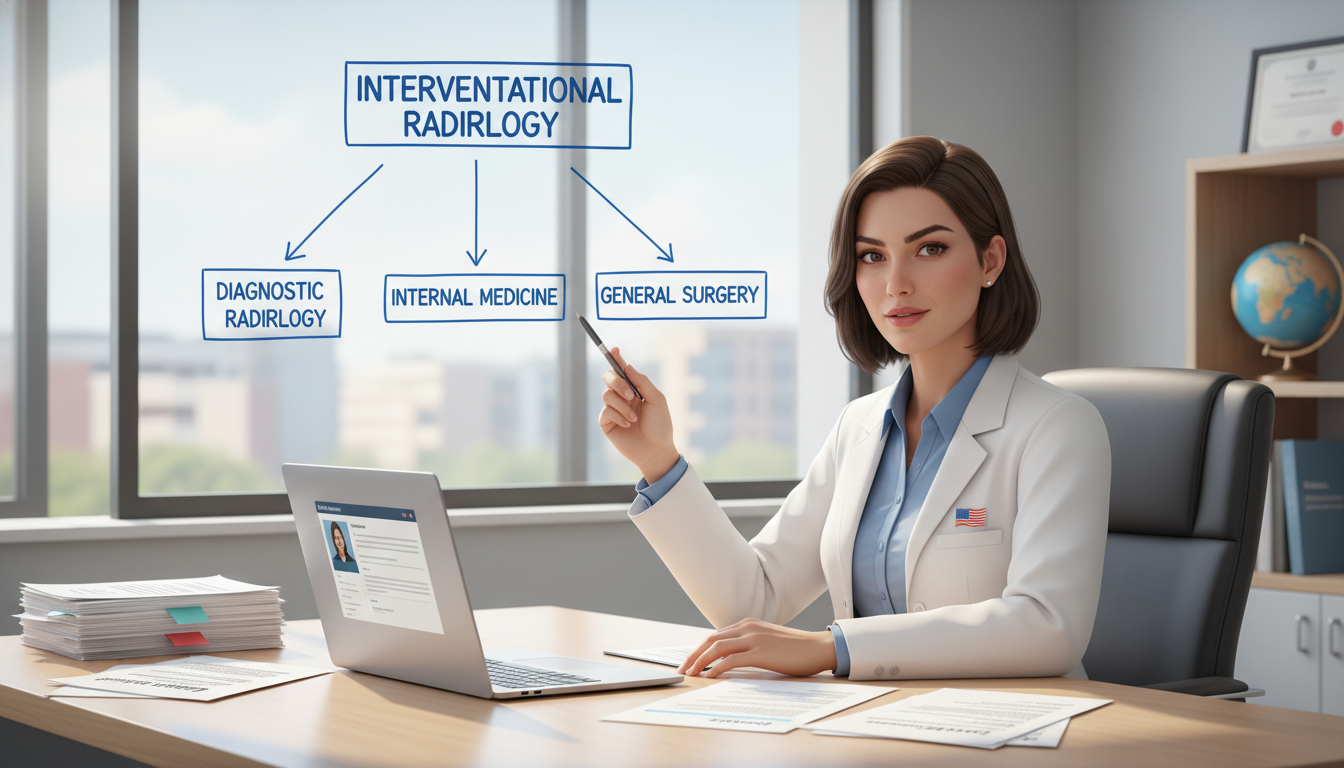
Understanding Why Backup Specialty Planning Matters for Aspiring Plastic Surgeons
For an MD graduate targeting plastic surgery, backup specialty planning isn’t about giving up on your dream. It’s about protecting your future as a physician in one of the most competitive corners of the allopathic medical school match. Thoughtful planning gives you:
- A realistic, data-driven strategy for the integrated plastics match
- A path to still become a plastic surgeon via an alternative route (e.g., general surgery → independent plastics)
- A “plan B specialty” that you could live with and thrive in if plastics never materializes
- Less anxiety because you’re not in an “plastics or bust” scenario
Plastic surgery is among the most competitive specialties in the NRMP match. Even excellent applicants may go unmatched on the first try. As an MD graduate residency applicant, you’re competing with stellar US MDs, DOs, and IMGs, many with extensive research, AOA, and strong mentorship.
Backup specialty planning helps you answer three crucial questions:
- What is my realistic chance of matching into an integrated plastic surgery residency this cycle?
- If I don’t match integrated plastics, what is my best alternative route to plastics?
- If I ultimately don’t become a plastic surgeon, what career path will still be acceptable and fulfilling?
This article walks through a structured, stepwise plan tailored to the MD graduate applying in plastic surgery: how to analyze your competitiveness, choose the right backup specialty, and execute a dual applying residency strategy without sabotaging your primary goal.
Step 1: Honestly Assess Your Competitiveness for Integrated Plastic Surgery
Before choosing any backup, you need a clear-eyed view of where you stand in the integrated plastics match.
Key Factors Program Directors Consider
For an MD graduate residency applicant, programs will look closely at:
USMLE Scores
- Step 1: Now pass/fail, but a fail is a major red flag.
- Step 2 CK: Still a critical objective measure. For competitive plastics, many programs expect scores at or above the national average for matched applicants in competitive surgical specialties.
Medical School Pedigree & Performance
- Top-tier or well-known allopathic medical school can help, but strong applicants can come from any school.
- Clerkship grades, especially in surgery and surgery sub-internships (Sub-I’s).
- AOA or other academic honors, if applicable.
Plastic Surgery Exposure & Letters of Recommendation
- Multiple plastic surgery rotations or sub-I’s (home + away).
- Strong letters from recognized plastic surgeons (preferably program directors or division chiefs).
- Clear demonstration that you understand the field—breadth beyond cosmetic work.
Research and Scholarly Activity
- Plastics is research-heavy at many programs.
- Multiple abstracts, posters, and publications—ideally in plastic surgery or related disciplines.
- A track record of longitudinal scholarly engagement.
Professionalism, Communication, and Fit
- Interview performance, interpersonal skills, and evidence of teamwork.
- Commitment to diversity, leadership, and service.
How to Benchmark Yourself
Use the NRMP Charting Outcomes and recent program-specific data (websites, Twitter/X, presentations) to estimate where you fall:
- Are your Step 2 CK scores near or above the typical plastic surgery match averages for US MD graduates?
- Do you have > 5–10 total abstracts, posters, or publications, with at least some in plastics or surgical research?
- Do you have at least 2 strong letters from plastic surgeons who know you well?
- Did you receive strong clerkship evaluations/surgical Sub-I feedback?
If you’re clearly above average in several of these areas, and your home or away rotations have signaled strong interest, your primary focus can be maximizing your integrated plastics match, with a narrower and more strategic backup plan.
If you are “middle-of-the-pack” or have notable weaknesses (e.g., late plastics exposure, minimal research, academic concerns), a more robust backup (or delayed application with a research year) may be wise.

Step 2: Understand the Main Backup Pathways for Plastic Surgery
When people say “backup specialty” for plastic surgery, they often mean one of two very different strategies:
Backup route to plastic surgery
- Still aiming to become a plastic surgeon, but not via the integrated plastics match.
- Examples: Match into categorical general surgery, otolaryngology (ENT), or another route that can lead to an independent plastic surgery residency or fellowship.
Backup career if plastics doesn’t work out at all
- Choosing a specialty you could practice long-term if independent plastics doesn’t become a reality.
- Example: General surgery, ENT, orthopedic surgery, or a non-surgical specialty that fits your skills and interests.
Your first step is deciding: Am I primarily seeking a detour into plastics, or a true alternative career path?
Common Backup Routes That Can Lead to Plastic Surgery
Historically, independent plastic surgery residencies allowed entry from:
- General Surgery
- Otolaryngology (ENT)
- Orthopedic Surgery
- Urology, Neurosurgery, or other surgical subspecialties (rarer now, and many programs are phasing out these routes)
Today, the most realistic “backup routes” for an MD graduate targeting plastics are:
Categorical General Surgery
- The most common alternative route to plastic surgery.
- After completing general surgery, you can apply to independent plastic surgery fellowships (where still available).
- However, independent spots are limited and competitive; the pipeline continues to shrink as integrated positions expand.
Otolaryngology (ENT)
- Some ENT surgeons pursue facial plastic and reconstructive surgery (a separate fellowship track).
- This can offer a career with a significant overlap in aesthetics and reconstruction, especially of the head and neck.
- But it typically does not lead to full-body plastic surgery practice.
Orthopedic Surgery (particularly hand/upper extremity–focused)
- Hand surgery and peripheral nerve work can overlap substantially with plastic surgery practice.
- Many hand fellowships accept both plastics and ortho residents.
- However, your practice may be very extremity-focused rather than full-scope plastics.
If your absolute priority is to become a plastic surgeon, categorical general surgery is the most flexible backup. But you should be comfortable with the possibility that you might remain a general surgeon for your entire career.
True “Plan B Specialty” Options
If you are considering a career that you’d accept even without plastic surgery down the road, you might consider:
- General Surgery – for those who like operative variety, acute care, and critical care.
- ENT (Otolaryngology) – for head and neck–focused operative practice with reconstructive and aesthetic elements.
- Orthopedic Surgery – for those who enjoy musculoskeletal work and are open to hand/upper extremity focus.
- Dermatology or Mohs Surgery Pathways – for MD graduates interested in skin oncology, reconstruction, and office-based procedures (highly competitive, but appealing to some plastics applicants).
- Anesthesiology, Radiology, or PM&R – not directly plastic routes, but realistic and rewarding careers for those who discover that they value lifestyle or non-operative work more than OR time.
When you consider a plan B specialty, ask:
If I never do a single plastic surgery procedure in my career, would I still be able to see myself happy in this field?
If your honest answer is “no,” you need either to reconsider your backup choice or be ready to extend your timeline (research year, another attempt) rather than pivoting completely.
Step 3: Choosing the Right Backup Specialty (or Route) for You
Selecting a backup specialty isn’t just about match statistics; it’s about aligning your preferences, strengths, and long-term goals with reality.
Key Questions to Guide Your Decision
How certain am I that I want to do plastic surgery above all else?
- If almost 100% certain: Consider general surgery or ENT as a backup route to independent plastics or a related reconstructive/aesthetic path.
- If moderately certain, but open: Explore broader “plan B” options that you genuinely like.
Do I enjoy long hours in the OR?
- If yes: Surgical backups (general surgery, ENT, ortho) make sense.
- If no: You might need to rethink plastics entirely or choose a non-surgical plan B.
What parts of plastic surgery attract me most?
- Aesthetics and cosmetic work → ENT/facial plastics or dermatology/Mohs could be acceptable alternatives.
- Trauma and reconstruction → General surgery, ortho/hand, or ENT with microvascular focus.
- Hand and peripheral nerve → Ortho or PM&R (with interventional spine/pain) may offer parts of what you enjoy.
How strong is my current plastics application?
- Very strong profile → You might dual apply lightly or not at all.
- Borderline profile → More robust dual applying residency strategy is appropriate.
Concrete Dual Applying Residency Models
Here are three realistic frameworks for MD graduate residency applicants in plastics:
Model A: “All-In Plastics with Emergency Plan”
- Who it fits: Very competitive applicants with strong signals from programs.
- Strategy:
- Apply only to integrated plastic surgery residencies.
- Have a preplanned pathway if you go unmatched: take a research year, SOAP into a preliminary surgery spot, or reapply.
- Advantage: No mixed messaging in your application.
- Risk: Unmatched with no categorical backup.
Model B: “Integrated Plastics + General Surgery Backup”
- Who it fits: Good but not stellar applicants who want a plastic surgery–capable backup route.
- Strategy:
- Primary: Apply broadly to integrated plastics.
- Secondary: Apply to categorical general surgery at programs you would be genuinely happy to join long-term.
- Tailor personal statements and letters so each specialty sees you as dedicated to them.
- Advantage: Protects you with a robust surgical career and possible independent plastics route.
- Risk: Some programs may question your commitment if not handled carefully.
Model C: “Plastic Surgery Dream, Alternative Career Reality”
- Who it fits: Applicants who like plastics but are very open to a stable, fulfilling backup specialty.
- Strategy:
- Apply to integrated plastics.
- Also apply to a genuine plan B specialty (e.g., ENT, anesthesia, radiology).
- Be prepared to commit fully to the specialty in which you match.
- Advantage: Strong safety net; less pressure.
- Risk: May never get a shot at plastics again if you match a non-surgical or unrelated field.
The common thread: You must decide in advance how much risk you can tolerate and how many years you’re willing to invest if matching plastics requires multiple attempts.

Step 4: Executing a Smart Dual Applying Strategy Without Sabotaging Plastics
Once you’ve chosen your backup, execution matters. Your goal is to present as a strong, focused integrated plastics applicant while preserving a credible story for your backup specialty.
1. Crafting Personal Statements for Dual Applying
Never use the same personal statement for both specialties. Program directors read between the lines.
Plastic Surgery Personal Statement
- Emphasize your commitment to plastic surgery, your understanding of its scope (reconstruction, microsurgery, hand, craniofacial, burn, aesthetics), and your plastic-specific experiences.
- Highlight your research, technical interests, and longitudinal mentorship in plastics.
- Show insight into the demands of an integrated plastics match and why you’re prepared.
Backup Specialty Personal Statement
- Present a coherent narrative that fits that field specifically (e.g., general surgery’s breadth and acuity; ENT’s head and neck focus).
- Avoid framing it as “if I don’t match plastics, I’ll settle for X.”
- Instead, emphasize overlapping interests (reconstruction, complex operative care) while demonstrating genuine respect for that specialty as a potential lifelong career.
2. Managing Letters of Recommendation
For dual applying residency, you may need separate sets of letters:
For Plastic Surgery Programs
- Aim for 2–3 letters from plastic surgeons (ideally including your department chair or program director) plus 1 other strong surgical letter (e.g., general surgery PD).
- These should explicitly endorse you for integrated plastic surgery.
For Backup Specialty Programs
- Obtain at least 2 letters from faculty in that field (e.g., general surgeons if your backup is gen surg).
- Letters should explicitly recommend you for that specialty, not describe you as “really wanting to do plastics.”
ERAS allows multiple letter combinations; you can assign different sets to different programs. Use this feature strategically.
3. Tailoring Your Application Materials
Program-Specific Signaling (if available)
- If your specialty uses signals or preference signaling, allocate most or all to plastic surgery programs.
- Reserve signals in your backup only if the system allows enough to keep plastics your clear priority.
CV & Experiences
- Keep your plastics-related experiences; they show commitment and rigor.
- Add backup-specialty experiences where possible: a sub-I in general surgery, ENT clinic time, or related research.
Interviews
- When interviewing for plastics: Do not bring up your backup specialty unless directly asked. Focus on your dedication to plastics.
- When interviewing for your backup: Be honest that you appreciate their field on its own merits. If asked directly about plastics, you can acknowledge your interest in operative reconstruction broadly, while making it clear that you would commit fully to their specialty if you match there.
Example answer if a general surgery PD asks about your plastics interest:
“I’m drawn to complex reconstructive surgery and longitudinal patient care, which is why plastics initially appealed to me. As I’ve done more general surgery, I’ve realized how much I enjoy the breadth of cases, critical decision making, and being the central operative consultant for a wide range of conditions. If I match in general surgery, I’d be fully committed and could see myself building a career in trauma, surgical oncology, or acute care, with or without additional fellowships.”
4. Avoiding Mixed Signals That Hurt Your Primary Application
To keep your integrated plastics match chances as strong as possible:
- Do not discuss your dual applying strategy on social media.
- Do not send emails suggesting plastics is your “backup” to another field.
- Maintain professionalism and genuine enthusiasm in all communications.
- If you have a plastic surgery sub-I, treat it as an “audition rotation” and act committed; don’t spend that time openly talking about a different plan B specialty.
Step 5: Contingency Planning If You Go Unmatched in Plastic Surgery
Even with excellent planning, some applicants will go unmatched in the integrated plastics match. This is where your backup strategy becomes reality.
Scenario 1: You Match Your Backup Specialty
If you dual applied and matched a backup specialty:
- Accept the outcome with professionalism and commit to being an excellent resident in that field.
- Reevaluate realistically whether you will pursue an independent plastics route later or whether you will build a career fully within your matched specialty.
- If you still plan to pursue plastics (e.g., via general surgery → independent plastics), start planning early:
- Seek mentors who have taken that route.
- Get involved in research and case logs relevant to plastics.
- Attend multidisciplinary conferences (e.g., hand, wound care, microvascular).
Scenario 2: You Don’t Match Plastics and Don’t Match a Backup (or Didn’t Dual Apply)
If you go completely unmatched:
Participate in SOAP (if eligible)
- Realistically, integrated plastics positions are extremely unlikely to be unfilled.
- Target preliminary general surgery, transitional year, or other positions that keep you connected to surgery.
Consider a Dedicated Research Year
- A plastics-focused research year at a strong academic center can significantly improve your competitiveness.
- Aim for high-yield productivity: publications, posters, national presentations, and deep mentorship.
Reassess Risk Tolerance
- Decide whether you will reapply to integrated plastics, dual apply (plastics + backup), or pivot to a new field.
- Seek honest feedback from your mentors and from plastic surgery PDs, if possible.
Address Application Weaknesses
- Improve exam scores if possible (e.g., Step 3).
- Obtain stronger letters with more direct supervision.
- Polish your personal statement and interview skills.
Scenario 3: You Change Course After Not Matching
Some MD graduate residency applicants, after an unsuccessful integrated plastics match attempt, realize that their happiness may lie in a less competitive or simply different specialty.
If you pivot:
- Choose a field where your plastics-oriented skills (dexterity, aesthetics, meticulousness) are valued—ENT, ortho, dermatology, interventional radiology, or even non-surgical specialties with procedures.
- Frame your plastics experience positively: you sought high-level surgical training and now bring that rigor to your new field.
Practical Tips and Examples for MD Graduates Planning a Backup
To make the principles above more concrete, here are a few real-world–style examples and actionable tips.
Example 1: Highly Competitive US MD Applicant
- Top 20 allopathic medical school
- Step 2 CK: 255+
- 12+ publications, several in plastic surgery journals
- Multiple strong letters from well-known plastic surgeons
- Honors in surgery and Sub-I’s
Recommended Strategy:
- Primary focus: Integrated plastics.
- Apply broadly to plastic surgery programs.
- Consider a narrow backup like 10–15 categorical general surgery programs that you’d genuinely rank only after all plastics programs.
- If you feel confident in interview invites, you may rank only plastics and accept the risk of no backup, or keep gen surg as a “safety net” at the bottom of your rank list.
Example 2: Solid but Not Stellar US MD Applicant
- Mid-tier allopathic med school
- Step 2 CK: ~240
- 3–5 publications, some in surgery but not all in plastics
- Good letters, but only one from a prominent plastics mentor
- Mixed clerkship grades
Recommended Strategy:
- Dual applying residency to integrated plastics and categorical general surgery.
- Complete at least one sub-I in general surgery at a program where you’d be happy matching.
- Obtain 2 strong general surgery letters and 2–3 plastics letters; tailor which ones each program receives.
- Be prepared that you may match gen surg and may or may not pursue independent plastics later.
Example 3: Late-Discovering Plastics Applicant
- Initially thought about internal medicine; discovered plastics late in MS3
- Limited plastic surgery research and exposure
- Average Step 2 CK
- Strong overall CV but no clear “plastics branding”
Recommended Strategy:
- Consider taking a research year in plastic surgery before applying.
- Use that time to build publications, relationships, and concrete experience in the field.
- When applying, seriously evaluate risk and likely competitiveness; dual applying to plastics and a more attainable plan B specialty (e.g., general surgery or ENT) may be prudent.
Frequently Asked Questions (FAQ)
1. As an MD graduate, is it risky for my integrated plastics application if I dual apply to another specialty?
Dual applying residency does carry some risk if it signals a lack of commitment. However, if you:
- Use separate, specialty-specific personal statements
- Obtain appropriate letters for each specialty
- Present yourself as genuinely interested in the field you’re interviewing for
…most program directors will understand that highly competitive specialties necessitate a backup plan. The key is to avoid appearing disinterested or “settling” when you’re in front of them.
2. What is the best backup specialty for someone aiming for plastic surgery?
There is no single “best” plan B specialty. For MD graduates whose primary goal is still plastic surgery, categorical general surgery is the most flexible route, since it can lead to independent plastics training and offers a broad operative career if plastics doesn’t materialize.
For others, ENT, ortho, derm, or even non-surgical fields may be better matches depending on lifestyle, interests, and personality. The best backup is one you could realistically practice long term and still feel fulfilled.
3. Can I still become a plastic surgeon if I match into general surgery?
Yes, but it is increasingly competitive and not guaranteed. The integrated plastics match has reduced the number of independent spots, and the bar remains high. If you pursue this route:
- Seek early mentorship from plastic surgeons at your institution.
- Get involved in plastics-related research and cases.
- Aim to excel in your general surgery residency (evaluations, technical skills, leadership).
- Be prepared for another highly competitive application cycle when applying for independent plastics.
4. Should I delay applying to the match and do a plastics research year instead of dual applying?
If your application is currently not competitive for integrated plastics (e.g., minimal research, limited exposure, or academic concerns) and you are strongly committed to plastic surgery, a dedicated research year can be an excellent investment. It:
- Strengthens your CV with publications and presentations
- Gives you deeper understanding of the field
- Builds relationships with mentors who can advocate for you
However, it also delays your income and training start by a year. You’ll need to balance your commitment to plastics against your financial, personal, and time constraints. Some applicants will do a research year then apply primarily to plastics with a lighter backup strategy; others may still choose to dual apply even after a research year.
Thoughtful backup specialty planning does not diminish your dedication to plastic surgery. It reflects maturity, self-awareness, and a realistic understanding of the integrated plastics match. By deliberately assessing your competitiveness, choosing the right plan B specialty or route, and executing a cohesive dual applying residency strategy, you can protect your future as an MD graduate while still giving yourself the best possible shot at your dream field.