Why Backup Specialty Planning Is Essential for Non‑US Citizen IMGs Aiming for ENT
Otolaryngology–Head and Neck Surgery (ENT) is among the most competitive residency specialties in the United States. For a non‑US citizen IMG or foreign national medical graduate, the barriers are even higher: visa requirements, fewer interview offers, and programs with implicit or explicit preferences for US graduates.
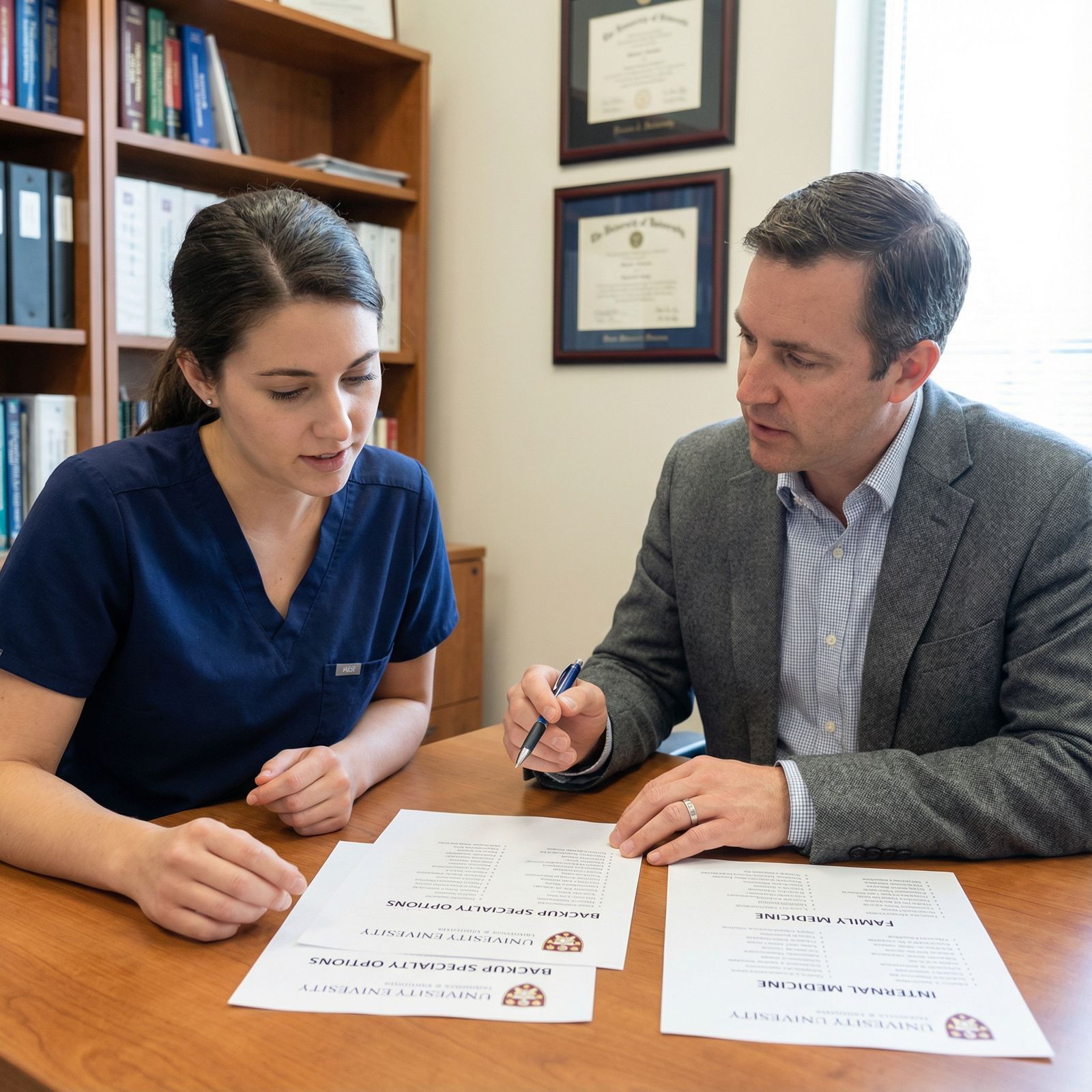
A deliberate backup specialty strategy is not an admission of defeat; it is risk management. You can still prioritize an ENT residency while protecting your chances of matching into a training pathway that leads to a satisfying career in the US.
This guide will walk you step‑by‑step through how to:
- Understand your realistic odds as a non‑US citizen IMG in the otolaryngology match
- Decide whether dual applying to another field makes sense for you
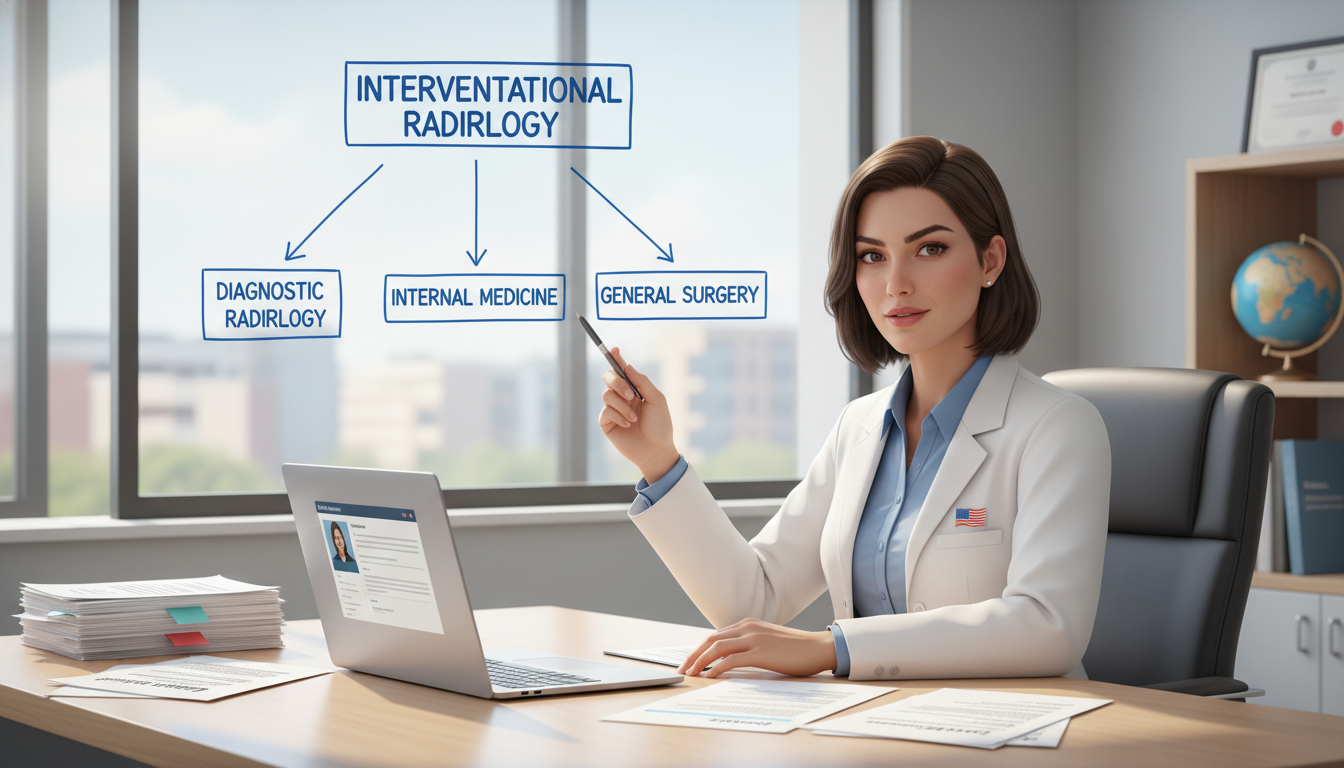
- Identify strong backup and “plan B” specialties that align with ENT interests
- Structure a coherent application strategy so you don’t look unfocused
- Avoid common mistakes that sabotage both your primary and backup applications
Throughout, the focus is on practical advice specifically for non‑US citizen IMGs and foreign national medical graduates.
Understanding Your Risk Profile in the ENT Match as a Non‑US Citizen IMG
Before you pick a backup specialty, you need to understand why a backup is so important.
1. Competitiveness of ENT (Otolaryngology)
ENT is consistently in the top tier of competitive specialties. Key factors:
- Limited number of residency positions nationwide
- High interest from US MD seniors with strong metrics
- Heavy emphasis on research and letters from academic otolaryngologists
- Many programs historically taking few or no IMGs in a given year
For a non‑US citizen IMG, you’re competing not only on academic merit but also against institutional preferences and visa limitations.
2. Additional Barriers for Non‑US Citizen IMGs
As a foreign national medical graduate, you face structural disadvantages:
- Visa sponsorship constraints:
- Not all ENT programs sponsor visas (especially H‑1B).
- Some accept only J‑1, some none, and a minority are flexible.
- IMG filters and “quiet” preferences:
- Programs may filter out IMGs via ERAS or may rank them lower.
- Even without formal “US grad only” policies, subjective preferences exist.
- Limited US clinical exposure:
- Many IMGs have fewer US rotations in ENT, resulting in weaker US-based letters.
This does not mean you can’t match ENT—but the risk of not matching is significantly higher than for a US MD senior.
3. When Is a Backup Specialty Almost Mandatory?
Consider dual applying or a robust backup if:
- Your USMLE/COMLEX scores are below recent averages for matched ENT applicants.
- You have no or minimal US research in otolaryngology.
- You lack strong US letters from ENT faculty.
- You require sponsorship for a visa as a non‑US citizen IMG.
- You have had attempts or gaps in your academic record.
- You are geographically restricted (family, spouse, etc.).
If you check several of these boxes, relying on ENT alone is high‑risk. A serious backup or “plan B specialty” dramatically reduces your chances of going unmatched.
Principles of Smart Backup Specialty Planning for ENT‑Focused IMGs
1. Define Your Primary Goal and Your Floor
You should clearly separate two concepts:
- Primary goal: Match in otolaryngology (ENT) in the US.
- Minimum acceptable outcome (“floor”): Match somewhere in the US GME system in a specialty you could reasonably see yourself practicing.
Your backup specialty should represent that “floor”—a field where, if ENT doesn’t work out, you could still be satisfied and build a viable career.
2. ENT‑Adjacent vs. ENT‑Distant Backup Specialties
Most ENT‑aspiring applicants think about two categories:
ENT‑adjacent specialties: share similar anatomical focus, operating room time, or patient population.
- Examples: General Surgery, Plastic Surgery (including integrated), Neurosurgery, sometimes Ophthalmology.
- Pros: Overlapping skills and interests. Easier narrative for your personal statement.
- Cons: Many of these are also highly competitive and may not be a true “safety net.”
ENT‑distant but practical specialties: more open to IMGs, higher number of positions, relatively less competitive.
- Examples: Internal Medicine, Family Medicine, Pediatrics, Psychiatry, Neurology, sometimes Anesthesiology or Pathology.
- Pros: Stronger safety net, more programs, more IMG‑friendly.
- Cons: Less overlap with ENT; requires careful narrative framing to avoid looking inconsistent.
A realistic backup strategy for a non‑US citizen IMG often involves one ENT‑adjacent and/or one ENT‑distant specialty, or a single ENT‑distant specialty if your risk is very high.
3. Assess Your Profile Honestly
Ask:
- Are my scores and experiences competitive even for ENT‑adjacent alternatives like General Surgery or Plastic Surgery?
- Are there enough programs in my backup field that historically take non‑US citizen IMGs on visas?
- Do I have time to build separate experiences (rotations, letters, a small project) in my backup specialty before application season?
If your profile is already marginal for ENT and barely competitive for other surgical fields, your backup specialty should probably lean toward a less competitive, more IMG‑friendly field.

Choosing Backup Specialties That Make Sense for an ENT‑Focused Foreign National Graduate
Below are common backup or plan B specialty pathways, with their pros, cons, and specific considerations for non‑US citizen IMGs who want ENT.
1. General Surgery as a Backup
Why people pick it:
General Surgery shares the OR‑based, procedural nature of ENT. Many residents interested in head and neck work feel at home in a surgical environment.
Pros:
- Significant overlap in operative mindset, anatomy, and peri‑operative care
- Potential to subspecialize later in surgical oncology, endocrine, or other fields
- Can maintain involvement with head and neck oncology services in some institutions
- Programs often value surgical research and strong work ethic, which ENT applicants typically have
Cons:
- Still quite competitive; not an “easy match,” especially for non‑US citizen IMGs
- Many categorical General Surgery programs are selective with visa sponsorship
- Long, demanding training; not ideal if your true passion is primarily clinic‑based ENT
Strategic use:
Best as a backup if you already have solid surgical rotations, maybe a sub‑internship in surgery, and if your USMLE scores are good but slightly below ENT averages. If your metrics are weak even for surgery, this is not a safe plan B.
2. Internal Medicine as a Practical Plan B
Why people pick it:
Internal Medicine has a large number of positions and is more IMG‑friendly, with many J‑1‑friendly programs. It is often the most realistic “floor” for non‑US citizen IMGs.
Pros:
- High number of program spots nationwide
- Many programs are accustomed to sponsoring J‑1 visas
- Broad career opportunities: hospitalist, primary care, or fellowship (e.g., Cardiology, Pulmonology, Oncology)
- Strong academic IM departments may still allow some ENT‑related research collaborations on the side
Cons:
- Clinically very different from ENT—mostly non‑surgical
- Requires a very different narrative in your personal statement and interview
- Some ENT‑focused applicants may feel dissatisfied in non‑procedural roles if they truly love the OR
Strategic use:
Ideal if you want a high‑probability backup while still making a serious attempt at ENT. Many non‑US citizen IMGs choose Internal Medicine as their primary plan B specialty in a dual applying residency strategy.
3. Family Medicine or Pediatrics
Why people pick them:
These fields often have many IMG‑friendly positions and broad geographic distribution.
Pros:
- Generally less competitive than ENT and major surgical fields
- High need in many regions; more open to visa sponsorship (especially J‑1)
- For Pediatrics: potential to engage with ENT‑relevant problems (recurrent otitis, airway issues) on the outpatient side
Cons:
- Very different daily practice from OR‑based ENT
- Income and lifestyle expectations may differ from surgical subspecialties
- May require re‑framing your long‑term interests as primary care or child‑focused
Strategic use:
Good as a high‑safety backup when your metrics or time for preparation are limited, or when you strongly prioritize matching in the US over a surgical career at any cost.
4. Anesthesiology, Neurology, and Psychiatry
These specialties fall somewhere between “highly competitive” and “moderate,” depending on the year and region.
Anesthesiology:
- OR‑based environment; some procedural overlap.
- Visa and IMG policies vary, but many programs are open to IMGs.
- Good if you like physiology, acute care, and the OR but can accept a non‑surgical role.
Neurology:
- Growing specialty, often IMG‑friendly.
- Shares some head and neck/neurosensory focus (neuro‑otology, vestibular disorders) conceptually.
- Less procedural, but can be very academic with subspecialty options.
Psychiatry:
- In recent years, competition has increased, but still more accessible than ENT.
- Strong demand for psychiatrists, including in underserved regions, often with J‑1 spots.
- Very different clinical domain; choose only if you can genuinely imagine a psychiatry career.
5. Plastic Surgery, Neurosurgery, Ophthalmology as “Adjacent” but High‑Risk Backups
These are very high‑risk backup specialties:
- Plastic Surgery (integrated): as or more competitive than ENT; limited positions; rarely a realistic backup.
- Neurosurgery: extremely competitive and long training; similar visa and IMG challenges.
- Ophthalmology: competitive and uses a separate match (SF Match), requiring even more planning.
For most non‑US citizen IMGs, dual applying to another very competitive surgical subspecialty is not a true safety net. This might make sense only if:
- You have exceptionally strong metrics,
- Major research and US letters in both fields, and
- You are psychologically prepared for a high risk of going unmatched.

How to Structure a Dual Applying Strategy Without Weakening Your ENT Application
Dual applying to ENT and a backup specialty is common but must be done carefully. Programs can detect a confused or insincere application.
1. Decide Your Primary and Secondary Fields Early
Ideally, by the end of the third year of medical school or at least 8–12 months before applying, decide:
- ENT is your primary target.
- Backup specialty X (e.g., Internal Medicine or General Surgery) is your secondary plan.
This gives time to:
- Arrange 1–2 rotations in your backup field
- Secure at least one letter from faculty in that specialty
- Possibly join a small research or quality improvement project
2. Separate Your Application Materials
You must tailor:
Personal statements:
- ENT PS: Focus on head and neck anatomy, surgery, operative cases, ENT research, mentorship by otolaryngologists, ENT‑specific experiences.
- Backup PS: Genuinely explain what attracts you to that field—patient population, longitudinal care, specific rotations, mentors in Internal Medicine or Family Medicine, etc.
Letters of Recommendation (LoRs):
- ENT application: Preferably 2–3 letters from ENT faculty + 1 from another surgical or core clerkship attending.
- Backup specialty: At least 1–2 letters from faculty in that specialty (e.g., Internal Medicine attending for IM, surgery attending for Gen Surg).
Avoid sending ENT letters to non‑ENT programs unless they explicitly say it is acceptable, and vice versa.
3. Manage Your Program Lists Intelligently
For a non‑US citizen IMG:
ENT list:
- Focus on programs that have historically taken IMGs or non‑US citizens.
- Prioritize those that explicitly mention visa sponsorship.
- Include smaller or mid‑tier academic programs and community‑based ENT programs, not only “big‑name” institutions.
Backup specialty list:
- Include many more programs than ENT (for example, 60–100+ Internal Medicine or 30–60+ General Surgery, depending on competitiveness).
- Filter by visa sponsorship, IMG‑friendliness, and geographic openness.
- Use FREIDA and program websites to confirm visa policies (J‑1 vs. H‑1B, IMG requirements).
4. Prepare for Interviews in Both Fields
Practice answering:
- “Why ENT?” and “Why [backup specialty]?” in ways that are independent and sincere, not contradictory.
- For ENT interviews:
- Emphasize your ENT‑specific experiences, research, and long‑term goal in otolaryngology.
- For backup specialty interviews:
- Do not say, “I really want ENT but I’m using your field as a backup.”
- Instead, focus on genuine aspects you appreciate in that specialty and your commitment to training if you match there.
You don’t need to lie; you do need to frame each specialty in a way that makes sense and respects the field.
Visa, Timing, and Long‑Term Career Strategy Considerations
1. Visa Type and Its Impact on Backup Planning
For a non‑US citizen IMG, visa issues are central:
J‑1 visa
- Common for residency training; many IMG‑friendly programs sponsor it.
- Requires home‑country return or a waiver after training; this can affect long‑term career plans.
- Most ENT and backup specialties will have more J‑1 than H‑1B options.
H‑1B visa
- Fewer programs offer H‑1B sponsorship due to administrative and cost burdens.
- If you require H‑1B only, your program lists—for ENT and backup—shrink significantly.
- Some applicants broaden their backup specialty choice to maximize H‑1B‑sponsoring programs (e.g., certain Internal Medicine or Neurology programs).
When exploring backup specialties, systematically check:
- Does this field have many J‑1/H‑1B friendly programs?
- Are those programs open to IMGs?
2. What If You Don’t Match ENT but Match Your Backup?
For many foreign national medical graduates, this is the most realistic outcome if they dual apply.
If you match your backup specialty:
- Commit fully to your training. Residency is demanding; ambivalence will make it harder.
- Seek ways to stay connected to ENT‑related content only if it does not interfere with your primary training (e.g., research collaborations, electives).
- Understand that switching specialties after starting residency is difficult and not guaranteed; it should not be your main plan.
3. What If You Go Completely Unmatched?
If you match neither ENT nor your backup specialty:
You have several options:
- Pursue a dedicated ENT or clinical research fellowship in the US (often unpaid or modestly paid) to strengthen your CV.
- Pursue another year of research or observerships, with better publications and newer letters.
- Reassess whether ENT is realistically attainable as a non‑US citizen IMG, and consider reapplying with a stronger backup specialty emphasis (e.g., focusing on Internal Medicine next cycle).
In your reapplication, your backup specialty strategy becomes even more important, as a second unmatched cycle is very damaging.
Practical Step‑by‑Step Plan for a Non‑US Citizen IMG Targeting ENT with a Backup
Here is a concrete roadmap you can adapt.
Year Before ERAS (or 6–12 Months Before Applying)
- Clarify priorities: ENT is primary; choose a realistic backup (e.g., Internal Medicine or General Surgery).
- Analyze your CV: Scores, research, US rotations, letters, visa status.
- Arrange rotations:
- ENT sub‑I or electives if possible.
- 1–2 rotations in backup specialty (e.g., medicine, surgery, pediatrics).
- Start or continue research: At least one active project in ENT; if possible, one in your backup field.
3–6 Months Before ERAS Opens
- Secure Letters of Recommendation:
- ENT: 2–3 from ENT faculty.
- Backup: 1–2 from core or specialty‑specific attendings.
- Draft personal statements: One for ENT, one for backup.
- Build program lists:
- ENT: Focus on IMG‑ and visa‑friendly programs.
- Backup: Larger list with many IMG‑friendly options.
During ERAS Submission
- Submit separate PS and LoR combinations tailored to each specialty.
- Apply broadly within your realistic budget.
- Track which programs get which documents; avoid accidental crossover (ENT PS to IM programs, etc.).
During Interview Season
- Prepare two sets of interview narratives: “Why ENT?” and “Why [Backup]?”
- Be consistent, positive, and committed in each specialty’s interviews.
- Rank lists: Rank ENT programs where you’d genuinely go first, then backup programs according to your preferences.
Frequently Asked Questions (FAQ)
1. As a non‑US citizen IMG, is dual applying to ENT and another specialty viewed negatively?
No, as long as your application to each specialty is coherent and sincere. Programs do not see what other specialties you applied to. Problems arise only if your documents or interview answers appear generic or contradictory. Tailored personal statements, appropriate letters, and consistent narratives usually avoid this issue.
2. Which backup specialty gives me the highest chance of matching if ENT doesn’t work out?
For most non‑US citizen IMGs, Internal Medicine is the most realistic high‑probability backup due to:
- Many positions nationwide
- Extensive history of accepting IMGs
- Frequent J‑1 visa sponsorship
Family Medicine, Pediatrics, Psychiatry, Neurology, and some Anesthesiology programs can also be good plan B specialties, depending on your interests and the visa climate.
3. Can I use General Surgery as my only backup specialty for ENT?
You can, but it’s risky. General Surgery remains competitive, and many programs limit IMG and visa spots. If your profile is strong (high scores, solid US experience, research), this may be a defensible approach. However, for many non‑US citizen IMGs, a second, less‑competitive backup (such as Internal Medicine) is safer if your top priority is to match into any US residency.
4. If I match into my backup specialty, can I later switch to ENT?
Switching specialties is possible but uncommon and depends on several factors:
- Availability of open ENT positions (rare)
- Support from your current program
- Visa constraints and GME funding limits
You should not rely on switching as your primary strategy. If you match a backup specialty, assume you will complete that training and build a career there. If, later, a realistic and ethical pathway to ENT appears, you can explore it, but it should be seen as a bonus, not a plan.
Thoughtful backup specialty planning allows you to pursue your ambition in otolaryngology while respecting the realities faced by non‑US citizen IMGs and foreign national medical graduates. By analyzing your risk, choosing ENT‑compatible and practical backup options, and structuring a coherent dual applying residency strategy, you significantly improve your chances of matching into a fulfilling US training program—whether in ENT or a well‑selected plan B specialty.