Why Backup Specialty Planning Matters So Much for US Citizen IMGs in Neurosurgery
If you are a US citizen IMG and your dream is neurosurgery residency, you are aiming for one of the most competitive—and smallest—fields in medicine. That alone makes careful backup specialty planning essential. As an American studying abroad, you face both the usual hurdles of a brain surgery residency applicant (high scores, research, letters) and the additional challenges of being an IMG (fewer interview invitations, limited familiarity from PDs, visa assumptions even as a US citizen).
Neurosurgery programs take very few residents per year, and many rank lists are filled long before they reach non-US MD applicants. Even strong US MD applicants sometimes go unmatched in neurosurgery. For a US citizen IMG, it is crucial to think strategically about:
- Your probability of matching neurosurgery this cycle
- Which backup specialty (or specialties) fits your interests, skills, and long‑term goals
- Whether dual applying residency is right for you—and how to do it without sabotaging your neurosurgery chances
Solid backup planning does not mean giving up on neurosurgery. It means designing a realistic, layered strategy so that:
- You keep yourself in the neurosurgery pipeline as long as possible, and
- You do not end up completely unmatched if neurosurgery doesn’t work out this year.
The goal of this article is to walk you through a structured way to choose a plan B specialty (or several), tailored to a US citizen IMG aiming for neurosurgery.
Step 1: Understand Your Competitive Position as a US Citizen IMG
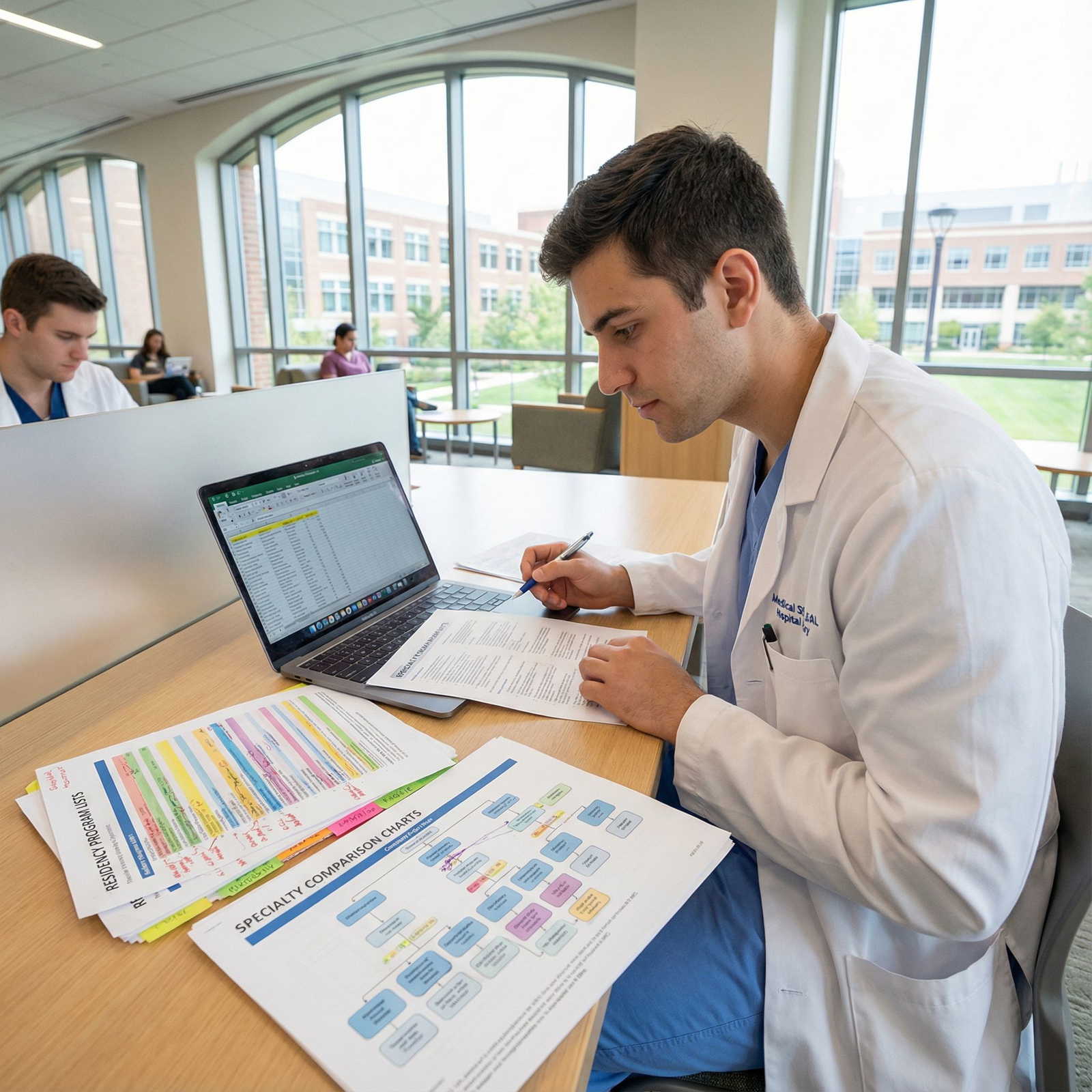
Before you can choose a backup specialty, you need a candid appraisal of where you stand. Program directors do this; you should too.
Key Factors That Matter for Neurosurgery Applicants
USMLE Scores
- For neurosurgery, Step 2 CK is critical now that Step 1 is pass/fail.
- Programs often prefer scores significantly above national means for surgical fields.
Clinical Performance and Letters
- Honors in core clerkships (especially Surgery, Neurology)
- Strong neurosurgery sub‑internship evaluations
- Letters from US neurosurgeons who are known to program directors
Research and Academic Productivity
- Neurosurgery places heavy emphasis on research—especially clinical or translational neuroscience, neuro-oncology, spine, vascular, functional neurosurgery, or neurocritical care.
- Abstracts, posters, and especially manuscripts (published or accepted) add substantial weight.
US Clinical Experience (USCE)
- As an American studying abroad, high-quality US rotations are crucial to demonstrate familiarity with the US system.
- Ideally: at least one neurosurgery rotation and a few surgical or neuro-related electives at US academic centers.
IMG-Specific Challenges
Even as a US citizen IMG (no visa issues), programs may:- Be less familiar with your school’s curriculum and grading.
- Wonder about the rigor and clinical exposure compared to US MD schools.
- Have policies or traditions favoring US MD or DO grads.
Self-Assessment: Are You in “High Chance,” “Borderline,” or “Long Shot” Territory?
Consider these informal tiers:
Relatively Strong Neurosurgery Applicant (for a US citizen IMG)
- Excellent Step 2 CK score
- Multiple neurosurgery‑specific rotations in the US
- Several neurosurgery or neuroscience publications or accepted manuscripts
- Strong letters from US academic neurosurgeons
- Clear commitment to the field (conferences, leadership, etc.)
Borderline but Viable Applicant
- Solid Step 2 CK but not exceptional for neurosurgery
- 1–2 neurosurgery rotations, perhaps at mid-tier centers
- Some research, maybe not all in neurosurgery
- Good letters, but not from major “name” neurosurgeons
Long Shot for Neurosurgery (This Cycle)
- Below-average Step 2 CK for surgical fields
- Minimal or no US neurosurgery rotations
- Limited research, especially neurosurgery-specific
- Letters from non-surgeons or unknown faculty
Your honest assessment influences how aggressively you should pursue a backup specialty, how many programs to apply to in each field, and whether to consider a multi-year strategy (e.g., a research fellowship first) instead of immediate dual applying residency.
Step 2: Criteria for Choosing a Backup or Plan B Specialty
Choosing a backup specialty is not just about “what’s easiest to match.” You need to think about:
- What you can live with long-term if you end up in the backup specialty
- How well your neurosurgery application materials transfer
- How program directors in that specialty perceive dual applicants
Here are high-yield criteria to consider:
1. Alignment With Your Core Interests
Neurosurgery appeals to students who like:
- The brain and nervous system
- Long, complex surgeries
- High-acuity, high-stakes decision-making
- Intensive care and perioperative management
Your plan B specialty should ideally share some of these characteristics. Otherwise, you risk long-term dissatisfaction.
2. Overlap in Rotations, Research, and Letters
The more overlap between neurosurgery and the backup specialty, the more efficient your application effort:
- Neurology, PM&R (especially neurorehab), and radiology (especially neuroradiology) can leverage your neuro-focused background.
- General surgery, orthopedic surgery, and ENT share surgical skills and OR experience.
- Anesthesiology and critical care share perioperative and ICU exposure.
Consider where your existing letters, research, and experiences will be valued rather than seen as “off-topic.”
3. Realistic Match Probability for a US Citizen IMG
Some fields are more IMG-friendly than others, but competitiveness fluctuates. As a US citizen IMG, you have an advantage over non-US IMGs (no visa sponsorship issues), but many specialties still view international schools cautiously.
Look for specialties where:
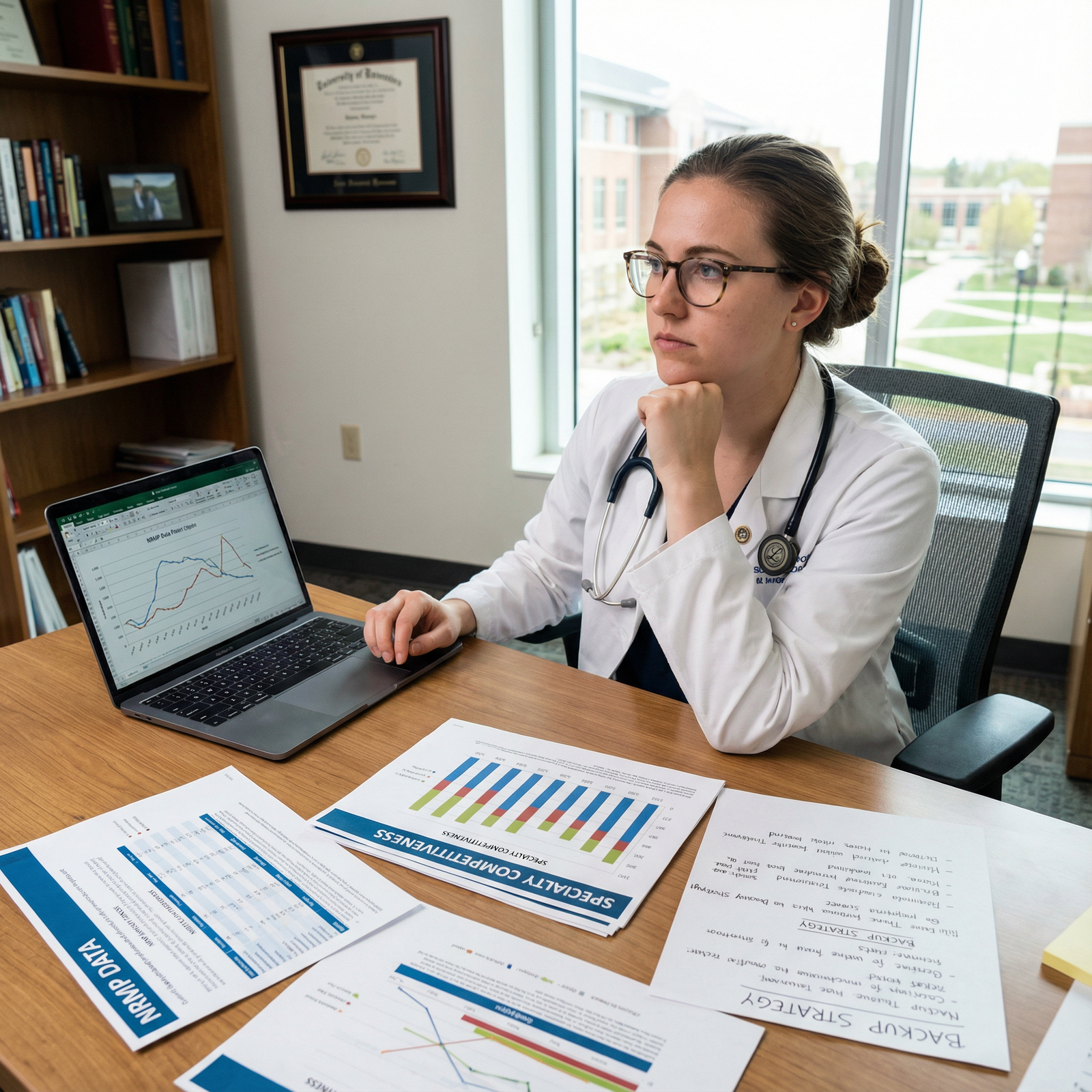
- Recent NRMP data show a non-trivial percentage of positions filled by US IMGs.
- There is some history of taking applicants with strong Step scores and surgical or neuro interest, even from non-US schools.
4. Lifestyle, Personality Fit, and Long-Term Satisfaction
Do not ignore lifestyle and personality fit. Ask yourself:
- Do you want a procedure-heavy career, clinic-heavy, ICU-heavy, or mixed?
- How much do you value schedule predictability vs. excitement and acuity?
- How important is long-term patient continuity versus episodic care?
You might be willing to sacrifice lifestyle for neurosurgery because it is your dream. For a backup specialty you might do for 30+ years, you should be more deliberate.
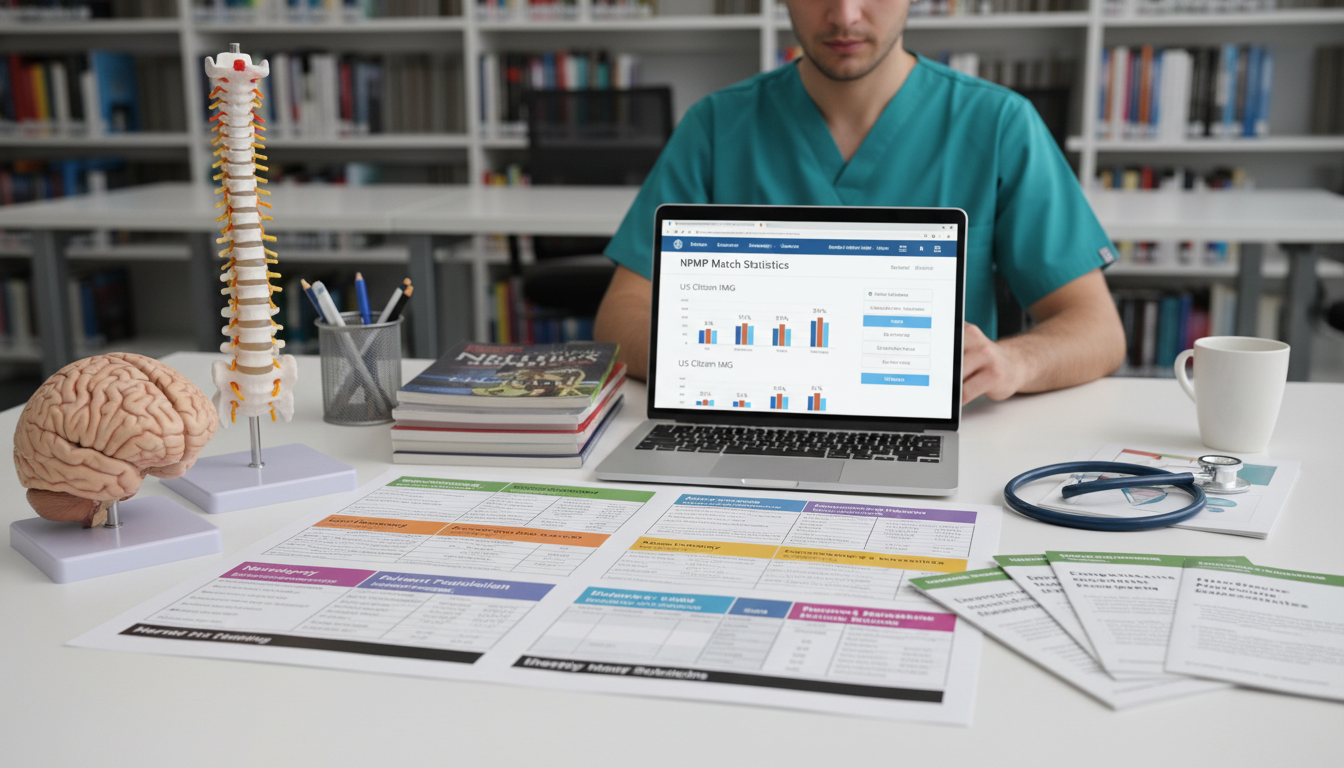
Step 3: High-Yield Backup Specialties for Neurosurgery-Focused US Citizen IMGs
Below are specialties commonly considered as backup or plan B options for neurosurgery applicants. None is “perfect,” but each offers different trade-offs.
1. Neurology
Why it fits:
- Deep alignment with your interest in the brain and nervous system
- You can still work closely with neurosurgeons, especially in academic centers
- Potential to subspecialize in stroke, epilepsy, neurocritical care, neuroimmunology, etc.
Pros for a US citizen IMG neurosurgery applicant:
- Your neuroscience background, neurosurgery rotations, and neuro-related research are highly relevant.
- Many neurology programs are IMG-friendly, including some academic centers.
- Opportunities for neurocritical care or stroke fellowships that keep you in the high-acuity realm.
Cons and considerations:
- You lose the surgical, hands-on aspect that drew you to neurosurgery.
- Some neurosurgery programs may be uneasy if they suspect you are primarily a neurology applicant; careful messaging is essential.
Practical tip:
If neurology is your backup specialty, ensure you have at least one strong neurology letter, and tailor a subset of your personal statements specifically to neurology. Emphasize your passion for neuro-disease mechanisms, longitudinal care, and interdisciplinary work with neurosurgery.
2. Physical Medicine & Rehabilitation (PM&R)
Why it fits:
- Strong overlap with neurosurgery patient populations: spinal cord injury, traumatic brain injury, stroke, neuromuscular disease.
- Opportunities to work closely with neurosurgery and ortho spine services.
- Growing field with fellowships in pain, spinal cord injury, TBI, sports, interventional spine, and more.
Pros for US citizen IMG neurosurgery applicants:
- Often more welcoming to IMGs than many surgical subspecialties.
- Values musculoskeletal, spine, and neuroanatomy knowledge—all strengths of a neurosurgery-oriented student.
- Offers procedural opportunities (EMG, injections, interventional pain/spine) that may appeal to procedure-oriented applicants.
Cons and considerations:
- Very different OR exposure profile compared to neurosurgery; less time in the operating room.
- Reputation for better lifestyle but also lower compensation and prestige than neurosurgery in some markets.
Practical tip:
If considering PM&R as a Plan B specialty, try to secure at least one PM&R elective or rotation, ideally in a US program that is known to take IMGs. Make explicit connections in your personal statement between your neurosurgery interest and your passion for functional recovery and longitudinal neurorehab.
3. Diagnostic Radiology
Why it fits:
- Heavy reliance on neuroimaging; a neurosurgery-focused background translates well.
- You will interpret brain and spine images daily, and work closely with neurosurgeons and neurologists.
- Later fellowship options in neuroradiology or interventional radiology.
Pros for US citizen IMG neurosurgery applicants:
- Your neuroanatomy expertise and neuroimaging experience are assets.
- Radiology tends to value strong exam performance and analytical skills.
- Some programs are open to US IMGs, particularly with high scores.
Cons and considerations:
- Direct patient contact is limited compared to neurosurgery.
- Competition varies year to year; some cycles are very tight.
- Interventional radiology (a path to procedural work) is competitive in its own right.
Practical tip:
If you’re dual applying to neurosurgery and radiology, you need at least one radiology letter and possibly a dedicated radiology elective that highlights your imaging skills. Be prepared to answer why radiology (and not just neurosurgery) genuinely appeals to you.
4. General Surgery
Why it fits:
- Maintains your identity as a surgeon.
- Provides broad operative exposure, trauma experience, and critical care.
- Future options include surgical critical care, trauma, vascular, etc.
Pros for US citizen IMG neurosurgery applicants:
- Your neurosurgery rotations count as robust surgical experience.
- OR comfort, procedural skills, and ICU experience are directly relevant.
- Some surgeons respect the ambition and technical inclination of neurosurgery-minded students.
Cons and considerations:
- General surgery is itself competitive in some regions, and not all programs are IMG-friendly.
- Long training pathway and challenging lifestyle.
- You will not be doing brain surgery residency; neurosurgery “reentry” after general surgery is extremely rare.
Practical tip:
If general surgery is your backup specialty, pursue at least one dedicated general surgery or trauma sub‑I in the US and obtain strong surgery letters (ideally from non-neurosurgeons). Tailor your general surgery personal statement to emphasize broad surgical interest, not just neurosurgery.
5. Anesthesiology and Critical Care Paths
Why it fits:
- Continuous exposure to neurosurgery cases in the OR and ICU.
- High-acuity patient management, airway skills, and physiology-intensive practice.
- Multiple fellowship options: critical care, pain, cardiac, regional, etc.
Pros for US citizen IMG neurosurgery applicants:
- Your OR familiarity and neurosurgical case exposure can be reframed as strengths.
- Anesthesiology has historically been more open to IMGs than some surgical subspecialties (though competitiveness fluctuates).
- ICU and neuroanesthesia can keep you close to the neuro world.
Cons and considerations:
- Different professional identity: you are not the primary surgeon but a perioperative and critical care expert.
- Image of being a common “backup” specialty can make program directors wary of lack of genuine interest.
Practical tip:
If anesthesiology is your plan B specialty, secure at least one anesthesia elective in the US and an anesthesiologist letter that testifies to real enthusiasm for the specialty, not just as a default after neurosurgery.
Other Possibilities
Depending on your interests, you could also consider:
- Emergency Medicine – for high-acuity, procedural, and trauma-adjacent work.
- Internal Medicine → Neurocritical Care or Stroke Fellowships – if you enjoy longitudinal and ICU-based neurology.
Each requires its own dedicated rotations, letters, and demonstration of authentic interest.
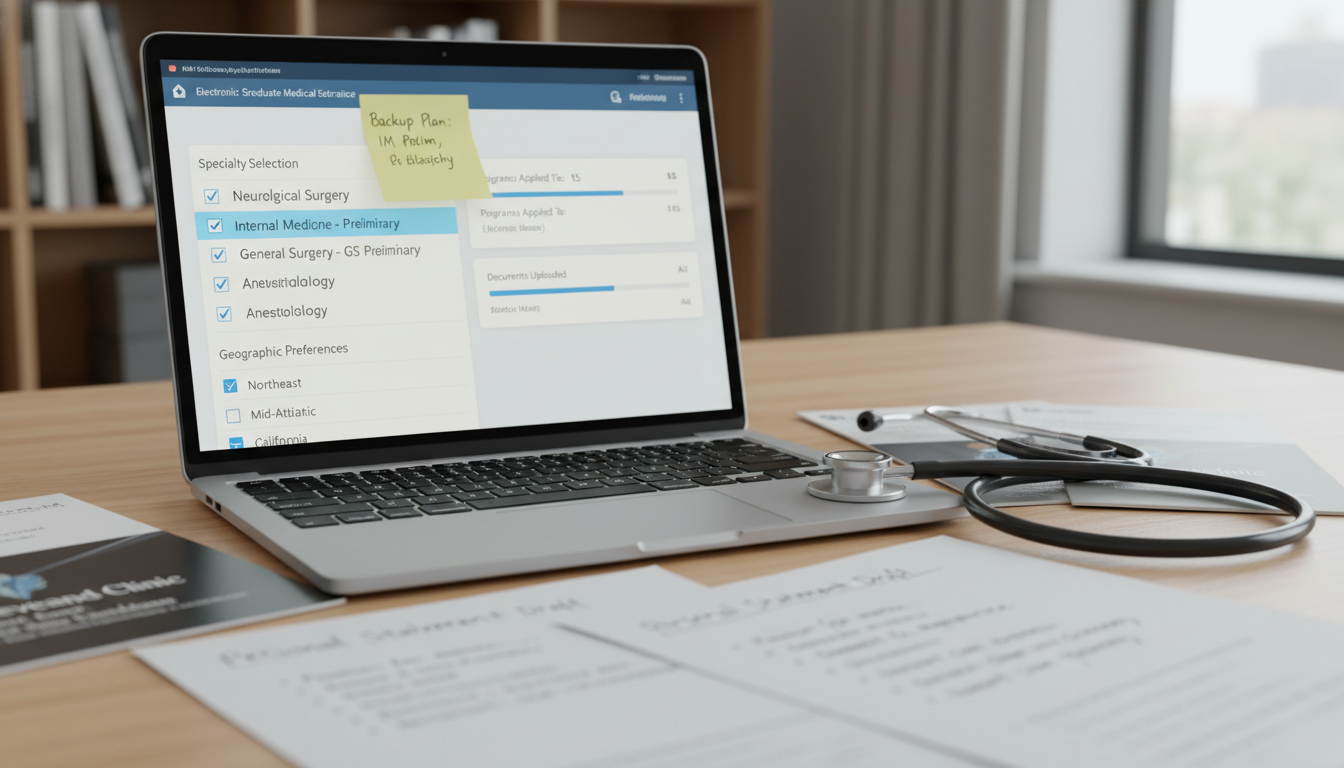
Step 4: How to Dual Apply Without Undermining Your Neurosurgery Chances
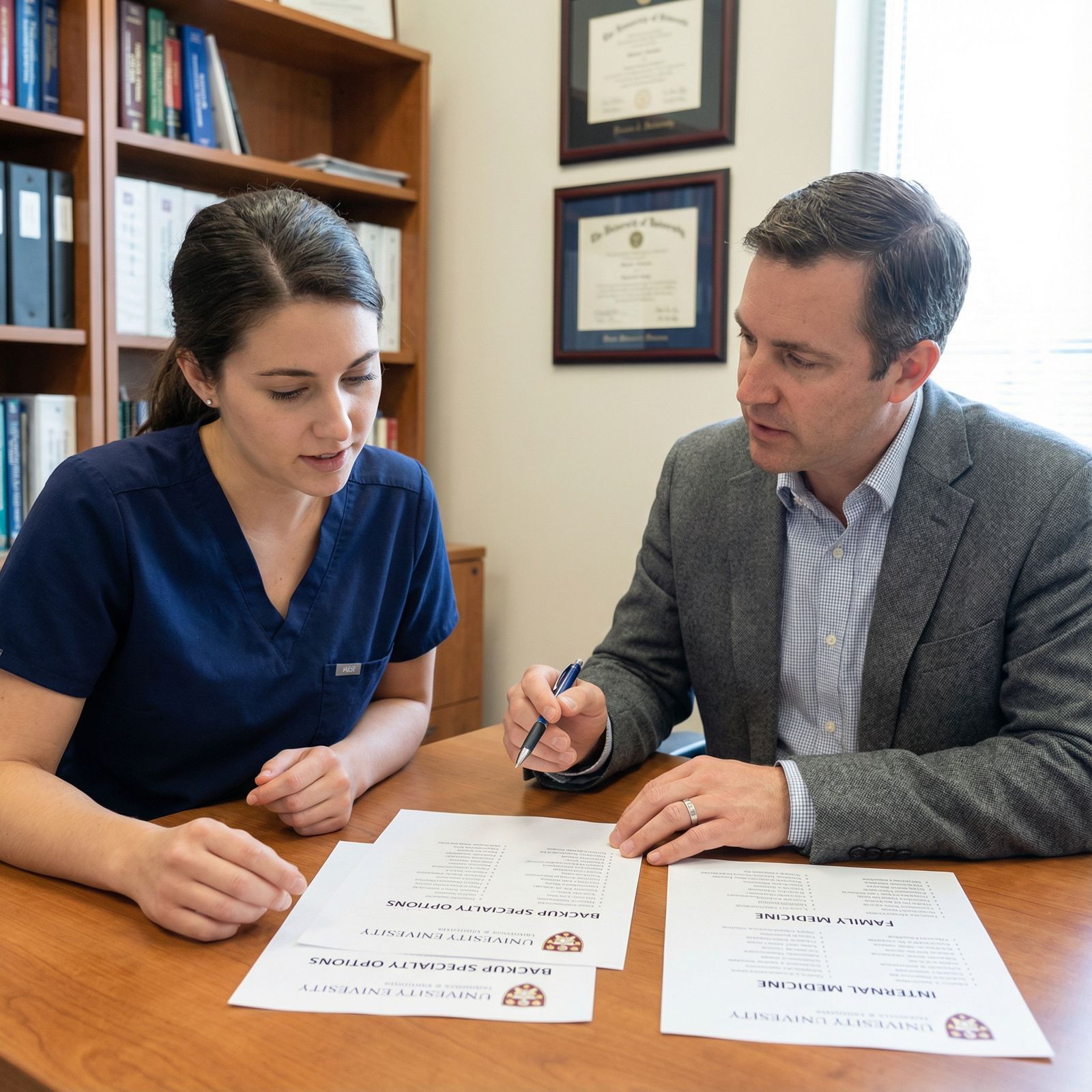
Dual applying residency to neurosurgery and a backup specialty is common—but risky if not done thoughtfully.
1. Clarify Your Primary Identity
For neurosurgery programs, you must present as someone fully committed to neurosurgery. That does not mean you have to lie about dual applying, but it does mean:
- Neurosurgery personal statement is clearly focused and passionate.
- Letters emphasize your dedication to neurosurgery.
- Your experiences list highlights neurosurgery research, leadership, and exposure.
For your backup specialty, you should not claim that it has always been your only dream. Instead, frame your interest honestly and positively:
“Through intensive exposure to neurosurgical patients, I realized I am particularly drawn to the neurological disease spectrum and long-term management, which led me to pursue neurology as the specialty where I can make my greatest impact.”
This is truthful without sounding like you “settled” under duress.
2. Use Separate Personal Statements and Program Lists
Do not send a neurosurgery‑oriented personal statement to non‑neurosurgery programs (or vice versa). Instead:
- Create a neurosurgery-specific statement.
- Create a fully independent statement for each backup specialty (neurology, PM&R, etc.).
- Tailor content: different narrative, different emphasis, even if some experiences overlap.
On ERAS, be intentional about which programs see which statement. It is worth the extra administrative effort.
3. Letters of Recommendation Strategy
For neurosurgery:
- Aim for 2–3 strong letters from neurosurgeons (especially from US institutions and academic centers).
- If possible, one letter from a non-neurosurgery surgeon or research mentor can add breadth.
For your backup specialty:
- At least 1–2 letters from faculty in that specialty.
- Additional letters can come from neurosurgeons if they highlight qualities that cross specialties (work ethic, clinical reasoning, teamwork, procedural skill).
Avoid sending a set of four neurosurgery letters to a neurology or PM&R program with no letter from their field at all; it signals you never seriously considered them.
4. Application Numbers and Strategy
For a US citizen IMG, you will likely need to apply broadly:
- Neurosurgery: Most US citizen IMGs apply to nearly all programs (or all that historically consider IMGs). Numbers vary, but 70–80+ applications is common.
- Backup Specialty: Also cast a wide net, especially at IMG-friendly programs.
As a rough conceptual framework:
- If you are in the “borderline” neurosurgery tier, you might split your effort (e.g., neurosurgery as primary, but 40–60+ applications to a realistic backup specialty).
- If you are in the “long shot” tier, consider making the backup specialty your main target this cycle, with neurosurgery only at a few programs where you have strong connections or research.
5. Interview Season Logistics and Candor
If you receive interviews in both neurosurgery and your backup specialty:
- Prioritize neurosurgery interviews on conflicting dates when possible; reschedule backup specialty interviews where feasible.
- Be polite and professional; last-minute cancellations burn bridges.
- If explicitly asked about dual applying, be honest but strategic:
- Emphasize that neurosurgery is your primary goal when speaking to neurosurgery PDs.
- When speaking to backup specialty PDs, explain what genuinely attracts you to their field, without denigrating your interest in neurosurgery.
Step 5: Contingency Planning if You Don’t Match Neurosurgery
Even with dual applying, you may end up matched in your backup specialty or unmatched altogether. It is crucial to have a realistic Plan C as well.
If You Match Your Backup Specialty
If you match into your plan B specialty (neurology, PM&R, radiology, etc.):
Commit fully for at least the first year.
- Give yourself a real chance to discover whether you can be genuinely satisfied in that field.
- Many physicians grow to deeply love their “backup” specialty.
Stay near the neurosurgery world if that’s important to you.
- Choose electives and research projects that keep you connected to neuro and neurosurgery colleagues.
- For example, a neurology resident might focus on neurocritical care or epilepsy in collaboration with neurosurgery.
Long-term neurosurgery “re-entry” is very rare.
- Transitioning from another residency into neurosurgery later is extremely uncommon and logistically difficult.
- If neurosurgery remains non-negotiable, you may need to think about reapplying before or at the start of your backup residency—with guidance from mentors.
If You Go Unmatched Altogether
If you do not match either neurosurgery or your backup specialty:
Participate in SOAP (Supplemental Offer and Acceptance Program).
- As a US citizen IMG, you may still have significant opportunities in less competitive specialties and prelim positions.
Consider a Dedicated Research Year or Fellowship.
- A year or two of neurosurgery research at a US academic center can enhance your neurosurgery profile and US connections.
- Alternatively, research in your backup specialty can reposition you for that field next cycle.
Evaluate Whether Another Specialty Should Become Plan A.
- After one or two unsuccessful neurosurgery cycles, many applicants transition to a backup specialty as their new primary goal.
- This is a deeply personal decision; seek advice from trusted neurosurgery mentors who understand your performance and potential.
Work With an Advisor Familiar With US Citizen IMG Challenges.
- A dean, mentor, or residency advisor who regularly works with US citizen IMG applicants can help adjust your strategy for the next cycle.
Putting It All Together: A Sample Strategy for a US Citizen IMG in Neurosurgery
Imagine three hypothetical US citizen IMGs:
Applicant A: Strong Neurosurgery Profile
- High Step 2 CK, multiple neurosurgery research projects with publications
- US neurosurgery sub-Is at two academic centers, strong letters
- Wants to dual apply because of the overall competitiveness of neurosurgery
Plan:
- Primary: Neurosurgery (applies broadly to nearly all programs that consider IMGs)
- Backup specialty: Neurology or Radiology at carefully selected programs
- Tailored personal statements and at least one core-letter writer in the backup specialty
Applicant B: Borderline Neurosurgery Applicant
- Solid Step 2 CK, some neurosurgery exposure, but limited publications
- One US neurosurgery elective, some USCE in surgery and internal medicine
- Nervous about going completely unmatched
Plan:
- Primary: Neurosurgery at programs where they have rotations, research connections, or clear IMG-friendliness
- Backup specialty: PM&R or Neurology, applied to broadly (including community programs, IMG-friendly centers)
- Invests time in a PM&R or neurology elective and obtains 1–2 letters in that field
Applicant C: Long-Shot Neurosurgery Applicant This Cycle
- Step 2 CK closer to the mean, minimal neurosurgery research, late exposure to the field
- Limited US neurosurgery experience, but strong interest
Plan:
- Primary: Backup specialty (e.g., Neurology, PM&R, Anesthesiology) with a robust application
- Selective neurosurgery applications: Only to a few neurosurgery programs where they have meaningful connection (research year, strong mentor support)
- If unmatched, considers research year in neurosurgery or strengthens backup specialty credentials
In all three scenarios, early and honest assessment plus thoughtful backup planning significantly reduces the risk of an entirely unmatched outcome while preserving neurosurgery as a realistic goal where appropriate.
FAQs: Backup Specialty Planning for US Citizen IMG Neurosurgery Applicants
1. As a US citizen IMG, is it realistic to match neurosurgery without a backup specialty?
It is possible but risky. Neurosurgery residency is small and highly competitive, even for US MD seniors. As a US citizen IMG, your odds are generally lower unless you have exceptional metrics, strong US neurosurgery research and letters, and meaningful institutional connections. For most American studying abroad candidates, applying only neurosurgery without a plan B specialty significantly raises the risk of going unmatched.
2. Which backup specialty is best for someone who wants to stay close to brain surgery residency work?
If your highest priority is staying close to neurosurgical patients and the brain/spine world, neurology, PM&R, and diagnostic radiology (with eventual neuroradiology) are commonly chosen. Each keeps you in the neuro space but with different balances of procedures, clinic, and ICU work. Anesthesiology with a focus on neuroanesthesia or critical care can also maintain proximity to neurosurgery cases.
3. Will neurosurgery programs hold it against me if I dual apply to another specialty?
Not automatically, but they may be concerned about your commitment if it appears you are primarily invested in another field. Most program directors understand that dual applying residency is prudent in ultra-competitive specialties. The key is how you present yourself: ensure your neurosurgery application (personal statement, letters, experiences) clearly demonstrates that neurosurgery is your primary goal, and avoid appearing unfocused or opportunistic.
4. If I match into my backup specialty, is there any realistic path back to neurosurgery later?
Transitioning from another residency into neurosurgery is very rare and logistically difficult. A few residents each decade may switch, often through strong existing research ties to neurosurgery programs and a willingness to restart training. You should not count on this as a likely pathway. If neurosurgery is absolutely non-negotiable, it is usually better to focus on strengthening your neurosurgery application (e.g., with a research year) rather than planning on switching later from a backup specialty.
Thoughtful backup specialty planning is an essential part of a realistic, resilient strategy for any US citizen IMG pursuing neurosurgery. By honestly assessing your competitiveness, choosing an aligned plan B specialty, and executing a deliberate dual-application strategy, you can preserve your neurosurgery aspirations while protecting yourself against the very real risk of going unmatched.