Understanding Backup Specialty Planning as a US Citizen IMG in Diagnostic Radiology
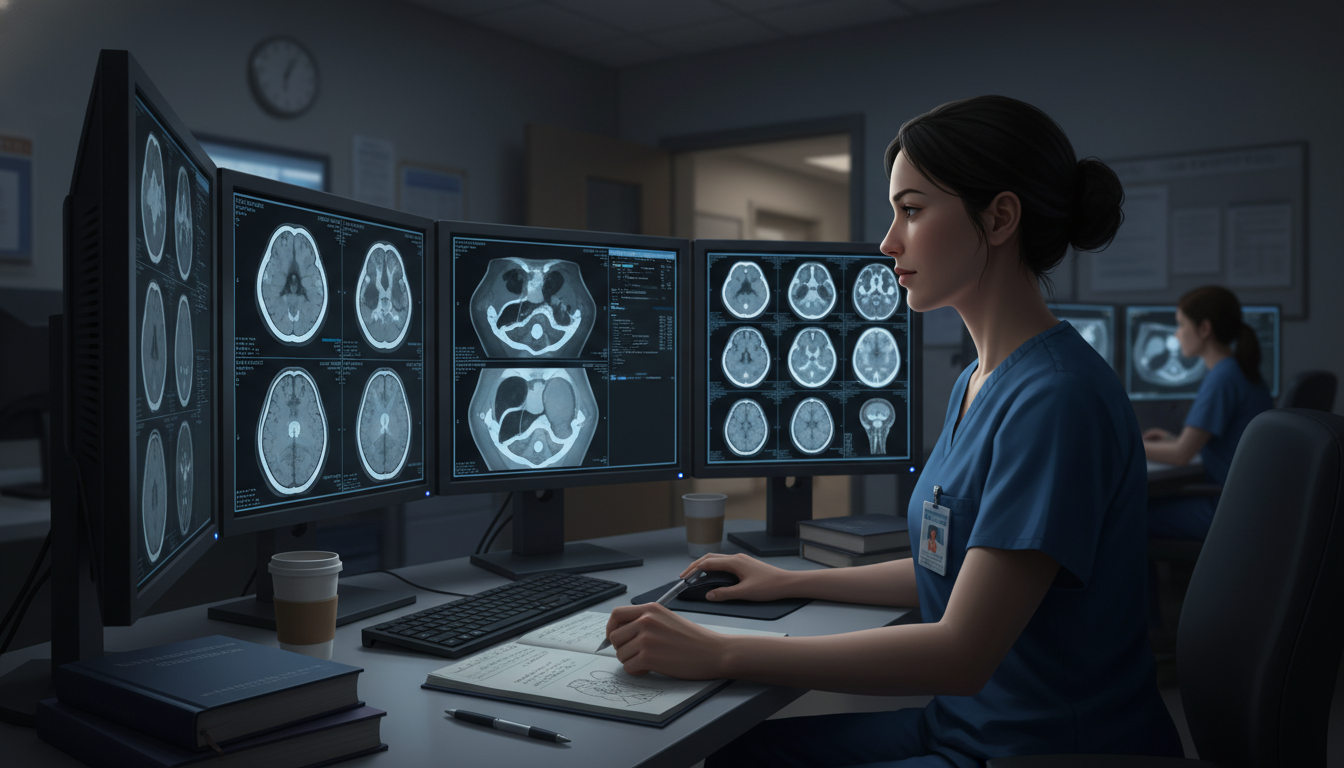
If you are a US citizen IMG or an American studying abroad aiming for a diagnostic radiology residency, you are already navigating a more competitive pathway. Diagnostic radiology is moderately competitive overall, but for IMGs—especially those training outside the US system—the bar is higher. Thoughtful backup specialty planning is one of the most important strategic decisions you can make.
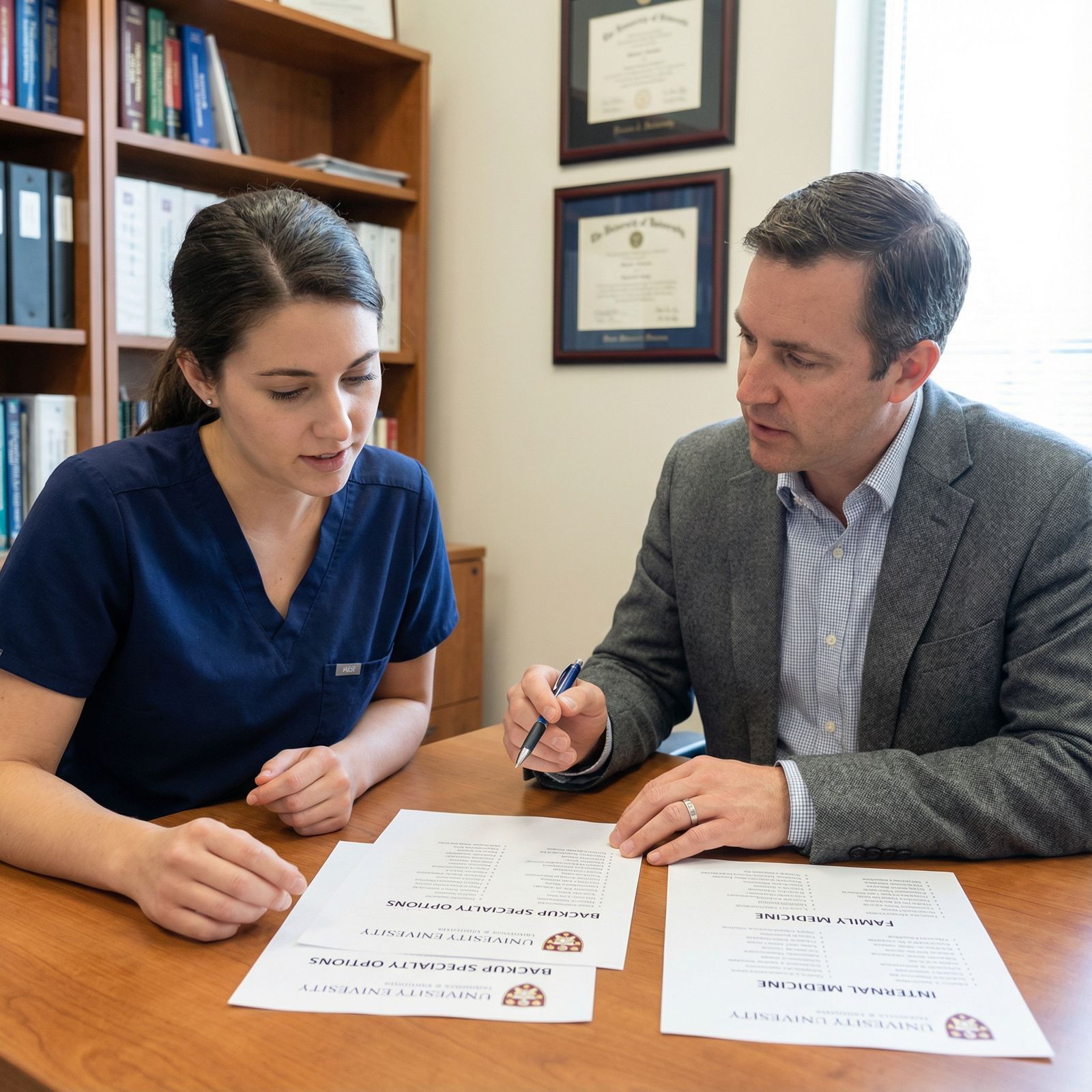
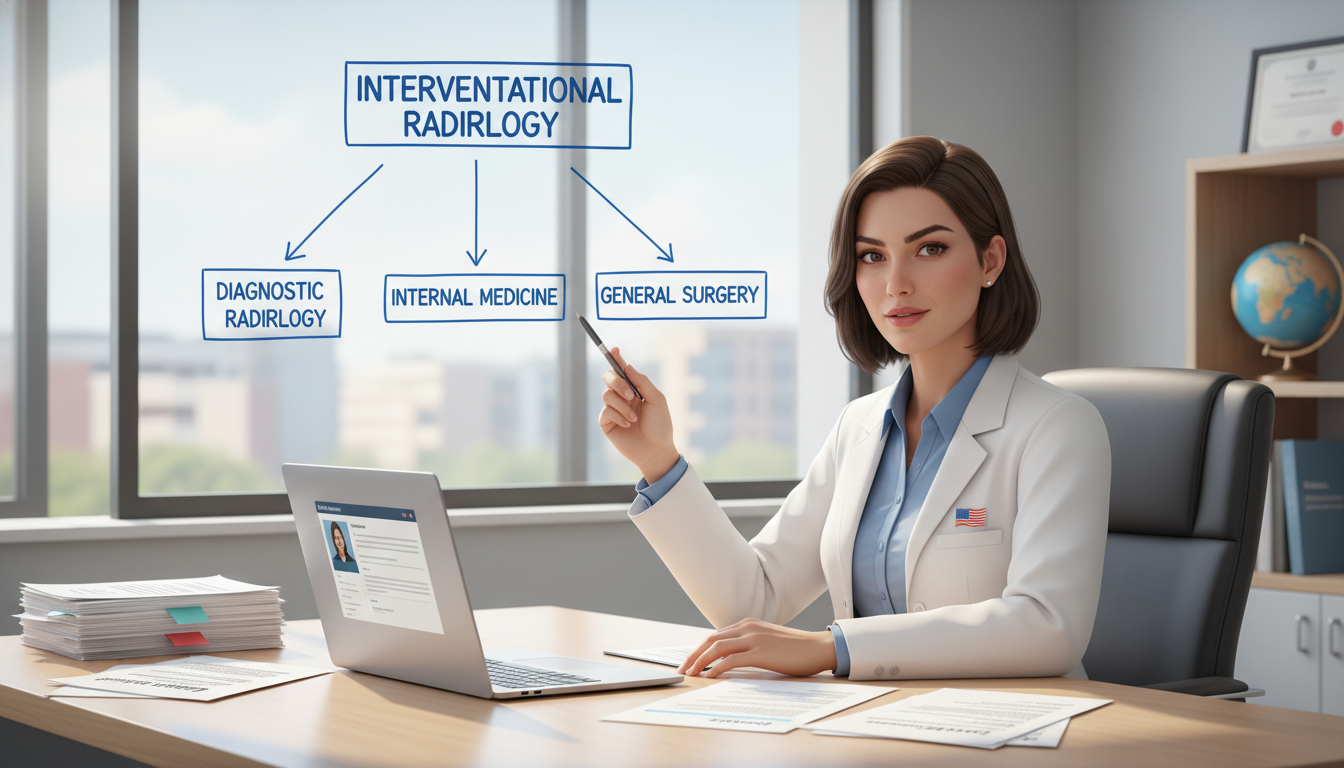
A backup specialty (or plan B specialty) is a field you apply to in addition to radiology in case you do not match into a diagnostic radiology residency. Dual applying residency (applying to two specialties in the same match cycle) can improve your odds of matching, but it also adds complexity, cost, and workload.
This guide is designed specifically for US citizen IMG applicants targeting diagnostic radiology, and it will walk you step-by-step through how to:
- Decide whether you truly need a backup specialty
- Choose realistic and compatible backup specialties
- Strategically plan your application timeline and documents
- Communicate your interests honestly without burning bridges
- Prepare for different match outcomes and reapplication pathways
1. Do You Really Need a Backup Specialty?
Not every diagnostic radiology applicant must dual apply, but as a US citizen IMG, it is often wise to at least seriously consider it.
Key Factors That Influence Your Need for a Backup
USMLE/COMLEX Scores
- Very strong: Step 2 CK ≥ 250 (or COMLEX Level 2 ≥ 640), with no failures
- If paired with strong US clinical experience and radiology letters, a backup may be optional.
- Mid-range: Step 2 CK 235–249 (COMLEX 580–639), no major red flags
- Backup is recommended for many US citizen IMG applicants.
- Lower or with failures: Step 2 CK < 235, any exam failure, or large score gap
- Backup planning is strongly recommended, particularly if you have limited US experience.
- Very strong: Step 2 CK ≥ 250 (or COMLEX Level 2 ≥ 640), with no failures
Clinical Experience and Radiology Exposure
- Robust profile:
- 2+ US clinical experiences (preferably including radiology observerships or electives)
- US letters from radiologists
- Weaker profile:
- Mostly home-country experience
- Limited or no radiology exposure in US hospitals
As an American studying abroad, program directors may worry you had fewer opportunities to be evaluated in the US system, making backup specialties especially important.
- Robust profile:
Application Cycle Timing
- First attempt vs. reapplicant:
- If you’ve already gone through a failed diagnostic radiology match, dual applying the second time is usually prudent.
- Graduation year:
- If you are ≥ 3–4 years from medical school graduation without continuous clinical work, competition is harder; a backup specialty becomes more important.
- First attempt vs. reapplicant:
Flexibility About Geography and Program Type
- Willing to go almost anywhere and accept community-based programs?
- Radiology-only strategy is more realistic.
- Restricting to specific regions or only large academic centers?
- Backup specialty planning becomes more critical.
- Willing to go almost anywhere and accept community-based programs?
When a Radiology-Only Strategy Might Be Reasonable
As a US citizen IMG in diagnostic radiology, consider a radiology-only strategy if:
- You have a high Step 2 CK (or COMLEX) with no failures
- You have substantial US clinical experience, including radiology exposure
- You are geographically flexible and open to community programs
- You are prepared to take a research year or preliminary year and reapply if you don’t match
Even then, you should still think about a long-term plan B (e.g., research fellowship, reapplication strategy) in case the first cycle does not go your way.
2. Choosing the Right Backup (Plan B) Specialties for a Radiology Applicant
Not all backup specialties are equal for someone who wants a career in diagnostic radiology. You want specialties that:
- Fit your academic and clinical profile
- Can be genuinely fulfilling if radiology doesn’t work out
- Align with your strengths (e.g., imaging interest, pattern recognition, analytical thinking)
- Minimize conflicting narratives in your application
Characteristics of Good Backup Options for Radiology
Less Competitive (Relative to DR for IMGs)
While competitiveness changes with time, you want specialties that:- Historically have more IMGs
- Are more open to US citizen IMG applicants
- Have a higher match rate for applicants with your profile
Some Conceptual Overlap with Radiology For example:
- Heavy use of imaging in clinical decision-making
- Pattern recognition and analytical skills
- Technical or procedural interest
Viable Long-Term Career If You Don’t End Up in Radiology You cannot assume you will “easily switch to radiology later.” Switching specialties is possible but not guaranteed. Your backup needs to be a field you can see yourself practicing.
Common Backup Specialties for US Citizen IMG Radiology Applicants
Below are realistic plan B specialty options, with pros and cons specifically for a radiology-focused US citizen IMG.
1. Internal Medicine (IM)
Why it works:
- Historically one of the most IMG-friendly specialties.
- Broad clinical exposure; imaging is used extensively in decision-making.
- Opens future options:
- Fellowship in cardiology, pulmonary/critical care, oncology, etc.
- Possibility of becoming an “imaging-heavy” internist in cardiology or pulmonary.
- Easier to obtain US clinical experience and letters.
Challenges:
- Very different day-to-day practice from diagnostic radiology.
- You must demonstrate genuine interest in patient care, not just using IM as a stepping stone.
- Many IM program directors are wary of applicants clearly “using IM as a backup.”
Who should consider it:
- US citizen IMGs with mid-range scores, solid clinical skills, and flexible career goals.
- Those who can see themselves being satisfied as an internist or subspecialist.
2. Transitional Year (TY) or Preliminary Medicine
These are one-year programs providing a clinical base before advanced specialties like radiology.
Why they matter:
- Taking a TY or prelim medicine year is not exactly a backup specialty, but a backup strategy.
- You can spend the year getting:
- Strong US-based letters
- More clinical experience
- Time to strengthen your radiology application and reapply.
Challenges:
- TY positions can be competitive, especially at desirable locations.
- No guarantee that doing a TY automatically leads to radiology the following year.
- You still need a plan if you don’t secure radiology after that year.
Best use case:
- High-potential radiology candidates who didn’t match but received some radiology interviews.
- US citizen IMGs aiming to stay clinically active in the US system while reapplying.
3. Family Medicine (FM)
Why it works:
- One of the most IMG-friendly fields; many programs welcome international graduates.
- Imaging plays a role in outpatient practice, and you can cultivate special interests (e.g., point-of-care ultrasound, MSK medicine).
- Relatively high match probability if you have passing scores and solid clinical skills.
Challenges:
- Career is heavily primary-care and continuity-oriented, very different from radiology workflow.
- You must show authentic interest in community care and long-term patient relationships.
Who should consider it:
- US citizen IMGs comfortable with outpatient practice and continuity of care.
- Applicants who prioritize job security and geographic flexibility.
4. Psychiatry
Why it works:
- Historically open to IMGs; growing demand for psychiatrists in the US.
- Less physically demanding; cognitive and interpersonal skills valued over procedural skills.
- May be attractive if you enjoy longitudinal care and diagnostic reasoning (albeit in a very different domain than imaging).
Challenges:
- Minimal direct overlap with diagnostic radiology.
- You’ll need entirely separate letters of recommendation and a convincing narrative.
Who should consider it:
- US citizen IMGs with strong communication skills, interest in mental health, and comfort with limited procedural work.
5. Neurology
Why it works:
- Neurology and radiology overlap significantly through neuroimaging (CT/MRI brain and spine).
- Many neurology programs value strong imaging interpretation skills.
- Historically IMG-friendly, though competitiveness varies.
Challenges:
- Requires you to embrace clinical neurology long-term if radiology does not work out.
- Program directors may be cautious if your application screams “radiology only.”
Who should consider it:
- Applicants with strong neurology foundation and genuine interest in neuro-diagnosis and stroke care.
- US citizen IMGs who are comfortable with inpatient call and complex neurological diseases.
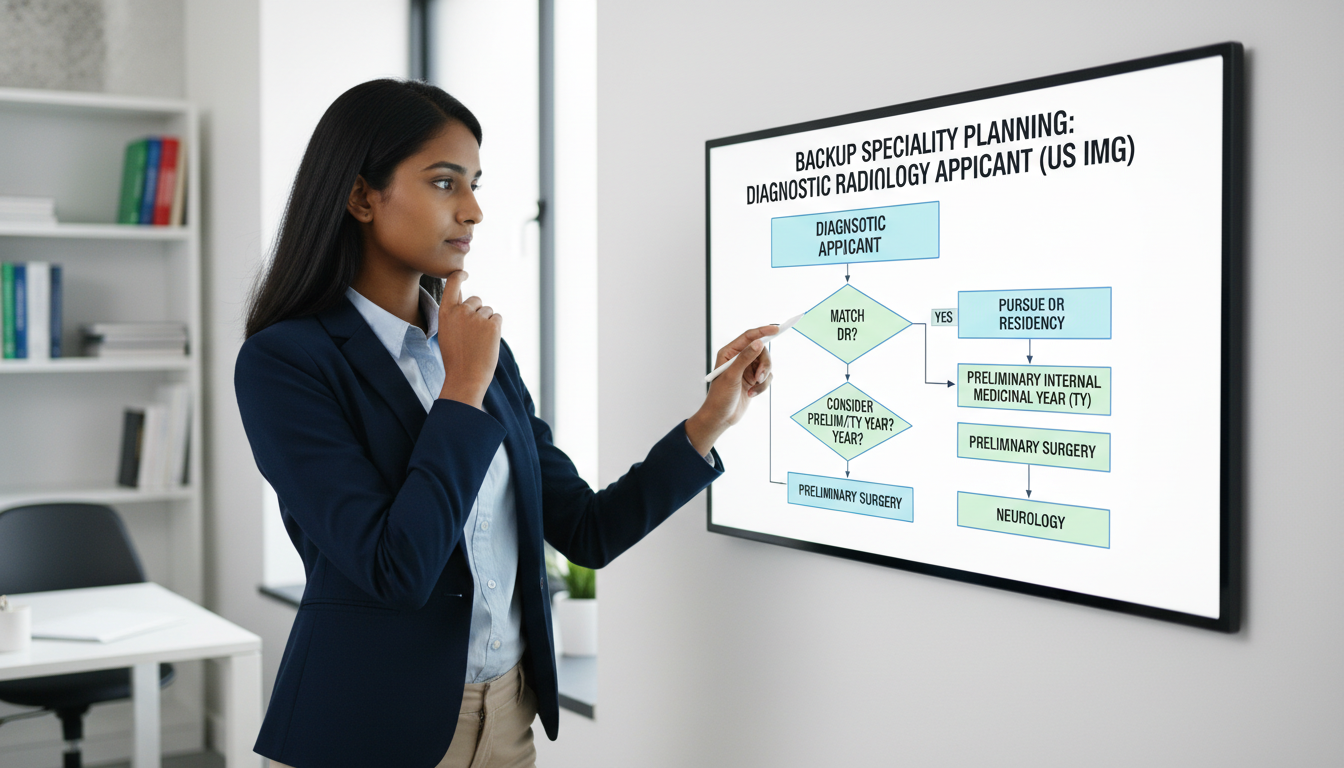
3. How to Decide: Radiology-Only vs Dual Applying
A key question for every US citizen IMG aiming for the diagnostic radiology match is:
Should I apply only to radiology, or should I dual apply to a backup specialty?
A Practical Decision Framework
Use the following checklist to guide your decision. If you answer “yes” to multiple points in each category, that path becomes more reasonable.
Path A: Primarily Radiology-Only (With Contingency Plans)
Favors radiology-only if:
- Scores are strong (e.g., Step 2 CK ≥ 245–250) with no exam failures.
- You have 2+ solid US clinical experiences, including at least one radiology observership/elective.
- You obtained at least 1–2 strong letters from radiologists.
- You are geographically flexible and open to community radiology programs.
- You are prepared to:
- Consider a TY/preliminary year and reapply
- Potentially take a research year in radiology
Even then, you should still consider a long-term Plan B (e.g., which non-radiology field you would accept if you later pivot).
Path B: Dual Applying to Radiology and a Backup Specialty
Favors dual applying residency if:
- Scores are mid-range or lower for radiology competitiveness.
- You have limited radiology exposure or letters from radiologists.
- You need to stay in a specific geographic area (family or visa reasons).
- You are not comfortable with the risk of going unmatched or reapplying.
- Your career satisfaction would be acceptable in your plan B specialty.
For US citizen IMGs, this path is common and sensible because:
- You are free from visa limitations but still face competitive barriers as an IMG.
- You may need to demonstrate to programs that you are pragmatic and realistic about your chances.
4. Building a Coherent Application for Two Specialties
Dual applying is not just about submitting more applications. For a successful diagnostic radiology match strategy, you need to separate and tailor your materials while keeping your story believable.
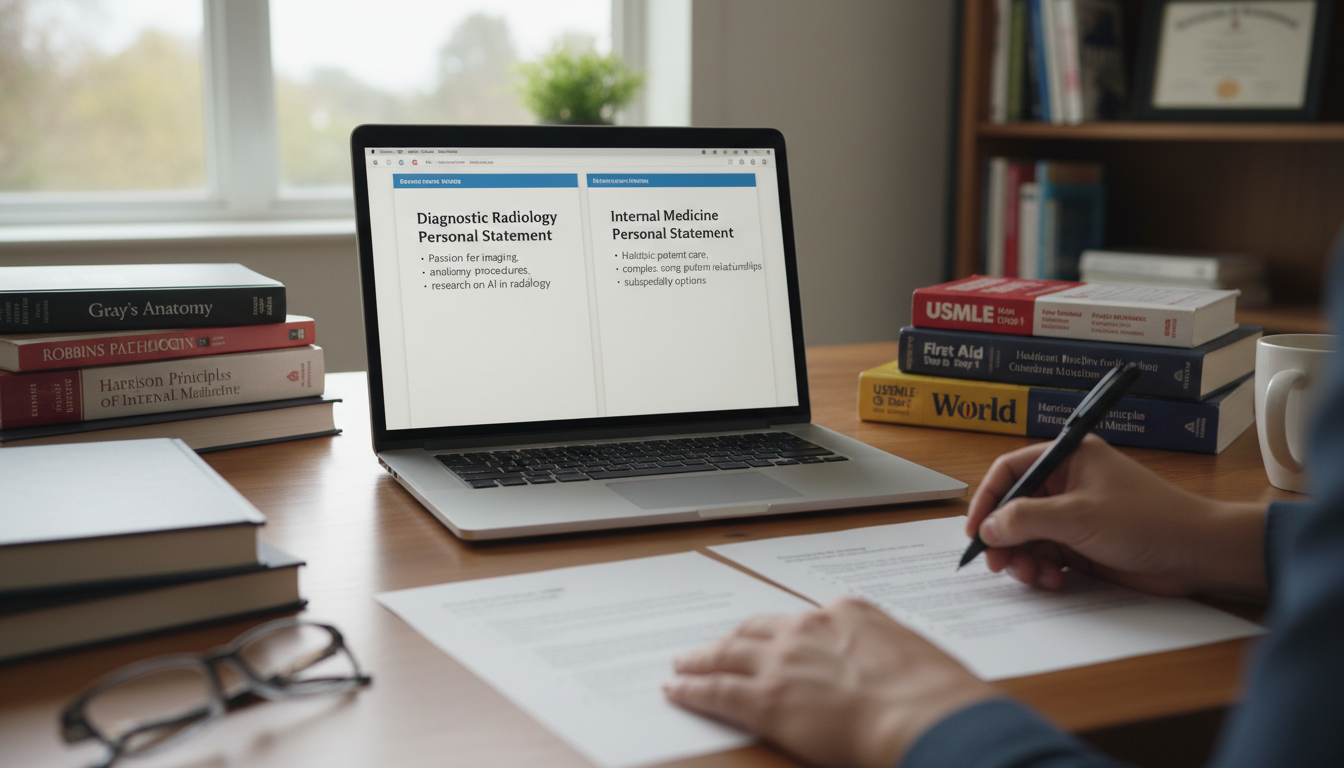
Personal Statements: Two Distinct Narratives
You should have two separate personal statements:
Diagnostic Radiology Personal Statement
- Emphasize:
- Your interest in imaging, pattern recognition, and technology.
- Specific radiology-related experiences (electives, observerships, case conferences).
- Analytical thinking, attention to detail, and communication skills with referring clinicians.
- Highlight why radiology is your primary passion, but do not sound naïve about its competitiveness.
- Emphasize:
Backup Specialty Personal Statement (IM, FM, Psychiatry, etc.)
- Emphasize:
- Direct patient care experiences and what you enjoyed.
- Attributes relevant to that specialty (e.g., continuity of care for FM, team-based inpatient care for IM, empathetic listening in psychiatry).
- Avoid positioning the specialty purely as a fallback; focus on authentic reasons you could be happy in that field.
- Emphasize:
Letters of Recommendation Strategy
Aim for:
Radiology application:
- 1–2 letters from radiologists (US-based if possible)
- 1–2 letters from other US clinicians (e.g., IM, surgery, neurology) who can speak to your clinical skills, professionalism, and work ethic
Backup specialty application:
- At least 2 letters from physicians in that specialty (IM, FM, psychiatry, etc.)
- An additional letter from any US clinician who knows you well
Use ERAS to assign different letters to different specialties. Program directors will not see letters not assigned to their program.
Managing Your CV and Activity Descriptions
Your CV is largely the same, but how you frame your experiences in the “description” sections can shift emphasis:
For radiology:
- Highlight imaging-related responsibilities (reviewing studies, attending readouts, imaging research).
- Emphasize analytic and technical skills.
For backup specialty:
- Highlight patient interactions, continuity, multidisciplinary teamwork, and clinical decision-making.
Do not lie or dramatically alter facts; simply emphasize aspects of experiences that align best with each specialty.
5. Interview Strategy and Honesty Across Specialties
Once interviews arrive, your strategy must adapt for each setting. As a US citizen IMG dual-applying, you will likely face questions about your interests and plans.
Handling “Why This Specialty?” Questions
Radiology interviews:
- Be clear that diagnostic radiology is your primary career goal.
- Discuss patient impact through accurate and timely diagnosis, even if your patient contact is indirect.
- Mention how your background as an American studying abroad has prepared you to adapt quickly to different systems and teams.
Backup specialty interviews:
- Focus on what truly appeals to you about that field.
- It is acceptable to acknowledge you explored radiology, but do not frame the other specialty as second choice in the room.
- Better framing: “I’ve explored multiple fields including radiology, but I’ve come to really appreciate the direct patient connection and continuity of care in family medicine.”
Should You Tell Programs You Are Dual Applying?
General guidance:
- You do not need to volunteer that you are dual applying.
- If explicitly asked:
- Answer honestly but briefly.
- Emphasize that you would be fully committed and happy at their program if matched.
Example response:
“Yes, I did apply to more than one specialty. I’m very interested in diagnostic radiology, but I also recognize the competitiveness of the field and have a genuine interest in internal medicine. If I were fortunate enough to match here, I would be fully committed to training as an internist and building a long-term career in this specialty.”
Most program directors respect honesty combined with realism.
6. Planning for Different Match Outcomes
Effective backup specialty planning means thinking ahead about several possible scenarios:
Scenario 1: Match in Diagnostic Radiology
- Celebrate—your primary goal is achieved.
- If you matched into an advanced DR position:
- Ensure your preliminary/TY year is solid; use it to become a strong clinician and to build relationships with radiologists.
- Continue to express appreciation to letter-writers, mentors, and backup-specialty programs that interviewed you.
Scenario 2: Match in Your Backup Specialty
This can be emotionally complex, particularly if radiology was your dream.
Early steps:
- Commit to excelling in your matched specialty—poor performance will close doors.
- Take time to reassess: Could you see a fulfilling career here (e.g., IM subspecialty, psychiatry with niche interests, etc.)?
If you still strongly want radiology:
- Be aware that moving from one residency to another is difficult and rare, but:
- Some residents transition from IM or neurology to radiology if a position opens.
- This usually requires outstanding performance, transparent communication with PDs, and a bit of luck.
- You must be prepared to be ethically honest with your current PD and not mislead anyone.
- Be aware that moving from one residency to another is difficult and rare, but:
Scenario 3: No Match in Either Specialty
As a US citizen IMG, unmatched status does not end your path but requires a disciplined response.
Immediate steps:
Participate in SOAP if eligible
- Many IM, FM, and prelim positions may still be available.
- Consider whether matching into a prelim or categorical backup spot this year is better than waiting.
Post-match planning if you remain unmatched:
- Options include:
- Research year (preferably in radiology or your backup specialty)
- Additional US clinical experience (observerships, externships)
- Improved language/cultural competence if that was a barrier
- Options include:
Reassess your strategy for the next cycle:
- Was your diagnostic radiology list too ambitious?
- Do you need a stronger backup specialty plan?
- Should you adjust expectations (e.g., more community programs, different regions)?
FAQs: Backup Specialty Planning for US Citizen IMGs in Diagnostic Radiology
1. As a US citizen IMG, is diagnostic radiology realistically within reach, or should I focus mainly on a backup specialty?
Diagnostic radiology is attainable for US citizen IMGs, especially those with strong scores, US clinical experience, and radiology exposure. If your Step 2 CK is competitive (around 245–250+), you have radiology letters, and you are geographically flexible, a radiology-focused strategy is reasonable. However, because the diagnostic radiology match is still competitive for IMGs, many US citizen IMGs prudently develop a backup specialty plan—either dual applying or having a clear pathway if their first attempt is unsuccessful.
2. Which backup specialty is “best” for a radiology-focused US citizen IMG?
There is no single best backup specialty. Internal medicine is common because it is IMG-friendly and flexible, with many subspecialties. Family medicine and psychiatry are also realistic options with good IMG representation. Neurology may appeal if you like neuroimaging. The “best” plan B specialty is one in which you can genuinely see yourself building a career if radiology does not pan out. Avoid picking a field you strongly dislike just because you think it is less competitive.
3. Will dual applying hurt my chances in diagnostic radiology?
If managed correctly, dual applying generally does not harm your radiology chances. Program directors typically do not see where else you applied, and you can tailor personal statements and letters via ERAS. Problems occur only if:
- You recycle a generic personal statement across specialties.
- Your letters clearly indicate you are unfocused or primarily committed to another field.
- You give conflicting or evasive answers in interviews.
With thoughtful planning and honest communication, dual applying can protect your overall match prospects without undermining your radiology application.
4. If I match into internal medicine or another backup specialty, can I still eventually move into radiology?
It is possible but uncommon and not guaranteed. Sometimes residents transfer from IM, neurology, or other training into diagnostic radiology when unexpected positions open. This requires:
- Excellent performance in your current residency
- Clear documentation of sustained interest in radiology (electives, mentorship, scholarly work)
- Open, honest communication with your program director
You should treat any backup specialty you match into as a potential long-term career, not as a temporary stepping stone. Plan as if you may spend your career there, and you will make better, more ethical decisions for yourself and your patients.
Thoughtful backup specialty planning allows you, as a US citizen IMG targeting diagnostic radiology, to pursue your first-choice field while protecting yourself from the uncertainties of the match. By understanding your competitiveness, choosing realistic plan B specialties, and crafting a coherent strategy, you can increase the chances that—whatever the outcome—you end up in a satisfying, sustainable medical career.