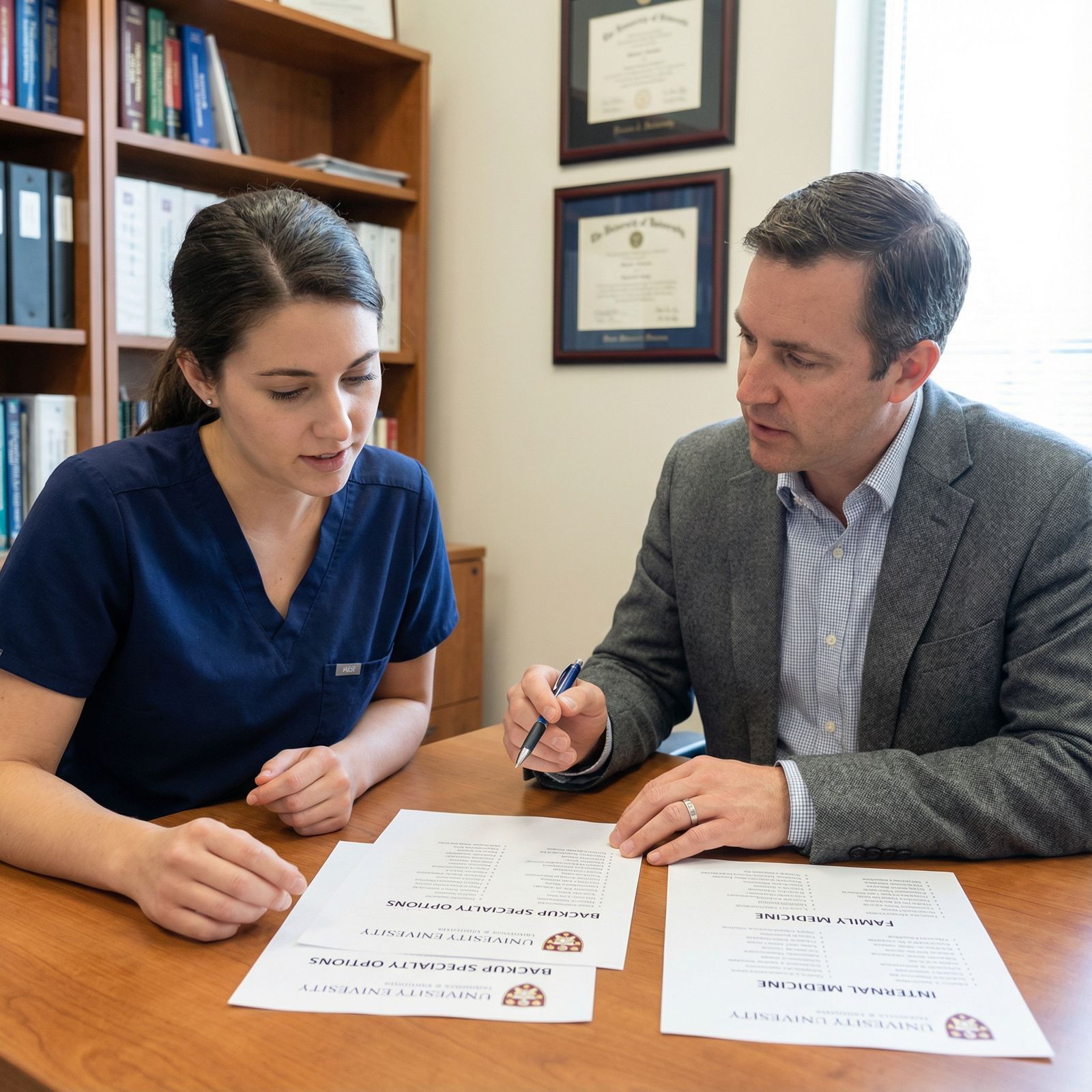
Vascular surgery is a small, competitive field with limited positions and a high proportion of applicants who do not match on the first try. Thoughtful backup planning is not a sign of doubt or weakness; it is a sign of maturity, insight, and risk management. This guide will walk you through how to think strategically about backup specialties, whether and how to dual apply, and how to protect your long‑term career goals if an integrated vascular program is your dream.
Understanding the Landscape: Why Backup Planning Matters in Vascular Surgery
Vascular surgery has a unique training structure and applicant pool that make backup planning particularly important.
The Integrated Vascular Program Reality
The integrated vascular surgery residency (0+5) has:
- Very few positions nationally compared with larger specialties
- High applicant-to-position ratio
- A strong emphasis on top-tier board scores, research, and letters
- Heavy focus on technical performance, complex decision-making, and academic potential
Even strong applicants may not match because:
- Programs are small and highly selective
- Fit and subjective impressions in interviews matter greatly
- Many programs favor applicants from their own or affiliated medical schools
Matching (or not matching) into an integrated vascular program does not always reflect your potential to be an excellent vascular surgeon.
Why You Need a Plan B
A robust Plan B specialty is essential for several reasons:
- You may not match despite being competitive.
- Personal circumstances (family, geography, finances, health) may shift your priorities late in the cycle.
- The interview season may reveal that another specialty better fits your interests.
- You may discover during sub‑internships that your ideal day‑to‑day practice looks different than you imagined.
Backup planning does not mean you are abandoning vascular surgery. Instead, you are building multiple pathways to a career that suits your skills and interests, possibly including eventual fellowship in vascular surgery or another procedure-heavy discipline.
Step 1: Clarify Your Core Interests and Non‑Negotiables
Before picking a backup specialty, define what actually draws you to vascular surgery. This helps you identify specialties with overlapping features.
What Attracts You to Vascular Surgery?
Common drivers include:
- Love of complex anatomy and physiology, particularly circulation
- Desire for procedural intensity (open surgery + endovascular/interventional work)
- Enjoyment of acutely ill and high‑risk patients
- Interest in longitudinal care of chronic vascular disease (PAD, aneurysms, carotid disease)
- Comfort with long, demanding OR cases
- Attraction to multidisciplinary collaboration (cardiology, radiology, neurology, nephrology, etc.)
- Interest in device innovation and imaging‑guided techniques
Write down your top 3–5 reasons. Then rank how important each is compared with lifestyle, location, academic versus community practice, and compensation.
Define Your Non‑Negotiables
Consider:
- Procedural vs. cognitive: Do you need to “do” something with your hands daily, or would a largely cognitive specialty satisfy you?
- Intensity of call: How much are you willing to accept in terms of nights/weekends and emergent cases?
- Patient population: Do you value managing older, comorbid patients, or would you prefer younger, healthier, or more diverse age groups?
- Longitudinal relationships: Do you want to follow patients for years or be a consultant primarily for discrete episodes of care?
- Training duration: Are you willing to commit to long training (6–8+ years) if you pivot to another field?
Your backup specialty should preserve as many of your high‑priority elements as possible, even if it cannot replicate them entirely.
Step 2: Know the Main Backup Pathways for Vascular‑Focused Applicants
For those drawn to vascular surgery, a “backup specialty” is often either:
- Another route that can still lead to a vascular career (e.g., general surgery + vascular fellowship), or
- A logically related Plan B specialty that fits your procedural style and patient preferences, even if it’s not vascular per se.
Below are the most common and realistic options.
1. General Surgery Categorical Residency (Most Common Path B to Vascular)
If you are strongly committed to becoming a vascular surgeon, general surgery is the most natural alternative if you do not match an integrated vascular program.
Why it works:
- Traditional pathway: 5 years general surgery + 2 years vascular fellowship is a well‑established route.
- Strong overlap in:
- Patient population
- Surgical anatomy
- Emergency coverage (ruptured aneurysms, ischemic limbs, etc.)
- Many vascular fellowships are run by the same departments that host integrated programs.
Pros:
- Keeps the door to vascular surgery wide open.
- Gives broad surgical training that can also lead to other fellowships (trauma/critical care, surgical oncology, etc.) if your interests shift.
- Positions are more numerous than integrated vascular spots.
Cons:
- Still competitive at top programs, especially for strong applicants.
- Rigorous call schedule and lifestyle; not an “easier” specialty.
- Some programs provide variable vascular exposure—research that beforehand.
Actionable Tips:
- If you are dual applying, target general surgery programs with strong vascular divisions:
- High vascular case volume
- Dedicated endovascular suites
- Integrated vascular residency or accredited fellowship
- Ask about:
- How often residents scrub vascular
- Access to vascular rotations early in PGY‑1/2
- Resident involvement in endovascular procedures
This is the most aligned Plan B specialty for those whose primary goal is vascular surgery itself.

2. Interventional Radiology (IR) – Image‑Guided Endovascular Focus
For some vascular‑interested students, interventional radiology has strong appeal:
- Heavy use of fluoroscopy and advanced imaging
- Endovascular procedures (angiography, stenting, embolization)
- Minimally invasive interventions for peripheral arterial disease, venous disease, and more
Pros:
- High degree of procedural work.
- Deep involvement with imaging—ideal if you love anatomy and radiologic detail.
- Overlap with vascular pathology and other organ systems.
Cons:
- Training pathway is separate: integrated IR residency (radiology + IR).
- Less open surgery; if you love open aortic or lower extremity bypasses, IR won’t provide that.
- Different department culture (radiology rather than surgery).
- Competitive, though the dynamics differ from vascular surgery.
Who it fits:
- Applicants who are particularly excited about endovascular approaches, imaging, and device technology.
- Those who are open to a career that is “vascular adjacent” but not defined as a surgeon per se.
If considering IR as a plan B specialty, be ready to explain why IR itself appeals to you, not just as a consolation prize for vascular.
3. Interventional Cardiology (via Internal Medicine → Cardiology → Interventional)
Another possible—but longer and more indirect—backup:
- Internal Medicine (3 years) → Cardiology fellowship (3 years) → Interventional Cardiology (1+ years)
Interventional cardiologists:
- Perform coronary angiography and stenting.
- Increasingly handle structural heart disease and some peripheral interventions.
Pros:
- Procedural, high‑acuity work.
- Strong focus on cardiovascular disease.
- Opportunities in both hospital‑based and private practice settings.
Cons:
- Long and competitive training pathway.
- Peripheral vascular work can be limited by institutional culture and collaboration models.
- Much less exposure to open surgery and certain vascular territories (e.g., complex aortic, carotid work) compared with vascular surgery.
Best fit for:
- Students who enjoy cardiovascular physiology, imaging, and procedural work, and are open to a medicine-based identity (internist first, procedural cardiologist second).
4. General Surgery–Related Plan B Specialties
If you discover you enjoy surgery broadly, not just vascular, other potential backup options include:
- Trauma/Acute Care Surgery track (via general surgery residency)
- Surgical Critical Care (after general surgery)
- Cardiothoracic Surgery (though also quite competitive; may not be a true “safer” backup)
- Transplant surgery (again, requires general surgery first)
These are less direct “backup specialties” and more like alternative fellowships post‑general surgery if vascular ultimately doesn’t work out or if your interests evolve.
Step 3: Deciding Whether to Dual Apply – And How to Do It Ethically
“Dual applying” means applying to more than one specialty during the same match cycle. For vascular surgery aspirants, the most common dual applying residency strategy is:
- Integrated vascular surgery + categorical general surgery.
Less commonly, some applicants might consider:
- Integrated vascular surgery + interventional radiology, or
- Integrated vascular surgery + diagnostic radiology (with the thought of IR later).
When Dual Applying Makes Sense
Consider dual applying if:
- Your application has borderline metrics for integrated vascular surgery (e.g., below-average board scores, fewer publications, late decision to pursue vascular).
- You have significant concerns about geographic location (e.g., needing to remain in a specific region for family reasons).
- You are risk‑averse and want to maximize your chance of matching in one cycle.
Dual applying can be particularly wise if you are:
- An international medical graduate (IMG)
- Coming from a school with limited home vascular or general surgery presence
- Applying late in the season after a change of heart
Risks and Downsides of Dual Applying
- Dilution of focus: Splitting time between different personal statements, letters, and interview days.
- Program perception: Some PDs worry that dual applicants are not truly committed to their specialty.
- Financial and logistical costs: More ERAS fees, more interviews, more travel/time off (or virtual interviews but more days blocked).
Doing Dual Applications the Right Way
Be honest with yourself first.
Decide which specialty is truly your first choice and what you would be comfortable doing if you never become a vascular surgeon.Align your story.
For integrated vascular programs:- Emphasize your specific interest in vascular disease, endovascular techniques, vascular research, and longitudinal limb salvage care.
For general surgery programs:
- Emphasize a genuine interest in being a broad surgeon.
- You can mention that you are particularly drawn to vascular but are excited about the full scope of general surgery.
- Avoid framing general surgery as merely a stepping stone or consolation prize.
Manage letters of recommendation strategically.
- Strong vascular letters can support both vascular and general surgery applications if the writers can also attest to your overall surgical potential.
- Having at least one letter from a general surgeon who is not purely vascular can help if you dual apply with general surgery.
Tailor your personal statements.
- Write separate statements for vascular surgery residency and your backup specialty.
- Maintain consistency in your core interests, but adjust emphasis (e.g., vascular disease vs. broad surgical disease, or procedural cardiology vs. vascular imaging).
Handle interviews with care.
- Never lie. Do not tell two different programs that they are each your “one true calling” in contradictory ways.
- It is acceptable to say:
- “I’m applying to both integrated vascular and general surgery because I’m committed to a surgical career and very drawn to vascular disease. I see more than one viable path to that goal.”
- Avoid saying to a general surgery program:
- “I only want general surgery if vascular doesn’t work out” or “I’m really only here because I need a backup.”
Be deliberate in your rank list.
- Think ahead: If you match into your Plan B specialty, can you truly see yourself satisfied in that role long‑term?
- Do not rank a program you would be miserable attending just to avoid going unmatched.

Step 4: Concrete Strategy Based on Your Competitiveness
Your backup strategy should be tailored to your objective competitiveness and timing. Below are example profiles and recommended approaches.
Profile A: Highly Competitive Vascular Applicant
Characteristics:
- Strong board scores
- Multiple vascular research projects; possibly first‑author publications
- Honors in surgery clerkship and sub‑internship
- Strong vascular and general surgery letters
Recommended Strategy:
- Primary: Apply broadly to integrated vascular surgery.
- Backup: Apply selectively to categorical general surgery programs, especially those with strong vascular presence.
- Use dual applying strategically rather than reflexively; you may be able to afford a narrower general surgery list or reserve it for specific geographic areas.
Profile B: Moderately Competitive with Solid but Not Outstanding Metrics
Characteristics:
- Average or slightly below‑average scores
- Some research, maybe not all in vascular
- Good but not superstar letters
- Late discovery of vascular interest (e.g., mid‑MS3 or early MS4)
Recommended Strategy:
- Serious dual application to:
- Integrated vascular programs (particularly mid‑tier and those known to value qualities beyond scores).
- Categorical general surgery programs with strong vascular components.
- Make sure your general surgery application materials are fully optimized, not an afterthought.
- Consider an additional vascular sub‑I or research block if time allows, but do not neglect creating a strong Plan B package.
Profile C: Significant Risk Factors for Not Matching in Integrated Vascular
Characteristics:
- Lower board scores or failed attempt
- Limited clinical honors
- Minimal vascular exposure or letters
- IMG or DO with limited institutional vascular presence and minimal vascular mentorship
Recommended Strategy:
- For most in this category, primary application to categorical general surgery is the safer course, possibly with a smaller, targeted list of integrated vascular programs where you have connections or strong fit.
- Build a compelling story as a future surgeon first, with interest in vascular as a focus within that.
- Use research years or additional clinical work to strengthen your file before attempting another vascular match (if that remains your goal).
Step 5: If You Don’t Match Vascular – Short‑ and Long‑Term Planning
If you do not match your integrated vascular program, your response strategy determines much of your future.
Scenario 1: You Matched into Your Backup Specialty
If you matched into categorical general surgery:
- Focus on being an excellent general surgery intern:
- Show up early, work hard, be reliable.
- Seek out vascular rotations and mentors in your program.
- Ask your vascular faculty:
- How to build a CV for eventual vascular fellowship.
- What research or QI projects you can join.
- Attend vascular conferences or morbidity and mortality (M&M) when possible.
- When fellowship applications come, your identity should be:
- “A strong, well‑trained general surgeon with clear and sustained interest in vascular surgery,”
not “a failed integrated vascular applicant.”
- “A strong, well‑trained general surgeon with clear and sustained interest in vascular surgery,”
If you matched into a different Plan B specialty (IR, IM, etc.):
- Commit fully to your chosen field.
- Maintain professional relationships with vascular/vascular‑adjacent colleagues if you expect to collaborate clinically.
- If you still feel a pull toward vascular surgery, discuss realistically with mentors whether a pathway exists and what sacrifices it would require.
Scenario 2: You Went Unmatched Altogether
This is painful but not career‑ending.
Participate in SOAP (Supplemental Offer and Acceptance Program)
- Prioritize categorical general surgery spots if your goal is eventually vascular.
- Consider a preliminary surgery year with a clear plan for how you will leverage that year (e.g., reapply stronger, seek categorical conversion).
Seek immediate mentorship.
- Talk with your vascular and general surgery mentors about:
- Why you may not have matched.
- How to strengthen your application (e.g., research year, additional clinical experiences, exam retakes if appropriate).
- Talk with your vascular and general surgery mentors about:
Plan a 1–2 year recovery strategy.
- Dedicated research in vascular surgery or related fields.
- An MPH or other degree may be helpful if strongly tied to vascular‑relevant work, but avoid degrees as mere “gap fillers.”
- Strong clinical performance in a preliminary year can open doors, but be strategic about the programs you choose.
Make a deliberate choice about reapplying.
- Decide whether to:
- Reapply to integrated vascular.
- Pivot to categorical general surgery.
- Consider IR/DR or other realistic Plan B options.
- Decide whether to:
The key is not to drift. You should have a structured plan within 2–3 months of the match outcome.
Practical Tips to Strengthen Both Your Primary and Backup Plans
Start early with mentorship.
Identify at least one vascular surgeon and one general surgeon as advisors by early MS3.Build a coherent narrative.
Your CV and personal statements should tell a story in which vascular interest makes sense, but your overall professional identity is sturdy enough to adapt within the surgical or procedural world.Be open with trusted mentors about dual applying.
Faculty can:- Help tailor letters.
- Suggest programs that value your profile.
- Provide insight on your realistic competitiveness in each field.
Use sub‑internships strategically.
- Do at least one vascular sub‑I if possible.
- If dual applying, consider a general surgery sub‑I that exposes you to vascular as well.
Know your data.
- Review NRMP data for vascular surgery residency and your backup specialty to understand match rates and applicant profiles.
- This can calibrate expectations and guide the breadth of your application list.
FAQs: Backup Specialty Planning for Vascular Surgery Applicants
1. Is it “disloyal” to vascular surgery to have a backup specialty?
No. Most program directors recognize that integrated vascular positions are limited and that prudent applicants may dual apply, especially with general surgery. What matters is honesty, professionalism, and genuinely respecting whichever specialty you match into.
2. Should I tell vascular programs that I’m also applying to general surgery?
You do not need to volunteer this information unless asked directly. If asked, answer honestly and professionally:
“Yes, I am also applying to general surgery because I am certain I want a surgical career and see more than one pathway that would let me care for patients with complex vascular disease.”
Avoid appearing uninterested in general surgery or implying that programs are “backup” in a dismissive way.
3. Can I still become a vascular surgeon if I don’t match an integrated vascular program?
Yes. The traditional pathway of 5 years of general surgery followed by a 2‑year vascular fellowship remains robust. Many excellent vascular surgeons trained this way. Matching categorical general surgery at a program with strong vascular exposure is often the best Plan B for those committed to a vascular future.
4. Is interventional radiology a good backup if I love endovascular vascular work?
For some students, yes. Interventional radiology offers extensive endovascular and image‑guided procedures, often including peripheral vascular interventions. But IR is a distinct specialty with its own culture, training pathway, and scope. You should only choose IR as a Plan B if you can see yourself satisfied as an interventional radiologist even if your practice is not predominantly vascular.
Thoughtful backup specialty planning does not detract from your commitment to vascular surgery; it strengthens your ability to build a fulfilling, sustainable career, wherever you ultimately match.