Choosing backup Residency Specialties is one of the most strategic parts of your career planning for the Match Process. Even the most competitive, well-prepared applicants should think carefully about backup options to protect against the inherent unpredictability of residency selection. Done thoughtfully, backup specialties are not a sign that you are “settling” but a way to ensure you land in a fulfilling, sustainable Healthcare Career even if your first choice doesn’t work out.
This guide walks through what to consider when choosing backup residency specialties—how to align them with your interests, realistically assess competitiveness, and build a strong, coherent application strategy across multiple fields.
Understanding Why Backup Specialties Matter in the Match Process
The residency Match Process is influenced by much more than your passion for a field. Program decisions incorporate board scores, clinical grades, letters of recommendation, personal statement, research, interview performance, and sometimes intangibles like “fit” and institutional needs in a given year.
Even strong candidates can experience unexpected outcomes due to:
- Year-to-year variation in the number of positions
- Increased competitiveness in certain Residency Specialties
- Limited number of programs applied to or geographic restrictions
- Unfavorable interview performance at a few key programs
- Visa or IMG-related constraints
Because of this uncertainty, planning backup residency specialties early in your Medical Training helps you:
- Maintain control and agency over your career direction
- Avoid last-minute panic or unplanned SOAP choices
- Select alternatives that still fit your interests, lifestyle, and long-term goals
- Reduce stress during interview season by knowing you have a layered strategy
Backup specialties are not “consolation prizes”; they are intentional alternative paths to meaningful practice. The goal is to choose options where you can be both competitive and satisfied.
1. Deep Self-Reflection: Interests, Skills, and Non-Negotiables
Before you look outward at competitiveness or job markets, start by looking inward. Good backup choices begin with a clear understanding of who you are and how you want to practice.
Assess What You Genuinely Enjoy in Clinical Work
Ask yourself:
- Do you prefer acute, high-intensity situations or slower-paced, longitudinal care?
- Do procedures energize you, or do you prefer diagnostic reasoning and communication?
- Do you like working with children, adults, older adults, or across the lifespan?
- Do you enjoy inpatient teams and rounding, or do you gravitate toward outpatient clinics?
- Are you most satisfied by curing disease, managing chronic illness, or maintaining wellness?
Example:
If you enjoy rapid decision-making, multitasking, and shorter patient encounters but don’t necessarily need to be in the OR, Emergency Medicine or critical care-oriented Internal Medicine might be more appealing backups than another highly specialized surgical field.
Clarify Your Strengths and Working Style
Consider the traits that have consistently helped you succeed:
- Cognitive strengths: pattern recognition, broad internal medicine knowledge, technical/procedural skills
- Interpersonal strengths: counseling, motivational interviewing, working with families, breaking bad news
- Work style: highly detail-oriented, big-picture thinker, team leader, comfortable with ambiguity
Example:
If your strengths lie in building rapport and guiding families through complex decisions, but you find prolonged OR time draining, a backup path like Pediatrics, Family Medicine, or Hospice and Palliative Medicine (via Internal Medicine or Family Medicine) may align better than another procedural-heavy surgical specialty.
Identify Your “Deal-Breakers”
Some aspects of practice are especially important to recognize early:
- Are you willing to work frequent nights, weekends, or 24-hour call long term?
- How important is geographic flexibility to you (e.g., ability to work in rural vs urban settings)?
- Is research, academia, or leadership a core part of your envisioned career?
- Are you open to additional fellowship training, or would you prefer to practice after residency alone?
Write down your non-negotiables. Any backup specialty you consider should respect these core values to avoid long-term dissatisfaction.
2. Specialty Demand, Competitiveness, and Intelligent Backup Pairing
Once you understand yourself, the next step is to understand the landscape of Residency Specialties and how they compare in the Match Process.

Research Current Specialty Demand and Match Trends
Use reliable sources such as:
- NRMP Results and Data (Main Residency Match)
- NRMP Program Director Survey
- ACGME Data Resource Book
- Specialty-specific organizations (e.g., ABIM, AAFP, ACEP, ACOG)
Look for:
- Fill rates and unmatched rates for U.S. MD, DO, and IMG applicants
- Number of positions available per specialty
- Trends over several years (is a field getting more or less competitive?)
- Geographic variations (some regions are more competitive than others)
Action Step:
Create a simple spreadsheet comparing your primary specialty and 2–3 potential backups on:
- Fill rate
- Number of positions
- Average Step/COMLEX scores of matched applicants (if available)
- Percentage of applicants matching in that field
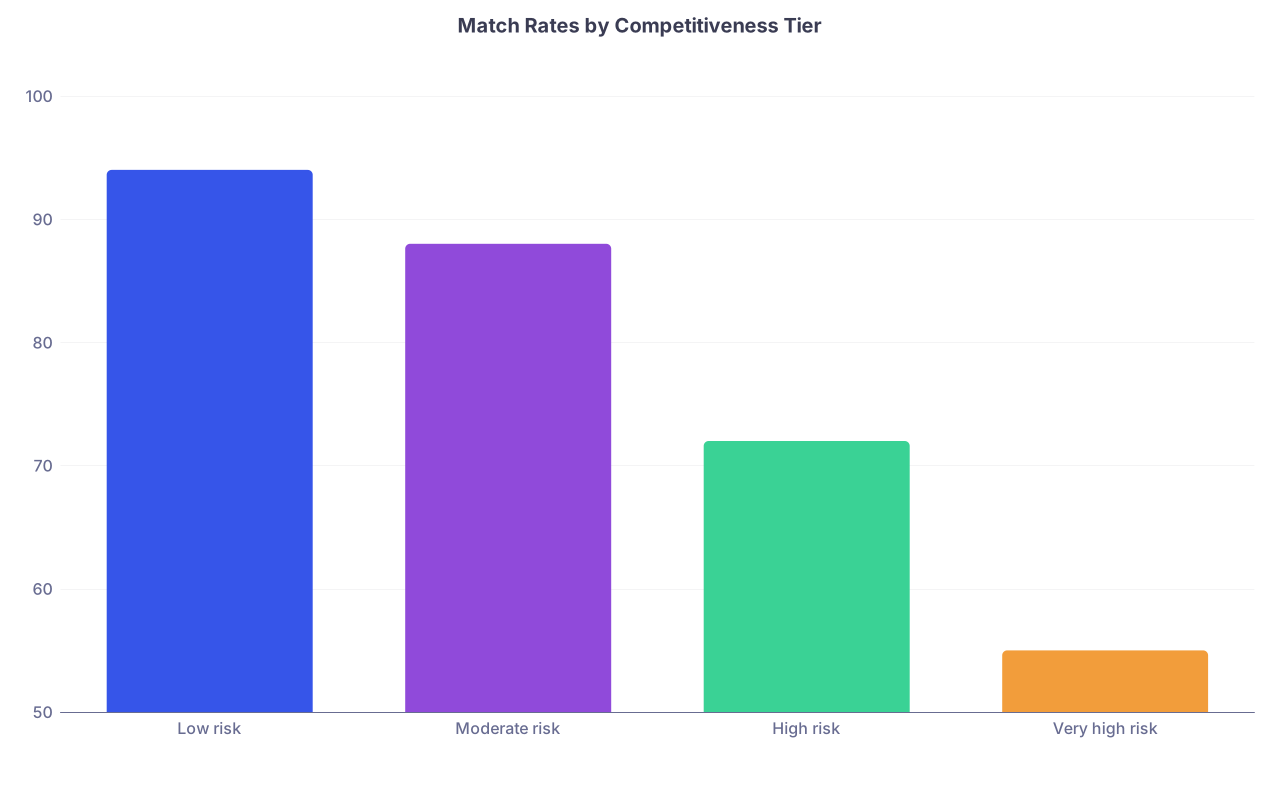
This gives you an objective view of relative risk.
Understand Levels of Competition and Strategic Pairings
Some Residency Specialties are consistently among the most competitive (e.g., Dermatology, Plastic Surgery, Neurosurgery, Radiation Oncology, some surgical subspecialties). If your primary interest is in one of these, a realistic backup is almost essential.
Think in terms of logical clusters of specialties rather than random backups:
- Surgical cluster: General Surgery, Vascular Surgery, Urology, ENT, Surgical Prelim + later transition
- Procedural but non-OR cluster: Emergency Medicine, Anesthesiology, Interventional Radiology (integrated or via Diagnostic Radiology)
- Primary care / longitudinal care cluster: Internal Medicine, Family Medicine, Pediatrics, Medicine-Pediatrics
- Hospital-based cognitive specialties: Internal Medicine (with later hospitalist or intensivist focus), Neurology, Psychiatry
Example Pairings:
- Primary: Orthopedic Surgery → Backup: General Surgery, Prelim Surgery with strong contingency plan, or Emergency Medicine if you value acute care and procedures.
- Primary: Dermatology → Backup: Internal Medicine or Family Medicine with plan for later fellowship or increased dermatology exposure.
- Primary: Diagnostic Radiology → Backup: Internal Medicine or Transitional Year (if available) with openness to pursuing radiology later.
Evaluate Your Personal Competitiveness Honestly
Compare your profile with recent matched data:
- Board scores (Step/COMLEX)
- Number and quality of specialty-specific letters
- Clerkship grades, especially in core rotations
- Research and scholarly activity in your target field
- Class rank or honors (e.g., AOA, Gold Humanism)
If you are significantly below the median in multiple metrics for your dream specialty, consider:
- Strengthening your application with a focused research year (if early enough), and/or
- Selecting a backup specialty where your profile will be competitive, not merely survivable.
Being realistic doesn’t mean abandoning ambition; it means hedging intelligently so you don’t end up unmatched.
3. Lifestyle, Well-Being, and Personal Circumstances
Your day-to-day life as a resident and attending will be profoundly shaped by your specialty. Backup Residency Specialties should still be compatible with the kind of life you want to lead.
Compare Lifestyle Profiles Across Specialties
Key factors to consider:
- Typical work hours (during residency and as an attending)
- Call schedules (in-house vs home call, nights, weekends, holidays)
- Shift work vs. continuity (e.g., Emergency Medicine vs. outpatient primary care)
- Predictability of schedule and ability to plan life events
- Burnout rates and wellness supports within that field
For example:
- Family Medicine / Outpatient Internal Medicine: Generally more predictable hours, especially in ambulatory settings; may be ideal if you value routine and time for family.
- Surgical Specialties: Typically longer hours, frequent call, and less control over schedule; better for those who derive satisfaction from the OR and accept more demanding lifestyles.
- Emergency Medicine: Shift-based schedule; no traditional continuity clinic but intense acute care; lifestyle can be flexible but includes nights and weekends.
Factor in Your Personal Commitments
Consider:
- Partner’s career and geographic limitations
- Children or caregiving responsibilities
- Your own health, chronic conditions, or mental health needs
- Desire to live near specific support systems (family, cultural or faith communities)
Example:
If you have substantial caregiving responsibilities that require predictable daytime availability, a backup specialty with largely outpatient practice (Family Medicine, Outpatient Pediatrics, many Internal Medicine roles) might be more realistic than one relying on unpredictable operative schedules or frequent 24-hour calls.
Anticipate Long-Term Satisfaction
Ask attendings and residents in different fields:
- What do you like most and least about your lifestyle?
- How do you manage work-life integration?
- If you could choose again, would you pick the same specialty?
Use these conversations to ensure that your backup choices are not just logically aligned, but emotionally acceptable to you over decades of practice.
4. Financial Realities and Long-Term Career Flexibility
While few enter medicine purely for income, financial considerations are practical and legitimate. Different Healthcare Careers within medicine carry different earning potential, debt management implications, and practice flexibility.
Understand Income Ranges and Job Security
Research:
- Starting salaries and median incomes by specialty (consider MGMA, Medscape, or specialty society reports)
- Urban vs rural compensation differences
- Demand in underserved areas or specific regions
Remember:
- Some specialties with slightly lower average pay offer greater job security and geographic flexibility (e.g., Family Medicine, General Internal Medicine, Psychiatry).
- High-paying subspecialties may require additional fellowship years, delaying peak earnings and prolonging training.
Consider Training Length and Additional Fellowships
Ask yourself:
- Am I comfortable with 6–8+ years of post-graduate training, if needed?
- Does the backup specialty open doors to subspecialties that interest me (e.g., Cardiology via Internal Medicine, Sports Medicine via Family Medicine)?
- Does the specialty allow lateral moves later in your career (e.g., from General Internal Medicine to Hospitalist, or from Family Medicine to academic leadership)?
Example:
If your primary choice is Cardiology via Internal Medicine but you worry about competitiveness for fellowship, a backup specialty like Family Medicine with fellowship in Sports Medicine, Geriatrics, or Palliative Care can still provide a rich, flexible career with meaningful subspecialty work.
Align With Your Debt and Financial Goals
When choosing backup specialties, factor in:
- Your total educational debt
- Your timeline for major life goals (home purchase, family, retirement planning)
- Opportunities for loan repayment (e.g., working in underserved areas, federal or state programs)
Financial reality should not override your interests entirely, but it should be thoughtfully integrated into your career planning.
5. Clinical Exposure, Mentorship, and Building a Coherent Story
You cannot effectively choose or apply to backup specialties you barely understand. Early, intentional exposure is critical.
Seek Targeted Clinical Experiences
Try to arrange:
- Electives and sub-internships in potential backup fields
- Shadowing experiences (even brief ones) in your third or early fourth year
- Longitudinal clinics that expose you to different practice types
- Volunteer or advocacy roles related to populations or conditions you may treat
Example:
If you are heavily leaning toward OB/GYN but considering Pediatrics or Family Medicine as backups, schedule rotations that let you experience newborn care, adolescent medicine, and outpatient women’s health to see which environment feels most natural.
Connect With Mentors in Each Potential Specialty
Identify:
- At least one mentor in your primary specialty
- One or two mentors in each serious backup field
Ask them:
- How they chose their specialty
- What alternative paths they considered
- How competitive the field is currently and what profiles match successfully
- How to craft your experiences and personal statement if applying to multiple fields
Mentors can:
- Provide honest feedback on your competitiveness
- Help you obtain strong, field-specific letters of recommendation
- Advise you on how to talk about your interest in multiple specialties without sounding unfocused
Build a Credible, Unified Narrative
If you apply to more than one specialty, your story should still make sense:
- Identify shared themes across fields (e.g., commitment to underserved populations, love of longitudinal relationships, passion for acute care).
- Highlight these themes in appropriate ways for each specialty’s expectations.
- Avoid contradicting yourself across personal statements (e.g., don’t claim you “could never imagine not operating” to Surgery programs while saying you “are most fulfilled by outpatient continuity care” to Family Medicine programs).
Coherence matters. Program directors want to know you have thought this through and are genuinely invested in their field—not that it’s an afterthought or desperation move.
6. Program Fit, Culture, and Geographic Strategy
Beyond the specialty itself, the type of program and its culture significantly shape your training experience. This is just as important for backup specialties as for your first choice.
Evaluate Program Characteristics That Matter to You
Consider:
- Program size (small, community-based vs large academic center)
- Institutional culture (collaborative vs hierarchical, emphasis on wellness vs pure productivity)
- Balance of inpatient vs outpatient training
- Research expectations and opportunities
- Diversity and inclusion efforts
- Support for teaching, leadership, and quality improvement
Tools to use:
- FREIDA and other program databases
- Program websites and social media
- Open houses, virtual info sessions, and residency fairs
- Word-of-mouth from current residents and recent graduates
Think Strategically About Geography
Your geographic strategy interacts with your backup specialty choices:
- Are you willing to broaden your geographic preferences for your first-choice specialty but narrow them for your backup (or vice versa)?
- Is there a region with high demand for certain fields (e.g., primary care in rural areas) where you’d be competitive and happy?
- Do you have visa, family, or partner constraints that make some regions more realistic than others?
A strong geographic strategy can sometimes compensate for moderate competitiveness in a given field.
Reputation and Outcomes of Programs
While prestige is not everything, consider:
- Board pass rates
- Fellowship match success (if you may subspecialize)
- Job placement outcomes
- Alumni networks and mentorship culture
A well-supported, mid-tier program in your backup specialty may offer a better experience and foundation than a highly prestigious but overstretched program in your first-choice field.
Putting It All Together: Constructing a Backup Strategy
When you integrate all of the above, your backup strategy should:
- Align with your core interests and strengths (not be in complete conflict with what you enjoy).
- Represent a meaningful, satisfying career path, not just a safety net.
- Be realistic about your competitiveness and match data.
- Maintain coherence in your narrative and experiences.
- Fit your lifestyle, financial, and personal goals.
You might end up with:
- One primary specialty and one closely related backup (e.g., General Surgery + Emergency Medicine).
- One primary and two backups that are conceptually aligned (e.g., Psychiatry + Internal Medicine + Family Medicine for a career focused on behavioral health and primary care integration).
- A primary specialty plan plus a SOAP contingency (if you are taking a high-risk approach and fully understand the potential consequences).
Whatever you choose, give your backup(s) the same respect in planning and execution as your first choice.

Frequently Asked Questions (FAQs)
1. What if I genuinely have no idea which backup Residency Specialties to choose?
Start with structured exploration:
- Review your clerkship evaluations and reflect on which rotations you enjoyed most and why.
- Schedule brief shadowing or electives in 1–2 fields that seem reasonably compatible with your interests.
- Talk to a career advisor or dean of students; they often have a big-picture view of where students like you have matched successfully in the past.
- Use tools like specialty exploration surveys (many medical schools and specialty societies offer them) to identify matches with your personality and values.
Indecision usually reflects insufficient exposure, not lack of fit. The more experiences and conversations you have, the clearer your options will become.
2. How many backup specialties should I reasonably apply to?
For most applicants:
- One to two backup specialties is typical and manageable.
- More than two may dilute your focus, complicate letters, and make it harder to maintain a coherent narrative.
The number also depends on:
- How competitive your primary field is
- Your individual competitiveness
- Your geographic flexibility
A student aiming for a very competitive specialty with modest metrics might do best with one strong, realistic backup plus a broad application strategy within that backup field.
3. Should my backup specialties be similar to my primary choice, or completely different?
Both approaches can work, but there are trade-offs:
Similar backups (e.g., General Surgery → Emergency Medicine)
- Pros: Easier to explain your interests, overlap in skills and experiences, shared letters may be more acceptable.
- Cons: May still be relatively competitive and not fully “safe.”
Different backups (e.g., Plastic Surgery → Family Medicine)
- Pros: Often significantly improves your odds of matching somewhere.
- Cons: Harder to craft a coherent narrative; may feel more like a “plan B” emotionally.
Ideally, choose backup specialties that share key aspects you value (patient population, acuity level, procedures vs cognitive work) but are meaningfully less competitive.
4. How do I handle personal statements and interviews if I’m applying to multiple specialties?
Approach this deliberately:
- Write distinct personal statements for each specialty, emphasizing the aspects most relevant to that field.
- Use overlapping themes (e.g., dedication to underserved populations, commitment to communication) while avoiding direct contradictions.
- In interviews, be honest but strategic. You can acknowledge exploration of different fields but emphasize what specifically draws you to this specialty and this program.
- Avoid mentioning ongoing applications to other fields unless asked directly; if asked, answer calmly and focus on your genuine interest in the specialty you’re interviewing for.
Programs primarily want to know: If we offer you a spot, will you be happy and committed here?
5. Is there any disadvantage to having backup Residency Specialties in the Match?
There is no formal penalty in the Match Process for applying to multiple specialties. However, potential pitfalls include:
- Spreading yourself too thin with letters, interviews, and away rotations
- Appearing unfocused if your story is inconsistent across applications
- Under-investing in your backup(s), leading to weaker applications in those fields
You can mitigate these risks by:
- Planning early
- Being strategic and selective about which backups you pursue
- Working closely with advisors and mentors to keep your narrative coherent
Thoughtfully chosen, well-prepared backup specialties strengthen your overall residency application strategy and increase the likelihood that you will match into a fulfilling, sustainable career in medicine.
By investing time now in reflective self-assessment, data-driven specialty research, and honest mentorship conversations, you can choose backup Residency Specialties that are not just safety nets, but genuine, rewarding paths within your broader Healthcare Career.