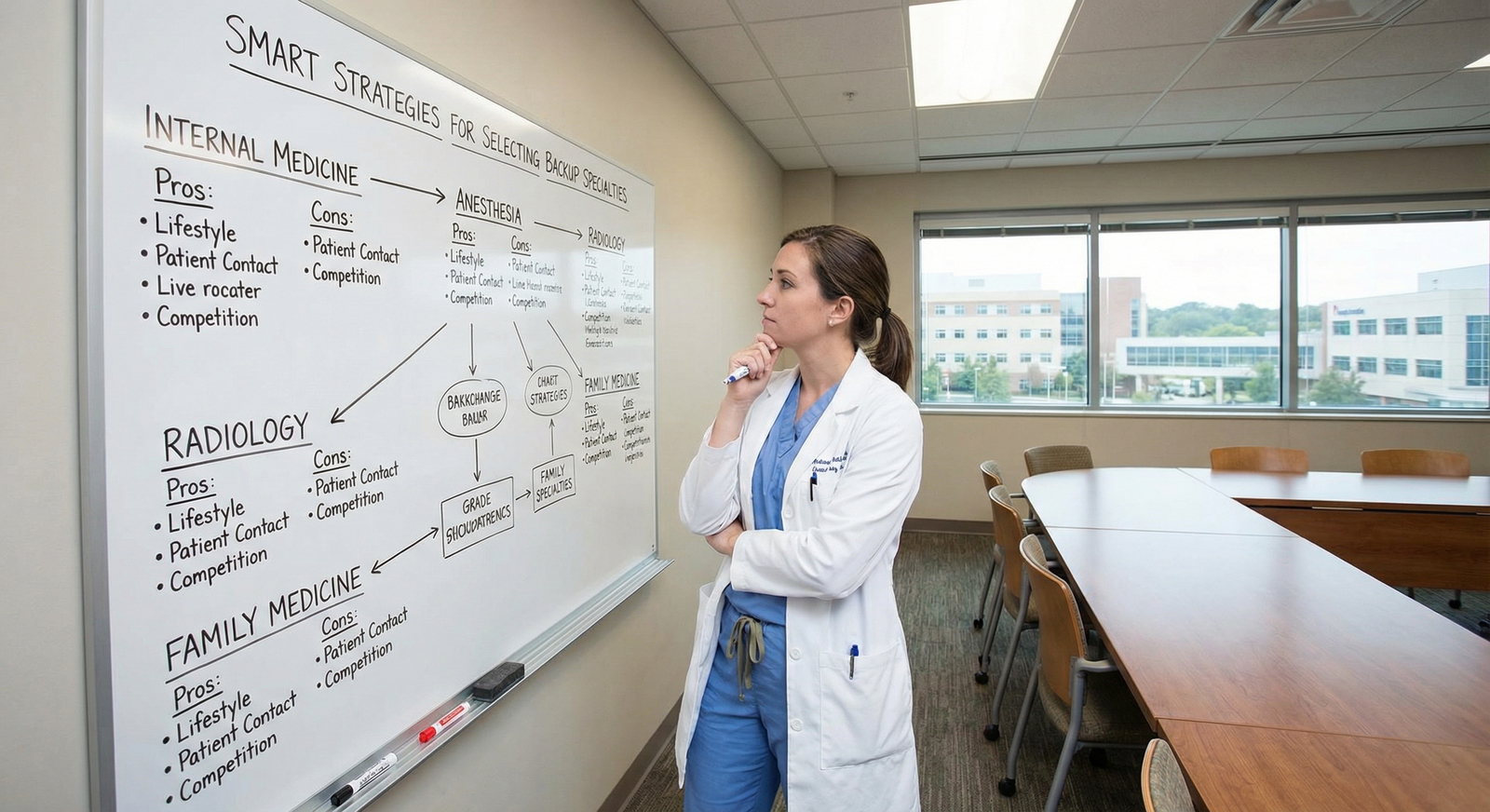
Choosing your primary specialty is challenging enough—but strategically selecting backup specialties can be just as important for your long-term Career Development. In a competitive Residency Matching environment, having thoughtful, realistic backup specialties is not a sign of weakness; it is a hallmark of mature, data-driven Decision-Making Strategies.
Below is a structured guide to help you choose Backup Specialties that genuinely fit your interests, strengths, and long-term goals, not just “anything I can match into.”
Understanding Why Backup Specialties Matter in Residency Matching
Backup specialties are not simply consolation prizes. They are carefully chosen alternative Medical Specialties that:
- Increase your overall chances of matching
- Protect you from going unmatched and losing a year
- Keep you aligned with your clinical interests, values, and lifestyle preferences
- Preserve meaningful career satisfaction and growth potential
The Reality of a Competitive Match
Some specialties—such as dermatology, plastic surgery, orthopedic surgery, neurosurgery, and interventional radiology—are consistently among the most competitive. Applicants to these fields often have:
- High board scores
- Multiple publications
- Strong home program support
- Away rotations with excellent evaluations
Even with a strong application, there is no guarantee of matching into a “reach” specialty. Thoughtful planning means asking:
- If I don’t match into my first-choice specialty, what is my next-best path?
- What specialties let me use similar skills, patient populations, or procedures?
- What paths keep doors open for fellowships or niche practice later?
Psychological and Strategic Benefits of a Backup Plan
Having well-chosen backup specialties can:
- Reduce anxiety as rank list deadlines approach
- Help you make more rational decisions, not fear-based ones
- Encourage you to build broader mentorship and networks across fields
- Allow you to customize applications (personal statements, letters) early, not at the last minute
In other words, creating backup specialties is not “giving up”—it is strategic risk management in your Career Development.
Step 1: Deep Self-Assessment of Interests, Strengths, and Constraints
Effective Decision-Making Strategies start with knowing yourself. Instead of asking only, “What specialty can I get into if my dream fails?”, ask, “What alternative specialties might I truly enjoy and grow in long-term?”
Clarify Your Clinical Interests
Start by analyzing your reactions to core rotations and electives:
Clinical Focus
- Do you enjoy longitudinal relationships (e.g., family medicine, internal medicine, pediatrics)?
- Do you prefer acute, high-intensity care (e.g., emergency medicine, critical care pathways)?
- Are you procedure-oriented (e.g., general surgery, anesthesiology, OB/GYN)?
- Are you drawn to diagnostic thinking with less procedural work (e.g., pathology, psychiatry)?
Patient Populations
- Children vs. adults vs. older adults
- Surgical vs. non-surgical patients
- Hospitalized patients vs. outpatient clinics
- Specific communities: underserved, rural, urban, LGBTQ+ populations, athletes, etc.
A helpful exercise: make three lists—
- Rotations you loved and why
- Rotations you disliked and why
- Clinical tasks that energize you (e.g., counseling, procedures, team leadership, diagnostics)
Then look for patterns that could fit more than one specialty.
Evaluate Your Skills and Natural Strengths
Backup specialties should still capitalize on your strengths. Consider:
- Interpersonal skills
- Are you skilled at difficult conversations and counseling? (Think psychiatry, palliative care, primary care, oncology.)
- Technical and procedural aptitude
- Do you enjoy and quickly master technical skills? (Think surgery, anesthesiology, EM, interventional specialties.)
- Cognitive/problem-solving focus
- Do you like complex diagnostic puzzles and longitudinal management? (Think internal medicine, neurology, rheumatology.)
- Team and leadership style
- Do you thrive in fast-paced multidisciplinary teams? (Think EM, ICU-bound tracks, OB.)
Seek feedback from:
- Clerkship evaluations
- Supervising physicians
- Residents who have seen you on different services
- Objective metrics (procedural logs, OSCE performance, etc.)
Use this feedback to narrow down backup specialties where you can genuinely excel rather than just “survive.”
Step 2: Analyze Specialty Competitiveness, Demand, and Lifestyle
Backup specialties should strike a balance between being more attainable and genuinely acceptable to you. This requires understanding the broader landscape of Medical Specialties.
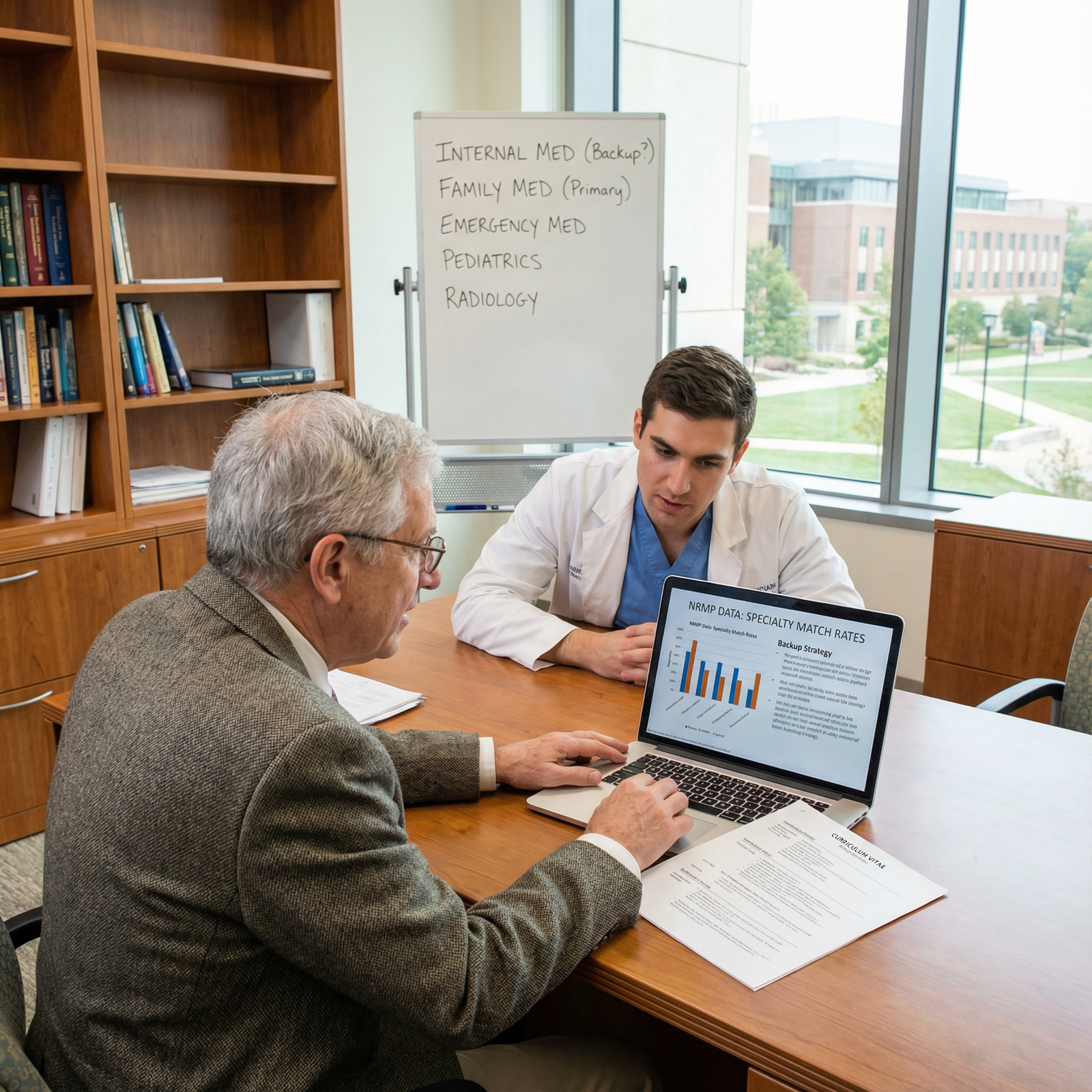
Use Data to Guide Your Strategy
Leverage objective data sources when considering Residency Matching odds:
- NRMP “Charting Outcomes in the Match”
- Review data on matching rates by specialty, USMLE/COMLEX scores, publications, AOA status, etc.
- NRMP Program Director Survey
- See what Program Directors value most: board scores, letters, clerkship grades, research, etc.
- AAMC and specialty society resources
- Examine workforce needs, predicted shortages, and geographic trends.
Ask:
- Is my primary specialty in the “very competitive” range for my numeric profile?
- Which related specialties have less intense competition but overlapping skills or interests?
For example:
- A competitive plastic surgery applicant might consider general surgery, otolaryngology, or even dermatology or anesthesiology as backup options, depending on their profile and interests.
- An applicant targeting dermatology might build parallel applications in internal medicine with a goal of dermatology-related fellowships (e.g., allergy/immunology, rheumatology) or in primary care with special interest in skin disease.
Consider Workforce Demand and Future Scope
Some specialties have strong and growing demand in many regions:
- Primary care (family medicine, internal medicine, pediatrics)
- Key for telemedicine, outpatient clinics, community health, and academic roles.
- Psychiatry and addiction medicine
- Growing rapidly due to mental health and substance use crises.
- Hospital medicine
- Increasing opportunities for internal medicine and family medicine graduates.
- Geriatrics and palliative care
- Expanding with aging populations.
- Telemedicine and digital health
- Open roles for many fields, especially primary care, psychiatry, and some subspecialties.
Choosing a backup specialty with solid job market prospects can safeguard your long-term career flexibility.
Lifestyle and Work–Life Balance Considerations
Your backup specialty should still support a sustainable lifestyle. Reflect on:
- Typical hours and call
- Are you comfortable with night shifts and 24-hour call (e.g., surgery, OB/GYN, EM)?
- Do you prefer a more predictable schedule (e.g., outpatient-focused specialties, pathology, some psychiatry roles)?
- Flexibility and location
- Do you want options for part-time work, locum tenens, or telehealth?
- Burnout risk
- Review job satisfaction surveys (e.g., Medscape, specialty society reports) to gauge typical burnout levels.
Be honest with yourself: you may match into a specialty and practice it for decades—your backup choice should be one you can realistically live with and grow in.
Step 3: Leverage Mentors, Advisors, and Real-World Exposure
Even well-analyzed self-reflection has limits. Mentorship and real-world observation are crucial Decision-Making Strategies.
Build a Diverse Mentorship Team
Relying on a single mentor—especially one from your dream specialty—can unintentionally limit your perspective. Instead, aim for:
- One or two mentors in your primary specialty
- One or two mentors in plausible Backup Specialties
- An impartial advisor (e.g., dean’s office, career advisor) with a broad overview of the Match
Ask targeted questions:
- “Given my application profile, what range of specialties is realistic and wise?”
- “If I were your student or resident, what backup fields would you advise me to explore?”
- “What are your colleagues in [backup specialty] saying about job satisfaction and career paths?”
Shadowing and Electives as Reality Checks
Do not pick a backup specialty you have never truly experienced. Practical steps:
- Schedule sub-internships or electives in potential backup specialties early in your fourth year.
- Attend department conferences, morbidity & mortality conferences, and grand rounds in those fields.
- Observe both the best and worst days: busy call days, clinic follow-up days, and routine operations.
Use these experiences to answer:
- Can I see myself doing this work most days without dreading it?
- Do I feel aligned with the culture, teamwork style, and patient relationships?
- Does this specialty allow me to pursue my values (e.g., advocacy, teaching, research, global health)?
Step 4: Evaluate Program Characteristics in Your Backup Fields
Once you have identified 1–2 realistic backup specialties, zoom in on the training programs themselves.
Training Structure and Curriculum Fit
When reviewing programs in your backup specialties, consider:
- Accreditation status
- Confirm ACGME accreditation and any recent citations or concerns.
- Curriculum structure
- Balance of inpatient vs. outpatient experiences
- Amount of procedural training
- Opportunities for electives and tailored tracks (e.g., global health, health policy, academic medicine)
- Fellowship and subspecialty opportunities
- Do graduates successfully place into desired fellowships or niche areas?
- Are there pathways that might get you closer to some interests of your original dream specialty?
For example, a student not matching into cardiothoracic surgery might consider:
- General surgery with a cardiothoracic fellowship later
- Anesthesiology with a critical care or cardiac anesthesia focus
- Internal medicine with a critical care or cardiology liaison role
Program Culture and Support
Backup specialties should not mean compromising on training quality. Evaluate:
- Program leadership and responsiveness
- Resident wellness initiatives
- Diversity, equity, and inclusion efforts
- Support for research or teaching if those are your goals
Talk to residents honestly—ask what they wish they had known before starting and how supportive the program is during personal or academic crises.
Step 5: Analyze Long-Term Career Outcomes and Satisfaction
Backup specialties should lead to genuine career satisfaction and viable employment, not just “a match this year.”
Investigate Job Market Outcomes
Look beyond residency:
- Job placement rates: Where do recent graduates practice (academic vs. community, urban vs. rural)?
- Average time to secure a job: Are graduates finding positions quickly?
- Geographic flexibility: Are jobs readily available in your desired regions?
You can gather this information by:
- Reviewing alumni pages on program websites
- Speaking to recent graduates, especially those 1–5 years out
- Attending specialty society events or webinars
Consider Career Longevity and Fulfillment
Career longevity depends heavily on:
- Alignment between your values and your daily work
- Realistic lifestyle that supports your mental and physical health
- Opportunity to evolve—through leadership, teaching, research, or subspecialization
Ask practicing physicians in your backup fields:
- “If you had to choose again, would you pick this specialty?”
- “What are the most fulfilling aspects of your work?”
- “What are the hardest aspects, and how do you cope?”
Use these insights to ensure your backup choice is not only acceptable but potentially deeply rewarding.
Step 6: Create a Concrete, Parallel Backup Strategy
Once you have identified appropriate backup specialties, you need a specific plan—not a vague idea.
Decide on How Many Backup Specialties to Pursue
Common approaches:
- Single primary + 1 closely related backup
- Example: Orthopedic surgery + general surgery
- Example: Dermatology + internal medicine
- Single primary + 1–2 broader backups
- Example: Neurosurgery + neurology + internal medicine
- Example: Plastic surgery + general surgery + otolaryngology (if realistic for your profile)
In general:
- Limit yourself to no more than 2–3 specialties total to keep your application coherent and manageable.
- Ensure each specialty application looks intentional, not generic.
Tailor Your Application Materials
For each specialty you apply to, you should have:
- A separate, specialty-specific personal statement
- Letters of recommendation that match the specialty (e.g., at least 2 letters from that field)
- A CV highlighting experiences pertinent to that specialty
Avoid red flags such as:
- Applying to a backup specialty with no relevant experiences or letters
- Submitting the same personal statement to dramatically different fields
Program directors can usually tell when they are clearly the “backup choice.” Your goal is authenticity: you should be able to sincerely explain why that specialty is a good fit, even if it was not your first choice.
Networking and Professional Relationships
Begin networking early in potential backup fields:
- Attend departmental meetings, noon conferences, or interest group events
- Express genuine interest to faculty and residents
- Seek small projects—case reports, QI projects, or short-term research—to demonstrate commitment
These relationships lead to stronger letters and a deeper understanding of the field before interviews.

Frequently Asked Questions About Selecting Backup Specialties
Q1: What if I genuinely have no idea what my backup specialties should be?
If you are uncertain:
- Start broad: Revisit your core rotations and identify which departments felt least draining and most engaging.
- Use structured tools: Some schools offer specialty interest inventories or career assessment tools.
- Talk to advisors: Schedule time with your dean’s office, career advisors, and several faculty members from different fields.
- Sample exposure: Arrange brief shadowing experiences or elective clinics in 2–3 possibilities (e.g., internal medicine, psychiatry, family medicine) to gather real impressions.
Lack of clarity is common; the key is to start exploring early in your fourth year rather than waiting until after interview season.
Q2: Should my backup specialty be similar to my primary choice, or completely different?
There is no single rule, but similarities often help:
Advantages of a related backup:
- Overlapping skills and experiences (e.g., surgery rotations support both gen surg and ortho).
- Easier to obtain relevant letters and explain your interest.
- Potentially more coherent career narrative.
Advantages of a different backup:
- Increased chance of matching if the fields have very different competitiveness or applicant pools.
- Opportunity to “pivot” if you recognize a major mismatch with your primary choice.
Example: An applicant for emergency medicine might choose internal medicine or family medicine as related backups (due to shared acute care and broad clinical exposure), while someone aiming for plastic surgery might have general surgery as the primary backup.
Q3: Are backup specialties less prestigious or less fulfilling?
No. Prestige should not be the primary lens through which you view Medical Specialties. Many specialties considered “backup” by some applicants:
- Offer excellent job security and strong incomes
- Provide rich, meaningful patient relationships
- Allow for subspecialization, leadership, teaching, advocacy, and research
- Have high satisfaction rates, particularly when values and personality are aligned
Your long-term happiness will depend far more on daily work and culture fit than on perceived prestige.
Q4: How important is networking when considering and applying to backup specialties?
Networking is extremely important, especially for backup plans. Through networking, you can:
- Get insight into how your application is perceived in that field
- Identify realistic programs likely to consider you seriously
- Find mentors who can write strong, specialty-specific letters
- Learn about unadvertised opportunities (away rotations, projects, elective experiences)
Even brief but genuine connections—such as a short project with a faculty member or consistent attendance at department conferences—can significantly strengthen your application.
Q5: Can my specialty plans change after I apply—or even after I start residency?
Yes. Career Development in medicine is dynamic:
- Before the Match:
You can adjust your rank list as your insights evolve—just be sure you could truly commit to any program you rank. - During residency:
Some residents successfully change specialties by reapplying, though this process is complex and not guaranteed. - Within a specialty:
Many physicians reshape their careers through fellowships, niche clinics, administrative roles, medical education, telemedicine, or part-time configurations.
Flexibility is a strength. The goal is not to predict one perfect path at age 25, but to choose fields that give you a strong foundation and multiple options.
Thoughtful Decision-Making Strategies for choosing backup specialties can transform the Residency Matching process from a high-stakes gamble into a structured, data-informed career step. By understanding yourself, analyzing the landscape of Medical Specialties, seeking honest mentorship, and building a clear parallel application strategy, you can protect your future while remaining open to fulfilling, sometimes unexpected career paths.
For deeper dives into specialty options and balance between fields, you may also explore: