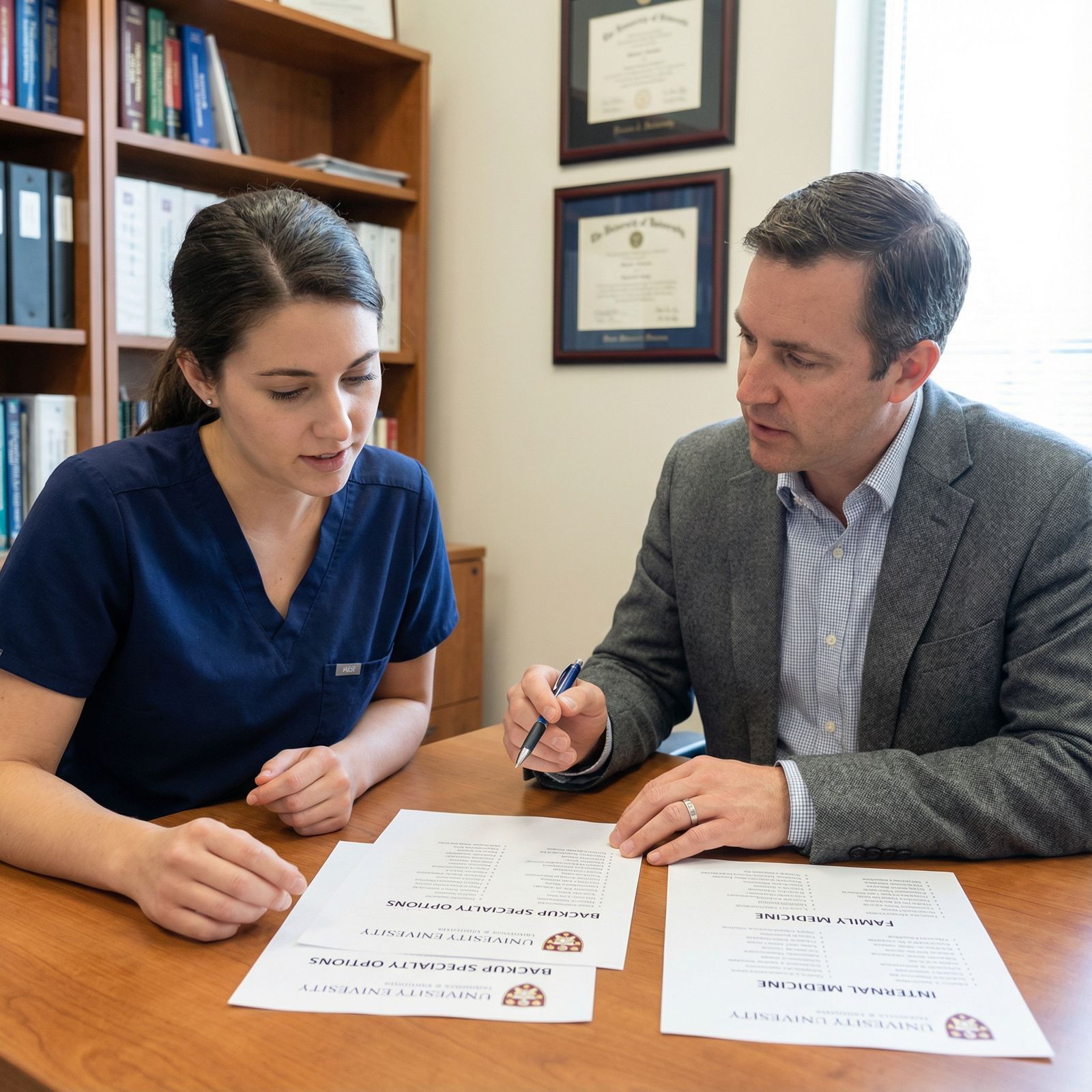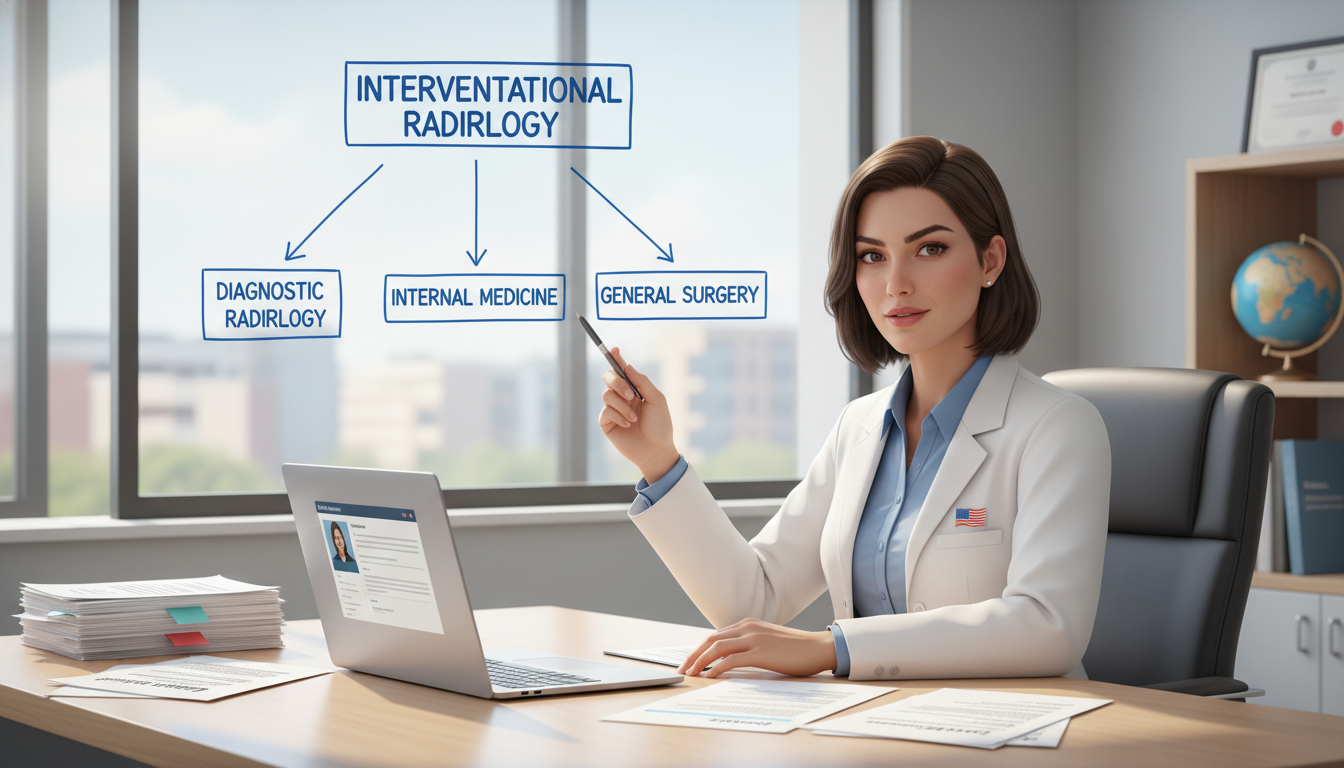
Understanding Why Backup Specialty Planning Matters for DOs Aiming at Radiology
Diagnostic radiology is a highly competitive field, and for a DO graduate, strategic planning is essential—not just to pursue radiology, but to protect yourself with a rational, well‑aligned backup specialty plan.
As a DO graduate targeting the diagnostic radiology match, you’re navigating:
- Increasing competitiveness of radiology residency
- Structural barriers some DOs still face (program bias, limited audition/elective slots)
- Uncertainty in board score conversions and how PDs interpret COMLEX
A thoughtful backup strategy is not “giving up” on radiology. It’s risk management for your career. Your goal is to:
- Maximize your chances of matching into diagnostic radiology
- Minimize the risk of going unmatched (by building a realistic Plan B)
- Ensure that your backup options are careers you could live with long‑term
This article will walk you through a step‑by‑step approach to backup specialty planning tailored specifically to DO graduates applying in diagnostic radiology, including dual applying residency strategies, choosing a plan B specialty, and practical application tactics.
Step 1: Honestly Assess Your Competitiveness as a DO Applicant in Radiology
Before you even choose a backup, you need a clear-eyed view of your competitiveness for radiology residency. This will determine whether you:
- Apply radiology only
- Dual apply (radiology + one backup specialty)
- Strongly prioritize a plan B specialty while still taking a realistic shot at radiology
Key Data Points to Review
Board Scores
- COMLEX Level 1 and 2 (and/or USMLE Step 1 and 2 if taken)
- Compare your performance to recent radiology applicant data (from NRMP and specialty societies).
- If you did not take USMLE:
- Some radiology programs still prefer or require USMLE; absence of USMLE may slightly narrow your options.
- This doesn’t disqualify you, but it increases the value of strong COMLEX scores and robust clinical performance.
Clinical Performance
- Clerkship grades and class rank
- Honors or high passes in core rotations, particularly:
- Internal Medicine
- Surgery
- Neurology
- Radiology electives
- Strong letters from core rotations and radiology rotations
Radiology‑Specific Experience
- Number and quality of radiology electives (home + away)
- Letters of recommendation from radiologists
- Involvement in imaging research, QI projects, or case reports
- Membership/leadership in radiology‑related interest groups
Red Flags
- Course remediations
- Board exam failures or repeats
- Professionalism issues
- Significant leaves of absence
The more red flags or gaps you have, the more seriously you should weigh aggressive backup planning.
Rough Radiology Competitiveness Tiers (for DOs)
These are general guidelines, not absolute rules:
Strong radiology DO applicant
- Solid to high board scores, no failures
- Strong clinical performance and letters
- Demonstrated interest in radiology
- Some research or scholarly work (not mandatory but helpful)
- May apply radiology only or dual apply lightly for geographic or risk tolerance reasons
Middle‑range radiology DO applicant
- Average scores or slightly below for radiology, but no major red flags
- A mix of grades; maybe not top quartile
- Limited radiology research/experience but some exposure and letters
- Should strongly consider dual applying residency with a carefully chosen backup specialty
At‑risk radiology DO applicant
- Limited radiology exposure or weak letters in the field
- Lower board scores or exam failures
- Academic challenges or professionalism concerns
- Should prioritize a robust plan B specialty and treat radiology as an aspirational reach
This candid self‑assessment is the foundation for rational backup specialty planning.

Step 2: Principles of Choosing a Backup Specialty (Plan B That You Can Live With)
Choosing a backup specialty is not about “what’s easiest” or “what guarantees a match.” It should be about selecting a realistic, acceptable, and potentially fulfilling career path that also aligns strategically with your radiology application.
Core Principles for DO Graduates
Acceptability: Could you truly practice this specialty long‑term?
Ask:- If radiology disappeared as an option, could you see yourself doing this for 30 years?
- Does the day‑to‑day clinical work feel tolerable or interesting?
Overlap With Radiology Skills/Interests For someone drawn to diagnostic radiology, consider how much you value:
- Pattern recognition and diagnostic reasoning
- Technology and imaging
- Procedural work vs. cognitive work
- Limited vs. extensive direct patient contact
Your backup should ideally share some of these characteristics—for both personal satisfaction and for application synergy.
Competitiveness and Match Realism
- Your plan B specialty should generally be less competitive for you than radiology, not more.
- DO graduates should verify that the specialty:
- Has a healthy number of programs accepting DOs
- Does not have strong anti-DO bias in your desired regions
Career Flexibility
- Does the specialty offer broad job opportunities after residency?
- Can you pivot to other roles (administration, education, outpatient practice, subspecialization)?
Residency Training Structure
- All-in-one categorical vs. separate preliminary + advanced spots
- Length of training (3 vs. 4+ years)
- Lifestyle and call structure during residency
Common Plan B Options for DO Applicants Interested in Radiology
Below are specialties often considered as backup options by students interested in the diagnostic radiology match, with pros and cons from a DO perspective.
1. Internal Medicine (IM)
Why it aligns:
- Wide job market and flexibility
- Strong cognitive/diagnostic component
- Many fields of IM use imaging heavily (cardiology, pulmonary, oncology)
Pros:
- Large number of positions, including many that are DO‑friendly
- Can still interact frequently with imaging and radiologists
- Opportunities to specialize later (fellowships in cardiology, GI, heme‑onc, etc.)
Cons:
- Much more direct patient care, inpatient work, and complex chronic disease management
- Residency lifestyle can be demanding (nights, frequent calls)
- The “feel” is very different from radiology; not ideal if you want minimal patient contact
Good candidate for:
DO graduates who like diagnostic thinking, are ok with more patient care, and want a broad safety net with many job options.
2. Transitional Year (TY) + Plan B Strategy
Transitional Year programs are 1‑year broad internship programs often used before advanced specialties (like radiology). They are not a standalone career path, but they can be part of a multi‑cycle strategy:
- Year 4: Apply diagnostic radiology and TY simultaneously.
- If you match a TY but not radiology: you have a year of training and can reapply to radiology or pivot to IM, neurology, etc.
Pros:
- Offers clinical experience and time to strengthen your application or pivot
- Can gain strong clinical letters and possibly research
Cons:
- Does not guarantee a spot in a final specialty
- Can be stressful and uncertain; requires a clear plan for reapplication or pivot
Good candidate for:
Applicants who are borderline competitive and open to a 2‑cycle match strategy.
3. Neurology
Why it aligns:
- Heavy use of neuroimaging; frequent collaboration with neuroradiologists
- Emphasis on pattern recognition, localization, and diagnostic reasoning
Pros:
- Moderate competitiveness; many programs are DO‑friendly
- Strong cognitive emphasis; imaging is central to evaluation
- Can later subspecialize (stroke, epilepsy, neuromuscular, etc.)
Cons:
- High exposure to chronic neurological disease (stroke, dementia, movement disorders)
- Outpatient and inpatient mix may feel quite different from radiology’s workflow
- Not as flexible as IM in terms of job types
Good candidate for:
Students fascinated by neuroanatomy, imaging, and diagnostic puzzles, willing to embrace patient‑facing care.
4. Family Medicine (FM)
Why it’s often considered:
- Many positions and high DO representation
- Good job security and geographic flexibility
Pros:
- High likelihood of matching for a wide range of applicants
- Broad scope of practice, many outpatient opportunities
- DOs are well‑represented and valued in FM
Cons:
- Less direct overlap with radiology’s day‑to‑day work
- Heavy focus on longitudinal patient relationships and primary care
- Might feel very different for someone drawn to image‑based diagnostic work
Good candidate for:
Students who truly enjoy primary care and patient relationships, and are willing to shift priorities from radiology toward holistic hands‑on medicine.
5. Psychiatry
Why it’s sometimes a backup:
- Increasing demand and job availability
- Many programs open to DOs
Pros:
- Relatively shorter training, lighter procedures, less overnight acute care in many settings
- Focus on cognitive/behavioral aspects rather than intensive medical management
Cons:
- Very different from radiology—minimal imaging, few procedures
- Requires strong interest in mental health and long-term behavioral care
Good candidate for:
Applicants with genuine interest in mental health who can see themselves practicing psychiatry independently of radiology.
Step 3: Building a Dual Applying Strategy Without Diluting Your Radiology Application
Dual applying residency (radiology + one backup specialty) is common and often advisable for DO graduates. The challenge is to do this strategically so that:
- You remain a strong, coherent radiology applicant
- Your backup application is still credible and competitive
- You avoid sending mixed messages that weaken both applications
1. Clarify Your Priority
You need to know your internal hierarchy:
- Option A: “Radiology is first choice; backup is safety net only.”
- Option B: “I genuinely like both; I’ll sort final preferences during interviews.”
- Option C: “Backup is primary; radiology is aspirational if I’m lucky.”
Your personal hierarchy shapes how you allocate time, away rotations, research, and application volume.
2. Plan Rotations and Letters Strategically
For a DO graduate, audition and home rotations can be especially important. Consider:
Radiology Rotations
- Aim for at least 1–2 radiology electives (home + possibly one away)
- Get at least 1–2 strong radiology letters from faculty who actually know your work
Backup Specialty Rotations
- Schedule at least one dedicated rotation in your backup field (e.g., IM ward month, neurology elective)
- Obtain at least one letter from that specialty to demonstrate seriousness and fit
Balance Example (Radiology + Internal Medicine)
- MS4 early: Home radiology elective → Radiology letter
- Mid-year: Sub-I in internal medicine → IM letter
- Additional: Elective in a subspecialty (e.g., cardiology or another radiology month) as feasible
3. Tailor Your Application Materials
You can—and should—submit:
- Different personal statements for radiology and your backup specialty
- Slightly tailored experiences descriptions emphasizing:
- Image-based reasoning and technology for radiology
- Patient care, continuity, and diagnostic workups for IM/neurology/FM/psychiatry
Avoid obvious copy‑paste between statements. Programs want to see a coherent narrative for their field.
4. Manage Overlaps in Experiences
You will inevitably reuse most of your core experiences (research, leadership, volunteer work). Adjust the framing:
- For radiology: highlight imaging, pattern recognition, data analysis, tech usage.
- For IM or neurology: emphasize clinical reasoning, complex case management, communication, and multidisciplinary care.
Example:
- Same research project involving imaging in stroke:
- Radiology PS: Focus on how imaging guided diagnosis and your interest in image interpretation.
- Neurology PS: Emphasize how imaging changed clinical neurologic decision-making and patient outcomes.
5. Be Prepared to Address Dual Applying in Interviews
Programs may ask if you applied elsewhere. For DO applicants, honesty with tact is important.
A reasonable framework:
- Affirm that radiology (or the specialty you’re interviewing in) is a top choice.
- Explain your interest in that field specifically.
- Briefly acknowledge that, as a DO in a competitive environment, you used a risk‑aware strategy, but you are genuinely enthusiastic about their specialty.

Step 4: Tactical Application Planning for DO Graduates
Now you need to translate your dual applying or backup specialty plan into numbers, timelines, and daily actions.
1. How Many Programs to Apply To?
Numbers may shift annually, but for a DO graduate:
Diagnostic Radiology Match (primary specialty)
- Middle‑range or strong DO applicants often apply to 40–80 radiology programs depending on geography flexibility and score profile.
- At‑risk applicants may go higher, but sheer volume cannot fully overcome low competitiveness.
Backup Specialty
- Internal Medicine: 30–60+ programs depending on your risk tolerance and geography
- Neurology, FM, or Psychiatry: 25–50+ programs is common for a safe cushion
The goal is an application volume where, across both specialties, your overall odds of matching are high, while staying realistic about personal time and finances.
2. Geographic Strategy
Some DO graduates hoping for radiology target geographic tiers:
- Tier 1: Radiology + backup in your preferred regions (e.g., Midwest, Southeast, etc.)
- Tier 2: Radiology in broader regions where DOs are well‑represented
- Tier 3: Backup specialty in any region where you would realistically live
When forced to choose, prioritize backup programs that you would actually attend rather than sending purely symbolic applications.
3. ERAS Application Execution
- Start drafting two personal statements early (late spring to early summer).
- Request specialty‑specific letters well in advance:
- Make it clear which letter goes to which specialty.
- Build a tailored program list spreadsheet:
- Columns for: Program, Specialty, DO‑acceptance history, location, type (academic vs community), personal notes.
For DO graduates, it’s crucial to pre‑screen programs:
- Check past DO match lists from your school
- Talk to recent graduates about which radiology programs truly welcome DOs
- Review program websites; though not always updated, they often show current resident lists—look for DO representation
4. Interview Season Strategy
As interviews arrive, track them by specialty:
- If radiology interviews are robust (e.g., 10–15+), and you are a solid DO candidate, your odds are reasonable.
- If radiology interviews are sparse, but backup specialty interviews are numerous:
- Prioritize attending backup interviews
- Protect days for radiology interviews that might still arrive, but don’t decline backup interviews lightly.
During interviews:
- For radiology: emphasize your passion for imaging, analytic thinking, and collaboration.
- For backup: own your enthusiasm for that field; avoid making it sound like a consolation prize.
5. Rank List Strategy
Near the end you will face the critical question: How do you rank radiology vs. your plan B specialty?
General guidance:
- Rank in true order of preference across specialties—not based on what you think is strategic. The algorithm favors your preferences.
- If radiology is genuinely your top choice, put your radiology programs first in the order you want them, followed by your backup programs where you’d still be happy.
- It is not wise to include programs (radiology or backup) that you would be genuinely devastated to attend—only rank places and specialties you can realistically live with.
Step 5: Contingency Planning If You Don’t Match Radiology
Even with strong planning, radiology is competitive, and some DO graduates will not match in the diagnostic radiology match on the first try. Planning ahead for this scenario reduces panic and emotional strain.
1. SOAP vs. Reapplying Next Year
If you go unmatched or only partially matched:
SOAP (Supplemental Offer and Acceptance Program)
- Limited radiology positions appear in SOAP; you should not bank on it.
- More often, positions in internal medicine, family medicine, psychiatry, prelim years, or transitional year programs may be available.
- Going through SOAP requires readiness:
- Updated personal statements
- A clear idea of which plan B specialties you’d accept quickly
- Immediate coordination with your school’s advising office
Reapplying in the Next Cycle
- Often combined with:
- Taking a TY or prelim IM year
- Doing a research year (especially at an institution with a radiology department)
- Improving board performance (if any exams remain) or adding scholarly work
- Often combined with:
2. Strengthening Application for a Second Attempt
If you decide to reapply to the diagnostic radiology match:
- Earn strong clinical evaluations and letters during your internship year.
- Engage in radiology‑related research, QI, or teaching.
- Obtain direct mentorship from radiologists who can advocate for you.
- Improve any weak areas:
- Address professionalism/communication skills
- Refine personal statement and interview skills
However, also be open to discovering that your backup specialty is actually a good fit. Many physicians who originally targeted something else end up satisfied—and highly successful—in their Plan B specialty.
3. Emotional and Professional Support
Not matching your top choice is emotionally difficult. Use:
- School advisors and mentors (MD and DO)
- Recent DO grads who have navigated similar pathways
- Wellness resources and counseling if needed
A rational, well‑constructed backup plan protects your career, but your well‑being and identity as a physician also matter.
FAQs: Backup Specialty Planning for DO Graduates in Diagnostic Radiology
1. As a DO graduate, do I have to dual apply if I’m going for diagnostic radiology?
Not necessarily. If you are a strong DO applicant (good board scores, strong clinical performance, clear radiology experience, and supportive letters), you may reasonably apply radiology‑only.
However, many DOs—especially those with:
- Average scores
- Limited radiology exposure
- Geographic restrictions
choose to dual apply residency (radiology + a plan B specialty) to protect against going unmatched. It’s a personal risk‑tolerance and competitiveness calculation best made with your advising dean and radiology mentors.
2. What’s the best backup or plan B specialty for someone who loves radiology?
There is no single best “plan B specialty.” It depends on your preferences and competitiveness. Commonly considered options include:
- Internal Medicine – broad opportunities, strong diagnostic focus, heavy imaging use in many subspecialties
- Neurology – significant reliance on neuroimaging and diagnostic reasoning
- Family Medicine – high match likelihood, broad outpatient career possibilities
- Psychiatry – very different than radiology but appealing for some interested in cognitive work
Pick a specialty that you could realistically see yourself doing long‑term if radiology does not work out.
3. Should I apply for a Transitional Year as part of my backup strategy?
A Transitional Year (TY) can be a useful bridge:
- Apply to diagnostic radiology and TYs simultaneously.
- If you match a TY but not radiology, you’ll have a year of broad clinical exposure.
- During that year, you can:
- Reapply to radiology with stronger letters and more experience
- Pivot to another specialty (internal medicine, neurology, etc.)
But a TY is not a complete backup on its own, because it doesn’t lead to a final specialty or long‑term career. Only use this option if you have a realistic plan for what comes after the TY.
4. How should I rank radiology vs. my backup specialty on my rank list?
Rank programs in your true order of preference across specialties. If you would prefer any radiology program over any backup specialty program, put all radiology programs first (in your preferred order), then your backup programs.
If you would genuinely be happier in a strong internal medicine or neurology program than in a particular radiology program, you can rank that backup program higher. The match algorithm is designed to favor your preferences; don’t try to “game” it based on what you think is realistic.
Thoughtful backup specialty planning as a DO graduate targeting the diagnostic radiology match is about aligning your ambition with realism. When you combine honest self‑assessment, strategic dual applying, and an acceptable plan B specialty, you significantly reduce the risk of going unmatched—while still giving yourself a strong chance at the radiology career you’re aiming for.