Understanding Why Backup Specialty Planning Matters for IMGs in ENT
Otolaryngology–Head and Neck Surgery (ENT) is one of the most competitive specialties in the U.S. residency system. For an international medical graduate, the challenge is even steeper. Limited interview spots, program preferences for U.S. graduates, and visa constraints all combine to make the otolaryngology match uncertain—even for strong applicants.
That’s why a clear, intentional backup plan is not optional; it’s a core part of a smart IMG residency guide. “Backup” shouldn’t mean “giving up on ENT,” but rather “maximizing your chance to match into a satisfying, realistic specialty path.”
In this article, you’ll learn:
- How to evaluate your competitiveness honestly as an IMG for ENT
- Which backup and plan B specialty options pair strategically with ENT
- How to dual apply without ruining your ENT narrative
- Practical steps to build an application portfolio that works for both ENT and backups
- How to make decisions if you don’t match in otolaryngology
The goal is to help you create a structured, evidence-based backup strategy—not a last-minute panic plan.
Step 1: Honestly Assessing Your ENT Competitiveness as an IMG
Before you choose a backup specialty, you need to know where you truly stand for otolaryngology. The more realistic your self‑assessment, the smarter your backup planning.
Key Competitiveness Factors for IMGs in ENT
USMLE Scores and Attempts
- ENT programs, particularly academic ones, often prefer very high scores and no exam failures.
- Step 2 CK has become especially important; Step 1 pass/fail status shifts focus to clinical performance.
- Multiple attempts or significantly below-average scores can make matching ENT extremely unlikely as an IMG.
Clinical Experience in the U.S.
- ENT‑specific electives, sub‑internships, or observerships in the U.S. are crucial for letters and familiarity with the system.
- IMGs without any U.S. clinical experience are at a major disadvantage in such a competitive field.
Research Productivity
- ENT is research‑heavy, especially at academic programs. Publications, presentations, and ENT‑related projects matter.
- Strong research in other fields still helps, but ENT‑focused research is more persuasive.
Letters of Recommendation (LORs)
- At least two strong letters from U.S. otolaryngologists are extremely valuable.
- Generic letters or letters from non‑ENT physicians without detail or enthusiasm carry less weight.
Visa Status and Graduation Year
- Programs differ in their willingness to sponsor J‑1 or H‑1B visas.
- Recent graduates are favored; being >5–7 years out of medical school may further reduce competitiveness.
A Practical Self‑Assessment Framework
Use a simple three‑tier framework to guide your backup plan:
Tier 1 – Highly Competitive for ENT (Even as an IMG)
- Step 2 CK: well above national ENT averages
- No USMLE failures
- Multiple U.S. ENT rotations with strong letters
- ENT‑related research with publications or conference posters
- Recent graduate, strong communication skills, visa not a major barrier
Tier 2 – Moderately Competitive / Borderline
- Scores around or slightly below typical ENT matched ranges but no serious red flags
- Some U.S. experience (not all in ENT)
- At least one strong ENT letter
- Limited ENT‑specific research or only a small number of projects
Tier 3 – Low Probability of Matching ENT
- USMLE failures, or scores significantly below typical ENT ranges
- Minimal or no U.S. ENT exposure
- No ENT‑specific letters
- Older graduate, limited research, and/or major visa constraints
Your tier determines how aggressive your backup specialty planning should be and whether dual applying residency is wise or essential.

Step 2: Choosing Logical Backup Specialties for an ENT‑Focused IMG
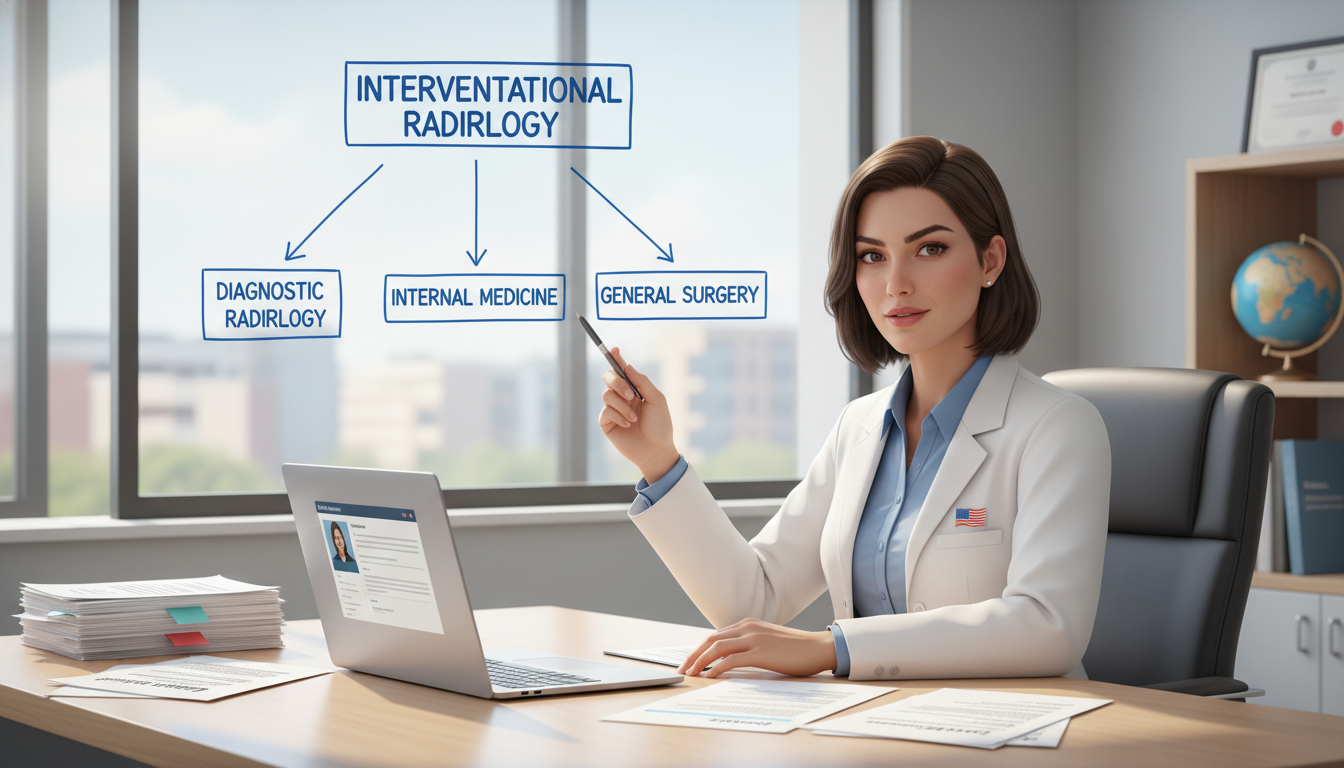
Not all backup specialties are equal. The best plan B specialty options for an ENT‑focused IMG:
- Have overlapping skills and interests with otolaryngology
- Offer better match probability for IMGs
- Still provide a fulfilling long‑term career
Core Considerations When Selecting a Backup Specialty
Your True Interests and Tolerances
- ENT attracts people who like procedures, operating room work, anatomy, and a mix of clinic and surgery.
- Backup choices should respect this profile as much as possible, or burnout is likely.
Competitiveness vs. Your Profile
- A backup that is almost as competitive as ENT (e.g., several surgical subspecialties) may not truly be a “backup.”
- You want a specialty where your current CV is at or above average competitiveness.
Immigration and Future Training Options
- Some fields offer more fellowship paths that can bring you closer to ENT‑like work (e.g., facial plastics, allergy, sleep medicine, interventional specialties).
- Think about long‑term visa security, job market, and geographic flexibility.
Common Backup Specialty Options for ENT Applicants
Below are commonly considered options, with pros and cons from an IMG perspective.
1. General Surgery
Why It Makes Sense
- Heavy OR time; anatomy‑rich; technically demanding—similar appeal to ENT.
- ENT‑relevant fellowships afterwards (e.g., surgical oncology, critical care, trauma with airway exposure, endocrine surgery).
Pros for IMGs
- More positions nationally than ENT.
- Many community programs more open to IMGs and J‑1 visas.
- Strong performance may open doors to competitive fellowships.
Cons
- Still competitive, especially at academic centers.
- Long training (5+ years) with demanding lifestyle.
- Not a guaranteed “safer” option for a weaker application.
Best For: Tier 1 or strong Tier 2 ENT applicants who absolutely want a surgical life and can tolerate a rigorous path.
2. Internal Medicine (IM)
Why It Makes Sense
- Considerably more positions and a long history of accepting IMGs.
- Pathway to subspecialties with ENT‑adjacent content: allergy/immunology, rheumatology, pulmonary/sleep, oncology, infectious diseases.
Pros for IMGs
- High match rates for IMGs in many community and even some academic programs.
- More flexible with exam attempts and older graduation dates in some institutions.
- Strong foundation for academic medicine and research.
Cons
- Less procedural and less OR exposure than ENT (unless you seek procedure‑focused subspecialties).
- You must genuinely accept a more cognitive, less surgical career.
Best For: Tier 2 and Tier 3 applicants who value a stable and achievable path in the U.S. system and are open to subspecialty training.
3. Family Medicine (FM)
Why It Makes Sense
- Extremely welcoming to IMGs; high number of positions nationwide.
- Exposure to a broad range of ENT problems in primary care, with the option of doing office‑based procedures.
Pros for IMGs
- Often the most accessible for IMGs, including those with moderate scores or graduation gaps.
- Flexible career paths: outpatient, hospitalist, urgent care, rural practice with more procedures.
- Good lifestyle in many settings.
Cons
- Far from surgical ENT practice; mostly outpatient with rare OR work.
- Lower average compensation than surgical specialties.
- Requires a mindset shift: from specialized to broad primary care.
Best For: Tier 3 applicants, or anyone whose primary goal is to match into U.S. residency and live/practice in the U.S., even if it means stepping away from surgical specialties.
4. Pediatrics
Why It Makes Sense
- ENT cares for many pediatric patients; interest in children translates well.
- Common ENT issues (otitis media, tonsillitis, airway concerns) appear often in pediatrics.
Pros for IMGs
- Higher acceptance rate of IMGs than ENT or many surgical fields.
- Strong need for pediatricians in many regions.
- Opens doors to subspecialties like pediatric pulmonology, allergy/immunology, pediatric critical care (airway focus).
Cons
- Very different day‑to‑day role from surgery.
- Compensation and lifestyle vary widely.
Best For: Applicants who particularly love working with children and can imagine a non‑surgical, child‑focused career.
5. Neurology or Emergency Medicine (Selective)
Depending on your background and local program attitudes toward IMGs:
- Neurology may be a reasonable backup if you enjoy neuroanatomy, imaging, and long‑term follow‑up, with potential for procedure‑oriented subspecialties (neurointerventional via further pathways).
- Emergency Medicine can align with acute airway and ENT presentations; however, EM competitiveness and IMG‑friendliness are very region‑specific and visa‑dependent.
Step 3: Structuring a Dual Applying Strategy Without Sabotaging ENT
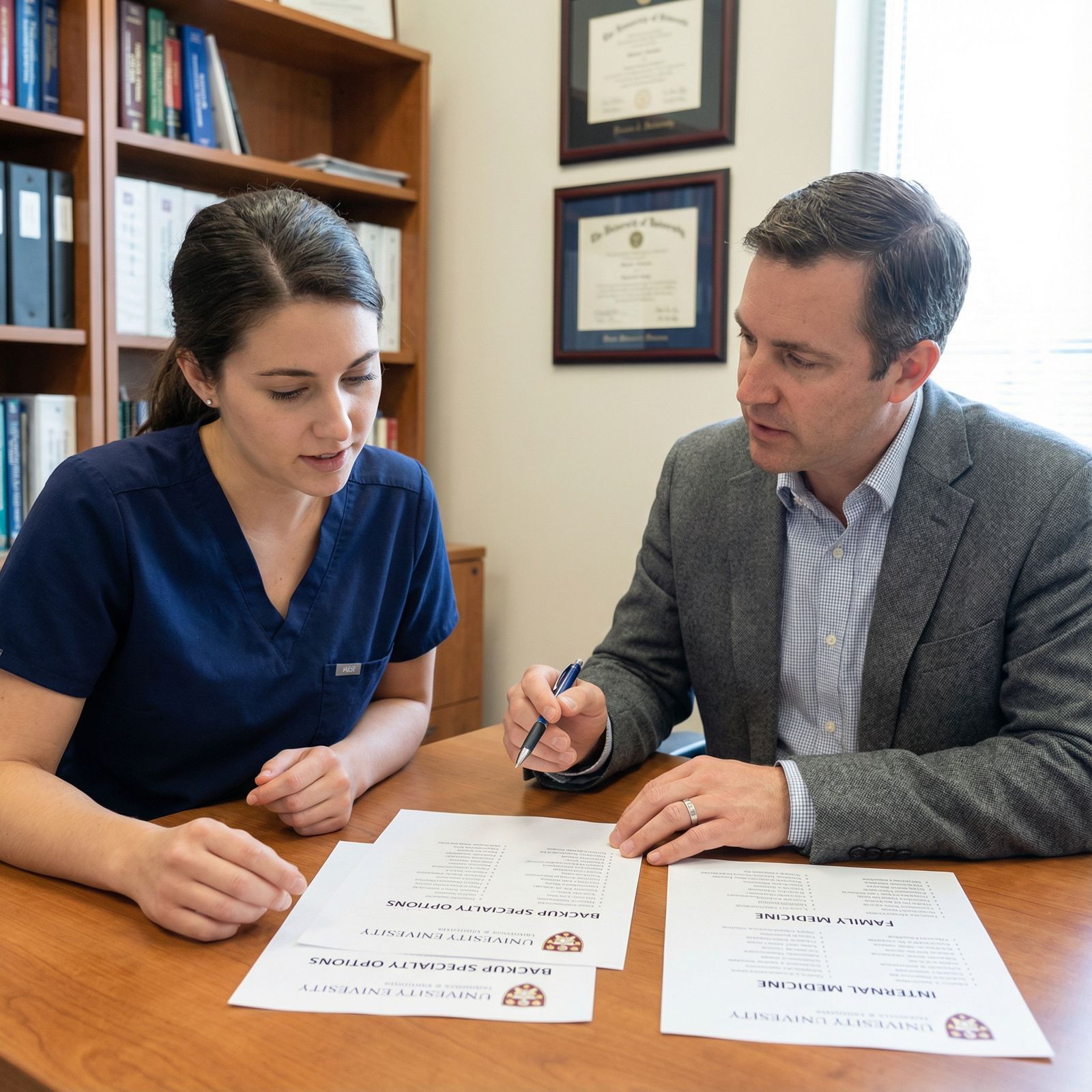
Dual applying residency is common, but it must be done thoughtfully. The danger is appearing unfocused or insincere to either specialty.
When Is Dual Applying ENT + Backup Reasonable?
- Tier 1 Strong Candidates
- May apply ENT as primary and a modest number of backup applications (e.g., IM or General Surgery) mainly in later interview season, or to programs known to be IMG‑friendly.
- Tier 2 Candidates
- Should usually dual apply more robustly: ENT applications plus a significant number of backup applications in a more accessible field.
- Tier 3 Candidates
- ENT may be a “reach” application (few programs) while the majority of your ERAS submissions go to backup specialties. Or you may prioritize backup entirely and work on ENT‑related fellowships later.
Building a Coherent Narrative for Two Specialties
You need to craft two slightly different, but not contradictory, stories:
ENT‑Focused Personal Statement
- Emphasize your interest in head and neck anatomy, surgery, procedural skills, communication (voice, hearing), or oncology, depending on your experiences.
- Highlight ENT‑specific rotations, research, and mentors.
- Show deep understanding of otolaryngology and realistic goals.
Backup Specialty Personal Statement
- Align with that specialty’s core values: e.g., continuity of care and breadth for Family Medicine; diagnostic reasoning and subspecialty potential for Internal Medicine; procedural breadth and teamwork for General Surgery.
- Use overlapping experiences (communication skills, research, teamwork), but interpret them through that specialty’s lens.
Important: Do not send a generic statement that sounds like you’re undecided. Each statement must show genuine interest in that specialty on its own terms.
Managing Letters of Recommendation in Dual Applying
Collect More Letters Than You Need
- For ENT: 2–3 letters from ENT faculty (ideally U.S. based) plus 1–2 from surgery or other closely related fields.
- For Backup: At least 2 letters closely tied to that specialty (e.g., internal medicine attendings) plus 1–2 more general letters.
Use ERAS Letter Assignment Strategically
- ENT programs see ENT‑focused letters and your ENT personal statement.
- Backup programs see letters from faculty in that field and your backup statement.
- Avoid sending ENT‑heavy letters to primary care programs unless those letters strongly emphasize transferable skills.
Scheduling Rotations and Experiences
Early in Cycle (Pre‑ERAS)
- Focus heavily on ENT rotations and ENT research.
- Secure at least 2 ENT letters before application opens.
Mid‑Cycle / Gap Time
- Gain experience in your backup specialty (e.g., sub‑I in Internal Medicine or Family Medicine elective).
- Use this to obtain strong backup letters and confirm that you can see yourself in that field if needed.
Do Not Appear Disengaged in Backup Rotations
- Faculty can sense if you view their specialty only as a safety net.
- Your evaluation and letters may suffer, hurting your backup chances.

Step 4: Portfolio Building for ENT and Backup Specialties
To execute a strong IMG residency guide strategy for ENT and backups, you must intentionally build your CV so that it supports both paths.
Clinical Experiences
For ENT
- U.S. ENT electives, observerships, sub‑internships
- ENT clinics, operating rooms, tumor boards, and multidisciplinary meetings
- Experiences with cochlear implants, sinus surgery, airway management, or head and neck oncology
For Backup Specialty
- Rotation in Internal Medicine, Family Medicine, Pediatrics, or General Surgery (depending on your choice)
- Demonstrated commitment: continuity clinics, inpatient ward rotation, procedure clinics, or call experience
Balancing Both
- Aim for at least one solid rotation directly in your backup specialty.
- Still maintain core ENT exposure if you want your otolaryngology match application to be credible.
Research and Scholarly Activity
ENT‑Focused Research
- Case reports or series involving ENT cases
- Retrospective chart reviews on head and neck cancer, sinus disease, pediatric ENT, etc.
- Quality improvement projects in ENT clinics or OR settings
Backup‑Relevant Research
- General internal medicine, primary care, pediatrics, or surgery‑focused projects
- Cross‑disciplinary topics: head and neck infections, obstructive sleep apnea management, allergy, antibiotic stewardship for sinusitis, etc.
A smart strategy is to choose projects with overlap: for example, a study on management of chronic sinusitis in primary care vs. ENT settings supports both ENT and Family/Internal Medicine narratives.
Volunteer Work and Leadership
- ENT‑connected outreach: hearing screenings, head and neck cancer screenings, health education about smoking cessation.
- Backup‑aligned activities: free clinics, chronic disease management programs, vaccination campaigns, pediatric wellness events.
Consistent service sends a message of commitment to patient care, regardless of final specialty.
Exam Strategy and Timelines
- Take Step 2 CK as early and as strongly as possible; this is crucial for competitive specialties.
- If you have a poor Step 1 or a failure, use subsequent exams (Step 2 CK, possibly Step 3) to demonstrate improvement.
- For some IMGs, Step 3 before applying can strengthen your profile for community programs and for certain visa sponsors (especially H‑1B).
Step 5: Planning for Outcomes – Matched, Backup Match, or Unmatched
Backup specialty planning is about realistic preparation for all possible outcomes.
Scenario 1: You Match in ENT
- Celebrate, and fully commit to being the best ENT resident you can be.
- Maintain good relationships with backup‑specialty mentors—they can still be collaborators in research or multidisciplinary care.
- Reflect on what aspects of your backup planning improved your application (research, exam timing, professionalism).
Scenario 2: You Match in Your Backup Specialty
This is a crucial psychological moment. Many IMGs initially see this as “failure,” but in reality:
- You have entered the U.S. training system—this is a major achievement.
- Many physicians develop a deep love for their backup specialty once they experience it fully.
- There are often ways to remain connected to ENT‑relevant content:
- Internal Medicine → Allergy/Immunology, Rheumatology, Oncology, Sleep Medicine
- Family Medicine → Office ENT procedures, rural practice with broader scope, sports medicine (ear and sinus issues in athletes)
- Pediatrics → Pediatric pulmonology, allergy/immunology, or complex chronic care
- General Surgery → Head and neck oncology collaboration, endocrine surgery, trauma and airway
Be deliberate: decide early whether you will commit fully to your matched specialty, or whether you intend to pursue ENT‑adjacent fellowships later.
Scenario 3: You Go Unmatched in Both ENT and Backup
If you are unmatched, avoid reacting impulsively. Instead, take a structured approach:
Request Feedback
- Ask a few program directors or advisors for honest assessments of your application.
- Identify whether it’s scores, lack of U.S. experience, letters, interview skills, or visa issues.
Consider a Strengthening Year
- Research position (ideally in ENT or your backup field) in the U.S.
- Additional U.S. clinical experience, particularly at IMG‑friendly programs.
- Improve language or communication skills if noted as a barrier.
Re‑Evaluate ENT vs. Backup Viability
- If ENT chances remain extremely low, shift focus to backup or even a more accessible plan B specialty (e.g., from General Surgery to Internal Medicine or Family Medicine).
Participate in SOAP Carefully (If Applicable)
- Have documents ready for a wide range of specialties.
- Prioritize your long‑term ability to remain in the U.S. system over prestigious but unreachable options.
Your unmatched year can become a pivotal growth year if used intentionally.
Practical Example Scenarios
Example 1: Strong ENT‑Focused IMG (Tier 1)
- Step 2 CK > 250, no attempts
- One year of ENT research in the U.S. with two posters
- Two ENT sub‑Is with excellent evaluations, three strong ENT letters
- Needs J‑1 visa
Strategy
- Apply broadly to ENT (80–100+ programs if feasible).
- As a safety net, dual apply to a smaller number of programs in General Surgery or Internal Medicine, ideally at institutions where you have research or clinical connections.
- Personal statements and letters clearly separate ENT vs. backup.
Example 2: Moderate Applicant (Tier 2)
- Step 2 CK ~235–240
- One ENT observership, but no ENT research
- Two letters from internal medicine, one ENT letter from home country
- Graduation 4 years ago
Strategy
- ENT applications are a reach: apply selectively to programs that have previously interviewed or matched IMGs, especially those open to J‑1.
- Primary focus on a more achievable backup such as Internal Medicine or Family Medicine, with 80–120 applications depending on budget and visa needs.
- Strengthen CV during application cycle with clinical experience and small research projects.
Example 3: High‑Risk Application (Tier 3)
- Step 2 CK 220, one exam failure
- No U.S. ENT rotations; only some outpatient observerships in primary care
- Graduation 7 years ago
Strategy
- ENT match probability is extremely low. Consider ENT applications only if you are emotionally and financially prepared for a likely non‑match.
- Major focus on IMG‑friendly backup like Family Medicine or Pediatrics, applying broadly.
- Use future career planning to remain somewhat connected to ENT (e.g., primary care with strong ENT skills, allergy/immunology fellowship).
FAQs: Backup Specialty Planning for IMGs in ENT
1. Should I even apply to ENT as an IMG, or go straight to a backup specialty?
If you are Tier 1 or a strong Tier 2 candidate—with high scores, U.S. ENT exposure, good research, and strong letters—you should consider applying to ENT while also planning a realistic backup. If you have multiple major red flags (low scores, attempts, old graduation, no U.S. experience), the otolaryngology match may be so unlikely that focusing on an IMG‑friendly plan B specialty (e.g., Internal Medicine, Family Medicine) is more rational.
2. Will dual applying make ENT programs think I’m not committed?
Programs understand that dual applying residency is normal in highly competitive fields. They usually do not know your full application list. What matters more is whether your ENT application materials (personal statement, letters, interviews) show genuine understanding and passion for otolaryngology. As long as your ENT side is coherent and strong, applying elsewhere does not automatically hurt you.
3. Is General Surgery a realistic backup for ENT for an IMG?
General Surgery can be a backup for some IMGs, but it is not a low‑competition field. For Tier 1 or strong Tier 2 applicants, General Surgery may be realistic, especially at community or IMG‑friendly programs. For weaker applications, General Surgery may not be much more achievable than ENT, and a truly safer plan B specialty like Internal Medicine or Family Medicine is often a better choice.
4. If I match into my backup specialty, can I still work closely with ENT later?
Yes. Many paths allow you to remain connected to ENT‑type problems. Internal Medicine → Allergy/Immunology or Sleep Medicine; Family Medicine → procedures and chronic ENT disease management; Pediatrics → pediatric pulmonology or allergy; General Surgery → head and neck oncology collaboration or endocrine surgery. Think of your backup specialty not as a dead end, but as a different route to meaningful, related work.
By approaching backup specialty selection strategically—honestly assessing your competitiveness, choosing aligned fields, and structuring a thoughtful dual application—you can protect your long‑term career as an international medical graduate while still giving yourself a real chance at the otolaryngology match.