Introduction: Why Backup Specialties Matter in Residency Planning
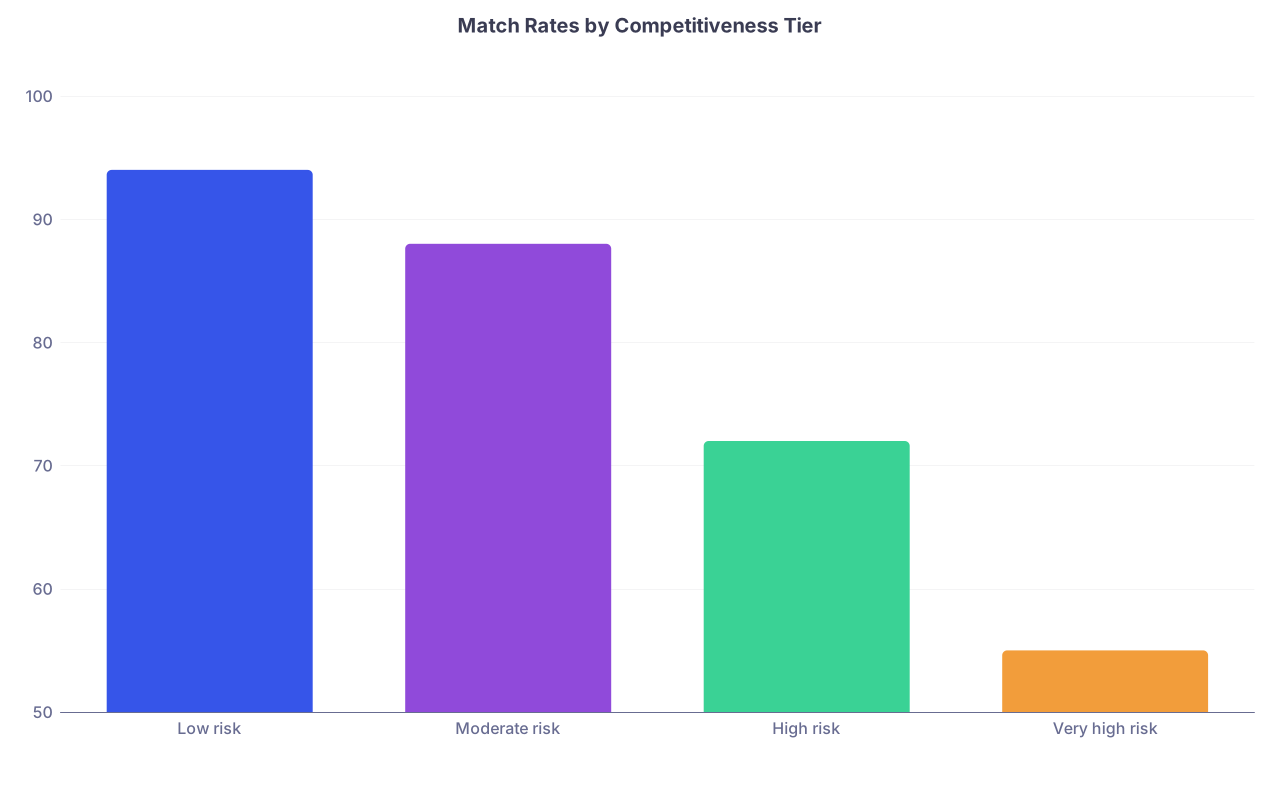
Choosing a medical specialty is one of the highest‑stakes decisions in medical education. Yet every year, a significant number of applicants do not match into their first-choice field. Even strong applicants to competitive areas like dermatology, orthopedic surgery, or plastic surgery can find themselves facing an unexpected outcome on Match Day.
This is where backup specialties become essential to effective career planning in the healthcare professions. A well-chosen backup specialty acts as both a safety net and an alternate path to a satisfying, stable career in medicine. It allows you to apply strategically, protect against the risk of going unmatched, and still end up in a field that aligns with your strengths, values, and lifestyle goals.
This article explores the pros and cons of common backup specialties—Family Medicine, Internal Medicine, Pediatrics, Psychiatry, Emergency Medicine, and Dermatology—and helps you understand how to integrate them into a realistic Medical Residency application strategy. You’ll also find practical guidance and FAQs designed for medical students and early residents navigating the residency match and applications process.
What Is a Backup Specialty in Medical Residency?
A backup specialty is a field you are genuinely willing to train and practice in if you don’t match into your first-choice specialty. It is not simply a “throwaway plan.” A realistic backup:
- Fits your interests and personality reasonably well
- Aligns with your tolerable lifestyle and workload
- Offers acceptable compensation and job opportunities
- Has a higher likelihood of matching than your primary choice
You might use a backup specialty in several ways:
- Applying only to your high-risk dream specialty but being mentally prepared to reapply with a backup the following year
- Applying to a mix of primary and backup specialties in the same cycle
- Applying to your backup specialty only if data suggests your chance in your preferred field is extremely low
The right approach depends on your competitiveness, your risk tolerance, and your broader career goals in medicine.
Key Factors to Consider When Choosing Backup Specialties
Before you add any specialty to your ERAS list, step back and assess these core factors:
1. Competitiveness and Match Probability
- What is the match rate and typical applicant profile (Step scores, research output, AOA, etc.)?
- Is it less competitive than your primary choice in a meaningful way?
- Are there enough community or mid-tier academic programs where your application would be realistic?
For example, using Dermatology as a backup to Plastic Surgery is generally not realistic, since both are extremely competitive. However, using Family Medicine or Internal Medicine as a backup to Radiology or Anesthesiology may be more feasible, depending on your record.
2. Lifestyle: Hours, Call, and Flexibility
- Typical weekly hours, call frequency, and night/weekend expectations
- Ability to control your schedule later in your career (outpatient vs inpatient, shift work vs clinic)
- Compatibility with your desired work–life balance, family goals, or non-clinical interests (research, teaching, leadership)
For example, if you’re drawn to shift-based work and blocks of time off, Emergency Medicine or Hospitalist Internal Medicine may feel more natural than traditional clinic-based fields.
3. Compensation and Financial Considerations
- Average starting salary and long-term earning potential
- Availability of loan repayment programs, especially in primary care and underserved areas
- Ability to supplement income with procedures, moonlighting, or telemedicine
While salary should not be the only factor, it does matter for long-term satisfaction and financial wellness, especially with substantial educational debt.
4. Job Market and Geographic Flexibility
- Is demand nationally strong, or heavily regional?
- Are there abundant positions in rural/suburban areas, or only in major academic centers?
- Can you find a job in the geographic region where you realistically want to live?
Family Medicine, Internal Medicine, and Psychiatry often offer strong job markets and broad geographic flexibility, especially in underserved regions.
5. Genuine Interest and Long-Term Fit
Critical question: Would you be okay doing this for 30+ years?
You do not need to be as passionate about your backup as your dream field, but you must:
- Find meaningful aspects of the work (patient population, procedures, continuity, problem-solving)
- Avoid fields that actively repel you, even if they are “good backup choices” on paper
- Accept that residency in this field will be demanding—if you fundamentally dislike it, burnout risk will be high

Family Medicine as a Backup Specialty
Family Medicine is often the first field that comes to mind when applicants think about backup specialties because of its broad scope, strong job market, and generally manageable competitiveness.
Pros of Family Medicine
1. Broad Clinical Scope and Variety
Family physicians see:
- Newborns to older adults
- Acute and chronic conditions
- Preventive care, women’s health, behavioral health, and minor procedures
This breadth can be energizing if you enjoy variety and whole-person care. It also supports future niche development—sports medicine, geriatrics, addiction medicine, urgent care, or academic roles.
2. High Demand and Job Security
In nearly every region, there is a strong and persistent need for primary care providers. This translates to:
- Excellent job security upon residency completion
- Multiple offers in both urban and rural settings
- Opportunities for loan repayment, especially in underserved areas or through National Health Service Corps-type programs
3. Relative Lifestyle Flexibility
While clinic days can be busy, many Family Medicine positions offer:
- Predictable daytime hours
- Limited or shared call (often outpatient-focused)
- Options for part-time or four-day workweeks in some practices
For those prioritizing work–life balance, family time, or outside interests, Family Medicine can be a strong fit.
Cons of Family Medicine
1. Lower Average Compensation Compared to Some Specialties
Family physicians often earn less than procedure-heavy or highly specialized fields. Over the course of a career, this income gap can be substantial, especially compared to top-earning specialties (Dermatology, Orthopedics, Cardiology subspecialties).
However, factors like:
- Low cost-of-living locations
- Productivity-based compensation
- Administrative/leadership roles
- Additional procedural skills
can significantly improve income trajectories.
2. Perceived Prestige and Cultural Attitudes
In some academic environments, there may be a subtle (or not-so-subtle) perception that primary care is “less prestigious” than procedural or highly specialized fields. While this is changing, it can impact:
- How peers and mentors discuss your career choice
- Your internal sense of professional identity
It’s important to build a supportive professional community within Family Medicine and reframe your role as a front-line expert in comprehensive care.
3. Breadth Over Depth
The need to manage a wide variety of problems means:
- You may refer more complex or rare conditions to subspecialists
- Some physicians feel they do not develop deep expertise in a narrow area
If you strongly prefer mastering a highly specialized, focused domain, this may feel unsatisfying. On the other hand, many family physicians thrive on being skilled “generalists” who coordinate multidisciplinary care.
Internal Medicine as a Backup Specialty
Internal Medicine (IM) plays a central role in medical education and is a common backup for students drawn to diagnostics, complex adult medicine, or internal subspecialties.
Pros of Internal Medicine
1. Pathway to Numerous Subspecialties
Completing an Internal Medicine residency opens doors to fellowships such as:
- Cardiology
- Gastroenterology
- Pulmonary/Critical Care
- Hematology/Oncology
- Endocrinology, Rheumatology, Nephrology, and more
If your competitive first choice is a subspecialty but you are open to alternative internal subspecialties, IM can be an excellent flexible foundation.
2. Strong Foundation for Complex Medical Care
Internal Medicine training emphasizes:
- Complex, multi-system disease management
- Diagnostic reasoning and evidence-based decision-making
- Chronic disease care and inpatient medicine
This skill set is valuable across the healthcare professions and provides career resilience. You can pivot into hospitalist work, outpatient primary care, subspecialty practice, academic medicine, or research-heavy roles.
3. Longitudinal Relationships and Hospitalist Options
Depending on your path, IM lets you:
- Build continuity relationships in outpatient settings
- Focus on inpatient-only care as a hospitalist, often using block schedules (e.g., 7 on/7 off)
These flexible practice models allow you to tailor your work to your preferred environment and schedule.
Cons of Internal Medicine
1. High Stress and Burnout Risk
The complexity of hospitalized patients and high patient volumes can lead to:
- Cognitive overload and emotionally heavy cases
- Long, intense days on wards or in clinic
- Burnout, especially without supportive systems
Resilience strategies, mentorship, and thoughtful job selection are crucial in this field.
2. Longer Training Path With Subspecialization
If you pursue a fellowship:
- Expect 3 years of IM residency, plus typically 2–3 years of fellowship
- This extends training, delays attending-level salary, and may require relocating multiple times
For those eager to complete training quickly or minimize moves, this can be a drawback.
3. Demanding Call and Inpatient Schedules
Residency in IM often involves:
- Night float, weekends, and holiday coverage
- Intensive inpatient rotations
- Variable continuity clinic demands
While attending life can be structured more flexibly, the residency years are challenging, and you should be psychologically prepared for this workload.
Pediatrics as a Backup Specialty
Pediatrics appeals strongly to those who enjoy working with children and families, and it can serve as a rewarding backup specialty when aligned with your personality and values.
Pros of Pediatrics
1. Deeply Rewarding Patient Population
Many pediatricians describe:
- Strong emotional satisfaction in helping children grow, develop, and recover
- A sense of purpose in shaping lifelong health behaviors
- Joy in watching patients and families over years
If you find interactions with children energizing and meaningful, Pediatrics can be a highly fulfilling choice.
2. Wide Range of Practice Settings
Pediatrics offers:
- General outpatient practice
- Hospital medicine
- NICU/PICU (with additional training)
- Subspecialties (e.g., Pediatric Cardiology, Endocrinology, Hematology/Oncology)
This variety allows you to align your career with your preferred acuity level, environment, and procedural intensity.
3. Long-Term Relationships With Families
You often see patients from newborn visits through adolescence. This allows for:
- Longitudinal relationships with both children and their caregivers
- The ability to watch clinical interventions make a clear impact over time
- Trust-building that can make practice deeply satisfying
Cons of Pediatrics
1. Working With Parents and Family Dynamics
Caring for children means caring for families, which sometimes brings:
- Conflicting opinions about management
- Challenges with adherence to recommendations
- High emotional stakes during serious illness
You’ll need excellent communication and boundary-setting skills to navigate these dynamics.
2. Lower Compensation Compared to Adult Subspecialists
Pediatrics—particularly general outpatient pediatrics—often:
- Has lower reimbursement rates than comparable adult medicine fields
- Faces budget constraints in some hospital and clinic systems
Subspecialty pediatrics can improve compensation somewhat, but overall, pediatrics tends to be at the lower end of physician income compared to some adult specialties.
3. Emotional Burden of Sick Children
Caring for seriously ill or abused children, or working in high-acuity settings like NICU/PICU, can be emotionally intense. Long-term sustainability often depends on:
- Strong support systems
- Access to mental health resources
- Reflective practices and boundaries around work
Psychiatry as a Backup Specialty
Psychiatry has become increasingly popular as a primary and backup specialty, driven by rising awareness of mental health needs and evolving care models.
Pros of Psychiatry
1. Growing Demand and Strong Job Market
Demand for psychiatrists continues to outpace supply, leading to:
- Robust job availability in nearly all regions
- Options for outpatient, inpatient, consult-liaison, or emergency settings
- Opportunities in telepsychiatry, expanding geographic flexibility and remote work options
This makes Psychiatry a strong choice from a job security standpoint.
2. Flexible Practice Styles and Schedules
Psychiatrists can design practice models that fit their lifestyle:
- Outpatient clinics with predictable daytime hours
- Part-time or group practices
- Telehealth-only or hybrid arrangements
This flexibility is attractive to those seeking work–life balance, family time, or parallel careers in research, writing, or education.
3. Profound Impact on Quality of Life
Mental illness affects almost every domain of a person’s life. Effective psychiatric treatment can:
- Prevent hospitalization or self-harm
- Restore functioning in work, school, and relationships
- Drastically improve quality of life
For many psychiatrists, this transformative impact makes the work deeply meaningful.
Cons of Psychiatry
1. Ongoing Stigma and Misunderstanding
Despite progress, psychiatry still faces:
- Societal stigma around mental illness and treatment
- Misunderstanding among some peers or even patients about the nature and value of psychiatric care
You’ll need comfort with advocating for your field and your patients.
2. Diagnostic and Therapeutic Complexity
Psychiatric conditions often involve:
- Overlapping symptom profiles
- Co-occurring medical, social, and substance-use issues
- Trial-and-error medication management over time
This complexity can be intellectually engaging but also frustrating; patience and long-term thinking are essential.
3. Emotional Intensity and Vicarious Trauma
Working with trauma, suicidality, psychosis, and severe mood disorders can take a toll. Sustainable practice requires:
- Strong boundaries
- Regular supervision or consultation
- Intentional self-care and, when needed, professional mental health support
Emergency Medicine as a Backup Specialty
Emergency Medicine (EM) can be an appealing backup for those drawn to acute care, procedures, and a fast-paced environment. However, it comes with unique trade-offs.
Pros of Emergency Medicine
1. Dynamic, High-Acuity Environment
EM offers:
- Constant variety in cases—from minor complaints to life-threatening emergencies
- Frequent use of hands-on procedures (intubations, central lines, chest tubes, reductions)
- Immediate, tangible impact: you stabilize patients in critical moments
If you thrive under pressure and enjoy rapid decision-making, EM can be very satisfying.
2. Shift-Based Schedule and Time Off
Most EM jobs are structured around shifts, which can allow:
- Clear separation between work and home life
- Consecutive days off for travel, family, or side projects
- Potential for moonlighting and extra income in residency and early attending years
This predictability of non-work time appeals to many.
3. Competitive Compensation
Emergency physicians generally earn strong salaries, reflecting:
- High responsibility and acuity
- Night/weekend/holiday work
- Risk environment and procedural skills
Compensation can be especially favorable in high-demand or rural regions.
Cons of Emergency Medicine
1. Irregular Hours and Circadian Disruption
Shift work often involves:
- Nights, evenings, weekends, and holiday coverage
- Rotating schedules that challenge sleep and routine
- Greater risk for long-term health issues related to circadian rhythm disruption
You’ll need to be realistic about your ability to adapt to and sustain this lifestyle.
2. Malpractice Exposure and High-Stakes Decisions
Rapid decisions with limited data can:
- Increase malpractice risk
- Create chronic stress about missing rare but serious diagnoses
Strong systems, good documentation, and risk management are vital.
3. Limited Long-Term Patient Relationships
Most EM encounters are episodic. If you value decades-long relationships and continuity:
- EM might feel unsatisfying
- Consider whether you can balance EM with part-time clinic work or other continuity roles
Dermatology as a “Backup” Specialty: Is It Realistic?
Dermatology is frequently described as a “lifestyle-friendly” specialty with high compensation and outpatient focus. But it is also among the most competitive fields in all of medical residency.
Pros of Dermatology
1. Excellent Lifestyle and Predictable Hours
Most dermatologists enjoy:
- Primarily outpatient schedules
- Minimal nights and weekend call (except for some hospital consult roles)
- High degree of schedule control later in practice
For applicants prioritizing lifestyle and work–life balance, this is a major draw.
2. High Earning Potential
Dermatology consistently ranks among the highest-paying medical specialties, driven by:
- Procedural work (biopsies, excisions, cosmetic procedures)
- High patient demand for both medical and cosmetic services
This can facilitate aggressive loan repayment and long-term financial stability.
3. Positive Work Environment
Clinics are generally:
- Elective or semi-elective, with fewer life-or-death emergencies
- Focused on conditions where treatment often leads to visible, satisfying improvements
- Staffed by teams used to predictable schedules
Many dermatologists report high career satisfaction and low burnout rates.
Cons of Dermatology
1. Extremely High Competitiveness
Dermatology is:
- Not a realistic “backup” for most applicants targeting other highly competitive fields
- Highly selective about academic metrics, research, and letters of recommendation
- Limited in residency spots compared to applicant numbers
You should only consider Derm as a “backup” if your application is already extremely strong and you could be competitive in several top-tier specialties.
2. Narrower Clinical Focus
While dermatology has its own diversity (pediatric derm, surgical derm, cosmetic, complex medical derm):
- The field is centered around skin, hair, and nails
- Cases can become repetitive depending on your practice mix
If you crave broad systemic medicine or high-acuity care, this may not align with your long-term interests.
3. Patient Demographics and Case Diversity Vary by Setting
Academic centers may see complex autoimmune or oncologic derm, but:
- Private practice often involves a high volume of common conditions (acne, eczema, benign lesions)
- Cosmetic practices may focus heavily on aesthetics
It’s important to explore multiple settings before committing.

Strategy Tips: How to Use Backup Specialties Wisely in the Match
1. Be Honest About Your Competitiveness
Review:
- Objective metrics (Step/Level scores, clerkship grades, research)
- Specialty-specific expectations (number of publications, away rotations, AOA)
- Feedback from mentors and program directors
If you are at the margin for a highly competitive field, seriously consider a parallel plan with a less competitive but still appealing specialty.
2. Avoid “Token” Backup Applications
Program directors can tell when:
- Your personal statement, letters, and experiences do not align with their field
- You present as ambivalent or clearly focused on another specialty
If you apply to a backup specialty:
- Obtain field-specific letters
- Do at least one core rotation or elective in that specialty
- Write a sincere personal statement expressing authentic reasons for interest
3. Think Beyond Residency: Career Trajectories
Consider:
- Potential for subspecialty fellowship (e.g., Sports Medicine from Family Medicine, GI from IM)
- Opportunities in leadership, academic medicine, public health, or medical education
- Flexibility to change practice setting (rural to urban, inpatient to outpatient, etc.)
Sometimes a “backup” can become a launchpad to an even better-fitting career than your original plan.
4. Seek Early and Honest Mentoring
Talk to:
- Faculty in your desired and backup specialties
- Residents who recently matched or re-applied
- Your school’s advising office or career counseling services
They can help you:
- Build a realistic rank list strategy
- Decide how many programs to apply to per specialty
- Understand region-specific job and training landscapes
FAQs: Backup Specialties and Residency Match Strategy
1. How do I choose the right backup specialty for my residency applications?
Start with self-assessment:
- What patient populations do you enjoy (children, adults, acute care, chronic care)?
- Do you prefer procedural work or cognitive/diagnostic roles?
- What lifestyle (hours, call, flexibility) is sustainable for you?
Then:
- Identify 2–3 realistic fields that align with these preferences
- Compare competitiveness and match statistics
- Do genuine clinical exposure (electives, shadowing) in your top backup choices
- Discuss with mentors whether your application is strong enough for your primary field to warrant a single-specialty strategy, or if you should dual-apply
2. Should my backup specialty be something I’m as passionate about as my first choice?
Not necessarily “as passionate,” but you should find it genuinely acceptable and meaningful. You will spend:
- 3+ years in residency training
- Decades in practice
If you actively dislike your backup specialty, you increase your risk of burnout and regret. Aim for a field where you can see yourself:
- Enjoying at least some core aspects of the work
- Growing professionally
- Living a lifestyle that feels sustainable
3. Can I still pursue fellowship or subspecialization after going into my backup specialty?
Yes, in many cases. Examples:
- Family Medicine → Sports Medicine, Geriatrics, Palliative Care, Addiction Medicine
- Internal Medicine → Cardiology, Gastroenterology, Pulm/Crit, Endocrinology, etc.
- Pediatrics → Neonatology, Pediatric Cardiology, Hematology/Oncology, and more
- Psychiatry → Child & Adolescent, Addiction, Forensic, Consultation-Liaison Psychiatry
- Emergency Medicine → Critical Care (in some tracks), Toxicology, EMS, Ultrasound
Your “backup” may become the foundation for a subspecialty that fully aligns with your long-term goals.
4. Is it safe to apply only to my dream specialty and not have a backup?
It depends on:
- Your competitiveness relative to matched applicants in that specialty
- The number and type of programs you apply to
- Your tolerance for going unmatched and possibly taking a gap year to re-apply or pursue a different route
For extremely competitive fields (Dermatology, Plastic Surgery, Neurosurgery, Orthopedics), many advisors encourage at least considering a parallel plan unless you are an exceptionally strong candidate. Discuss your situation candidly with mentors before finalizing your strategy.
5. What if I don’t match into either my primary or backup specialty?
If you go unmatched, you still have options:
- Enter the SOAP (Supplemental Offer and Acceptance Program) to obtain a position in an unfilled specialty
- Consider a preliminary or transitional year while strengthening your application
- Pursue research or additional clinical experience to reapply more competitively next cycle
- Reevaluate your specialty choice with mentors, including whether a less competitive field better fits your profile and goals
Many physicians with non-linear paths ultimately find fulfilling careers. A setback in the match does not define your potential in the healthcare professions.
Thoughtful use of backup specialties is a key part of modern Medical Residency strategy. By understanding the pros and cons of fields like Family Medicine, Internal Medicine, Pediatrics, Psychiatry, Emergency Medicine, and Dermatology—and aligning them with your authentic interests and strengths—you can protect yourself against uncertainty while moving toward a meaningful, sustainable career in medicine.