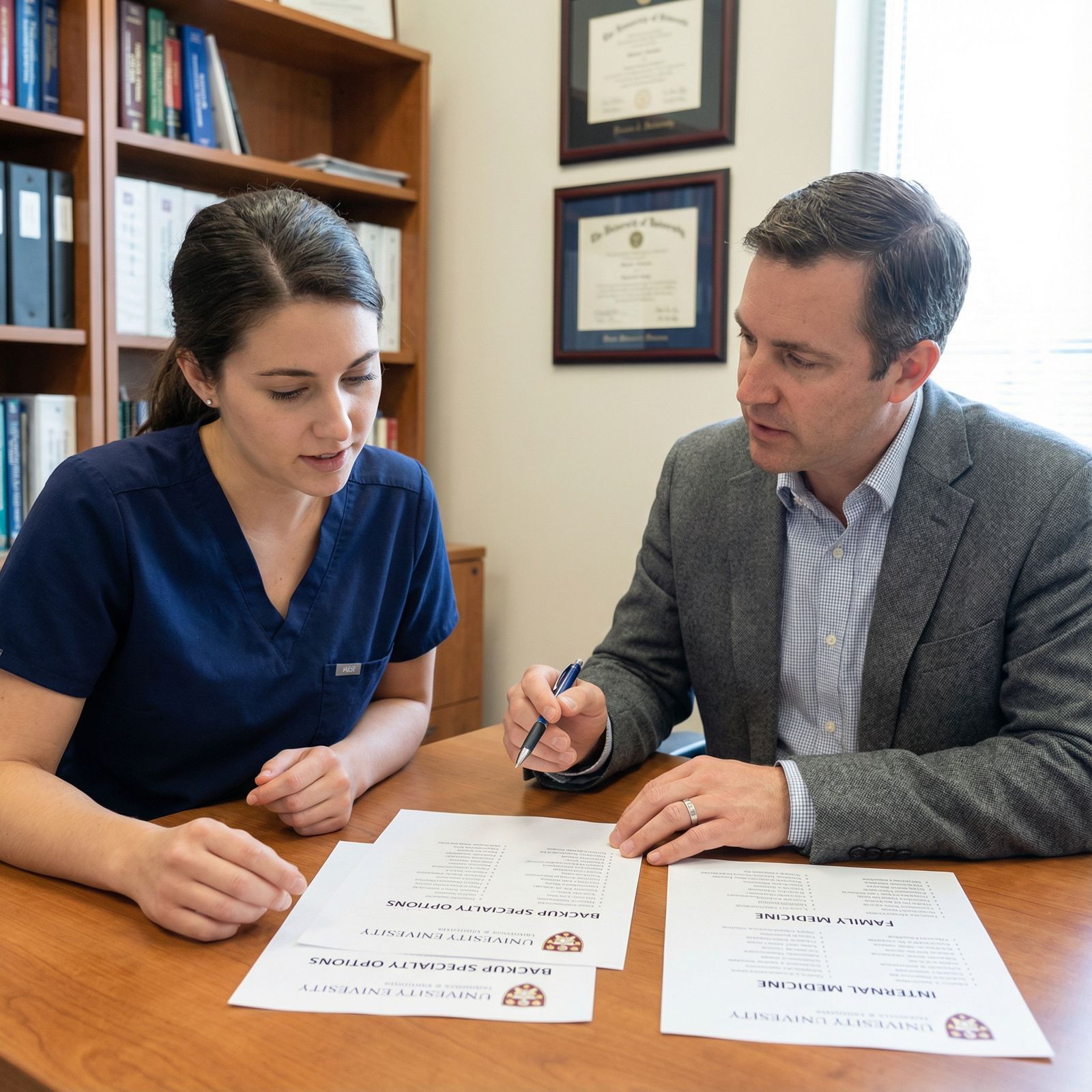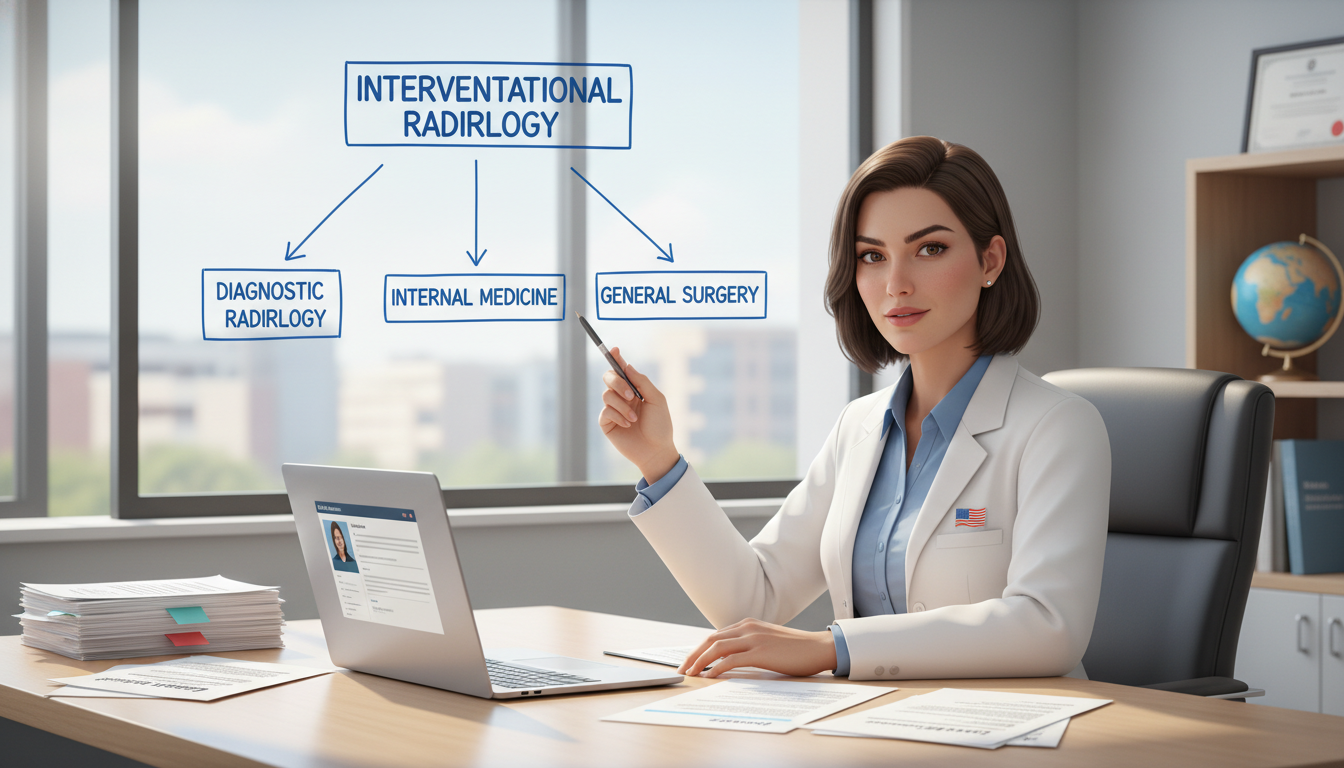
Interventional Radiology (IR) is one of the most competitive and rapidly evolving specialties in the Match. For a US citizen IMG, the road to an interventional radiology residency is absolutely possible—but it is not something you want to approach without a thoughtful backup strategy.
This guide is written specifically for the US citizen IMG or American studying abroad who is serious about IR, but wants to protect themselves with a realistic and smart backup specialty plan. We’ll walk through how to think about risk, which specialties make sense as backup choices, and how to execute a dual applying residency strategy without sabotaging your IR aspirations.
Understanding the Risk: Why Backup Planning is Critical in IR
Interventional radiology offers high acuity, procedural intensity, and cutting‑edge technology—so it attracts many strong applicants. For US citizen IMGs, the challenge is not just competitiveness, but also:
- Fewer IR-integrated positions compared to other specialties
- Program hesitancy toward IMGs at some academic centers
- Limited time to signal interest and build a clear IR narrative
In other words, even a strong candidate can go unmatched in interventional radiology residency. That’s why every US citizen IMG targeting IR should build a structured Plan B.
Key realities for US citizen IMGs in IR
- IMG acceptance varies widely by program. Some IR (and DR) programs regularly take IMGs; others essentially never do.
- Geography matters. Programs in large urban areas or well-known academic centers may be more competitive, especially for IMGs.
- Step scores and clinical performance still matter. Even with holistic review, standardized exam performance and strong US clinical experience remain important.
Consider this mindset:
“I am aiming 100% for IR—but I will design my application so that, even if I miss IR this cycle, I secure a strong alternate path that still allows for a fulfilling, procedure-heavy career.”
That’s the core of backup specialty planning.
Step 1: Clarify Your True Career Priorities
Before you pick a plan B specialty, you need to be brutally honest with yourself about what you actually want out of your career.
Ask yourself:
Is IR itself the dream, or is it the combination of:
- Image-guided procedures
- Short, focused patient encounters
- Technology-driven practice
- Limited longitudinal clinic
- Acute pathology and hospital-based work
How much do you value:
- High procedural volume vs. cognitive/diagnostic work
- Long-term patient relationships vs. episodic care
- Operating room vs. angio suite vs. clinic
- Shift work vs. continuity of care
What is your risk tolerance?
- Are you comfortable taking an extra year (e.g., research) if you don’t match?
- Do you need to match this cycle for personal or financial reasons?
Are you open to alternate routes into IR?
- Integrated IR residency (most direct)
- DR residency followed by IR fellowship/ESIR
- Other specialties with significant procedural work (e.g., vascular surgery, interventional cardiology down the line, or procedural internal medicine subspecialties)
Your answers shape not only your backup specialty but also how aggressively you dual apply.
Step 2: Core Backup Options for IR-Focused US Citizen IMGs
The best backup specialties for IR tend to share at least one of the following:
- Overlapping skill sets (procedures, imaging, acute care)
- Shared training pathways (e.g., via diagnostic radiology)
- Realistic competitiveness for a US citizen IMG
- Potential to circle back toward IR or interventional subspecialty work later
Let’s look at the most common and realistic choices.
1. Diagnostic Radiology (DR) – The Primary “IR-Adjacent” Backup
For many IR hopefuls, Diagnostic Radiology is the most logical plan B specialty.
Why DR makes sense as a backup:
- Direct pathway to IR:
- ESIR (Early Specialization in IR) during DR
- Standard IR fellowship after DR
- Shared skill set:
- Heavy imaging exposure
- Understanding of anatomy and pathology
- Collaboration with IR team
- Application synergy:
- Your IR-focused CV (research, electives, letters) fits well with DR applications
- You can talk about your IR interest without raising red flags, if framed appropriately
Risk level for US citizen IMG:
- More attainable than integrated IR, but still competitive, especially at top academic centers.
- Many community and some university programs are more IMG-friendly.
How to frame your interest in DR (without sounding like IR is your “real” goal):
In interviews and personal statements, emphasize:
- Your fascination with imaging as the foundation of patient care
- Your appreciation for the diagnostic side of medicine
- Your interest in a future that could include procedures, but without dismissing pure DR as valuable and fulfilling
You want programs to believe you will be happy as a radiologist—even if you never become an interventional radiologist.

2. Categorical Internal Medicine – The Safest Broad Platform
If your top priority is maximizing the chance of matching this cycle, Internal Medicine (IM) is a powerful backup specialty.
Why IM works well as Plan B:
- High number of positions nationwide
- Many IM programs regularly match US citizen IMGs and Americans studying abroad
- Opens doors to procedural subspecialties, including:
- Interventional cardiology (via cardiology)
- Gastroenterology with advanced endoscopy
- Pulmonology/critical care with bronchoscopy and ICU procedures
- Allows future pivot into hospital-based, procedure-heavy practice
Risk level:
- Significantly lower risk than IR or DR for a US citizen IMG, assuming reasonable academic performance and strong US clinical experience.
The trade-off:
- Less direct imaging focus
- Longer path to a high-procedure career (fellowship after residency)
- Requires a shift in identity from “future IR” to “future internist with procedural interest”
Good fit if you:
- Enjoy rounding, complex medical decision-making, and longitudinal care
- Could see yourself happy in cardiology, GI, ICU, or hospitalist roles even if you don’t do advanced interventions
3. General Surgery – For Those Drawn to the Procedural Lifestyle
General Surgery can be a viable backup specialty for IR applicants who are absolutely procedure-driven and enjoy the OR environment.
Pros:
- High procedural volume and technical skill development
- Some programs more open to US citizen IMGs than IR/DR
- Future options in vascular surgery, trauma, surgical oncology, etc.
Cons:
- Long, demanding training path
- Workload, call, and burnout risk are higher
- Less imaging-centered, more open-surgery and peri-operative management
Who should consider this:
- You genuinely enjoy surgery, not just “doing procedures”
- You have strong clerkship evaluations in surgery and surgical letters
- You can convincingly express a true interest in a surgical career independent of IR
4. Transitional Year (TY) + DR/Other Advanced Positions
Some US citizen IMGs consider applying broadly to:
- Advanced diagnostic radiology positions, plus
- Transitional year (TY) or preliminary medicine/surgery positions as a buffer
This strategy can work if:
- You’re competitive enough for at least some DR programs
- You’re willing to risk needing to reapply for an advanced spot if you only match a prelim year
For most IMGs, this is more risky than a categorical backup (e.g., IM categorical), but it can be part of a tiered strategy if you’re aiming high while trying to maintain some flexibility.
Step 3: Designing a Dual Applying Strategy Without Sabotaging IR
Dual applying residency—applying to IR and a backup specialty in the same cycle—requires careful planning.
You’re trying to balance:
- Being fully committed and believable as an IR applicant
- Demonstrating true interest in your backup specialty programs
- Avoiding red flags that you are “using” a specialty as a safety net
A. Choosing One (or Two) Backup Specialties
For US citizen IMGs targeting IR, the most common dual-apply patterns are:
- IR + DR only
- Highest IR alignment
- Still moderately high risk if your profile is borderline
- IR + DR + IM
- Better safety net
- More complex messaging and paperwork
- IR + IM
- Simpler messaging
- Less directly aligned with IR, but highest chance of matching something
Most applicants should limit themselves to 1–2 backup specialties. Applying to too many can:
- Dilute your messaging
- Overload you with interviews and scheduling conflicts
- Make your narrative sound unfocused
B. Building Parallel but Coherent Narratives
You need slightly different personal statements and talking points for:
- IR-integrated programs
- DR programs (advanced and categorical)
- Backup categorical (IM or surgery) programs
Example structure for your IR personal statement:
- Your journey to IR: how you discovered and confirmed your interest
- Concrete experiences: IR electives, procedures, patient interactions
- Attributes you bring: technical curiosity, resilience, multidisciplinary teamwork
- Long-term vision: academic vs community IR, subspecialty interests
Example structure for your DR personal statement:
- Focus more on love of imaging and diagnostic reasoning
- Seamlessly mention exposure to IR as part of your exploration of radiology
- Emphasize you’d be satisfied and engaged as a diagnostic radiologist, with or without advanced procedures
Example structure for an IM personal statement:
- Focus on clinical reasoning, complex care, and patient relationships
- Frame procedural interests (paracentesis, thoracentesis, central lines) as part of your IM excitement, not the sole reason
- Avoid over-emphasizing IR—mention it only if it deepens your interest in the breadth of medicine and multidisciplinary care
C. Letters of Recommendation (LORs)
For most IR/DR-focused US citizen IMGs, aim for:
- 1–2 letters from radiologists, ideally including an IR attending
- 1 letter from a core clinical specialty (IM, surgery, etc.)
- 1 flexible letter you can use across both IR/DR and your backup specialty, depending on its content
Tips:
- Ask IR and DR faculty if they are comfortable supporting you for both IR and DR (if you’re dual applying there).
- For IM or surgery programs, use letters from those fields preferentially.
- Avoid letters that explicitly state, “This student is only interested in IR,” if you plan to use them for IM or surgery applications.

Step 4: Application Tactics for Maximizing IR While Protecting Yourself
You can be ambitious about interventional radiology residency while still building a robust safety net.
A. Program List Strategy
IR Applications:
- Apply very broadly, especially as a US citizen IMG.
- Prioritize:
- Programs known to accept IMGs
- Institutions where you’ve done electives or have strong connections
- Include a mix of:
- Academic programs
- Community or hybrid programs
DR Applications:
- Also apply broadly, including:
- Mid-tier academic programs
- Community-based programs with good IR exposure or ESIR opportunities
- Also apply broadly, including:
IM or Surgery (if used as backups):
- Target a sufficient number of programs to feel safe:
- Many US citizen IMGs applying to IM will apply to 60–100+ programs depending on competitiveness
- Focus on:
- IMG-friendly programs
- Locations where you have geographic ties (family, prior living, school)
- Target a sufficient number of programs to feel safe:
B. Signaling and Communication
If preference signaling (e.g., “program signals”) is available during your application year:
- Use top signals for IR programs that:
- Have taken IMGs
- Fit your interests (location, academic vs community)
- For DR and IM, use signals more selectively:
- Where you have strong ties or clear interest
During interviews, avoid saying things like:
- “IR is my dream, but I’m just applying here as backup.”
- “I’m really hoping for IR; if that doesn’t work, I’ll settle for DR/IM.”
Instead, use:
- IR interviews: “IR is the field where I see myself building a career that combines procedures, imaging, and patient care. I’ve explored other fields, but IR is clearly the best match for my strengths.”
- DR interviews: “Radiology gives me the intellectual challenge and imaging focus I love. I’m particularly drawn to practices where I can eventually integrate procedures or work closely with IR, but I would be fully satisfied as a diagnostic radiologist.”
- IM interviews: “Internal medicine gives me the complexity and long-term impact I’m seeking. I hope to incorporate procedures and possibly pursue a subspecialty, but I’m genuinely drawn to the breadth of IM itself.”
C. Ranking Strategy
Once interview season ends, you’ll need to create a rank list that aligns with both your dream and your reality.
Some general principles:
- Rank all IR programs you interviewed at above backup specialties, if you are certain you’d prefer any IR spot over your backup.
- For DR vs IM:
- If long-term, radiology is clearly closer to your ideal, generally rank DR above IM.
- If you’d be truly unhappy in DR without IR, consider ranking certain IM programs above weaker DR programs.
- Avoid ranking programs you would not be willing to attend. Matching somewhere you actively dislike can lead to burnout and regret.
Step 5: Long-Term Perspective – If You Don’t Match IR
Backup planning is not just about this Match cycle. It’s also about what happens if you don’t match IR despite your best efforts.
Scenario 1: You Match Diagnostic Radiology
This is one of the best outcomes if IR is your goal but you didn’t secure an integrated spot.
Next steps:
- Seek programs with ESIR or a strong IR presence
- Get involved with IR early—electives, research, mentorship
- Build a strong case for IR fellowship after DR
- Understand that many practicing IRs followed the DR→IR fellowship pathway and are very satisfied
Scenario 2: You Match Internal Medicine or General Surgery
Your IR dream may evolve, but you still have options to maintain a procedural focus.
If you match IM:
- Explore:
- Cardiology → Interventional cardiology
- Gastroenterology → Advanced endoscopy
- Pulmonology/critical care → Bronchoscopy, ICU procedures
- Develop procedural comfort early in residency; volunteer for lines, taps, and other bedside procedures.
- Consider blending consult-based and procedural work as a hospitalist or subspecialist.
If you match surgery:
- Lean into rotations and mentors who can help you develop strong operative skills.
- Explore subspecialties that align with your interests (e.g., vascular surgery, trauma, HPB surgery).
- Recognize that your life may look very different from IR—but still highly procedural and impactful.
Scenario 3: You Go Unmatched Entirely
This is the most difficult situation, but also where good backup planning still helps.
If your application was clearly too IR-heavy and not strong enough in backups, consider:
- A research year in IR or DR, especially in a US academic center
- Improving your application:
- Additional US clinical experience
- Stronger letters
- Targeted Step or OET improvements if relevant
- Reassessing whether a more attainable plan B specialty might be better the next cycle (e.g., IM categorical instead of only IR/DR)
Practical Example: A Sample Strategy for a US Citizen IMG
Profile:
- US citizen, Caribbean medical school
- Step 1: Pass, Step 2 CK: 236
- 1 IR elective in the US, strong letter
- 1 DR research project, poster at a radiology meeting
- Strong IM clerkship grades and letters
Potential Backup Strategy:
- Primary goal: Integrated interventional radiology residency
- Plan B: Diagnostic radiology
- Safety net: Internal medicine categorical
Applications:
- IR: ~45–60 programs (all that consider IMGs)
- DR: ~80+ programs (mix academic/community, IMG-friendly)
- IM: ~80 programs (IMG-friendly, mix of community and mid-tier university)
Documents:
- 1 IR-focused personal statement (for IR programs)
- 1 DR-focused personal statement (for DR programs)
- 1 IM-focused personal statement (for IM programs)
- Letters:
- IR attending (used for IR and DR)
- DR attending (used for IR, DR)
- IM attending (used for IM, possibly IR if strong)
- Medicine or surgery core faculty (flexible letter)
Ranking:
- All IR programs interviewed at (ranked by fit/location)
- DR programs (favoring those with ESIR and strong IR exposure)
- IM programs (where the applicant has geographic ties or strong impressions from interview)
This blended approach keeps IR as the clear priority while meaningfully lowering the chance of going unmatched.
FAQs: Backup Specialty Planning for US Citizen IMG in IR
1. As a US citizen IMG, is it realistic to aim only for IR without a backup?
For almost all US citizen IMGs, no. IR is highly competitive, and the number of spots is limited. Even strong candidates can go unmatched. Unless you have an extraordinarily strong profile (top scores, strong IR research, home institution with IR program, robust US radiology network), a backup specialty is strongly recommended.
2. Is DR always the best backup specialty for IR?
Not always, but for many IR-focused applicants it’s the most logical and synergistic. Diagnostic radiology preserves a clear pathway to IR via ESIR or fellowship and makes good use of IR-related experiences. However, if your scores are modest and radiology interviews seem unlikely, internal medicine may offer a more secure match probability. Your choice should balance alignment with IR and realistic competitiveness.
3. Will dual applying to IM or surgery hurt my chances in the IR match?
If done thoughtfully, no. Programs understand that competitive specialties push applicants to consider backups. What can hurt you is being inconsistent or unfocused in your narrative—for example, telling IR programs you are “all in” on IR, then telling IM programs you’ve “always wanted to be an internist.” Keep your story honest and coherent: IR is your top choice, but you also have real respect and interest in your backup field.
4. If I match DR, how hard is it to later get into IR?
For many years, the DR→IR fellowship route was the standard path into IR. With integrated IR residencies, the training structure changed, but DR residents can still transition into IR via:
- ESIR during residency, followed by one year of independent IR
- Standard two-year independent IR residency
Your chances will depend on:
- Your performance in DR residency
- Strength of your IR involvement (electives, research, mentorship)
- The reputation and IR resources of your DR program
For a US citizen IMG, matching DR is often an excellent step toward ultimately building an IR-oriented career.
Designing a thoughtful backup specialty plan does not mean you’re giving up on IR. It means you’re approaching your career as a US citizen IMG with strategy, flexibility, and long-term vision—maximizing your odds of matching into a path that will keep you close to the kind of doctor you want to become.