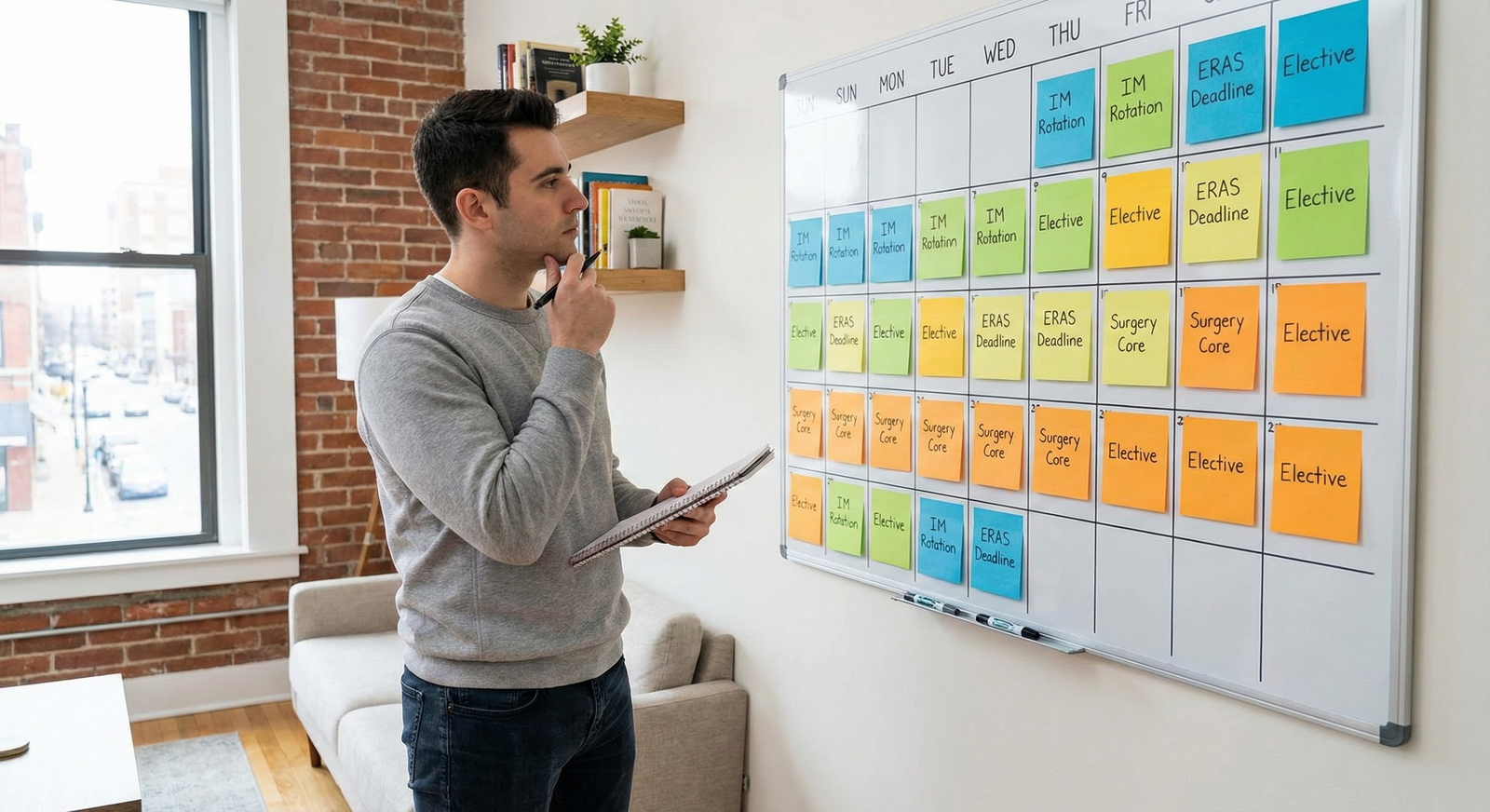
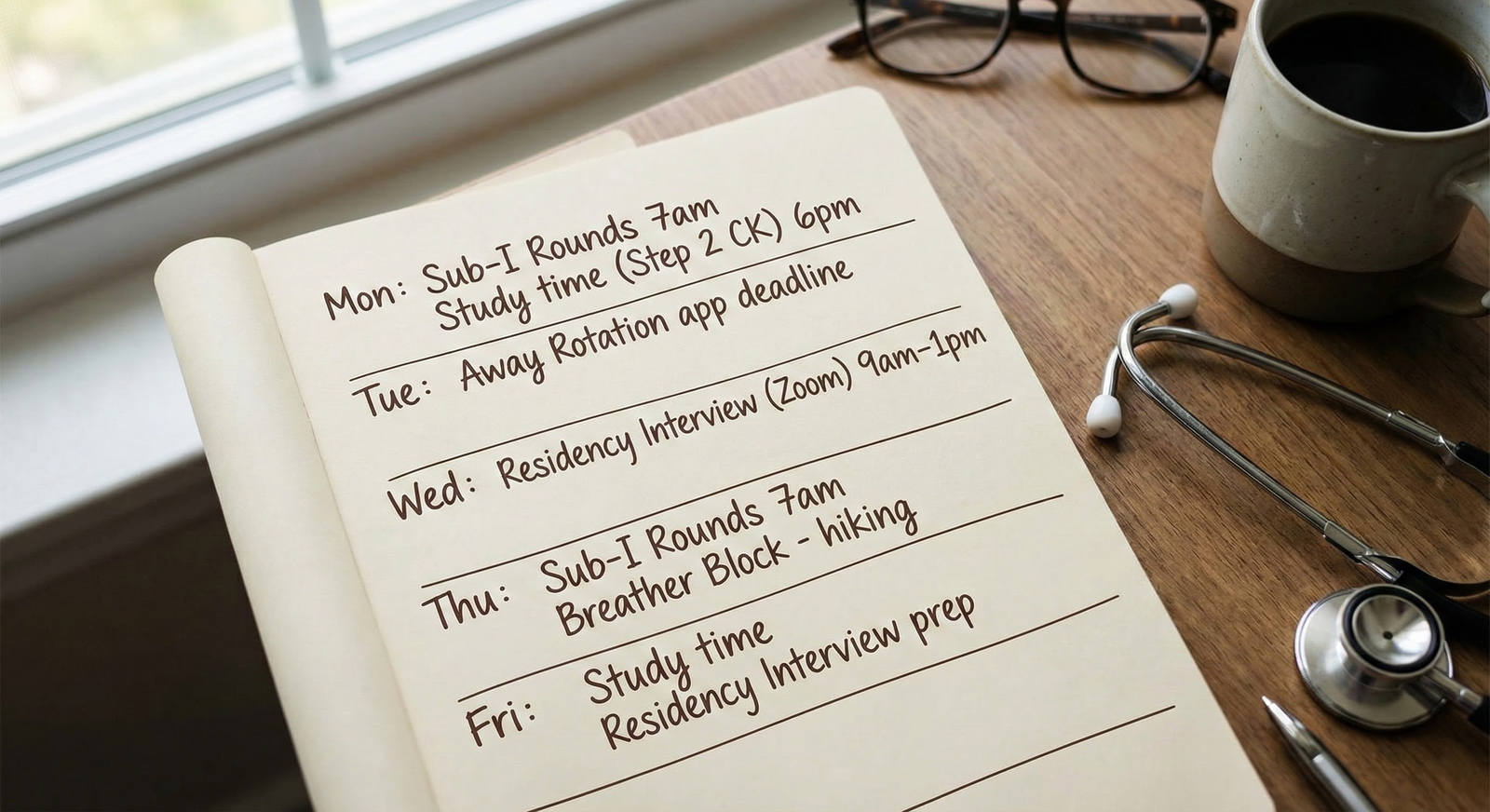
Meta description: Can a 2-week away rotation be enough for residency match success? Learn when a short away helps, which specialties value it most, and how to maximize letters, advocacy, and fit while weighing time and financial costs.

Yes, a 2-week away rotation can be enough. But only if it produces something real.
Educational note: This article discusses the time and financial tradeoffs of away rotations for medical students. It is for educational purposes only and is not financial, legal, or tax advice. Costs, school policies, and application rules vary, so consult your medical school, the host program, and qualified advisors for guidance specific to your situation.
That is the whole game. Not “exposure.” Not “I got a feel for the place.” Not vague networking. The data shows the value of a short away rotation comes from a small number of high-yield outputs: a strong specialty-specific letter, one or two faculty advocates, a credible signal of interest, and a clear answer on fit. If you get those, two weeks can absolutely move the match needle. If you do not, then you just bought travel, fatigue, and schedule disruption.
I have seen students obsess over duration as if four weeks automatically means four times the benefit. It does not. A sharp 2-week away at the right program, in the right specialty, with the right faculty exposure, often beats a sloppy 4-week rotation where nobody remembers your name. Residency selection is not a time-on-task contest. It is a signal-generation contest.
So what does “enough” actually mean? Enough for what?
- Enough to show genuine interest in a program
- Enough to earn a strong letter
- Enough to test whether the culture fits you
- Enough to improve interview odds
- Enough to prove you can function in that specialty
Those are different endpoints. The mistake is treating them as interchangeable. If your goal is one excellent letter and one champion on faculty, two weeks may be plenty. If your goal is to reverse a weak application, build a reputation from zero, and get deeply known in a hypercompetitive field, two weeks is often not enough. Short. Useful. But not magic.
Can a 2-Week Away Rotation Actually Move the Match Needle?
The answer is yes, but with conditions. Specialty matters. Timing matters. Your baseline application strength matters. Most of all, the output matters.
The data shows away rotations have diminishing returns once you pass the threshold of being remembered favorably. That threshold is not measured in calendar days alone. It is measured by whether attendings trust you, whether residents can picture working with you, and whether someone is willing to write or say, “This student impressed us.”
One high-quality away usually beats multiple low-yield ones. That is not motivational fluff; it is basic marginal utility. Your second, third, or fourth away adds less if each one is rushed, generic, or too brief to produce advocacy. A focused rotation where you are prepared, visible, and easy to work with can create more match value than stacking experiences just to list them.
And “move the needle” should be defined like an analyst would define it: by outcomes.
A 2-week away is enough if it does one or more of the following:
- Generates a strong letter that is specific, enthusiastic, and specialty-relevant
- Gives you one or two faculty members who will advocate for you
- Turns a program from a cold application into a familiar name
- Confirms the program belongs high, low, or nowhere on your rank list
That is enough. Full stop.
What the Data Suggests About Away Rotation Value by Specialty
The data shows away rotation value is not evenly distributed across specialties. In audition-heavy fields, the marginal impact is much higher. In broad, less audition-dependent fields, the impact is often modest.
Surgical specialties lead this list. Orthopedics, ENT, plastic surgery, and similar competitive procedural fields often place real weight on away performance because programs want to see how you function in their ecosystem. Can you keep up? Are you coachable? Do residents like having you around at 5:15 a.m.? That stuff matters, and an away rotation is often where it gets measured.
Dermatology also sits higher than many students expect. Not because every 2-week away guarantees a match boost, but because the specialty remains selective and relationship-driven. A brief but excellent experience can produce a letter or faculty support that carries disproportionate value.
By contrast, internal medicine, pediatrics, and family medicine usually offer lower marginal return from a short away, especially if your home institution is strong and your application is already competitive. In those fields, home performance, board metrics, clerkship grades, sub-I strength, and overall application coherence often matter more than a brief visiting experience. That does not make aways useless. It makes them less decisive.
A useful way to think about this is not “How many weeks do I need?” but “What can realistically be produced in two weeks?”
In a strong short away, the usual ceiling looks like this:
- 1 strong letter of recommendation
- 1 to 2 meaningful faculty relationships
- 1 visible professionalism signal to residents and staff
- 1 informed opinion about culture and fit
That is a very respectable return. In fact, I would take that package over a mediocre 4-week away every time.
The trap is assuming longer automatically means stronger. It often does not. I have seen 4-week rotators drift in anonymity because they never clicked with a faculty member, never asked for feedback, and never made themselves useful. Then I have seen a 2-week rotator in orthopedics show up prepared, know every patient by day three, ask for midpoint feedback, and leave with an attending who clearly wanted them there. Guess which one created a stronger match signal.
Programs remember competence, reliability, and fit. They do not award points for merely occupying a badge for longer.
How to Maximize a Short Away Rotation for Match Outcomes
If you only have two weeks, you cannot drift. Day one matters. Honestly, hour one matters.
The data shows short rotations reward applicants who reduce ramp-up time. The less time you need to figure out workflow, expectations, and personalities, the more time you have to generate positive signal. That means preparation before arrival is not optional.
Come in with:
- A polished CV
- A one-minute introduction to your interests and goals
- Basic knowledge of the program structure
- Faculty names and areas of interest
- A clear target: letter, advocacy, fit assessment, or all three
You are not there to be dazzling. You are there to be dependable. Programs love students who are easy to teach, clinically organized, and socially normal. Underappreciated truth. The “pleasantly competent” student often beats the “brilliant but exhausting” student.
Your high-yield behaviors in a 2-week away are boring on paper and powerful in practice:
- Be early. Every day.
- Learn the workflow fast.
- Know your patients better than expected.
- Ask focused questions, not performative ones.
- Follow through without being chased.
- Accept feedback without defensiveness.
- Improve visibly from one week to the next.
That last point matters a lot. Faculty notice trajectory. If you tighten presentations, become more efficient, and correct mistakes quickly, they infer coachability. Programs value coachability because residency is built on it.
Here is the numbers-based checklist I give students. In two weeks, your target is not broad exposure. Your target is concentrated signal:
- 1 strong letter
- 1 to 2 faculty contacts who can remember you specifically
- 1 clear professional impression: reliable, prepared, easy to work with
- 0 avoidable mistakes
That zero matters. A short away gives little room for recovery. One late arrival, one odd interaction, one careless comment, one day of visible disengagement—that can dominate the whole sample size. Two weeks is statistically fragile. Protect the downside.
Mid-rotation, ask for feedback. Do not wait. Say something simple and adult: “I would appreciate any feedback on how I can be more useful this week.” Strong students do this. Weak students avoid it and hope for the best.
Toward the end, request the letter directly if the experience has gone well. Not vaguely. Directly. “I enjoyed working with you and would be honored if you felt comfortable writing a strong letter.” That word—strong—matters. It gives the person room to decline gracefully if the answer is no. Better a polite no than a bland letter.
After the rotation, send concise thank-you notes. Then keep genuine advocates updated. Not spammed. Updated. If they liked you enough to support you, make it easy for them to do so.
When a 2-Week Away Is Not Enough
Sometimes two weeks is not enough. Saying otherwise is bad advising.
If you are trying to repair a weak academic record, rebuild trust after poor clinical performance, or enter a very audition-heavy specialty with little existing visibility, a short away may underperform badly. The data shows short samples are great for confirming a strong baseline. They are much worse for correcting a weak one.
This is especially true if you need a letter from scratch but will have limited direct attending exposure. If half the rotation is orientation, service variability, or fragmented clinic days, you may not create enough meaningful contact for a truly persuasive letter. A generic letter after a short away is a poor return on effort.
Then there is opportunity cost. Real cost. Travel logistics, housing, application fees, institutional paperwork, and lost study time add up fast. If that same 2-week block could materially improve your Step score, rescue a sub-I at home, or let you finish a project that strengthens your application more clearly, the data may favor skipping the away.
I have seen students force an away because it felt like the “serious” thing to do. Wrong reason. If your objective requires deep evaluation, broad networking, and sustained faculty exposure, two weeks may simply be insufficient. Not because two weeks is inherently weak, but because your goal is too large for the sample size.
That is the key distinction. “Not enough” is usually about objective mismatch, not duration alone.
Decision Framework: Should You Do the 2-Week Away or Skip It?
Use a four-variable model:
- Specialty competitiveness
- Current application strength
- Probability of getting a strong letter or advocate
- Time and financial cost
This does not need to be fancy. You can score each variable from 1 to 5.
A high-value scenario looks like this:
- Competitive specialty: 5
- Solid baseline application: 4
- High chance of strong letter/advocacy: 4 or 5
- Manageable cost: 3 to 5
That is usually a yes.
A low-value scenario looks like this:
- Less audition-dependent specialty: 1 or 2
- Application already strong without away: 4 or 5
- Low chance of meaningful faculty contact: 1 or 2
- High cost in money or lost study time: 1 or 2
That is usually a no.
The data shows expected return drops sharply when the letter probability is low. That is the pivot variable. If the rotation is unlikely to produce a strong letter, strong advocacy, or a real interview signal, then the benefit often collapses into “I saw another hospital.” That is not nothing, but it is usually not enough to justify the cost.
So ask yourself blunt questions:
- Will I work closely enough with someone who can write a strong letter?
- Does this specialty actually value aways?
- Am I using this to gain signal, or just because I feel behind?
- What am I giving up to do it?
Prioritize measurable outputs over vague exposure. Always.

How to Talk About a Short Away Rotation on ERAS and in Interviews
Do not apologize for the duration. That sounds weak. Talk about outcomes.
On ERAS and in interviews, describe the experience with concrete specifics:
- Patient populations seen
- Clinic and OR exposure
- Number of cases or consults
- Responsibilities you handled
- Feedback you received
- Why the program remained a fit after direct exposure
A strong answer sounds like this: you completed a focused 2-week rotation in a high-volume service, worked closely with residents and faculty, saw a defined patient mix, improved a specific clinical skill, and left with an even clearer understanding of why the program fit your training goals.
Quantify where possible. Numbers make experiences credible. “I participated in eight OR days and two clinic sessions” is stronger than “I got good exposure.” “I presented new consults daily and gave one case-based presentation” is stronger than “I was involved with the team.”
Most important, frame the short timeline as efficient, not deficient. The message is simple: time was limited, but the signal was strong. Programs respect clarity. They do not need you to pretend two weeks was six months. They need evidence that the rotation mattered.
A 2-week away rotation can be enough. The data shows it is enough when it creates something tangible: a strong specialty-specific letter, meaningful faculty advocacy, a visible professionalism signal, or a sharper read on fit.
Its value is highest in competitive, audition-heavy specialties like orthopedics, ENT, plastic surgery, and dermatology. Its value is lower in fields where home performance, board metrics, and sub-I strength carry more weight. And if the same two weeks could generate a bigger return through exam prep, research completion, or stronger performance at home, forcing an away is a bad trade.
Do the 2-week away if it is likely to produce measurable outputs. Skip it if it is just expensive motion. That is the cleanest answer, and the match data logic behind it is hard to argue with.