

The place you choose to practice will shape your career more than your specialty choice. That is the ugly little secret most senior attendings admit only after they are locked in and it’s too late to move.
I’ve heard the same regrets over and over in faculty lounges, late-night call rooms, and retirement dinners where people finally tell the truth. The medical students and residents hear the sanitized version: “Find a place that fits your values.” Behind closed doors, the real story comes out: “I picked wrong, and I stayed because of money, kids, or fear.”
Let me walk you through what senior attendings actually regret about where they chose to work. Not the brochure version. The version they only tell each other.
The Money Trap: High Salary, Low Life
Everyone thinks they’re immune to this. They aren’t.
A ridiculous number of attendings chose their first (and often final) job based on compensation and RVU promises. The story is almost always the same: a high-paying offer in a mid-sized city or rural area, “partnership track,” big signing bonus, “work hard, play hard.”
Ten years later they’re exhausted, bitter, and trapped by their own income.
Here’s the pattern I’ve seen at community hospitals, corporate groups, and some “physician-led” organizations that are physician-led in name only:
- High RVU expectations baked into the culture.
- Understaffed clinics and call schedules quietly normalized.
- Overtime that’s “not really overtime, just part of the job.”
- A lifestyle built on a $450–700K income that becomes impossible to step down from.
No one tells you this in med school: your cost of living will rise to match your salary frighteningly fast. You tell yourself you’ll be different. You won’t. I’ve watched dozens of smart, disciplined people fall into the exact same trap.
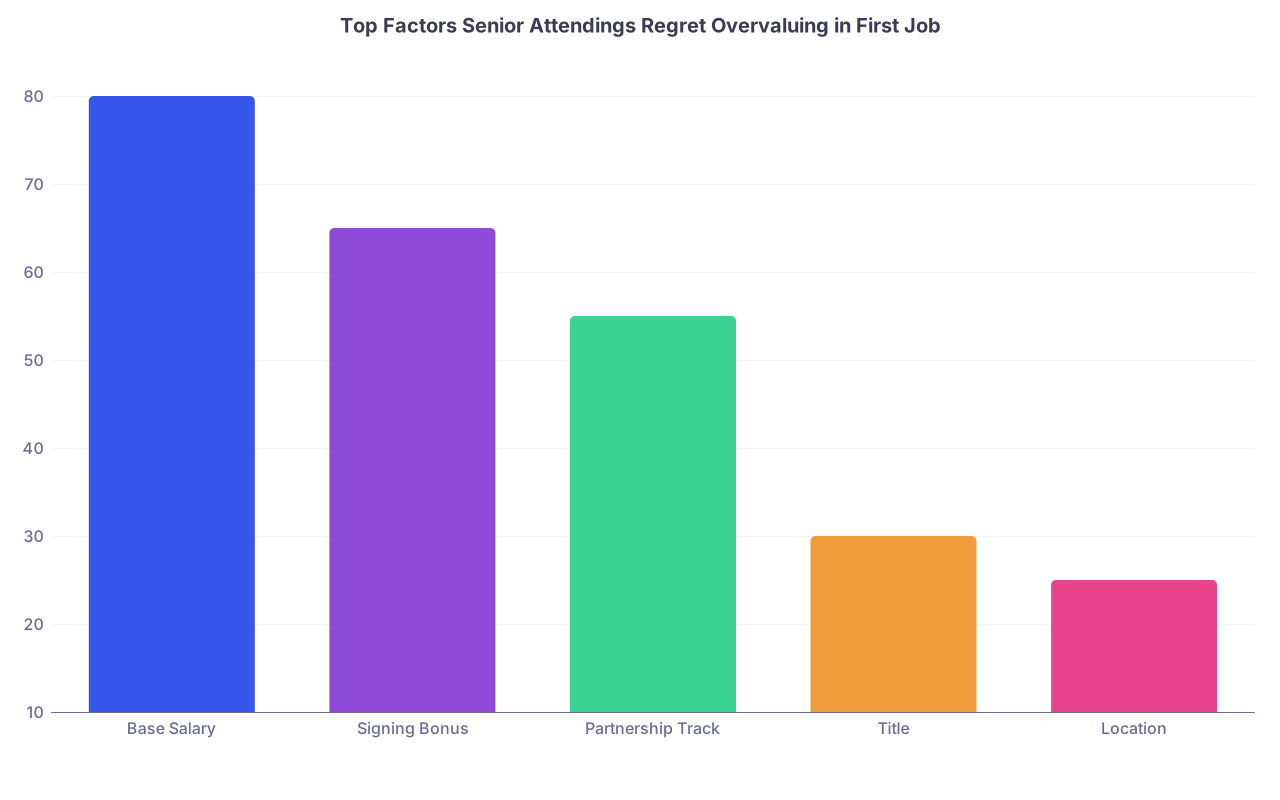
| Category | Value |
|---|---|
| Base Salary | 80 |
| Signing Bonus | 65 |
| Partnership Track | 55 |
| Title | 30 |
| Location | 25 |
Behind the scenes, attendings in their 50s say things like:
- “I should’ve taken 100K less and actually seen my kids grow up.”
- “I chased volume in a place I never liked living in. Now I’m stuck.”
The regret isn’t just the hours. It’s realizing they optimized for the wrong metric. They maximized income but minimized joy, autonomy, and long-term health.
The programs and recruiters will hammer salary and bonus. The senior people who are honest will tell you: choosing a job mostly for money is one of the most common career regrets in medicine.
The Location Myth: “I’ll Move Later”
Here’s the lie almost every young physician tells themselves:
“I’ll take this job for a few years, pay off loans, then move to where I really want to live.”
Faculty and chairs quietly roll their eyes when they hear that. They’ve watched this movie hundreds of times. The ending almost never changes.
Life piles on:
- You buy a house “because renting is throwing money away.”
- Your partner finds a job they like locally.
- Your kids enter a “good school district.”
- Your social circle solidifies around work and kids’ activities.
Five to seven years later, you’ve built a life somewhere you never actually chose. It just happened.

| Step | Description |
|---|---|
| Step 1 | First Job in Temporary City |
| Step 2 | Buy House |
| Step 3 | Partner Job Local |
| Step 4 | Kids in School |
| Step 5 | Income and Lifestyle Inflate |
| Step 6 | Golden Handcuffs |
| Step 7 | Stay by Default |
I’ve heard variations of this same sentence over beers with 60-year-old cardiologists and surgeons:
“I never really liked this city. I moved here for the job, told myself it was temporary, and then twenty-five years went by.”
They don’t say that at resident noon conference. But they say it when the residents leave the room.
The unspoken truth: where you live matters more every year as clinical work gets more draining. If you dislike the climate, culture, or geography, your job has to be near-perfect to compensate. Most jobs are not near-perfect.
Common location regrets I’ve heard:
- “I underestimated how much constant bad weather would wear me down.”
- “I married into my partner’s hometown and never felt like it was mine.”
- “I thought proximity to family would be a plus. It complicated everything and made it harder to leave a bad job.”
Do not treat geography as a throwaway variable. Senior attendings will tell you: hating where you live is a slow, corrosive regret.
Culture Over Brand: The Hospital Name That Wasn’t Worth It
A lot of ambitious physicians pick institutions the way premeds pick colleges: name brand over day-to-day reality.
They choose the big academic center, the coastal “prestige” system, or the shiny new corporate hospital with glossy marketing, assuming that a strong brand will guarantee a great experience and future options. Then they find out what actually matters:
- Who controls your schedule.
- How admin treats clinicians when conflict happens.
- Whether there’s a culture of dumping extra work on “team players.”
- How quickly burned-out partners are replaced and forgotten.
I remember a senior hospitalist at a big-name academic center telling a group of residents during a closed-door Q&A:
“If this place didn’t have the name on the door, half of you wouldn’t even consider working here. And frankly, I’m not sure you should anyway.”
He’d been there twenty years.
The biggest culture regrets I hear from attendings:
- Staying in a prestigious but toxic institution because leaving felt like “failing.”
- Joining a “cutting-edge” system that worshipped metrics and treated physicians as replaceable labor units.
- Ignoring how attendings talked to each other in the hallway and only listening to the formal pitch.

In residency, you get used to absorbing a bad culture because it’s temporary. Once you sign your attending contract, that same bad culture can become the next 15–25 years of your life.
The regret is rarely: “I should have chased more prestige.” It’s almost always: “I stayed in a name-brand place that treated me badly, for far too long, because my ego liked the name.”
The Call Burden and Aging Body Nobody Planned For
Here’s a quiet little detail: your 35-year-old self and your 55-year-old self live in different bodies. Senior attendings know this in their bones. Literally.
In your early attending years, overnight call, 24-hour shifts, post-call clinic—it’s miserable but survivable. So you tolerate a practice environment with heavy call, crazy post-call expectations, and “we all did it this way” culture.
Ask those same physicians fifteen years later what they regret:
- Taking a job with heavy night call in a small group where they couldn’t realistically offload it later.
- Joining a trauma-heavy or OB-heavy practice with no real exit ramp as they aged.
- Underestimating how wrecked their sleep and back and joints would be.
I listened to a 58-year-old orthopedic surgeon put it bluntly to a PGY-4:
“If you pick a place with brutal call and no realistic path to slow down, you’re basically betting your spine and marriage on your 30-year-old energy level. That’s stupid. I did it. Don’t.”
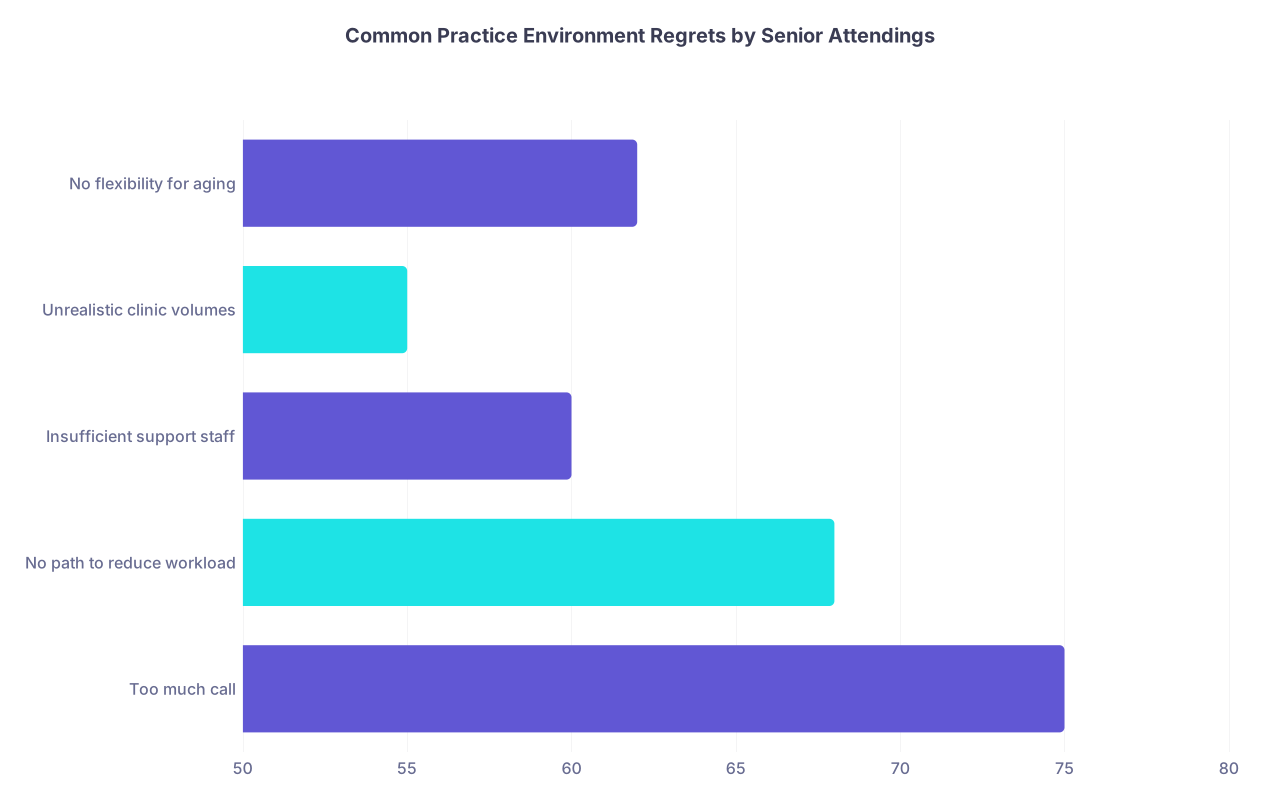
| Category | Value |
|---|---|
| Too much call | 75 |
| No path to reduce workload | 68 |
| Insufficient support staff | 60 |
| Unrealistic clinic volumes | 55 |
| No flexibility for aging | 62 |
Hidden regret: they never modeled a graceful way out. No transition to part-time, clinic-only, telehealth, or lower-intensity roles. So they keep grinding at 80% of their former speed, angry at their bodies and their hospital.
When you evaluate where to work, do not just ask, “Can I do this now?” Ask, “Can I see myself doing some version of this at 55?” If the answer is no, you’re setting yourself up for the same resentment I’ve heard in countless break rooms.
Isolation and Community: The Loneliness Nobody Mentioned
The emotional part rarely gets talked about in formal settings. It comes out at 10 p.m. after a long shift when most of the department has gone home.
A surprising number of attendings regret practicing in places where they never built a real life outside of work:
- Rural or exurban areas where they always felt like outsiders.
- Small groups where everyone was “friendly” but no one was actually a friend.
- Big cities where commute, call, and cost of living killed off their hobbies and social life.
The specific line I’ve heard too many times:
“I built my entire identity around being a doctor at this hospital. Once the job started to feel bad, there was nothing else.”

When you’re training, the built-in community is automatic: co-residents, co-fellows, constant shared suffering. As an attending, that evaporates unless you’re deliberate about building a life.
What senior physicians regret about where they chose to practice:
- Picking a place where they never really clicked with the local culture.
- Underestimating how hard it would be for their partner or family to integrate.
- Choosing a job where everything social revolved around the hospital, so there was no separation between work life and “real” life.
There’s also this quiet trend: physicians in more collegial, mid-sized cities with strong group culture report far less burnout than those in prestigious but cutthroat urban centers. It’s not scientific, but I’ve heard the contrast too many times to dismiss it.
Administrative Climate: Who Owns the Place Owns Your Life
This is where senior attendings get the most cynical.
Over the last 20 years, there’s been a massive shift to:
- Hospital-employed models
- Private equity–backed groups
- Mega-systems swallowing up independent practices
The regret isn’t just about “selling out” independence. It’s about losing any leverage over how the work is structured.
Common refrains from older docs who remember a different era:
- “We used to sit in a room and actually decide our call schedule. Now a non-clinical administrator tells us what it is.”
- “I regret joining a system where metrics and satisfaction scores mattered more than clinical judgment.”
- “We sold the practice and thought we’d get stability. We got more meetings and less say.”
| Setting Type | Most Common Regret |
|---|---|
| Hospital-employed | Loss of autonomy |
| Private equity group | Volume and profit pressure |
| Big academic center | Bureaucracy and politics |
| Small private group | Call and coverage burden |
I’ve sat in meetings where senior attendings, people who built departments, were quietly sidelined by new service line administrators with MBAs and PowerPoints. The anger is palpable, but the options are limited. They’re tied to the institution by pensions, kids in local schools, spouse careers, and sunk time.
The key mistake they made years earlier: choosing a place where physicians did not genuinely have a structural voice. Not in theory. In reality.
You want to know what senior attendings actually ask each other, off-record?
- “Do physicians sit on the real decision-making committees, or are they window dressing?”
- “Who actually controls scheduling rules, compensation formulas, and staffing ratios?”
- “In the last major conflict, did admin back the clinicians or throw them under the bus?”
They regret going to places where, once the glossy recruitment phase ended, they were just line items in a budget.
The “I Stayed Too Long” Problem
There’s a whole category of regret that has nothing to do with the initial choice—and everything to do with inertia.
Attending after attending will tell you some version of:
“I knew this was the wrong place 5–7 years in. I stayed another 10.”
Why?
- Fear of losing income or seniority.
- Fear of starting over and being “the new person” again.
- Worry about kids, schools, partner jobs.
- Ego about leaving a prestigious place or admitting a “bad fit.”
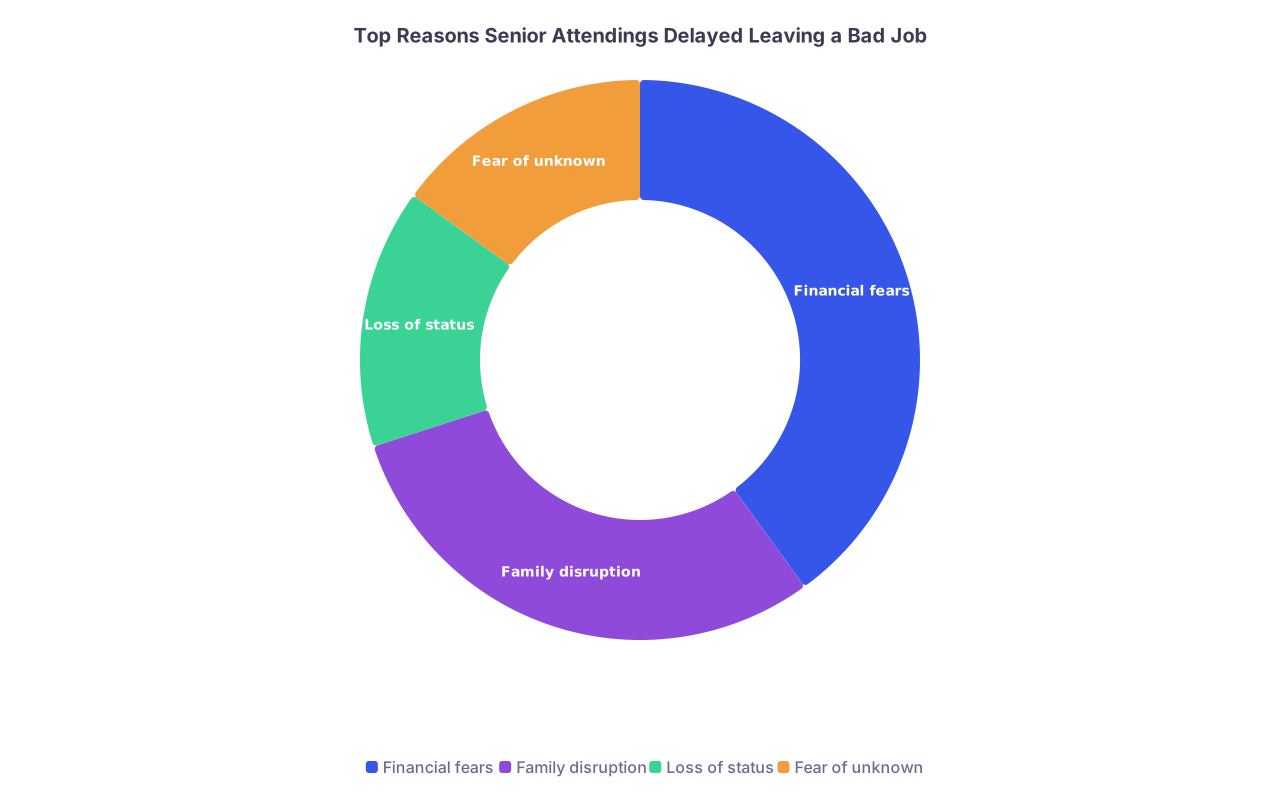
| Category | Value |
|---|---|
| Financial fears | 40 |
| Family disruption | 30 |
| Loss of status | 15 |
| Fear of unknown | 15 |
I watched a very respected subspecialist in his early 60s finally leave a big academic center he’d been complaining about for fifteen years. He went to a smaller, saner place. Within six months he looked ten years younger. His exact words to a group of fellows:
“I should have done this at fifty. I stayed for all the wrong reasons—title, reputation, habit. Don’t do what I did.”
This is where future-of-medicine talk gets real. Younger physicians have more options than he did: telemedicine roles, portfolio careers, part-time or hybrid models, cross-state licensing via compacts. Senior attendings see these options and sometimes admit privately: “If I’d had that flexibility, I never would’ve stayed where I was.”
The core regret isn’t just choosing the wrong place. It’s ignoring clear signs for years and losing a decade of career happiness to fear and inertia.
What They Wish They’d Prioritized Instead
When you press senior attendings—really press them—and strip away the formal answers, they converge on a few things they wish they’d valued more when choosing where to practice.
They don’t speak in buzzwords. They say specific, practical things:
- “I should have picked a city I actually wanted to wake up in on my days off.”
- “I should have chosen a group where the older docs looked like the kind of 60-year-old I wanted to be—mentally and physically.”
- “I should have asked more questions about what happened to the people who left.”

Patterns show up:
They wish they had:
- Evaluated how attendings in their 50s and 60s were doing—not just careers, but marriages, health, and attitudes.
- Talked directly with people who had left the group or hospital, not just those still on the roster.
- Treated geography as a core life decision, not a side effect of a job offer.
- Chosen settings with real flexibility for different career phases: full-throttle, parenting years, early aging, pre-retirement.
They also talk a lot about the value of “optionality” before it was trendy:
- Not being locked into a single employer that owns the whole local market.
- Maintaining skills that travel: generalist abilities, procedures useful in multiple settings, multiple state licenses.
- Living in places where there are multiple hospitals, systems, or groups within reasonable commuting distance.
Behind closed doors, the most satisfied senior attendings aren’t necessarily the richest or the most prestigious. They’re the ones who chose places with decent culture, livable locations, and room to pivot as their life changed.
Looking Forward: How Your Generation Can Avoid Their Mistakes
Older attendings are not shy about one thing: they think your generation has more leverage—and more risk of frittering it away.
They see:
- Remote work creeping into more specialties (radiology, psych, derm consults, tele-ICU).
- Shorter job tenures becoming normal, making moving easier if you accept a “non-lifer” mindset.
- Increasing consolidation that can trap you in bad systems if you totally ignore the power dynamics.
They regret not having the options you do. But they also quietly worry you’ll repeat the same pattern: chasing the highest first offer, punishing yourself through a terrible culture, then staying too long because rearranging your life feels unbearable.
The smartest thing you can take from senior attendings’ regrets is this:
Assume your first job will not be your last. Choose a place with the awareness that you may leave. That mindset alone changes which trade-offs you’ll tolerate, which bridges you’ll burn, and how much of your identity you fuse to a single institution.
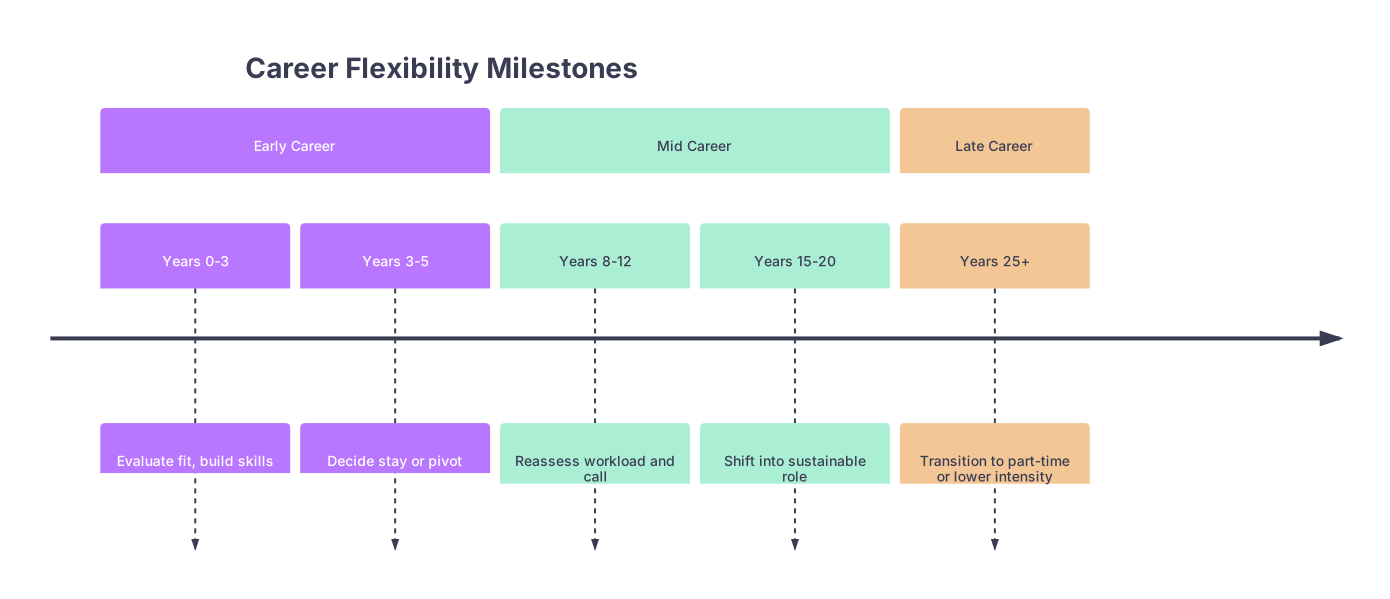
| Period | Event |
|---|---|
| Early Career - Years 0-3 | Evaluate fit, build skills |
| Early Career - Years 3-5 | Decide stay or pivot |
| Mid Career - Years 8-12 | Reassess workload and call |
| Mid Career - Years 15-20 | Shift into sustainable role |
| Late Career - Years 25+ | Transition to part-time or lower intensity |
I’ve sat through too many retirement speeches that were basically elegant cover stories for decades of simmering regret. I’ve also seen quiet, low-prestige community docs who loved their town, liked their colleagues, and retired without drama or bitterness.
The difference was never just the job. It was where and how they chose to live that job.
FAQs
1. How can I actually assess culture and future regret risk before accepting a job?
Talk to people who are not on the official interview schedule. Ask to shadow for a full day. Have coffee with a mid-career doc who’s clearly not part of leadership. Track down someone who left in the last 2–3 years and ask why. Watch how staff talk about physicians when physicians are not in the room. If you sense fear, cynicism, or constant turnover, believe it.
2. Is it a mistake to prioritize being near family when choosing where to practice?
It can be, if you treat “near family” as automatically good. Senior attendings will tell you: family proximity amplifies whatever dynamic already exists. Good support gets better. Boundary issues get worse. And it can trap you in a job you hate because the idea of moving away from extended family becomes emotionally loaded. Choose the job and city first, then ask if it also works with family—not the other way around.
3. How long should I stay in a first job before deciding it was the wrong place?
Most honest answers cluster around 2–5 years. The first year is survival and adjustment. By year two, you know the truth about workload, admin, and culture. By year three, you usually know whether the life around the job feels right. If you’re consistently miserable by year three and still telling yourself “maybe it will get better,” you’re on the same path as the 60-year-olds who say, “I knew by year five and stayed another fifteen.” Notice that and act earlier.
Key points: where you practice will shape everything; money and prestige are overrated compared to culture, geography, and flexibility; and the biggest regret isn’t usually picking wrong—it’s realizing it and staying anyway.


