

Last week I got a late‑night message from a resident in San Francisco: “I feel like I’m on a treadmill set to ‘Bay Area rent’ and I’ll never be able to step off. Is this just my life now?” She’s PGY‑2, working 70 hours a week, and still splitting a tiny one‑bedroom with another resident. Her co‑intern just signed a lease where the rent is literally higher than her take‑home pay.
If you’re reading this, I’m guessing you’ve had the same sick feeling: what if you never actually escape the expensive city you trained in? What if you’re just…stuck?
Let’s talk about what doctors actually do. Not the fantasy Instagram version. The real paths, with the trade‑offs and the “oh crap, didn’t think about that” parts included.
Why It Feels Like You’ll Never Get Out
You’re not crazy for feeling trapped. The system is built to make you feel that way.
During med school and residency, you get anchored to:
- A specific academic center
- A tight social/professional network
- A certain “level” of prestige you’re scared to lose
And then the financial reality hits you:
- $200k–$400k+ in loans
- Cost of living that laughs at your resident salary
- Peers signing $4,000+ leases like it’s normal
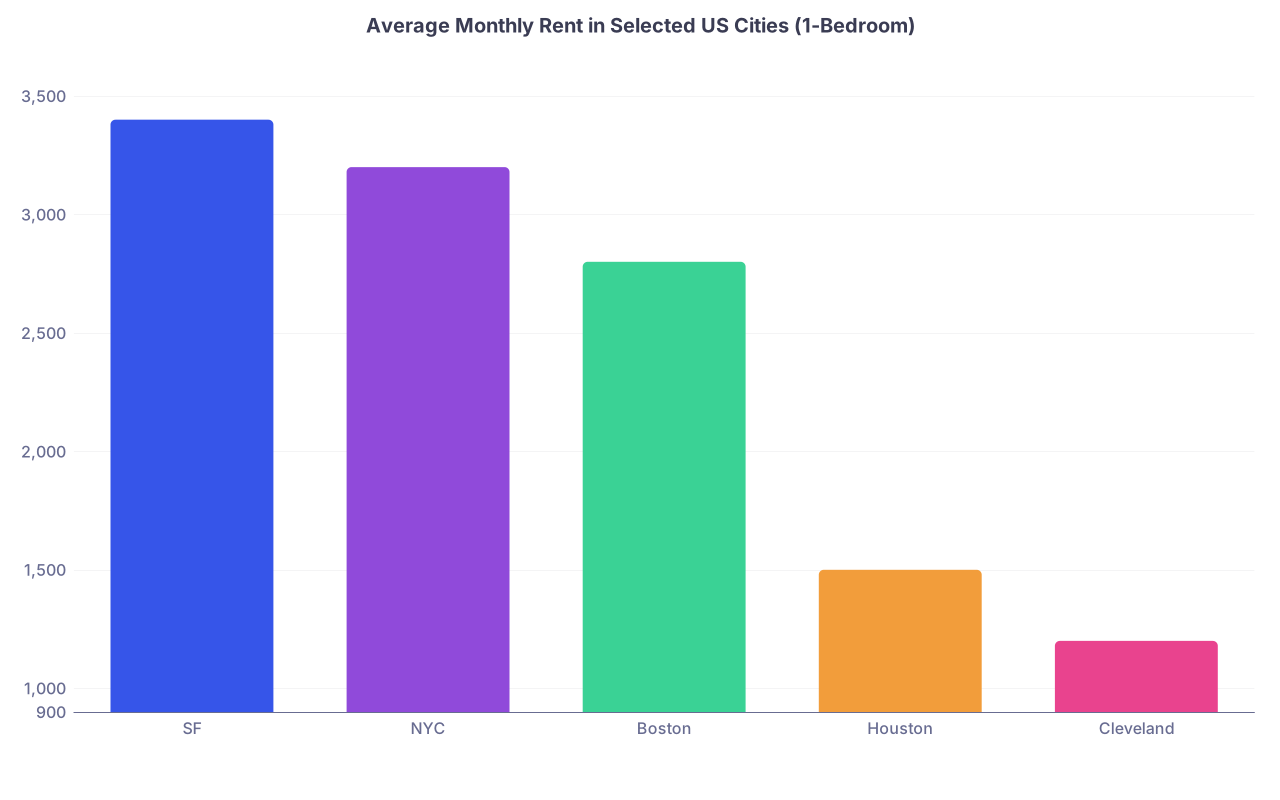
| Category | Value |
|---|---|
| SF | 3400 |
| NYC | 3200 |
| Boston | 2800 |
| Houston | 1500 |
| Cleveland | 1200 |
When your training, mentors, and hospital are all in one high‑cost city, your brain quietly writes a story: “Real medicine happens here. Anything else is ‘settling.’”
That story is wrong. But it’s powerful. And when you mix it with fear about money and matching and visas and fellowship and reputation, you get this awful, sticky feeling of being trapped.
You’re not. But the escape routes aren’t always obvious from inside the bubble.
The Main Paths Doctors Actually Take Out of Expensive Cities
I’m just going to lay out what I’ve seen over and over. Not theoretically. Actual residents, attendings, colleagues.
1. The “Do Fellowship Here, Then Bolt” Path
This is probably the most common. People stay in the expensive city for:
- Residency + fellowship
- Or med school + residency
- Or all three (the full “I’m never leaving this subway line” package)
Then, once they’re fully trained, they jump.
Typical pattern:
- Do residency in NYC/Boston/SF/LA
- Match into fellowship there (because honestly, it’s easier with connections)
- Use the name brand to negotiate a job elsewhere:
- Mid‑sized city
- Suburban setting
- Or even rural with insane pay
Pros:
- You ride the prestige wave one last time
- You have time to build CV and letters that look good anywhere
- Recruiters love “trained at [Big Name Hospital]”
Cons:
- You’re in brutal cost of living for longer
- Lifestyle is often bad until you’re attending
- Easy to get sucked into “one more fellowship, one more year…”
This path works, but it feels endless while you’re in it. If you choose it, you honestly need a written exit plan or you’ll blink and be an attending still paying $3,500 for a shoebox.
2. The “First Job Is My Escape Hatch” Path
You train in a HCOL city. You deliberately choose your first attending job in a cheaper area. This is where a lot of people quietly win.
They don’t always post about it, because it’s not very brag‑worthy to say, “I left Manhattan for a hospital in Omaha and now I can afford a yard and I sleep.”
But they do it. A lot.

What it actually looks like:
- You apply widely to non‑coastal jobs
- You stop filtering by “cities I’ve heard of” and start filtering by:
- Salary to cost-of-living ratio
- Call schedule
- Loan repayment options
- You accept that your friends will say, “Wait, where is that again?” and might secretly judge you
But then:
- Your rent or mortgage is 1/3 of what it would be in SF
- You’re not living with three roommates
- You can actually attack your loans
- You might own something by 35 instead of 45+
| Option | City Type | Salary (Approx) | Monthly Rent | Loan Payoff Speed |
|---|---|---|---|---|
| A | NYC Academic | $250k | $3,500 | 10–20 years |
| B | Mid-Sized City | $350k | $1,800 | 5–10 years |
| C | Rural Hospital | $400k+ | $1,200 | 3–7 years |
Is it glamorous? No. Does it work? Constantly.
3. The “Two‑Step: High Pay Rural, Then Go Where You Want” Path
This is the most brutally efficient path I’ve seen, but also the one people are most scared of.
Step 1: Go somewhere “no one wants to go” for 2–5 years.
- Rural hospital in the Midwest
- Small town in the South
- Tribal/Indian Health Service
- Underserved region with crazy signing bonuses and loan repayment
Step 2: Once your financial life isn’t on fire anymore, then move somewhere you actually fantasize about.
Here’s what this looks like on paper:
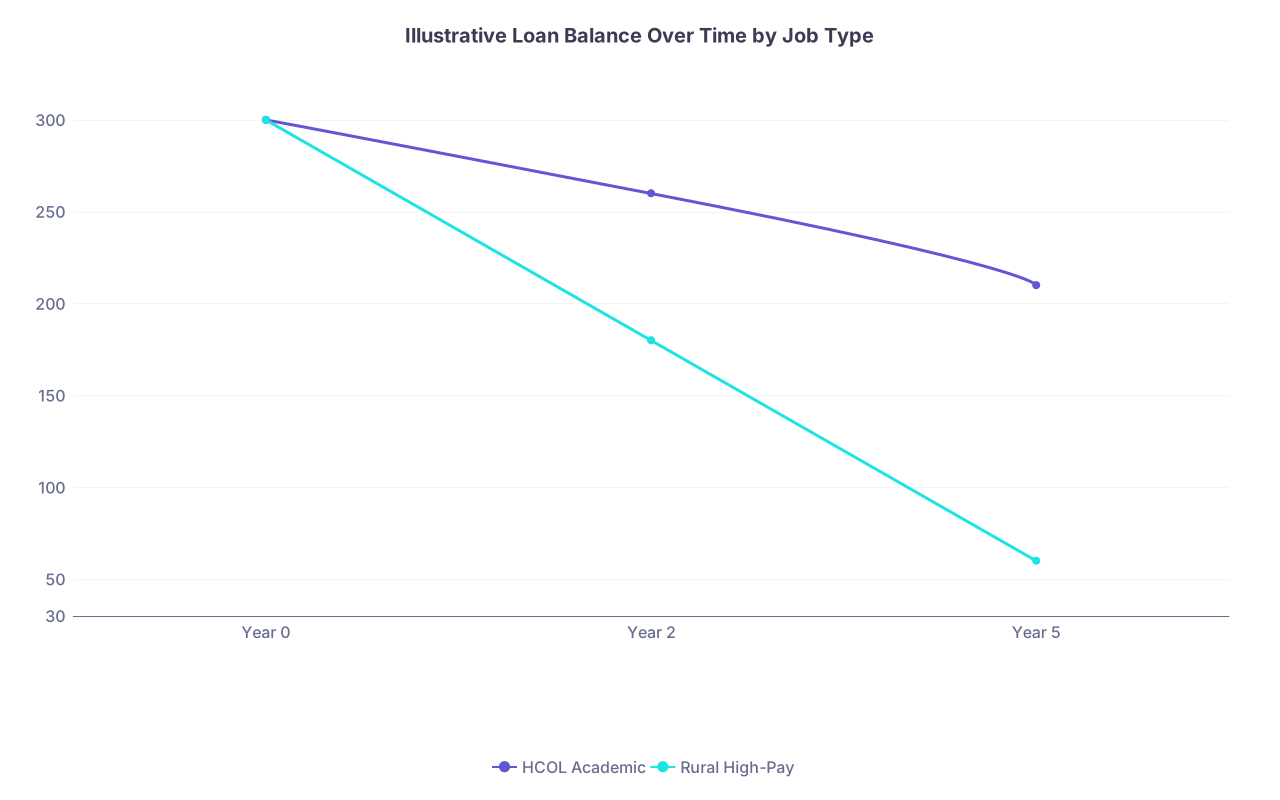
| Category | HCOL Academic | Rural High-Pay |
|---|---|---|
| Year 0 | 300 | 300 |
| Year 2 | 260 | 180 |
| Year 5 | 210 | 60 |
(Values in thousands, obviously.)
Reality of this path:
- First move is often lonely and disorienting
- Call can be heavy
- Culture shock is real if you’ve only lived in major cities
But:
- People pay off $300k loans in under 5 years
- They come out with savings and negotiating power
- When they apply back to a nicer city or desirable suburb, they’re not desperate
I’ve watched this pattern enough that I actually consider it one of the least risky long‑term moves, even though it feels terrifying upfront.
4. The “Stay in the Expensive City, But Change the Game” Path
Here’s the thing no one tells you: some people actually do stay in expensive cities—and it’s not always a tragedy.
But the ones who make it work don’t just:
- Take any academic job with “Assistant Professor” in the title
- Accept garbage pay because “it’s competitive”
- Pretend $3,800 rent is fine because “I’m a doctor”
They do one of a few things:
- Join a well‑run private group with real partnership track
- Negotiate like hell, leveraging other offers
- Add high‑pay side work (locums, telemedicine, urgent care shifts)
- Live further out than their colleagues are willing to
Or they’re dual‑income with a partner who also earns a lot. That’s the part people ignore when they compare themselves to Instagram doctor couples in luxury condos.
So yes, you can stay in SF, NYC, LA, Boston. But if you don’t want to feel poor forever, you can’t just passively accept whatever academic job falls into your lap.
5. The “I’ll Go Where the Visa Lets Me” Reality (For IMGs)
If you’re on a visa, everything is more constrained. I’ve seen this go a few ways:
- J‑1 waiver jobs in rural or underserved areas:
- Great pay
- Often lonely
- Pretty intense work
- H‑1B tied to specific employers:
- Makes big fancy cities even riskier if you’re miserable
- But can sometimes be leveraged into better long‑term positions
Here’s the dark thought you probably have and don’t say out loud: “What if my visa situation forces me to stay somewhere expensive or terrible forever?”
For most people, that’s not how it plays out. The first job is constrained. The rest of your life is less so.
The IMGs I know who are happiest did something like:
- Accept the less‑than‑perfect first job that meets visa needs
- Use those years to:
- Save aggressively
- Network with future employers
- Build a CV that gives them options later
- Then move to a location they actually chose
It’s not fair that you have fewer doors open. But “forever trapped” usually isn’t accurate. It just…takes longer and feels scarier.
The Mental Traps That Keep You Stuck
The biggest problem isn’t actually geography. It’s what your brain is doing.
Trap 1: “If I leave this city, my career is over”
No. People build fantastic careers out of:
- Madison
- Nashville
- Columbus
- Charlotte
- Kansas City
I’ve seen folks leave Boston for a mid‑sized city, become leaders in their departments, and end up more respected in their niche than the people who stayed behind grinding for associate professor.
Academic medicine loves to pretend it only exists in like six zip codes. That’s just ego + marketing.
Trap 2: “Everyone else is fine with this rent, so I should be too”
They’re not fine. They’re just quiet.
I’ve listened to chiefs in elite programs whisper, “I don’t know how my interns are supposed to live on this salary.” I’ve seen attendings in NYC with kids and daycare costs who are more cash‑strapped than hospitalists in Iowa.
If your gut is screaming “this feels unsustainable,” listen to it. That’s not weakness. That’s reality testing.
Trap 3: “I’ll figure it out once I’m an attending”
Dangerous thought.
Your first attending job is when you have maximum flexibility to reset:
- No kids in school yet (for many)
- No mortgage locking you in (yet)
- CV is fresh, people remember you
- You’re not burned to ash (hopefully)
If you use that window to just grab whatever’s nearby in your training city…you quietly lose one of your best chances to escape.
How to Actually Start Building an Escape Plan (While Still in Training)
You don’t have to wait until you’re “free” to do this. In fact, you shouldn’t.
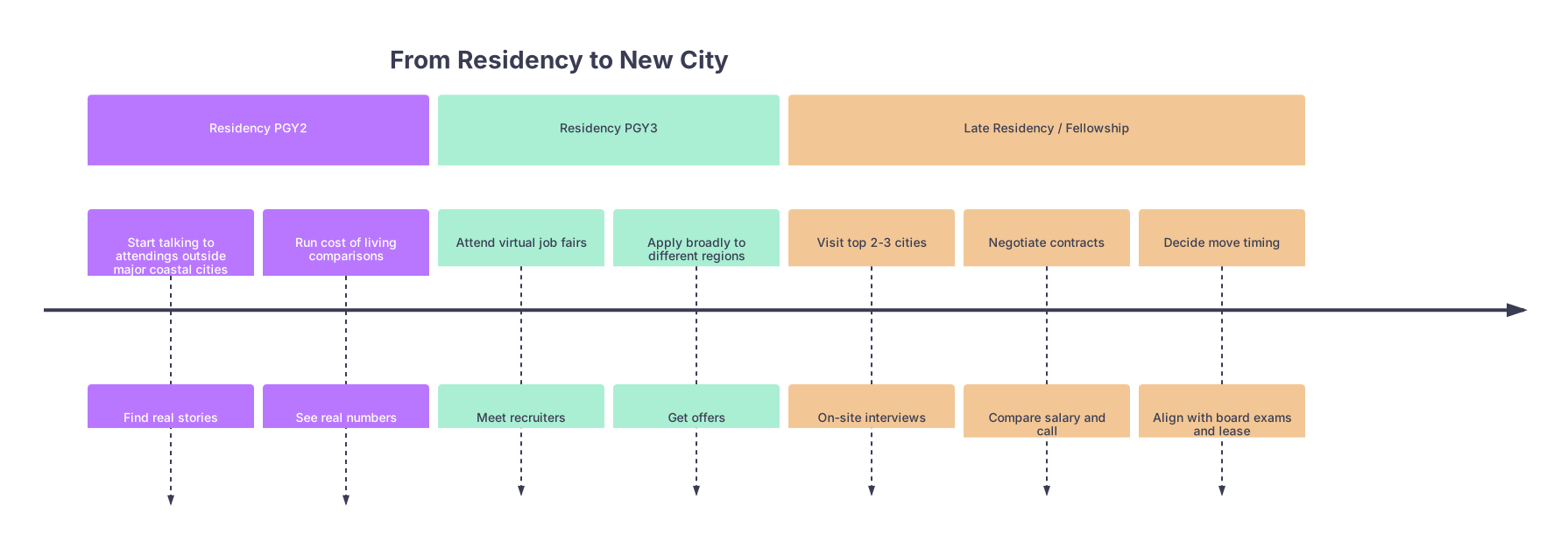
| Period | Event |
|---|---|
| Residency PGY2 - Start talking to attendings outside major coastal cities | Find real stories |
| Residency PGY2 - Run cost of living comparisons | See real numbers |
| Residency PGY3 - Attend virtual job fairs | Meet recruiters |
| Residency PGY3 - Apply broadly to different regions | Get offers |
| Late Residency / Fellowship - Visit top 2-3 cities | On-site interviews |
| Late Residency / Fellowship - Negotiate contracts | Compare salary and call |
| Late Residency / Fellowship - Decide move timing | Align with board exams and lease |
Practical, not fluffy:
Ask attendings where they’d actually work if they could start over
You’ll hear the same non‑coastal cities repeated more than you expect.Run actual numbers
Don’t do vibes. Do math. A $260k academic job in Boston vs $350k in a cheaper city with half the rent…there’s a point where prestige is just a very expensive hobby.Sign up for recruiter emails
Yes, they’re annoying. Also yes, they show you real salaries in real places you’d never think about.Stop anchoring on “cities I’ve heard of”
Lots of quiet, mid‑tier cities have:- Good airports
- Real restaurants and culture
- Normal houses under $500k
Think in 5–7 year chapters, not “forever”
You don’t have to marry your first job or your first city. “I’ll do 5 years here, crush my loans, and then reassess” is completely legitimate.
FAQ: Five Questions You’re Probably Too Embarrassed to Ask
1. What if I move to a cheaper city and absolutely hate it? Am I just stuck?
No. Doctors are not trees. I’ve seen people tough it out for 2–3 years, pay down a huge chunk of debt, then move again to a different city that fits better. Will there be a penalty for job‑hopping too fast? If you’re changing jobs every 12 months, yes. Every 3–5 years? That’s normal. Think of the first move as a financial and lifestyle reset, not a permanent sentence.
2. Will I destroy my academic career if I leave a big‑name city or center?
You might make the Harvard‑to‑Harvard‑to‑Harvard ladder harder. But most people aren’t actually going to end up full professors at the same big‑name institution they trained at. You can still publish, teach, and hold leadership roles from “less sexy” locations. If you’re truly research‑heavy and that’s your life, then yeah, you may need to stay in certain ecosystems. If you’re 80% clinician and 20% academic, you have way more geographic freedom than they make it sound like.
3. Is it dumb to choose a job mainly based on cost of living and salary?
No. What’s dumb is ignoring money entirely and then panicking at 38 because your loans are huge and you own nothing. Money isn’t the only factor, obviously. Toxic work environments will wreck you faster than high rent. But pretending you can live in SF on feelings and prestige is delusional. Financial stability is a mental health intervention, especially in medicine.
4. What if my partner’s career basically requires a big expensive city?
Then you’re solving a two‑body problem, which is legitimately hard. But I’ve seen couples:
- Live just outside the most expensive core and commute
- Stagger career goals (one person optimizes location first, then switch)
- Consider mid‑tier “second cities” with decent opportunities for both (think Austin, Denver, Raleigh, Minneapolis) instead of only SF/NYC/LA.
Sometimes the compromise isn’t “perfect for both” but “livable for both and financially survivable.” That’s still a win compared to burnout plus money panic.
5. Be honest: is it actually possible to have a normal life if I insist on staying in NYC/SF/LA long‑term?
Yes, but not by accident. People who pull this off usually have one or more of:
- Strongly paid subspecialty or procedure‑heavy field
- Dual high incomes in the household
- Willingness to live smaller/longer commutes than their peers
- Side income (locums, telehealth, consulting, etc.)
If you want frequent travel, kids, a reasonable home, and early-ish financial security and you never want to leave a top‑tier expensive city, the margin for error is tiny. Possible? Yes. Automatic just because you have MD after your name? Absolutely not.
If you strip everything else away, there are really three key points:
- You are not actually chained to the expensive city you trained in, even if it feels like that at 2 a.m. in the call room.
- The doctors who escape usually do it at natural transition points—first job, post‑fellowship, or visa pivot—and they choose based on numbers, not ego.
- You don’t have to pick the perfect place forever. You just have to pick the next place that gives you more freedom than where you are right now.


