
Programs do not see a magic “submitted at 12:01 am” timestamp that secretly ranks you. That myth survives because anxious applicants keep repeating it to each other, not because it is true.
Let me be precise: ERAS does track when your application is submitted and when documents arrive. But what programs actually see, how they use it, and what matters for your chances is very different from the folklore floating around group chats.
You are not competing for “points” based on which minute you clicked submit.
You are competing inside crude buckets: early enough, on time, late, and “why are you applying now?”
Let’s tear this apart properly.
What Programs Actually See in ERAS (and What They Don’t)
There are three different questions people mash together:
- Does ERAS record a timestamp?
- Do programs see any indication of timing?
- Does timing function like a ranking metric?
Different answers.
1. Yes, ERAS records submission time
Behind the scenes, ERAS absolutely logs when:
- You certify and submit your application
- Your USMLE/COMLEX scores are released
- MSPE, LORs, transcripts arrive
- Supplemental application (if used) is submitted
It has to. The system needs that internally for queues, transmissions, and technical auditing.
But internal logs are not the same thing as “Director sees: submitted at 12:01:23 on Sept 25.”
2. What programs actually see in their interface
Program directors and coordinators don’t stare at raw timestamps. They live in filters and columns.
In the ERAS Program Director’s WorkStation (PDWS) or WebADMIT-like interfaces, what they usually see is more like:
- “Application received” date
- Step scores, school, visa status, degree type
- Whether the application is complete (all documents in)
- Filters like “New Since Last Log-In” or “Received between Date X and Y”
They can sort by “date received” or “complete date.” That’s real. But that’s at the day or batch level, not a minute-by-minute Olympic time trial.
No serious program director is sorting by “submitted at 6:01 am vs 6:29 am” on release day. They barely have time to triage at all.
3. How the “timestamp” myth got legs
I’ve heard this exact sentence from more than one MS4 on a group call:
“Our dean said you have to submit at midnight on opening day because programs see a timestamp and review in order.”
This is how myths perpetuate. A kernel of truth:
- Programs receive apps in the order ERAS releases them.
- Some programs start reviewing on day one.
- Earlier complete apps get reviewed earlier.
Then students convert that into:
“If you’re not in the first minute, you’re dead.”
False. Overconfident. And frankly, a lazy misunderstanding of how review volume works.
The ERAS Timeline Reality: Batches, Not Minutes
The bigger truth is more boring and less cinematic: applications move in batches, and review happens in waves.

| Step | Description |
|---|---|
| Step 1 | Applicant clicks Submit |
| Step 2 | ERAS queues application |
| Step 3 | Release date batch to programs |
| Step 4 | Program imports to internal system |
| Step 5 | Coordinator screens for completeness |
| Step 6 | Faculty/PD review pool |
| Step 7 | Interview offers sent |
Look at where your paranoid focus on “timestamp” fits into that chain. Right at the very beginning. Then buried under layers of batching and human delay.
How “early” actually works on key dates
Two critical concepts:
- ERAS application release date (when apps are first sent to programs)
- MSPE release date (when the dean’s letter drops and most apps become “complete”)
On those days:
- Thousands of applications hit program inboxes in a big lump.
- Programs import, sort, and start screening.
- Many do not touch anything seriously for several days while they wait for MSPEs or filter by complete applications.
Submitting at 9:00 am vs 9:12 am on release day gets you exactly nothing.
Submitting on release day vs two weeks later? That can matter.
Here’s the part students hate because it’s not neurotic enough: most programs are operating at the day or week granularity, not the minute.
What the Data and Directors Actually Say About Timing
No, there is no giant dataset where NRMP publishes “impact of timestamp within first 24 hours.” But we do have real signals.
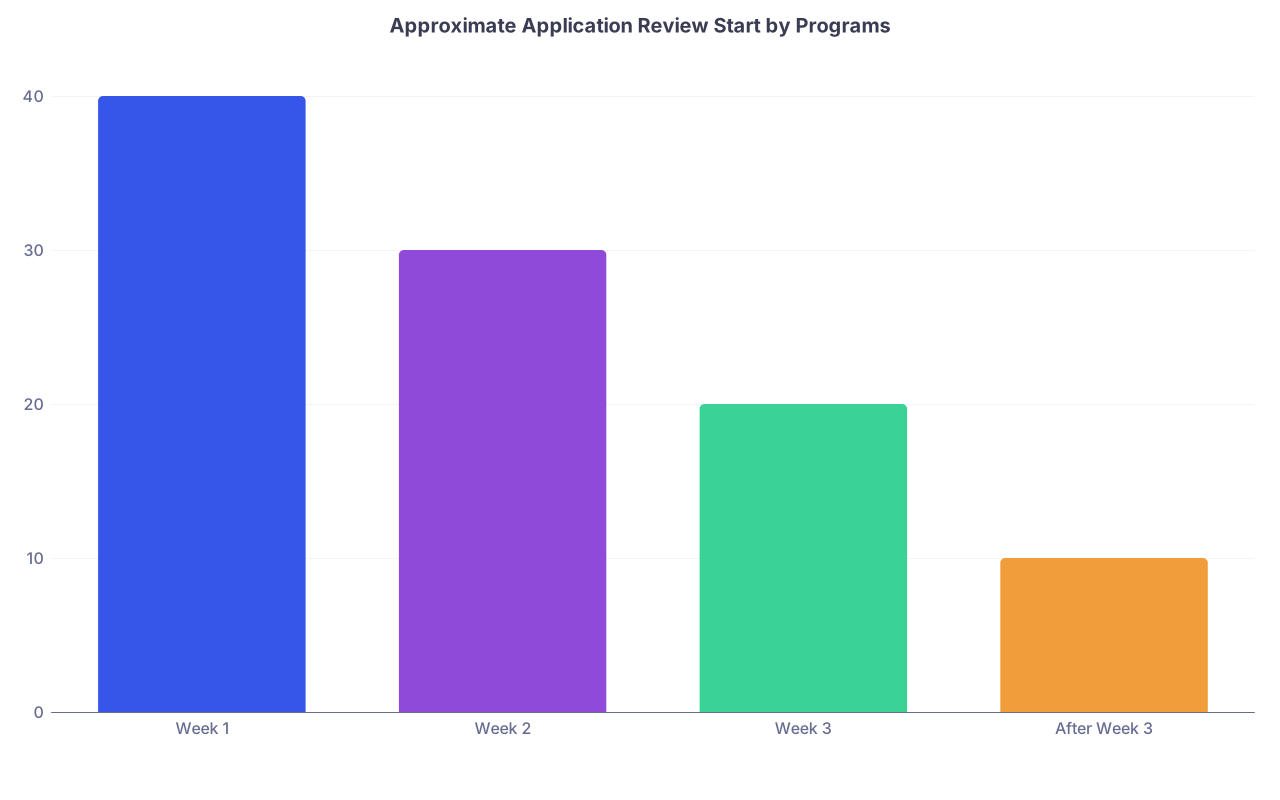
NRMP Program Director Survey: When they start and stop looking
The NRMP Program Director Survey (which you should actually read instead of just quoting) repeatedly shows:
- Most programs begin reviewing applications within the first 1–3 weeks after release.
- A significant chunk finish offering interviews in the first 4–6 weeks.
- Late applications are at a very obvious disadvantage.
| Category | Value |
|---|---|
| Week 1 | 40 |
| Week 2 | 30 |
| Week 3 | 20 |
| After Week 3 | 10 |
The rough pattern across multiple specialties:
- Being ready at or near the release date is good.
- Being in the first day vs the first week? Almost no meaningful difference for most programs.
- Being a month late? That’s a problem.
Directors’ actual behavior (not forum fantasies)
I’ve heard some version of this from real PDs in IM, EM, and peds:
“We don’t even open ERAS for a few days. We wait until MSPEs drop, then start reviewing complete apps.”
Or:
“Our coordinator filters by complete applications and US scores. We don’t care when you clicked submit inside that early window.”
Do some programs open on day one and start clicking through immediately? Yes.
Do they run a strict FIFO (first in, first out) system where the 100th application is doomed compared to the 5th? No. They use filters, sort by metrics, and batch-review.
Again: days and weeks matter. Minutes don’t.
The Dangerous Part of the Timestamp Obsession
The timestamp myth isn’t just wrong; it pushes people into actually dumb decisions.
I’ve watched students:
- Submit with a half-baked personal statement because “I have to hit midnight or I’m screwed.”
- Apply without updated Step 2 CK scores that would clearly help them, purely for “earlier timestamp.”
- Click submit before LORs arrived, creating a long gap before their application is considered complete.
All to gain an imaginary “advantage” in a queue that is not sorted with that level of precision.
Completion date > submission date
Programs care a lot more about when your application is actually reviewable:
- All required LORs in (or enough to look credible)
- MSPE uploaded
- USMLE/COMLEX scores visible
- Transcript in place
Many coordinators screen by “complete” status first. An early submission with missing core elements is functionally later than a slightly later submission that’s complete on day one of serious review.

Smart Timing Strategy: What Actually Matters
You want a rule of thumb? Here’s the boiled-down version.
1. Aim to be complete and polished by the time programs start real review
For most specialties and years this has meant:
- ERAS application submitted by or near the initial release date
- MSPE will auto-drop on the MSPE release date
- High-yield LORs uploaded by that MSPE date
- Step 2 CK in if your Step 1 is pass/fail or weak
If you hit that window, you are “early enough.” The micro-timestamp is irrelevant.
2. If you must choose, quality beats ultra-early
You’re choosing between:
- Submitting 2–3 days earlier with a weak personal statement and no updated Step 2, or
- Submitting a few days later (still within the first week or so) with a stronger, clearer story and better scores.
Every sane PD I’ve spoken to would pick the second applicant.
This is especially true for:
- IMGs and FMGs
- Applicants with below-average scores
- Applicants in competitive specialties (where marginal improvement in narrative or LORs actually changes your tier)
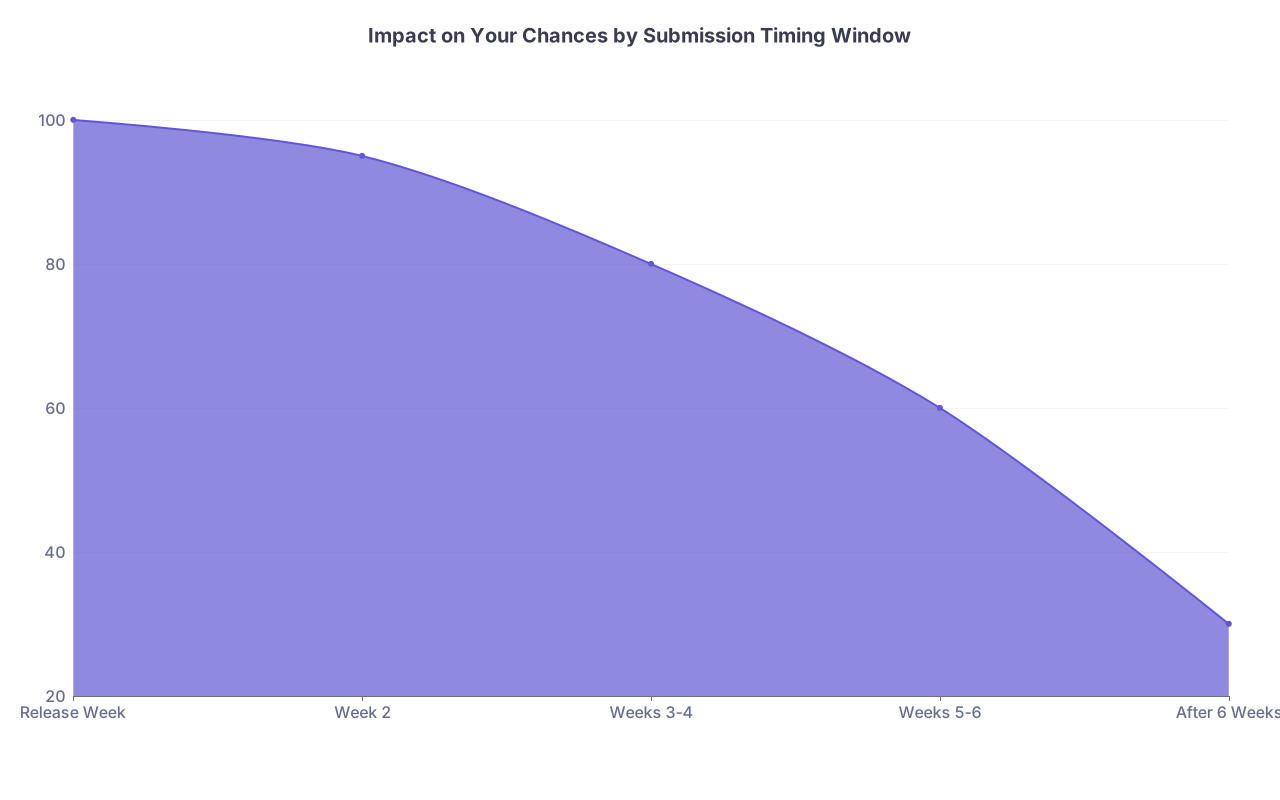
3. There is a soft cutoff window
Now let’s be honest on the other side. Timing does matter in broad strokes.
There are rough buckets:
| Timing Window | How Programs Typically See It |
|---|---|
| On/near release day | Ideal / standard early pool |
| Within first 2 weeks | Still early / normal review pool |
| Weeks 3–6 | Late-ish, but still reviewable |
| After ~6 weeks | Truly late, many interviews gone |
Do not let the timestamp myth lull you into thinking “as long as I was early that day I can relax; submitting a month later is the same.” It is not.
The real enemy isn’t missing the first minute. It’s missing the first wave.
Specialty Differences: Where Timing Really Bites
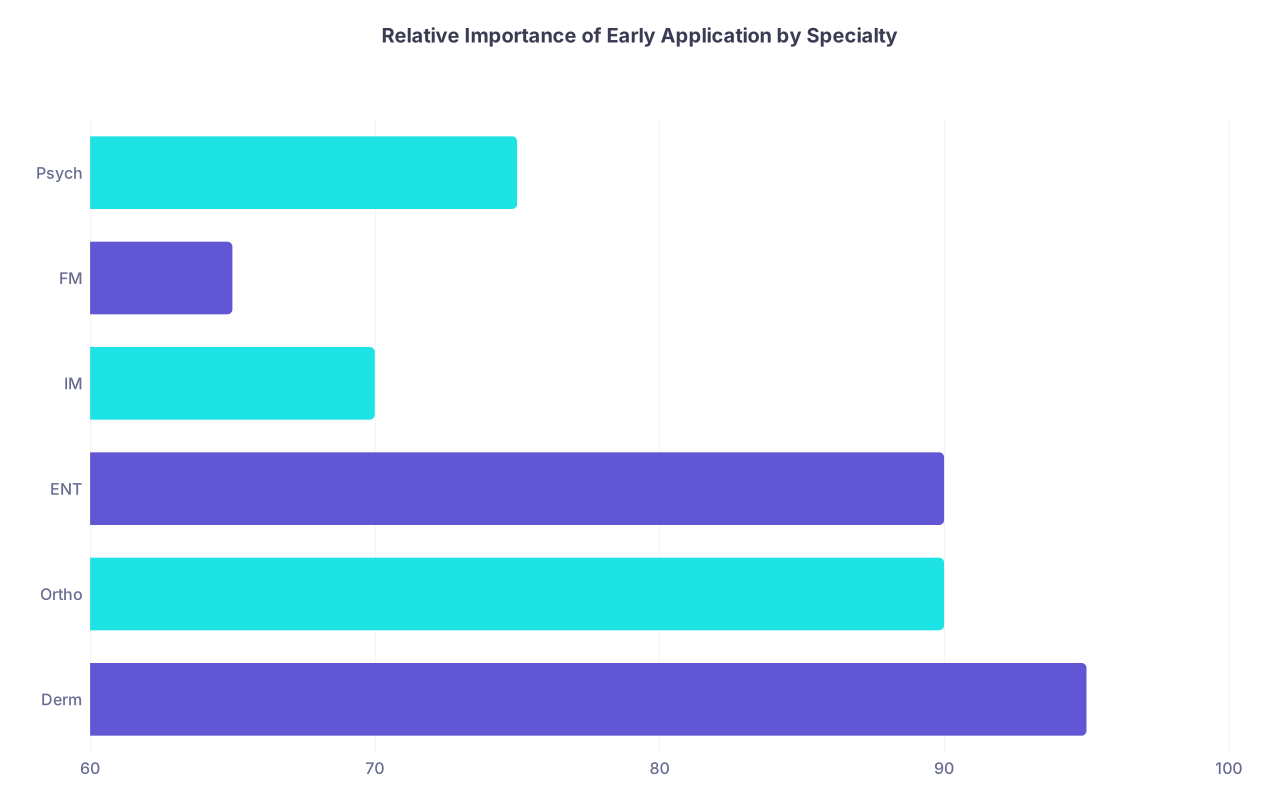
Not all specialties play by the same practical rules.
| Category | Value |
|---|---|
| Derm | 95 |
| Ortho | 90 |
| ENT | 90 |
| IM | 70 |
| FM | 65 |
| Psych | 75 |
This is a conceptual scale, not published data, but it matches what PDs and advisors see:
Hyper-competitive fields (derm, ortho, ENT, plastics):
Being in the first waves as a complete, polished app is crucial. But again, that’s days/weeks, not 12:01 vs 12:07.Broad-access fields (FM, IM, peds, psych):
The system is more forgiving. Being in the first 2 weeks versus first 2 hours is basically indistinguishable.Fields with supplemental apps (EM, IM, a few others):
The timing of the supplemental and program-specific components often matters more than the bare ERAS timestamp. Programs may not triage seriously until those pieces are in.

So, Do Programs “See” a Timestamp or Not?
Let me answer the exact question in plain language.
- ERAS tracks when you submit.
- Programs see an application received date and can sort/filter on it.
- On big release days, your specific hour or minute is lost in massive batches.
- No credible evidence shows programs micro-rank applicants by minute of submission.
- Almost all actual decision-making happens on: completeness, scores, school, LORs, MSPE, and overall fit.
You’re not being scored against another applicant because you clicked one hour later. You are being quietly relegated to the “late” pool if you submit weeks after most interviews have already been offered.
Practical Checklist: How Not to Lose to Timing Myths
Here is the sane, data-aligned way to think about ERAS timing:
- Target being fully ready and complete (minus MSPE, which is out of your hands) by the time ERAS first transmits to programs.
- If that means taking 2–5 extra days to fix terrible wording, correct errors, or wait for a clearly helpful Step 2 score, take those days.
- Do not waste a week “perfecting” tiny formatting details. Days do matter at the scale of weeks.
- Forget about midnight madness. Submit during a normal hour when you’re awake and clear-headed enough to review everything one last time.
- Focus on being complete in the first wave, not the first minute.
| Category | Value |
|---|---|
| Release Week | 100 |
| Week 2 | 95 |
| Weeks 3-4 | 80 |
| Weeks 5-6 | 60 |
| After 6 Weeks | 30 |
FAQ: ERAS Timing and Timestamps
1. If I submit a few hours after applications open, is that worse than submitting right at midnight?
No. There’s no meaningful advantage to being in the first few minutes or hours compared to sometime that same day or even within the first couple of days, as long as you’re complete when programs start real review.
2. Do programs see the exact time I clicked submit?
They see when your application was received in their system and can sort by date, but they are not grading you on a minute-level timestamp. They’re using date and completeness far more than exact time.
3. Is it better to submit slightly later with Step 2 CK included, or earlier without it?
If Step 2 will clearly strengthen your application (or rescue a weak Step 1/pass-fail situation), it’s usually better to wait a few days and apply with the better score, as long as you’re still in that early-window timeframe.
4. What if my letters aren’t all in by the application release date?
You can submit ERAS without all letters, but programs heavily favor complete applications. If waiting a couple of days gets your key letters in and you still land in the first week or two, that trade-off is often worth it.
5. How late is “too late” to submit ERAS and still be realistic?
Once you’re beyond 4–6 weeks after applications first reach programs, your odds drop sharply in many specialties because interview slots are already filled or mostly spoken for. At that point, the problem isn’t timestamp; it’s that the party has already started without you.
Two key points to walk away with:
- Programs don’t care about your exact submission minute; they care about whether you’re complete and in the early waves of review.
- Obsessing over timestamps is a distraction; use that energy to improve the actual content of your application and hit the right week, not the right second.