
The biggest mistake residents make with board prep isn’t laziness. It’s timing.
You do not need to “study for boards” every day of residency. But you absolutely do need a clear, PGY-specific plan or you’ll end up cramming exhausted and angry six months before the exam.
Here’s the answer you’re looking for:
- Casual prep starts in PGY‑1.
- Real, structured prep starts in PGY‑2 (for most).
- Serious, exam-focused prep ramps up 6–9 months before test day, regardless of specialty.
Let’s break it down by PGY level and exam type, then I’ll give you concrete weekly hour targets and what to use.
First, know which exam you’re actually talking about
“Boards” means different things depending on your situation. You need to anchor timing to the right test.
| Path | Exam | Typical Timing |
|---|---|---|
| Internal Medicine | ABIM Certifying Exam | Summer after PGY-3 |
| Pediatrics | ABP Certifying Exam | After PGY-3 |
| General Surgery | ABS Qualifying Exam | After PGY-5 |
| Anesthesiology | BASIC exam | End of CA-1 (PGY-2/3) |
| Family Medicine | ABFM | Final year of residency |
If you’re in a specialty with:
- An early in-training-like board (e.g., Anesthesia BASIC) → “serious prep” comes earlier.
- A big one-time certifying exam at the end (IM, Peds, FM, Neuro, etc.) → “serious prep” is heavily PGY‑3+.
Your first step: know your exact exam date window and the pass rate at your program. Ask seniors, your PD, or chief. The lower the historical pass rate, the earlier you should move from casual to serious prep.
PGY‑1: Light, foundation-building — not “serious” board prep
PGY‑1 is not for grinding UWorld blocks at midnight. You’re just trying not to drown.
What you should do in PGY‑1:
Use an in-training exam as your compass
Every major specialty has one: ITE, IABSITE, ITE Anesthesia, etc. This is your free diagnostic board simulation.- Before: 1–2 months prior, lightly review high-yield topics (not to “ace” it, but to preview what matters).
- After: actually read the score report. Which subspecialties were weak? That’s your study list for the next 6–12 months.
Anchor learning to real patients
Let the wards be your textbook.- New CHF admission? Read a 5–10 minute summary from a quality resource (UpToDate, Pocket Medicine, Emma Holliday’s IM notes, etc.).
- See the same diagnosis twice? Look it up twice. Repetition is how it sticks.
Do question-based learning, but in small doses
Aim for 20–40 questions per week, max, just to get comfortable with board-style thinking.Good uses of your time in PGY‑1:
- 5–10 questions a couple times a week on topics relevant to your rotation
- Writing 1–2 flashcards per day for truly new or confusing concepts
- Watching short, high-yield videos when post-call
Bad uses of your time in PGY‑1:
- “I’m going to finish all of UWorld this year.” No, you’re not, and you’ll burn out trying.
- Giant abstract board-prep schedules while you’re still figuring out how to admit a patient properly.
Serious board prep? No. PGY‑1 is about competence and pattern recognition, not full exam mode.
PGY‑2: This is when real structure should start
PGY‑2 is where people split into two groups:
- Those who start structured, modest board prep
- Those who say “I’ll get serious next year” and end up cramming in a panic
If you’re in a 3-year residency (IM, Peds, FM, EM, Neuro):
PGY‑2 is when you start “Phase 1” real prep — low-intensity but consistent.
If you’re in a longer residency (Surgery, Ortho, OB/GYN, etc.):
PGY‑2 is still early, but you should treat it as in‑training exam optimization — building habits and base knowledge that make future prep way easier.
What “serious but sustainable” looks like in PGY‑2
Target:
- 2–4 hours/week of board-directed studying when not on brutal rotations
- 10–20 questions on most days off, 5–10 on lighter weekdays
- Rotate systems/sections over 2–3 month blocks
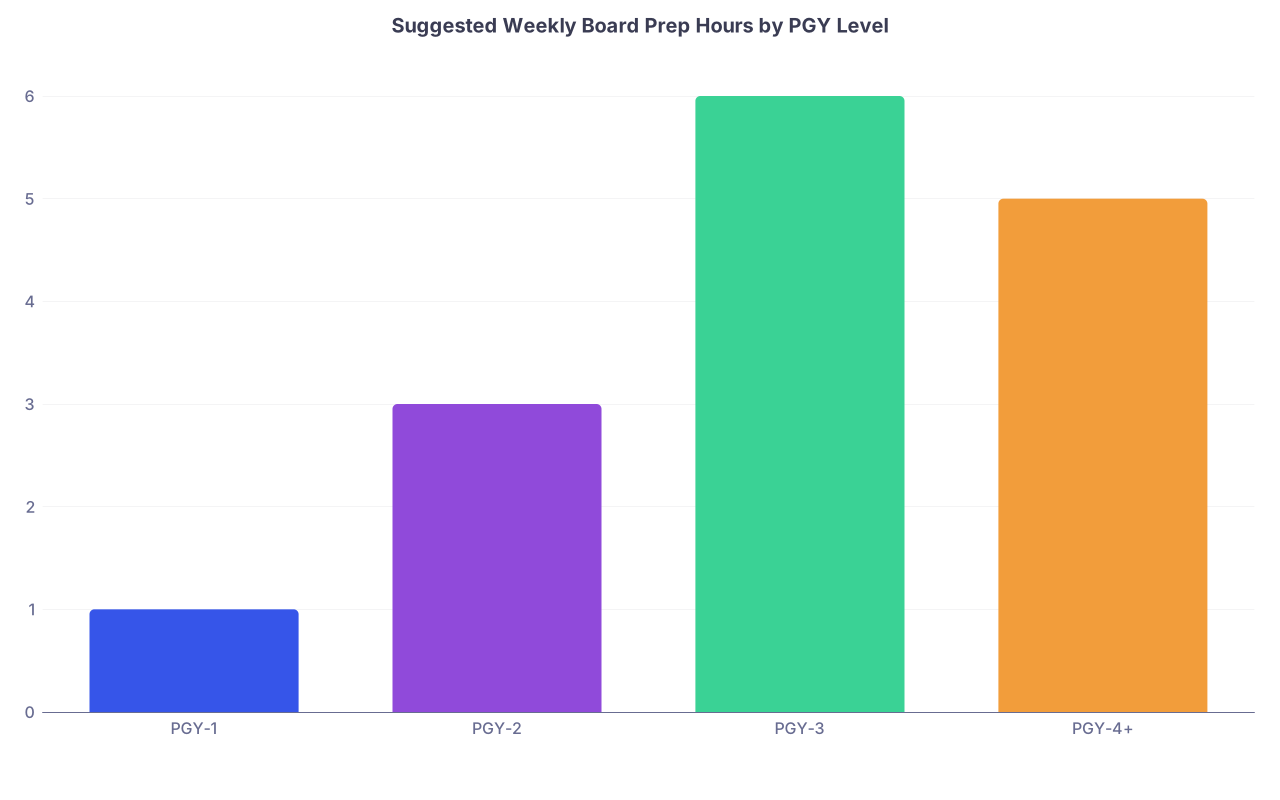
| Category | Value |
|---|---|
| PGY-1 | 1 |
| PGY-2 | 3 |
| PGY-3 | 6 |
| PGY-4+ | 5 |
Concrete example for an IM PGY‑2 on a manageable month:
- Mon/Wed: 10–15 board-style questions (timed, mixed) → review explanations
- Sat or Sun: 1–2 focused chapters or 1–2 short video modules on your weakest system
- Ongoing: make micro-notes or flashcards only for things you miss repeatedly
For Anesthesiology:
- BASIC exam hits end of CA‑1 (often PGY‑2/3). You don’t get the luxury of waiting.
- From the start of CA‑1: review book + ~20 questions several days per week. By 6 months out, you’re basically in “serious prep” already.
Key idea: PGY‑2 is where you stop relying solely on “learning from work” and start doing intentional question-based prep.
PGY‑3 in 3-year programs: Your real board-prep year
For IM, Peds, FM, EM, Neuro and similar 3‑year residencies, PGY‑3 is where serious board prep becomes non-negotiable.
If the boards are within 6–12 months, your mindset changes from “I’ll get there eventually” to “this is an exam I am training for.”
Timeline: When to ramp up PGY‑3 prep
Assume boards are in August after residency graduation:
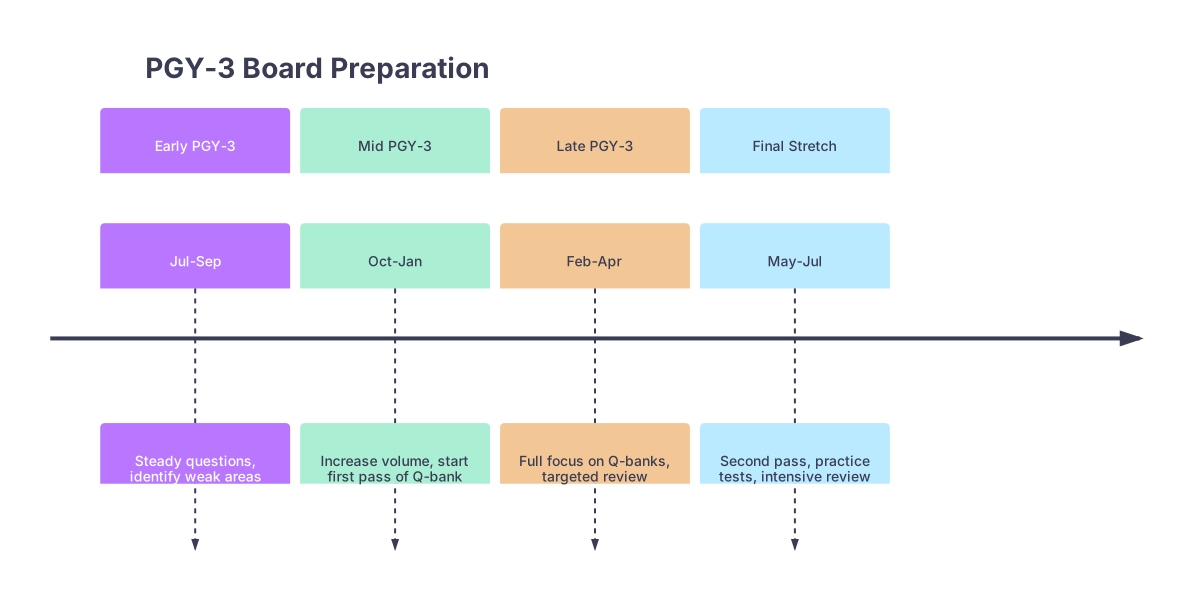
| Period | Event |
|---|---|
| Early PGY-3 - Jul-Sep | Steady questions, identify weak areas |
| Mid PGY-3 - Oct-Jan | Increase volume, start first pass of Q-bank |
| Late PGY-3 - Feb-Apr | Full focus on Q-banks, targeted review |
| Final Stretch - May-Jul | Second pass, practice tests, intensive review |
12 months out (early PGY‑3):
3–4 hours/week; 10–20 questions on most non-call days.
Goal: expose yourself to breadth and find your truly weak systems.9 months out:
You should be in a regular Q-bank rhythm. Ideally, you’ve done several hundred questions, not “I’ll start next month.”6 months out:
This is where “serious” becomes obvious:- 5–8 hours/week on average
- Set a question target: e.g., finish one full major Q-bank by 3 months before the exam
- Full-length practice exams start to matter
Realistic pattern at 6 months out:
- 15–20 questions on 3–4 weekdays → review explanations thoroughly
- 1 half-day every 1–2 weeks: mini-mock exam (40–80 questions) + focused content review
What if your ITE was bad?
If your PGY‑2 or early PGY‑3 in-training exam score was below the program’s comfort zone, you pull everything earlier:
- Start true “serious” prep 9–12 months before the exam, not 6
- Increase to ~5 hours/week earlier
- Add a second Q-bank or a more structured review resource
I’ve seen residents go from 20th percentile ITE to passing boards comfortably — but only when they took the year-long approach, not the last-minute one.
PGY‑4+ or longer programs: Shift from survival to exam intent
For General Surgery, Ortho, OB/GYN, Neuro, etc., you’ve got:
- Annual in‑training exams that actually predict board performance
- A final big qualifying or certifying exam after training (often written, then oral)
You do not need full-on board mode for 3–5 years straight. But you also cannot ignore exams until the very end.
General pattern that works for longer programs
PGY‑1–2:
- Same as above: focus on foundational knowledge, light Qs, in-training exam feedback.
PGY‑3:
- Increase structure: 2–4 hours/week on average
- Use your in‑training curriculum + a Q-bank or targeted review books
- Aim to be at or above national mean on in‑training by end of PGY‑3
PGY‑4–5 (or final 1–2 years):
- Serious board prep starts ~9–12 months before your written qualifying exam.
- Question volume and structured reading go up.
- Protected time becomes more important — ask upper levels how they scheduled this.
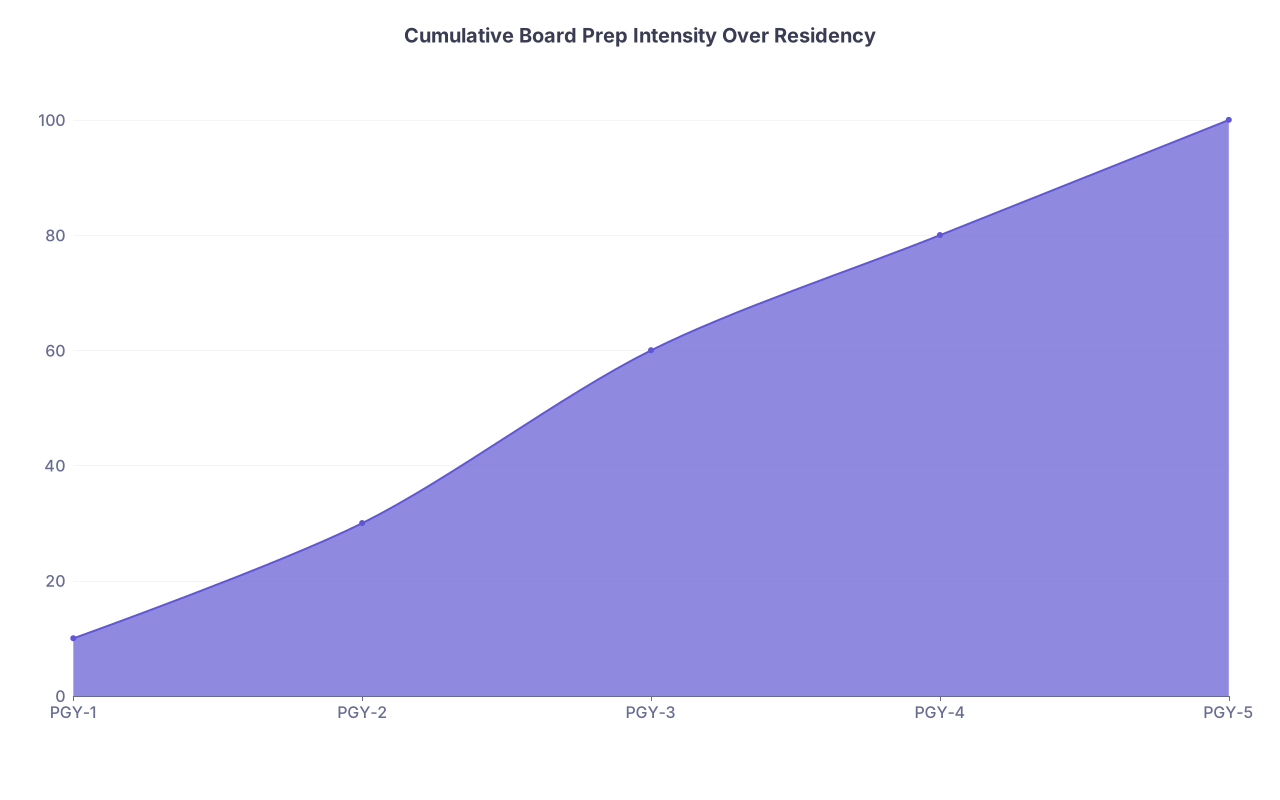
| Category | Value |
|---|---|
| PGY-1 | 10 |
| PGY-2 | 30 |
| PGY-3 | 60 |
| PGY-4 | 80 |
| PGY-5 | 100 |
Remember, in surgical fields the ABSITE / in-training essentially is your early board prep. Treating it casually until your chief year is how people end up doing fellowship remediation instead of celebrating.
How many questions and hours do you actually need?
People obsess over “the perfect number.” There isn’t one, but I’ll give you realistic ranges that work.
Reasonable Q-bank targets
For a 3-year residency, single big exam (IM, Peds, FM):
- One major full Q-bank: ~1,500–2,500 questions
- Optional second, smaller bank or curated high-yield review: 500–1,000 questions
For Anesthesia BASIC, Emergency Medicine, Surgery ABSITE/boards:
- Similar order of magnitude, adjusted for specialty and available resources.
This is completely doable if spread out:
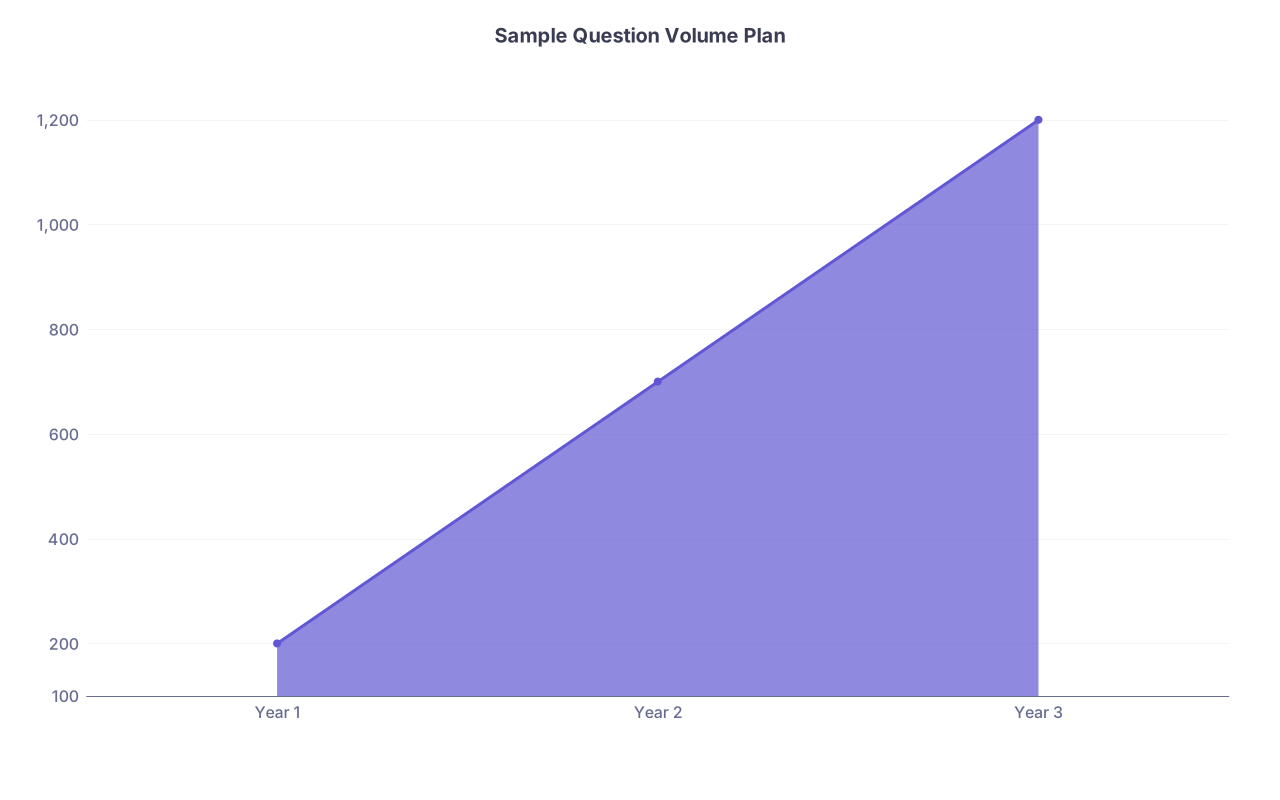
| Category | Value |
|---|---|
| Year 1 | 200 |
| Year 2 | 700 |
| Year 3 | 1200 |
- PGY‑1: 100–300 questions (light)
- PGY‑2: 500–800 questions
- PGY‑3: 800–1,200+ focused, exam-intent questions
Weekly time by PGY level (average, over a year)
- PGY‑1: ~1 hour/week board-directed (questions + quick reading)
- PGY‑2: ~2–3 hours/week during reasonable months
- PGY‑3 (or final year): ~4–8 hours/week in the final 6–9 months
You don’t do this perfectly every week. You’ll have ICU months where you do almost nothing, then ambulatory or elective months where you double up. That’s normal.
How to adapt for different schedules and burnout risk
The right timing isn’t just PGY level, it’s also what your life looks like that year.
Here’s the decision framework I’d use if we were talking face to face:
What does your last year look like?
- Heavy service, lots of nights? Start serious prep earlier (9–12 months).
- More electives/clinic? You can shift more of the load into that year, but still start 6+ months out.
How bad was your last standardized exam performance?
- Below average on USMLE/COMLEX and in-training → earlier and steadier.
- Historically strong test-taker → you can compress slightly, but don’t get cocky. Boards are still a different beast.
What’s your program’s culture?
- Some programs build formal board prep into noon conferences and senior year. Great. You still need independent questions.
- Other programs pay lip service and then dump service load on seniors. In those places, starting PGY‑2–3 matters even more.
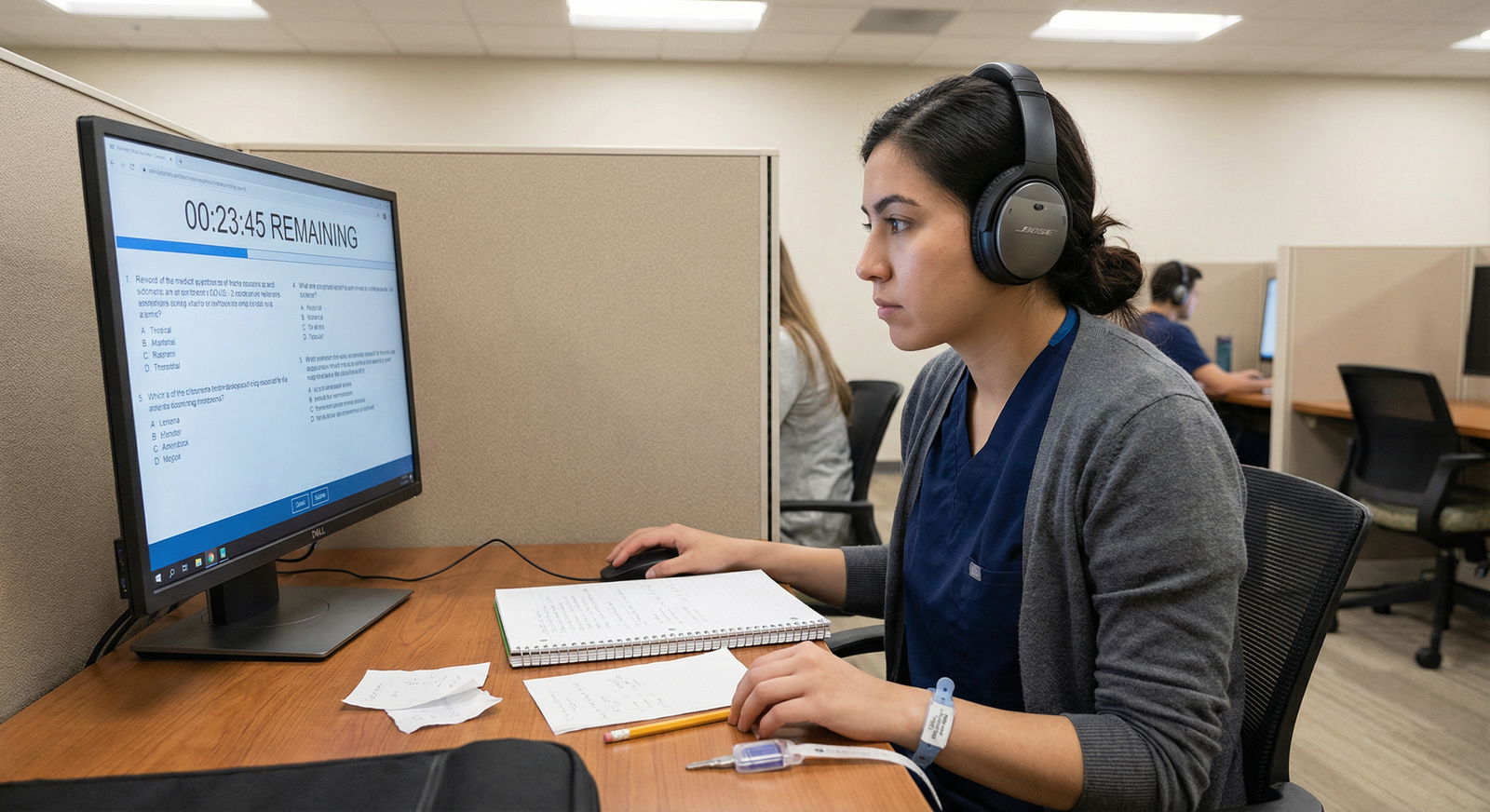
If you find yourself 4–6 months from exam day, exhausted, and way behind on prep, your priority shifts:
- Stop pretending you’ll do “a bit every day.” You won’t.
- Carve out fixed, protected blocks each week (half-days off, specific evenings).
- Focus on one primary Q-bank, plus 1–2 concise references. Drop everything else.
What resources actually count as “serious” prep?
Cut out the noise. For almost every specialty, serious board prep means:
- One high-quality Q-bank that mirrors your exam
- One concise review book/video series that hits the breadth of testable material
- Your in-training exam review to prioritize weak areas

Things that are nice but optional: podcasts, long-form textbooks, random PDFs from Dropbox drives. Use them if they make you efficient, not as an excuse to avoid questions.
Fast specialty-specific notes
This could be a book, but here’s the 10,000‑foot version:
Internal Medicine / Peds / FM / Neuro:
- PGY‑1: light questions + ward-based learning
- PGY‑2: structured Q-bank use, 2–3 hr/week
- PGY‑3: ramp up 6–9 months pre-exam, aim to finish at least one full Q-bank
Anesthesiology (BASIC):
- CA‑1: serious prep basically all year, 3–6 hr/week on average
- BASIC is not an exam you can wing. Q-bank + review text from month 1.
Emergency Medicine:
- Annual in‑training + boards at the end.
- R2: start consistent question use.
- R3: increase to serious levels ~6–9 months prior to ABEM Qualifying Exam.
Surgery / OB/GYN / Ortho:
- Treat ABSITE/in-training as progressive board prep.
- By PGY‑3, you should be studying each year with ABSITE in mind.
- Final year before written boards: heavy emphasis on Qs + structured reading, 6–9 months out.

If your seniors all tell you “I wish I’d started 6 months earlier,” believe them.
Quick summary: When to start serious board prep by PGY level
Here’s the clean version.
PGY‑1:
- Do not try to be in full board mode.
- Learn from patients, do some questions, take in-training seriously as a diagnostic.
PGY‑2:
- Start structured but low-intensity prep.
- 2–3 hours/week; consistent use of at least one Q-bank; respond to in-training weaknesses.
PGY‑3 (or final year of a 3‑year program):
- Serious prep starts 6–9 months before exam day.
- 4–8 hours/week on average, especially in the final stretch.
- Goal: finish at least one big Q-bank + targeted review of weak systems.
PGY‑4+ (longer programs):
- Use PGY‑3/4 to get your in-training score to or above national mean.
- Full board-mode 9–12 months before your written boards, especially if service is heavy.

If you remember nothing else, remember this:
Assume you’ll be more tired, more burned out, and busier in your final year than you expect. Start serious prep just a little earlier than feels comfortable, spread the load out, and let the in-training exam show you where to aim.
FAQ (5 questions)
1. How many months before my boards should I start “serious” studying?
For most residents, 6–9 months before your scheduled exam is the sweet spot for serious, structured prep. If your prior standardized test performance or in-training scores are weak, start at the 9–12 month mark. Anything less than 3–4 months is a rescue job, not a plan.
2. Can I pass my boards if I only start studying in the last 3 months?
Yes, some people do. Usually strong test-takers in lighter programs, with prior knowledge and very disciplined schedules. But it’s a gamble. You’ll need high weekly hours (10+), very focused resources, and no major life disasters. Most residents are safer treating 3 months as the final intensive phase, not the entire prep.
3. Do I really need to use a Q-bank, or can I just read review books?
You need a Q-bank. Boards are a question-based exam. Reading alone doesn’t train your brain to parse stems, handle time pressure, and recognize distractors. Use review books or videos to fill knowledge gaps, but let questions drive what you study, not the other way around.
4. How do I balance board prep with 80-hour weeks and call?
Accept that your studying will be cyclical, not perfectly consistent. On ICU or night-float months, your priority is survival and patient care. Do the bare minimum: a handful of questions here and there. On lighter rotations and electives, double or triple your board time. The average over months matters more than weekly perfection.
5. What if my program doesn’t offer much formal board prep?
Then you build your own structure. Grab: one good Q-bank, one concise review resource, your in-training score report, and a calendar. Map out: how many questions to finish by 3 months pre-exam, how many hours per week on average, and which months you’ll push harder. Ask seniors who passed recently exactly what they used and how they scheduled it. Copy what works, not what sounds impressive.
Key points:
Start light in PGY‑1, structured in PGY‑2, and truly serious 6–9 months before your exam in your final years. Let in-training exams be your early warning system, and make question banks the backbone of your prep — not an afterthought.