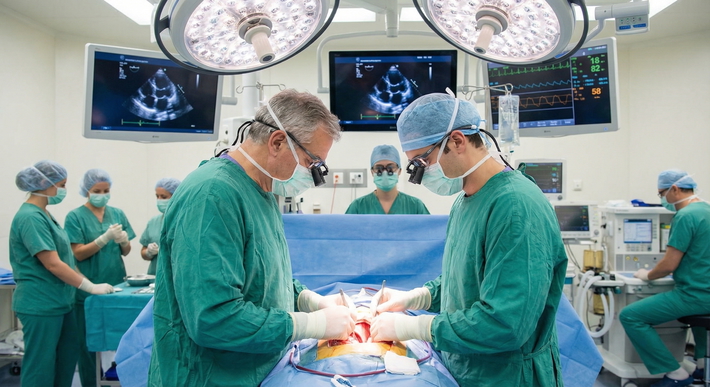
The surgical match does not care that your home program is low volume. It only cares whether you found ways to get high‑quality experiences anyway.
If your home general surgery program is small, slow, or weak on case volume, you are starting from behind. Not doomed. But behind. The students who match most competitively out of these environments do not wait for their school to fix it. They build their own ecosystem.
Here is how you do that, step by step.
Step 1: Get Clear On What You’re Competing Against
Before you fix a weak home environment, you need to understand what a strong one looks like.
At a high-volume home general surgery program, students get:
- Frequent early OR exposure
- Several strong surgical mentors with national reputations
- Built-in sub-internships (sub‑Is) with high case counts
- Tons of clinical research projects already organized
- Name‑brand letters without much hunting
You may have:
- Limited OR days or long stretches of “floor only”
- Attendings who are good clinicians but not well-known academically
- Few or no residents
- Minimal or disorganized research infrastructure
- Passable but not standout letters if you stay local
So the job is simple to describe and harder to execute: you must manufacture, outside your home program, what other students get automatically inside theirs.
Let me be concrete about what top surgery programs actually look for.
| Category | What Strong Applicants Typically Show |
|---|---|
| Clinical Performance | Honors or near-honors on surgery and sub-Is |
| Letters of Rec | 2–3 strong letters from known, academic surgeons |
| Research | At least some surgical or outcomes research, 1+ pubs |
| Commitment to Field | Multiple rotations, electives, or away rotations |
| Fit & Maturity | Strong interviews, teamwork, coachable demeanor |
If your home program cannot give you enough volume, letters, or research, you will get them elsewhere. Here is the playbook.
Step 2: Extract Every Drop From Your Home Program
You do not abandon your home program. You max it out, then supplement.
2.1 Become “The Surgery Person” Locally
Your goal: every surgeon in your building should know, “That student really wants gen surg.”
Do this:
Meet the Program Director early (M3 start or earlier).
- Email: short, respectful, specific.
- Subject line: “MS3 interested in surgery – seeking advice.”
- Ask:
- Which surgeons are most involved in teaching?
- Who is active in research and open to students?
- How do students from here usually match in surgery?
Show up in the OR more than required.
- On surgery clerkship, ask the chief: “On any days when cases are light, is there another room I can scrub into?”
- Come in on one or two mornings a week before required time to pre-round or scrub additional cases. Do not announce it. Just do it consistently.
Volunteer for the less glamorous work.
- Weekend rounds
- Late admissions or consults
- On-call nights shadowing senior residents This builds reputation fast in a smaller program. People talk: “That student stays late, wants to learn.”
Ask for deliberate feedback.
- Mid-rotation: “Can you be blunt – if I were a sub‑I applying to your program, what would I need to improve to be top tier?”
- Then fix those things visibly.
You want your home program letters to say: “Despite limited volume here, this student aggressively sought extra opportunities and performed at the level of an intern.”
2.2 Build At Least One Strong Home Letter
You probably need 1–2 letters from your home institution even if you plan to match elsewhere. The trick: choose the right person and set them up to see your best work.
Target surgeons who:
- See you repeatedly (core clerkship, sub‑I, research, call nights)
- Are known to write detailed letters
- Are at least somewhat connected regionally or academically
Then:
- Tell them early you hope to earn a strong letter.
- Ask, “What would you need to see from me to feel comfortable writing a very strong letter?”
- Execute on that list. Relentlessly.
If your only option is a community surgeon, that is still usable if the content is specific, detailed, and enthusiastic. Generic letters are death; specific local letters are fine.
Step 3: Create Case Volume Somewhere Else
If your home OR is slow, you must go where the cases are. That means away rotations and external electives.
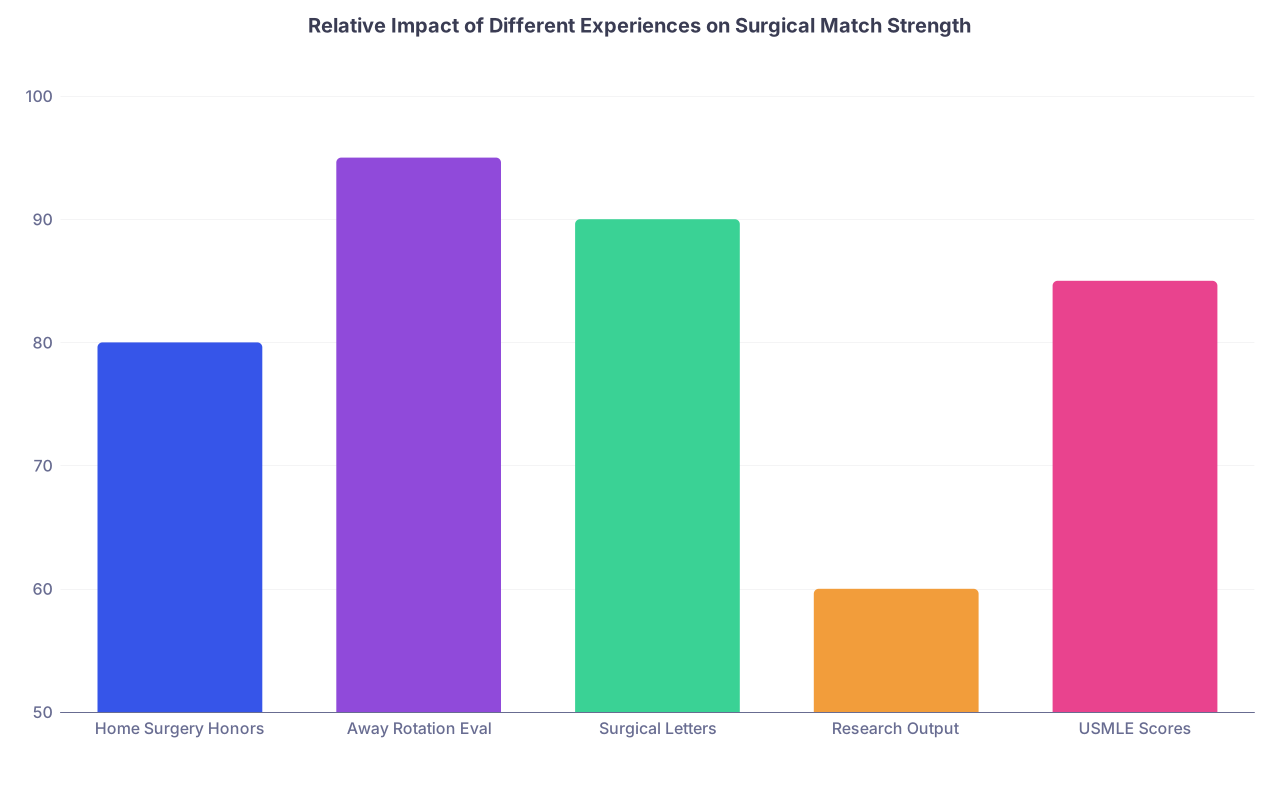
| Category | Value |
|---|---|
| Home Surgery Honors | 80 |
| Away Rotation Eval | 95 |
| Surgical Letters | 90 |
| Research Output | 60 |
| USMLE Scores | 85 |
3.1 Plan Your Away Rotations Strategically
Do not shotgun random places. You need purposeful away rotations:
Aim for:
- 1–2 away rotations at solid academic general surgery programs
- At least one in the region where you realistically want to match
- At least one program that regularly takes outside rotators for residency
Timeline:
- Early M3: identify 8–10 realistic programs.
- Mid M3: talk with dean or advisor about your competitiveness band (scores, grades).
- VSLO opens (usually spring): submit early. First-come often matters.
How to choose targets if you are from a low-volume shop:
Look at where your recent alumni matched.
If 3 people in 5 years matched at Midwest University Hospital, that is a known quantity. Easier door to push on.Do not overreach across the entire list.
A mid-tier applicant doing away rotations only at powerhouse names (MGH, UCSF, Hopkins) is sabotaging themselves. Mix:- 1 aspirational program
- 2 realistic programs
- 1 safety or regional program
Align with your likely geographic preference.
Programs care more about students with a plausible reason to stay in their city or region (family, partner, med school, undergrad).
3.2 How to Turn an Away Rotation into “Case Volume + Letter”
On an away, your two jobs:
- Look like an intern who is not on payroll yet
- Make one attending think: “I would be happy if this person matched here”
Daily behavior checklist:
- Be the earliest student there. Every day.
- Own 2–4 patients like an intern:
- Know every lab, drain, output, plan before rounds.
- Write clean, concise notes without being asked.
- In the OR:
- Show up early enough to help position and prep.
- Know the indication, anatomy, and 3 key steps of every case.
- Ask 1–2 thoughtful questions. Not 20.
- Never disappear at 3 pm unless told, “You can go.”
If the team stays, you stay.
At week 2–3, if things are going well, say to the PD or key attending:
“I am very interested in your program. If I keep working at this level or better, would you feel comfortable writing a strong letter for me?”
Force the issue. Early enough to change behavior if needed. If they hesitate, redirect toward another faculty who seems more enthusiastic about you.
Step 4: Build Surgical Research Outside Your Backyard
Low-volume clinics usually mean low research output. That does not mean you get a pass. It means you build research differently: multi-institutional, remote, or outcomes-based work.
4.1 Find Research That Does Not Care Where You Are
Here is what I have seen work repeatedly:
National collaborative groups.
- Examples: multi-institutional quality collaboratives, ACS committees, specialty interest groups.
- Many have remote-friendly chart review, registry analysis, or database projects.
- Action: email published residents/fellows listed on collaborative papers and ask bluntly:
“I am a rising MS3 at a smaller program interested in general surgery. Are there any ongoing projects where an extra pair of hands would help with data collection, chart review, or manuscript preparation?”
Remote mentorship with a research-heavy surgeon at another institution.
- Look up faculty whose work you like (trauma, colorectal, HPB, etc).
- Email with a specific ask:
- One paragraph on you
- One paragraph on why their work interests you
- One line: “Do you have a project where I could start with data collection or a defined sub-analysis?”
Retrospective studies at your own hospital. You may not have 20 Whipple procedures a month, but you probably have:
- Appendicitis
- Cholecystitis
- Hernias
- Trauma consults
- Surgical infections
These are enough for:
- QI projects
- Small retrospective series
- Workflow or protocol audits
Stepwise:
- Identify a clinical question with an attending.
- Confirm there is data to answer it.
- Get IRB support (often more tedious than hard).
- Offer to do:
- Chart review
- Data entry
- First draft of abstract/manuscript
4.2 What “Enough” Research Looks Like
No, you do not need 15 publications.
For a typical general surgery applicant from a low-volume home program, a realistic and solid goal:
- 1–2 abstracts/posters at a regional or national surgical meeting
- 1–3 PubMed-indexed outputs (case report, retrospective review, outcomes work)
- Clear surgical theme (not scattered across dermatology, psych, and ENT)
Programs reading your ERAS will think: “This student had fewer built-in resources but still found ways to contribute meaningfully to surgery.”
Step 5: Fix Your Letters of Recommendation Strategy
Weak programs often produce weak letters: short, generic, repetitive. You cannot afford that.
You want:
- 3 surgical letters total, typically:
- 1 from your home institution
- 2 from academic surgeons at away or research institutions
- Optionally 1 non-surgical letter (medicine, ICU, etc) if it is outstanding
5.1 How to Engineer Strong External Letters
On your aways and research collaborations:
Flag your intentions early.
- “If I perform at a very high level, I would be honored to earn a letter from you. What specifically would you need to see?”
Create a “letter packet” for them. Within 24 hours of asking:
- Updated CV
- Personal statement draft
- USMLE/COMLEX scores
- A 1-page “highlight sheet”:
- 5–7 bullet points of things you did with them (cases, projects, call shifts, presentations) This makes it easy for them to write concretely strong letters.
Follow up without being annoying.
- If they agree to write, send one polite reminder 2–3 weeks before ERAS opening if it is not yet submitted.
5.2 What You Want Your Letters to Actually Say
Content > name brand.
Kill phrases:
- “Hardworking and pleasant”
- “Will be a competent resident”
Gold phrases:
- “Functioned at the level of an intern on our service”
- “Among the top 10% of students I have worked with in the last several years”
- “I would be delighted to have this student as a resident at our program”
You cannot see the letters. But you can influence the inputs that produce them.
Step 6: Use Your Application to Reframe the Low-Volume Issue
Programs will see your school and home program. Some will know it is small. A few will discount you. That is life.
You counter that by explicitly owning it in how you present yourself.

6.1 Personal Statement: Turn Constraint Into Asset
Do not whine. Do not blame your school. You are not a victim; you are a problem-solver.
One paragraph can do a lot of work:
- Acknowledge the constraint in one sentence.
- Spend the rest describing how you responded.
Example skeleton:
“Training at a smaller program with limited surgical volume meant that observing from the sidelines was an easy default. I refused that path. I sought additional OR time, joined weekend rounds by choice, and arranged outside rotations at higher-volume centers, where I could test myself against the pace and complexity of academic surgery…”
The implied message: “If I did this with fewer resources, imagine what I will do with yours.”
6.2 Experiences Section: Show Initiative Repeatedly
Pattern you want them to see:
- “Identified gap” → “Took initiative” → “Created opportunity” → “Contributed meaningfully”
For each major entry (research, leadership, clinical work), briefly highlight:
- What was missing or limited
- What extra step you took
- What came out of it (abstract, project launch, quality improvement)
Programs like people who do not wait for perfect conditions.
Step 7: Build a Coherent School List That Matches Reality
The worst move from a low-volume home program is a delusional application list.
You are not trying to “prove everyone wrong.” You are trying to match.
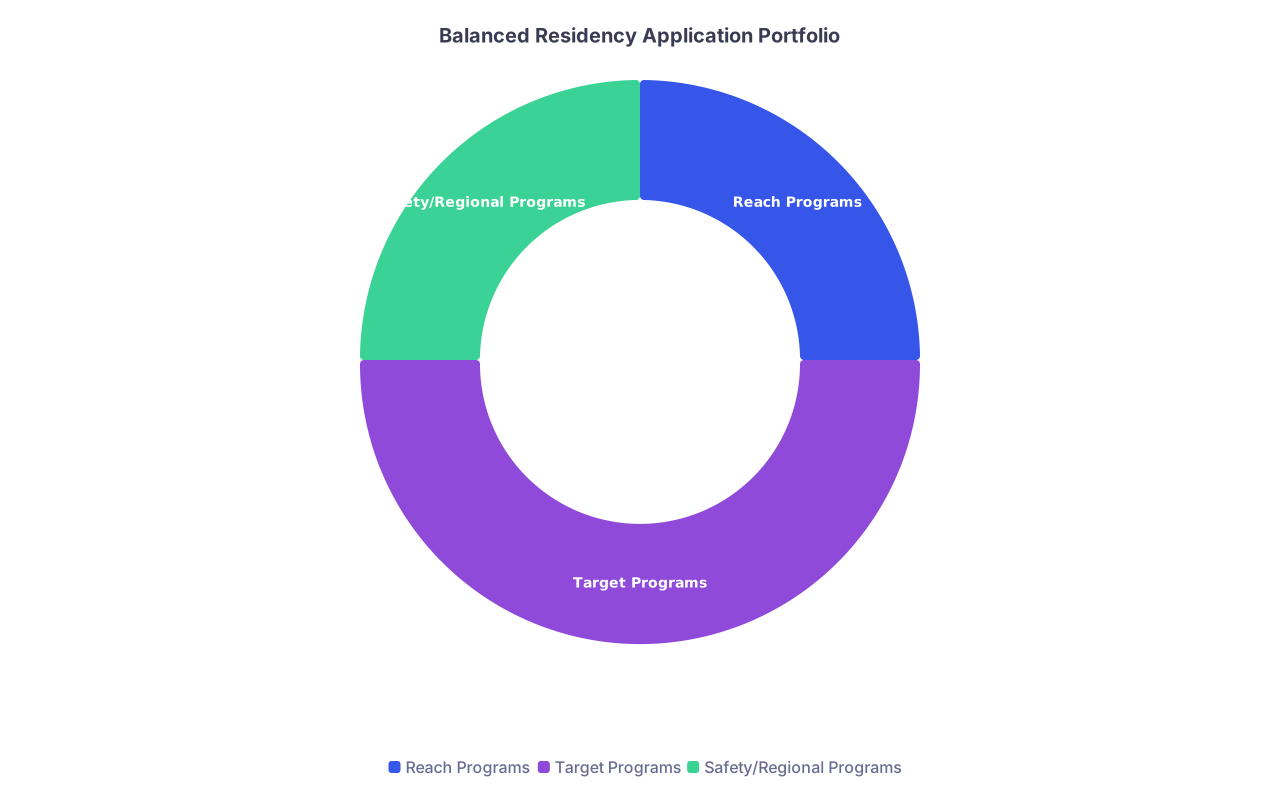
| Category | Value |
|---|---|
| Reach Programs | 25 |
| Target Programs | 50 |
| Safety/Regional Programs | 25 |
Rough structure for a typical general surgery applicant (not superstar, not red-flag):
- 20–30 target programs where your metrics are near their averages
- 10–15 “safer” programs, including community and lower/mid-tier academic centers
- 5–10 reach programs (mostly if you have strong step scores and some research)
If your school historically matches 1–3 per year in surgery, ask:
- Where did they go?
- Which programs have taken multiple graduates?
That is your realistic foundation. Then add others that fit your geography and profile.
Step 8: Fix Your Day-to-Day Learning So You Do Not Look “Small”
The hidden problem of a low-volume environment is not just numbers. It is exposure. You might not see enough:
- Complex pathologies
- High-intensity call
- Big index cases
You cannot fake experience, but you can fix your knowledge and mindset.
8.1 Self-Study Like a Resident, Not a Student
Pick 1–2 core surgery texts or resources and actually work through them:
- For breadth: a standard surgery shelf resource (Pestana, OnlineMedEd surgery, etc.)
- For depth: a surgical handbook used by residents (e.g., “Surgical Recall,” “Abernathy’s Surgical Secrets,” or your program’s preferred manual)
Routine:
- 30–60 minutes per day of focused surgical reading during your clinical year.
- Tie reading to patients and cases you saw that day.
8.2 Find Extra ORs and Clinics Creatively
If your home gen surg volume is low, look laterally:
- Vascular surgery
- Trauma
- Colorectal
- Surgical oncology
- Transplant (if available)
- Even OR-heavy specialties like ENT or ortho for basic OR skills and workflows
Ask attendings:
“On days when my general surgery duties are complete, is there a service where an extra set of hands in the OR would be useful?”
You are training your OR instincts even if the specific case types differ.
Step 9: Manage the Narrative in Interviews
Eventually you sit across from a PD or faculty and they think: “Small school. Low volume. Does this applicant actually know what busy surgery is like?”
Your answer must be calibrated: honest, but confident.

| Step | Description |
|---|---|
| Step 1 | Interviewer asks about home program volume |
| Step 2 | Acknowledge limitation briefly |
| Step 3 | Describe actions you took locally |
| Step 4 | Describe away rotations and external exposure |
| Step 5 | Highlight what you learned from both settings |
| Step 6 | Connect to why you fit their program |
Example answer skeleton:
Acknowledge, do not defend.
“Our general surgery program is smaller, and case volume is lower than at many academic centers.”Describe what you did about it.
“That pushed me to actively seek additional experience: I picked up extra OR days, joined trauma call when I could, and arranged two away rotations at higher-volume centers.”Show you understand real surgical life.
“At [Away Hospital], the pace in the trauma bay and ICU was intense. I was pre-rounding on my own list, assisting in multiple cases per day, and staying until the work was finished, often late into the evening. That environment confirmed for me that I want a busy program.”Connect directly to their program.
“Your program’s operative volume and emphasis on early autonomy are exactly what I am looking for, and I am confident I will thrive because I have already sought out and performed well in that kind of setting.”
You are not apologizing for your background. You are showing you used it as training weight.
Step 10: Put It All Together Into a Concrete Plan
Let’s turn this into a rough action checklist, especially if you are MS2 or early MS3 now.

By the End of M3 Year
- Honor (or come close) on surgery clerkship
- Identify at least 1 home surgeon for a possible letter
- Join 1–2 surgical research projects (home or remote)
- Submit away rotation applications early to 8–10 programs
During Away Rotations (M4 Early)
- Behave like an intern: early, prepared, reliable
- Get 1–2 very strong external letters
- Confirm that you truly want a busy general surgery life (or pivot if you do not)
Before ERAS Submission
- 2–3 strong surgical letters (with at least one external academic)
- 1–3 surgical research outputs (abstracts, posters, or manuscripts)
- Personal statement that reframes your low-volume background as a catalyst, not a handicap
- A school list that is ambitious and grounded in data and your track record
During Interview Season
- Consistent narrative: you come from a lower-volume environment, deliberately sought high-volume experiences, performed well, and are hungry for more
- Examples ready for:
- Hardest call night
- Times you took ownership beyond expectations
- Concrete situations where you made the team’s life easier
That is how you stop being “the student from the small, slow program” and become “the applicant who built a serious surgical career from limited resources.”