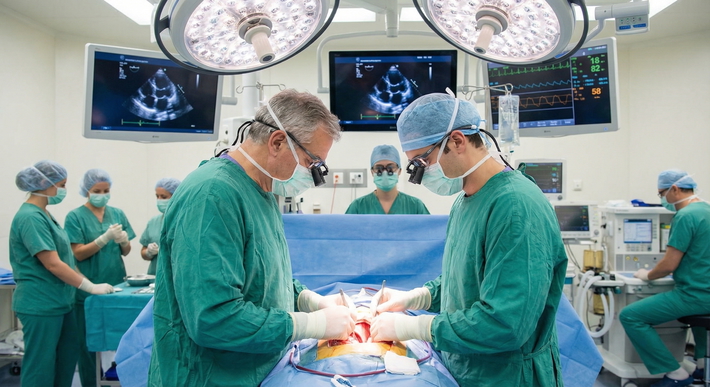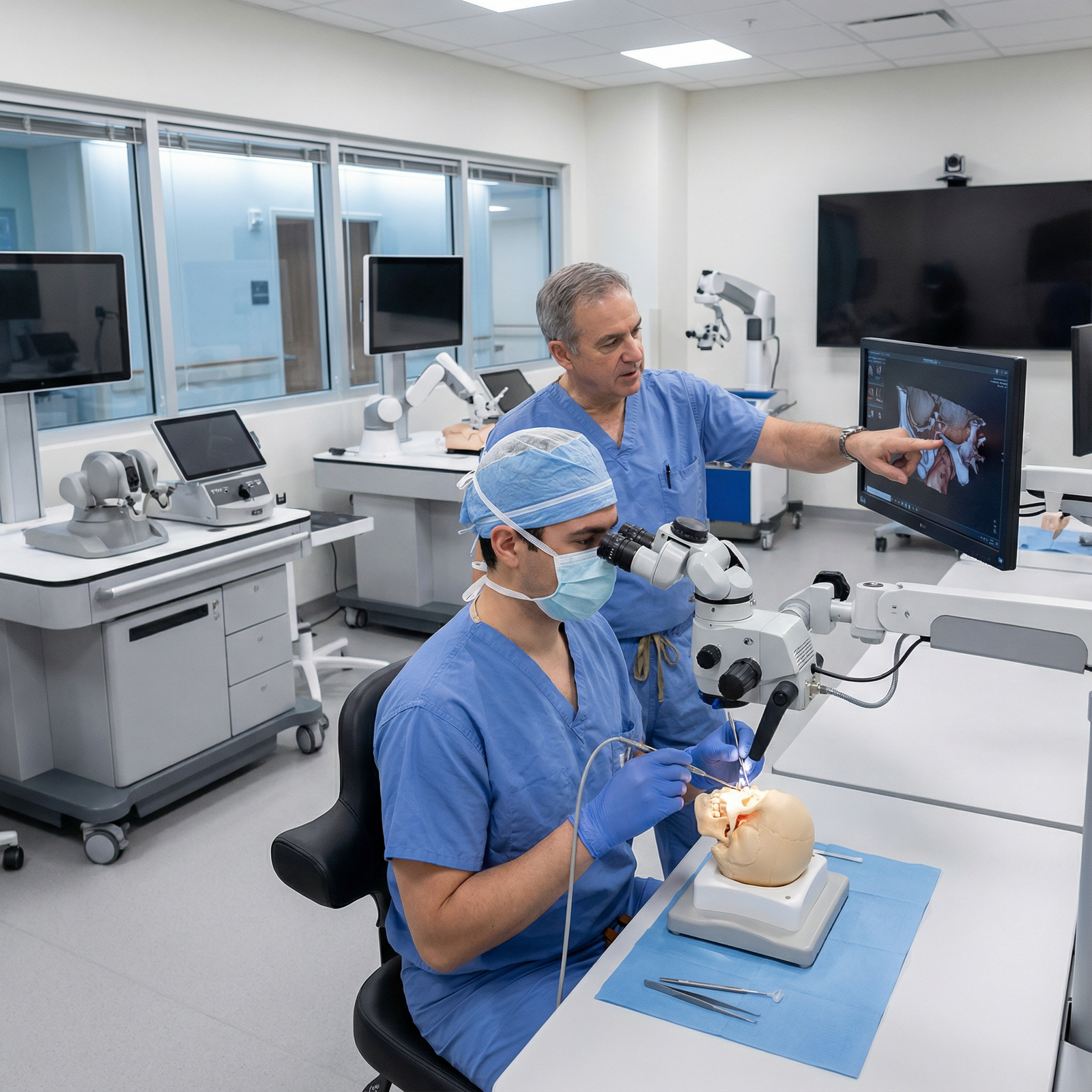
The belief that you must already be “a natural with your hands” before applying to ortho is nonsense—and also dangerous if it makes you hide your weaknesses instead of fixing them.
Here is the reality: most students start ortho with mediocre technical skills. The ones who match well are not magically gifted. They just follow a ruthless, structured plan to close the gap fast. You can do the same.
You are not getting extra points for pretending you are better in the OR than you are. You get points for walking into sub‑I season with a demonstrable upward trajectory and the ability to do the basics cleanly, consistently, safely.
This is a stepwise fix‑it strategy for weak technical skills before applying to ortho.
Step 1: Get Honest About Where You Actually Stand
You cannot fix what you will not measure. Vague “I’m not good with my hands” is useless. You need a skills inventory.
Break your current technical ability into concrete buckets:
Core OR skills
- Gowning and gloving without contamination
- Draping efficiently
- Holding retractors correctly and for a long time
- Anticipating instruments
- Not getting in the way
Basic procedural skills
- Simple interrupted sutures (skin and deep)
- Running sutures
- Knot tying: instrument and two‑handed
- Handling tissue gently
- Using needle drivers correctly (needle angle, wrist motion)
Ortho‑specific fundamentals
- Power drill handling and trigger control
- Guidewire control
- Sawbones fracture reduction concepts (even if clumsy at first)
- Understanding the workflow of common cases (hip fracture, ankle ORIF, TKA, ACL)
Now do this:
Ask 2–3 trusted people for blunt feedback
- One senior resident (ideally in ortho)
- One attending or senior in a procedural specialty (gen surgery, EM, anesthesia)
- A skills‑lab director or simulation instructor, if available
Say this verbatim:
“I am strongly interested in ortho and want a true assessment of my current technical skills so I can improve before I apply. Can you tell me where I’m weakest and what a realistic plan over the next 3–6 months would look like?”
Do a timed, recorded skills session (phone video is fine)
- 10 minutes: knot tying (instrument + 2‑hand)
- 10 minutes: simple interrupted suturing on a pad
- 10 minutes: running suture
- If available: 10–15 minutes on sawbones drilling or basic fixation test block
Watch the video with someone who knows what they are doing; have them critique:
- Hand position
- Needle angle
- Economy of movement
- Consistency between first and last attempt
Translate feedback into a short, ugly list
Not paragraphs. A brutal checklist like:- Drops needle often
- Over‑tightens knots
- Slow with instrument tying
- Retractor keeps drifting
- Fidgets with instruments
- Loses track of field sterility
That list is now your problem list. It becomes your training plan.
Step 2: Build a 12‑Week Technical Skills Plan
Do not just “practice more.” That is how people waste hours and stay mediocre. You need reps, structure, and progression.
Use a 12‑week block, even if you have more time. You can repeat or intensify it later.
| Phase | Weeks | Focus Area |
|---|---|---|
| Foundation | 1-4 | Knots, basic suturing, OR setup |
| Integration | 5-8 | Speed + accuracy, retraction, simple closures |
| Ortho-Specific | 9-12 | Power tools, fracture models, case workflows |
Weekly Structure (Baseline Template)
Aim for 4–5 days per week, 30–45 minutes per session. That is manageable with rotations if you treat it like non‑negotiable gym time.
- 10 minutes: warm‑up (knot tying, basic hand skills)
- 20–30 minutes: focused drill (one or two skills only)
- 5 minutes: quick self‑assessment and log
Keep a simple log: date, skill, number of reps, any issues. This is not journaling. It is data.
Step 3: Fix Core Hand Skills First (Weeks 1–4)
You cannot out‑orthopedics bad fundamentals. Strong power drill skills with garbage knot tying is not impressive.
1. Knot Tying — You Should Be Bored of It
You want:
- Instrument tie: smooth, consistent, no fumbling
- Two‑handed tie: reliable, equal tension, flat knots
Protocol:
- Get two needle drivers or a driver + forceps, and a roll of string / shoe laces / suture remnants.
- Daily:
- 5 minutes: two‑handed ties around a dowel, marker, or towel roll
- 5 minutes: instrument ties around a pen / tube / fixed object
Key focus:
- Eyes mostly on the “wound,” not your fingers
- No huge, dramatic arm motions
- Same pattern every time
You should be doing dozens of knots per day, not five perfect ones.
2. Basic Suturing on a Pad
You do not need a $300 simulator. A decent silicone pad or layered pad is enough; if broke, use a dish sponge covered with glove material.
First 4 weeks:
- Day A: simple interrupted, evenly spaced, consistent depth
- Day B: running suture, straight line and curved line
- Day C: buried deep dermal (even if ugly at first)
- Day D: repeat your weakest from the earlier days
Target: by end of Week 4, you can close a 3–4 cm “wound” with 6–8 evenly spaced simple interrupted sutures in under 6–7 minutes without obvious errors.
3. Micro‑Drills for Dexterity
No, you do not need piano lessons. You need control.
Try:
- Picking up 10–20 paper clips or small beads with forceps and moving them between containers
- Drawing straight and curved lines on a glove and “cutting” along them with scissors with minimal jagging
- Placing dots on a pad and driving a needle through each dot with correct bite angle
These look silly. They work.
Step 4: Get Ortho‑Specific Without a Cadaver Lab (Weeks 5–8)
You probably do not have daily access to ortho sim labs. Fine. You can still train the patterns.
1. Retraction and Positioning — The Most Underrated Skill
Ortho residents remember students who can retract properly. It makes or breaks whether you are “helpful” or “in the way.”
Find an upper‑level ortho resident and say:
“Can you show me exactly how you want me to hold common retractors for a hip/ankle/knee case and what ‘good’ vs ‘bad’ feels like from the surgeon side?”
Then practice:
With a friend or mannequin:
- Simulate holding an army‑navy or Hohmann at proper angle and tension for 5–10 minutes straight without bouncing or drifting
- Practice quietly adjusting hand/wrist without losing exposure
Alone:
- Hold a 5–10 lb dumbbell at varying angles for time while keeping shoulders relaxed and elbows near your body. You are training endurance and posture.
You are not trying to get jacked. You are building static muscular endurance in the same positions you will use retracting.
2. OR Flow and Instrument Anticipation
Weak technical students often look lost not because their hands are terrible, but because they have no idea what is happening in the operation.
Fix this with deliberate prep:
For 3–4 common ortho cases (e.g., hip hemi, ankle ORIF, distal radius ORIF, TKA):
- Watch 2–3 short operative videos for each (VuMedi, OrthoBullets videos, AAOS, or reputable YouTube surg video channels)
- Write a one‑page cheat sheet:
- Positioning
- Incision landmarks
- Basic approach
- Implants used
- Where a student can be useful (retraction spots, suction, simple closure)
Before each related case you scrub:
- Review your cheat sheet
- Decide: “I’ll focus on being perfect at X today (retraction on medial side, suction timing, or skin closure).”
You cannot control how much they let you do, but you can control how prepared you are when they say, “Do you want to close?”
Step 5: Add Power Tools and Fixation Concepts (Weeks 9–12)
This is where ortho gets intimidating for students. Power tools, wires, hardware. You do not need to be a wizard. You need basic control and understanding of the workflow.
1. Drilling Fundamentals
If you have a skills lab: fantastic. If not, ask your ortho department if you can access sawbones and a battery drill during off hours (they often say yes if you are respectful and supervised at first).
Core elements to practice:
- Hand position: both hands on the drill, elbows tucked, wrist neutral
- Trigger control: short, controlled bursts without plunging
- Perpendicular drilling: start slowly to prevent skiving off the cortex
- Depth awareness: know when to stop; do not bury the bit
Create simple drills (no pun intended):
- Draw lines on a sawbones and drill along them, keeping angle consistent
- Practice bicortical drilling on test blocks, stopping just as you exit the far cortex
If absolutely no access:
- Practice dry with a decommissioned drill or even a weighted object mimicking the drill to at least rehearse hand positions and stance. Not ideal, but better than zero.
2. Guidewires and Precision
Guidewires demand fine control.
Practice (with supervision and proper equipment only):
- Starting on flat surfaces: controlling entry point and direction
- Progressing to angled surfaces: maintaining line despite slope
- Fluoro awareness: correlate what you see on C‑arm with your hand position
You are not learning full nail insertion. You are learning to start straight, adjust minimally, and not overcorrect.
3. Fracture Reduction Concepts
You can start this even if your hands are still catching up. The point here is mental rehearsal plus basic manipulation.
Use:
- OrthoBullets / AO Surgery Reference for reduction principles
- Sawbones fracture models if available
Focus on:
- Traction, alignment, rotation
- How clamp positions affect fragment control
- Order of steps—what must be reduced first
Again, you are not trying to be a PGY‑3. You are trying to walk into interview season able to speak intelligently about what is happening when you scrub a case.
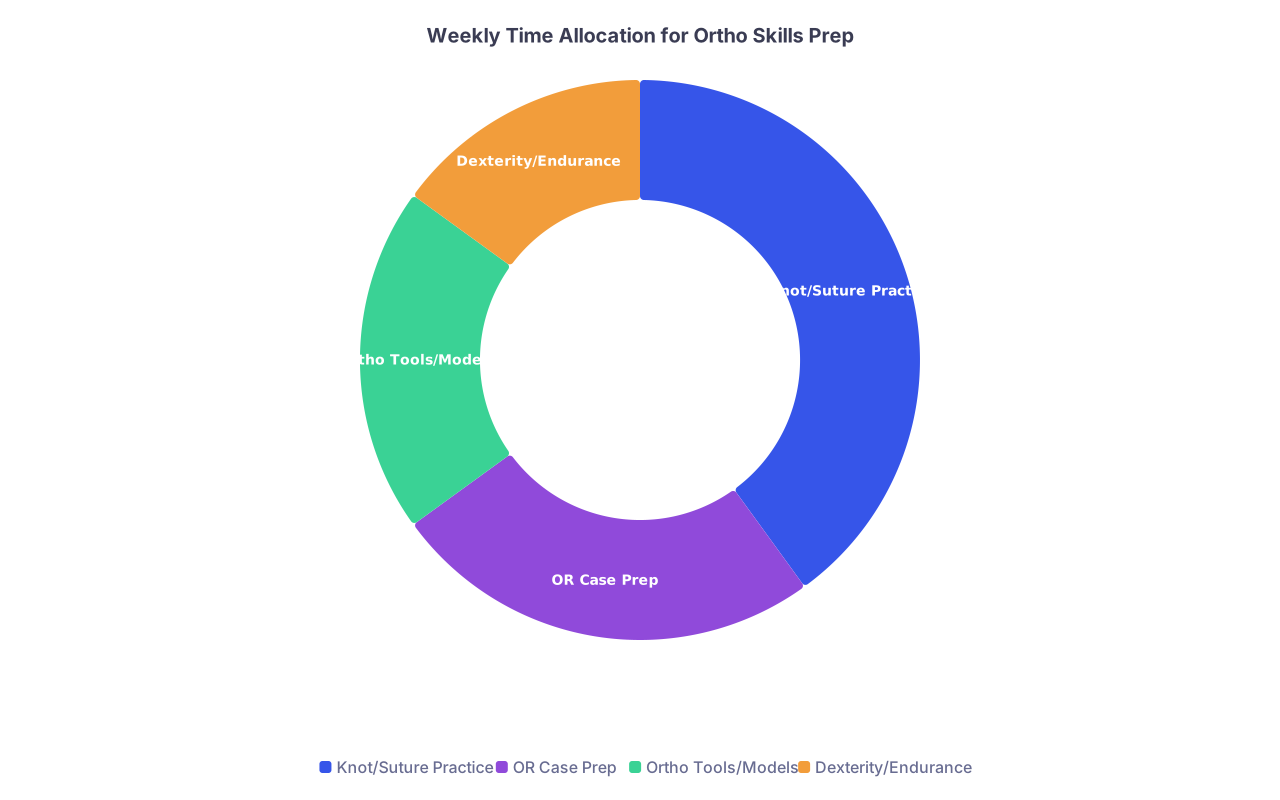
| Category | Value |
|---|---|
| Knot/Suture Practice | 40 |
| OR Case Prep | 25 |
| Ortho Tools/Models | 20 |
| Dexterity/Endurance | 15 |
Step 6: Turn Practice into Evidence Programs Actually Believe
Strong technical improvement is useless if no one knows it happened.
You want concrete signals:
1. Documented Progress in Evaluations
On sub‑Is and ortho rotations, attendings and residents often write things like:
- “Technically improving rapidly”
- “Very good with basic suturing and retraction”
- “Reliable and safe in the OR”
You get those comments by:
Asking for targeted feedback mid‑rotation:
“I am working hard on my basic OR skills—especially suturing and retraction. Is there one thing I could do in the next week that would noticeably improve how helpful I am in cases?”
Then actually fixing that one thing and circling back:
“Last week you mentioned my hand positioning when retracting; I have been practicing and trying to keep elbows closer in. Any better in the last couple of cases?”
People notice when their feedback is not wasted. That is how you shift from “weak technically” to “coachable and improving quickly.”
2. Faculty Who Will Vouch for Your Trajectory
You want at least:
- 1–2 ortho attendings
- 1 senior ortho resident (who is plugged into program leadership)
Who can honestly say in a letter or phone call:
- “Started below average technically but improved a lot over a short period.”
- “Shows up early to practice skills, asks for focused feedback.”
- “I trust them in the OR at a level appropriate for a student.”
How to build that:
- Schedule repeat OR time with the same people, if possible. Familiarity shows your curve.
- Tell them explicitly:
“I know my technical skills were weak earlier in the year. I have been following a structured plan to improve. I would value your feedback on whether that is showing up in the OR.”
No need to over‑sell. Your behavior will do the talking.
3. Add It Subtly to Your Application Story
You do not write: “I was a disaster with my hands.” But you can show growth.
In your personal statement or interviews:
- Mention deliberate practice: setting up regular skills lab sessions, using sawbones, logging practice
- Reference specific turning points:
- “A resident pointed out that my knot tying was too slow. I started doing 15–20 minutes of knot drills nightly for two months. By the time of my sub‑I, I was routinely closing skin and fascia.”
That sounds like someone who takes weaknesses seriously and fixes them. Programs like that.
Step 7: Avoid the Common Traps That Keep Students Technically Weak
You can train hard and still look terrible in the OR if you fall into these predictable traps.
Trap 1: Treating the OR as Performance, Not Practice
If you only practice during live cases, you will stay behind. The OR is where you display the skills you built outside, not where you first attempt them.
Fix:
- Never let the first time you try a knot, stitch, or hand position be in front of an attending.
Trap 2: Over‑Focusing on Flashy Skills
I have seen students begging to do screw placement when their basic sutures look like barbed wire.
Programs do not need you placing lag screws as an M4. They need you safe, consistent, dependable.
Fix:
- Prioritize:
- Sterility and OR etiquette
- Retraction and exposure
- Basic suturing and knots
- Tool familiarity (drill, wires, sawbones)
Flashy comes later.
Trap 3: Hiding Weakness Instead of Exposing It Early
Students sometimes avoid asking for chances to close because they are afraid of looking bad. So they never improve. Then on sub‑Is, they truly are behind.
Fix:
- On earlier rotations (gen surg, trauma, EM), actively ask:
“Can I try closing this?”
Then accept the criticism and go home to practice exactly what they call out.
Trap 4: No Feedback Loop
Mindless repetition of bad technique just makes bad permanent.
Fix:
- Video yourself monthly doing a closure and compare side by side to a high‑quality tutorial.
- Get a resident to watch a 2–3 minute clip and give 2 specific corrections.
Step 8: Align Your Skills Plan With Your Application Timeline
Timing matters. You want your skills peak to line up with:
- Ortho rotations / sub‑Is
- Letters of recommendation
- Interview season
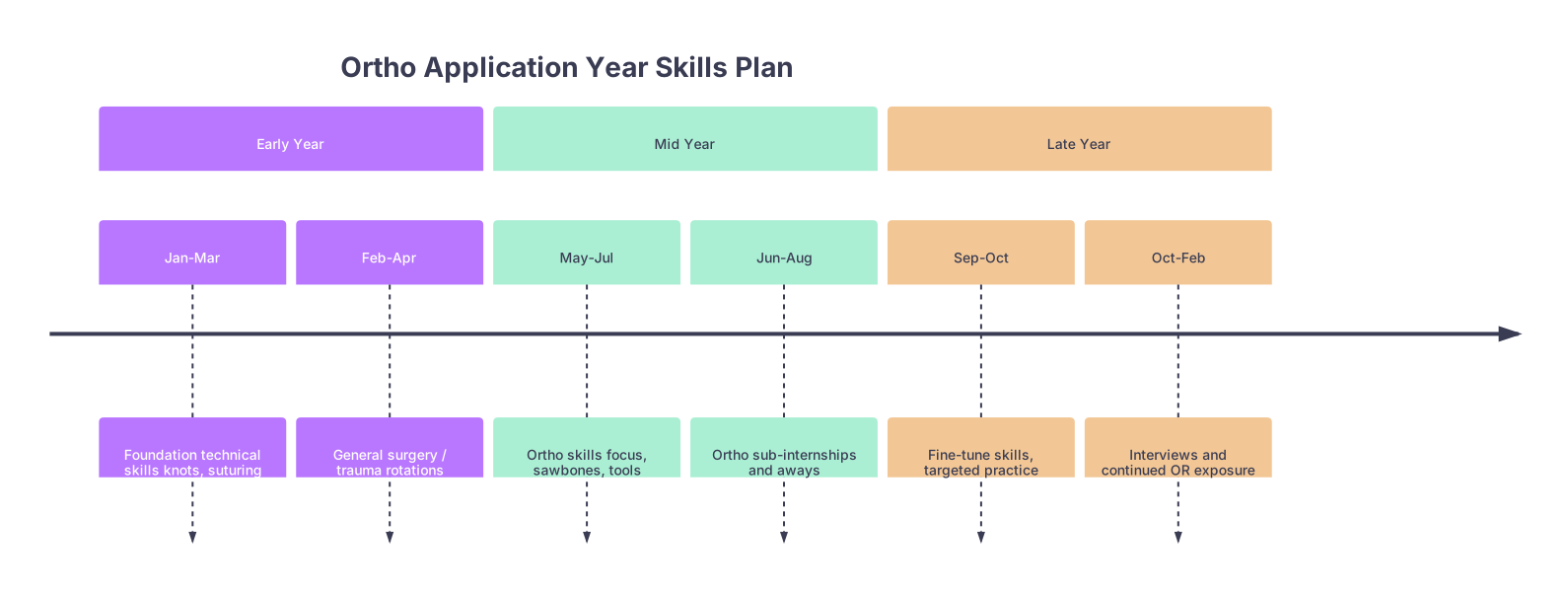
A simple alignment:
| Period | Event |
|---|---|
| Early Year - Jan-Mar | Foundation technical skills knots, suturing |
| Early Year - Feb-Apr | General surgery / trauma rotations |
| Mid Year - May-Jul | Ortho skills focus, sawbones, tools |
| Mid Year - Jun-Aug | Ortho sub-internships and aways |
| Late Year - Sep-Oct | Fine-tune skills, targeted practice |
| Late Year - Oct-Feb | Interviews and continued OR exposure |
If your ortho sub‑Is are in June–August:
- Start your 12‑week intensive no later than March–April.
- Use early gen surg or trauma rotations as your live practice lab.
If you are late to decide on ortho:
- Compress to 8 weeks but increase frequency: 6 days/week, 30 minutes daily.
- Focus hard on the highest‑yield basics: knots, simple suturing, retraction endurance, OR flow knowledge.
Step 9: Use Other Rotations to Train “Ortho” Skills
Do not waste non‑ortho rotations.
On:
- General surgery: treat every closure like board exams for your hands. Ask for feedback.
- Emergency medicine: laceration repairs = suturing reps. Be the first to volunteer.
- Anesthesia: learn positioning and room setup; understand how obese, frail, or polytrauma patients change the game.
- Radiology: correlate ortho imaging with what you later see in the OR.
You want every rotation to push your procedural competency forward, even if the specialty is far from ortho.
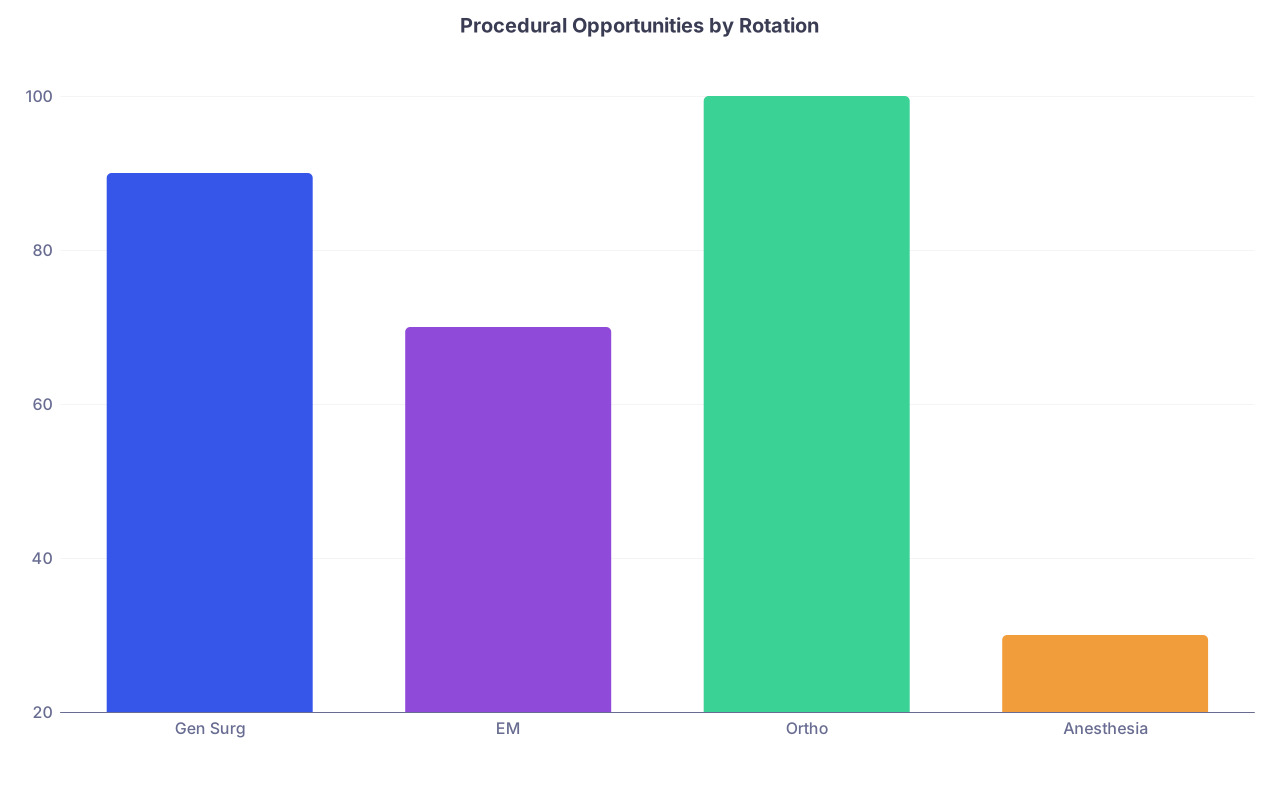
| Category | Value |
|---|---|
| Gen Surg | 90 |
| EM | 70 |
| Ortho | 100 |
| Anesthesia | 30 |
(Think of those numbers as rough “opportunity units.” Ortho and gen surg are obvious; EM is underrated for suturing.)
Step 10: Don’t Confuse Clumsiness With Incompatibility
Here is the part nobody says out loud: a lot of attendings were clumsy as students. Some still are not naturally gifted, they are just experienced.
Being awkward with instruments at first does not mean ortho is the wrong field for you. What would make it the wrong field:
- You refuse to practice
- You get defensive when corrected
- You cut corners on sterility or safety
- You think you are better than you are
If instead you:
- Expose your weaknesses early
- Build a clear, repeatable practice system
- Show consistent improvement over months
You give programs exactly what they want: evidence that you will keep getting better all through residency.
FAQs
1. How many hours per week should I realistically spend on technical skills before applying to ortho?
If you are serious about ortho and starting from below average, aim for 3–5 hours per week of deliberate practice in the 3–4 months before your ortho sub‑Is. That can be:
- 30–45 minutes a day, 4–6 days per week
- Split between knots/sutures, OR flow prep, and ortho‑specific drills (sawbones, drills, retraction endurance)
More than that is fine, but only if you keep the practice high‑quality and specific, not mindless repetition.
2. What should I do if my school has almost no formal ortho skills resources?
You build your own ecosystem:
- Use general surgery skills labs for suturing and basic OR etiquette
- Ask the ortho department if you can attend resident sawbones sessions or labs, even as an observer at first
- Partner with an interested resident for 1–2 “private” skills sessions per month; bring coffee and a clear agenda
- Supplement with high‑quality online videos and cheap home simulators (suturing pads, Amazon sawbones kits, etc.)
Many strong applicants come from schools without massive ortho infrastructure. They just hustle differently.
3. Will programs hold it against me if I admit I was technically weak early on?
Not if you frame it correctly. You do not lead with “I was terrible.” You frame it as:
- Identifying a weakness early
- Creating a structured plan
- Demonstrating measurable improvement
- Backed by letters and behavior consistent with that story
Programs respect trajectory and coachability more than early perfection. What they dislike are applicants who are oblivious to their limitations.
4. How do I know when my technical skills are “good enough” to apply for ortho?
There is no magical threshold score. You are “good enough” if:
- Residents/attendings on recent rotations describe you as safe, helpful, and improving in the OR
- You can reliably:
- Tie secure knots without fumbling
- Close simple skin incisions neatly and reasonably quickly
- Hold retractors effectively for long periods
- Understand what is happening in common ortho cases
- Your sub‑I evaluations comment positively on your OR performance or rate you at least “above expectations” in technical domains
You do not need to look like a PGY‑2. You need to look like a smart, hardworking M4 whose hands are clearly catching up—and will keep doing so.
Open your calendar right now and block 30 minutes tomorrow for a specific technical skill: knots, simple suturing, or retractor endurance. Name the skill in the event title and treat it like a patient appointment. Then keep that appointment.